
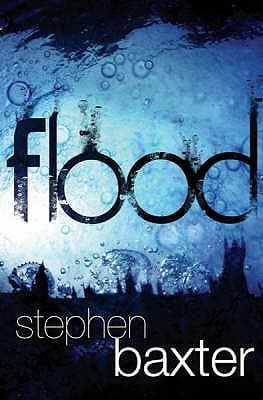
Synopsis
Covers the whole plot, including the ending.
- Difficulty
- Medium
- Pacing
- Variable
- Mood
- Apocalyptic, Bleak, Scientific, Desperate, Epic
- Read it if
- You enjoy epic-scale disaster thrillers with a strong scientific bent and don't mind a bleak vision of humanity's future.
- Skip it if
- You prefer character-driven stories over plot-driven ones, or find existential dread and global catastrophe too overwhelming.
Flood Plot Summary
Covers the whole plot, including the ending.
The Thames Barrier Breach and the Hostage Release
In 2016, a severe storm surge breaches the Thames Barrier, flooding central London. At the same time, Lily McLeish, Helen Gosling, Gary Boyle, and Piers Torday are rescued from a cave in Spain after five years of captivity by Christian extremists. The former hostages, especially Lily, struggle to re-enter a rapidly changing world. News reports begin to mention unusual flooding globally, but most people attribute them to extreme weather. The initial London flood recedes, allowing a semblance of normalcy to return, though an underlying unease persists.
Rising Tides and Global Flooding
Over the next two years, global sea level rise becomes undeniable and catastrophic. Major cities like London, New York, and Venice are permanently submerged. The Pope delivers his final address from the Vatican before it is swallowed by the Mediterranean. Mecca also succumbs to the rising waters, erasing ancient landmarks and displacing billions. Scientists struggle to explain the speed and scale of the inundation. They initially point to accelerated climate change, but the rate of rise defies known models. Panic sets in as governments and populations realize the world is drowning.
The Retreat to Higher Ground
As the waters continue to rise, humanity begins a mass exodus to higher ground. Coastal regions are abandoned, and billions become environmental refugees, straining resources and infrastructure. The remaining landmasses, primarily mountain ranges and high plateaus, become battlegrounds for survival. Lily, Helen, Gary, and Piers, along with their families and new acquaintances, join millions fleeing the encroaching ocean. Social order unravels, with governments struggling to maintain control, leading to widespread chaos and desperation.
Searching for Answers: The Deep Ocean Theory
While public opinion largely blames climate change, Dr. Kate Morris, a geologist, proposes a radical alternative. The water is not from melting ice caps but from a vast, unknown reservoir beneath Earth's crust. She theorizes that a massive geological event opened fissures, allowing trapped water to escape to the surface. Her theory is initially met with skepticism but gains traction as traditional climate models fail to explain the phenomenon. Her work offers hope for understanding the catastrophe.
The Exodus to Tibet and the Ark Project
With much of Europe and Asia submerged, the Tibetan plateau becomes one of the last significant landmasses. Millions of survivors, including Lily, Helen, and their families, make the perilous journey to the Himalayas. Amid dwindling resources and escalating conflicts, a global initiative, the 'Ark Project,' begins. The goal is to construct massive, self-sustaining vessels capable of housing a significant portion of humanity, preserving knowledge, and ensuring the species' survival on an ocean world. The project faces political and logistical challenges.
The Hostages' Trauma and New Relationships
Lily, Helen, Gary, and Piers continue to struggle with the psychological scars of their five-year captivity. Their past ordeal, while seemingly unrelated to the global flood, prepared them for extreme hardship and uncertainty. Lily forms a close bond with Piers, both finding solace in their shared trauma and an unexpected connection amidst the apocalypse. Helen, more pragmatic, focuses on practical survival, while Gary struggles with despair. Their coping mechanisms and evolving relationships are tested by the flood and the unraveling of civilization.
Political Strife and Resource Wars
As land becomes scarcer, international cooperation crumbles, replaced by competition and warfare. Nations with remaining high ground, like China and the United States, become fortresses, often refusing entry to refugees. Resource wars erupt over food, fresh water, and building materials for the Ark Project. The global political landscape shifts dramatically, with powerful factions emerging and traditional alliances dissolving. The struggle for survival breeds both altruism and brutality.
The Deep Ocean Expedition
Driven by Dr. Morris's theory, a desperate international effort sends a submersible deep into the Pacific Ocean, where seismic activity and unusual geological formations suggest the flood's source. Lily McLeish, with her geology background and resilience, is recruited for this mission. The expedition aims to gather definitive proof of the deep-ocean water reservoir and understand its release mechanism. The journey is dangerous, facing immense pressures, unknown geological phenomena, and the psychological toll of humanity's last hope resting on their shoulders.
Discovery of the Abyss and the 'Seed'
The deep-ocean expedition, led by Lily, locates a colossal chasm, an unprecedented geological feature stretching thousands of kilometers. Within this abyss, they discover a massive subterranean ocean and an enigmatic, artificial structure - a 'Seed.' This alien artifact is the true cause of the flood, a mechanism designed to terraform Earth into an ocean world. The discovery alters humanity's understanding of its place in the cosmos. It reveals the catastrophe is not natural but a deliberate, extraterrestrial intervention.
The World Becomes Ocean
Despite the discovery and the Ark Project, the flood continues. Earth becomes an almost entirely aquatic planet, with only the highest mountain peaks remaining as scattered islands. Billions have perished, and survivors are confined to massive arks or isolated, precarious settlements on the few remaining landmasses. The atmosphere becomes heavy with moisture. The once-familiar blue-green planet is now a vast, deep blue. Humanity faces the challenge of adapting to an entirely new world, forever changed by the 'Seed' and the deluge it unleashed.
The Ark's New World and the Future of Humanity
The Ark Project, though scaled down, launches several massive vessels. Lily, Helen, Gary, and Piers are among the survivors aboard these arks. Life on the arks is a stark contrast to their previous existence, marked by tight living quarters, resource management, and the constant hum of machinery. They grapple with the psychological impact of losing their home world. Humanity's future involves navigating a water planet, exploring its depths, and perhaps, one day, understanding the full purpose of the 'Seed' and their place in the universe. The novel concludes with humanity's uncertain but determined survival.
Principal Figures
Lily McLeish
Protagonist
A geologist and former hostage, driven by a need for understanding.
Lily is a geologist by profession, a detail that becomes crucial as the world drowns. She is one of four hostages released from a Spanish cave after five years of captivity by Christian extremists. Her ordeal leaves her with deep psychological scars but also an incredible resilience and a unique perspective on survival under extreme duress. She is intelligent, analytical, and possesses a quiet strength that allows her to push through unimaginable challenges. Her drive to understand the 'why' behind the flood propels much of the narrative.
Relationships: Helen Gosling (Fellow hostage, close friend); Gary Boyle (Fellow hostage, strained relationship); Piers Torday (Fellow hostage, romantic interest); Dr. Kate Morris (Scientific colleague, mentor)
Helen Gosling
Supporting
A pragmatic former hostage focused on practical survival.
Helen is another of the former hostages. She is practical, resourceful, and often serves as a grounding force for Lily. While she also carries the trauma of captivity, her focus tends to be on immediate survival and the well-being of her family. She is less interested in the philosophical 'why' of the flood and more concerned with the 'how' of staying alive. Her resilience is different from Lily's, manifesting in her ability to adapt to new, harsh realities and make tough decisions.
Relationships: Lily McLeish (Fellow hostage, close friend); Gary Boyle (Fellow hostage); Piers Torday (Fellow hostage)
Gary Boyle
Supporting
A former hostage who struggles with despair and addiction.
Gary is one of the four hostages, and his experience in captivity leaves him deeply scarred and prone to despair. Unlike Lily and Helen, he struggles significantly with reintegration and adapting to the new world. He often seeks solace in alcohol and becomes increasingly cynical and fatalistic as the flood progresses. His character represents the psychological fragility of humanity in the face of overwhelming catastrophe, highlighting the varied ways individuals cope (or fail to cope) with trauma and loss.
Relationships: Lily McLeish (Fellow hostage, strained relationship); Helen Gosling (Fellow hostage); Piers Torday (Fellow hostage)
Piers Torday
Supporting
A former hostage and journalist who forms a bond with Lily.
Piers is the fourth former hostage. He is a journalist, which gives him a unique perspective on the unfolding global catastrophe. He is intelligent and observant, and like Lily, struggles with the trauma of captivity. He develops a close, eventually romantic, relationship with Lily, finding mutual understanding and support in their shared ordeal. He often acts as a chronicler of the events, trying to make sense of the world's end through his journalistic lens, even as that world disappears.
Relationships: Lily McLeish (Fellow hostage, romantic interest); Helen Gosling (Fellow hostage); Gary Boyle (Fellow hostage)
Dr. Kate Morris
Supporting
A brilliant geologist who theorizes the deep-ocean source of the flood.
Dr. Kate Morris is a leading geologist who challenges the prevailing climate change narrative. She is a brilliant and tenacious scientist, ostracized by some for her unconventional theories but ultimately vindicated. Her research suggests that the water is not from melting ice but from a vast, previously unknown subterranean ocean within the Earth's mantle, released by a massive geological event. She becomes a crucial figure in the scientific effort to understand the flood, leading the theoretical charge that eventually leads to the deep-ocean expedition.
Relationships: Lily McLeish (Scientific colleague, mentor); Various scientists (Colleagues and skeptics)
Dr. Ma Jian
Supporting
A Chinese scientist involved in the Ark Project.
Dr. Ma Jian is a prominent Chinese scientist who plays a significant role in the global efforts to preserve humanity, particularly through the Ark Project. He represents the pragmatic and often ruthless efficiency of certain national responses to the crisis. While dedicated to humanity's survival, his methods can be cold and utilitarian, reflecting the immense pressures and impossible choices faced by leaders in a dying world. He is a key figure in coordinating the construction and launch of the survival vessels.
Relationships: Dr. Kate Morris (Scientific collaborator); Various government officials (Political collaborator)
The Christian Extremists
Antagonists/Mentioned
The group that held Lily and others hostage in Spain.
This group, though not directly involved in the flood, serves as the initial antagonists who shape the protagonists' resilience and trauma. They are Christian extremists operating out of a cave in Spain, holding Lily, Helen, Gary, and Piers captive for five years. Their ideology and brutal methods leave lasting psychological scars on the survivors, ironically preparing them for the later global catastrophe. They represent a more localized, human-made horror that contrasts with the impersonal, overwhelming force of the flood.
Relationships: Lily McLeish (Captor-captive); Helen Gosling (Captor-captive); Gary Boyle (Captor-captive); Piers Torday (Captor-captive)
The 'Seed'
Antagonist
An enigmatic alien artifact causing the flood.
The 'Seed' is not a character in the traditional sense, but an alien artifact discovered at the bottom of the deep ocean. It is the ultimate antagonist, an impersonal, non-sentient (or incomprehensibly alien) mechanism responsible for terraforming Earth into an ocean world. Its existence redefines humanity's understanding of the catastrophe, shifting it from a natural disaster or self-inflicted wound to an external, deliberate, and potentially alien-driven event. Its purpose remains largely unknown, adding to the existential dread and mystery of the flood.
Relationships: Humanity (Terraformer-terraformed)
Themes & Insights
Survival and Adaptation
The most prominent theme is humanity's struggle for survival against an overwhelming, existential threat. Characters like Lily and Helen, already hardened by captivity, show incredible resilience. The global response, from mass migrations to the Ark Project, shows humanity's capacity for both cooperation and conflict in the face of annihilation. The theme explores not just physical survival but also the adaptation of human society, politics, and psychology to a new, water-dominated world, as seen in the transition to ark life and the scramble for high ground.
“We are survivors. It's what we do. We find a way, even when there isn't one.”
The Nature of Catastrophe: Natural vs. Intentional
Initially, the flood is widely seen as a consequence of climate change. This aligns with common societal anxieties about environmental degradation. However, Dr. Kate Morris's theory and the deep-ocean expedition reveal a different truth: the flood is not natural but the result of an alien 'Seed' deliberately terraforming Earth. This shift forces humanity to confront not just an environmental disaster but an unknown, possibly hostile, cosmic intelligence. This changes their worldview and sense of agency.
“It wasn't Gaia's wrath. It was... something else. Something far older, far colder.”
Trauma and Resilience
The novel explores the psychological impact of trauma, both individual and collective. The former hostages (Lily, Helen, Gary, Piers) carry the scars of their five-year captivity, which prepares them for the global catastrophe. Their coping mechanisms, from Lily's drive for understanding to Gary's despair, highlight human responses to extreme stress. On a larger scale, humanity grapples with the collective trauma of losing its home world, forcing a re-evaluation of what it means to be human and what truly matters.
“We lost five years in that cave. Now we're losing the world. But we're still here.”
The Search for Knowledge and Truth
A driving force in the narrative is humanity's quest to understand the flood. From initial scientific debates about climate change to Dr. Morris's deep-ocean theory, the pursuit of knowledge is important. Lily's involvement in the deep-ocean expedition exemplifies this theme. Characters risk everything to uncover the truth, even if it is terrifying. The 'Seed' discovery represents the ultimate scientific revelation, challenging all previous assumptions and forcing humanity to confront a reality beyond its comprehension.
“We can't fight what we don't understand. Knowledge is our only weapon.”
The Collapse of Civilization and Rebirth
The novel details the breakdown of societal structures, governments, and international cooperation as the flood progresses. Resource wars, mass migrations, and the abandonment of traditional cities show the fragility of civilization. However, amidst the collapse, there is also the theme of rebirth and the forging of new communities, particularly on the arks and remaining high ground. This duality highlights humanity's capacity for both destruction and creation, showing that even in the face of ultimate loss, the drive to build, adapt, and continue exists.
“The old world is gone. We must build a new one, or we are truly lost.”
Plot Devices & Literary Techniques
The Deep Ocean Reservoir Theory
A scientific theory that challenges conventional explanations for the flood.
This theory, proposed by Dr. Kate Morris, serves as a crucial plot device, shifting the narrative's focus from a climate change disaster to a more enigmatic, potentially extraterrestrial event. It provides a scientific mystery that drives the deep-ocean expedition and ultimately leads to the discovery of the 'Seed.' Without this alternative explanation, humanity would remain trapped in a misdiagnosis, unable to comprehend the true nature of their predicament. It adds a layer of scientific intrigue and foreshadows the larger cosmic implications.
The Hostage Backstory
The protagonists' shared trauma and unique resilience from five years of captivity.
The five-year captivity of Lily, Helen, Gary, and Piers by Christian extremists functions as a powerful character-building device. It provides them with an unusual baseline for extreme hardship, trauma, and survival, making them uniquely resilient (or vulnerable, in Gary's case) to the global flood. This shared past forges deep bonds and conflicts among them, influencing their decisions and reactions to the apocalypse. It also highlights the contrast between human-made cruelty and an impersonal, overwhelming natural (or alien) force.
The Ark Project
Humanity's desperate, last-ditch effort to preserve life and knowledge on massive vessels.
The Ark Project is a monumental plot device representing humanity's collective will to survive and preserve its legacy. It provides a tangible goal for many characters and a framework for the societal and political struggles as resources dwindle. The construction, launch, and eventual life aboard the arks illustrate the practical and ethical challenges of building a new civilization from scratch, while also offering a glimmer of hope for humanity's future on a water world. It symbolizes both the failure of the old world and the potential for a new beginning.
The 'Seed'
An alien artifact responsible for terraforming Earth into an ocean world.
The 'Seed' is the ultimate plot twist and a central plot device. Its discovery fundamentally recontextualizes the entire narrative, transforming the flood from an environmental catastrophe into a deliberate act of alien terraforming. It introduces a cosmic horror element and raises profound questions about humanity's place in the universe, the nature of intelligence, and the purpose of existence. The 'Seed' acts as a catalyst for humanity's final understanding of its demise and the beginning of its adaptation to a new reality.
Flood Quotes
“The Earth had been a good home, for so long. Now it was just a memory, a blue marble receding into the black.”
“It wasn't just water. It was the end of everything they knew, a slow, inexorable drowning of the world.”
“Hope was a dangerous thing, a flickering candle in a hurricane. But without it, there was nothing.”
“The ocean was no longer a boundary; it was a conqueror. And it was still rising.”
“They were not just escaping a flood; they were escaping a future that no longer existed.”
“Every drop of water was a tear for what was lost, and a promise of what was to come.”
“The stars were indifferent, as always. But tonight, they seemed to mock their struggle.”
“Humanity's greatest achievement, its most enduring monument, had become its tomb.”
“Survival wasn't about being strong; it was about being adaptable, even when adaptation meant losing everything.”
“The world was a blank canvas, washed clean by the sea. What would they paint on it next?”
“There was no going back. Only forward, into the endless, watery unknown.”
“The silence was broken only by the lapping of water, a constant, mocking reminder of their predicament.”
“They were the last remnants, the seeds of a new world, adrift on the ruins of the old.”
Quiz
10 questions on the plot and the characters. Each answer comes with a short explanation.
Question 1
What significant event occurs in London at the very beginning of the novel, signaling the start of the catastrophic flooding?
- The Houses of Parliament are destroyed by a tsunami.
- The Thames Barrier is breached, swamping central London.
- A massive earthquake causes a land subsidence in the city.
- The River Thames completely dries up.
Show answer
B. The Thames Barrier is breached, swamping central London. The novel begins with the Thames Barrier being breached during a storm surge, leading to the initial flooding of central London.
Question 2
Which of the following cities is NOT explicitly mentioned as being swallowed by the rising waters early in the novel?
- London
- New York
- Paris
- Rome
Show answer
C. Paris The synopsis specifically mentions London, New York, Rome (with the Pope's last address), and Mecca as cities that will vanish. Paris is not mentioned in this context.
Question 3
What is the shared past experience of characters Lily, Helen, Gary, and Piers before the widespread floods begin?
- They were all scientists working on climate models.
- They were held captive for five years by Christian Extremists in Spain.
- They were survivors of a previous, smaller flood in England.
- They served together in the British armed forces.
Show answer
B. They were held captive for five years by Christian Extremists in Spain. Lily, Helen, Gary, and Piers are introduced as hostages recently released after five years in captivity by Christian Extremists in Spain.
Question 4
What is the popular, initial theory among the public and media for why the sea levels are rising catastrophically?
- A massive asteroid impact in the ocean.
- An alien terraforming project gone wrong.
- Climate change and mankind's profligacy redressing Gaia's balance.
- Undersea volcanic eruptions displacing ocean water.
Show answer
C. Climate change and mankind's profligacy redressing Gaia's balance. The synopsis states that 'The popular theory is that we are paying the price for our profligacy and that climate change is about to redress Gaia’s balance.'
Question 5
How quickly do London and New York face being submerged, according to the early predictions in the book?
- Within a decade.
- Within five years.
- Within two years.
- Within six months.
Show answer
C. Within two years. The synopsis explicitly states, 'Within two years London and New York will be under water.'
Question 6
What is the ultimate consequence for humanity described as the waters continue to rise and the 'great retreat' begins?
- Humanity develops advanced underwater cities.
- Millions will die, billions will become migrants, and wars will be fought over mountains.
- A global government is formed to manage the crisis peacefully.
- Humanity discovers a way to reverse the flooding entirely.
Show answer
B. Millions will die, billions will become migrants, and wars will be fought over mountains. The text warns of severe consequences: 'Millions will die, billions will become migrants. Wars will be fought over mountains.'
Question 7
Beyond the popular climate change theory, what other perspective is mentioned regarding the cause of the global flood?
- A deliberate act of sabotage by a rogue nation.
- The intervention of an ancient, unknown civilization.
- Dissenting views and a desperate race to find out what is happening.
- A natural, cyclical event that occurs every few millennia.
Show answer
C. Dissenting views and a desperate race to find out what is happening. While the popular theory is climate change, the synopsis notes, 'But there are dissenting views. And all the time the waters continue to rise and mankind begins the great retreat to higher ground.' This implies other theories are being explored.
Question 8
In what specific country were Lily, Helen, Gary, and Piers held captive?
- Italy
- France
- Spain
- Greece
Show answer
C. Spain The text states they were 'hostages released from five years captivity at the hands of Christian Extremists in Spain.'
Question 9
What religious site, significant to Islam, is explicitly mentioned as vanishing beneath the waves?
- Jerusalem
- Mecca
- Vatican City
- Kyoto
Show answer
B. Mecca The synopsis mentions, 'Mecca too will vanish beneath the waves,' alongside Rome.
Question 10
The rising sea levels are described as happening at a 'catastrophic speed'. What does this imply about humanity's ability to adapt or prepare for the changes?
- Humanity has ample time to build new coastal defenses and infrastructure.
- The speed makes adaptation extremely difficult, leading to mass displacement and conflict.
- Governments can easily relocate entire populations to safe zones.
- Technological solutions are readily available to reverse the trend.
Show answer
B. The speed makes adaptation extremely difficult, leading to mass displacement and conflict. The phrase 'catastrophic speed' combined with 'millions will die, billions will become migrants. Wars will be fought over mountains' clearly indicates that humanity's ability to adapt is severely hampered, leading to dire consequences.
Flood FAQ
What is the initial catastrophic event that sets the stage for the global flood?
The story begins with a severe breach of the Thames Barrier during a particularly wet summer in 2016, leading to central London being swamped. This event, initially perceived as a localized disaster, is a precursor to the much larger, global flooding that follows.
Who are the four main characters introduced early in the novel, and what is their shared traumatic past?
The four main characters are Lily, Helen, Gary, and Piers. They are introduced as a group of hostages recently released after five years of captivity at the hands of Christian Extremists in Spain, a shared ordeal that deeply impacts their perspectives and survival strategies.
What is the primary global phenomenon that drives the central conflict of 'Flood'?
The central conflict is driven by an unprecedented and catastrophic rise in global sea levels, occurring at an accelerating pace. This phenomenon swiftly submerges major cities like London, New York, Rome, and Mecca, forcing humanity into a desperate retreat to higher ground.
How quickly do major cities like London and New York succumb to the rising waters?
Within two years of the initial events, both London and New York are projected to be completely submerged. This rapid inundation highlights the extreme speed and scale of the global sea-level rise, leaving little time for preparation or adaptation.
What is the prevailing popular theory for the cause of the floods, and what is an alternative view?
The popular theory attributes the floods to humanity's profligacy and climate change, suggesting Gaia is redressing its balance. However, there are dissenting views, implying a more complex or perhaps extraterrestrial cause for the accelerated sea-level rise.
Are there any subtle hints early on that the flooding is not a natural climate change event?
The narrative subtly introduces 'dissenting views' regarding the cause of the floods, suggesting it might not be solely attributable to climate change. The sheer speed and scale of the water's rise also hint at an unnatural or externally influenced phenomenon, beyond typical environmental models.
How does the past trauma of captivity influence Lily, Helen, Gary, and Piers' reactions to the global catastrophe?
Their five years as hostages likely instilled a profound sense of resilience, resourcefulness, and a heightened awareness of survival. This experience might make them more adaptable to extreme conditions and less prone to panic than others, or conversely, trigger new forms of PTSD.
What role does religion play in the novel, both as a source of comfort and potential conflict, given the 'Biblical proportions' of the flood?
Religion is a dual force: the Pope's last address from the Vatican before Rome is swallowed offers a poignant moment of spiritual reckoning, while the mention of 'Christian Extremists' in the characters' past hints at the destructive potential of zealotry. The 'Biblical proportions' evoke ancient narratives of divine judgment, influencing societal responses.
How might Gary's practical skills or personality traits, possibly honed during captivity, prove crucial in their survival?
Gary, having endured five years of captivity, might possess a pragmatic, resourceful, or even hardened personality. These traits, coupled with any practical skills he might have developed or maintained, would be invaluable for scavenging, navigation, or leading during the chaotic retreat to higher ground.
What specific details about the rising water suggest an unnatural phenomenon rather than mere climate change?
The text emphasizes 'catastrophic speed' and the fact that 'within two years London and New York will be under water,' which is an unprecedented rate for natural sea-level rise. The 'dissenting views' also point to an underlying, non-climatic cause, hinting at a more complex, possibly artificial, origin.
How does the loss of iconic religious sites like the Vatican and Mecca impact global psychology and societal structure?
The submersion of the Vatican and Mecca represents a profound symbolic loss for billions, potentially triggering widespread despair, a crisis of faith, or new religious movements. This loss could destabilize existing societal structures and lead to mass psychological trauma.
What ethical dilemmas might arise as billions become migrants and wars are fought over mountains?
The mass migration and resource scarcity will inevitably lead to severe ethical dilemmas concerning who gets to survive, access to food, water, and safe havens. Governments and individuals will face agonizing choices about borders, aid, and the use of force to protect dwindling resources.
Is there any indication of a scientific or exploratory effort to determine the true cause of the flood beyond the popular theories?
The phrase 'A desperate race to find out what is happening begins' strongly implies a scientific or investigative effort. This suggests that some individuals or groups are actively seeking a concrete explanation beyond the popular climate change narrative, hinting at a deeper mystery.
How might Piers's character, potentially a more intellectual or analytical type, contribute to understanding or surviving the disaster?
Piers, if he is the intellectual or analytical member of the group, might be crucial in interpreting scientific data, understanding maps, or strategizing long-term survival. His ability to process information and make rational decisions could be a vital asset in a world succumbing to chaos.
What does the phrase 'Gaia's balance' imply about the prevailing environmental philosophy within the story?
The phrase 'Gaia's balance' suggests a popular belief in an Earth system that self-regulates and punishes human excess. This implies a prevalent ecological worldview where nature is seen as a living entity capable of retaliatory action against human profligacy, rather than just a passive environment.
What is the significance of the initial Thames Barrier breach in 2016, given the later global catastrophe?
The initial breach of the Thames Barrier acts as a microcosm and a grim foreshadowing of the global disaster. It establishes the vulnerability of human infrastructure to water and introduces the theme of overwhelming natural forces, albeit initially underestimated.
How do Lily and Helen's experiences as female hostages influence their roles or challenges during the global flood?
Their past trauma as female hostages could have instilled unique coping mechanisms, resilience, or specific vulnerabilities. They might face additional challenges or exhibit distinct strengths related to leadership, community building, or emotional endurance in the face of the global catastrophe.
Could the 'Christian Extremists' from the characters' past be linked to the dissenting views about the flood's cause?
It's possible, though not explicitly stated, that the 'Christian Extremists' might hold apocalyptic or divinely-ordained views on the flood, aligning with or influencing some 'dissenting views.' Their past actions suggest a radical interpretation of events, which could resurface in the face of a 'Biblical' flood.
What implications does the 'great retreat to higher ground' have for human civilization and culture?
The 'great retreat' implies a massive societal upheaval, the loss of cultural heritage, and a complete restructuring of human civilization. Cities, infrastructure, and historical sites will be abandoned, forcing humanity to rebuild from scratch in new, high-altitude communities, potentially leading to new forms of governance and culture.
About the author

Stephen Baxter is a British author known for his contributions to science fiction. His notable works include "Time," which explores the concept of time travel, "Flood," a speculative narrative about a future inundated world, "Ark," which delves into humanity's survival in space, and "Voyage," a reimagining of the Mars exploration.
Similar books
- The Drowned World
J.G. Ballard
3.4 (18k) average on GoodreadsThrillerExplores a world transformed by rising sea levels and humanity's psychological adaptation.
- The Day of the Triffids
John Wyndham
4.0 (90k) average on GoodreadsFantasyA classic British disaster novel with a focus on societal collapse and survival.
- Seveneves
Neal Stephenson
4.0 (95k) average on GoodreadsFantasyFeatures a detailed scientific premise for global catastrophe and humanity's long-term survival efforts.
- The Water Knife
Paolo Bacigalupi
3.8 (21k) average on GoodreadsThrillerThe Water Knife focuses on a near-future, geographically limited water crisis in the American Southwest, emphasizing human conflict, political intrigue, and resource wars. Flood operates on a global and cosmic scale, prioritizing scientific explanation and the ultimate fate of humanity and Earth over localized human conflict.
- Angels & Demons
Dan Brown
3.9 (2.7M) average on GoodreadsThrillerA Harvard symbologist races through Rome's ancient sites, deciphering cryptic clues to unmask the Illuminati and stop a vengeful plot to destroy the Vatican with a stolen antimatter weapon.
- Gone Girl
Gillian Flynn
4.1 (2.3M) average on GoodreadsThrillerA wife's sudden disappearance on her fifth anniversary reveals a web of lies and psychological warfare, exposing the secrets within a seemingly perfect marriage.



Enjoyed the summary?
A summary gives you the shape of the book. The book itself has the detail, the examples and the voice.
Find Flood on AmazonAs an Amazon Associate, BookBrief earns from qualifying purchases. How we're funded