
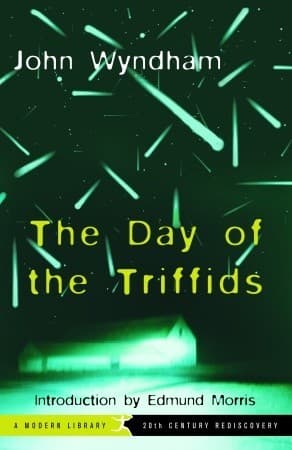
Synopsis
Covers the whole plot, including the ending.
- Difficulty
- Medium
- Pacing
- Moderate
- Mood
- Bleak, Suspenseful, Thought-provoking, Eerie
- Read it if
- You enjoy classic post-apocalyptic stories with a focus on societal collapse and unique ecological threats.
- Skip it if
- You prefer fast-paced action over philosophical exploration of survival and societal rebuilding.
The Day of the Triffids Plot Summary
Covers the whole plot, including the ending.
A World Plunged into Darkness
Bill Masen, a triffid expert, wakes in a London hospital with his eyes bandaged. He missed a spectacular meteor shower. The next morning, he removes his bandages to find the hospital eerily silent and deserted. Venturing out, he discovers a city filled with blind, disoriented people stumbling through the streets. They cannot see the devastation. He quickly realizes that the meteor shower, which many people stared at directly, caused widespread, instantaneous blindness. The few sighted individuals are overwhelmed by the number of helpless people. Society collapses almost immediately, leaving Bill to navigate a dangerous new reality where most basic human functions are now impossible for the majority.
First Encounters and Escape from London
Bill encounters Josella Playton, a young, sighted woman being harassed by a blind man. After rescuing her, they join forces. They recognize the immediate danger of being sighted in a world of the blind, where they are seen as either a resource or a threat. They see society quickly fall apart, with blind individuals dying from accidents, starvation, or the increasingly bold triffids. As London descends into anarchy, Bill and Josella decide to escape the city, realizing that staying would mean certain death or enslavement to the helpless. They gather supplies and plan their departure, seeking a safer place away from the immediate chaos and the growing triffid threat.
The University Group and Conflicting Ideologies
Bill and Josella reach the University of London, where a group of sighted survivors has gathered. Professor Beadley, a practical leader, heads the group. Beadley wants to establish a self-sufficient, sighted colony in the countryside, prioritizing the survival of humanity's genetic future. However, another group, led by Wilfred Coker, who is charismatic but morally unclear, argues for integrating the blind into their society. Coker believes it is their duty to care for them. Bill initially aligns with Beadley's group, but the debate shows the deep ethical problems facing the survivors, as resources are scarce and the future uncertain. The group's different ideas create tension and threaten to split their efforts.
Coker's Folly and Forced Labor
Coker, unable to agree with Beadley's harsh practicality, splits off with his followers. He plans to establish a network of sighted individuals guiding and caring for groups of blind people across London. Bill, despite his doubts, is forced to join Coker's initiative, as Coker's group captures sighted individuals and makes them serve. This plan quickly proves unsustainable and dangerous. The sighted 'guides' are overworked, vulnerable to attacks from desperate blind individuals, and increasingly exposed to the roaming triffids. Bill sees firsthand how useless and dangerous Coker's approach is, realizing that compassion without planning leads only to greater suffering.
Escape from Coker and Reunion
As Coker's plan falls apart into chaos and starvation, Bill escapes during a triffid attack. He then searches for Josella, fearing for her safety. His journey takes him through deserted and dangerous places, showing the scale of the catastrophe. He eventually finds her at a country estate, where she has joined another group of survivors led by Miss Durrant, a morally good woman who wants a more traditional, 'family unit' approach to rebuilding society. Bill is relieved to find Josella alive, but the differences in ideas within Miss Durrant's group, especially about the role of women and reproduction, become clear.
The Tynsham Experiment
Bill and Josella leave Miss Durrant's rigid community. They find it too focused on maintaining old social structures rather than practical survival. They journey to Tynsham, a well-organized and successful settlement established by Beadley and his followers. Tynsham represents a practical approach to survival, with a strong focus on self-sufficiency, defense against triffids, and the careful selection of individuals for genetic propagation. Bill, with his knowledge of triffids, becomes a valuable member of the community. Here, they find purpose and relative safety, but the constant threat of the triffids and the need to protect their resources remain important.
The Triffid Threat Escalates
The triffid population, with no human control, grows rapidly. They begin to move in organized, predatory groups, drawn to human settlements. Their poisonous stingers and ability to walk make them strong adversaries. Tynsham, despite its defenses, faces constant attacks. Bill and other members of the community often fight the plants, using fire and other methods to keep them away. The triffids are no longer just a background threat but an active, intelligent, and relentless enemy. This forces the survivors to use significant resources and people for defense, showing humanity's uncertain position in this new ecosystem.
A New Life and a Difficult Choice
Bill and Josella, wanting more control and a secure future for their potential children, decide to leave Tynsham. They, along with a few others, establish their own self-sufficient farm on the Isle of Wight, which they believe will be naturally protected from the triffids. They work hard to grow food and build defenses. During this time, Josella becomes pregnant. Their isolation ends when they encounter a blind family held captive by a single sighted man, Stephen, who is trying to exploit them. Bill faces a moral problem: help the blind family and risk his own safety, or focus on his immediate family's survival.
Stephen's Arrival and the New Society
Bill and Josella's peaceful existence on the Isle of Wight is broken by the arrival of Stephen, a sighted survivor. Stephen reveals that he has been part of a larger, more organized community on the mainland. Stephen, having escaped the mainland group, warns them of its strict, almost totalitarian structure, where individuals are assigned roles and relationships for the 'greater good' of rebuilding society. He describes a society that values collective survival and genetic purity over individual freedom. Bill now faces the choice of remaining isolated with his family, or joining this growing, but potentially oppressive, new human civilization.
Confrontation and the Future of Humanity
Stephen, now allied with Bill, reveals that the mainland community plans to 'cleanse' the Isle of Wight of its triffids. This would mean confronting Bill and his family. Bill prepares for a confrontation, not just with the triffids, but potentially with other human survivors. He realizes that the future of humanity will not just be about fighting the plants, but also about defining what kind of society will emerge from the ashes. The novel ends with Bill, Josella, and their small group continuing to defend their farm against the triffids. They know that the fight for survival, both against the plants and for human values, is far from over. The future remains uncertain, but their determination to protect their way of life is strong.
Principal Figures
Bill Masen
Protagonist
A triffid expert whose unique circumstances save his sight and thrust him into leadership.
Bill Masen is a biologist specializing in triffids, giving him invaluable knowledge about their behavior and weaknesses. He retains his sight because he was hospitalized with bandaged eyes during the meteor shower. Initially a solitary and observant individual, he quickly adapts to the post-apocalyptic world, demonstrating resourcefulness and a strong survival instinct. He is a pragmatic and ethical man, often caught between the ruthless necessities of survival and his innate compassion for others. His scientific background makes him a key figure in understanding and combating the triffid threat.
Relationships: Josella Playton (Romantic partner and fellow survivor); Professor Beadley (Fellow survivor and intellectual colleague); Wilfred Coker (Antagonist whose ideology clashes with Bill's)
Josella Playton
Supporting
A spirited young woman who becomes Bill's companion and partner.
Josella is a young, intelligent, and resourceful woman who, like Bill, retains her sight by chance. She quickly bonds with Bill and becomes his steadfast companion. Initially somewhat naive, she rapidly matures in the face of the apocalypse, demonstrating courage and adaptability. She is practical and compassionate, often acting as Bill's moral compass, and plays a crucial role in establishing their new life on the Isle of Wight. Her desire for a family and a stable future drives many of her decisions.
Relationships: Bill Masen (Romantic partner and fellow survivor)
Professor Beadley
Supporting
A pragmatic scientist who advocates for the survival of humanity's intellectual and genetic future.
Professor Beadley is a visionary and highly pragmatic leader who quickly grasps the implications of the widespread blindness. He advocates for establishing self-sufficient, sighted colonies, prioritizing the survival of the human race's genetic and intellectual legacy, even if it means making harsh decisions about those who cannot contribute. He is a logical and somewhat ruthless figure, whose primary concern is the long-term future of humanity. He establishes the successful Tynsham community, which embodies his principles of selective survival and strategic rebuilding.
Relationships: Bill Masen (Colleague and ideological ally); Wilfred Coker (Ideological opponent)
Wilfred Coker
Antagonist
A charismatic but misguided idealist who believes in caring for the blind, leading to disaster.
Wilfred Coker is a well-meaning but ultimately flawed leader who believes in the moral imperative to care for the newly blind. He rejects Beadley's pragmatic approach, advocating for sighted individuals to guide and support the helpless. His compassion, while admirable, blinds him to the practical dangers and unsustainable nature of his plan, which ultimately leads to suffering and death for many, including his own followers. He forces Bill to join his group, demonstrating a coercive streak despite his good intentions.
Relationships: Bill Masen (Forced associate and ideological opponent); Professor Beadley (Ideological opponent)
Miss Durrant
Supporting
A traditionalist leader who tries to rebuild society based on old-world social structures.
Miss Durrant leads a group of survivors with a strong emphasis on maintaining traditional social structures and gender roles. She is a rigid and somewhat authoritarian figure who believes in strict adherence to pre-catastrophe societal norms, particularly regarding marriage and family. While her intentions are to rebuild a stable society, her methods are often inflexible and impractical for the harsh new world, leading to a stifling environment for individuals like Josella. Her group represents a different, more conservative approach to societal reconstruction.
Relationships: Josella Playton (Temporary guardian, whose views clash with Josella's)
Stephen
Supporting
A lone sighted survivor who brings news of a larger, more organized, but potentially oppressive, mainland community.
Stephen is a resourceful and somewhat cynical sighted survivor who has spent time with a larger, more organized community on the mainland. He provides Bill with crucial information about this new society, which is highly structured and utilitarian, prioritizing the collective over individual freedom. Stephen's experiences have made him wary of such centralized control, and he ultimately seeks a more independent existence. His arrival on the Isle of Wight forces Bill to reconsider his isolation and the future of human governance.
Relationships: Bill Masen (Informant and temporary ally)
The Triffids
Antagonist
Genetically engineered carnivorous plants that become the dominant threat after human civilization collapses.
The triffids are large, mobile, carnivorous plants, originally cultivated for their valuable oil. They possess a poisonous stinging 'whip' capable of killing a human and can uproot themselves to walk. Genetically engineered, they represent a bio-hazard created by humanity that turns against its creators. After the meteor shower blinds most of humanity, the triffids, no longer controlled or harvested, proliferate rapidly and begin to actively hunt humans, becoming the primary antagonist and a symbol of nature's reclaiming of the world. They are depicted as intelligent and increasingly organized.
Relationships: Humanity (Predator-prey relationship)
Susan
Supporting
A young girl rescued by Bill and Josella, representing the hope for a new generation.
Susan is a young, sighted girl found by Bill and Josella, orphaned and alone. She represents the innocence and vulnerability of the next generation in the post-apocalyptic world. Her survival and well-being become a significant motivation for Bill and Josella, highlighting their desire to protect and rebuild for the future. She is a quiet but resilient child, adapting to the harsh realities around her. Her presence emphasizes the importance of family and the continuation of humanity.
Relationships: Bill Masen (Adoptive guardian); Josella Playton (Adoptive guardian)
Themes & Insights
The Collapse of Civilization and Social Order
The novel shows how quickly and brutally society falls apart after mass blindness. Wyndham explores how fast social norms, infrastructure, and morality disappear when most people are unable to function. The initial chaos in London, Coker's group's struggles to maintain order, and the constant threat of violence from desperate blind individuals all show how fragile civilization is. This theme asks what truly holds society together and how quickly it can unravel under extreme pressure, forcing survivors to redefine what it means to be human.
“A world of people, of which only one in a thousand was able to see. And the other nine hundred and ninety-nine blind. Blind, helpless, and starving.”
Survival of the Fittest vs. Moral Obligation
A main conflict in the book is the ethical problem of prioritizing the survival of the sighted (and thus the human race) versus the moral duty to care for the majority of the population who are now blind and helpless. Beadley represents the harsh practicality of 'survival of the fittest,' wanting selective breeding and the abandonment of the blind. Coker, on the other hand, supports compassion and integration, a path that proves disastrous. Bill Masen constantly deals with this tension, trying to balance ensuring his own and his family's survival with keeping his humanity.
“The blind could not be helped. There were too many of them. The sighted must survive, for the sake of the future.”
Humanity's Hubris and Bio-Engineering
The triffids are a direct result of humanity's unchecked scientific ambition. Originally engineered for commercial purposes, these plants become the main enemy, turning against their creators. This theme warns against the dangers of changing nature without fully understanding the long-term consequences. It foreshadows modern worries about genetic engineering and bio-weaponry. The triffids symbolize nature's revenge against human interference, suggesting that humanity's attempts to control and use the natural world can lead to its own downfall.
“It was we who had developed them, we who had brought them to their present pitch of efficiency, and we who had scattered them world-wide.”
The Nature of Community and Governance
The novel explores various ways to rebuild society. These include Coker's chaotic, compassionate but unsustainable approach, Beadley's organized and practical Tynsham community, and Miss Durrant's rigid, traditionalist group. Each community reflects different ideas about government, social structure, and individual freedom. The conflict between these approaches shows the problems of establishing order and purpose in a world without established laws or institutions. Bill and Josella's decision to establish their own independent farm shows a desire for self-determination among these competing visions of a new society.
“The important thing was not to save humanity, but to save a nucleus of humanity that was worth saving.”
Adaptation and Resilience
Despite the great disaster, the surviving sighted individuals show remarkable adaptability and resilience. Characters like Bill and Josella quickly learn new skills, develop ways to survive against the triffids, and form new social bonds. The establishment of communities like Tynsham shows humanity's ability to organize and innovate even in the worst circumstances. This theme emphasizes the human spirit's ability to endure, evolve, and rebuild when the old world is gone, finding new ways to live and thrive in the face of threats.
“Adapt or perish. It's the law of life, and it's doubly the law now.”
Plot Devices & Literary Techniques
The Meteor Shower
The catalyst for widespread blindness and societal collapse.
The meteor shower serves as the inciting incident, a seemingly beautiful natural phenomenon that tragically causes universal blindness. It is a 'deus ex machina' that instantly removes humanity's dominant sense, rendering them vulnerable and paving the way for the triffids to become the dominant species. This device allows Wyndham to explore a sudden, catastrophic shift in the power dynamic between humans and nature, without resorting to traditional warfare or disease. It's an external, arbitrary event that throws the world into chaos, highlighting humanity's fragility.
First-Person Narrative (Bill Masen)
Provides an intimate, subjective perspective on the apocalypse.
The story is told from the perspective of Bill Masen, a scientist with specific knowledge of triffids. This narrative choice immerses the reader directly into Bill's experiences, thoughts, and moral dilemmas. It allows for a more personal and immediate understanding of the unfolding catastrophe, as the reader discovers the new world alongside Bill. His scientific background also provides credible explanations for the triffids' behavior and the challenges of survival, grounding the fantastical elements in a sense of realism.
The Triffids (as a Symbol)
Symbolize humanity's hubris and nature's retaliation.
Beyond their literal role as antagonists, the triffids symbolize the dangers of unchecked scientific advancement and humanity's exploitation of nature. They are a product of human engineering that ultimately turns against its creators, representing a form of poetic justice. Their ability to walk and hunt after the blindness event further solidifies them as a symbol of nature reclaiming its dominance, highlighting the precariousness of human control over the environment and the potential for unintended consequences.
Contrasting Communities
Explores different ideological approaches to rebuilding society.
Wyndham uses the contrasting communities (Coker's compassionate but doomed group, Miss Durrant's rigid traditionalists, and Beadley's pragmatic Tynsham settlement) as a plot device to explore various philosophies on how humanity should rebuild itself. Each community represents a distinct ideological stance on survival, morality, and social structure in the post-apocalyptic world. This allows the author to examine the strengths and weaknesses of different approaches to governance and societal reconstruction, providing a multifaceted view of humanity's struggle for a future.
The Day of the Triffids Quotes
“We're a social animal, and the product of a social past. We've been shaped by a need to live in communities, and what we call human nature has been molded by the needs of the group.”
“When you're trying to cope with the end of the world, you don't waste time on trivialities.”
“It was as though the whole world had been re-drawn by a child.”
“Civilization, I realized, is a far more fragile thing than we are accustomed to believe.”
“The triffid, of course, was an evolutionary anomaly, a botanical sport of a particularly virulent kind.”
“It is one of the paradoxes of the human species that we are at our most inventive when we are at our most desperate.”
“The silence was not empty, but full of the unspoken, of the things that had been and were no longer.”
“We are still, at heart, a primitive people, and the veneer of civilization is very thin.”
“There is a kind of freedom in the absolute destruction of everything you ever knew.”
“The tragedy of the blind was not merely their blindness, but their utter dependence.”
“Hope, like fear, can be a great motivator.”
“Life, when stripped to its essentials, is a very simple thing. It is just a matter of staying alive.”
“The greatest danger lay not in the triffids themselves, but in the choices we made in response to them.”
“We were learning that the world, even without us, was still a place of beauty, but a beauty that no longer cared for us.”
Quiz
10 questions on the plot and the characters. Each answer comes with a short explanation.
Question 1
What event does Bill Masen miss due to his bandaged eyes?
- A massive triffid migration
- The declaration of martial law
- A spectacular meteorite shower
- The global collapse of communication networks
Show answer
C. A spectacular meteorite shower Bill Masen's blindness from a triffid sting prevents him from witnessing the meteorite shower, which is the event that blinds most of the world's population.
Question 2
What is the primary method by which Triffids kill humans?
- Entanglement by their walking roots
- A quick lash of their poisonous stingers
- Releasing airborne spores causing respiratory failure
- Crushing victims with their seven-foot height
Show answer
B. A quick lash of their poisonous stingers The Triffids are described as having poisonous stingers that they use to attack and kill humans, often with a quick lash.
Question 3
Who is the first sighted person Bill Masen encounters after removing his bandages?
- Josella
- A military officer
- A blind survivor begging for help
- His former colleague, Coker
Show answer
A. Josella After leaving the hospital, Bill soon meets Josella, another individual who has retained her sight amidst the widespread blindness.
Question 4
What is a key characteristic that makes Triffids particularly dangerous in a post-apocalyptic world?
- Their ability to communicate with each other
- Their reliance on human cultivation for survival
- Their capacity to pull their roots from the ground and walk
- Their rapid reproductive cycle, spreading seeds globally
Show answer
C. Their capacity to pull their roots from the ground and walk Beyond their poisonous stingers, the Triffids' ability to uproot themselves and move makes them an active, predatory threat, rather than just a stationary hazard.
Question 5
The novel is described as anticipating 'bio-warfare and mass destruction'. Which Cold War concern does this align with?
- Economic recessions
- Space race competition
- Nuclear proliferation
- Paranoia about biological weapons and global conflict
Show answer
D. Paranoia about biological weapons and global conflict The text explicitly states that Wyndham 'chillingly anticipates bio-warfare and mass destruction' and links this to 'Cold War paranoia,' suggesting anxieties about man-made disasters.
Question 6
What is the immediate consequence of the meteorite shower for the majority of the population?
- Massive structural damage to cities
- Widespread, incurable blindness
- A sudden increase in Triffid aggression
- Global communication failure
Show answer
B. Widespread, incurable blindness The meteorite shower is the catalyst for the apocalypse, leaving masses of people sightless, as Bill observes after removing his bandages.
Question 7
Before the catastrophic event, what was Bill Masen's profession, and how was it related to Triffids?
- He was a soldier, tasked with eradicating Triffids.
- He was a botanist, studying Triffids and their properties.
- He was a journalist, reporting on the dangers of Triffids.
- He was a farmer, cultivating Triffids for commercial purposes.
Show answer
B. He was a botanist, studying Triffids and their properties. While not explicitly stated in the provided text, Bill Masen is a botanist who worked with Triffids before the disaster, which gives him crucial knowledge about their behavior and weaknesses, making this a harder question requiring external book knowledge.
Question 8
What ethical dilemma do the sighted survivors face regarding the blind population?
- Whether to use the blind as a labor force or abandon them.
- How to cure their blindness using limited resources.
- If they should integrate the blind into their new societies or segregate them.
- The challenge of communicating with the blind who are also deaf.
Show answer
A. Whether to use the blind as a labor force or abandon them. A significant conflict among survivors is the debate over how to deal with the vast numbers of blind people. Some, like Coker, advocate for organizing them, while others prioritize the survival of the sighted, often viewing the blind as a burden or a resource to be exploited, like using them as human shields or cheap labor.
Question 9
How does the novel portray the immediate aftermath of the global blindness in terms of societal structure?
- Orderly transition to new leadership.
- Rapid formation of new, democratic governments.
- Complete collapse into chaos and disorganization.
- Emergence of small, self-sufficient family units.
Show answer
C. Complete collapse into chaos and disorganization. The description of 'masses of sightless people wandering the city' and 'society in shambles' clearly indicates a complete breakdown of order and societal structure immediately following the blindness.
Question 10
What is the primary long-term threat posed by Triffids to human survival, beyond individual attacks?
- Their consumption of all available food sources.
- Their ability to learn and strategize against humans.
- Their uncontrolled propagation, making the Earth uninhabitable for humans.
- Their evolution into a new dominant species, surpassing humans intellectually.
Show answer
C. Their uncontrolled propagation, making the Earth uninhabitable for humans. The Triffids' unchecked growth and spread, especially with humanity largely incapacitated, poses the existential threat of overwhelming the planet and making it impossible for humans to live safely, rather than just being individual predators. This requires understanding the broader implications of their nature in a changed world.
The Day of the Triffids FAQ
What is 'The Day of the Triffids' about?
'The Day of the Triffids' is a post-apocalyptic science fiction novel where a majority of humanity is blinded by a mysterious meteor shower. The protagonist, Bill Masen, a triffid expert, navigates this new world alongside other sighted survivors, battling the predatory, walking, carnivorous plants known as triffids that now freely roam and prey on the helpless.
Why should I read 'The Day of the Triffids'?
You should read 'The Day of the Triffids' for its gripping blend of classic British disaster fiction and Cold War paranoia. It offers a chilling exploration of societal collapse, the struggle for survival against a unique biological threat, and the moral dilemmas faced by survivors trying to rebuild, making it a prescient and thought-provoking read.
What is the background/setting of 'The Day of the Triffids'?
The story is set in a near-future England, specifically London and later rural areas, in the aftermath of a global catastrophe. A meteor shower blinds most of the population, leaving the world vulnerable to the triffids, artificially engineered plants that can move and kill, which were initially cultivated for their valuable oil.
What are the most memorable quotes?
One memorable quote is, "It was not a new world, but a world that had been changed, and the changes were too great for it ever to be the same again." This encapsulates the irreversible nature of the catastrophe. Another is Bill Masen's observation, "We're not savages, we're civilized people," often uttered in moments where civilization teeters on the brink.
What writing style does the author use?
John Wyndham employs a clear, unadorned, and often journalistic prose style, characterized by its methodical pacing and focus on logical problem-solving amidst chaos. He uses a first-person perspective through Bill Masen, which allows for a rational and observational tone, even when describing horrifying events.
What minor details add significant meaning?
The detail of Bill Masen's profession as a triffid expert is crucial; it provides him with invaluable knowledge about their weaknesses and behaviors, which is key to survival and understanding the scope of the threat. Also, the initial cultivation of triffids for oil highlights humanity's role in creating its own impending doom.
What are some subtle foreshadowing moments?
Early discussions about the triffids' unusual growth patterns and their limited ability to move, dismissed as anomalies, subtly foreshadow their eventual predatory nature and the danger they pose. The initial excitement and lack of concern over the meteor shower's brightness also foreshadow the devastating blindness it will inflict.
What unexpected character connections exist?
An unexpected connection emerges with the character of Coker, who initially attempts to organize survivors into a communal, almost socialist, system. While Bill initially disagrees with Coker's methods, their paths cross again later, revealing a complex, evolving relationship based on shared survival goals despite differing ideologies.
What are unspoken character motivations?
Beyond explicit survival, Bill Masen's unspoken motivation is often a desire to preserve some semblance of the old world's order and morality, even when faced with harsh choices. Josella's motivation, particularly in the early stages, is a profound need for companionship and protection in a terrifying, sightless world, which drives her to cling to Bill.
What psychological complexities do characters exhibit?
Characters like Bill Masen grapple with the moral complexities of survival, such as the decision to leave the blind to fend for themselves or to actively participate in dangerous rescue efforts. Josella struggles with trauma and adaptation, oscillating between helplessness and resourcefulness, while Coker represents the psychological drive to impose order and altruism, even when impractical.
What are the major emotional turning points?
A major emotional turning point is when Bill first removes his bandages to find the world plunged into chaos and silence, realizing the full extent of the disaster. Another is the group's forced departure from London, symbolizing the abandonment of urban civilization, and later, the loss of some members of their convoy, reinforcing the fragility of life.
How do relationship dynamics evolve?
The relationship between Bill and Josella evolves from a pragmatic partnership of two sighted individuals to a deeper, familial bond as they navigate the apocalypse together, eventually having a child. Relationships with other survivors, like Coker, shift from initial conflict and ideological clashes to grudging respect and cooperation born of necessity.
Which parts remain ambiguous or open-ended?
The ultimate origin of the meteor shower, whether it was a natural phenomenon or a weapon, remains somewhat ambiguous, hinted at but never definitively proven. The long-term success of the various survivor communities, including Bill's, and the future of humanity in a world dominated by triffids are also left open-ended, suggesting an ongoing struggle.
What are controversial scenes or decisions?
One controversial decision is the initial abandonment of the blind population in London by many sighted survivors, including Bill, who prioritize their own survival. Another is the debate within survivor groups about whether to prioritize the continuation of the human race through controlled breeding or to maintain traditional family structures, which causes significant ideological friction.
'The Day of the Triffids' ending explained: how it ends & what it means
The novel ends with Bill, Josella, and their community establishing a relatively stable, though isolated, settlement on the Isle of Wight, successfully fending off triffids and rebuilding society. However, the final passages indicate that the triffids are still a pervasive threat on the mainland, and humanity's survival remains a continuous, precarious struggle, suggesting a future of constant vigilance and adaptation rather than a complete victory.
About the author
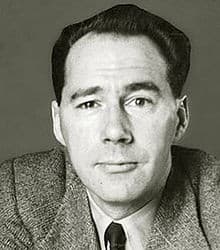
John Wyndham Parkes Lucas Beynon Harris was an English science fiction writer best known for his works published under the pen name John Wyndham, although he also used other combinations of his names, such as John Beynon and Lucas Parkes. Some of his works were set in post-apocalyptic landscapes. His best known works include The Day of the Triffids (1951), filmed in 1962, and The Midwich Cuckoos (1957), which was filmed in 1960 as Village of the Damned, in 1995 under the same title, and again in 2022 in Sky Max under its original title.
Similar books
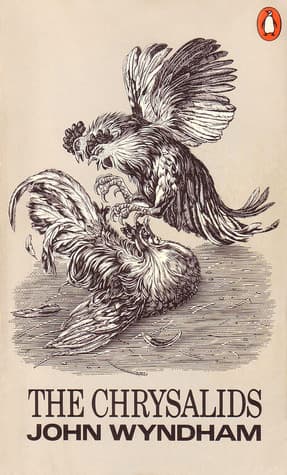
- The Chrysalids
John Wyndham
3.9 (43k) average on GoodreadsFantasyExplores post-apocalyptic themes and societal adaptation in a world altered by catastrophe.
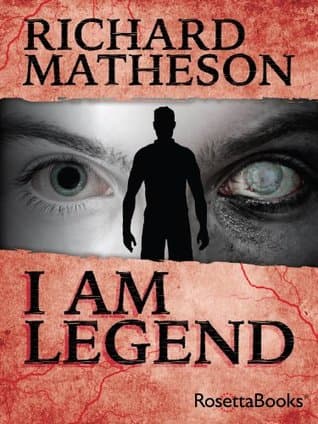
- I Am Legend
Richard Matheson
4.1 (96k) average on GoodreadsFantasyFeatures a lone survivor navigating a world overrun by a terrifying new species, with a focus on isolation and adaptation.
- The Road
Cormac McCarthy
4.0 (716k) average on GoodreadsScience FictionDepicts a desolate, post-apocalyptic world and the struggle for survival, though 'The Day of the Triffids' has a more direct external threat.
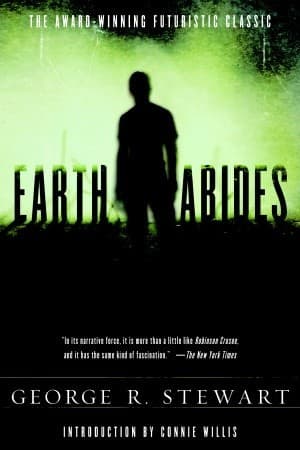
- Earth Abides
George R. Stewart
4.0 (24k) average on GoodreadsFantasyThe Day of the Triffids and Earth Abides both explore the aftermath of a global catastrophe that decimates humanity, leaving a small remnant. However, Stewart's novel, published earlier in 1949, focuses more on the long-term societal regression and the challenges of maintaining knowledge and civilization across generations, with the protagonist, Isherwood Williams, attempting to preserve human intellect. Wyndham's novel, while also dealing with rebuilding, introduces an active, intelligent biological threat (the triffids) that demands constant vigilance and shapes the immediate strategies for survival and community formation, a element absent in Earth Abides' more passive, disease-driven apocalypse.
- Harry Potter and the Sorcerer's Stone
J.K. Rowling
4.5 (7M) average on GoodreadsFantasyRescued from a miserable life under the stairs, an orphaned boy discovers he's a wizard destined for a magical school, where he uncovers a dangerous secret tied to the dark wizard who murdered his parents.
- The Hunger Games
Suzanne Collins
4.3 (6.4M) average on GoodreadsFantasyIn a future where children fight to the death on live television, Katniss Everdeen volunteers for the arena, turning a death sentence into a fight for survival and a spark of rebellion.



Enjoyed the summary?
A summary gives you the shape of the book. The book itself has the detail, the examples and the voice.
Find The Day of the Triffids on AmazonAs an Amazon Associate, BookBrief earns from qualifying purchases. How we're funded