

Synopsis
Covers the whole plot, including the ending.
- Difficulty
- Hard
- Pacing
- Variable
- Mood
- Epic, Scientific, Challenging, Hopeful, Bleak
- Read it if
- You love hard science fiction, epic scope, detailed world-building, and exploring the future of humanity after a global catastrophe. Fans of 'The Martian' or 'Project Hail Mary' looking for a much grander scale will enjoy this.
- Skip it if
- You prefer character-driven stories over plot and scientific detail, or are put off by a slow burn and extensive technical explanations.
Seveneves Plot Summary
Covers the whole plot, including the ending.
The Moon Shatters and Humanity's Countdown Begins
On a normal day, the Moon suddenly shatters into seven major pieces, an event called the 'Agent.' Dr. Dubois Harris, an astrophysicist and TV personality, quickly sees the coming danger: in two years, the fragments will start colliding and pulverizing each other, creating a 'Hard Rain' of meteoroids that will make Earth's surface unlivable for thousands of years. This apocalyptic forecast causes global panic and an international effort to save humanity by launching as many people and resources as possible into orbit. The International Space Station (ISS), renamed 'Cradle,' becomes the main point for this desperate escape, overseen by characters like Dinah MacQuarie, a robotics engineer, and Commander Ivy Xiao, the ISS leader.
The Mass Exodus and Building the Cloud Ark
In the two frantic years before the Hard Rain, humanity achieves a huge feat of engineering and cooperation. Thousands of launches deliver prefabricated modules, supplies, and chosen 'Arkies' (those selected for space) to the growing orbital habitat, which becomes a complex structure called the 'Cloud Ark.' Dinah MacQuarie is key in designing and putting in place the robotic systems for construction, while Moira Crewe, a geneticist, focuses on creating a viable human gene pool. Political tensions, lack of resources, and huge logistical problems constantly threaten the mission's success, but the shared goal of survival drives the project forward despite huge obstacles.
The Hard Rain and Earth's Devastation
As the two-year deadline nears, the Moon fragments begin their destructive fall. The Hard Rain starts, turning Earth into a fiery inferno. The Cloud Ark, now a sprawling but fragile habitat, must cut all ties with the surface. Commander Ivy Xiao, with help from Dinah and other important personnel, manages the final closure and isolation of the Ark. The survivors watch in horror as their home planet is destroyed by fire and impacts, knowing that returning is no longer possible. The remaining population of the Cloud Ark, a diverse but limited group, now faces the challenge of long-term survival in the harsh vacuum of space, with limited resources and a quickly shrinking population.
Political Strife and the Great Dispersion
After the Hard Rain, the Cloud Ark faces severe internal conflict. Resources become very scarce, especially breathable air and water. Political groups form, with figures like President Julia Blum supporting different survival plans. A major crisis happens when a rogue group, the 'Red-Handed,' tries to take control of vital resources, leading to violence and more division. To ensure the long-term survival of at least some humanity, a drastic plan is put into action: the 'Great Dispersion.' The Cloud Ark is intentionally broken apart, with smaller 'Arklet' vessels, each carrying a limited number of people and resources, sent on different paths to reduce the risk of one disaster wiping out everyone. This desperate measure further reduces the already small human population.
The Seven Eves and the Race Against Extinction
After the Great Dispersion and continued losses, the human population shrinks to a critical point. Through a series of tragic events, including sabotage and accidents, only a few women remain fertile and able to continue the species. Dr. Moira Crewe, the geneticist, takes on the huge task of ensuring genetic diversity from this tiny group. In the end, seven women are identified as the 'Seven Eves': Dinah, Ivy, Moira, Aïda, Tekla, Camilla, and Julia. These women, each with unique skills and genetic traits, become the sole ancestors of all future humanity. They must rebuild the species through a strict breeding program while living a precarious existence in orbit.
Five Thousand Years Later: The Return to Earth
Five thousand years have passed. The descendants of the Seven Eves, organized into seven distinct 'races' (each named after their Eve), now number three billion people living in a huge, interconnected orbital habitat called 'New Earth.' Earth itself has changed dramatically; the Hard Rain created a new, dense atmosphere and a superheated, chaotic surface. The 'Spacers,' as orbital humanity is now known, have developed advanced technology and societal structures. The main goal of this new civilization is to return to Earth, now called 'Cradle,' and reclaim their ancestral home. A reconnaissance mission, led by characters like Kath Two and Hakone, is sent to check the planet's habitability and prepare for large-scale colonization.
The Diggers and the Swarm
The reconnaissance team, including Kath Two and her companion, finds Earth a very different place. The surface has a subterranean ecosystem of 'Diggers,' huge, worm-like creatures that have evolved to live in the hot, dense atmosphere. Above ground, they find the 'Swarm,' a complex, self-organizing cloud of microscopic organisms that is a new form of atmospheric life. The Diggers and the Swarm are both threats and opportunities for the returning Spacers. The Spacers realize that Earth's new environment needs completely new ways to survive and colonize, forcing them to adapt their advanced technology and understanding of life.
The Search for the Lost Arkies
During their exploration, the Spacers find clues that not all humanity died in the Hard Rain. They find signs of a group that managed to survive on Earth's surface, adapting to the disaster. This discovery, centered around the 'Cleft'—a huge, protected canyon—challenges the Spacers' long-held belief that they were the only survivors. The existence of these 'Diggers' (not to be confused with the worm-like creatures) presents a big ethical and existential problem for the Spacers. The mission changes from just colonization to understanding and possibly reuniting with this lost branch of humanity, whose existence could change what it means to be human.
Contact and Cultural Clash
The Spacers eventually make direct contact with the descendants of the Earth-bound survivors, whom they also call 'Diggers' (a term that applies to both the subterranean creatures and these humans). These Earth-Diggers have evolved into a distinct society, physically and culturally different from the Spacers, adapted to living underground and processing Earth's unique environment. The first interactions are full of tension and misunderstanding, as both groups try to understand the other's existence and history. The Spacers, used to their technologically advanced and highly structured orbital society, find themselves challenged by the Diggers' more primal, yet resilient, way of life.
Reconciliation and the Future of Humanity
Despite initial conflicts, the Spacers and the Earth-Diggers slowly begin to bridge their differences. The Spacers, led by individuals like Kath Two, learn about the Diggers' cleverness in surviving Earth's harsh conditions, while the Diggers gain access to the Spacers' advanced knowledge and technology. The discovery of shared ancestry through genetic markers helps create a sense of unity. The ultimate goal becomes not just the colonization of Earth by the Spacers, but the integration and mutual understanding of both branches of humanity. The novel ends with the hopeful idea of a unified human future, with diverse societies coexisting and thriving on a transformed Earth and in orbit, showing humanity's lasting ability to adapt and survive.
Principal Figures
Dubois Harris (Doob)
Supporting
Astrophysicist and media personality who first predicts the Hard Rain.
Doob Harris is a brilliant astrophysicist and a charismatic media figure who becomes the face of the impending lunar catastrophe. His ability to explain complex scientific concepts to the public makes him instrumental in galvanizing global action. While not directly involved in the Cloud Ark's construction, his initial calculations and warnings set the entire plot in motion. He is a pragmatic and somewhat cynical character, but deeply committed to humanity's survival, even if it means acknowledging the direst outcomes. He ultimately chooses to remain on Earth, accepting his fate.
Relationships: Ivy Xiao (professional acquaintance, shares scientific understanding); Dinah MacQuarie (professional acquaintance, shares scientific understanding)
Dinah MacQuarie
Protagonist
Robotics engineer crucial to the Cloud Ark's construction and one of the Seven Eves.
Dinah is a highly skilled robotics engineer, indispensable to the rapid construction and maintenance of the Cloud Ark. Her practical ingenuity and problem-solving abilities are vital for humanity's survival in orbit. She is resourceful, resilient, and possesses a strong moral compass. Dinah is one of the original 'Arkies' and later becomes one of the Seven Eves, specifically the progenitor of the 'Dinans' race. Her journey is one of continuous adaptation and leadership, facing immense personal loss and the weight of species survival.
Relationships: Ivy Xiao (close colleague and friend); Moira Crewe (colleague, eventually co-Eve); Tekla Alekseyevna (rival/colleague, eventually co-Eve)
Ivy Xiao
Protagonist
Commander of the ISS/Cradle and one of the Seven Eves.
Ivy Xiao is the calm, decisive, and highly capable commander of the International Space Station (ISS), which becomes the 'Cradle' of humanity. Her leadership is critical in managing the chaotic influx of people and resources, and in maintaining order during the early, tumultuous days of the Cloud Ark. Ivy is a pragmatic and disciplined leader, often making difficult choices for the greater good. She is another of the Seven Eves, the progenitor of the 'Ivvies' race, known for their strong leadership and organizational skills in the future.
Relationships: Dinah MacQuarie (close colleague and friend); Julia Blum (political rival, eventually co-Eve)
Moira Crewe
Supporting
Geneticist responsible for establishing humanity's future gene pool and one of the Seven Eves.
Moira Crewe is the brilliant and somewhat detached geneticist tasked with the monumental responsibility of preserving human genetic diversity. She is pragmatic and focused on the scientific aspects of survival, often clashing with others over ethical considerations. Moira's expertise is crucial in the post-dispersion phase, as she meticulously selects and manages the genetic material of the remaining survivors, ultimately identifying and mentoring the Seven Eves. She herself becomes an Eve, the progenitor of the 'Moirans' race, known for their scientific and intellectual prowess.
Relationships: Dinah MacQuarie (colleague, eventually co-Eve); Julia Blum (political opposition, eventually co-Eve)
Julia Blum
Antagonist/Supporting
President of the 'Arkies' and one of the Seven Eves, known for her political acumen.
Julia Blum is a shrewd and ambitious politician who becomes a prominent leader among the Arkies. She is highly skilled in rhetoric and manipulation, often prioritizing political power and public perception over purely scientific or ethical considerations. Her actions sometimes create conflict and division within the Cloud Ark, particularly with Ivy Xiao. Despite her controversial methods, her resilience and ability to command loyalty are undeniable. She becomes one of the Seven Eves, the progenitor of the 'Julians' race, characterized by their political savvy and diplomatic skills.
Relationships: Ivy Xiao (political rival); Moira Crewe (scientific opposition)
Tekla Alekseyevna
Supporting
Russian cosmonaut and one of the Seven Eves, known for her physical prowess.
Tekla is a highly skilled and physically capable Russian cosmonaut, embodying strength and resilience. She is pragmatic, direct, and possesses a strong survival instinct. Tekla's expertise in space operations and her unflappable demeanor are vital during the Cloud Ark's early struggles. While initially a minor character, her physical and mental toughness make her one of the chosen Seven Eves, progenitor of the 'Teklans' race, known for their physical strength, engineering skills, and adventurous spirit.
Relationships: Dinah MacQuarie (colleague, sometimes rival); Ivy Xiao (commander/subordinate)
Kath Two
Protagonist
A 'Dinah' descendant and leader of the expedition back to Earth 5,000 years later.
Kath Two is a key character in the second part of the novel, set 5,000 years after the Hard Rain. She is a direct descendant of Dinah MacQuarie and embodies the ingenuity and resourcefulness of her ancestral Eve. Kath Two is a skilled engineer, explorer, and diplomat, leading the complex mission to re-colonize Earth. She is curious, open-minded, and driven by a desire to understand Earth's transformation and the potential for human reunification. Her leadership is crucial in bridging the gap between the orbital Spacers and the Earth-bound Diggers.
Relationships: Hakone (fellow expedition member, close colleague); Ymir (Earth-Digger contact, cultural bridge)
Hakone
Supporting
A 'Tekla' descendant and member of the Earth reconnaissance mission.
Hakone is a descendant of Tekla and a member of Kath Two's expedition to Earth. He possesses the characteristic physical strength and resilience of the Teklans, making him well-suited for the harsh conditions of the transformed planet. Hakone is a loyal and capable team member, providing physical support and practical skills during the exploration. He represents the adventurous and adaptive spirit of his race, contributing significantly to the success of the mission and the understanding of Earth's new environment.
Relationships: Kath Two (expedition leader/colleague); Ymir (Earth-Digger contact)
Ymir
Supporting
A leader of the Earth-bound 'Diggers' encountered by the Spacers.
Ymir is a significant figure among the Earth-bound 'Diggers' (the human survivors on Earth). He represents the ingenuity and adaptation of this lost branch of humanity, who have evolved a unique culture and way of life suited to the post-Hard Rain world. Ymir is initially cautious and distrustful of the Spacers but eventually becomes a key intermediary between the two groups. His understanding of Earth's new ecosystems and his people's history is invaluable to the Spacers, helping to bridge the vast cultural and technological divide.
Relationships: Kath Two (primary contact, cultural bridge); Hakone (contact during exploration)
Themes & Insights
Humanity's Resilience and Adaptability
The main theme of 'Seveneves' is humanity's great ability to survive and adapt in the face of huge catastrophe. From the initial rush to build the Cloud Ark, through the Great Dispersion, to the genetic bottleneck of the Seven Eves, and finally to the re-colonization of a radically changed Earth, the story consistently shows human ingenuity, determination, and the will to live. The evolution of the seven distinct races and their ability to thrive in different environments (orbital habitats and subterranean Earth) further emphasizes this theme. It shows that humanity can not only last but also do well in the most extreme conditions.
“The human race, after all, was not a race of angels. It was a race of survivors.”
The Role of Science and Technology in Survival
Science and technology are both the reason for understanding the coming doom and the main way to survive. Dr. Dubois Harris's astrophysical calculations warn of the Hard Rain, while Dinah MacQuarie's robotics, Moira Crewe's genetics, and Ivy Xiao's engineering leadership are essential for building and maintaining the Cloud Ark. In the second part, advanced Spacer technology allows the return to Earth and interaction with its new ecosystems. The book celebrates scientific inquiry and technological innovation as necessary tools for overcoming existential threats, showing that knowledge is power when facing oblivion.
“Science is the only way out of this. Science is the only way in.”
Political and Social Division vs. Unity
Even when facing species-level extinction, human political and social divisions continue. The Cloud Ark is troubled by factionalism, resource disputes, and power struggles, shown by President Julia Blum's plans and the 'Red-Handed' rebellion. These conflicts lead to more losses and make the survival mission harder. However, the story also shows moments of cooperation and unity, such as the initial global effort to build the Ark and the eventual reconciliation between the orbital Spacers and the Earth-bound Diggers. The book explores the constant tension between humanity's destructive tendencies and its ability for collective action.
“The greatest danger wasn't the Hard Rain itself, but the human tendency to turn on each other when the chips were down.”
Identity, Evolution, and the Definition of 'Human'
The novel looks deeply at what it means to be human over a long time. The Seven Eves and their genetic diversification into distinct 'races' bring up questions about identity, ancestry, and the future of human evolution. The physical and cultural differences between the orbital Spacers and the subterranean Earth-Diggers show how environment shapes humanity. The eventual reunification forces both groups to confront their shared origins and different paths, challenging their definitions of 'humanity' and suggesting a broader, more inclusive understanding of the species. The book proposes that humanity is not static but a constantly evolving entity.
“We are not the same people who left. We are what we became.”
The Cycle of Destruction and Rebirth
The story is built around a grand cycle of destruction and rebirth. The shattering of the Moon and the Hard Rain are a catastrophic end, wiping out terrestrial life. However, this destruction makes way for a new beginning in orbit, and eventually, a transformed Earth. The planet itself undergoes a geological and atmospheric rebirth, creating new ecosystems. Humanity, too, experiences a rebirth through the Seven Eves, leading to a new civilization that eventually returns to a renewed home. This cyclical pattern shows that even from total devastation, new life and possibilities can emerge.
“The End of the World was just the beginning of the next one.”
Plot Devices & Literary Techniques
The Hard Rain
The central apocalyptic event that drives the entire plot.
The Hard Rain is the meteoroid bombardment of Earth caused by the Moon's fragmentation. It serves as the ultimate ticking clock, forcing humanity's immediate and desperate actions in the first part of the book. It's not just a backdrop but an active force, shaping the environment, determining survival chances, and explaining Earth's transformed state in the second part. The inevitability and severity of the Hard Rain establish the high stakes and constant pressure on the characters, justifying the extreme measures taken for humanity's survival.
Dual Timeline / Two-Part Structure
Splits the narrative into the immediate catastrophe and a future aftermath.
The novel is distinctly divided into two main parts: the first covers the two years leading up to the Hard Rain and the subsequent struggle for orbital survival, ending with the establishment of the Seven Eves. The second part jumps 5,000 years into the future, focusing on the descendants' return to Earth. This dual timeline allows Stephenson to explore both the immediate, frantic response to an apocalypse and the long-term societal, evolutionary, and environmental consequences, offering a comprehensive vision of humanity's past, present, and distant future.
The Seven Eves
A genetic bottleneck and the matriarchs of future humanity.
The Seven Eves are the seven women who, through a combination of chance, skill, and genetic engineering, become the sole progenitors of all future humanity. This device creates a profound genetic bottleneck, emphasizing the fragility of species survival and the immense responsibility placed upon these individuals. It serves as a powerful symbol of rebirth and the arbitrary nature of survival, while also providing a clear ancestral lineage for the distinct 'races' that emerge 5,000 years later, allowing for exploration of genetic and cultural evolution.
The Cloud Ark / New Earth
The orbital habitats representing humanity's temporary and then permanent home.
The Cloud Ark is the initial, hastily assembled orbital habitat built to escape the Hard Rain. It symbolizes humanity's desperate ingenuity and collective will to survive. Over 5,000 years, it evolves into 'New Earth', a vast, complex, and sustainable orbital civilization. These habitats serve as both a physical refuge and a crucible for human evolution, showcasing the development of advanced technology and new societal structures in an extraterrestrial environment. They are a testament to humanity's ability to create a new home when the old one is lost.
The 'Diggers' (Earth-bound humans)
A parallel branch of humanity that evolved independently on Earth.
The discovery of the Earth-bound 'Diggers' in the second part of the novel is a significant plot device. It challenges the Spacers' assumption that they are the sole survivors of humanity and introduces a fascinating 'what if' scenario: how would humans evolve if they stayed on a ravaged Earth? This device creates narrative tension, provides a foil for the orbital Spacers, and allows for exploration of extreme adaptation, cultural divergence, and the ultimate question of what constitutes humanity when faced with different evolutionary paths.
Seveneves Quotes
“The moon blew up without warning and for no apparent reason.”
“We are all of us, in a sense, orphans.”
“The hard part is not building a spaceship. The hard part is building a spaceship that can keep people alive for five thousand years.”
“In space, no one can hear you scream, but they can sure as hell see you on radar.”
“The only thing more dangerous than a man with a gun is a man with a clipboard.”
“Evolution is not a ladder; it's a bush.”
“We are the ark. We are the lifeboat. We are the future.”
“The universe doesn't care about your feelings. It just is.”
“In the long run, we are all dead. But in the very long run, we might not be.”
“A leader is someone who can make hard decisions and live with the consequences.”
“The past is a foreign country; they do things differently there.”
“Survival is not a given. It is a choice, made every day.”
“We are not just saving ourselves. We are saving the idea of humanity.”
“In space, you learn to appreciate the simple things: a breath of air, a sip of water, a moment of silence.”
Quiz
10 questions on the plot and the characters. Each answer comes with a short explanation.
Question 1
What celestial event triggers the apocalyptic scenario at the beginning of 'Seveneves'?
- A massive solar flare
- The Moon breaking apart into fragments
- An asteroid impact on Earth
- A gamma-ray burst from a distant star
Show answer
B. The Moon breaking apart into fragments The novel begins with the unexplained fragmentation of the Moon into seven large pieces, which will eventually rain down on Earth in a 'Hard Rain' of debris, rendering the planet uninhabitable for thousands of years.
Question 2
What is the name of the orbital habitat where humanity attempts to survive after the Moon's destruction?
- The Ark
- Cloud Ark
- Orbital Haven
- Space Colony Alpha
Show answer
B. Cloud Ark The 'Cloud Ark' is the network of space stations, habitats, and spacecraft assembled in orbit to preserve human civilization after Earth becomes uninhabitable due to the lunar debris.
Question 3
Which character is a robotics expert and key figure in the early efforts to establish the Cloud Ark?
- Dinah MacQuarie
- Julia Bliss Flaherty
- Aïda
- Tekla
Show answer
A. Dinah MacQuarie Dinah MacQuarie is a mining engineer and robotics specialist who plays a crucial role in operating the robotic 'swarm' to build and maintain the Cloud Ark infrastructure.
Question 4
What major conflict arises among the survivors in the Cloud Ark that drastically reduces their numbers?
- A rebellion led by military factions
- A schism between scientists and politicians
- An alien invasion of the habitat
- A pandemic outbreak in zero-gravity
Show answer
B. A schism between scientists and politicians Tensions escalate between the scientific leaders (like Dinah and Ivy) and political figures (like Julia), leading to a violent conflict known as the 'Cleft' or schism, which results in the deaths of most survivors, leaving only seven women.
Question 5
How many women survive the schism to become the 'Eves' who repopulate humanity?
- 5
- 7
- 10
- 12
Show answer
B. 7 After the conflict, only seven women survive: Dinah, Tekla, Aïda, Camila, Julia, Ivy, and Moira. They use genetic engineering to found seven distinct races of humans, giving the book its title 'Seveneves'.
Question 6
What technology do the Eves use to ensure genetic diversity and adapt their descendants to space?
- Cloning
- Selective breeding programs
- Genetic engineering and epigenetics
- Cryogenic preservation
Show answer
C. Genetic engineering and epigenetics The Eves employ advanced genetic engineering, including epigenetic modifications, to create seven distinct races of humans, each with specialized traits suited for survival in space and later on a transformed Earth.
Question 7
Five thousand years later, what is the primary mission of the descendants when they return to Earth?
- To recolonize Earth and rebuild civilization
- To retrieve ancient technology left behind
- To study the extinct native wildlife
- To confront an alien species that has taken over
Show answer
A. To recolonize Earth and rebuild civilization In the third part of the book, set 5,000 years after the apocalypse, the descendants of the Eves—now numbering in the billions—send an expedition to Earth to assess its habitability and potentially recolonize the transformed planet.
Question 8
Which of the seven races is known for their physical strength and combat prowess, descended from Tekla?
- The Diggers
- The Spacers
- The Teklans
- The Julians
Show answer
C. The Teklans The Teklans are one of the seven races, descended from Tekla, and are characterized by their martial skills, discipline, and physical robustness, often serving as soldiers or enforcers.
Question 9
What is the 'Hard Rain' in the context of the novel?
- A prolonged meteor shower from the asteroid belt
- The continuous bombardment of Earth by lunar debris
- A catastrophic flooding event after the apocalypse
- A solar storm that disrupts space communications
Show answer
B. The continuous bombardment of Earth by lunar debris The 'Hard Rain' refers to the millennia-long period during which fragments of the destroyed Moon rain down on Earth, heating the atmosphere and surface to uninhabitable levels, a central apocalyptic event in the book.
Question 10
Which theme is most prominently explored through the conflict between the Eves and their differing approaches to survival?
- The inevitability of human extinction
- The tension between individual freedom and collective survival
- The superiority of technological solutions over natural ones
- The ethical implications of artificial intelligence
Show answer
B. The tension between individual freedom and collective survival The schism and the Eves' later genetic engineering highlight the ongoing struggle between personal autonomy and the needs of the group, a key theme in the book as humanity faces existential threats.
Seveneves FAQ
What is 'Seveneves' about?
'Seveneves' is a two-part epic about humanity's survival after the Moon explodes, rendering Earth uninhabitable within two years. The first part follows the frantic effort to establish a space-based ark using the International Space Station, while the second part jumps 5,000 years later to show how seven genetically distinct races descended from the survivors return to a transformed Earth.
Why should I read 'Seveneves'?
You should read 'Seveneves' for its meticulously researched hard science fiction, gripping survival narrative, and profound exploration of human resilience and genetic legacy. Stephenson combines orbital mechanics, sociology, and speculative evolution into a sweeping saga that examines how societies form and adapt under extreme pressure.
What is the background/setting of 'Seveneves'?
The novel begins in the near future when an unknown agent (the 'Agent') shatters the Moon into seven large fragments. This triggers a 'Hard Rain' of lunar debris that will sterilize Earth's surface within two years, forcing humanity to evacuate to space. The primary setting shifts from Earth to the International Space Station and various spacecraft, then leaps 5,000 years ahead to a terraformed Earth with new continents and ecosystems.
What are the most memorable quotes?
Key quotes include President Julia Bliss Flaherty's 'The human race is going to become extinct unless we can get off this rock,' encapsulating the survival imperative, and Doc Dubois's observation that 'In space, everyone can hear you scheme,' highlighting the political tensions. The opening line, 'The moon blew up without warning and for no apparent reason,' immediately establishes the catastrophic premise.
What writing style does the author use?
Neal Stephenson employs a dense, technical prose style rich with scientific and engineering details, particularly in the first part depicting the space ark's construction. The narrative shifts to a more exploratory tone in the second part, blending anthropological world-building with adventure as the Seven Eves' descendants investigate Earth. Stephenson's signature digressions into orbital mechanics, genetics, and sociology are prevalent throughout.
What minor details add significant meaning?
The 'Izzy' nickname for the International Space Station (ISS) humanizes the ark, while the 'Cloud Ark' concept symbolizes hope. The meticulous cataloging of supplies and life-support systems underscores the fragility of survival. In Part 2, the 'Diggers' race's subterranean adaptations and the 'Spacers' reliance on technology reflect how the original survivors' traits were genetically amplified over millennia.
What are some subtle foreshadowing moments?
Early tensions between characters like Dinah and Ivy foreshadow the eventual political schism that leads to the 'Battle of the Arks.' References to genetic diversity and embryo banks hint at the Seven Eves' future role. The 'Agent's' mysterious nature and the moon's fragmentation subtly prefigure the cosmic-scale changes in Part 2, where Earth is reshaped by millennia of bombardment.
What unexpected character connections exist?
Dinah MacQuarie, a miner-turned-astronaut, becomes crucial to the ark's survival through her robotics expertise, linking the novel's practical and philosophical themes. Doc Dubois, a scientist, indirectly influences the genetic legacy by advising on population ethics. The Seven Eves themselves—survivors like Kath Two, Moira, and others—are connected through their shared trauma and become the matriarchs of all future humanity.
What are unspoken character motivations?
Ivy Xiao's rigid leadership stems from a deep-seated fear of chaos, driving her authoritarian measures. Sean Probst's entrepreneurial zeal masks a desire for legacy beyond Earth. In Part 2, characters like Ty and Kathree are motivated by unspoken curiosity about their origins and a latent drive to reclaim Earth, reflecting ancestral memories of loss.
What psychological complexities do characters exhibit?
Characters grapple with survivor's guilt, such as Dinah mourning Earth while focusing on technical tasks. The political rift between Ivy's faction and the 'Red' rebels showcases how stress exacerbates ideological divides. In Part 2, the genetically distinct races exhibit amplified traits—like the Spacers' social rigidity or the Diggers' claustrophilia—illustrating how trauma shaped human evolution.
What are the major emotional turning points?
The 'Hard Rain' beginning marks a shift from panic to desperate action. The 'Battle of the Arks' is a traumatic climax where conflict reduces survivors to a handful. The selection of the Seven Eves is a poignant moment of hope and sacrifice. In Part 2, the discovery of Earth's new habitability rekindles a sense of homecoming, blending awe with melancholy for the lost past.
How do relationship dynamics evolve?
Early collaborations on the ISS give way to factionalism under stress, exemplified by Ivy and Dinah's strained alliance. Romantic bonds, like between Dinah and Tekla, emerge as anchors amid chaos. In Part 2, inter-race relationships among the descendants—such as between Ty (a Spacer) and Kathree (a Digger)—mirror ancient divisions while fostering new unity during the Earth mission.
Which parts remain ambiguous or open-ended?
The cause of the Moon's destruction (the 'Agent') is never explained, leaving it as a cosmic mystery. The long-term societal outcomes for the Seven Races after returning to Earth are not detailed, inviting speculation. The ethical implications of the genetic modifications that created the races are debated but not resolved, reflecting ongoing questions about human identity.
What are controversial scenes or decisions?
The 'Culling' of the space population during the Battle of the Arks sparks debate over utilitarianism versus individual rights. Ivy's authoritarian rule and the decision to isolate the 'Reds' are criticized as draconian. The genetic engineering by the Seven Eves, which creates distinct races with tailored traits, raises ethical questions about eugenics and natural evolution.
'Seveneves' ending explained: how it ends & what it means
The novel ends with the descendants of the Seven Eves—now seven distinct races—successfully returning to a transformed Earth, exploring its new ecosystems and remnants of the old world. This conclusion symbolizes humanity's resilience and adaptability, suggesting that survival requires both technological ingenuity and genetic diversification. It leaves open whether they will repeat past mistakes or forge a new society, emphasizing themes of legacy and renewal.
What philosophical ideas are explored in 'Seveneves'?
Stephenson delves into themes of existential risk, asking what it means to be human when facing extinction. The novel examines utilitarianism through life-and-death decisions in space, and in Part 2, it explores genetic determinism versus free will via the Seven Races. Ideas about memory, legacy, and the interplay between technology and biology are central, reflecting on how civilizations preserve knowledge across millennia.
How does the two-part structure enhance the story?
The abrupt jump from the immediate survival crisis to 5,000 years later allows Stephenson to contrast short-term desperation with long-term evolution. Part 1 focuses on gritty, technical survival, while Part 2 explores the anthropological and genetic consequences, showing how the survivors' actions ripple through history. This structure emphasizes scale, connecting individual choices to species-wide outcomes.
What role does technology play in the narrative?
Technology is both a savior and a source of conflict. In Part 1, advancements in robotics, spacecraft, and life support enable the ark, but also lead to dependencies that fuel political strife. In Part 2, the Spacers' high-tech culture contrasts with the Diggers' low-tech adaptation, illustrating how technology shapes societal values. The 'Eye' network and genetic tech underscore themes of information preservation and biological engineering.
How does Stephenson handle scientific accuracy?
Stephenson meticulously details orbital mechanics, spacecraft design, and survival logistics, grounding the story in plausible hard science. He consults experts to depict realistic challenges like radiation shielding and resource management. This accuracy makes the speculative elements—like genetic races and terraformed Earth—more compelling, blending rigorous science with imaginative extrapolation.
What cultural or historical parallels are drawn?
The space ark's political divisions echo historical schisms like civil wars or colonial conflicts. The Seven Races' return to Earth parallels myths of diaspora and homecoming, such as the Exodus or ancestral migration stories. The novel also references real-space programs (e.g., the ISS) and ethical debates from events like the Holocaust or eugenics movements, adding depth to its speculative framework.
About the author
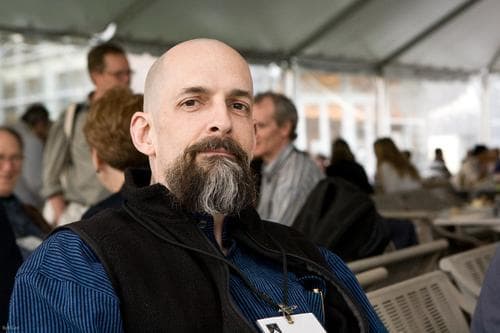
Neal Town Stephenson is an American writer known for his works of speculative fiction. His novels have been categorized as science fiction, historical fiction, cyberpunk, postcyberpunk, and baroque.
Similar books
- The Martian
Andy Weir
4.4 (817k) average on GoodreadsThrillerShares a focus on scientific problem-solving and survival in extreme environments.
- Red Mars
Kim Stanley Robinson
3.9 (67k) average on GoodreadsFantasyFeatures detailed terraforming, colonization, and the political complexities of human expansion into space.
- Station Eleven
Emily St. John Mandel
4.0 (322k) average on GoodreadsLiterary FictionBoth novels depict post-apocalyptic futures after a global catastrophe. While Station Eleven focuses more on the survival of art, culture, and human connection in a world stripped bare, Seveneves primarily emphasizes scientific, engineering, and logistical solutions for humanity's physical survival and evolution. Mandel's work is more character-driven and reflective, whereas Stephenson's is driven by scientific problem-solving and large-scale societal transformation.
- Harry Potter and the Sorcerer's Stone
J.K. Rowling
4.5 (7M) average on GoodreadsFantasyRescued from a miserable life under the stairs, an orphaned boy discovers he's a wizard destined for a magical school, where he uncovers a dangerous secret tied to the dark wizard who murdered his parents.
- The Hunger Games
Suzanne Collins
4.3 (6.4M) average on GoodreadsFantasyIn a future where children fight to the death on live television, Katniss Everdeen volunteers for the arena, turning a death sentence into a fight for survival and a spark of rebellion.
- 1984
George Orwell
4.2 (3.1M) average on GoodreadsPoliticsIn a future where surveillance and thought control are absolute, a man's search for truth clashes with the Party, showing that hope can be a form of rebellion.





Enjoyed the summary?
A summary gives you the shape of the book. The book itself has the detail, the examples and the voice.
Find Seveneves on AmazonAs an Amazon Associate, BookBrief earns from qualifying purchases. How we're funded