
Synopsis
Covers the whole plot, including the ending.
- Difficulty
- Medium
- Pacing
- Fast
- Mood
- Gritty, Suspenseful, Action-packed, Witty
- Read it if
- You enjoy urban fantasy with a strong detective noir feel, witty banter, and a morally gray wizard protagonist who frequently finds himself in over his head.
- Skip it if
- You prefer high fantasy epics, lighthearted stories, or dislike graphic violence and morally ambiguous characters.
Fool Moon Plot Summary
Covers the whole plot, including the ending.
A Gruesome Murder and a New Client
Harry Dresden, Chicago's only professional wizard, struggles financially when Lieutenant Karrin Murphy of the Special Investigations (SI) unit calls him to a murder scene. The victim, 'Spider' Sid, a petty criminal, has been torn apart, seemingly by a large animal, with strange claw marks. Murphy's boss, Captain Carmichael, wants the case solved quickly, as it is the latest in a series of similar killings. At the scene, Harry meets Tera West, a woman who claims to be a werewolf. She offers Harry money to find her missing brother, Harley MacFinn. She believes Harley is the killer, transforming against his will, and she wants Harry to help him before he kills again or is killed.
First Suspects and a Pack of Werewolves
Harry's investigation leads him to the Streetwolves, a biker gang known for aggressive behavior and rumored ties to the supernatural. He suspects they might be involved. He visits their hangout, a bar called 'The Pack,' where he confronts their leader, Alpha. Harry's presence is met with hostility. He quickly realizes that Alpha and his gang are werewolves, though a different, more controlled type than the killer. A tense standoff becomes a brutal fight. Harry barely escapes after using his magic to fight off the entire pack. He realizes there are multiple types of lycanthropes, which makes the case harder to understand.
A Second Attack and Police Scrutiny
Another victim, a Streetwolves member, is found murdered in a similar way to Sid. This makes Harry believe a true werewolf is involved, but it also puts him in a difficult spot with the police. Murphy's superiors, Captain Carmichael and FBI Agent Denton, become more suspicious of Harry, especially after he was seen at 'The Pack' just before the second murder. Denton, a serious agent, thinks Harry is either involved or hiding information. Harry's attempts to explain the supernatural are met with disbelief, further isolating him and Murphy from the official investigation.
The MacFinn Mansion and a Dark Ritual
Harry, with Murphy, visits Harley MacFinn's mansion. The house is rich but unsettling. Inside, they find evidence that Harley struggles with a werewolf curse, including restraints, torn furniture, and signs of a violent transformation. Harry also finds remnants of dark magic, a ritual circle, and symbols, suggesting Harley's condition is an induced curse, not just genetic. He realizes Harley is a 'lycanthrope,' a werewolf created through black magic, which explains the unique savagery. This points to a powerful dark wizard behind the curse, not just a natural event.
Confrontation with the Streetwolves and a Trap
Desperate for answers, Harry returns to 'The Pack' to confront Alpha and the Streetwolves again. He hopes to get their help or learn more about other lycanthropes in Chicago. However, the meeting quickly becomes a trap. The Streetwolves, under pressure or manipulation, try to capture Harry. It becomes clear that someone powerful is planning events, using the Streetwolves as pawns. Harry narrowly escapes another violent fight, realizing he is being hunted and that the dark wizard behind MacFinn's curse is actively trying to remove him from the investigation.
The FBI's Interrogation and Murphy's Loyalty
Following the rising violence and Harry's presence at crime scenes, FBI Agent Denton and Captain Carmichael bring Harry in for questioning. They accuse him of obstructing justice and possibly being involved in the murders. Harry, bound by the supernatural world's secrecy and unable to fully explain the magic without sounding crazy, struggles to defend himself. Murphy, despite her career being at risk, defends Harry, believing in his innocence and abilities. Their bond grows as Murphy defies her superiors, protecting Harry from wrongful arrest and letting him continue his investigation, though under close watch.
The Dark Wizard Revealed
Through magical investigation, deduction, and help from Bob, the skull-dwelling spirit of intellect, Harry identifies the dark wizard. It is Victor Sells, an ordinary local businessman and occult enthusiast, who has used black magic to create lycanthropes for his own purposes. Sells has experimented with different types of lycanthropy, including the 'loup-garou' curse he put on Harley MacFinn, and the 'hexenwulf' he uses to control the Streetwolves. Sells' motive is power and control; he sees his creations as weapons and tools. This changes the focus from just stopping a werewolf to confronting a dangerous human sorcerer.
The Confrontation at the Warehouse
Harry, Murphy, and SI officers track Victor Sells to a deserted warehouse district. Sells, knowing they are coming, has gathered his lycanthrope creations – the Streetwolves (hexenwulfs) and the tormented Harley MacFinn (loup-garou) – as well as his personal guards, a group of 'skinwalkers,' to protect himself. A chaotic battle starts. The Streetwolves, though unwilling, are forced to fight Harry and the police, while the savage loup-garou MacFinn rages indiscriminately. Harry uses his magic to protect Murphy and the officers, while trying to contain the various monstrous threats and reach Sells.
The Ritual and MacFinn's Sacrifice
Amidst the chaos, Victor Sells tries to complete a dark ritual to fully use the lycanthropes' power and gain more magical abilities. Harry confronts Sells directly, engaging in a magical duel. Meanwhile, Tera West arrives, trying to reach her brother, Harley. In a moment of clarity and pain, Harley MacFinn, still a loup-garou, recognizes his sister. In a tragic act, he lunges at Sells, disrupting the ritual and taking Sells down with him. Both Sells and MacFinn die in the struggle, ending the loup-garou curse and the dark wizard's control.
Aftermath and New Challenges
Afterward, the remaining Streetwolves are killed or captured. The police process the scene, struggling to understand the impossible events. Tera West, heartbroken by her brother's death, disappears. Agent Denton and Captain Carmichael, while still suspicious, acknowledge the extraordinary circumstances and Harry's role. However, Harry's actions, especially his use of magic, draw the attention of the White Council of Wizards, who are wary of his growing power and his involvement in mortal affairs. Harry also realizes that Sells' defeat has created a power vacuum in Chicago's supernatural underworld, suggesting future conflicts.
Principal Figures
Harry Dresden
Protagonist
Chicago's only professional wizard, struggling to make ends meet and solve supernatural crimes.
Harry Dresden is a private investigator and a wizard, the only one listed in the Chicago phone book. He's often sarcastic, quick-witted, and deeply committed to protecting the innocent, even if it means bending the rules of the White Council. He wields significant magical power, primarily elemental and force-based, and relies on his intellect and street smarts. Despite his gruff exterior, he has a strong moral compass and a deep sense of responsibility. He lives in a basement apartment and drives a beat-up old car, constantly battling financial woes and the skepticism of the mundane world.
Relationships: Karrin Murphy (Police liaison and trusted friend); Bob (Spirit of intellect and magical consultant); Tera West (Client and temporary ally); Harley MacFinn (Victim of a curse he tries to save); Victor Sells (Primary antagonist and dark wizard)
Karrin Murphy
Supporting
Head of SI, struggling to balance police procedure with the realities of the supernatural.
Lieutenant Karrin Murphy is the head of the Chicago Police Department's Special Investigations (SI) unit. She is small in stature but fierce, highly intelligent, and an excellent shot. Murphy is one of the few mundane individuals aware of the supernatural world and trusts Harry's expertise, often putting her career on the line to work with him. She struggles with the bureaucracy and skepticism of her superiors, particularly Captain Carmichael and Agent Denton, but her loyalty to Harry and her commitment to justice are unwavering. She is a pragmatist who, despite her initial disbelief, has come to accept the magical world.
Relationships: Harry Dresden (Professional partner and close friend); Captain Carmichael (Skeptical superior); Agent Denton (Antagonistic FBI agent)
Tera West
Supporting
Enigmatic werewolf seeking help for her cursed brother, Harley MacFinn.
Tera West is a striking, mysterious woman who hires Harry to find her missing brother. She reveals herself to be a 'loup-garou' – a natural werewolf – explaining that her family has a genetic predisposition to the condition, but they control their transformations. She is deeply concerned for Harley, who has been afflicted with a more savage, uncontrollable form of the curse. Tera is fiercely protective of her brother and her family's secrets, possessing an almost feral grace and strength. She is initially wary of Harry but becomes a desperate ally in the fight to save Harley, even as her own nature puts her at odds with human law.
Relationships: Harley MacFinn (Her cursed brother); Harry Dresden (Her hired investigator and ally)
Harley MacFinn
Supporting
The wealthy, cursed victim of a dark wizard, transforming into a savage loup-garou.
Harley MacFinn is Tera West's brother, a wealthy and reclusive man who has been afflicted with an uncontrollable loup-garou curse by Victor Sells. Unlike his sister, Harley's transformation is involuntary and agonizing, turning him into a monstrous, savage beast during the full moon. He is a tragic figure, desperately fighting against the curse that consumes him, leaving a trail of gruesome murders in its wake. Though his actions are horrific, he is not inherently evil, but a victim of dark magic, tormented by the loss of his humanity. His ultimate sacrifice is an act of redemption and love for his sister.
Relationships: Tera West (His sister, who tries to save him); Victor Sells (The dark wizard who cursed him)
Victor Sells
Antagonist
A dark wizard experimenting with lycanthropy and the creator of the loup-garou curse.
Victor Sells is the primary antagonist of 'Fool Moon.' He is a seemingly ordinary, unassuming man who is secretly a powerful dark wizard. Sells is obsessed with gaining power through black magic, particularly through the creation and control of various lycanthropes, including the hexenwulfs (Streetwolves) and the loup-garou (Harley MacFinn). He is manipulative, cruel, and without remorse, viewing his victims and creations as mere tools for his experiments. His ambition and disregard for life make him a formidable and dangerous foe, driven by a desire for ultimate magical dominion.
Relationships: Harley MacFinn (His cursed victim); The Streetwolves (His manipulated hexenwulf pawns); Harry Dresden (His magical opponent)
Agent Denton
Supporting
Skeptical FBI agent investigating the murders, suspicious of Harry Dresden.
Agent Denton is a no-nonsense FBI agent who takes over the federal investigation into the werewolf murders. He is highly intelligent, methodical, and completely rational, refusing to believe in anything outside of conventional police work. Denton quickly becomes suspicious of Harry Dresden, viewing him as a charlatan or, worse, a prime suspect due to his inexplicable presence at crime scenes and his unusual explanations. He represents the mundane world's inability to comprehend the supernatural, acting as an antagonist to Harry and Murphy by constantly trying to shut down their unorthodox methods and arrest Harry.
Relationships: Harry Dresden (His prime suspect and antagonist); Karrin Murphy (His police contact, whom he pressures)
Captain Carmichael
Supporting
Murphy's superior, pressured to solve the case and skeptical of Harry.
Captain Carmichael is Karrin Murphy's superior officer in the Chicago Police Department. He is a pragmatic and politically minded individual, more concerned with public perception and departmental efficiency than with delving into supernatural theories. He is highly skeptical of Harry Dresden and distrusts his involvement in police cases, often pressuring Murphy to cut ties with the wizard. Carmichael's role is to represent the institutional resistance to the supernatural, and his skepticism puts immense pressure on Murphy throughout the investigation, threatening her career if she continues to work with Harry.
Relationships: Karrin Murphy (His subordinate, whom he pressures); Harry Dresden (Someone he deeply distrusts)
Alpha
Supporting
Leader of the Streetwolves, a hexenwulf biker gang.
Alpha is the intimidating leader of the Streetwolves, a biker gang composed of hexenwulfs – a type of lycanthrope created through a less potent form of dark magic than the loup-garou. He is powerful, brutal, and fiercely loyal to his pack, but is also a pawn in Victor Sells' larger scheme. Alpha and his gang operate with a pack mentality, driven by aggression and a sense of territoriality. While they are dangerous, they are not inherently evil; they are manipulated and coerced by Sells, who holds power over them, forcing them into conflict with Harry.
Relationships: The Streetwolves (Leader of the pack); Victor Sells (His manipulator); Harry Dresden (His adversary)
Bob
Supporting
A skull-dwelling spirit of intellect, Harry's magical research assistant.
Bob is an air spirit of intellect bound to a human skull, residing in Harry's lab. He serves as Harry's primary source of magical knowledge, able to access vast amounts of information on spells, creatures, and rituals. Bob is often sarcastic, lecherous, and prone to complaining, but he is fiercely loyal to Harry and provides invaluable assistance in his investigations. He cannot leave Harry's lab without permission and is bound by magical laws, making him a powerful but confined ally. His dry wit and extensive knowledge are crucial to Harry's success in understanding the complex supernatural threats he faces.
Relationships: Harry Dresden (His master and friend)
Themes & Insights
The Nature of Monstrosity
The book explores what makes a 'monster,' comparing the natural, controlled lycanthropy of Tera West with the cursed, savage loup-garou of Harley MacFinn, and the manipulated hexenwulfs of the Streetwolves. It asks if monstrosity is inherent, a curse, or a choice. Victor Sells, the human dark wizard, is the true monster, as his deliberate cruelty and manipulation are more frightening than the animalistic rage of the transformed victims. Harry constantly deals with defining and confronting these different forms of evil.
“There are things in the world that are more monster than man. But there are also men who are more monster than anything else.”
Responsibility and Sacrifice
A main theme is the heavy burden of responsibility, both for one's actions and for the power one has. Harry consistently takes responsibility for protecting Chicago, even when it puts him in danger and alienates him from authorities. Tera West feels great responsibility for her brother's curse and his actions. Harley MacFinn's sacrifice, taking down Victor Sells, is a powerful act of taking responsibility for the damage he caused while cursed, choosing a moment of clarity to end the violence. The book shows the personal cost of these responsibilities.
“With great power comes great responsibility. And a hell of a lot of paperwork, in my case.”
Trust and Loyalty
The relationship between Harry and Murphy is central to this theme. Despite pressure from her superiors and the unbelievable nature of Harry's world, Murphy trusts Harry and stays loyal to him, even risking her career. This loyalty is tested by Agent Denton's accusations and Carmichael's demands, but it strengthens their bond. Harry, in turn, trusts Murphy completely with his life and the secrets of the supernatural world. The betrayal of trust, as seen in Sells' manipulation of the Streetwolves, also shows the dark side of this theme.
“He might be a pain in the ass, but he's *my* pain in the ass. And he gets results.”
The Mundane vs. The Supernatural
This theme is always present, as Harry, a wizard, must navigate the world of ordinary humans and the skepticism of law enforcement. The police, represented by Agent Denton and Captain Carmichael, struggle to understand or accept the supernatural explanations for the murders, leading to friction and distrust. Harry's challenge is to solve cases involving magic without revealing too much, constantly bridging the gap between two different realities. Murphy is the link, a regular character who has chosen to accept the supernatural, making her an important connection between Harry's world and the police force.
“I love my job. I love the smell of magic in the morning. And I love it even more when it doesn't get me arrested by the FBI.”
Plot Devices & Literary Techniques
The Lycanthrope Spectrum
Differentiating various types of werewolves to complicate the mystery.
Instead of a single type of werewolf, the book introduces a spectrum: the natural 'loup-garou' (Tera West), the cursed, uncontrollable 'loup-garou' (Harley MacFinn), and the magically enslaved 'hexenwulfs' (Streetwolves). This device serves to deepen the mystery, as Harry initially struggles to understand the different manifestations and their origins. It allows for multiple factions and motivations among the 'monsters,' preventing a simplistic good-vs-evil dynamic and highlighting the complexity of the magical world. It also underscores Victor Sells' depravity in creating and manipulating these different forms for his own gain.
The Full Moon Cycle
A ticking clock device that amplifies urgency and danger.
The recurring full moon acts as a natural ticking clock, driving the plot forward and escalating the stakes. Each full moon brings another murder and another uncontrollable transformation for Harley MacFinn, creating a sense of urgency for Harry to find and stop the killer before the next lunar cycle. This device not only adds suspense but also emphasizes the cyclical nature of the curse and the limited time Harry has to intervene. It also highlights the raw, primal power of the supernatural, tied directly to natural phenomena.
The Skeptical Authority Figure
A narrative obstacle representing the mundane world's resistance to the supernatural.
Agent Denton and Captain Carmichael serve as this device, embodying the skepticism and bureaucratic resistance of the mundane world. Their disbelief in magic and their insistence on rational explanations constantly impede Harry's investigation and put pressure on Murphy. This device highlights Harry's isolation and the difficulty he faces in operating as a wizard in a modern, non-magical society. It also forces Murphy to choose between her career and her belief in Harry, strengthening their bond in the process. Their presence creates external conflict and raises the stakes for Harry's secretive methods.
Bob, the Skull-Dwelling Spirit
An exposition and comic relief device providing magical lore.
Bob, the spirit of intellect bound to a skull, functions as a living encyclopedia of magical knowledge. He provides Harry (and by extension, the reader) with crucial exposition about different types of lycanthropy, curses, and dark magic rituals that Harry wouldn't otherwise know. Beyond exposition, Bob also serves as a source of comic relief with his lecherous remarks and sarcastic wit, lightening the tone amidst the dark subject matter. His limitations (being bound to the lab) also create minor plot points and challenges for Harry when he needs information on the go.
Fool Moon Quotes
“The building was on fire, and it wasn't my fault.”
“I don't believe in fate. I believe in choices. And I believe in consequences.”
“The man once wrote: Do not meddle in the affairs of wizards, for they are subtle and quick to anger. Tolkien had that one mostly right.”
“I'm not a hero. I'm a high-functioning schizophrenic.”
“There's power in the touch of a hand in friendship. It can heal. It can comfort. It can connect.”
“The only way to deal with a monster is to become a monster yourself.”
“Magic comes from life. From emotion. From belief.”
“I've got a bad feeling about this.”
“The night is dark and full of terrors, but so is the day.”
“Sometimes you have to break the rules to save the day.”
“Fear is a tool. It can sharpen your senses or paralyze you.”
“I'm not in the business of making friends. I'm in the business of staying alive.”
“The moon doesn't care about your problems, but it can still change you.”
“Trust is a luxury I can't afford.”
“Magic isn't about power. It's about will.”
Quiz
10 questions on the plot and the characters. Each answer comes with a short explanation.
Question 1
What type of supernatural creatures are primarily responsible for the murders in 'Fool Moon'?
- Vampires
- Werewolves
- Ghosts
- Demons
Show answer
B. Werewolves The book's title 'Fool Moon' is a play on 'full moon,' and the murders involve werewolves. The description mentions 'strange-looking paw prints' and 'a full moon,' which are classic werewolf clues.
Question 2
Who is Harry Dresden's police contact who brings him into the murder investigation?
- Karrin Murphy
- John Marcone
- Bob the Skull
- Susan Rodriguez
Show answer
A. Karrin Murphy Karrin Murphy is a lieutenant in the Chicago Police Department's Special Investigations unit and frequently hires Harry as a consultant for supernatural cases.
Question 3
What is Harry's financial situation at the start of 'Fool Moon'?
- He is wealthy from previous cases
- He is struggling to afford his next meal
- He has just inherited money
- He is in debt to a loan shark
Show answer
B. He is struggling to afford his next meal The description states that 'business has been dead' and Harry 'hasn't been able to dredge up any kind of work,' so he is financially desperate when the murder case comes along.
Question 4
What does Harry advertise as services he does NOT provide in his business?
- Love potions, endless purses, or other entertainment
- Curses, hexes, or dark magic
- Divination, alchemy, or enchantments
- Exorcisms, blessings, or spiritual guidance
Show answer
A. Love potions, endless purses, or other entertainment Harry's advertisement explicitly states 'No Love Potions, Endless Purses, or Other Entertainment,' highlighting his ethical boundaries and focus on legitimate supernatural investigations.
Question 5
What clue at the crime scene suggests the involvement of supernatural creatures?
- A mysterious symbol drawn in blood
- Strange-looking paw prints
- A cursed object left behind
- Whispers heard by witnesses
Show answer
B. Strange-looking paw prints The description mentions 'strange-looking paw prints' as a key clue, which Harry recognizes as evidence of werewolf activity, tying into the book's central mystery.
Question 6
Why is Harry Dresden considered unique in Chicago?
- He is the only private detective
- He is the only professional wizard in the phone book
- He is the only person who can see ghosts
- He is the only member of the White Council in the city
Show answer
B. He is the only professional wizard in the phone book The description notes that Harry is 'the only professional wizard in the phone book,' which establishes his distinctive role in the urban fantasy setting of Chicago.
Question 7
What theme is highlighted by Harry's financial struggles and the timing of the murder case?
- The corruption of power
- The conflict between magic and technology
- The unpredictability of supernatural threats
- The precariousness of Harry's profession and life
Show answer
D. The precariousness of Harry's profession and life Harry's near-destitution and the sudden appearance of the murder case emphasize how his work as a wizard is unstable and dangerous, yet essential, reflecting the theme of survival and moral duty in a hidden world.
Question 8
In the context of the book, what does 'Fool Moon' primarily refer to?
- A magical artifact used in the story
- A nickname for Harry Dresden
- A pun on 'full moon' related to werewolf activity
- A festival celebrated in the supernatural community
Show answer
C. A pun on 'full moon' related to werewolf activity The title 'Fool Moon' is a clever wordplay on 'full moon,' hinting at the werewolf theme central to the plot, where the lunar cycle triggers the murders.
Question 9
How does the murder case in 'Fool Moon' contrast with Harry's usual work?
- It involves political intrigue rather than supernatural elements
- It is a simple missing persons case
- It is more brutal and high-stakes than his typical jobs
- It requires him to work alone without police assistance
Show answer
C. It is more brutal and high-stakes than his typical jobs The description mentions a 'brutally mutilated corpse,' indicating a violent and serious crime that goes beyond Harry's usual 'Lost Items Found' or consulting work, raising the stakes and danger.
Question 10
What does Harry's advertisement 'Reasonable Rates' imply about his approach to his wizard business?
- He overcharges for his services due to high demand
- He prioritizes profit over helping people
- He aims to make his services accessible despite their uniqueness
- He only works for wealthy clients
Show answer
C. He aims to make his services accessible despite their uniqueness Despite being the only professional wizard in Chicago, Harry advertises 'Reasonable Rates,' suggesting he tries to keep his supernatural help affordable and practical, aligning with his down-to-earth, ethical character.
Fool Moon FAQ
What is 'Fool Moon' about?
'Fool Moon' follows wizard detective Harry Dresden as he investigates a series of brutal murders in Chicago linked to werewolves during a full moon. He must navigate conflicts between different werewolf factions—the Street Wolves, the FBI's Hexenwolves, and the ancient Alphas—while uncovering a conspiracy involving dark magic and betrayal.
Why should I read 'Fool Moon'?
This book combines urban fantasy with detective noir, offering fast-paced action, clever magic systems, and Harry's witty narration. It deepens the series' lore by introducing werewolf mythology and testing Harry's ethics as he faces moral dilemmas and personal threats.
What is the background/setting of 'Fool Moon'?
Set in modern-day Chicago, the story unfolds in gritty urban environments like crime scenes, abandoned buildings, and magical hideouts. The full moon heightens supernatural activity, creating a tense atmosphere where human and magical worlds collide.
What are the most memorable quotes?
Key quotes include Harry's motto: 'Wizard Lost Items Found. Paranormal Investigations. Consulting. Advice. Reasonable Rates.' and his reflection: 'The building was on fire, and it wasn't my fault.' These capture his dry humor and chaotic life.
What writing style does the author use?
Jim Butcher uses first-person narration from Harry's perspective, blending hard-boiled detective prose with fantasy elements. The tone is sarcastic and fast-paced, mixing action scenes with introspective moments about magic and morality.
What minor details add significant meaning?
The silver amulet Harry wears subtly hints at werewolf vulnerabilities, while recurring mentions of his broken shield bracelet foreshadow his magical limitations. Small clues like paw print sizes differentiate werewolf types early on.
What are some subtle foreshadowing moments?
Early references to the FBI's unusual interest in the case foreshadow Agent Denton's Hexenwolves. Harry's strained relationship with Murphy hints at later betrayals, and full moon warnings build tension for the werewolf reveals.
What unexpected character connections exist?
Marcone, a crime lord, has indirect ties to the werewolf conflicts through city underworld dealings. Susan Rodriguez's reporting connects mundane and supernatural events, while Murphy's police work unexpectedly intersects with ancient werewolf lore.
What are unspoken character motivations?
Agent Denton seeks power through the Hexenwolf belts to control crime, driven by a twisted sense of justice. The Alphas hide their nature to protect themselves, while Harry's actions are fueled by guilt over past failures and a need to prove his worth.
What psychological complexities do characters exhibit?
Harry struggles with isolation as a wizard in a skeptical world, balancing cynicism with compassion. The werewolves grapple with beast vs. human duality, such as the Street Wolves embracing savagery and the Alphas fighting to retain their humanity.
What are the major emotional turning points?
Key moments include Harry's betrayal by someone he trusts, his desperate fight to save innocents from werewolf attacks, and his realization that magic alone can't solve every problem, forcing him to rely on allies like Murphy and the Alphas.
How do relationship dynamics evolve?
Harry and Murphy's partnership strains under mistrust but strengthens through shared crises. His rapport with Susan deepens as she witnesses more magic, while tensions with Marcone shift from hostility to uneasy respect amid supernatural threats.
Which parts remain ambiguous or open-ended?
The full extent of Marcone's knowledge about the supernatural is unclear, and some werewolf origins are left mysterious. Harry's lingering trauma from the events isn't fully resolved, hinting at future consequences in the series.
What are controversial scenes or decisions?
Harry's use of lethal force against werewolves sparks debate on necessary violence vs. morality. His secrecy with Murphy causes conflict, and the Alphas' choice to remain hidden rather than help openly raises questions about responsibility.
'Fool Moon' ending explained: how it ends & what it means
The climax sees Harry defeating the Hexenwolves and exposing the conspiracy, but at great personal cost. The ending implies that supernatural threats in Chicago are escalating, setting up Harry's ongoing role as a protector while leaving him more isolated and wary.
About the author

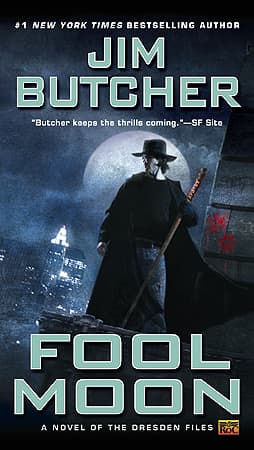
Jim Butcher is an American author known for his work in the fantasy genre. He is best recognized for the Dresden Files series, which includes titles such as Storm Front, Fool Moon, Grave Peril, Summer Knight, Death Masks, and Dead Beat, featuring the adventures of a wizard detective in modern-day Chicago.
Similar books
- Rivers of London
Ben Aaronovitch
3.9 (94k) average on GoodreadsFantasyFeatures a magical detective in a modern city, solving supernatural crimes with a mix of magic and police procedural.
- Neverwhere
Neil Gaiman
4.2 (430k) average on GoodreadsFantasyExplores a hidden magical world coexisting with a mundane city, featuring a reluctant hero drawn into its conflicts.
- Moon Called
Patricia Briggs
4.2 (176k) average on GoodreadsFantasyWhile both feature shapeshifters and hidden supernatural worlds, 'Fool Moon' is more cynical and morally ambiguous, with Dresden facing harsher consequences. Briggs' world often presents a more unified supernatural community, whereas Butcher emphasizes fractured factions.
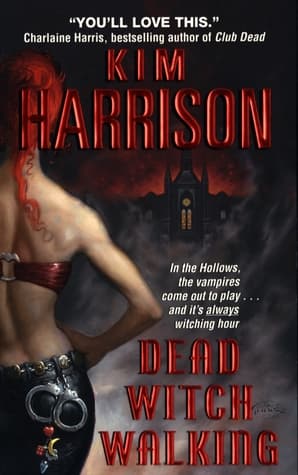
- Dead Witch Walking
Kim Harrison
4.0 (110k) average on GoodreadsFantasyHarrison's series offers a female protagonist and incorporates more overt magical technology and a brighter, more whimsical tone. 'Fool Moon' maintains a darker, more grounded, and classic noir feel, focusing on magic as a more visceral and dangerous force.
- Harry Potter and the Sorcerer's Stone
J.K. Rowling
4.5 (7M) average on GoodreadsFantasyRescued from a miserable life under the stairs, an orphaned boy discovers he's a wizard destined for a magical school, where he uncovers a dangerous secret tied to the dark wizard who murdered his parents.
- The Hunger Games
Suzanne Collins
4.3 (6.4M) average on GoodreadsFantasyIn a future where children fight to the death on live television, Katniss Everdeen volunteers for the arena, turning a death sentence into a fight for survival and a spark of rebellion.


Enjoyed the summary?
A summary gives you the shape of the book. The book itself has the detail, the examples and the voice.
Find Fool Moon on AmazonAs an Amazon Associate, BookBrief earns from qualifying purchases. How we're funded