
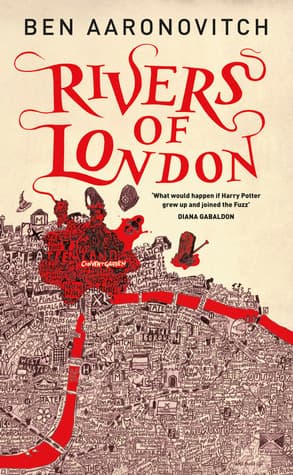
Synopsis
Covers the whole plot, including the ending.
- Difficulty
- Easy
- Pacing
- Moderate
- Mood
- Witty, Urban, Mysterious, Supernatural, Humorous
- Read it if
- You enjoy urban fantasy with a strong sense of place, police procedural elements, witty narration, and British humor.
- Skip it if
- You prefer high fantasy epics, grimdark themes, or stories without modern-day magic and supernatural beings.
Rivers of London Plot Summary
Covers the whole plot, including the ending.
A Ghostly Witness and a New Path
Probationary Constable Peter Grant, on guard duty at a murder scene in Covent Garden, meets a ghost named Nicholas Wallbrook. Wallbrook, a jazz musician who died in 1957, describes the murderer to Peter. His superior, Detective Chief Inspector Seawoll, dismisses this. Peter's unusual report, however, catches the attention of Detective Chief Inspector Thomas Nightingale, England's last officially sanctioned wizard. Nightingale takes Peter in, revealing the existence of magic and the 'Folly', the police unit investigating magical crimes. Peter, at first skeptical, soon finds himself in a world he never knew existed, leaving behind his aspirations for a conventional detective career.
Unveiling the Folly and First Lessons
Peter moves into the Folly, Nightingale's old Georgian house in Bloomsbury, which is both headquarters and home. He learns about the history of English magic, the decline of the magical community, and Nightingale's position as the last active wizard. Nightingale starts Peter's magical education, beginning with Latin and the basics of 'vestigia' – magical traces left by events or people. Peter struggles with theory but shows an intuitive understanding of practical magic, especially in communicating with the deceased. He also learns about the 'Genii Loci', the spirits of London's rivers, and the balance Nightingale keeps with them.
The Brutal Jazz Murders
More murders happen, all linked by a similar method: victims found with their faces flayed or disfigured, often near jazz clubs. Peter and Nightingale investigate, finding magic at each scene. Peter's ability to speak with ghosts is very helpful, as he interviews the spectral victims who provide fragmented clues about their attacker. The victims are not just ordinary people; some are connected to the jazz scene, and the killings become more violent and public, causing fear in London. Nightingale suspects a practitioner of 'broken magic' – a dangerous, uncontrolled form.
Meeting the Rivers
Nightingale introduces Peter to the powerful, old entities known as the Genii Loci – the personified spirits of London's rivers. Peter first meets Mama Thames, the matriarch, and her various 'children,' including Lady Tyburn and Father Thames. He attends a peace conference between them, where tensions are high because of the recent murders and increasing magical disturbances. Peter is drawn to Beverley Brook, the spirit of the river, and they begin a cautious, then close, relationship. Their alliance helps navigate the complex politics of London's magical underworld.
The Faceless Man Revealed
Through investigation, including analysis of the vestigia and interviews with ghosts, Peter and Nightingale identify the killer as a rogue magical practitioner they call 'The Faceless Man'. This individual uses powerful, destructive magic, often targeting those with latent magical abilities or connections to the rivers. The Faceless Man's signature involves magically manipulating flesh and bone, explaining the disfigurements. He is elusive and dangerous, always one step ahead, leaving a trail of death and chaos across London. His motives remain unknown, but his power is clear.
A Visit to the British Museum
Nightingale and Peter visit the British Museum to research historical instances of similar magic. They consult with Dr. Walid, an expert in old artifacts and magical history. Their research uncovers references to a powerful, malevolent entity or practitioner from the past, possibly linked to the Roman occupation of London, who used similar destructive magic. This discovery suggests that the Faceless Man might be a resurgence or reincarnation of an old evil, or someone tapping into a long-dormant source of dark power. The stakes of their investigation become much higher.
The Undercurrent of London
Peter, with help from Beverley Brook and his own intuitive abilities, starts to understand the deep, interconnected magical currents running beneath London. He learns about the 'aetheric' network, the city's magical energy lines, and how they are being disturbed. He discovers the Faceless Man is manipulating these currents, using them to amplify his power and perhaps draw on old sources. This manipulation is not just causing murders but also creating general magical chaos, affecting people and places across the city. The Faceless Man's plan appears to be larger than just individual killings.
Confrontation at the Tube Station
Following a trail of vestigia and ghostly whispers, Peter and Nightingale track the Faceless Man to a disused London Underground station. A tense confrontation happens, where the Faceless Man shows his formidable magical power, easily overpowering Nightingale with a burst of raw, destructive magic. Peter, despite his inexperience, tries to engage the Faceless Man, but is outmatched. The Faceless Man escapes, leaving Nightingale severely injured and Peter shaken but determined. This encounter shows the immense power of their adversary and the real danger they face.
The Battle for the Rivers
The Faceless Man's goal becomes clear: to control or destroy the Genii Loci, the spirits of London's rivers, particularly Mama Thames, to seize control of the city's magical heart. He attacks the river spirits during a gathering, creating a maelstrom of magic and chaos. Peter, Nightingale (recovering but weakened), and the various river spirits, led by Mama Thames and Beverley Brook, unite to defend themselves and London. The battle is fierce, with magic clashing against magic, and the city's magical ecosystem is at stake.
Unmasking the Faceless Man and Aftermath
During the final battle, the Faceless Man is unmasked, revealing himself to be a former apprentice of Nightingale's, a brilliant but corrupted wizard named Lesley May. Lesley, thought to have died during a magical incident years ago, had returned, twisted by dark magic and seeking revenge or power. Peter and Nightingale, with the aid of the river spirits, defeat Lesley, though with significant cost and damage to London's magical landscape. The immediate threat is neutralized, but the experience changes Peter, cementing his place in the world of magic and the Folly.
Principal Figures
Peter Grant
Protagonist
Probationary Constable turned wizard's apprentice, navigating London's magical underworld.
Peter Grant is a young, observant, and somewhat sarcastic probationary constable in the Metropolitan Police. He possesses an innate curiosity and a keen eye for detail, which serves him well in both mundane police work and magical investigations. His ability to speak with ghosts is his primary magical talent, initially leading him to the Folly. Despite being a 'rookie' in the world of magic, he is quick-witted and pragmatic, often approaching magical problems with a policeman's logical mindset. He is driven by a desire to understand and protect, and his loyalty to Nightingale and his new friends in the magical community grows throughout the story.
Relationships: Thomas Nightingale (mentor and apprentice); Beverley Brook (romantic interest and ally); Nicholas Wallbrook (ghostly informant); Lesley May (former colleague and main antagonist)
Thomas Nightingale
Supporting
The last officially sanctioned English wizard, Peter's mentor and guardian of the Folly.
Detective Chief Inspector Thomas Nightingale is a powerful, aristocratic wizard, seemingly from a bygone era. He is the last remaining active practitioner of traditional English magic, living a solitary existence in the Folly. Reserved and formal, he has a dry wit and a deep sense of duty to protect London from magical threats. He is immensely knowledgeable about magic, history, and the arcane, and despite his age, he remains formidable in combat. His past is shrouded in mystery, and he carries the weight of a dying magical tradition, making Peter's apprenticeship vital for the future.
Relationships: Peter Grant (mentor and apprentice); Lesley May (former apprentice, now antagonist); Mama Thames (respected magical peer)
Beverley Brook
Supporting
The personification of the River Beverley Brook, an ally and Peter's love interest.
Beverley Brook is one of the younger 'children' of Mama Thames, embodying the spirit of her namesake river. She is fiercely independent, modern in her outlook, and possesses a sharp wit. Unlike the more ancient and formal river spirits, Beverley is more approachable and relatable, often clashing with traditional expectations. She is powerful in her own right, particularly when near her river, and becomes a vital source of information and magical assistance for Peter. Her growing romantic relationship with Peter adds a personal dimension to his magical journey.
Relationships: Peter Grant (romantic interest and ally); Mama Thames (matriarchal figure); Lady Tyburn (sister river spirit)
Lesley May
Antagonist
Nightingale's former apprentice, resurrected and corrupted as the Faceless Man.
Lesley May was Nightingale's previous apprentice, a brilliant and promising young wizard who was believed to have died in a magical accident years prior to Peter's arrival. She is revealed to be the Faceless Man, having been resurrected or transformed by a dark, destructive form of magic. Her motives are complex, driven by a thirst for power, a desire for revenge, or perhaps a twisted sense of justice. She wields immense, brutal magical power, capable of manipulating flesh and bone, and systematically targets those connected to London's magical undercurrents. Her return is a shock to Nightingale and a formidable challenge for Peter.
Relationships: Thomas Nightingale (former mentor); Peter Grant (successor and adversary)
Mama Thames
Supporting
The ancient and powerful matriarch of London's river spirits.
Mama Thames is the ancient and powerful personification of the River Thames, the matriarch of all the river spirits in London. She commands immense respect and authority among her 'children' and other magical entities. She is wise, formidable, and embodies the ancient, enduring spirit of London itself. Her decisions significantly impact the magical balance of the city, and her alliance is crucial for Nightingale and Peter. She is a force of nature, capable of both immense power and profound wisdom, acting as a crucial mediator and protector of the city's magical heart.
Relationships: Thomas Nightingale (respected magical peer); Beverley Brook (daughter river spirit); Father Thames (consort/counterpart river spirit)
Dr. Walid
Supporting
An expert in ancient history and magical artifacts at the British Museum.
Dr. Walid is a knowledgeable and somewhat eccentric academic at the British Museum, specializing in ancient history and artifacts, particularly those with a magical or supernatural connection. He serves as an invaluable resource for Nightingale and Peter, providing historical context and research that helps them understand the nature of the Faceless Man's magic. He is aware of the magical world, albeit from an academic perspective, and offers a bridge between mundane scholarship and arcane knowledge.
Relationships: Thomas Nightingale (academic collaborator); Peter Grant (informant)
Nicholas Wallbrook
Mentioned
A ghost and the first witness Peter interviews, sparking his magical journey.
Nicholas Wallbrook is the ghost of a jazz musician who died in 1957. He is the key eyewitness to the initial murder in Covent Garden, providing Peter with the crucial, though initially dismissed, description of the killer. His existence confirms Peter's unique ability to communicate with the dead and sets in motion the events that lead Peter to Nightingale and the Folly. He is a lingering spirit, tied to the place of his death, and his spectral presence is a recurring motif early in the story.
Relationships: Peter Grant (informant to the living)
DC Seawoll
Supporting
Peter's mundane police superior, skeptical of his unusual reports.
Detective Chief Inspector Seawoll is Peter's immediate superior in the mundane police force at the beginning of the story. He is a pragmatic, no-nonsense officer who dismisses Peter's report about a ghost as nonsense, reflecting the conventional police force's disbelief in anything outside the norm. He represents the mundane world Peter leaves behind and serves as a foil to Nightingale's acceptance of the uncanny. He is focused on traditional police procedure and views Peter as a somewhat odd but capable probationary constable.
Relationships: Peter Grant (superior officer)
Lady Tyburn
Supporting
A powerful and elegant personification of the River Tyburn.
Lady Tyburn is one of Mama Thames's 'children,' embodying the spirit of the lost River Tyburn. She is depicted as elegant, ancient, and somewhat imperious, representing a more traditional and powerful aspect of the river spirits. She is a key figure among the Genii Loci, participating in their councils and debates. Her interactions with Peter and Nightingale highlight the complex political landscape of the river spirits and their enduring connection to London's history and magic.
Relationships: Mama Thames (matriarchal figure); Beverley Brook (sister river spirit); Thomas Nightingale (respected magical peer)
Themes & Insights
The Coexistence of Magic and Modernity
The novel explores how old magic and supernatural entities exist, often hidden, within modern London. Peter's journey shows the contrast and surprising overlaps between police procedure and magical investigation. The Folly, an old Georgian house, is a physical example of this theme, a place of old magic in a busy contemporary city. The river spirits, old forces, navigate modern society, using mobile phones and attending 'peace talks' in human guises, showing magic's adaptation rather than its disappearance.
“The London Underground doesn't so much run on rails as on the bones of long-dead magicians.”
Identity and Belonging
Peter Grant deals with his identity as he changes from a conventional police constable to a wizard's apprentice. He must reconcile his established career path with the extraordinary world he discovers, often feeling like an outsider in both. The river spirits also deal with their identity as old forces in a modern world, and their relationships with each other define their sense of belonging. The Faceless Man's true identity, Lesley May, also speaks to a lost identity and a corrupted sense of self, showing the impact of magical transformation on one's being.
“I was a police constable, and I was going to be a detective. Then I met a ghost, and everything changed.”
The Weight of History and Legacy
The book is full of London's history, both everyday and magical. Nightingale represents a dying legacy of English magic, making Peter's apprenticeship important for its continuation. The river spirits are old entities, their existence tied to the city's past. The Faceless Man's actions are also shown to have historical roots, possibly connected to old evils or forgotten magical incidents. The Folly itself is a historical building with centuries of magical lore, emphasizing how the past continues to influence the present magical world.
“The past isn't dead. It isn't even past. It just lives in the Folly.”
The Nature of Power and Corruption
The novel explores different forms of power – the institutional power of the police, the raw magical power of wizards and river spirits, and the destructive power used by the Faceless Man. It looks at how power can corrupt, as seen in Lesley May's transformation into the Faceless Man, using her magical abilities for malevolent ends. Nightingale's careful, controlled use of magic contrasts with the Faceless Man's uncontrolled, brutal application, showing the ethical responsibilities that come with wielding such forces. The river spirits' power is tied to their natural domain, showing a more inherent, balanced form of strength.
“Magic is not about waving your hands and saying a few words. It's about power. And power always has a price.”
Plot Devices & Literary Techniques
First-Person Narrative (Peter Grant)
Provides an immediate, often humorous, and grounded perspective on the magical world.
The story is told entirely from Peter Grant's perspective, offering readers his skeptical yet curious viewpoint as he navigates the bewildering world of magic. This allows for a gradual unveiling of the fantastical elements, making them more believable through Peter's relatable reactions and internal monologue. His police training informs his observations, adding a layer of pragmatic analysis to the supernatural events, and his dry wit infuses the narrative with humor, making complex magical concepts accessible and engaging.
The Folly
A physical and symbolic hub for English magic, representing its decline and potential revival.
The Folly is Nightingale's dilapidated Georgian mansion, serving as the headquarters for the magical police unit. It is both a physical location and a powerful symbol. Its decaying state reflects the decline of English magic and the solitary existence of Nightingale. However, it also becomes a place of learning and refuge for Peter, symbolizing the potential for magic's revival. The house itself is imbued with magical history and secrets, acting as a silent character that absorbs and reflects the magical events unfolding within and around it.
Ghosts/Vestigia
A primary source of information and a key element of Peter's unique magical ability.
Ghosts, particularly Nicholas Wallbrook, serve as direct eyewitnesses to crimes and provide crucial clues that mundane police methods cannot uncover. Peter's innate ability to communicate with them is his primary magical talent. 'Vestigia,' the magical traces left behind by events or people, function similarly, providing forensic evidence in the magical world. Both devices allow Peter and Nightingale to reconstruct events and track the Faceless Man, blending traditional detective work with supernatural investigation.
Personified Rivers (Genii Loci)
Represent ancient, powerful forces of London, shaping its magical and physical landscape.
The personified rivers of London, the Genii Loci (Mama Thames, Beverley Brook, Lady Tyburn, etc.), are not just symbols but active characters with their own politics, powers, and personalities. They embody the ancient, enduring spirit of London itself and represent a powerful, natural form of magic distinct from human wizardry. Their alliances and conflicts directly impact the city, and their existence grounds the fantastical elements in a tangible, historical sense of place, making London itself a living, breathing magical entity.
Rivers of London Quotes
“Magic is like a river. It flows where it wants to, and if you try to block it, it'll just go around you.”
“I'm not a wizard, I'm a police officer who happens to do magic.”
“The Folly is the last bastion of English magic, and it's falling apart at the seams.”
“You can't arrest a river, but you can damn well try to stop it from killing people.”
“History is a ghost that haunts the present, especially in a city as old as London.”
“Magic doesn't care about your feelings; it just is.”
“The problem with gods is they're never around when you need them, but always there when you don't.”
“Policing is about patterns, and magic is just another pattern to learn.”
“London is a palimpsest, and magic is the ink that never fully fades.”
“Sometimes the most magical thing is just surviving another day.”
“The river goddesses don't want worship; they want respect, and they'll drown you if they don't get it.”
“Magic isn't about power; it's about understanding the rules so you don't blow yourself up.”
“In London, the past is never dead; it's not even past, especially if it's magical.”
“You don't fight ghosts with fists; you fight them with memory and truth.”
Quiz
10 questions on the plot and the characters. Each answer comes with a short explanation.
Question 1
What is Peter Grant's initial assignment in the Metropolitan Police before encountering the ghost?
- Homicide Division
- Case Progression Unit
- Traffic Division
- Counter-Terrorism Unit
Show answer
B. Case Progression Unit Peter's superior plans to assign him to the Case Progression Unit, described as a mundane desk job where the biggest threat is a paper cut, before his encounter with the ghost changes his career path.
Question 2
Who is the eyewitness that provides Peter with exclusive information about the puzzling murder?
- A retired police officer
- A local journalist
- A ghost
- A psychic medium
Show answer
C. A ghost Peter gains exclusive information from an eyewitness who happens to be a ghost, which reveals his ability to speak with the lingering dead and sets the main plot in motion.
Question 3
What ability does Peter Grant possess that brings him to Thomas Nightingale's attention?
- Photographic memory
- Expert martial arts skills
- The ability to speak with ghosts
- Proficiency in forensic science
Show answer
C. The ability to speak with ghosts Peter's ability to speak with the lingering dead (ghosts) brings him to the attention of Detective Chief Inspector Thomas Nightingale, who investigates supernatural crimes.
Question 4
What is Thomas Nightingale's role in the Metropolitan Police?
- He leads the Case Progression Unit
- He is a forensic pathologist
- He investigates crimes involving magic and the uncanny
- He is Peter's direct supervisor in traffic division
Show answer
C. He investigates crimes involving magic and the uncanny Detective Chief Inspector Thomas Nightingale investigates crimes involving magic and other manifestations of the uncanny, making him the head of a secret supernatural division.
Question 5
What broader threat emerges in London as Peter joins Nightingale's team?
- A series of bank robberies
- A viral pandemic
- A wave of brutal and bizarre murders
- Political corruption scandals
Show answer
C. A wave of brutal and bizarre murders As Peter is plunged into the supernatural world, a wave of brutal and bizarre murders engulfs the city, driven by magical forces and a long-dead evil.
Question 6
Which of the following best describes the supernatural world Peter enters?
- A world where aliens secretly control the government
- A world where gods and goddesses mingle with mortals
- A world dominated by vampire clans
- A world where technology has replaced magic
Show answer
B. A world where gods and goddesses mingle with mortals The book describes a world where gods and goddesses mingle with mortals, reflecting its blend of urban fantasy with mythological elements in modern London.
Question 7
What is described as 'making a comeback on a rising tide of magic' in the book?
- Victorian-era policing methods
- Ancient Roman architecture
- A long-dead evil
- Traditional British folklore
Show answer
C. A long-dead evil The summary mentions that 'a long-dead evil is making a comeback on a rising tide of magic,' indicating the resurgence of an ancient supernatural threat driving the murders.
Question 8
How does the book blend its fantasy and mystery elements?
- By having Peter solve crimes using purely scientific methods
- By setting the story in a completely fictional world
- By involving supernatural elements like ghosts and magic in police investigations
- By focusing exclusively on historical mysteries
Show answer
C. By involving supernatural elements like ghosts and magic in police investigations The book blends fantasy and mystery by having Peter, a police officer, investigate crimes that involve supernatural elements like ghosts, magic, and ancient evils, creating an urban fantasy mystery.
Question 9
What role does the setting of London play in the story?
- It is merely a backdrop with no significance to the plot
- It serves as a generic urban environment for the mystery
- It is integral, with its history and rivers tied to the magical elements and crimes
- It is portrayed as a city completely devoid of magic
Show answer
C. It is integral, with its history and rivers tied to the magical elements and crimes London's history, geography (including its rivers), and urban landscape are deeply integrated into the magical elements and crimes, as suggested by the title 'Rivers of London' and the blending of gods with the city's fabric.
Question 10
What is the significance of Peter being a probationary constable at the start of the story?
- It shows he is already an experienced detective
- It highlights his lack of authority and need to prove himself in both policing and magic
- It means he is about to retire from the police force
- It indicates he is working undercover
Show answer
B. It highlights his lack of authority and need to prove himself in both policing and magic As a probationary constable, Peter is at the bottom of the police hierarchy, which emphasizes his journey of proving himself not only as a detective but also as someone navigating the new, dangerous world of magic.
Rivers of London FAQ
What is 'Rivers of London' about?
The book follows Probationary Constable Peter Grant, who discovers he can speak with ghosts after interviewing a spectral witness to a murder. This ability leads him to join Detective Chief Inspector Thomas Nightingale, who heads a secret branch of the Metropolitan Police dealing with magical crimes. Together, they investigate a series of brutal murders linked to a resurgence of ancient magic and malevolent forces in modern London.
Why should I read 'Rivers of London'?
It offers a unique blend of urban fantasy and police procedural, with witty humor and a richly detailed London setting. The protagonist Peter Grant's relatable voice and the seamless integration of magical elements into everyday crime-solving make it both entertaining and immersive for fans of mysteries with supernatural twists.
What is the background/setting of 'Rivers of London'?
The story is set in contemporary London, primarily in its police stations, crime scenes, and hidden magical locales. Key settings include the Folly (Nightingale's headquarters), the River Thames and its personified deities, and various historical sites where ancient magic intersects with modern urban life.
What are the most memorable quotes?
Notable quotes include Peter's observation, 'I always thought magic would be more... magical,' highlighting his pragmatic approach, and Nightingale's warning, 'Magic is coming back, and not all of it is friendly,' which underscores the central conflict. Another is Peter's reflection on policing: 'The job's not about being brave; it's about being there.'
What writing style does the author use?
Ben Aaronovitch employs a first-person narrative from Peter Grant's perspective, blending dry British humor with detailed police procedural elements. The prose is conversational and witty, often incorporating technical jargon about policing and magic to create a believable, immersive world.
What minor details add significant meaning?
The recurring motif of water and rivers symbolizes the flow of magic and history in London, such as the personification of the Thames and its tributaries as deities. Small details like Peter's use of a smartphone to research magical texts contrast ancient lore with modern technology, emphasizing the story's contemporary setting.
What are some subtle foreshadowing moments?
Early scenes where Peter casually notices odd occurrences, like strange graffiti or unexplained weather patterns, hint at the broader magical unrest. The ghost witness's cryptic comments about 'the river's anger' foreshadow the involvement of river deities in the murders and the resurgence of primal magic.
What unexpected character connections exist?
Peter's mentor, Nightingale, has a hidden history tied to World War II and earlier magical conflicts, linking him to ancient forces. The river goddesses, such as Mama Thames and Father Thames, are revealed to have familial and territorial disputes that directly impact the modern crimes, connecting myth to the present-day plot.
What are unspoken character motivations?
Peter is driven by a deep-seated desire to prove himself beyond the mundane police work he fears, rooted in his insecurity about his career. Nightingale's guarded nature stems from trauma and guilt over past magical failures, motivating his protective yet secretive approach to mentoring Peter.
What psychological complexities do characters exhibit?
Peter grapples with imposter syndrome as he navigates both police hierarchy and the magical world, often using humor as a defense mechanism. Nightingale displays a stoic exterior masking loneliness and the burden of being one of the last practicing wizards, creating a nuanced mentor-student dynamic.
What are the major emotional turning points?
Key moments include Peter's first successful use of magic, which boosts his confidence, and his confrontation with the killer, where he must reconcile his police training with supernatural threats. Another is his growing bond with Nightingale, shifting from awe to mutual respect as they face life-or-death situations together.
How do relationship dynamics evolve?
Peter and Nightingale's relationship evolves from formal superior-subordinate to a trusted partnership, with Nightingale gradually sharing magical knowledge and personal history. Peter's interactions with river deities, like Beverley Brook, transition from suspicion to alliance, reflecting his adaptation to the magical community.
Which parts remain ambiguous or open-ended?
The full extent of magic's return and its long-term implications for London are left unclear, hinting at larger conflicts in future books. Specific details about Nightingale's past and the origins of certain magical entities are only partially revealed, inviting reader speculation.
What are controversial scenes or decisions?
Peter's decision to hide his magical abilities from most of the police force raises ethical questions about transparency in law enforcement. Some readers debate the portrayal of river deities as capricious and violent, which blurs lines between mythic beings and criminal antagonists.
'Rivers of London' ending explained: how it ends & what it means
The climax resolves the murder spree by revealing the culprit's connection to ancient magic and river conflicts, with Peter using his newfound skills to help defeat the threat. The ending implies that magic's resurgence is ongoing, setting up Peter's continued role in balancing police duty with supernatural responsibilities, symbolizing a fusion of tradition and modernity.
About the author

Ben Aaronovitch is a British author best known for his "Rivers of London" series, a blend of urban fantasy and police procedural fiction. The series, which began in 2011, follows Peter Grant, a London police officer who becomes an apprentice wizard. Aaronovitch's writing is praised for its witty dialogue, intricate world-building, and deep knowledge of London's history and geography.
Similar books
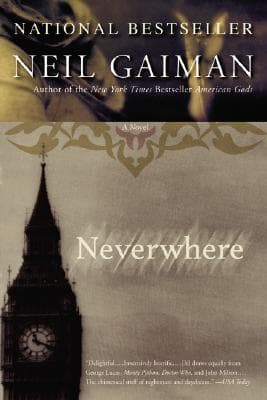
- Neverwhere
Neil Gaiman
4.2 (430k) average on GoodreadsFantasyExplores a hidden magical London beneath the mundane city, with a strong sense of place and urban fantasy elements.
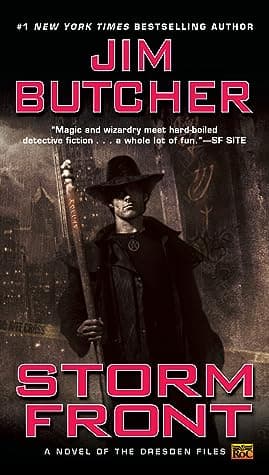
- Storm Front
Jim Butcher
4.0 (294k) average on GoodreadsFantasyWhile both feature a magical detective in a modern city, Rivers of London is less reliant on noir tropes and presents a more bureaucratic, state-sanctioned approach to magic. Peter Grant is a fresh police officer learning, in contrast to Harry Dresden's world-weary private eye. Aaronovitch's London is also more historically detailed than Butcher's Chicago.
- Harry Potter and the Sorcerer's Stone
J.K. Rowling
4.5 (7M) average on GoodreadsFantasyRescued from a miserable life under the stairs, an orphaned boy discovers he's a wizard destined for a magical school, where he uncovers a dangerous secret tied to the dark wizard who murdered his parents.
- The Hunger Games
Suzanne Collins
4.3 (6.4M) average on GoodreadsFantasyIn a future where children fight to the death on live television, Katniss Everdeen volunteers for the arena, turning a death sentence into a fight for survival and a spark of rebellion.
- 1984
George Orwell
4.2 (3.1M) average on GoodreadsPoliticsIn a future where surveillance and thought control are absolute, a man's search for truth clashes with the Party, showing that hope can be a form of rebellion.
- Divergent
Veronica Roth
4.2 (2.9M) average on GoodreadsFantasyIn a society divided by virtues, a sixteen-year-old's difference from the norm starts a rebellion that threatens her world.




Enjoyed the summary?
A summary gives you the shape of the book. The book itself has the detail, the examples and the voice.
Find Rivers of London on AmazonAs an Amazon Associate, BookBrief earns from qualifying purchases. How we're funded