
Synopsis
Covers the whole plot, including the ending.
- Difficulty
- Medium
- Pacing
- Fast
- Mood
- Action-packed, Gritty, Humorous, Suspenseful
- Read it if
- You enjoy urban fantasy with a snarky female lead, action, intricate world-building, and a blend of supernatural creatures.
- Skip it if
- You prefer high fantasy, dislike morally grey characters, or are looking for a lighthearted read without darker themes.
Dead Witch Walking Plot Summary
Covers the whole plot, including the ending.
The I.S. Resignation
Rachel Morgan, a witch, resigns from the Inderlander Security (I.S.) with her vampire partner Ivy Tamwood and pixy Jenks. They are unhappy with the I.S.'s corrupt practices and unjust treatment of Inderlanders. Rachel's supervisor, Marshal Edden, tries to stop her, but Rachel is firm. Their decision follows a recent incident with a rogue vampire and their belief that the I.S. is not protecting the innocent. This leaves them jobless and financially unstable, as the I.S. now sees them as 'loose ends.' They decide to start their own private investigation and bounty hunting firm.
New Beginnings and Immediate Threats
After forming their new agency, Living Accords, Rachel, Ivy, and Jenks immediately face a challenge. The I.S. places a bounty on Trent Kalamack, a powerful human businessman with ties to the city's elite and rumors of illegal genetic research. The bounty is almost impossible to collect alive, and the I.S. warns that anyone who tries will be targeted. Rachel, needing money and wanting to prove their independence, takes the contract despite Ivy's strong doubts and the danger. This decision immediately puts them against Kalamack's resources and the I.S.
Trent Kalamack's Entanglements
Rachel's attempts to catch Trent Kalamack are difficult. She discovers he is more than just a businessman; he has powerful magic, which surprises her for a human. During her pursuit, she meets him several times, leading to tense standoffs and a growing respect between them. Trent seems interested in Rachel and even gives her information that hints at a larger conspiracy. He reveals he is being framed and that the I.S. has a hidden agenda. This makes Rachel rethink her initial opinion of him and question the true reasons behind the I.S. bounty.
The Turn and the Master Vampire
Rachel's contract on Trent Kalamack attracts the unwanted attention of Piscary, a powerful master vampire. Piscary is a high-ranking member of the Cincinnati vampire coven and has significant influence. He believes Rachel is interfering with his plans and orders her 'turned' – a process where a vampire drains a human or Inderlander to near death, making them a ghoul or a new vampire, then uses them as a thrall. Rachel is attacked and almost turned, but escapes with Ivy's help and her own quick thinking. This incident shows the extreme dangers of operating outside I.S. protection and the ruthless nature of the vampire world.
The Ghoul's Plight
While investigating Trent, Rachel uncovers a pattern of missing ghouls – humans partially turned by vampires and in servitude. She learns that Trent has been protecting these ghouls, offering them refuge and trying to find a cure for their condition. This changes Rachel's understanding of Trent, showing him to be more complex than a simple villain. Her investigation leads her to a hidden facility where Trent is keeping and studying ghouls, hinting at a larger scientific and magical project that goes beyond criminal activity and possibly involves a cure for the ghoul condition.
Piscary's Betrayal and the Ghoul Cure
Rachel discovers that Piscary is not just a master vampire but a key player in a scheme to exploit ghouls. He has been manipulating events, including the bounty on Trent, to increase his power and research into ghoul biology. Trent, it turns out, was working on a cure for the ghoul condition, a cure that Piscary wants to prevent from being released because it would disrupt his control over the ghoul population. Rachel realizes that the I.S. bounty on Trent was a setup orchestrated by Piscary to remove a threat to his operations. This revelation shifts Rachel's focus from catching Trent to protecting the ghouls and exposing Piscary.
The Confrontation at the Ghoul Den
Rachel, now allied with Trent Kalamack, prepares for a direct confrontation with Piscary. She enlists the help of Jenks and Ivy, along with the ghouls Trent has been protecting. The climax takes place at a hidden facility where Piscary conducts his experiments and holds other ghouls captive. A fierce battle follows, involving Rachel's witch magic, Ivy's vampire speed and strength, Jenks's pixy agility, and Trent's advanced technology and unexpected magical abilities. Rachel must use all her skills and power to protect the ghouls and defeat Piscary, who is a formidable opponent.
Piscary's Downfall
In a desperate struggle, Rachel, with Ivy and Trent's help, defeats Piscary. Trent, using a specialized weapon, delivers a critical blow, while Rachel's magic weakens the master vampire. Piscary is killed, ending his control over the ghouls and exposing his illegal activities. However, the victory has a cost. The battle leaves many casualties, and Piscary's death has significant implications for the vampire coven and the I.S. Rachel and her team are now independent operators, but they have also made powerful enemies.
Aftermath and New Alliances
After Piscary's death, Rachel and her team deal with the aftermath. The I.S. investigates the incident, but Rachel avoids severe consequences by exposing Piscary's crimes. The ghouls are freed, and Trent Kalamack, though still enigmatic, is cleared of the I.S. bounty. Rachel and Trent form a fragile, uneasy alliance, recognizing their shared interests and the larger threats. Ivy and Jenks remain loyal to Rachel, strengthening their new agency. The events have changed Rachel's standing in the Hollows, making her a force to be reckoned with.
The Ghoul Cure and Unresolved Tensions
Trent Kalamack reveals that his research has produced a partial cure for the ghoul condition, allowing ghouls to regain some humanity and control. This offers hope for the affected Inderlanders, but the cure is incomplete and needs more development. The I.S. is forced to acknowledge Trent's work, though reluctantly. While Piscary is gone, the power vacuum in the vampire coven and ongoing tensions with the I.S. create new challenges for Rachel. Her relationship with Trent remains complex and flirtatious, hinting at future collaborations and conflicts. The Hollows is a dangerous place, and Rachel's journey has just begun.
Principal Figures
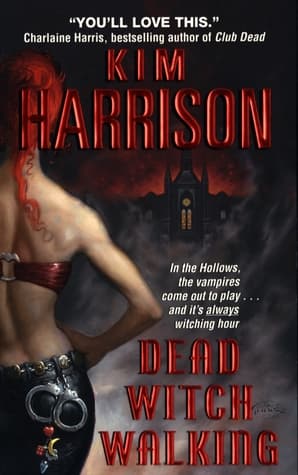
Rachel Morgan
Protagonist
A feisty, independent witch and bounty hunter.
Rachel is a red-haired witch with a strong sense of justice and a stubborn streak. She left the I.S. due to its corruption and aims to protect Inderlanders independently. She is powerful in earth and fire magic, often relying on her wits and resilience. Despite her tough exterior, she cares deeply for her friends and the innocent. She struggles with her identity as a witch in a world dominated by vampires and demons, and often finds herself in over her head, yet always pulls through.
Relationships: Ivy Tamwood (Best friend, business partner, housemate, and complicated romantic tension.); Jenks (Loyal friend, business partner, and protective pixy.); Trent Kalamack (Initial target, then reluctant ally, and developing romantic/antagonistic dynamic.); Piscary (Major antagonist and threat to her life.)
Ivy Tamwood
Supporting
A pragmatic, powerful, and emotionally distant living vampire.
Ivy is a living vampire, meaning she needs to feed on blood but is not undead. She is Rachel's best friend, business partner, and housemate. Ivy is calm, collected, and incredibly strong, often acting as Rachel's anchor. She struggles with her vampire nature and the constant urge to feed, particularly on Rachel, which creates a deep, unspoken tension between them. She is fiercely loyal to Rachel and Jenks, but her vampiric instincts and emotional detachment often put a strain on their relationships.
Relationships: Rachel Morgan (Best friend, business partner, housemate, and complicated romantic/feeding tension.); Jenks (Friend and business partner.); Piscary (Master vampire and her former 'owner'.)
Jenks
Supporting
A loyal, foul-mouthed, and protective pixy.
Jenks is a pixy, a small, winged fairy-like creature, and Rachel's third business partner. He is married with several children and is fiercely protective of his family and Rachel. Jenks is an expert in surveillance, lock-picking, and general mischief, providing comic relief and practical skills. He carries a small, poisoned dart gun and is surprisingly effective in a fight despite his size. He often grumbles and curses but his loyalty to Rachel is unwavering, seeing her as part of his extended family.
Relationships: Rachel Morgan (Close friend and business partner.); Ivy Tamwood (Friend and business partner.); Matalina (Wife.); His Children (Devoted father.)
Trent Kalamack
Antagonist/Supporting
An enigmatic and powerful human businessman with a hidden agenda.
Trent Kalamack is a wealthy and influential human businessman with a reputation for ruthlessness and connections to the criminal underworld. He is initially Rachel's bounty target, but quickly proves to be more complex than he appears. Trent possesses unexpected magical abilities for a human and is involved in secret genetic research, particularly concerning ghouls. He is sophisticated, manipulative, and often morally ambiguous, but also capable of surprising acts of protection and loyalty, especially towards those he considers his own. He maintains a facade of control, but has deeply personal motivations.
Relationships: Rachel Morgan (Initial target, then reluctant ally, and developing romantic/antagonistic dynamic.); Piscary (Rival and enemy due to conflicting interests in ghoul research.)
Piscary
Antagonist
A ruthless and manipulative master vampire.
Piscary is a powerful master vampire and a high-ranking member of the Cincinnati vampire coven. He is cunning, cruel, and ambitious, willing to manipulate and destroy anyone who stands in his way. He sees Inderlanders as tools to be used and controlled, particularly ghouls, whom he exploits for his own power and dark research. He orchestrates the bounty on Trent Kalamack and attempts to turn Rachel, making him a formidable and personal enemy. He embodies the corrupt and dangerous elements of the vampire society.
Relationships: Rachel Morgan (Mortal enemy.); Ivy Tamwood (Her former master.); Trent Kalamack (Rival and target.)
Marshal Edden
Supporting
Rachel's former supervisor at the Inderlander Security.
Marshal Edden is Rachel's former boss at the I.S. He is a pragmatic and generally well-meaning individual, but ultimately bound by the bureaucracy and rules of the I.S. He tries to warn Rachel against leaving the agency and later acts as a reluctant intermediary between her and the I.S. He represents the 'good' side of the flawed I.S. system, often sympathetic to Rachel but unable to truly help her outside the established protocols. He understands the dangers Rachel faces but is limited by his position.
Relationships: Rachel Morgan (Former supervisor, now a cautious contact.)
Kistian
Mentioned
A human ghoul under Trent's protection.
Kistian is one of the ghouls Trent Kalamack is protecting and attempting to cure. He serves as a representative of the ghoul community, highlighting their plight and the potential for a cure. Kistian is a sympathetic character, showcasing the humanity that remains within those partially turned by vampires. His presence underscores the moral stakes of Trent's research and Piscary's cruelty. He is a testament to the fact that ghouls are not simply monstrous creatures but victims.
Relationships: Trent Kalamack (Protector and potential savior.); Rachel Morgan (Ally who fights for his freedom.)
Themes & Insights
Independence vs. Bureaucracy
The novel explores the tension between individual freedom and oppressive institutions. Rachel's resignation from the Inderlander Security (I.S.) is an act of rebellion against its corruption and inefficiency. She believes the I.S. has lost its way, prioritizing politics over justice, especially for Inderlanders. Her decision to start her own agency, Living Accords, despite the dangers, shows her desire for autonomy and her belief in doing what is right, even if it means breaking rules. This theme is clear as Rachel clashes with the I.S., proving that operating outside the system can be necessary for justice.
“The I.S. had become a monster, devouring its own, and I wasn’t going to feed it anymore.”
Prejudice and Acceptance
The Hollows is a world with much prejudice between species – witches, vampires, pixies, humans, and demons. Vampires, in particular, have significant power and often look down on or exploit other races. Rachel, a witch, often faces discrimination and danger, while Ivy, a living vampire, struggles with the stigma and fear of her nature and her own urges. The ghouls, victims of vampire turning and often treated as property, are a central example of this prejudice. The story challenges these biases, suggesting that alliances and understanding across species are necessary for survival and justice, as seen in Rachel's alliance with Trent Kalamack, a human, to fight a vampire.
“It didn’t matter what you were, only what you did.”
The Nature of Good and Evil
The book presents a complex view of morality, where characters are rarely purely good or evil. Trent Kalamack, initially a villain, is shown to have complex reasons and even a noble goal in trying to cure ghouls. The I.S., meant to be a force for good, is corrupt and ineffective. Even Rachel, the protagonist, makes morally questionable decisions in her pursuit of justice and survival. This theme challenges simple black-and-white morality, making the reader consider the shades of grey in character actions and motivations. Piscary, however, remains a clear example of ruthless evil, providing a stark contrast.
“The world wasn’t made of good and evil, but of people doing the best they could with what they had.”
Found Family and Loyalty
Despite the dangers of their world, Rachel, Ivy, and Jenks form a strong, unconventional family unit. Their loyalty to each other is constant, providing strength and support. Rachel's decision to leave the I.S. is for herself and her partners. Ivy's struggle to control her vampiric urges for Rachel's safety, and Jenks's fierce protectiveness, show the depth of their bond. This theme highlights that when traditional institutions fail, bonds formed through shared experiences and mutual trust are important for survival and emotional well-being.
“We were a team, a family, and we would sink or swim together.”
Consequences of Power
The novel explores the corrupting influence of power, especially among the vampire hierarchy and within the I.S. Piscary's abuse of his master vampire status to control ghouls, and the I.S.'s bureaucratic overreach, are prime examples. Rachel, though powerful, must constantly deal with the responsibility of her abilities and the potential for misuse. The struggle to maintain moral integrity while having power is a challenge for many characters. Even Trent Kalamack's power, though sometimes used for good, has a dark, manipulative side.
“Power corrupted, and absolute power corrupted absolutely. The Hollows was proof of that.”
Plot Devices & Literary Techniques
The Bounty Contract
A dangerous mission that drives the initial plot.
The bounty placed on Trent Kalamack's head serves as the central inciting incident for Rachel's new independent agency. It immediately plunges Rachel, Ivy, and Jenks into a high-stakes conflict, forcing them to prove their capabilities outside the I.S. The contract is designed to be nearly impossible, setting up the challenges and dangers they face. It also acts as a red herring, masking the true motivations behind Trent's targeting and the larger conspiracy involving Piscary, compelling Rachel to dig deeper than just collecting a reward.
The Ghoul Condition/Cure
A medical/magical mystery that reveals deeper conspiracies.
The ghoul condition, resulting from incomplete vampire turning, and Trent's secret research into a cure, is a critical plot device. It provides a humanitarian element to the story, highlighting the plight of a vulnerable population. More importantly, it serves as the nexus for the conflict between Trent and Piscary, revealing Piscary's true villainy and Trent's complex, morally ambiguous heroism. The cure itself offers hope but also creates a new power dynamic, as its existence threatens the established order of the vampire coven and the I.S.
The Living Vampire
A unique vampiric condition creating internal and external conflict.
Ivy Tamwood's status as a 'living vampire' is a significant plot device, distinguishing her from traditional undead vampires. This condition means she requires blood to survive but is not technically dead, allowing her to operate in daylight and maintain a semblance of humanity, yet still battling powerful urges. It creates constant internal conflict for Ivy, particularly her struggle to control her desire to feed on Rachel. This unique vampirism also influences her relationships and her role in the story, offering a different perspective on vampire lore and adding a layer of danger and tension to Rachel and Ivy's bond.
The I.S. (Inderlander Security)
A corrupt bureaucratic organization that serves as both a former employer and an antagonist.
The I.S. functions as a primary antagonistic force, not through direct malice but through its systemic corruption, bureaucracy, and inefficiency. Rachel's past association and subsequent resignation from the I.S. establish her motivations and the stakes of her independence. The I.S. constantly interferes with Rachel's investigations, places bounties, and attempts to control Inderlander affairs, often making things worse. It represents the oppressive institutional power that Rachel and her team are fighting against, even when individual members might be well-meaning. It highlights the difficulty of achieving justice within a flawed system.
Dead Witch Walking Quotes
“The only thing worse than a vampire with a chip on his shoulder is a vampire with a chip on his shoulder and a bad mood.”
“Every time you think you've hit rock bottom, there's always a new shovel.”
“Sometimes you have to do the wrong thing for the right reason.”
“A witch with a good sense of direction is a dangerous thing. A witch with a bad sense of direction is a disaster waiting to happen.”
“The problem with being a professional runner is that eventually, someone always catches up.”
“Never trust a fey. They'll steal your heart, your sanity, and probably your socks.”
“If you're going to dive into trouble, might as well do it headfirst.”
“Being undead doesn't make you smart, it just makes you really, really old.”
“The best way to hide a secret is in plain sight.”
“Even demons have a soft spot, it's just usually covered in scales and smells like sulfur.”
“You can always tell a lot about a person by how they treat someone they don't need.”
“Magic isn't about power, it's about control. And sometimes, losing it.”
“Sometimes the biggest monsters are the ones that look the most human.”
Quiz
10 questions on the plot and the characters. Each answer comes with a short explanation.
Question 1
What kind of supernatural creature is Rachel Morgan?
- Vampire
- Werewolf
- Witch
- Elf
Show answer
C. Witch Rachel Morgan is established early in the book as a witch working for the I.S. bounty hunting.
Question 2
Who is Rachel's vampire partner at the start of the book, who later becomes her love interest?
- Trent Kalamack
- Kisten
- Ivy Tamwood
- Nick
Show answer
C. Ivy Tamwood Ivy Tamwood is Rachel's vampire partner at the start of the book, and their relationship evolves throughout the series.
Question 3
What is the name of the organization Rachel works for at the beginning of the book?
- The Hollows Enforcement Agency
- The Inderland Security (I.S.)
- Cincinnati Paranormal Services
- The Vampire Council
Show answer
B. The Inderland Security (I.S.) Rachel works as a bounty hunter for the Inderland Security (I.S.) before she quits.
Question 4
Why does Rachel decide to leave the I.S. and start her own agency?
- She wants to work exclusively with vampires.
- She is tired of working with Ivy.
- She feels undervalued and believes she can do better on her own.
- She was fired for insubordination.
Show answer
C. She feels undervalued and believes she can do better on her own. Rachel's frustration with the I.S.'s bureaucracy and her desire for independence leads her to quit and form her own agency.
Question 5
What is the primary supernatural race that controls the Hollows, specifically Cincinnati?
- Witches
- Werewolves
- Vampires
- Elves
Show answer
C. Vampires The book explicitly states that vampires rule the darkness in the Hollows of Cincinnati.
Question 6
Who is the powerful and enigmatic human businessman that Rachel often clashes with, and who is revealed to be more than he seems?
- Glenn
- Algaliarept
- Trent Kalamack
- Ceri
Show answer
C. Trent Kalamack Trent Kalamack is a prominent human businessman who frequently interacts with Rachel, often creating conflict, and has a hidden supernatural identity.
Question 7
What unique physical characteristic does Ivy possess that is a significant plot point and source of her power?
- She has glowing red eyes.
- She has retractable claws like a cat.
- She can turn into mist at will.
- She has a second set of fangs, indicating she is a master vampire.
Show answer
D. She has a second set of fangs, indicating she is a master vampire. Ivy's second set of fangs is a key detail, signifying her status as a master vampire and her unique abilities within the vampire hierarchy.
Question 8
What type of magic does Rachel primarily specialize in, often using it for offensive and defensive purposes?
- Divination
- Charms and Glamours
- Earth and Fire magic
- Healing magic
Show answer
C. Earth and Fire magic Rachel frequently uses earth-based magic (like summoning roots) and fire magic in her confrontations and spellcasting throughout the book.
Question 9
What is the nature of the curse that Rachel inadvertently acquires, making her a target for supernatural creatures?
- She becomes allergic to silver.
- She is marked by a demon and becomes irresistible to all males.
- She gains the ability to see ghosts.
- She starts to turn into a werewolf during the full moon.
Show answer
B. She is marked by a demon and becomes irresistible to all males. Rachel is cursed by a demon, which gives her a powerful allure to males of all species, making her a walking target and complicating her life significantly.
Question 10
What pivotal decision does Rachel make regarding her living situation by the end of 'Dead Witch Walking'?
- She moves into Trent Kalamack's mansion.
- She decides to live with Ivy in a church, despite the complications.
- She buys her own house outside of the Hollows.
- She returns to live with her human family.
Show answer
B. She decides to live with Ivy in a church, despite the complications. By the end of the book, Rachel and Ivy (along with Jenks) have moved into a deconsecrated church, establishing their new living and working arrangement.
Dead Witch Walking FAQ
What is the core premise of 'Dead Witch Walking'?
The story introduces Rachel Morgan, a witch bounty hunter working for the Inderlander Security (IS) in Cincinnati's 'Hollows,' a district populated by supernatural creatures after a global pandemic. She decides to leave her job and go freelance, which puts her at odds with her former boss, Marshall, and forces her to team up with an unlikely group to survive and establish her new business.
Who are Rachel Morgan's main allies when she leaves the IS?
Rachel's primary allies are Ivy Tamwood, a living vampire who was her partner at the IS, and Jenks, a pixy who is a skilled pilot and mechanic. Ivy provides combat support and strategic insight, while Jenks offers aerial surveillance and tech assistance, forming the core of her new independent team.
What is the significance of the I.S. and Rachel's departure from it?
The Inderlander Security (I.S.) is the organization responsible for policing the supernatural community, largely controlled by humans. Rachel's departure is a bold move to gain independence and escape the discriminatory practices she experienced, but it also places a bounty on her head, making her a target for her former colleagues and other creatures.
Who is Trent Kalamack and what is his initial role in the story?
Trent Kalamack is a powerful and enigmatic human businessman, initially introduced as a suspect in a series of murders Rachel is investigating, and later as a potential client. He represents the wealthy and influential human elite who navigate the Inderlander world, often with their own hidden agendas.
What major magical artifact plays a role in the plot?
The demon artifact known as the 'Ever After' is a crucial magical item that Rachel is tasked with finding and later uses. It is a powerful focus for demon magic, capable of granting immense power or causing great destruction, and its possession is highly sought after by various factions.
How does the 'Turn' or the 'Plague' impact the world of 'Dead Witch Walking'?
The 'Turn' or 'Plague' was a global pandemic that wiped out a significant portion of the human population, leading to the public revelation and rise of Inderlanders. This event fundamentally reshaped society, creating the 'Hollows' as supernatural enclaves and establishing the power dynamics between humans and other species.
What specific detail about Ivy's vampirism is revealed that complicates her relationship with Rachel?
It is revealed that Ivy is a living vampire, meaning she still has a pulse and is not undead, but she struggles with her bloodlust and the predatory nature of her species. This creates a constant tension and danger in her close proximity to Rachel, as Ivy must exert immense control to avoid feeding on her friend.
What is the significance of Rachel's demon mark?
Rachel's demon mark, which she received in a past encounter, gives her a unique connection to demon magic and makes her an anomaly among witches. This mark hints at deeper magical potential and future conflicts, setting her apart from other practitioners and making her a target for those interested in demon lore.
What unspoken secret does Jenks harbor about his family or past?
Jenks, despite his jovial exterior, carries the burden of being a pixy, a species with a greatly reduced lifespan and dwindling numbers. He deeply cares for his children and is fiercely protective of his family, which subtly drives many of his decisions and his loyalty to Rachel, as he seeks to secure their future.
How does Rachel's past relationship with Nick affect her current decisions?
Rachel's past relationship with Nick, who is revealed to be a human involved in illegal magical dealings, makes her wary of trust and betrayal. His reappearance and manipulative behavior force her to confront her own vulnerabilities and reinforces her desire for independence, making her more guarded in her new alliances.
Analyze Rachel's motivation for leaving the I.S. beyond just 'independence.'
Rachel's motivation is deeply rooted in a sense of injustice and a desire for self-respect. She felt undervalued and discriminated against as a witch within the human-dominated I.S., particularly by her boss, Marshall. Her departure is a psychological reclamation of her agency and a refusal to be defined or controlled by an oppressive system.
Discuss the psychological dynamics of the Rachel-Ivy relationship.
The Rachel-Ivy relationship is a complex blend of deep friendship, co-dependency, and inherent predator-prey dynamics. Ivy's constant struggle with her vampiric urges creates a psychological tightrope, where her love for Rachel battles her biological imperative, highlighting themes of control, trust, and the boundaries of affection.
How does the 'Hollows' environment psychologically affect its inhabitants?
The 'Hollows' is a high-stress, dangerous environment where survival depends on constant vigilance and often morally ambiguous choices. This constant threat psychologically hardens its inhabitants, fostering a cynical outlook but also forging strong, albeit often guarded, bonds among those who choose to live there, like Rachel and her team.
Is Rachel's 'good girl' persona entirely genuine, or is it a coping mechanism?
While Rachel genuinely strives to do good, her 'good girl' persona also functions as a coping mechanism and a shield. It allows her to maintain a moral compass in a morally grey world and to differentiate herself from the more ruthless Inderlanders, but it sometimes makes her naive or reluctant to fully embrace the necessary harshness of her profession.
Is Trent Kalamack a purely villainous character, or is there more nuance to his actions?
Trent Kalamack is presented with significant nuance; while his actions are often ruthless and self-serving, they are also driven by a deep loyalty to his family and a desire to protect his species' interests. He operates in a morally ambiguous space, making him an antagonist but not a purely evil one, suggesting potential for future alliances or shared goals with Rachel.
How does 'Dead Witch Walking' challenge traditional fantasy tropes of good vs. evil?
The book challenges traditional good vs. evil by presenting a world where all factions, including humans, operate in shades of grey. Rachel, despite being the protagonist, often makes morally questionable decisions, and antagonists like Trent have understandable motivations. This blurs the lines, forcing readers to question who is truly 'good' or 'evil'.
What is the implied future for Rachel's relationship with the I.S.?
The implied future for Rachel's relationship with the I.S. is one of continued antagonism, but also grudging respect. While Marshall will likely remain an adversary, Rachel's demonstrated competence and success outside the I.S. might force them to acknowledge her as an independent force, potentially leading to reluctant collaborations or a complex power dynamic in the future.
Does the novel suggest that magic is inherently dangerous, or is it the user who defines its morality?
The novel strongly suggests that magic itself is amoral; its danger and morality are entirely dependent on the user's intent and control. Powerful magic, like demon magic, is presented as inherently volatile and tempting, but it is the choices made by individuals like Rachel, Trent, or the demons themselves that dictate whether it is used for good or destructive purposes.
How does the world-building of the 'Hollows' reflect contemporary societal issues?
The 'Hollows' world-building reflects contemporary societal issues through its depiction of racial/species discrimination, class divides, and the struggles of marginalized communities. Inderlanders face prejudice from humans, and within the supernatural community, there are hierarchies and power imbalances, mirroring real-world social injustices and power struggles.
About the author

Kim Harrison is an American author known for her urban fantasy novels. Her notable works include "Dead Witch Walking," "The Witch With No Name," and "Ever After," which are set in a world where witches, vampires, and other supernatural beings coexist with humans. Harrison's writing often features strong female protagonists and intricate plots.
Similar books
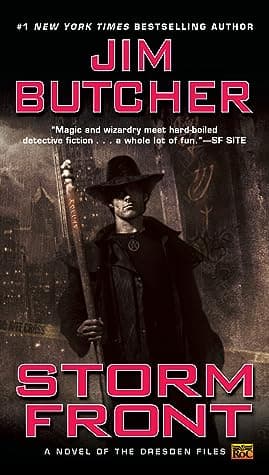
- Storm Front
Jim Butcher
4.0 (294k) average on GoodreadsFantasyFeatures a snarky, magic-wielding detective solving supernatural cases in a modern city.
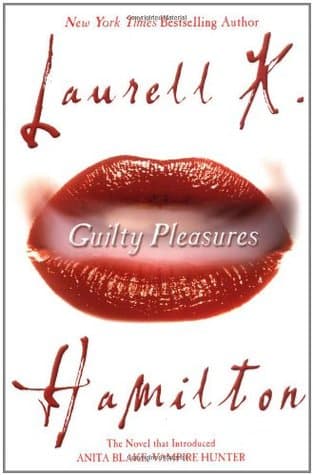
- Guilty Pleasures
Laurell K. Hamilton
4.0 (133k) average on GoodreadsFantasyBoth novels feature strong, often morally ambiguous female protagonists navigating a world populated by supernatural creatures and engaging in dark urban fantasy. However, Harrison's 'Dead Witch Walking' generally maintains a more focused narrative on Rachel's professional struggles and emerging independence, with romantic elements developing alongside. Hamilton's 'Guilty Pleasures' is significantly more explicit in its romantic and sexual content, with Anita Blake's identity often more intertwined with her growing supernatural powers and numerous romantic relationships. Harrison's approach to relationships, while significant, is less central to Rachel's overall character arc in this initial volume.
- Harry Potter and the Sorcerer's Stone
J.K. Rowling
4.5 (7M) average on GoodreadsFantasyRescued from a miserable life under the stairs, an orphaned boy discovers he's a wizard destined for a magical school, where he uncovers a dangerous secret tied to the dark wizard who murdered his parents.
- The Hunger Games
Suzanne Collins
4.3 (6.4M) average on GoodreadsFantasyIn a future where children fight to the death on live television, Katniss Everdeen volunteers for the arena, turning a death sentence into a fight for survival and a spark of rebellion.
- 1984
George Orwell
4.2 (3.1M) average on GoodreadsPoliticsIn a future where surveillance and thought control are absolute, a man's search for truth clashes with the Party, showing that hope can be a form of rebellion.
- Divergent
Veronica Roth
4.2 (2.9M) average on GoodreadsFantasyIn a society divided by virtues, a sixteen-year-old's difference from the norm starts a rebellion that threatens her world.




Enjoyed the summary?
A summary gives you the shape of the book. The book itself has the detail, the examples and the voice.
Find Dead Witch Walking on AmazonAs an Amazon Associate, BookBrief earns from qualifying purchases. How we're funded