
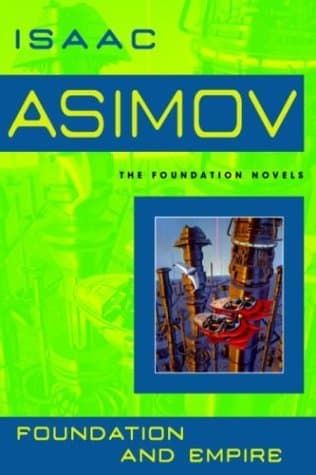
Synopsis
Covers the whole plot, including the ending.
- Difficulty
- Medium
- Pacing
- Moderate
- Mood
- Epic, Thought-provoking, Strategic, Sweeping
- Read it if
- You enjoy classic space opera, complex political maneuvering, and stories where intellectual solutions triumph over brute force, with a touch of philosophical exploration.
- Skip it if
- You prefer fast-paced action over intricate plots, or find older science fiction prose to be dated.
Foundation and Empire Plot Summary
Covers the whole plot, including the ending.
The General's Dilemma: Rising Imperial Power
General Bel Riose, a military leader of the decaying First Galactic Empire, begins a campaign to conquer the independent Foundation. Despite the Empire's overall decline and technological stagnation, Riose has a formidable fleet and strategic skill. He views the Foundation's growing influence and technology as a direct threat to Imperial authority. Riose establishes a base on Siwenna, gathering intelligence and resources, while the Foundation, guided by the Seldon Plan, believes itself safe from attack. Riose's initial successes, including the capture of several Foundation outposts, surprise the Foundation's leadership, forcing them to reconsider the Seldon Plan's predictions about the Empire's weakness.
Foundation's Counter-Strategy: Political Manipulation
Believing direct military confrontation is not possible against Riose's forces, the Foundation sends two agents: Ducem Barr, a former Imperial aristocrat from Siwenna, and Lathan Devers, a Foundation trader. Their mission is not to fight, but to subtly manipulate Imperial politics and Riose's ambition. They deduce that Riose, despite his military skill, is a pawn in the larger game of Imperial power. Their strategy involves planting suspicion within the Imperial court against Riose, hoping to trigger the Empire's paranoia and political instability. They believe that if Riose becomes too successful, the Emperor will see him as a threat, leading to his downfall.
The Emperor's Intervention and Riose's Fall
Devers and Barr's efforts work. Emperor Cleon II, a strong but suspicious ruler, becomes wary of General Riose's triumphs. The Emperor's advisors, fueled by fear and jealousy, subtly exaggerate Riose's ambition and independent actions. Despite Riose's loyalty, Cleon II's paranoia overwhelms him. He recalls Riose to Trantor, the Imperial capital, under the guise of celebration. Upon his arrival, Riose is arrested, charged with treason, and executed. His campaign against the Foundation collapses instantly, and the Imperial fleet disperses. The Foundation celebrates this outcome as another triumph of the Seldon Plan, confirming the Empire's inevitable decline and its inability to successfully challenge the Foundation.
The Rise of the Mule: An Unforeseen Threat
Eighty years after Riose's downfall, the galaxy faces a new, unprecedented threat: the Mule. A mysterious individual with the ability to telepathically manipulate emotions, the Mule rapidly conquers independent systems and then sets his sights on the Foundation. His powers allow him to turn entire populations and fleets into loyal followers, making traditional military resistance impossible. The Foundation, complacent in its belief in the Seldon Plan's infallibility, is caught off guard. The Mule's abilities are a 'wild card' – a factor that Hari Seldon, the creator of psychohistory, could not have predicted or accounted for, representing a catastrophic deviation from the Plan. This is the beginning of the Foundation's most severe crisis.
Fall of the Foundation
The Mule's advance is relentless. He uses his emotional manipulation to turn Foundation fleets against each other and to convert key Foundation figures, including the Mayor of Terminus, Indbur III, into his loyal servants. Terminus, the capital of the Foundation, falls with minimal resistance. The Seldon Plan, which predicted a series of predictable crises and the Foundation's eventual triumph, is shattered. The Mule establishes his new capital on Kalgan and begins to build a new, personal empire, changing the trajectory of galactic history. The Foundation's citizens are left in despair, their faith in psychohistory and the future undermined.
Bayta Darell's Quest for the Second Foundation
Amidst the chaos and despair following the Foundation's fall, a young woman named Bayta Darell, along with her husband Toran and the Mule's jester, Magnifico Giganticus (who is secretly the Mule himself), begins a search for the Second Foundation. According to Seldon's prophecies, the Second Foundation was established at 'the other end of the galaxy' and comprised mental scientists capable of guiding humanity's future. Bayta believes that only the Second Foundation has the mental powers to counter the Mule. Their journey takes them through various star systems, including the remnants of the old Empire and the Mule's newly conquered territories, as they try to evade the Mule's agents and uncover clues.
On Trantor: The Search for Seldon's Library
Bayta, Toran, and Magnifico travel to the ruins of Trantor, the former capital of the Galactic Empire, now a desolate planet stripped of its metal and resources. They seek the Imperial Library, hoping to find any records or clues about the Second Foundation's location. They encounter Jord Fara, a scholar living among the ruins, who guides them through the vast, decaying library. While they find no direct mention of the Second Foundation, they learn more about Hari Seldon's life and his foresight, reinforcing Bayta's conviction that the Second Foundation must exist. Their time on Trantor shows the devastation caused by the Empire's fall and the lingering knowledge hidden within its remnants.
On Kalgan: The Mule's Identity Revealed
The trio eventually travels to Kalgan, the Mule's new capital. During their stay, Bayta Darell begins to piece together subtle clues and inconsistencies in Magnifico's behavior and knowledge. She realizes that the seemingly harmless jester is, in fact, the powerful, emotion-manipulating Mule himself, who has been traveling with them, observing and manipulating their quest. This revelation is a shocking climax, as Bayta confronts the Mule directly. The Mule, having grown fond of Bayta, reveals his true nature and the extent of his powers, admitting that he kept her close out of a strange affection and a desire to understand those who defied him.
Bayta's Stand and the Mule's Pursuit of the Second Foundation
In a tense confrontation on Kalgan, Bayta, with her knowledge of the Mule's identity, manages to briefly resist his mental influence through sheer force of will, fueled by her love for Toran. This act, while not defeating him, disturbs the Mule. He realizes that a strong emotional force, particularly love, can partially shield against his powers. More importantly, he recognizes that the Second Foundation, if it truly exists, would be his only true threat, as they would have mental abilities potentially equal or superior to his own. He declares his intention to find and destroy the Second Foundation, shifting his focus from galactic conquest to this new, personal crusade.
The Second Foundation's Intervention
Unbeknownst to the Mule, the Second Foundation has been subtly working against him all along. While their direct intervention is not explicitly shown in this book, the ending implies that they have been guiding events and planting the idea of a 'search for the Second Foundation' in the minds of key individuals like Bayta. Their ultimate goal is to neutralize the Mule without revealing their existence or directly confronting him, thus preserving the Seldon Plan. The Mule's shift in focus to finding the Second Foundation is, in itself, a manipulation by the Second Foundation, diverting him from further consolidating his empire and setting him on a path where they can eventually counter him.
Foundation and Empire Characters
General Bel Riose
Antagonist
Ambitious Imperial general who attempts to conquer the Foundation.
General Bel Riose is a highly competent and charismatic military commander of the First Galactic Empire. Unlike many other Imperial figures, he is not decadent or corrupt, but genuinely dedicated to restoring the Empire's glory. He possesses a keen strategic mind and is a formidable opponent for the Foundation. Despite his military prowess, he is ultimately a pawn in the Empire's political games, loyal to Emperor Cleon II to a fault. His ambition, while a strength on the battlefield, becomes his undoing as it fuels the Emperor's paranoia.
Relationships: Emperor Cleon II (Loyal general, ultimately betrayed by his emperor); Ducem Barr (Opponent, whom he respects and attempts to recruit)
Ducem Barr
Supporting
Former Imperial aristocrat and Foundation agent.
Ducem Barr is an astute and cunning former Imperial aristocrat from Siwenna, whose family suffered under the Empire. He becomes a key Foundation agent, understanding the intricacies of Imperial politics better than most. Barr is instrumental in the Foundation's strategy to undermine Riose, using his knowledge of Imperial paranoia and bureaucracy. He is a pragmatic and resilient character, willing to take risks for the Foundation's long-term survival.
Relationships: Lathan Devers (Fellow Foundation agent and companion); General Bel Riose (Political adversary whom he helps to bring down)
Lathan Devers
Supporting
Foundation trader and agent, assisting in Riose's downfall.
Lathan Devers is a resourceful and somewhat impulsive Foundation trader. He is tasked with working alongside Ducem Barr to execute the Foundation's plan against General Riose. Devers represents the practical, independent spirit of the Foundation's trading class. While initially somewhat naive about Imperial politics, he learns quickly and proves himself capable in espionage and manipulation. His determination and quick thinking are vital to their mission's success.
Relationships: Ducem Barr (Fellow Foundation agent and companion)
Emperor Cleon II
Mentioned
The last strong Emperor of the First Galactic Empire.
Emperor Cleon II is the final truly strong and influential Emperor of the First Galactic Empire. He is a shrewd and intelligent ruler, capable of making tough decisions, but also intensely paranoid about challenges to his authority. His fear of a successful general like Riose overshadowing him ultimately leads to Riose's downfall, demonstrating the inherent instability and self-destructive tendencies of the declining Empire. He embodies the Empire's inability to adapt and its reliance on centralized, often fearful, power.
Relationships: General Bel Riose (His most loyal and capable general, whom he ultimately executes)
The Mule (Magnifico Giganticus)
Antagonist
A powerful mutant with telepathic powers, capable of manipulating emotions and conquering the galaxy.
The Mule is a unique and devastating force, a powerful mutant with the ability to telepathically control and alter the emotions of others, turning them into loyal followers. He is a 'wild card' in the Seldon Plan, an anomaly that psychohistory could not predict. Despite his monstrous power, he is also depicted as a lonely and somewhat tragic figure, physically deformed and yearning for acceptance. His initial disguise as Magnifico Giganticus, a jester, highlights his complex nature – a being of immense power hiding behind a facade of harmlessness. He is driven by a desire to establish his own empire and find a place in the galaxy, but also by a deep-seated insecurity.
Relationships: Bayta Darell (His unwitting companion, whom he develops a complex, almost affectionate bond with); Toran Darell (Bayta's husband, whose emotions he manipulates)
Bayta Darell
Protagonist
Courageous young woman who searches for the Second Foundation to defeat the Mule.
Bayta Darell is a courageous and intelligent young woman from the fallen Foundation. She is fiercely independent and possesses a strong will, particularly when it comes to protecting her loved ones. After the Mule's conquest, she refuses to succumb to despair and dedicates herself to finding the mythical Second Foundation, believing it to be the only hope against the Mule. Her love for her husband, Toran, proves to be a powerful, if temporary, shield against the Mule's mental manipulation, demonstrating the strength of human emotion.
Relationships: Toran Darell (Her beloved husband); Magnifico Giganticus (The Mule) (Unwitting companion, then adversary whom she unmasks)
Toran Darell
Supporting
Bayta's husband, initially a pragmatic Foundation trader, who joins her quest.
Toran Darell is Bayta's devoted husband, a pragmatic and somewhat less idealistic Foundation trader. He is initially more focused on survival and less inclined to believe in the Second Foundation. However, his love for Bayta leads him to join her perilous quest. He provides practical support and a grounding presence during their journey. Toran is vulnerable to the Mule's mental manipulation, highlighting the overwhelming nature of the Mule's powers against ordinary individuals.
Relationships: Bayta Darell (His beloved wife); Magnifico Giganticus (The Mule) (Travel companion, whose true identity he is unaware of)
Jord Fara
Supporting
A scholar living among the ruins of Trantor.
Jord Fara is a scholar encountered by Bayta's group on the desolate planet Trantor. He represents the lingering intellectual spirit amidst the ruins of the once-great Imperial capital. Fara provides historical context and guidance through the vast, decaying Imperial Library, helping Bayta in her search for information about the Second Foundation. He symbolizes the importance of preserving knowledge even in times of galactic collapse.
Relationships: Bayta Darell (Assists her in her search for knowledge)
Ebling Mis
Supporting
Brilliant but unstable psychohistorian who attempts to locate the Second Foundation.
Ebling Mis is a brilliant but emotionally unstable psychohistorian who accompanies Bayta and Toran for a period. He possesses an exceptional intellect and is driven by an intense desire to find the Second Foundation, believing its existence is crucial to restoring the Seldon Plan. His mental strain from the Mule's influence and his exhaustive research pushes him to the brink. His ultimate fate, being mentally 'stabilized' by the Mule (or the Second Foundation), underscores the power of mental manipulation.
Relationships: Bayta Darell (Travel companion and fellow seeker of the Second Foundation); Toran Darell (Travel companion)
Foundation and Empire Themes
The Fall of Empires and the Rise of New Orders
The novel shows the decline and collapse of the First Galactic Empire, with political paranoia, technological stagnation, and internal decay, as seen in the fate of General Riose. At the same time, it shows the Foundation's emergence as a new galactic power, first through its technology and economy, and later through its struggle against unforeseen challenges. The Mule's conquest represents another, unexpected, shift in galactic order, showing how power cycles and civilization constantly changes. The story contrasts the old, decaying power with the new, evolving one, and then introduces an entirely new, unpredictable force.
“The Galactic Empire was a thing of the past. The Foundation was a thing of the future. The two could not exist together.”
The Power and Limits of Prediction (Psychohistory)
Psychohistory, Hari Seldon's science of predicting mass human behavior, is central to the Foundation's existence. The first part of the book, 'The General', shows psychohistory's accuracy in predicting the Empire's self-destructive tendencies. However, the second part, 'The Mule', explores the limits of this prediction. The Mule, a unique individual with unprecedented mental powers, represents a 'wild card' that psychohistory could not account for, shattering the Seldon Plan and plunging the Foundation into chaos. This theme asks whether even the most advanced scientific models can truly predict and control all aspects of human destiny, especially when confronted with unpredictable genius or mutation.
“Psychohistory dealt with the reactions of human masses to socioeconomic stimuli. It was a science of statistics, not of individuals.”
Individual Agency vs. Determinism
This theme comes from the conflict between the Seldon Plan and the Mule. The Plan suggests a deterministic future for humanity, guided by statistical probabilities. Characters like Bel Riose try to act against this tide, but ultimately fall victim to larger historical forces. The Mule, however, represents a powerful individual who can change the course of history through personal will and unique abilities, defying deterministic predictions. Bayta Darell's desperate search and her love for Toran also show the human desire to act and make choices, even when faced with overwhelming, seemingly predetermined, events. The story explores the tension between humanity's collective destiny and the impact of extraordinary individuals.
“The Seldon Plan was broken. It was not merely bent, or twisted, or temporarily dislocated. It was broken. And I broke it.”
The Nature of Power and Leadership
The novel looks at different forms of power: the decaying political power of the Empire (Cleon II's paranoia), the military power of a capable general (Riose), the technological and economic power of the early Foundation, and the mental power of the Mule. It contrasts traditional forms of leadership with the Mule's ability to subjugate minds, raising questions about control and consent. The Foundation's reliance on the Seldon Plan also represents a form of power – the power of knowledge and long-term planning. The themes explore how power is acquired, maintained, and how it can corrupt or be subverted, and what is legitimate leadership in a changing galaxy.
“There was a time when the mere name of the Emperor was enough to send shivers down a man's spine. Now, it's just a word.”
The Search for Hope and Meaning in Crisis
After the fall of the Foundation to the Mule, a deep sense of despair affects the galaxy. The loss of the Seldon Plan, which had provided a clear path to a better future, leaves many feeling lost and hopeless. Bayta Darell's quest for the Second Foundation is a symbol of this search for renewed hope and meaning. Her determination to find a solution, even when faced with great odds, shows the human spirit's need for purpose and a belief in a brighter tomorrow. The 'myth' of the Second Foundation is a psychological anchor for those who refuse to surrender to the Mule's conquest and the apparent end of the Seldon Plan.
“We're looking for the Second Foundation. We need to find them. They're our only hope.”
Plot Devices & Literary Techniques
Psychohistory
A fictional science used to predict the future of large populations.
Psychohistory is the central plot device and philosophical backbone of the 'Foundation' series. Developed by Hari Seldon, it is a mathematical science that can predict the general course of future events for large human populations, though not for individuals. In 'Foundation and Empire', it initially provides the Foundation with a sense of security against the Empire, accurately predicting Riose's downfall. However, its failure to predict the Mule's emergence becomes the primary conflict, highlighting its limitations and creating a crisis that drives the second half of the narrative. It serves as both a guiding prophecy and a challenge to human free will.
The 'Wild Card' Anomaly
An unpredictable element that disrupts the established order or plan.
The Mule is the ultimate 'wild card' anomaly in 'Foundation and Empire'. He represents an individual whose unique mental abilities and singular impact on history could not be accounted for by psychohistory. His emergence shatters the Seldon Plan, plunging the Foundation into an existential crisis. This device introduces unpredictability and raises the stakes, demonstrating that even a robust scientific prediction model like psychohistory has limits when confronted with truly exceptional, unforeseen factors. It forces the characters and the narrative to adapt to a reality beyond their understanding.
The Hidden Second Foundation
A legendary, secretly existing group of mental scientists.
The Second Foundation is a legendary, almost mythical, organization whose existence is hinted at throughout the series. It's described as being located at 'the other end of the galaxy' and composed of mental scientists who work to subtly guide humanity's development according to the Seldon Plan. In 'Foundation and Empire', it serves as Bayta Darell's desperate objective and the ultimate hope against the Mule. Its hidden nature and mental powers make it an invisible hand, subtly influencing events and ultimately neutralizing the Mule without direct confrontation, thus preserving the Seldon Plan and its own secrecy.
The Decaying Empire
A setting representing the decline of a once-great civilization.
The First Galactic Empire serves as a powerful backdrop and a primary antagonist in the first part of the novel. Its decay is not just a setting but a plot device that enables the Foundation's rise. Characterized by political paranoia (Emperor Cleon II), technological stagnation, and internal corruption, the Empire's inherent weaknesses are exploited by the Foundation. Its inability to sustain a prolonged, effective campaign against the Foundation, despite the brilliance of General Riose, underscores its inevitable collapse predicted by Seldon. The ruins of Trantor later symbolize this profound decline.
Emotional Manipulation (The Mule's Power)
A unique telepathic ability to control and alter the emotions of others.
The Mule's power of emotional manipulation is a critical plot device that fundamentally alters the nature of conflict in the 'Foundation' universe. Unlike conventional warfare, which relies on technology and strategy, the Mule's ability to turn enemies into loyal followers by 'tweaking' their emotions renders traditional defenses useless. This power allows him to conquer the Foundation swiftly and without significant resistance, creating a crisis that psychohistory could not foresee. It also highlights the vulnerability of the human mind and introduces a new dimension of psychological warfare.
Foundation and Empire Quotes
“Violence is the last refuge of the competence.”
“Never let your sense of morals prevent you from doing what is right!”
“To succeed, you must have the courage to fail.”
“The greatest enemy of knowledge is not ignorance, it is the illusion of knowledge.”
“An atom-blaster is a good weapon, but it can point both ways.”
“It is the chief characteristic of the human mind, that it can never be at rest.”
“The only sure weapon against the Mule is freedom.”
“The test of a first-rate intelligence is the ability to hold two opposed ideas in mind at the same time and still retain the ability to function.”
“History is a wheel, for the nature of man is a wheel.”
“There are no such things as facts, only interpretations.”
“The future is not a path to be walked, but a labyrinth to be explored.”
“The highest activity a human being can attain is learning for understanding, because to understand is to be free.”
“Against logic there is no armor like ignorance.”
“The only way to solve a problem is to prevent it.”
Quiz
10 questions on the plot and the characters. Each answer comes with a short explanation.
Question 1
Which major character in 'Foundation and Empire' represents a significant deviation from Hari Seldon's psychohistorical predictions?
- Hober Mallow
- Bel Riose
- The Mule
- Pritcher
Show answer
C. The Mule The Mule is a mutant with mental powers capable of directly influencing emotions, which made him an unpredictable variable that Hari Seldon's psychohistory, based on statistical analysis of large populations, could not foresee.
Question 2
What is the primary method Bel Riose uses to attempt to conquer the Foundation?
- Economic manipulation and trade embargos.
- Direct military conquest with superior Imperial forces.
- Infiltration and sabotage of Foundation infrastructure.
- Diplomatic alliances with other independent systems.
Show answer
B. Direct military conquest with superior Imperial forces. Bel Riose, an ambitious Imperial general, attempts to crush the Foundation through a straightforward military campaign, relying on the vast resources and discipline of the First Empire's fleet.
Question 3
What is the significance of the Terminus City archives in the context of the Seldon Plan?
- They contain the secret location of the Second Foundation.
- They periodically reveal prerecorded messages from Hari Seldon.
- They serve as the main library for all galactic knowledge.
- They house the Foundation's most advanced weaponry.
Show answer
B. They periodically reveal prerecorded messages from Hari Seldon. The Terminus City archives are where Hari Seldon's holographic projections appear at critical junctures, explaining the nature of the current Seldon Crisis and guiding the Foundation's leaders.
Question 4
How does Ducem Barr, a former Imperial aristocrat, aid the Foundation against Bel Riose?
- He leads a rebellion against Riose from within the Empire.
- He provides crucial intelligence about Imperial fleet movements.
- He serves as a political advisor, helping expose Riose's ambitions to the Emperor.
- He defects and brings a significant portion of the Imperial fleet to the Foundation.
Show answer
C. He serves as a political advisor, helping expose Riose's ambitions to the Emperor. Ducem Barr, though imprisoned by Riose, helps reveal Riose's true intentions and growing power to the Emperor, which ultimately leads to Riose's downfall not by the Foundation, but by the Empire's own paranoia.
Question 5
What is the 'Anacreon Interregnum' often referred to in the Foundation series?
- A period of peace between the Foundation and the Empire.
- The time when the Foundation was under direct Imperial rule.
- The era of the first Seldon Crisis involving the barbarian kingdoms.
- The period of the Mule's reign over the galaxy.
Show answer
C. The era of the first Seldon Crisis involving the barbarian kingdoms. The Anacreon Interregnum refers to the initial period after the fall of the First Empire's authority in the Periphery, where independent 'barbarian' kingdoms like Anacreon rose to power and threatened the nascent Foundation.
Question 6
What is the primary reason the First Empire ultimately fails to defeat the Foundation, even with superior military might?
- The Foundation's superior technology.
- The internal decay and political instability of the Empire.
- The intervention of the Second Foundation.
- A massive rebellion among the Imperial forces.
Show answer
B. The internal decay and political instability of the Empire. Despite Bel Riose's military prowess, the First Empire is plagued by internal corruption, paranoia, and a decadent central government. This inherent weakness, part of Seldon's plan, leads to Riose's downfall at the hands of the Emperor, not the Foundation.
Question 7
Which character serves as a key figure in the Foundation's resistance against the Mule, despite his mental powers?
- Hober Mallow
- Salvor Hardin
- Bail Channis
- Randu
Show answer
C. Bail Channis Bail Channis is a Foundation agent who, along with Bayta Darell, actively seeks the Second Foundation and attempts to resist the Mule's influence, even leading a mission to find the Second Foundation's location.
Question 8
What is the 'Space-Time Warp' that the Mule utilizes?
- A method of instantaneous interstellar travel.
- A propaganda term for his mental abilities to control emotions.
- A powerful weapon that distorts reality.
- A secret passage through asteroid fields.
Show answer
B. A propaganda term for his mental abilities to control emotions. The 'Space-Time Warp' is a term used by the Mule to describe his mental ability to subtly alter the emotions and loyalties of individuals, effectively 'warping' their perception and allegiance to his will without them realizing it.
Question 9
What is the main challenge the Seldon Plan faces with the emergence of the Mule?
- The Foundation's technological stagnation.
- The unpredictable nature of a single, powerful individual.
- External invasion from a non-human species.
- The rebellion of the outer planets against the Foundation.
Show answer
B. The unpredictable nature of a single, powerful individual. Psychohistory relies on statistical predictions over vast populations. The Mule, a powerful mutant capable of individually manipulating emotions, represents a unique, unquantifiable variable that throws the entire Seldon Plan off course.
Question 10
Why does Bayta Darell kill Ebling Mis?
- She believes he is secretly working for the Mule.
- She fears he is about to reveal the location of the Second Foundation to the Mule.
- He attempts to betray her and Bail Channis to the Empire.
- She discovers he is a spy for the First Empire.
Show answer
B. She fears he is about to reveal the location of the Second Foundation to the Mule. Bayta Darell kills Ebling Mis because he has successfully deduced the location of the Second Foundation. Knowing that the Mule could easily 'convert' Mis and extract this crucial information, Bayta acts to protect the Second Foundation and the Seldon Plan.
Foundation and Empire FAQ
What is Foundation and Empire about?
Foundation and Empire is the second novel in Isaac Asimov's original Foundation Trilogy. It details the Foundation's inevitable clash with the crumbling Galactic Empire, specifically focusing on two major conflicts: the rise of a powerful Imperial general named Bel Riose who seeks to crush the Foundation, and later, the emergence of the Mule, a mutant with mind-controlling abilities who poses an unforeseen threat to Hari Seldon's meticulously planned Seldon Plan.
Why should I read Foundation and Empire?
You should read Foundation and Empire to witness the Seldon Plan tested against its greatest challenges, both foreseen and unforeseen. It offers a thrilling exploration of empire decline, the power of individual genius against statistical prediction, and introduces one of science fiction's most iconic and terrifying villains, the Mule, whose unique abilities force the Foundation to adapt in ways no one anticipated.
What is the background/setting of Foundation and Empire?
The book is set thousands of years in the future across a vast galaxy, where the First Galactic Empire is in terminal decline, as predicted by psychohistorian Hari Seldon. The Foundation, established on the remote planet Terminus, is a scientific and technological haven designed to shorten the interregnum of barbarism before the rise of a Second Empire. The story unfolds across various Imperial worlds and Foundation territories, highlighting the vastness of the crumbling Empire and the Foundation's growing influence.
What are the most memorable quotes?
One memorable quote is 'Violence is the last refuge of the incompetent.' Another significant one, often attributed to the Mule's impact, is the realization that 'The Seldon Plan had failed.' These quotes encapsulate the intellectual nature of the conflict and the profound shock of an unexpected threat.
What writing style does the author use?
Asimov employs a clear, concise, and highly intellectual writing style, often focusing on dialogue and internal monologues to convey complex ideas and strategic maneuvers. He prioritizes plot and conceptual depth over elaborate descriptions or character introspection, making the narrative feel like a grand historical account unfolding with scientific precision.
What minor details add significant meaning?
The subtle hints about the Mule's true nature, long before his identity is revealed, such as the unusual speed of his conquests and the unwavering loyalty of his followers, are crucial. These details build suspense and underscore the unprecedented nature of the threat he poses, making his eventual reveal more impactful and terrifying.
What are some subtle foreshadowing moments?
Early discussions among the Foundation's leaders about the Seldon Plan's limitations, particularly its inability to account for individual mutants or 'wild cards,' subtly foreshadow the Mule's emergence. Similarly, the Emperor's disinterest in Bel Riose's successes, prioritizing his own comfort over Imperial strength, foreshadows the Empire's ultimate collapse regardless of Riose's temporary victories.
What unexpected character connections exist?
The most unexpected connection is that of Bayta Darell's great-grandson, Arkady Darell, who plays a crucial role in 'Second Foundation.' While not explicitly detailed as a connection in *this* book, the lineage of the Darell family becomes a recurring thread, linking different eras of the Foundation's history and demonstrating the enduring impact of seemingly minor characters.
What are unspoken character motivations?
Emperor Cleon II's unspoken motivation, despite his apparent strength, is a deep-seated paranoia and insecurity. He allows Bel Riose to pursue the Foundation not out of genuine belief in Riose's loyalty, but to have a potential scapegoat or to eliminate a rival. Riose himself is driven by a desire for glory and to restore the Empire, but beneath that lies a deep ambition for personal power, which the Emperor subtly detects.
What psychological complexities do characters exhibit?
Bel Riose exhibits the psychological complexity of a brilliant military mind operating within a decaying system, constantly battling against the Emperor's suspicion and the inherent inertia of the Empire. The Mule, despite his immense power, shows a deep-seated loneliness and a desire for acceptance, which he tries to fulfill through his manipulations and his relationship with Bayta Darell, revealing a vulnerability beneath his terrifying abilities.
What are the major emotional turning points?
The first major emotional turning point is when Bel Riose, despite his military genius, is recalled and executed by Emperor Cleon II, demonstrating the Empire's self-destructive nature. The second, and more profound, is the Foundation's realization that the Mule is a single, unpredicted individual who has irrevocably broken the Seldon Plan, plunging them into existential despair and forcing a frantic search for the Second Foundation.
How do relationship dynamics evolve?
The relationship between General Bel Riose and his aide, Ducem Barr, evolves from a professional military dynamic to one of increasing trust and shared understanding of the Empire's flaws, though Barr remains loyal to the Foundation's principles. More dramatically, the relationship between Bayta Darell and the Mule transforms from initial fear and opposition to Bayta's complex emotional entanglement as she attempts to understand and ultimately defeat him, highlighting his manipulative charm.
Which parts remain ambiguous or open-ended?
The exact location and nature of the Second Foundation remain ambiguous throughout the book, serving as a mysterious, unseen force that the Foundation desperately seeks. While the Mule's defeat is implied, the specific mechanisms of how the Second Foundation intends to restore the Seldon Plan are not fully revealed, leaving the reader to ponder the future challenges.
What are controversial scenes or decisions?
One controversial decision is the Foundation's initial complacency, relying too heavily on the Seldon Plan without fully understanding its limitations, which ultimately leaves them vulnerable to the Mule. Another is the psychological manipulation employed by the Mule, which raises ethical questions about free will and the right to alter minds, even if for a 'peaceful' conquest.
Foundation and Empire ending explained: how it ends & what it means
Foundation and Empire ends with the Mule having successfully conquered the First Foundation, but his search for the Second Foundation proves fruitless. Bayta Darell discovers the Mule's true identity as a mutant and his mental powers. Ultimately, the book concludes with the Foundation under the Mule's control, but with the hope that the Second Foundation, an organization of mental scientists, will eventually intervene to restore the Seldon Plan and counteract the Mule's unprecedented disruption. It signifies the triumph of individual genius (the Mule) over statistical prediction, but also sets the stage for the true test of psychohistory.
About the author
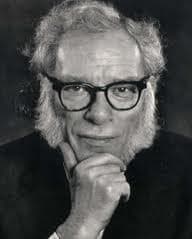
Isaac Asimov was an American writer and professor of biochemistry at Boston University. During his lifetime, Asimov was considered one of the "Big Three" science fiction writers, along with Robert A. Heinlein and Arthur C. Clarke. A prolific writer, he wrote or edited more than 500 books. He also wrote an estimated 90,000 letters and postcards. Best known for his hard science fiction, Asimov also wrote mysteries and fantasy, as well as much non-fiction.
Similar books
- Dune
Frank Herbert
4.2 (766k) average on GoodreadsFantasyFeatures a sprawling galactic empire, messianic figures, and deep political and sociological themes.
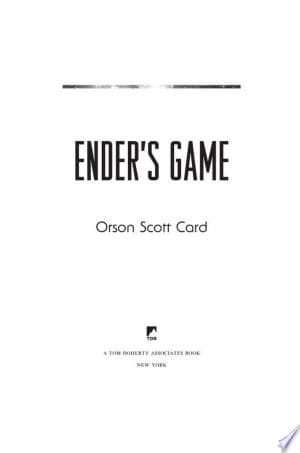
- Ender's Game
Orson Scott Card
4.3 (1.1M) average on GoodreadsFantasyFocuses on strategic genius and the psychological impact of war, though on a smaller scale.
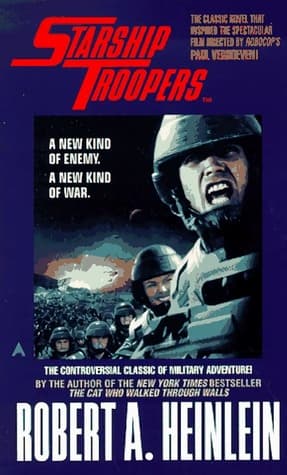
- Starship Troopers
Robert A. Heinlein
4.0 (192k) average on GoodreadsFantasyHeinlein's Starship Troopers (1959) prioritizes individual heroism, military action, and a more direct exploration of political ideologies through character experiences. Asimov's work, in contrast, focuses on the broader, impersonal forces of history and the intellectual challenge of psychohistory, with less emphasis on individual character development or direct combat.
- Harry Potter and the Sorcerer's Stone
J.K. Rowling
4.5 (7M) average on GoodreadsFantasyRescued from a miserable life under the stairs, an orphaned boy discovers he's a wizard destined for a magical school, where he uncovers a dangerous secret tied to the dark wizard who murdered his parents.
- The Hunger Games
Suzanne Collins
4.3 (6.4M) average on GoodreadsFantasyIn a future where children fight to the death on live television, Katniss Everdeen volunteers for the arena, turning a death sentence into a fight for survival and a spark of rebellion.
- 1984
George Orwell
4.2 (3.1M) average on GoodreadsPoliticsIn a future where surveillance and thought control are absolute, a man's search for truth clashes with the Party, showing that hope can be a form of rebellion.




Enjoyed the summary?
A summary gives you the shape of the book. The book itself has the detail, the examples and the voice.
Find Foundation and Empire on AmazonAs an Amazon Associate, BookBrief earns from qualifying purchases. How we're funded