
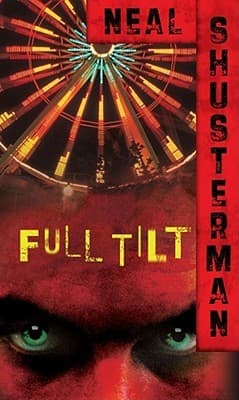
Synopsis
Covers the whole plot, including the ending.
- Difficulty
- Medium
- Pacing
- Fast
- Mood
- Suspenseful, Dark, Intense, Introspective
- Read it if
- You enjoy psychological thrillers with a supernatural twist, explore themes of guilt and fear, and appreciate a fast-paced, high-stakes narrative.
- Skip it if
- You prefer lighthearted stories, dislike allegorical plots, or are sensitive to dark and intense themes.
Full Tilt Plot Summary
Covers the whole plot, including the ending.
The Dare and the Phantom Carnival's Arrival
Sixteen-year-old Blake always looks out for his younger brother, Quinn, who loves thrills. One night, while Blake is on a date with his girlfriend, Maggie, Quinn and his friends, Russ and Cassandra, dare each other to visit a new, mysterious carnival that appeared suddenly. Blake, uneasy about the carnival's unsettling atmosphere and the strange, old-fashioned ticket booth, tries to dissuade Quinn. However, Quinn, a daredevil, rushes in with his friends. Blake, feeling responsible and a sense of dread, reluctantly follows them, purchasing tickets from the eerie ticket taker who seems to know more than he lets on, and steps into the bizarre, old-fashioned world of the Full Tilt Carnival.
Trapped and the Seven Deadly Rides
Inside the carnival, Blake quickly realizes something is wrong. The rides are unsettling, the atmosphere is sinister, and the other patrons seem dazed or unnervingly joyful. He finds Quinn, Russ, and Cassandra, but they are all behaving strangely, already under the carnival's spell. A disembodied voice, belonging to the ringmaster, informs Blake that he is trapped. To escape the carnival by dawn, he must survive seven deadly rides, each designed to exploit his deepest fears. If he fails, he, along with Quinn and his friends, will become permanent parts of the carnival, their souls consumed. Blake, terrified but determined to save his brother, accepts the challenge.
The Carousel of Beasts and the Mirror Maze
Blake's first challenge is the 'Carousel of Beasts,' where the animals are not painted horses but grotesque, living creatures that stampede and try to trample him. He narrowly survives, his fear of being overwhelmed and helpless tested. Next, he faces the 'Hall of Mirrors,' which does not just reflect his image but distorts it into monstrous, deformed versions of himself, reflecting his inner insecurities and fears of becoming something ugly or broken. He sees his father's angry face, his own failures, and the potential for his own darkness. This ride forces him to confront his self-perception and the hidden anxieties he has about his own identity.
The Tunnel of Love and the Roller Coaster of Regret
The 'Tunnel of Love' is a macabre experience, twisting the romantic ideal into a journey through decaying relationships and lost connections, forcing Blake to confront his anxieties about love and commitment, particularly concerning Maggie. After this, he boards the 'Roller Coaster of Regret,' a terrifying ride that plunges him through vivid, agonizing recreations of his past mistakes and moments of failure, particularly those involving Quinn. He relives his regret over not being able to save his younger brother, Matt, from a drowning accident, a memory that has haunted him for years and makes him overprotective towards Quinn. The ride intensifies his guilt and the burden he carries.
The House of Horrors and the Ferris Wheel of Fate
The 'House of Horrors' presents Blake with an onslaught of his personal phobias, from claustrophobia to grotesque creatures, pushing him to the brink of his sanity. He navigates through the chilling, shifting rooms, forced to confront his primal fears directly. Next, he ascends the 'Ferris Wheel of Fate,' which does not offer scenic views but rather terrifying glimpses into potential bleak futures, showing him the consequences of his failures and the loss of Quinn. The height and the visions combine to make him feel powerless over destiny, amplifying his fear of losing control and of an uncertain, terrible future.
The Gravitron of Guilt and the Truth About Matt
The seventh and final ride is the 'Gravitron of Guilt.' As the ride spins, pinning him against the wall, Blake is overwhelmed by memories about his younger brother, Matt, who drowned years ago. The centrifugal force and the disorienting environment strip away his defenses, forcing him to relive the exact moments of Matt's death. He finally admits the full truth to himself: he was there, he saw Matt struggling, and he froze, unable to act, burdened by an inexplicable fear. This confession, a moment of raw, painful honesty, is the true purpose of the Gravitron, forcing Blake to face his deepest, most buried trauma and the immense guilt he has carried silently.
Saving Quinn and the Carnival's True Nature
Having confronted his guilt over Matt's death, Blake finds a new strength and clarity. He realizes that the carnival feeds on unresolved fears and guilt. With the dawn approaching, he races to find Quinn, who is now fully under the carnival's influence, almost a part of its structure. Blake confronts the ticket taker, who reveals himself to be the spirit of a young boy who died in a carnival accident, trapped in this purgatorial existence. Blake, understanding that his acceptance of his past is the key, manages to reach Quinn. By embracing his guilt and vowing to live fully, he breaks the carnival's hold over them. The carnival, its purpose fulfilled, begins to dissolve.
Escape and Lingering Questions
As the carnival collapses into dust and shadows, Blake, Quinn, Russ, and Cassandra find themselves back in the real world, standing in the empty field where the carnival had been. They are disoriented but safe. Quinn, though still a thrill-seeker, seems to have a new appreciation for life and a deeper connection with Blake. Russ and Cassandra are also changed, shaken by their experience. Blake, while scarred, feels a sense of release from his lifelong burden of guilt regarding Matt. The phantom carnival is gone, but the lessons learned and the fears confronted will forever shape their lives. The experience strengthens Blake's understanding of his own courage and the unbreakable bond with his brother.
Principal Figures
Blake
Protagonist
Sixteen-year-old, responsible older brother burdened by past trauma.
Blake is a cautious and highly responsible sixteen-year-old, constantly looking out for his younger brother, Quinn. He is burdened by the unresolved guilt of his youngest brother Matt's drowning death, believing he was responsible for not saving him. This trauma makes him overly protective and risk-averse, contrasting sharply with Quinn's thrill-seeking nature. He is deeply caring but also carries a heavy emotional weight, which the carnival exploits by forcing him to confront his deepest fears and the truth about his past. His journey through the carnival is one of self-discovery and ultimate liberation from his guilt.
Relationships: Quinn (Younger brother, Blake feels responsible for his safety); Matt (Deceased youngest brother, Blake carries immense guilt over his death); Maggie (Girlfriend, a source of comfort and normalcy outside the carnival); The Ticket Taker/Ringmaster (Antagonistic force, orchestrator of the carnival's trials)
Quinn
Supporting
Blake's fearless younger brother, drawn to danger and thrills.
Quinn is Blake's younger brother, characterized by his boundless energy, fearlessness, and insatiable desire for thrills. He constantly pushes boundaries and seeks out new adventures, often to Blake's exasperation. His adventurous spirit is what initially draws him and his friends into the Full Tilt Carnival. Once inside, he quickly succumbs to the carnival's spell, becoming a dazed, almost willing participant, which forces Blake to confront the challenges to save him. Quinn represents the carefree, spontaneous side of life that Blake has suppressed due to his past trauma.
Relationships: Blake (Older brother, looks up to him but also frustrates him with his caution); Russ (Friend, fellow thrill-seeker); Cassandra (Friend, shares his adventurous spirit)
Maggie
Supporting
Blake's supportive girlfriend, representing his connection to the real world.
Maggie is Blake's girlfriend and a grounding presence in his life. She is kind, understanding, and offers Blake emotional support. While she doesn't enter the carnival, she represents the normalcy, love, and future that Blake risks losing if he fails to escape. Her presence in Blake's thoughts, particularly during the 'Tunnel of Love,' highlights his anxieties about maintaining relationships and his desire for a future beyond his past burdens. She is a reminder of what he is fighting for and a symbol of hope.
Relationships: Blake (Boyfriend, a source of love and support)
Russ
Supporting
Quinn's friend, who joins him in entering the carnival.
Russ is one of Quinn's friends, a fellow thrill-seeker who accompanies Quinn and Cassandra into the Full Tilt Carnival. Like Quinn, he quickly falls under the carnival's spell, becoming dazed and unresponsive. He serves as another example of the carnival's power to ensnare those who enter, and his fate is tied to Blake's success in completing the rides. He is less developed than Quinn but contributes to the sense of urgency and danger for Blake.
Relationships: Quinn (Friend, shares a love for dares); Cassandra (Friend)
Cassandra
Supporting
Quinn's friend, also drawn into the carnival's sinister world.
Cassandra is another of Quinn's friends who, along with Russ, dares to enter the mysterious carnival. She, too, becomes a victim of the carnival's enchantment, her personality subdued and her free will suppressed. Her presence reinforces the peril that Blake faces, as he is fighting not just for Quinn but for all three of the friends who followed Quinn inside. She represents another soul Blake is trying to save from becoming a permanent part of the carnival's dark allure.
Relationships: Quinn (Friend, shares a love for dares); Russ (Friend)
The Ticket Taker / The Ringmaster
Antagonist
The enigmatic, sinister entity overseeing the Full Tilt Carnival.
The Ticket Taker, who also manifests as the disembodied voice of the Ringmaster, is the primary antagonist of the story. He is an eerie, ancient figure at the carnival's entrance, whose eyes seem to hold centuries of knowledge. He is the one who sets the rules for Blake's survival challenge, orchestrating the seven deadly rides. He later reveals himself to be the trapped spirit of a young boy who died in a carnival accident long ago, forever bound to this purgatorial carnival, feeding on the fears and guilt of its patrons. He is a tragic figure, a victim turned tormentor, whose existence is intertwined with the carnival's purpose.
Relationships: Blake (Adversary, challenges Blake to confront his fears)
Matt
Mentioned
Blake's deceased youngest brother, whose death is the source of Blake's guilt.
Matt is Blake and Quinn's youngest brother, who tragically drowned years before the events of the story. Although deceased, Matt is a central figure in Blake's internal conflict. His death is the source of Blake's profound guilt and overprotective nature towards Quinn. Blake believes he failed to save Matt, and this unresolved trauma is the carnival's ultimate target. Matt's memory is revisited vividly during the 'Roller Coaster of Regret' and most painfully during the 'Gravitron of Guilt,' where Blake finally confronts the full, painful truth of what happened.
Relationships: Blake (Older brother, source of Blake's deep guilt); Quinn (Older brother)
Themes & Insights
Confronting Guilt and Self-Forgiveness
The central theme is Blake's struggle with the guilt he carries over his youngest brother Matt's drowning. The carnival's rides are designed to force Blake to relive and confront this repressed trauma. Through the 'Roller Coaster of Regret' and especially the 'Gravitron of Guilt,' Blake is compelled to acknowledge his perceived failure and his inaction during Matt's death. His ultimate escape depends on his ability to forgive himself and accept that he was not fully responsible, leading to a sense of liberation.
“'It wasn't your fault, Blake. It never was.”
Fear and Its Manifestations
The Full Tilt Carnival is a metaphor for fear itself. Each ride physically shows Blake's deepest anxieties and phobias, from the fear of helplessness ('Carousel of Beasts') and distorted self-image ('Hall of Mirrors') to the fear of loss ('Ferris Wheel of Fate') and his most repressed fear of his past actions ('Gravitron of Guilt'). The novel explores how fear can paralyze individuals and how confronting these fears, rather than avoiding them, is essential for growth and freedom. The carnival thrives on these fears, trapping souls who cannot overcome them.
“Fear makes you freeze, Blake. It makes you a prisoner.”
Sibling Responsibility and Love
The bond between Blake and Quinn is a driving force of the narrative. Blake's overprotective nature comes from his love for Quinn and his guilt over Matt's death. He enters the dangerous carnival solely to save Quinn, showing the depth of his sibling responsibility. The challenges he faces are increased by the knowledge that Quinn's life, and soul, are at stake. The story shows the sacrifices one is willing to make for family and the lasting strength of brotherly love, even amidst conflict and contrasting personalities.
“I had to save him. He was my brother, and I wasn't going to lose another one.”
The Nature of Reality and Illusion
The Full Tilt Carnival exists in a space between reality and illusion. It appears and disappears, its rides are both physically real and psychologically manipulative, and its patrons are trapped in a dreamlike state. The novel questions what is real and what is perceived, especially when fear and guilt distort one's perception. The carnival's ability to show Blake's inner world blurs the lines, suggesting that internal struggles can create their own external realities, and that true escape involves distinguishing between objective reality and subjective terror.
“The carnival is as real as your deepest fears, Blake.”
Plot Devices & Literary Techniques
The Phantom Carnival
A supernatural, sentient carnival that preys on human fears and guilt.
The Full Tilt Carnival is the central plot device. It is a mysterious, anachronistic carnival that appears and disappears seemingly at will, drawing in thrill-seekers. It's not just a setting but an antagonist, a sentient entity that feeds on the unresolved fears and guilt of its patrons. It manifests personalized, terrifying rides for each individual, specifically designed to exploit their psychological vulnerabilities. Its ultimate goal is to trap souls, transforming them into permanent, dazed attractions. It serves as a purgatorial space where characters are forced to confront their inner demons to escape.
Seven Deadly Rides
A series of personalized, fear-inducing attractions Blake must survive.
The 'Seven Deadly Rides' are the core challenge Blake must overcome. Each ride (Carousel of Beasts, Hall of Mirrors, Tunnel of Love, Roller Coaster of Regret, House of Horrors, Ferris Wheel of Fate, Gravitron of Guilt) is a distinct, terrifying trial designed to exploit a specific fear or trauma of Blake's. They are not merely physical challenges but psychological ones, forcing him to confront his deepest anxieties, insecurities, and particularly his guilt over Matt's death. Successfully navigating these rides is the mechanism by which Blake achieves self-discovery and earns his freedom.
Flashbacks and Memories
Interspersed recollections of past events, particularly Matt's death.
Flashbacks and vivid memories are used throughout the narrative, especially during the more psychologically intense rides like the 'Roller Coaster of Regret' and the 'Gravitron of Guilt.' These serve to gradually reveal the full story of Matt's drowning and Blake's role (or perceived lack thereof) in it. They are crucial for understanding Blake's character, his motivations, and the source of his profound guilt. By forcing Blake (and the reader) to relive these moments, the plot device deepens the emotional impact and builds towards the climactic confrontation with his past.
The Ticket Taker's Revelation
The antagonist's true identity and the carnival's origin are revealed.
The revelation of the Ticket Taker's true identity as a trapped spirit, a young boy who died in a carnival accident, serves as a significant plot device. It explains the carnival's supernatural nature, its purpose, and its connection to unresolved trauma. This twist transforms the antagonist from a purely evil entity into a tragic figure, adding depth to the narrative. It also provides Blake with a deeper understanding of the carnival's rules and how to truly escape, by confronting and resolving his own lingering guilt, thereby breaking the cycle of entrapment.
Full Tilt Quotes
“Sometimes the things we think are the most important are the things that are most easily lost.”
“Fear is a powerful motivator. It can make you do things you never thought possible.”
“The greatest show on Earth, they called it. And it was. A show of how easily people could be manipulated.”
“You can't save everyone. Sometimes you just have to save yourself.”
“There's a fine line between bravery and stupidity.”
“Love isn't about finding someone perfect. It's about finding someone who's perfectly imperfect for you.”
“The carnival feeds on your desires, your fears, your hopes. It takes everything and gives nothing back.”
“Sometimes the only way out is through.”
“We all have monsters inside us. The trick is not to let them out.”
“It's amazing how much you can endure when you have something worth fighting for.”
“The past is a ghost that haunts us, but it doesn't have to define us.”
“Hope is a dangerous thing. It can lead you to believe in the impossible, even when you know it's a lie.”
“Sometimes the greatest acts of courage are the ones no one ever sees.”
“Life is a roller coaster, and sometimes you just have to hold on tight.”
Quiz
10 questions on the plot and the characters. Each answer comes with a short explanation.
Question 1
What is the primary reason Blake enters the phantom carnival?
- He was dared to by a mysterious figure.
- He is chasing after his younger brother, Quinn.
- He accidentally stumbled into it while looking for a shortcut.
- He was looking for a new thrill-seeking experience himself.
Show answer
B. He is chasing after his younger brother, Quinn. Blake, the responsible older brother, enters the carnival specifically to retrieve his thrill-seeking younger brother, Quinn, who has run into it.
Question 2
How many deadly rides must Blake survive to escape the carnival?
- Five
- Six
- Seven
- Ten
Show answer
C. Seven Blake must survive 'seven deadly rides by dawn' to escape the phantom carnival, each representing a personal fear.
Question 3
What is a key characteristic that differentiates Blake from his brother Quinn?
- Blake is fearless, while Quinn is cautious.
- Blake is responsible, while Quinn is a thrill-seeker.
- Blake is outgoing, while Quinn is shy.
- Blake is older, while Quinn is younger, but they share the same personality.
Show answer
B. Blake is responsible, while Quinn is a thrill-seeker. The book explicitly states that Blake is the 'responsible member of the family' who keeps an eye on the 'fearless Quinn, whose thrill-seeking sometimes goes too far.'
Question 4
What does each of the deadly rides in the carnival represent for Blake?
- A challenge to his physical strength.
- A deep, personal fear.
- A memory from his happy childhood.
- A test of his loyalty to Quinn.
Show answer
B. A deep, personal fear. The description states that each of the seven deadly rides 'represents a deep, personal fear' for Blake, such as the carousel of stampeding animals or the hall of mirrors.
Question 5
Besides saving Quinn, what personal challenge must Blake ultimately face to escape the carnival?
- He must learn to embrace his own thrill-seeking side.
- He must convince the carnival master to release them.
- He must confront a horrible secret from his own past.
- He must find a hidden exit before the carnival disappears.
Show answer
C. He must confront a horrible secret from his own past. The summary indicates that Blake 'ultimately has to face up to a horrible secret from his own past to save himself and his brother.'
Question 6
What is the consequence for customers who are trapped in the phantom carnival?
- They are forced to work for the carnival forever.
- They become part of the rides themselves.
- The carnival 'traps its customers forever.'
- They lose their memories and become carnival spectators.
Show answer
C. The carnival 'traps its customers forever.' The text explicitly states that the bizarre phantom carnival 'traps its customers forever,' implying a permanent and inescapable fate.
Question 7
Which of these is mentioned as an example of a deadly ride Blake must face?
- A roller coaster that goes underwater.
- A house of horrors filled with clowns.
- A carousel of stampeding animals.
- A Ferris wheel that spins out of control.
Show answer
C. A carousel of stampeding animals. The summary provides 'a carousel of stampeding animals' and 'a hall of mirrors that changes people into their deformed reflections' as specific examples of the deadly rides.
Question 8
What is the looming deadline for Blake to escape the carnival with Quinn?
- Before midnight.
- Within 24 hours.
- By dawn.
- Before the next full moon.
Show answer
C. By dawn. Blake must survive the seven deadly rides 'by dawn,' indicating a strict time limit for their escape.
Question 9
What is the ultimate threat that the carnival poses to Blake and Quinn if they fail to escape?
- They will be forced to become permanent attractions.
- The carnival will claim their souls.
- They will be transformed into carnival creatures.
- They will simply vanish without a trace.
Show answer
B. The carnival will claim their souls. The summary concludes with the chilling warning: 'that is, if the carnival doesn't claim their souls first!', implying a spiritual and permanent loss.
Question 10
How does the 'hall of mirrors' ride specifically challenge Blake?
- It shows him illusions of his happiest memories.
- It changes people into their deformed reflections.
- It traps him in an endless maze of his own image.
- It forces him to confront his vanity.
Show answer
B. It changes people into their deformed reflections. The description specifically mentions 'a hall of mirrors that changes people into their deformed reflections,' indicating a direct confrontation with self-perception and possibly hidden fears about his own identity or appearance.
Full Tilt FAQ
What is 'Full Tilt' about?
'Full Tilt' by Neal Shusterman follows sixteen-year-old Blake as he desperately tries to rescue his thrill-seeking younger brother, Quinn, from a sinister phantom carnival. The carnival traps its visitors, and Blake must survive seven deadly rides, each designed to exploit his deepest fears, before dawn to save himself and Quinn.
Why should I read 'Full Tilt'?
You should read 'Full Tilt' for its thrilling pacing, masterful blend of horror and psychological depth, and its exploration of sibling bonds and confronting personal fears. Shusterman crafts a unique, nightmarish world that forces its protagonist, Blake, to mature by facing his past in a highly inventive and terrifying way.
What is the background/setting of 'Full Tilt'?
The story begins in a contemporary suburban setting before quickly transitioning into the primary antagonist: a bizarre, anachronistic phantom carnival that appears and disappears seemingly at will. This carnival is a surreal, ever-shifting landscape of terrifying rides and attractions, each designed to manifest and exploit the deepest fears of its patrons.
What are the most memorable quotes?
While specific quotes aren't provided in the summary, the book is known for its evocative descriptions of fear and its impact, such as passages describing the 'stampeding animals' on the carousel or the 'deformed reflections' in the hall of mirrors, which resonate with the characters' internal struggles.
What writing style does the author use?
Neal Shusterman employs a fast-paced, suspenseful writing style that is rich in descriptive imagery, particularly when detailing the surreal and terrifying carnival rides. He uses strong internal monologue for Blake to convey his fear and determination, creating a visceral and immersive experience for the reader.
What minor details add significant meaning?
The specific nature of each of the seven deadly rides, like the carousel of stampeding animals or the hall of mirrors, isn't just random; they are meticulously crafted to represent Blake's deep-seated fears and his unacknowledged guilt, adding layers to his psychological torment and eventual growth.
What are some subtle foreshadowing moments?
Quinn's inherent thrill-seeking nature and Blake's constant need to protect him subtly foreshadow the core conflict that pulls them into the carnival. Additionally, Blake's vague 'horrible secret from his own past' is hinted at through his overprotective tendencies and internal anxieties long before its full revelation.
What unexpected character connections exist?
Beyond Blake and Quinn's brotherly bond, the carnival itself acts as a character, connecting Blake to other trapped souls he encounters. These brief encounters, though not explicitly detailed, often provide Blake with crucial insights or warnings, subtly linking their shared predicament.
What are unspoken character motivations?
Blake's unspoken motivation is a deep-seated guilt and fear of failure, stemming from the 'horrible secret' in his past, which drives his overprotective behavior towards Quinn. Quinn's thrill-seeking, while seemingly reckless, might be an unspoken desire for attention or a way to push boundaries that Blake inadvertently sets.
What psychological complexities do characters exhibit?
Blake exhibits profound psychological complexity, grappling with fear, guilt, responsibility, and the trauma of his past. His journey through the carnival is a forced confrontation with his inner demons, revealing his capacity for immense courage despite his overwhelming anxieties.
What are the major emotional turning points?
A major emotional turning point for Blake is realizing that simply surviving the rides isn't enough; he must actively confront the root of his fears and the 'horrible secret' to truly save Quinn and himself. Another is the moment he fully accepts his past, transforming his fear into resolve.
How do relationship dynamics evolve?
The relationship between Blake and Quinn evolves from one of reluctant responsibility (Blake constantly watching Quinn) to a deeper, more profound bond forged in shared terror and mutual reliance. Blake's understanding of Quinn shifts from seeing him as merely reckless to appreciating his brother's spirit, while Quinn likely gains respect for Blake's courage.
Which parts remain ambiguous or open-ended?
The ultimate origin and true nature of the phantom carnival often remain somewhat ambiguous, contributing to its terrifying mystique. While its purpose is clear (trapping souls), the mechanics of its existence and its full capabilities are left to the reader's imagination, enhancing its supernatural horror.
What are controversial scenes or decisions?
The summary doesn't detail specific controversial scenes, but the 'horrible secret' from Blake's past, when revealed, likely involves a difficult decision or event that could be debated by readers. Additionally, some of the more extreme terror Blake faces on the rides might be considered intense.
'Full Tilt' ending explained: how it ends & what it means
The summary implies that to escape, Blake must face his 'horrible secret' from the past, meaning the ending likely involves him successfully confronting this trauma and overcoming his deepest fears. This confrontation would break the carnival's hold, allowing him and Quinn to escape, signifying Blake's personal growth and the strengthening of their bond, having faced death and their inner demons together.
About the author

Neal Shusterman is an American author known for his contributions to young adult fiction. His notable works include "Unwind," "The Toll," "Everlost," "Challenger Deep," "UnDivided," and "Bruiser," which explore themes of identity, morality, and the human experience. Shusterman has received various awards for his writing, including the National Book Award for "Challenger Deep."
Similar books
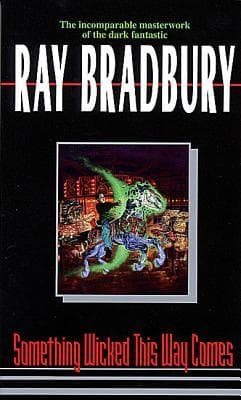
- Something Wicked This Way Comes
Ray Bradbury
3.9 (100k) average on GoodreadsFantasyBoth feature a mysterious, malevolent carnival that preys on human desires and fears.
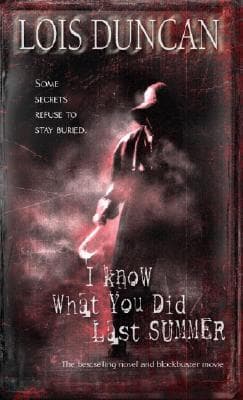
- I Know What You Did Last Summer
Lois Duncan
3.5 (12k) average on GoodreadsThrillerBoth books involve teenagers dealing with guilt and secrets. However, Duncan's novel is a more straightforward thriller focused on the consequences of a past crime, whereas Shusterman's Full Tilt uses a supernatural setting to force characters to confront their internal psychological demons directly.
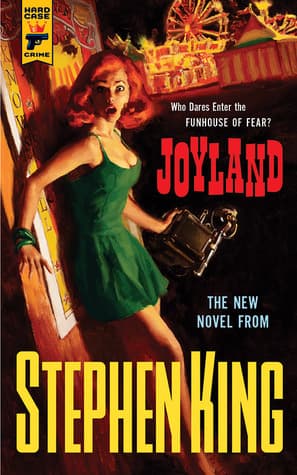
- Joyland
Stephen King
3.9 (118k) average on GoodreadsThrillerBoth novels are set in amusement parks with supernatural elements. King's Joyland is primarily a coming-of-age story with a classic ghost mystery, while Shusterman's Full Tilt is more intensely psychological, with the carnival itself acting as a sentient entity designed to exploit fears rather than just host a haunting.
- The Hunger Games
Suzanne Collins
4.3 (6.4M) average on GoodreadsFantasyIn a future where children fight to the death on live television, Katniss Everdeen volunteers for the arena, turning a death sentence into a fight for survival and a spark of rebellion.
- The Great Gatsby
F. Scott Fitzgerald
3.9 (3.8M) average on GoodreadsHistorical FictionIn the opulent Roaring Twenties, a mysterious millionaire's lavish parties hide his desperate, tragic pursuit of a lost love, exposing the emptiness within the American Dream.
- The Fault in Our Stars
John Green
4.2 (3.6M) average on GoodreadsYoung AdultA girl with a terminal illness finds her story rewritten when a charming boy with a similar past enters her life at a cancer support group, leading to a star-crossed romance.



Enjoyed the summary?
A summary gives you the shape of the book. The book itself has the detail, the examples and the voice.
Find Full Tilt on AmazonAs an Amazon Associate, BookBrief earns from qualifying purchases. How we're funded