
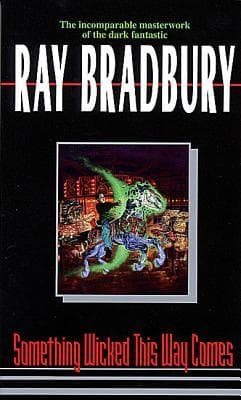
Synopsis
Covers the whole plot, including the ending.
- Difficulty
- Medium
- Pacing
- Moderate
- Mood
- Atmospheric, Suspenseful, Melancholy, Whimsical, Dark
- Read it if
- You love atmospheric, poetic horror that explores themes of youth, aging, good vs. evil, and the power of human spirit. Perfect for a spooky autumn read.
- Skip it if
- You prefer modern, explicit horror or straightforward narratives without much metaphorical depth.
Something Wicked This Way Comes Plot Summary
Covers the whole plot, including the ending.
The Arrival of the Carnival
On an ordinary October night in Green Town, Illinois, thirteen-year-old Will Halloway and his best friend, Jim Nightshade, are drawn to the edge of town. They see the midnight arrival of a mysterious carnival, Cooger & Dark’s Pandemonium Shadow Show, which rolls into town silently, its calliope playing a silent, seductive tune. The carnival's tents are instantly erected, appearing as if by magic. The boys feel a mix of fear and intense curiosity, sensing that this is no ordinary fair. This secret arrival sets an ominous tone, hinting at supernatural events to come, and immediately establishes the carnival as a powerful, evil entity.
The Temptation of the Carousel
The next day, Will and Jim sneak back to the carnival. They find the carousel, which operates in reverse to make riders younger and forward to make them older. They watch Mr. Cooger, one of the carnival owners, ride the carousel backwards, transforming from an old man into a young boy. Jim, fascinated by the idea of instant adulthood and the power it offers, is tempted to ride it. Will, however, senses the danger and unnaturalness of the machine, pulling Jim away from its spell. This scene shows their personalities: Jim’s impulsive nature versus Will’s cautious intuition, and establishes the carousel as the main instrument of the carnival's dark magic.
The Rescue of Miss Foley
Miss Foley, the boys' lonely, aging seventh-grade teacher, is lured by the carnival's promise of youth. She rides the carousel, becoming a young girl again, but the experience is not what she expected; she is left disoriented and miserable. Will and Jim, seeing her transformation and misery, try to warn her and help her escape the carnival. They manage to pull her away, but the carnival's influence is strong, and Miss Foley is confused and resists their help. This event makes the boys understand the carnival's evil nature and the tragic results of its false promises, deepening their resolve to fight it.
The Dust Witch's Pursuit
As the boys become more involved in exposing the carnival's secrets, they attract the attention of the Dust Witch, a blind woman who can 'see' with her skin and has strong psychic powers. She tries to capture them, using a hot air balloon to pursue them through the town. Will and Jim evade her, but the chase is terrifying and relentless, showing the carnival's willingness to use its dark magic to silence those who threaten it. This intense pursuit reinforces the danger the boys are in and the formidable power of their adversaries, increasing the conflict.
Charles Halloway's Involvement
Will's father, Charles Halloway, a melancholic and aging library janitor, at first dismisses the boys' fantastic tales. However, after seeing Mr. Dark's sinister presence and the carnival's strange effects on the townspeople, he slowly begins to believe them. He confronts Mr. Dark in the library, where Dark tries to intimidate him with illusions and threats. Charles, armed with his knowledge and love for his son, realizes the evil at play. His involvement shifts the story, bringing an adult perspective and a deeper understanding of the carnival's threat, and he becomes an unexpected ally in the fight.
The Hall of Mirrors Confrontation
During a desperate chase, Will and Jim are trapped in the carnival's Hall of Mirrors. Mr. Dark and the Dust Witch confront Charles Halloway there, trying to break his spirit and capture the boys. Charles, remembering advice about facing fear with joy, begins to laugh. His genuine, heartfelt laughter, initially forced, becomes infectious and powerful, shattering the carnival's illusions and weakening its hold. The mirrors crack, the Dust Witch is disoriented, and Mr. Dark is momentarily stunned. This moment shows laughter and joy as strong weapons against the carnival's dark magic.
Jim's Transformation and Rescue
In desperation, Jim gives in to the carousel's appeal and rides it forward, aging himself prematurely. The transformation leaves him frail, ancient, and near death, a horrifying sign of the carnival's corrupting power. Will and Charles rush to his aid, horrified by his state. Charles, using warmth, love, and laughter, tries to bring Jim back. Will, heartbroken by his friend's condition, also contributes his youthful energy and love. This scene is emotional, showing the dire consequences of the carnival's magic and the deep bond between the characters.
The Defeat of Mr. Dark
Mr. Dark, weakened by Charles's laughter, attempts a final assault. He tries to crush Charles's spirit by revealing his own tattooed body, which shows all the carnival's victims, including an image of a dying Jim. Charles, however, refuses to give in to despair. He embraces his love for Will and for life itself, focusing on simple joys and a renewed sense of purpose. With a final, powerful laugh and a loving touch, Charles embraces Mr. Dark, effectively 'killing' him with pure joy and affection. Mr. Dark crumbles into dust, his power dissolving under the force of human connection.
The Carnival's Demise
With Mr. Dark defeated, the entire carnival begins to unravel. The tents collapse, the rides stop, and the magical illusions disappear. The carnival, a manifestation of fear and despair, cannot exist without its master's dark will. The other carnival freaks and victims, now free from their enchantment, either disappear or revert to their original forms, no longer bound by the spell. The wind carries away the last remnants of the Pandemonium Shadow Show, leaving Green Town purged of its sinister influence and restoring peace to the community. The town remembers the strange events as a dream or a nightmare.
Morning After
As the sun rises, Will and Jim, now fully recovered, and Charles Halloway survey the empty field where the carnival once stood. The experience has changed them. Charles feels a renewed sense of youth and purpose, having conquered his own fears and embraced life. Jim has learned the dangers of wishing for things too quickly and the value of his own childhood. Will, always cautious, understands the importance of joy and simple goodness in combating evil. They walk away, forever bound by their shared ordeal, carrying the lessons of the carnival with them, ready to face the future with a deeper appreciation for life and its simple pleasures.
Something Wicked This Way Comes Characters
Will Halloway
Protagonist
The cautious, intuitive thirteen-year-old who embodies goodness.
Will is thirteen years old, born one minute before midnight on October 30th, making him a 'Halloween's Eve' child, a symbol of light and goodness. He is cautious, thoughtful, and deeply intuitive, often sensing danger where others do not. He is grounded in reality and possesses an inherent purity that makes him resistant to the carnival's temptations. His love for his father and his friendship with Jim are central to his character, and he often acts as Jim's moral compass, pulling him back from the brink of danger. He represents innocence and the power of simple, uncorrupted joy.
Relationships: Jim Nightshade (Best friend, often pulls Jim back from danger.); Charles Halloway (Son, his love for his father is a source of strength for both.)
Jim Nightshade
Protagonist
The impulsive, adventurous thirteen-year-old who yearns for experience.
Jim is Will's best friend, also thirteen, but born one minute after midnight on October 31st, making him a 'Halloween's Day' child, symbolizing a darker, more adventurous side. He is impulsive, restless, and deeply curious, yearning for speed, adventure, and the experience of adulthood. He is easily tempted by the carnival's promises of power and transformation, driven by a desire to escape the confines of childhood. His impulsiveness often puts him and Will in peril, but his courage and loyalty are also strong. He represents the human desire for more, and the dangers of unchecked ambition.
Relationships: Will Halloway (Best friend, often led into trouble by Jim's impulsiveness.); Mr. Dark (Tempted and nearly consumed by Mr. Dark's promises.)
Charles Halloway
Protagonist/Supporting
Will's melancholic father, a library janitor who rediscovers joy.
Charles Halloway is Will's father, a 54-year-old library janitor who feels the weight of his age and the approach of death. He is intelligent and sensitive but prone to melancholy and self-pity, believing his best years are behind him. Initially skeptical of the boys' stories, he is forced to confront the carnival's reality and his own deepest fears. His journey is one of self-acceptance and rediscovering the power of joy, love, and laughter. He represents the adult world's weariness and its potential for renewal.
Relationships: Will Halloway (Father, his love for Will is his greatest strength.); Mr. Dark (Primary antagonist, defeats him with joy.)
Mr. Dark
Antagonist
The sinister co-owner of the carnival, a tattooed embodiment of evil.
Mr. Dark is the Illustrated Man, the co-owner of Cooger & Dark's Pandemonium Shadow Show. His body is covered in tattoos, each representing a soul he has captured or transformed. He is a charismatic, manipulative, and profoundly evil entity who preys on people's deepest regrets, desires, and fears, offering them false promises of youth or power. He is the physical manifestation of the carnival's corrupting influence and a force of despair, seeking to extinguish joy and life. He thrives on misery and the loss of innocence, embodying the 'something wicked' that comes to town.
Relationships: Will Halloway (Seeks to capture and corrupt him.); Jim Nightshade (Tempts him with promises of adulthood.); Charles Halloway (His ultimate adversary, whom he underestimates.); The Dust Witch (His loyal subordinate and enforcer.)
The Dust Witch
Antagonist
A blind, powerful psychic and enforcer for Mr. Dark.
The Dust Witch is a terrifying, blind old woman who serves Mr. Dark. She possesses formidable psychic abilities, able to 'see' with her skin, cast illusions, and paralyze with a touch. She is a relentless hunter, tasked with capturing Will and Jim, and embodies the carnival's cruel and inescapable reach. Her presence is chilling, and her methods are insidious, often using psychological torment alongside her physical pursuits. She represents the carnival's supernatural power and its ability to hunt down those who defy it.
Relationships: Mr. Dark (Loyal subordinate.); Will Halloway (Hunts and attempts to capture him.); Jim Nightshade (Hunts and attempts to capture him.)
Miss Foley
Supporting
The lonely, aging former teacher who falls victim to the carousel.
Miss Foley is Will and Jim's former seventh-grade teacher, a lonely and regretful woman who feels the pangs of age and missed opportunities. She is easily lured by the carnival's promise of youth and beauty, hoping to reclaim her lost prime. Her transformation on the carousel is tragic, as she becomes a young girl but remains miserable and disoriented, unable to truly enjoy her renewed youth. She serves as a cautionary tale of the carnival's deceptive promises and the emptiness of superficial change.
Relationships: Will Halloway (Former student, tries to save her.); Jim Nightshade (Former student, tries to save her.)
Mr. Cooger
Supporting
Co-owner of the carnival, who uses the carousel to become young.
Mr. Cooger is the other co-owner of Cooger & Dark's Pandemonium Shadow Show. He is the first person the boys see use the carousel to become younger, transforming from an old man into a young boy. His transformation, though initially seemingly successful, is unstable, and he eventually becomes trapped in an infant-like state. He serves as an early example of the carousel's dangerous power and the carnival's ability to manipulate time and life, but also its inherent instability and corrupt nature.
Relationships: Mr. Dark (Business partner, manipulated by Dark.)
The Dwarf
Mentioned
A carnival freak, once a man who wished to be tall.
The Dwarf is one of the carnival's 'freaks,' a man who once wished to be tall but was cruelly twisted by the carnival's magic into his current state. He is a tragic figure, serving as another example of the carnival's deceptive nature and its ability to warp desires into grotesque realities. His presence reinforces the idea that the carnival grants wishes, but always with a terrible, unforeseen cost, turning dreams into nightmares.
Something Wicked This Way Comes Themes
The Nature of Good vs. Evil
The central theme explores the struggle between good and evil, shown by the carnival's dark magic and the goodness of Will, Jim, and Charles. The carnival, led by Mr. Dark, thrives on fear, regret, and unfulfilled desires, offering false promises that lead to misery. Goodness is represented by love, laughter, friendship, and accepting life's natural progression. The novel argues that simple joy, genuine connection, and courage are the most potent weapons against despair and evil. This is clearly shown when Charles Halloway defeats Mr. Dark not with strength, but with pure, heartfelt laughter in the Hall of Mirrors.
“For the first time in his life, Charles Halloway was not afraid. He was not afraid of the carnival, not afraid of his age, not afraid of anything. And then, he laughed.”
The Allure and Danger of Wishes
The carnival preys on people's deepest, often hidden, desires and regrets, offering to grant wishes for youth, beauty, or escape. However, these wishes always come with a terrible, unforeseen cost, twisting the desired outcome into a grotesque parody or a source of misery. Miss Foley wishes for youth but becomes a confused, unhappy child. Jim wishes for adulthood and nearly dies as an ancient man. The theme warns against the dangers of seeking shortcuts or unnatural transformations, and the importance of appreciating the present and the natural order of life. The carnival's victims are those who succumb to these tempting, but destructive, desires.
“Be careful what you wish for. You may get it.”
The Transition from Childhood to Adulthood
The novel explores the complex transition from childhood innocence to adult experience, especially through Will and Jim. Jim yearns for the perceived freedom and power of adulthood, making him susceptible to the carnival's promises. Will, conversely, cherishes his childhood, sensing the dangers of rushing into the unknown. Charles Halloway, an adult, grapples with past regrets and the fear of aging, ultimately finding a renewed sense of purpose and a 'second childhood' through his love for his son. The story suggests that true maturity involves embracing life's stages, rather than trying to escape them, and that the best of both childhood and adulthood can be integrated.
“Oh, God, let me be a boy again, so I don't have to watch myself die.”
The Power of Joy and Laughter
Against the carnival's forces of fear and despair, joy and laughter become the ultimate weapons. The carnival feeds on sadness and regret, making people miserable. Charles Halloway discovers that genuine laughter, born from love and acceptance, can shatter the carnival's illusions and weaken its power. His laughter, initially forced, becomes a powerful, infectious force that defeats the Dust Witch and ultimately Mr. Dark himself. This theme highlights Bradbury's belief in the resilience of the human spirit and the transformative power of positive emotions in the face of darkness, suggesting that happiness is not just an antidote, but an active force against evil.
“Laugh! Laugh as loud as you can! Make it good!”
The Importance of Friendship and Family
The bonds of friendship between Will and Jim, and the familial love between Will and Charles Halloway, are essential to their survival and the carnival's defeat. Their loyalty, mutual support, and deep affection provide them with strength and motivation in the face of terrifying odds. Jim's near-death experience shows the depth of Will's concern, and Charles's love for Will empowers him to overcome his own fears and confront Mr. Dark. These relationships show that human connection and love are powerful forces that can resist and ultimately overcome the isolating and corrupting influence of evil.
“He loved his father, all right. He loved him more than anything. And that was a weapon.”
Plot Devices & Literary Techniques
The Carousel
A magical, time-altering ride that grants wishes of youth or age.
The carousel is the central magical artifact of Cooger & Dark's carnival. When ridden forward, it ages a person; when ridden backward, it makes them younger. This device serves as the primary temptation and instrument of the carnival's power, allowing it to prey on people's desires for youth or experience. However, its transformations are always imperfect and come with a terrible cost, leaving its riders disoriented, miserable, or physically twisted. It symbolizes the dangerous allure of unnatural change and the irreversible consequences of meddling with time.
The Hall of Mirrors
A distorting funhouse attraction used to disorient and trap victims.
The Hall of Mirrors is a classic funhouse attraction that the carnival uses to amplify fear and confusion. Its distorting reflections twist reality and make it difficult to navigate, serving as a physical manifestation of the carnival's psychological manipulation. It's in this setting that Charles Halloway has his pivotal confrontation with Mr. Dark and the Dust Witch, where his laughter shatters the illusions, demonstrating how genuine joy can overcome fabricated fear and distorted reality. It symbolizes the carnival's ability to warp perception and the power of truth to break through falsehoods.
Mr. Dark's Tattoos
Living illustrations on Mr. Dark's body that represent his victims.
Mr. Dark's body is covered in intricate tattoos, each one a living, moving image of the carnival's victims and attractions. These tattoos are not merely decorative; they are a physical manifestation of his power and his collection of lost souls. They allow him to conjure illusions, summon his freaks, and mentally torment his adversaries by showing them their own fears or the suffering of others. The tattoos symbolize the carnival's ability to capture and control people, literally marking them as its own, and Mr. Dark's ultimate defeat involves these tattoos fading and crumbling, releasing his hold on his victims.
The Calliope
A silent, seductive musical instrument that draws people to the carnival.
The calliope, an organ-like instrument, is one of the first magical elements introduced. It plays a silent, yet powerfully seductive, tune upon the carnival's arrival, drawing people in with an irresistible, almost hypnotic allure. It's a symbol of the carnival's insidious nature – its ability to lure victims without a sound, making its presence felt deeply before it is physically seen. The silent music represents the unspoken desires and regrets that the carnival preys upon, a siren song for the soul.
Something Wicked This Way Comes Quotes
“First of all, it was October, a rare month for boys.”
“The unread books were the best. The books that were still a mystery, that were still an adventure. The books that were still a promise.”
“The most important thing is to be in a good mood.”
“For some, the carnival was a place of delight, a place of magic, a place of wonder. For others, it was a place of terror.”
“A smile is a net in which you catch friends.”
“The only way to fight a shadow is to shine a light on it.”
“Be kind. Be kind, above all, be kind.”
“He knew that the carnival was a trap, a lure, a spider's web.”
“Sometimes the only way to win is to lose.”
“The carnival was a mirror, reflecting what you wished and what you feared.”
“Laughter is the most beautiful sound in the world.”
“The greatest joy in life is to be loved.”
“Death doesn't like to be laughed at.”
“Every man must be a God, to some extent.”
Quiz
10 questions on the plot and the characters. Each answer comes with a short explanation.
Question 1
What is the name of the carnival that comes to Green Town, Illinois?
- The Grand Carnival
- Cooger & Dark's Pandemonium Shadow Show
- The Midnight Spectacle
- The Whispering Wonders
Show answer
B. Cooger & Dark's Pandemonium Shadow Show The carnival that arrives in Green Town is specifically named Cooger & Dark's Pandemonium Shadow Show, as stated in the book's description.
Question 2
Who are the two young boys who discover the carnival's secrets?
- Tom and Jerry
- Jim Nightshade and Will Halloway
- Peter and Michael
- Ben and Sam
Show answer
B. Jim Nightshade and Will Halloway The two main protagonists, best friends who uncover the carnival's sinister nature, are Jim Nightshade and Will Halloway.
Question 3
What time of year does the carnival arrive, ushering in Halloween early?
- Summer
- Spring
- Autumn (a week before Halloween)
- Winter
Show answer
C. Autumn (a week before Halloween) The carnival arrives 'sometime after midnight, ushering in Halloween a week early,' placing the setting firmly in autumn.
Question 4
What specific magical device in the carnival is known to grant wishes, often with a terrible cost?
- The House of Mirrors
- The Carousel
- The Hall of Illusions
- The Wishing Well
Show answer
B. The Carousel The carousel is the primary magical device that can reverse or accelerate a person's age, granting wishes for youth or adulthood but at a significant, often horrific, cost.
Question 5
What is the primary power that Mr. Dark possesses and wields over the carnival's victims?
- The power to control fire
- The power to grant immortality
- The power to manipulate desires and fears, often through tattoos
- The power to teleport anywhere
Show answer
C. The power to manipulate desires and fears, often through tattoos Mr. Dark, the Illustrated Man, uses the tattoos on his body to control and exploit the desires and fears of his victims, often binding them to the carnival.
Question 6
What is the job of Will Halloway's father, Charles Halloway?
- A teacher
- A librarian
- A doctor
- A shopkeeper
Show answer
B. A librarian Charles Halloway works as a librarian, a detail that allows him access to knowledge and a reflective nature crucial to understanding the carnival.
Question 7
What is the primary weakness of the carnival and its inhabitants, which the protagonists eventually discover?
- Sunlight
- Laughter and happiness
- Water
- Loud noises
Show answer
B. Laughter and happiness The carnival and its evil are weakened and repelled by genuine laughter, happiness, and love, which represent the opposite of their despair and manipulation.
Question 8
How does Mr. Cooger, one of the carnival's proprietors, meet his initial fate?
- He is captured by the townspeople.
- He is aged rapidly into an old man by the carousel and then dies.
- He is turned into a statue.
- He simply disappears.
Show answer
B. He is aged rapidly into an old man by the carousel and then dies. Mr. Cooger, attempting to become young again, overuses the carousel and is rapidly aged into an ancient, shriveled man before dying, only to be resurrected later as a dwarf.
Question 9
What philosophical concept does Charles Halloway frequently ponder regarding the nature of good and evil, particularly in relation to the carnival?
- The inevitability of fate.
- The delicate balance between youth and age, and the fear of mortality.
- The power of scientific progress.
- The importance of material wealth.
Show answer
B. The delicate balance between youth and age, and the fear of mortality. Charles Halloway, being an older character, grapples deeply with the themes of aging, lost youth, and the temptation to reclaim it, which the carnival exploits.
Question 10
What is the significance of the 'October Country' in the broader context of Bradbury's works and subtly referenced in this novel?
- It refers to a specific geographic location where all his stories take place.
- It symbolizes a state of mind or a season of the soul where strange, often melancholic, and supernatural events occur.
- It is the name of the planet where the carnival originated.
- It describes the utopian future where humanity thrives.
Show answer
B. It symbolizes a state of mind or a season of the soul where strange, often melancholic, and supernatural events occur. The 'October Country' is a recurring motif in Bradbury's work, representing a liminal, often unsettling, time and place where the ordinary meets the extraordinary and often dark. The early Halloween setting of the novel perfectly embodies this concept.
Something Wicked This Way Comes FAQ
What is the core premise of 'Something Wicked This Way Comes'?
The novel centers on two young boys, Will Halloway and Jim Nightshade, in Green Town, Illinois, who encounter a mysterious and sinister carnival, Cooger & Dark's Pandemonium Shadow Show. This carnival arrives a week before Halloween and preys on the unfulfilled desires and regrets of the town's inhabitants, offering youth or lost opportunities at a terrible price.
Who are the two main protagonists, Will Halloway and Jim Nightshade, and how do they differ?
Will Halloway is 13 years old, born one minute before midnight on October 30th (the 'good' side of Halloween), characterized by caution, optimism, and a deep love for his family. Jim Nightshade, also 13, born one minute after midnight on October 31st (the 'dark' side), is more impulsive, adventurous, and yearns for the accelerated experience of adulthood, making him particularly vulnerable to the carnival's allure.
What is the role of Charles Halloway, Will's father, in the story?
Charles Halloway, the town librarian and Will's father, is a melancholic man in his fifties who feels the weight of age and missed opportunities. Initially hesitant and fearful, he ultimately becomes the primary adult figure battling the carnival, using his wisdom, love, and a profound understanding of human nature to fight its dark magic.
What is Cooger & Dark's Pandemonium Shadow Show, and what is its primary power?
The carnival is a malevolent entity that feeds on human sorrow and desire, appearing deceptively ordinary at first. Its primary power lies in granting wishes, such as youth or strength, through rides like the carousel, but these gifts come with a monstrous transformation and enslavement to the carnival's will, effectively stealing souls.
Who are Mr. Dark and Mr. Cooger, and what are their individual roles?
Mr. Dark, the Illustrated Man, is the more dominant and menacing leader of the carnival, covered in tattoos that are actually the faces of his victims. Mr. Cooger, initially appearing as the carnival's owner, is later transformed into a young boy by the carousel, becoming a tool for Mr. Dark and demonstrating the carnival's corrupting power.
How does the 'Dust Witch' contribute to the carnival's terror?
The Dust Witch is a blind but psychically powerful member of the carnival, capable of sensing emotions and tracking individuals. She uses voodoo dolls and other dark magic to torment and hunt down those who oppose the carnival, particularly Will and Charles, adding a supernatural and psychological layer of fear.
What is the significance of the carousel, and how does it function?
The carousel is the central magical device of the carnival. Riding it backward makes one younger, while riding it forward makes one older. However, these changes are not benign; they distort and trap individuals, making them grotesque versions of their desired selves or turning them into carnival freaks, effectively stealing their true essence.
What is the symbolic meaning behind the names 'Will Halloway' and 'Jim Nightshade'?
Will Halloway's name suggests 'willpower' and 'hallowed way,' indicating his inherent goodness and resilience. Jim Nightshade's name, with 'night' and 'shade,' reflects his darker inclinations, impulsiveness, and susceptibility to the carnival's shadowy temptations, highlighting their contrasting natures.
How does laughter and joy act as a weapon against the carnival?
The carnival thrives on sorrow, regret, and fear. Laughter, joy, and sincere happiness are anathema to it, causing its members pain and even disintegration. Charles Halloway discovers this, using genuine mirth and love as a powerful, unexpected weapon to disrupt its dark magic and save his son and Jim.
What psychological vulnerabilities do the carnival exploit in the townspeople?
The carnival preys on deep-seated regrets, unfulfilled desires, and the fear of aging or missed opportunities. It exploits feelings of inadequacy, loneliness, and the yearning for a second chance, offering a false promise of fulfillment that ultimately leads to despair and enslavement.
How does the novel explore the father-son relationship between Charles and Will Halloway?
The novel deeply explores their relationship, initially marked by Charles's feeling of being too old and distant from his young son. Through their shared ordeal against the carnival, Charles rediscovers his youthful spirit and love, strengthening their bond and allowing him to become the heroic protector Will needs.
What is the psychological impact of the carnival's illusions and transformations on its victims?
The carnival's illusions offer fleeting fulfillment but result in profound psychological torment. Victims become grotesque parodies of their desires, losing their true selves and becoming enslaved, filled with despair and regret, effectively having their souls hollowed out and replaced with a living nightmare.
How does Jim's desire for adulthood contrast with Will's acceptance of childhood?
Jim intensely desires to skip childhood and experience adulthood, viewing his youth as a limitation. Will, conversely, cherishes his childhood, finding joy and wonder in it. This contrast highlights their core personalities and makes Jim more susceptible to the carnival's promise of instant maturity, while Will resists its allure.
What is the overarching theme of good versus evil in the book?
The novel presents a classic struggle between good and evil, personified by the pure-hearted Halloways and the malevolent carnival. It argues that evil thrives on misery and fear, while good is found in love, joy, and the acceptance of life's natural course, emphasizing the power of simple human virtues against dark forces.
Is the carnival a literal supernatural entity or a metaphor for human temptation?
While the carnival possesses literal supernatural powers (transformations, tracking, etc.), it also functions as a powerful metaphor. It represents the destructive nature of unchecked desire, regret, and the temptation to escape the natural flow of life, embodying the inner demons that can corrupt individuals.
What does the ending suggest about the nature of evil and how it is defeated?
The ending suggests that evil, specifically the carnival's brand, is ultimately weak against genuine human happiness, love, and acceptance. It cannot withstand true joy, laughter, and the simple affirmation of life. Its defeat comes not through violence, but through the overwhelming force of positive human emotion.
How does Bradbury use the setting of Green Town, Illinois, to enhance the novel's themes?
Green Town, a seemingly idyllic, ordinary American town, serves as a microcosm of humanity, making the carnival's invasion more impactful. Its normalcy highlights the universal human vulnerabilities the carnival exploits, and its small-town charm contrasts sharply with the sinister forces that threaten its peace, amplifying the stakes.
What is the significance of the novel's title, 'Something Wicked This Way Comes'?
The title is a direct quote from Shakespeare's 'Macbeth,' spoken by the Witches, signifying the arrival of something profoundly evil and unnatural. It immediately sets a tone of impending dread and supernatural menace, hinting at the dark magic and malevolent forces that are about to descend upon Green Town.
About the author
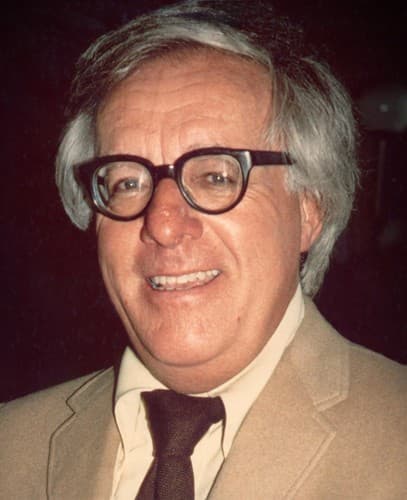
Ray Douglas Bradbury was an American author and screenwriter. One of the most celebrated 20th-century American writers, he worked in a variety of modes, including fantasy, science fiction, horror, mystery, and realistic fiction.
Similar books
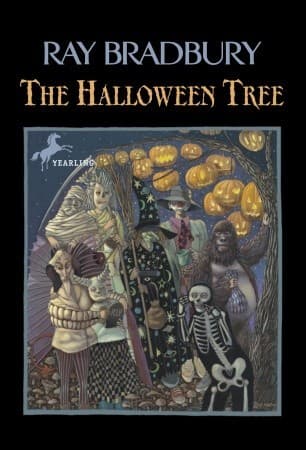
- The Halloween Tree
Ray Bradbury
3.8 (21k) average on GoodreadsFantasyShares Bradbury's signature poetic prose and exploration of Halloween themes and childhood wonder.
- American Gods
Neil Gaiman
4.1 (758k) average on GoodreadsFantasyFeatures ancient, powerful entities preying on human belief and desire, with a similar mythical undertone.
- A Head Full of Ghosts
Paul Tremblay
3.8 (46k) average on GoodreadsThrillerExplores psychological horror and the blurring of reality and illusion, though with a much darker, modern tone.
- It
Stephen King
3.5 (237) average on GoodreadsFictionBoth novels feature a malevolent entity preying on children in a small town. However, King's IT is significantly longer, more explicit in its horror, and delves deeper into psychological trauma and multi-generational impact. Bradbury's novel is more allegorical, poetic, and focuses on the internal struggles of its characters with a more dreamlike quality, less graphic horror.
- Harry Potter and the Sorcerer's Stone
J.K. Rowling
4.5 (7M) average on GoodreadsFantasyRescued from a miserable life under the stairs, an orphaned boy discovers he's a wizard destined for a magical school, where he uncovers a dangerous secret tied to the dark wizard who murdered his parents.
- The Hunger Games
Suzanne Collins
4.3 (6.4M) average on GoodreadsFantasyIn a future where children fight to the death on live television, Katniss Everdeen volunteers for the arena, turning a death sentence into a fight for survival and a spark of rebellion.


Enjoyed the summary?
A summary gives you the shape of the book. The book itself has the detail, the examples and the voice.
Find Something Wicked This Way Comes on AmazonAs an Amazon Associate, BookBrief earns from qualifying purchases. How we're funded