
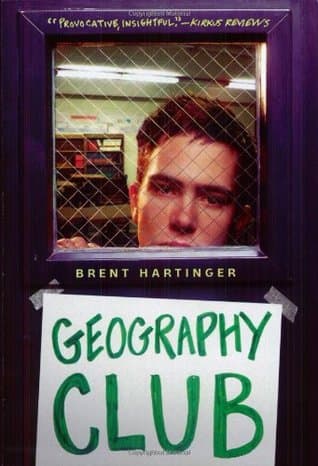
Synopsis
Covers the whole plot, including the ending.
- Difficulty
- Easy
- Pacing
- Moderate
- Mood
- Heartwarming, Hopeful, Realistic, Emotional
- Read it if
- You enjoy heartfelt coming-of-age stories about self-discovery and first love, particularly within the LGBTQ+ community.
- Skip it if
- You prefer fantasy or sci-fi over contemporary realistic fiction, or are looking for a story without significant emotional conflict.
Geography Club Plot Summary
Covers the whole plot, including the ending.
The First Encounter and a Secret Shared
Russel Middlebrook, a high school student, is surprised when Kevin Land, the school's star baseball player, kisses him in the locker room. Kevin quickly dismisses it as a mistake, blaming stress from an upcoming game. Russel feels confused and interested despite Kevin's denial. Later, Russel's friend, Min, tells him she is secretly dating Terese, another girl from their school. This news gives Russel a sense of shared secrecy and confirms some of his own growing feelings, making him feel less alone in his struggles with his identity.
The Idea of the Geography Club
Because of his own secret and Min's confession, Russel decides to form a club where students can share their true identities without fear. He calls it the 'Geography Club,' a dull name meant to keep away anyone not truly interested in its real purpose. He asks Min to help him spread the word, subtly hinting at the club's true nature to those he suspects might be interested. The goal is to create a safe space for LGBTQ+ students to meet and talk about their experiences, believing others in their school are also hiding who they are.
First Meeting and Growing Membership
The first Geography Club meeting takes place in a quiet classroom, with only a few people attending. Besides Russel and Min, the members include Terese, Min's girlfriend; Ike, a quiet boy; and later, Kevin, who initially seems to show up out of curiosity. The atmosphere is tense at first, but as students cautiously share parts of their lives and feelings, a sense of friendship grows. They realize they are not alone in hiding their identities from the school, and the club becomes a support network.
Kevin's Reluctance and Russel's Hope
Kevin's involvement in the Geography Club is irregular and cautious. He attends some meetings, but his fear of being outed as gay, especially as a star athlete, makes him very careful. He continues to date girls publicly, further confusing Russel, who still has feelings for him. Russel feels torn between his attraction to Kevin and his frustration with Kevin's inability to fully embrace his identity. This creates emotional conflict for Russel, who wants a real connection with Kevin but understands the immense pressure Kevin faces.
The Threat of Spreading Rumors
Paul, a former friend of Kevin's who feels wronged, learns about the Geography Club and its true purpose. He starts to piece together the members' secrets, especially Kevin's. Paul sees this as a chance to get revenge on Kevin and possibly other club members. He begins spreading rumors and making veiled threats, creating fear among the club members. This outside threat increases the students' internal struggles, forcing them to face the real-world results of their hidden identities.
Ike's Bold Confession
Inspired by the support he finds in the Geography Club, Ike bravely decides to come out to his parents. Their initial reaction is complex and not entirely positive, showing the challenges many young people face when revealing their sexual orientation to their families. While they do not disown him, their struggle to understand and accept his identity highlights existing societal pressures. Ike's experience, though difficult, is a powerful moment for the club members, showing both the risks and rewards of living authentically.
The Betrayal and the Fallout
Paul, wanting to ruin Kevin's reputation, publicly outs him as gay, revealing his involvement with the Geography Club. This news shocks the school, especially the baseball team. Kevin faces immediate negative reactions, scorn, and alienation from his teammates and the student body. The incident brings the club members' hidden struggles into public view, forcing them to confront the fears they tried to avoid. The club is no longer a secret, and its members must now deal with the consequences.
Support and Solidarity
After Kevin is outed, the Geography Club members show strong solidarity and support. Despite their own fears, they rally around Kevin, offering him comfort and a safe space. This collective support shows the club's true purpose and strength, proving that even when facing adversity, their bond provides a crucial lifeline. It shows that while their secrets might be exposed, their community and mutual acceptance remain, offering hope amid public outcry.
Russel's Public Stand
Inspired by his friends' courage and the injustice Kevin faces, Russel takes a public stand. He openly defends Kevin and the Geography Club, challenging the prejudice and homophobia at their school. This act marks a turning point for Russel, as he fully embraces his own identity and moves past the fear of being outed. His public defense supports his friends and makes a strong statement against intolerance, encouraging others to reconsider their biases. It shows Russel's change from a secretive person to an advocate for his community.
The Aftermath and Future Hopes
The public outing and following events leave the Geography Club members facing an uncertain future. While some students remain prejudiced, others begin to show understanding or support. The club, no longer a secret, becomes a visible symbol of LGBTQ+ presence in the school. The members learn to navigate the challenges of being openly gay in high school, finding strength in each other and their shared experiences. The book ends with cautious optimism, suggesting that while the path ahead is not easy, the club has built a foundation for greater acceptance and self-discovery.
Geography Club Characters
Russel Middlebrook
Protagonist
A shy, introspective high school student grappling with his sexual identity.
Russel is the main protagonist, a high school student who feels different from his peers. He is intelligent and observant but initially struggles with self-acceptance and fear of judgment. His journey begins with confusion and denial about his attraction to boys, particularly Kevin. He is the instigator of the Geography Club, seeking a safe space for himself and others. Russel is thoughtful and kind, though prone to overthinking and anxiety about his secret. He yearns for genuine connection and understanding, which he eventually finds within the club.
Relationships: Kevin Land (Romantic interest, complex and secretive relationship); Min (Close friend, confidante); Terese (Friend, Min's girlfriend); Ike (Friend, fellow club member)
Kevin Land
Supporting/Love Interest
A popular, athletic baseball player secretly struggling with his sexuality.
Kevin is the school's star baseball player, popular and seemingly confident, but he harbors a deep secret: he is gay. His fear of losing his social standing, his place on the team, and his parents' approval drives him to extreme lengths to conceal his identity. He is conflicted, drawn to Russel but terrified of the consequences of acting on his feelings. Kevin's struggle highlights the immense pressure faced by LGBTQ+ athletes in a heteronormative environment. He is initially guarded and defensive, but his vulnerability eventually surfaces, especially after being outed.
Relationships: Russel Middlebrook (Romantic interest, complex and secretive relationship); Paul (Former friend, later antagonist); Min (Fellow club member, friend); Terese (Fellow club member, friend); Ike (Fellow club member, friend)
Min
Supporting
Russel's best friend, openly gay and dating Terese.
Min is Russel's best friend and one of the first people to confide in him about her sexuality. She is openly gay within their small circle and is dating Terese. Min is witty, intelligent, and more self-assured than Russel in her identity, though she still maintains a level of secrecy from the wider school. She is a loyal friend and a strong advocate for the Geography Club, providing a voice of reason and support. Her relationship with Terese serves as a positive example of a loving same-sex couple within the narrative.
Relationships: Russel Middlebrook (Close friend, confidante); Terese (Girlfriend); Kevin Land (Friend, fellow club member); Ike (Friend, fellow club member)
Terese
Supporting
Min's girlfriend and a member of the Geography Club.
Terese is Min's girlfriend and a quieter, more reserved member of the Geography Club. She is deeply committed to Min and finds comfort and safety in the club's environment. While not as vocal as Min or Russel, her presence contributes to the sense of community and shared experience. She represents another facet of the LGBTQ+ experience, showing that not everyone expresses their identity with the same level of outward confidence. Her relationship with Min is a cornerstone of the club's early development.
Relationships: Min (Girlfriend); Russel Middlebrook (Friend, fellow club member); Kevin Land (Friend, fellow club member); Ike (Friend, fellow club member)
Ike
Supporting
A shy and thoughtful member of the Geography Club.
Ike is a quiet and thoughtful member of the Geography Club. He is initially very withdrawn and struggles significantly with his sexual identity and the fear of his parents' disapproval. His journey is marked by a powerful moment of coming out to his parents, which, while difficult, shows his growth and courage. Ike represents the personal, internal struggle many young people face, and his story highlights the potential for empowerment that a supportive community like the Geography Club can provide. He becomes a symbol of personal bravery within the group.
Relationships: Russel Middlebrook (Friend, fellow club member); Min (Friend, fellow club member); Terese (Friend, fellow club member); Kevin Land (Friend, fellow club member)
Paul
Antagonist
A former friend of Kevin's who outs him to the school.
Paul serves as the primary antagonist of the story. He is a former friend of Kevin's who feels slighted and seeks revenge. He discovers the existence of the Geography Club and, driven by malice and a desire to damage Kevin's reputation, ultimately outs Kevin to the entire school. Paul embodies the prejudice and cruelty that LGBTQ+ individuals often face, acting as a catalyst for the main conflict and forcing the club members to confront their greatest fears. He represents the external threat to their safety and secrecy.
Relationships: Kevin Land (Former friend, now antagonist); Russel Middlebrook (Antagonistic relationship due to his actions against the club)
Geography Club Themes
Self-Acceptance and Identity
The main theme is the characters' journeys to understand and accept their sexual identities in a world that often pressures them to fit in. Russel's thoughts constantly deal with his feelings for Kevin and his own identity. Min and Terese have found some acceptance in their relationship but keep it secret from the school. Ike's struggle ends with him bravely coming out to his parents, showing the personal growth that comes with self-acceptance. The Geography Club itself shows this theme, offering a space where these identities can be explored and confirmed without fear.
“I knew that any wrong action, however slight, could reveal my true identity...”
The Power of Community and Support
The Geography Club is a vital sanctuary for its members, showing how finding a supportive community can change lives. Before the club, characters like Russel and Ike feel alone in their struggles. In the club, they find validation, understanding, and courage. When Kevin is outed, the club members' collective support becomes his lifeline, showing that even in public adversity, a strong community can provide strength. The club becomes more than a secret meeting; it becomes a symbol of solidarity.
“Their secret should be safe.”
Fear of Exposure vs. Authenticity
A main tension in the book is the constant fear of being outed versus the desire to live authentically. Kevin's character best shows this conflict, as his popularity and athletic status make him terrified of exposure. Russel feels similar anxieties, leading him to create the club as a secret way to connect. The book's climax, where Paul outs Kevin, brings this theme to a head, showing the devastating results of exposure but also leading to moments of public authenticity and defiance from Russel. The story explores the heavy cost of living a double life.
“But after a while, the truth's too hard to hide - at least from each other - so they form the 'Geography Club.'”
Prejudice and Homophobia
The book clearly shows the prejudice and homophobia common in a high school setting. Paul's character embodies this antagonism, driven by malice to expose and harm the LGBTQ+ students. The reactions of the baseball team and other students to Kevin's outing highlight the systemic nature of homophobia and the social exclusion that can happen. This theme emphasizes the challenges the characters face and provides the external conflict that drives much of the plot. It stresses the importance of the club as a counter to the prevailing intolerance.
“Nobody else will come. Why would they want to?”
Plot Devices & Literary Techniques
The Secret Club (Geography Club)
A covert meeting place for LGBTQ+ students to share their identities.
The Geography Club is both a literal setting and a symbolic device. Initially, it functions as a safe, hidden space where characters can explore their identities without fear of judgment. Its unassuming name is a deliberate camouflage. As the story progresses, the club evolves from a secret refuge to a symbol of solidarity and, eventually, a public statement of LGBTQ+ presence in the school, especially after its members are outed. It represents the need for community and the journey from hiddenness to visibility.
First-Person Narration (Russel)
The story is told entirely from Russel Middlebrook's perspective.
Telling the story through Russel's first-person perspective allows the reader deep insight into his internal struggles, anxieties, and developing understanding of his sexuality. This device creates a strong sense of empathy for Russel, as his confusion, hope, and fear are directly conveyed. It also limits the reader's knowledge to only what Russel experiences or observes, building suspense around other characters' secrets (like Kevin's initial reluctance) and the looming threat of exposure. This intimate viewpoint makes Russel's journey of self-acceptance particularly resonant.
The 'Outing' Incident
Paul's deliberate exposure of Kevin's sexuality to the entire school.
The outing incident is the major turning point and climax of the novel. It functions as a catalyst, forcing the characters to confront their greatest fears and the real-world consequences of their secrets. This device shatters the illusion of safety provided by the Geography Club, pushing the characters out of their comfort zones. It serves to highlight the theme of prejudice and homophobia, while also prompting acts of courage and solidarity from Russel and the other club members, ultimately leading to their collective growth and a more public stance against intolerance.
Geography Club Quotes
“Being gay wasn't a choice. It was a fact. Like having brown hair. Or being left-handed.”
“The hardest part about being gay wasn't being gay. It was being alone.”
“There was a whole world out there, waiting for him, full of people who understood.”
“Sometimes, the only way to be brave was to pretend you weren't scared.”
“Secrets were like heavy weights, always pulling you down.”
“You couldn't choose who you loved, but you could choose what you did about it.”
“It was a strange kind of freedom, being able to be himself, even if it was only for an hour a week.”
“Maybe being different wasn't so bad after all. Maybe it was even good.”
“The truth had a way of coming out, whether you wanted it to or not.”
“Love didn't care about labels, or what other people thought.”
“Sometimes the biggest adventures weren't about going to new places, but about discovering new things about yourself.”
“He was tired of living a lie. Tired of pretending to be someone he wasn't.”
“The world was bigger than his high school, bigger than his town, bigger than all the worries that tried to keep him small.”
Quiz
10 questions on the plot and the characters. Each answer comes with a short explanation.
Question 1
What is the primary reason the main characters form the 'Geography Club'?
- To study geography for an upcoming school competition.
- To have a safe and private space to discuss their shared secret of being gay.
- To plan a school trip to a distant location.
- To avoid being seen with other, more popular clubs.
Show answer
B. To have a safe and private space to discuss their shared secret of being gay. The 'Geography Club' is formed by the characters as a cover for their secret meetings where they can be open about their sexual orientation without fear of being discovered by others at school.
Question 2
Which character is initially dating girls to hide his true identity?
- Kevin
- Min
- Russel
- Terese
Show answer
C. Russel The provided text explicitly states, 'Russel is still going on dates with girls,' indicating he is doing so to conceal his true identity.
Question 3
What sport does Kevin play, and what is he trying to prevent his teammates from finding out?
- Football; that he is failing a class.
- Basketball; that he has a secret girlfriend.
- Baseball; that he is gay.
- Soccer; that he is transferring schools.
Show answer
C. Baseball; that he is gay. The text states, 'Kevin would do anything to prevent his teammates on the baseball team from finding out,' referring to his sexual orientation, which is the central secret of the club members.
Question 4
What is the central theme highlighted by the characters' decision to form the 'Geography Club'?
- The importance of academic achievement.
- The struggle for self-acceptance and the need for a safe space in the face of societal pressure.
- The excitement of exploring new places.
- The challenges of maintaining friendships in high school.
Show answer
B. The struggle for self-acceptance and the need for a safe space in the face of societal pressure. The characters form the club because 'the truth's too hard to hide - at least from each other,' indicating their need for a space where they can be themselves without fear of judgment, reflecting themes of self-acceptance and navigating societal expectations.
Question 5
How do Min and Terese initially explain their relationship to others?
- They claim to be distant relatives.
- They tell everyone they're just good friends.
- They pretend to be casual acquaintances.
- They avoid talking about their relationship altogether.
Show answer
B. They tell everyone they're just good friends. The text explicitly states, 'Min and Terese tell everyone they're really just good friends,' as a way to hide the true nature of their relationship.
Question 6
What is the primary internal conflict faced by the characters in the story, as suggested by the provided text?
- Deciding which college to attend after high school.
- Balancing their academic responsibilities with their social lives.
- The fear of their true identity being revealed and the potential consequences.
- Struggling to find common interests with their peers.
Show answer
C. The fear of their true identity being revealed and the potential consequences. The opening line, 'I knew that any wrong action, however slight, could reveal my true identity,' and the characters' efforts to hide their relationships, clearly indicate the internal conflict revolves around the fear of exposure and its repercussions.
Question 7
Why would 'Nobody else' want to join the Geography Club, according to the text?
- Because the club is only for students interested in advanced geography.
- Because it's a cover for a secret that most students would not want to be associated with.
- Because the club meetings are held at inconvenient times.
- Because the club is perceived as unpopular and uncool.
Show answer
B. Because it's a cover for a secret that most students would not want to be associated with. The text states, 'Nobody else will come. Why would they want to? Their secret should be safe,' implying that the club's true purpose (being a safe space for gay students) is something most other students would want to avoid, ensuring the privacy of the members.
Question 8
The phrase 'any wrong action, however slight, could reveal my true identity' most strongly suggests what about the protagonist's mindset?
- A deep concern for academic integrity.
- An acute sense of paranoia and constant vigilance regarding their secret.
- A desire to be perfect in all aspects of life.
- A fear of making mistakes in general social interactions.
Show answer
B. An acute sense of paranoia and constant vigilance regarding their secret. The intensity of 'any wrong action, however slight' and the consequence of 'reveal my true identity' indicates a high level of anxiety and constant self-monitoring to keep their secret hidden, which is characteristic of paranoia and vigilance.
Question 9
What specific detail about Kevin's situation highlights the societal pressures faced by the characters?
- His desire to maintain his grades despite his personal struggles.
- His willingness to do 'anything' to prevent his baseball teammates from knowing his secret.
- His struggle to balance his time between sports and the Geography Club.
- His fear of being cut from the baseball team due to poor performance.
Show answer
B. His willingness to do 'anything' to prevent his baseball teammates from knowing his secret. Kevin's extreme effort ('would do anything') to hide his sexual orientation specifically from his 'teammates on the baseball team' showcases the strong pressure and potential negative repercussions associated with being openly gay in a traditionally masculine, team-oriented environment.
Question 10
The phrase 'the truth's too hard to hide - at least from each other' implies what about the characters' relationships within the club?
- They are tired of lying to each other about minor things.
- They have developed a level of trust and intimacy that allows for openness.
- They are struggling to keep their secrets from leaking out to the school.
- They are starting to reveal their true feelings to people outside the club.
Show answer
B. They have developed a level of trust and intimacy that allows for openness. This phrase suggests that while they maintain facades for the outside world, among themselves, the burden of hiding their true selves has become unsustainable, leading to an environment of trust and genuine self-expression within the club.
Geography Club FAQ
What is the central premise of 'Geography Club'?
'Geography Club' revolves around Russel Middlebrook, a high school student secretly exploring his sexuality, and his friends who are also grappling with their own hidden LGBTQ+ identities. They form a clandestine club under the guise of studying geography, providing a safe space for them to be themselves away from the judgment of their peers and the pressures of high school.
Who are the main characters and what are their primary struggles?
The main characters include Russel Middlebrook, who is secretly dating Kevin and trying to appear straight; Kevin Land, Russel's boyfriend, who is a closeted jock terrified of his baseball team finding out; Min, who is a lesbian in a secret relationship with Terese; and Terese, Min's girlfriend, who also struggles with her identity. Each character navigates the intense fear of exposure and social ostracization in their conservative high school environment.
What role does the 'Geography Club' itself play in the story?
The 'Geography Club' serves as a crucial sanctuary for Russel, Kevin, Min, and Terese. It's a physical and symbolic safe space where they can openly discuss their feelings, experiences, and identities without fear of judgment, a stark contrast to the performative heteronormativity they maintain in the rest of their lives. The club's ostensible purpose provides a perfect cover for their secret meetings.
How does Russel's relationship with Kevin evolve throughout the book?
Russel and Kevin's relationship begins secretly, marked by intense passion but also Kevin's deep-seated fear and denial, leading him to date girls and publicly reject Russel. Over the course of the book, Russel pushes Kevin to confront his identity and their relationship, culminating in a significant moment of public acknowledgment, though not without ongoing challenges.
What societal pressures are highlighted in the book regarding LGBTQ+ youth?
The book vividly illustrates the immense societal pressures faced by LGBTQ+ youth, including the fear of bullying, ostracization from friends and family, and the pressure to conform to heteronormative expectations. It explores the psychological toll of living a double life and the anxiety of potential 'outing,' especially in a small-town high school setting where rumors spread quickly.
Are there any subtle hints about characters' identities before they are explicitly revealed?
Yes, for instance, Kevin's intense overreaction to any perceived 'gay' behavior or comment, and his fervent attempts to prove his masculinity, subtly hint at his deep-seated closeted identity. Similarly, Min and Terese's unusually close friendship and shared secrets, often framed as 'best friends,' can be read as early indicators of their romantic involvement before it's explicitly stated.
How does the author use the setting of high school to amplify the characters' struggles?
The high school setting is a microcosm of societal judgment, where peer pressure, gossip, and social hierarchies are magnified. The constant surveillance of classmates, the pressure to fit in with specific cliques, and the fear of social death for being 'different' intensify the characters' need for secrecy and their internal conflicts, making the stakes incredibly high for them.
Is there a significance to the name 'Geography Club' beyond its immediate cover story?
Beyond being a convenient cover, 'Geography Club' can symbolize the characters' journey of self-discovery and mapping out their own identities in an uncharted personal 'territory.' They are exploring the 'geography' of their own desires and true selves, navigating an often-hostile world to find their place, much like explorers charting new lands.
How does Russel's internal monologue reflect his psychological state?
Russel's internal monologue is often anxious, self-doubting, and filled with calculations about how to maintain his secret, reflecting the constant psychological burden of living a double life. He grapples with guilt over deceiving his female dates and friends, alongside a desperate longing for authenticity and acceptance, showcasing his internal conflict between desire and fear.
Discuss the psychological impact of 'passing' as straight for characters like Kevin.
The psychological impact of 'passing' for Kevin is profound, manifesting as intense internalized homophobia, self-loathing, and a fierce need for external validation of his masculinity. This leads to erratic behavior, including lashing out at Russel and pursuing public heterosexual relationships, all to maintain a facade that is deeply damaging to his mental health and relationships.
How do Min and Terese cope with their secret relationship differently from Russel and Kevin?
Min and Terese seem to have a more stable and accepting understanding of their relationship, though they still maintain secrecy. Their bond appears stronger and less fraught with the internal turmoil seen in Kevin, perhaps because they found solace and acceptance in each other earlier, forming a united front, even if hidden, against societal pressures.
What role does the character of Gunnar play in Russel's psychological journey?
Gunnar, the openly gay student, acts as a catalyst and a mirror for Russel. Initially, Russel is wary of Gunnar, fearing association and exposure. However, Gunnar's confidence and unapologetic authenticity eventually inspire Russel to confront his own fears and desires, pushing him towards greater self-acceptance and a more open identity.
Is the ending of 'Geography Club' definitively happy, or more realistic and nuanced?
The ending is more realistic and nuanced than a simple 'happy ever after.' While there are moments of hope and progress, particularly Russel's growing self-acceptance and some public acknowledgment of his identity, the challenges of being openly gay in high school are not fully resolved. It suggests that the journey towards full acceptance is ongoing, reflecting real-world complexities.
How does the book challenge or reinforce stereotypes about LGBTQ+ youth?
The book challenges stereotypes by presenting a diverse range of LGBTQ+ experiences and personalities, moving beyond simplistic portrayals. While it touches on the common theme of secrecy, it delves into the psychological depth of each character, showing their individual struggles and growth, thus humanizing and diversifying the narrative rather than reinforcing broad stereotypes.
What is the book's message about the importance of safe spaces for LGBTQ+ individuals?
The book powerfully conveys the critical importance of safe spaces like the 'Geography Club.' It illustrates how these environments are vital for LGBTQ+ individuals to explore their identities, find solidarity, and gain the emotional strength needed to navigate a world that may not always accept them. These spaces are presented as essential for mental well-being and self-discovery.
Could the book be interpreted as a critique of high school social structures?
Absolutely. The novel serves as a strong critique of the rigid, often unforgiving social structures within high schools that enforce conformity and punish difference. It highlights how these environments can be breeding grounds for fear, prejudice, and isolation, forcing individuals into hiding and hindering their authentic self-expression.
How does Russel's relationship with his female friend, Kimberly, complicate his journey?
Russel's friendship with Kimberly complicates his journey by creating guilt and further demands for secrecy. He genuinely cares for her but is also using her as a shield to appear straight, which causes him internal conflict and highlights the sacrifices he makes to maintain his hidden identity. Her eventual discovery is a significant turning point.
What is the significance of the school dance scene for Russel and Kevin?
The school dance scene is a pivotal moment of public tension and near-exposure for Russel and Kevin. It forces Kevin to choose between his facade and his feelings, leading to a public confrontation and a significant step towards acknowledging his identity, albeit still with fear. It's a high-stakes moment where their private world almost collides with their public one.
Similar books
- Simon vs. the Homo Sapiens Agenda
Becky Albertalli
4.3 (288k) average on GoodreadsYoung AdultFeatures a closeted gay teen navigating first love and the fear of being outed in high school.
- Harry Potter and the Sorcerer's Stone
J.K. Rowling
4.5 (7M) average on GoodreadsFantasyRescued from a miserable life under the stairs, an orphaned boy discovers he's a wizard destined for a magical school, where he uncovers a dangerous secret tied to the dark wizard who murdered his parents.
- The Hunger Games
Suzanne Collins
4.3 (6.4M) average on GoodreadsFantasyIn a future where children fight to the death on live television, Katniss Everdeen volunteers for the arena, turning a death sentence into a fight for survival and a spark of rebellion.
- To Kill a Mockingbird
Harper Lee
4.3 (4.5M) average on GoodreadsHistorical FictionIn the 1930s Jim Crow South, Harper Lee writes about racial injustice, moral growth, and the quiet courage of a lawyer father, Atticus Finch, as seen through his young daughter's eyes.
- The Fault in Our Stars
John Green
4.2 (3.6M) average on GoodreadsYoung AdultA girl with a terminal illness finds her story rewritten when a charming boy with a similar past enters her life at a cancer support group, leading to a star-crossed romance.
- Divergent
Veronica Roth
4.2 (2.9M) average on GoodreadsFantasyIn a society divided by virtues, a sixteen-year-old's difference from the norm starts a rebellion that threatens her world.






Enjoyed the summary?
A summary gives you the shape of the book. The book itself has the detail, the examples and the voice.
Find Geography Club on AmazonAs an Amazon Associate, BookBrief earns from qualifying purchases. How we're funded