
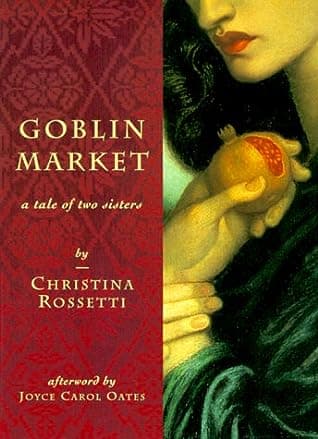
Synopsis
Covers the whole plot, including the ending.
- Difficulty
- Medium
- Pacing
- Moderate
- Mood
- Mysterious, Ethereal, Dark, Redemptive
- Read it if
- You enjoy classic Victorian poetry, allegorical tales, and stories exploring temptation, sacrifice, and sisterly love.
- Skip it if
- You prefer modern, straightforward narratives and dislike poetic language or symbolic storytelling.
Goblin Market Plot Summary
Covers the whole plot, including the ending.
The Allure of the Goblin Men
Every evening, sisters Laura and Lizzie hear the calls of the goblin men hawking their exotic fruits by a nearby brook. The goblins, described as animalistic and grotesque, display an array of luscious, ripe fruits – 'pine-apples, and pomegranates, / Dates and mulberries, / Wild free-born cranberries.' Lizzie, the more cautious sister, reminds Laura of Jeanie, a friend who 'pined away' after eating the goblins' fruit and died, never to be found again. Lizzie urges Laura to resist, warning her not to even look at the tempting market, but Laura, drawn by curiosity and the intoxicating sounds, lingers and gazes at the display.
Laura Succumbs to Temptation
Despite Lizzie's warnings, Laura cannot resist the goblin market. She approaches the goblin men, who are initially wary. When she realizes she has no money, the goblins, with 'sly' and 'evil' eyes, suggest she pay with a lock of her golden hair. Without hesitation, Laura cuts off a 'golden curl' and offers it to them. The goblins accept her payment, and Laura gorges herself on the sweet, intoxicating fruits until she is satisfied, experiencing intense pleasure. She then returns home, leaving the market behind.
The Aftermath and Laura's Decline
After her feast, Laura feels an intense craving for the goblin fruit the next morning. However, when she goes to the brookside, she can no longer hear the goblins' calls or see their market. Lizzie, who was always able to see and hear them, still can, but Laura is now blind and deaf to their presence. Laura's health quickly declines; her 'golden hair grew grey,' her 'fair curled up,' and her 'eyes grew dim,' mirroring Jeanie's fate. She stops eating, cries constantly, and becomes a shadow of her former self, slowly wasting away from her longing for the forbidden fruit.
Lizzie's Desperate Plan
Seeing Laura's rapid decline and fearing for her sister's life, Lizzie resolves to help. She understands that Laura is dying from the absence of the fruit and believes the only cure is to obtain more of it. Despite her deep fear and knowledge of the goblins' treachery, Lizzie gathers a 'silver penny' and prepares to go to the market herself. She is determined to face the goblin men, not to taste their fruit, but to bring some back for Laura, hoping to break the curse that is slowly killing her sister.
Lizzie Faces the Goblins
Lizzie approaches the goblin market, and unlike Laura, the goblins immediately surround her, recognizing her as Jeanie's sister. They aggressively offer her their most tempting fruits, trying to entice her to eat. Lizzie, however, stands firm, refusing to taste their wares. She offers her silver penny and asks to buy some fruit to take home. The goblins, enraged by her resistance and their inability to ensnare her as they did Laura, grow increasingly hostile, seeing her refusal as an insult and a challenge.
The Goblins' Assault
Furious at Lizzie's refusal to eat their fruit, the goblin men turn violent. They surround her, pulling at her dress, scratching her, and 'tore her gown and soil'd her stocking,' attempting to force the fruit upon her. They 'claw'd her, pinch'd her, kick'd her, cuff'd her, / Mauled and mock'd her.' They smear her face and body with the pulpy juice of their fruits, hoping to force her to consume it indirectly or to at least mark her with its intoxicating essence. Despite the physical assault, Lizzie remains resolute, keeping her lips tightly closed, refusing to open her mouth.
Lizzie's Triumphant Return
After their futile attempts to make her eat, the goblins, exhausted and defeated by Lizzie's resistance, eventually give up their attack. They leave her bruised and battered, but triumphant. Lizzie, covered in the sticky, sweet, and potent juices of the goblin fruit, rushes home with urgency. She does not carry any actual fruit, but her entire being is drenched in its essence, making her a living conduit for the cure Laura needs. She runs through the 'glimmering moonlit path' to reach her dying sister.
Laura's Redemption
Lizzie bursts into their home, calling to Laura, 'Come and kiss me. / Never mind my bruises.' She urges Laura to 'Hug me, kiss me, suck my juices,' offering her body as the vessel for the healing fruit. Laura, in her weakened state, embraces Lizzie and eagerly drinks the potent, sweet-and-sour juices from her sister's face and neck. The taste is initially 'wormwood to her tongue,' a bitter poison, but then it transforms into a 'fire' that courses through her veins. This intense experience purges the goblin's spell, and Laura's health is instantly restored. Her 'eyes grew bright,' her 'hair grew gold again,' and she is 'sweeter than ever.'
The Sisters' Future
With Laura fully recovered and the goblin spell broken, the sisters live out their lives in peace and happiness. The goblin men are never heard or seen again, their market seemingly vanished. Laura and Lizzie grow old, marry, and have children of their own. They frequently recount the tale of the goblin market to their children, emphasizing the moral lesson of sisterly love and the dangers of temptation. They teach their children that 'There is no friend like a sister / In calm or stormy weather,' solidifying the poem's message of familial bond and mutual protection.
Goblin Market Characters
Laura
Protagonist
The sister who succumbs to the goblins' temptation and falls ill.
Laura is initially portrayed as curious, impulsive, and somewhat naive. She is drawn to the exotic and forbidden fruit of the goblin men, unable to resist their alluring calls despite her sister's warnings. Her desire for pleasure leads her to trade a lock of her hair for the fruit, which subsequently curses her. She experiences a rapid decline in health, becoming a shadow of her former self, consumed by an insatiable longing for the fruit she can no longer obtain. Her journey embodies the themes of temptation, fall, and redemption.
Relationships: Lizzie (Devoted sister, protector, and savior); Goblin Men (Tempters and tormentors)
Lizzie
Protagonist
The cautious and self-sacrificing sister who saves Laura.
Lizzie is the embodiment of caution, strength, and unwavering sisterly love. She initially warns Laura against the goblin men, having learned from Jeanie's tragic fate. When Laura falls ill, Lizzie displays immense courage and self-sacrifice, venturing into the dangerous goblin market herself. She resists the goblins' aggressive attempts to force-feed her their fruit, enduring physical abuse to bring the 'cure' back to Laura through her own body. Her actions highlight themes of redemption, sacrifice, and the power of familial love.
Relationships: Laura (Beloved sister, whom she protects and saves); Goblin Men (Adversaries whom she defies and triumphs over)
The Goblin Men
Antagonists
Grotesque, animalistic creatures who sell enchanted, deadly fruit.
The goblin men are the primary antagonists, depicted as hybrid creatures—part animal, part human, with 'cat-like and rat-like' features. They are cunning, malicious, and predatory, using their alluring, intoxicating fruits to ensnare unsuspecting maidens. Their market is a place of danger and temptation, and they become violent when their will is defied. They represent forbidden desires, the corrupting influence of vice, and the patriarchal forces that prey on female vulnerability. They revel in the suffering of those they ensnare, like Jeanie and Laura.
Relationships: Laura (Victim whom they tempt and curse); Lizzie (Adversary whom they try to corrupt but fail); Jeanie (Former victim whom they destroyed)
Jeanie
Mentioned
A cautionary tale of a maiden who succumbed to the goblins and died.
Jeanie is a spectral figure who serves as a stark warning to Laura and Lizzie. She is a former friend who 'pined away' and died after partaking of the goblin fruit, never to be found again. Her tragic fate underscores the danger of the goblin market and foreshadows Laura's own decline. Jeanie represents the ultimate consequence of succumbing to the goblins' temptation and is a constant reminder of the perils involved.
Relationships: Laura (Friend whose fate she mirrors); Lizzie (Friend whose fate she warns against)
Goblin Market Themes
Temptation and Forbidden Pleasure
The poem explores the allure of forbidden pleasure, personified by the goblins' exotic and delicious fruits. Laura's initial fascination and eventual surrender to temptation highlight the powerful nature of desires that are deemed dangerous or illicit. The immediate gratification Laura experiences is contrasted with the severe, lasting consequences, showing how fleeting pleasure can lead to suffering. This theme is clear when Laura 'sucked their fruit globes dry' and then experienced 'longing, deep longing' for what was no longer accessible, leading to her physical and mental decay.
“She suck'd their fruit globes dry; she suck'd them dry as thirsty lips can do. / Then suck'd again a finer pleasure, touch'd with a new wild feeling.”
Sisterly Love and Sacrifice
The bond between Laura and Lizzie is the emotional core of the poem, representing an unconditional and redemptive love. Lizzie's willingness to risk her own life and purity to save her sister, enduring the goblins' abuse, is the ultimate act of self-sacrifice. This theme emphasizes the strength in family ties and the power of love to overcome evil and restore what is lost. Lizzie's actions directly contrast with Laura's initial self-indulgence, showing how true love prioritizes another's well-being over personal safety or desire. The poem concludes by celebrating this enduring bond as the greatest protection.
“For there is no friend like a sister / In calm or stormy weather; / To cheer one on the tedious way, / To fetch one if one goes astray, / To lift one if one totters down, / To strengthen whilst one stands.”
Redemption and Restoration
Laura's journey from a fallen state to full recovery illustrates the theme of redemption. After her indulgence in the forbidden fruit leads to a life-threatening illness, she is offered a path to restoration through Lizzie's intervention. Lizzie's act of bringing the antidote (the fruit juices from her own body) allows Laura to purge the poison and return to her former health and purity. This redemption is both physical and spiritual, signifying a triumph over the corrupting influence of the goblins and a return to a state of grace, emphasizing hope and second chances.
“Her gleaming locks showed not one thread of grey, / Her cheek to rosy health return'd, her eyes / Grew bright again to hear and see.”
The Dangers of the Patriarchy and Sexual Temptation
While often interpreted through a religious lens, 'Goblin Market' can also be read as a cautionary tale about the dangers women face in a patriarchal society, especially concerning sexual temptation and its consequences. The goblin men, with their animalistic features and aggressive sales tactics, represent predatory male figures who exploit female vulnerability. The 'forbidden fruit' can be a metaphor for illicit sexual experience, leading to a 'fall' (like Jeanie and Laura's illness) that results in social isolation or ruin. Lizzie's resistance and subsequent 'rescue' of Laura can symbolize female solidarity and resistance against such predatory forces, reclaiming agency and purity.
“We must not look at goblin men, / We must not buy their fruits: / Who knows upon what soil they fed / Their hungry thirsty roots?”
Plot Devices & Literary Techniques
The Goblin Fruit
A magical, addictive fruit that causes illness and longing.
The goblin fruit serves as the central magical element and a powerful symbol of temptation. Its deliciousness is intoxicating and addictive, yet it brings a curse to those who consume it from the goblins directly. It causes a profound, insatiable craving that leads to physical and mental deterioration, as seen in Laura and Jeanie. The fruit's dual nature—initially pleasurable, then poisonous—is key to the plot, driving Laura's fall and Lizzie's heroic quest. It functions as both the source of the problem and, indirectly, the source of the cure when Lizzie's body becomes infused with its essence.
The Sisterly Bond
An unbreakable bond of love and loyalty that provides redemption.
The deep, unconditional love between Laura and Lizzie acts as a powerful plot device for redemption. It is Lizzie's profound affection and unwavering loyalty that motivates her to undertake the dangerous mission to save Laura. This bond is explicitly presented as the ultimate antidote to the goblins' evil, demonstrating that love can overcome the most insidious forms of corruption. The sisters' relationship is not just a thematic element but a driving force that enables the plot's resolution, providing the strength and purity necessary to break the goblin's spell and restore Laura.
The Cautionary Tale of Jeanie
A previous victim whose tragic fate foreshadows Laura's experience.
Jeanie's story, recounted by Lizzie early in the poem, serves as a significant plot device. It foreshadows Laura's eventual decline and emphasizes the grave dangers of interacting with the goblin men. Jeanie's fate—'pined away' and died after tasting the fruit—establishes the high stakes of the sisters' encounter with the goblins. Her memory acts as a constant reminder of the peril, intensifying the dramatic tension and highlighting Lizzie's prudence while underscoring Laura's impulsive nature. It also provides a benchmark for the severity of Laura's illness.
The Goblins' Transformation/Disappearance
The goblins' change in behavior and eventual vanishing after Lizzie's defiance.
The goblins' shift from cunning merchants to aggressive attackers when Lizzie refuses their fruit, and their subsequent disappearance after she triumphs, is a crucial plot device. Their violence underscores the true malice behind their temptations. Their ultimate vanishing signifies the defeat of their corrupting power, implying that pure, unyielding goodness (Lizzie's) can effectively banish evil. This resolution provides a sense of closure and reinforces the poem's moral message about the triumph of virtue over vice, ensuring the sisters' future peace and safety.
Goblin Market Quotes
“Come buy, come buy!”
“We must not look at goblin men, We must not buy their fruits:”
“She sucked their fruit globes dry: She sucked until her lips were sore;”
“Her hair grew thin and grey; She dwindled, as the fair full moon doth turn To swift decay and burn Her fire out, and die.”
“For there is no friend like a sister In calm or stormy weather; To cheer one on the tedious way, To fetch one if one goes astray, To lift one if one totters down, To strengthen whilst one stands.”
“Pushed them off and trod them down, Held her lips and held her hands:”
“She cried 'Laura,' up the garden, 'Did you miss me? Come and kiss me. Never mind my hair, look, here all round my mouth the juice will make you whole again.'”
“But sweet-tooth Laura spoke in haste: 'Good folk, I have no coin; To-day's a holiday, to-morrow you may feast, But I to-day must buy.'”
“She thought of Jeanie in her grave, Who should have been a bride;”
“For there is no friend like a sister, In calm or stormy weather; To cheer one on the tedious way, To fetch one if one goes astray, To lift one if one totters down, To strengthen whilst one stands.”
“She flung the goblins back with scorn, She loathed them from the first.”
“Then sat up in a passionate yearning, And gnashed her teeth for baulked desire, and wept as if her heart would break.”
“Her lips began to scorch, At first sharp burning, then a doleful ache, Such kisses as a hard-won fight, Such kisses as a mourner might Give a dead brother's temple.”
“That juice was wormwood to her tongue, She loathed the feast:”
Quiz
10 questions on the plot and the characters. Each answer comes with a short explanation.
Question 1
What do the goblin merchants primarily sell to the maidens?
- Sparkling jewels and precious stones
- Delicious and exotic fruits
- Fine silks and embroidered garments
- Magical potions and elixirs
Show answer
B. Delicious and exotic fruits The goblin merchants are known for their cries of 'Come buy, come buy' as they offer a variety of luscious, forbidden fruits to Laura and Lizzie.
Question 2
What is the immediate consequence for Laura after she buys and eats the goblins' fruit?
- She gains immense wealth and power.
- She becomes unable to hear the goblins' calls or see their market.
- She transforms into a goblin herself.
- She falls into a deep, enchanted sleep.
Show answer
B. She becomes unable to hear the goblins' calls or see their market. After eating the fruit, Laura finds herself unable to hear the goblins' market cries or see them, leading to her subsequent decline.
Question 3
What does Lizzie offer the goblins as payment when she goes to the market?
- A lock of her golden hair
- A silver penny
- A tear from her eye
- A piece of her own homemade bread
Show answer
B. A silver penny Lizzie offers a silver penny as payment for the fruit, but the goblins refuse it, wanting her to eat the fruit directly.
Question 4
What is the primary motivation for Lizzie's decision to confront the goblins?
- She wants to experience the forbidden fruits for herself.
- She seeks revenge for their previous encounter with Laura.
- She is desperate to save her sister Laura from fading away.
- She desires to expose the goblins' wicked trade to the village.
Show answer
C. She is desperate to save her sister Laura from fading away. Lizzie's love and concern for her sister, who is wasting away from longing for the fruit, drives her to risk facing the goblins.
Question 5
How do the goblins react when Lizzie refuses to eat their fruit?
- They immediately release her and let her go.
- They try to force-feed her the fruit, smearing it on her face.
- They offer her other temptations, like gold and jewels.
- They turn her into a small, harmless animal.
Show answer
B. They try to force-feed her the fruit, smearing it on her face. When Lizzie refuses to eat, the goblins become enraged and physically assault her, smearing the fruit pulp and juice all over her.
Question 6
What is the symbolic significance of the 'fiery antidote' that Lizzie brings back to Laura?
- It represents the power of money to overcome evil.
- It symbolizes sisterly love and self-sacrifice as a path to redemption.
- It illustrates the dangers of curiosity and disobedience.
- It signifies the fleeting nature of earthly pleasures.
Show answer
B. It symbolizes sisterly love and self-sacrifice as a path to redemption. Lizzie's willingness to endure the goblins' abuse for Laura's sake, bringing back the fruit's juices, represents the redemptive power of selfless love.
Question 7
Which of the following lines best captures the initial allure of the goblin market for Laura?
- 'We must not look at goblin men, / We must not buy their fruits.'
- 'Their fruits like honey to the throat / But poison in the blood.'
- 'Come buy, come buy', was still their cry. / Laura bowed her head to hear.'
- 'For there is no friend like a sister / In calm or stormy weather.'
Show answer
C. 'Come buy, come buy', was still their cry. / Laura bowed her head to hear.' The line 'Laura bowed her head to hear' shows her succumbing to the temptation of the goblins' enticing calls, despite knowing the danger.
Question 8
The poem can be interpreted as an allegory for various Victorian societal anxieties. Which of the following is NOT a prominent allegorical reading?
- The dangers of female sexual curiosity and premarital desire.
- The perils of addiction and the destructive nature of forbidden pleasures.
- The critique of industrialization and the loss of rural innocence.
- The redemptive power of sisterly love and sacrifice.
Show answer
C. The critique of industrialization and the loss of rural innocence. While 'Goblin Market' touches on temptation, sin, and redemption, it is less commonly interpreted as a critique of industrialization compared to themes of female sexuality, addiction, and sisterhood.
Question 9
Consider the goblins' appearance and behavior. What animalistic characteristics are frequently attributed to them, contributing to their sinister nature?
- They are described as tall, elegant figures with melodious voices.
- They are depicted with features like cat's faces, rat's tails, and snail's pace, making them grotesque and predatory.
- They appear as shadowy, ethereal beings that are difficult to discern.
- They are shown as gentle, childlike creatures who are simply misunderstood.
Show answer
B. They are depicted with features like cat's faces, rat's tails, and snail's pace, making them grotesque and predatory. The goblins are described with a menagerie of animalistic features (e.g., 'Worn-out faces like a rat,' 'one had a cat's face,' 'one like a snail') emphasizing their grotesque, non-human, and predatory nature.
Question 10
At the poem's conclusion, how do Laura and Lizzie, now older, advise their own children regarding the goblin market?
- They encourage them to visit the market cautiously to learn its lessons.
- They warn them of the dangers, emphasizing the importance of sisterly love for protection.
- They claim the goblin market was merely a childhood dream and not real.
- They advise them to avoid all strangers, regardless of their offerings.
Show answer
B. They warn them of the dangers, emphasizing the importance of sisterly love for protection. The poem concludes with Laura telling her children, 'There is no friend like a sister / In calm or stormy weather... To strengthen for the strife, to help with toil, / And cheer upon the way,' highlighting the enduring lesson of sisterly love and support against temptation.
Goblin Market FAQ
What is the central conflict in 'Goblin Market' and how does it manifest for the main characters?
'Goblin Market' centers on the conflict between temptation and innocence, embodied by the goblin men's enchanted fruits and the sisters Laura and Lizzie. Laura succumbs to the goblins' lures, eating their fruit and falling into a wasting sickness, while Lizzie bravely resists their enticements to save her sister.
Who are Laura and Lizzie, and what are their distinct roles in the narrative?
Laura and Lizzie are sisters who live together. Laura is initially more curious and impulsive, yielding to the goblins' temptation and suffering the consequences. Lizzie is portrayed as more cautious and self-sacrificing, ultimately risking herself to acquire the antidote that saves Laura.
Describe the goblin men and the nature of their market. What makes their fruit so dangerous?
The goblin men are depicted as grotesque, animalistic figures who tempt maidens with an array of luscious, exotic fruits. Their market is a dangerous trap; while the fruit offers immediate pleasure, it is enchanted to cause a slow, agonizing death for those who partake, leaving them longing for more.
What happens to Laura after she eats the goblin fruit, and what are the immediate consequences?
After eating the goblin fruit, Laura experiences an initial euphoria, followed by an insatiable craving for more. When she can no longer hear the goblins' calls or see their market, she begins to wither away, her hair greying, eyes dimming, and vitality draining, slowly succumbing to a fatal enchantment.
How does Lizzie attempt to rescue Laura, and what specific actions does she take?
Lizzie attempts to rescue Laura by bravely going to the goblin market herself. She refuses to eat their fruit, instead offering money to buy some for her sister. When the goblins assault her, trying to force-feed her, she endures their abuse, allowing their fruit juices to cover her, which she then brings back to Laura as a 'cure.'
What is the significance of the description of Jeanie, another maiden who fell victim to the goblins?
Jeanie serves as a cautionary tale, illustrating the fatal consequences of succumbing to the goblins' temptation. Her story reinforces the danger Laura faces, showing that those who eat the fruit and are then abandoned by the goblins waste away and die, emphasizing the urgency of Lizzie's rescue attempt.
Are there any hidden details in the poem suggesting the goblins' true nature or origins beyond simply being 'tempters'?
The poem describes the goblins with animalistic features—rat-faced, cat-faced, snail-paced—suggesting a connection to the wild, untamed, and perhaps even demonic aspects of nature, rather than merely human merchants. Their magical fruit also hints at a supernatural, malevolent power beyond simple earthly trickery.
The illustrations by Dante Gabriel Rossetti are mentioned. How might their Pre-Raphaelite style subtly influence the reader's interpretation of the poem's themes?
The Pre-Raphaelite illustrations often emphasize intricate detail, vibrant colors, and a blend of realism with symbolic or mythical elements. This style could heighten the poem's sensory descriptions, make the goblins appear more grotesquely vivid, and underscore the ethereal beauty and tragic fragility of Laura and Lizzie, intensifying the emotional impact and moral weight of the narrative.
Analyze Laura's initial desire for the fruit from a psychological perspective. What does it represent?
Laura's initial desire for the fruit can be psychologically interpreted as a longing for forbidden pleasure, a curiosity about the unknown, or an expression of burgeoning sexuality repressed by Victorian societal norms. It represents a transgression of boundaries and a yearning for an experience outside of her sheltered existence.
How does Lizzie's act of self-sacrifice demonstrate a particular psychological strength or moral virtue?
Lizzie's self-sacrifice demonstrates immense psychological strength, characterized by courage, unwavering loyalty, and altruism. She overcomes fear for her own safety and endures physical and emotional abuse from the goblins, driven solely by her love and determination to save her sister, exemplifying the virtue of unconditional sisterly devotion.
Discuss the psychological impact of Laura's 'wasting sickness.' What does it symbolize beyond physical decline?
Laura's 'wasting sickness' symbolizes not only physical decline but also profound psychological torment, including guilt, regret, and the anguish of unfulfilled desire. It represents a spiritual and emotional emptiness, a loss of innocence, and the destructive power of succumbing to temptation without redemption.
In what ways do the sisters' bond and love serve as a psychological counterpoint to the goblins' maliciousness?
The sisters' bond and love serve as a powerful psychological counterpoint to the goblins' maliciousness by representing purity, selflessness, and restorative healing. While the goblins offer destructive, selfish pleasure, Laura and Lizzie's relationship demonstrates the redemptive and life-affirming power of familial love and mutual support, contrasting corruption with enduring virtue.
Is 'Goblin Market' an allegory for the dangers of illicit desire, or does it offer a more nuanced view of temptation and redemption?
While 'Goblin Market' certainly functions as an allegory for the dangers of illicit desire, its portrayal of Lizzie's self-sacrifice and Laura's subsequent redemption suggests a more nuanced view. It doesn't merely condemn temptation but also explores the transformative power of sisterly love and the possibility of salvation even after profound transgression, moving beyond simple moralizing.
How does the ending, with Laura and Lizzie as wives and mothers, reinterpret their past experiences for future generations?
The ending, with Laura and Lizzie telling their children the tale, reinterprets their past experiences as a didactic lesson about the enduring strength of sisterly love and the perils of temptation. It frames their ordeal not as a shameful secret, but as a testament to redemption and the protective power of family, passing on wisdom to future generations.
Some interpretations view the goblin fruit as a metaphor for drugs or prostitution. How well do these interpretations align with the poem's themes?
Interpretations viewing the fruit as a metaphor for drugs or prostitution align well with the poem's themes of irresistible temptation, fleeting pleasure, subsequent addiction/ruin, and societal ostracism/decline. Laura's craving and wasting sickness mirror addiction, while the gobl's predatory nature and the 'forbidden' aspect of the fruit resonate with the dangers associated with prostitution in Victorian society.
What is the significance of the poem's setting, specifically its natural yet often ambiguous landscape, to its overall message?
The poem's setting, oscillating between the domestic safety of the sisters' home and the wild, liminal space of the goblin market, is highly significant. The natural landscape is ambiguous; it provides sustenance but also harbors the dangerous, unnatural goblins. This duality emphasizes the ever-present threat of temptation lurking just beyond the boundaries of innocence and civilization, making the sisters' journey a moral one through a landscape reflecting inner states.
Could 'Goblin Market' be read as a feminist text, critiquing Victorian societal expectations for women?
Yes, 'Goblin Market' can be read as a feminist text. It critiques Victorian expectations by showing women's vulnerability to predatory forces and the societal consequences of 'fallen' women (Laura's decline mirroring social ruin). However, it also empowers women through Lizzie's agency and self-sacrifice, highlighting female solidarity and the strength of sisterhood as a means of survival and redemption outside of traditional male intervention.
How does the poem's use of vivid sensory imagery contribute to its impact and thematic depth?
The poem's vivid sensory imagery—the luscious descriptions of the fruit, the grotesque appearances of the goblins, the taste of the 'honey-sweet' fruit, and the physical decline of Laura—immerses the reader in the experience. This rich detail amplifies the allure of temptation, the horror of its consequences, and the visceral nature of Lizzie's sacrifice, deepening the emotional and thematic impact of pleasure, pain, and redemption.
About the author
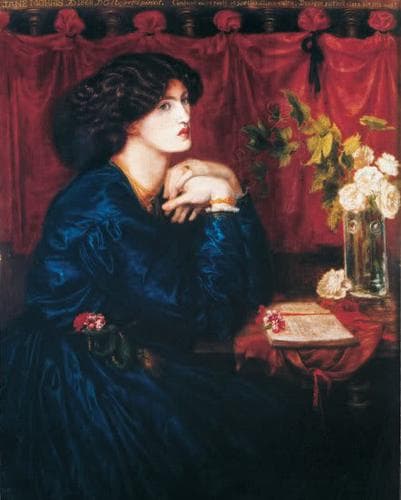
Christina Rossetti (1830-1894) was a leading English poet of the Victorian era. She is best known for her narrative poem "Goblin Market" and "Remember," a sonnet on death and remembrance. Her work often explored themes of love, death, and faith, characterized by vivid imagery and musicality.
Similar books
- A Midsummer Night's Dream
William Shakespeare
4.0 (443k) average on GoodreadsFantasyFeatures a fantastical, enchanting, and sometimes menacing fairy-world with magical elements.
- Alice's Adventures in Wonderland
Lewis Carroll
4.0 (245k) average on GoodreadsFantasyWhile both "Goblin Market" and Alice's Adventures in Wonderland feature fantastical worlds and encounters with strange beings, Rossetti's poem is far more overtly allegorical and morally charged. Carroll's work, while containing its own layers of interpretation, often prioritizes playful absurdity and illogical humor, whereas "Goblin Market" maintains a darker, more cautionary tone throughout. The focus in Rossetti is on transgression and redemption, while Carroll's is on the experience of childhood wonder and nonsense.
- The Rime of the Ancient Mariner
Samuel Taylor Coleridge
4.0 (54k) average on GoodreadsFantasyBoth poems share a narrative structure centered around a protagonist who commits a transgression, suffers severe consequences, and ultimately finds a form of redemption or penance. However, Coleridge's The Rime of the Ancient Mariner emphasizes a more cosmic and solitary spiritual journey, with consequences affecting the natural world and the mariner's soul directly. "Goblin Market," by contrast, places a strong emphasis on human relationships, specifically sisterly love, as the primary vehicle for salvation and focuses more on societal and psychological 'fall' and recovery rather than supernatural punishment and absolution.
- Harry Potter and the Sorcerer's Stone
J.K. Rowling
4.5 (7M) average on GoodreadsFantasyRescued from a miserable life under the stairs, an orphaned boy discovers he's a wizard destined for a magical school, where he uncovers a dangerous secret tied to the dark wizard who murdered his parents.
- The Hunger Games
Suzanne Collins
4.3 (6.4M) average on GoodreadsFantasyIn a future where children fight to the death on live television, Katniss Everdeen volunteers for the arena, turning a death sentence into a fight for survival and a spark of rebellion.
- 1984
George Orwell
4.2 (3.1M) average on GoodreadsPoliticsIn a future where surveillance and thought control are absolute, a man's search for truth clashes with the Party, showing that hope can be a form of rebellion.




Enjoyed the summary?
A summary gives you the shape of the book. The book itself has the detail, the examples and the voice.
Find Goblin Market on AmazonAs an Amazon Associate, BookBrief earns from qualifying purchases. How we're funded