
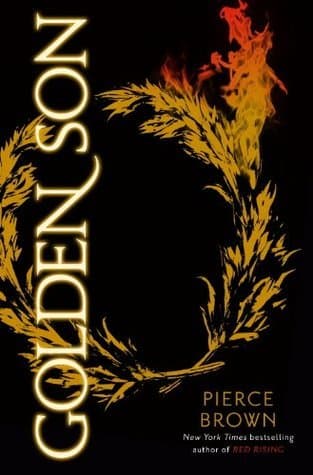
Synopsis
Covers the whole plot, including the ending.
- Difficulty
- Medium
- Pacing
- Fast
- Mood
- Intense, Suspenseful, Dark, Epic
- Read it if
- You love epic space opera with intricate political intrigue, morally grey characters, and intense, visceral action sequences.
- Skip it if
- You prefer lighter, character-driven narratives without significant violence or morally ambiguous protagonists.
Golden Son Plot Summary
Covers the whole plot, including the ending.
The Institute's Aftermath and Darrow's New Reality
After his victory at the Institute, Darrow, known as 'The Reaper,' is a celebrated hero among the Golds but feels conflicted. ArchGovernor Nero adopts him into House Augustus, seeing him as a useful piece in his political games. Darrow struggles with the constant deception and the weight of his mission, often feeling alone despite his success. He reunites with friends from the Institute, including Sevro, Cassius, Roque, and Mustang, but their camaraderie is strained by politics and past conflicts. Darrow is haunted by Eo's memory and the sacrifices made, always questioning if his actions honor her vision or if he is becoming like his enemies. His training continues with Fitchner, pushing him to master Gold warfare and politics.
The Academy and the Looming War Games
Darrow, Sevro, Mustang, and other successful Institute students go to the Academy, a military school where they learn fleet command, strategy, and political maneuvering. ArchGovernor Augustus pushes Darrow to excel, using him as a symbol of his house's power. Darrow becomes more involved in Gold politics, learning their games while secretly working for the Sons of Ares. He forms a close bond with Mustang, developing feelings for her despite his initial doubts about their different castes. The Academy ends with intense war games, which are not just simulations but a brutal test of skill and loyalty, designed to find future leaders of the Society's military.
The Battle of Ganymede and the Rising
During the Academy's war games, which become a real conflict on Ganymede, Darrow commands a fleet. He achieves a victory against forces led by the Ash Lord, a powerful rival of House Augustus. This battle is important, as Darrow uses the chance to help the Sons of Ares, saving many lowColors used as cannon fodder. His actions get the attention of the Sons of Ares, who start to see him as a leader, and also raise suspicions among some Golds, especially Roque, who becomes wary of Darrow's tactics and influence. The battle establishes Darrow's reputation as a military genius but also puts him in a more risky position.
The Grand Ball and the Seeds of Treachery
After the victory on Ganymede, ArchGovernor Augustus holds a ball to celebrate Darrow's success and strengthen his political standing. Darrow navigates the social scene, making allies and enemies. He dances with Mustang, their connection growing, and observes the power plays among the highGolds. During the ball, Darrow learns of ArchGovernor Septimus's plot to undermine Augustus and Darrow. He also has a tense meeting with the Sovereign, Octavia au Lune, who subtly questions his loyalties. Darrow realizes the extent of the danger he is in and the ruthlessness of the Society's elite, making him more determined to bring them down.
Exposure and Cassius's Betrayal
The Sons of Ares carry out an operation to expose corruption within the Society, using Darrow's information. However, during the chaos, the Sovereign's forces corner Darrow. Cassius au Bellona, Darrow's former friend and rival, reveals Darrow's true identity as a Red. Cassius, seeking revenge for his brother Julian's death and manipulated by the Sovereign, publicly unmasks Darrow, exposing him as a Red changeling and a traitor. This revelation shatters Darrow's world, destroying his persona and putting his life in immediate danger. He is captured and tortured, his mission seemingly failing.
Rescue and the Sons of Ares' Revelation
Just as Darrow faces execution, Sevro and the Howlers rescue him, revealing themselves as high-ranking Sons of Ares members. Darrow learns that Fitchner, his mentor, is Ares, the rebellion's leader. This revelation is a shock, as Darrow deals with the deception. Ares explains their plan: to use Darrow as a symbol and weapon to dismantle the Society. Darrow is taken to the Sons of Ares' hidden base, where he meets other rebellion figures and begins to understand the network working for freedom. He is given the choice to commit fully to the rebellion or be left behind.
The Republic's Dawn and Mustang's Dilemma
With his identity revealed, Darrow, now committed to the Sons of Ares, begins to describe his vision for a new, fair society—a Republic. He aims for lasting freedom and justice for all Colors, not just revenge. Mustang, shocked by the betrayal and Darrow's true identity, struggles with her loyalties. She is torn between her feelings for Darrow and her duty to her family and the Society she grew up in. Darrow tries to convince her to join, appealing to her sense of justice and intelligence, but she remains conflicted, unsure if she can trust him after such a lie.
The Sovereign's Counterattack and Fitchner's Fate
The Sovereign, Octavia au Lune, angry about Darrow's escape and the Sons of Ares' growing influence, launches a counterattack. She uses her resources and skill to hunt down the rebels. During this time, the Sons of Ares suffer a blow: Fitchner, their leader Ares, is captured. In a show of power, the Sovereign publicly executes Fitchner, broadcasting his death across the solar system. This act deeply affects Darrow and Sevro, Fitchner's son. The loss of Ares is a setback for the rebellion, creating a leadership gap and fueling Darrow's desire for revenge, but also strengthening his resolve to finish what Fitchner started.
Darrow's Leadership and the Capture of the Sovereign's Ship
After Fitchner's death, Darrow takes on a more prominent leadership role within the Sons of Ares, though not yet officially Ares. He plans to capture the Sovereign's flagship, the 'Pax,' a symbol of her power. This operation is dangerous, requiring careful planning and execution. Darrow leads a team of Howlers and other rebels in a covert infiltration, navigating the ship's defenses and overcoming resistance. Capturing the 'Pax' is a moral victory for the rebellion and a strategic blow to the Society, showing Darrow's growing tactical skill and ability to inspire loyalty.
Roque's Betrayal and the Final Confrontation
As the rebellion gains momentum, Darrow prepares for a major attack. However, he is surprised by a betrayal: Roque, his long-time friend, reveals his allegiance to the Sovereign. Roque, disappointed by Darrow's lies and the rebellion's chaos, believes Darrow is destructive and chooses to side with the established order. This betrayal leads to a battle, as Roque uses his knowledge of Darrow's tactics to ambush the Sons of Ares. Darrow confronts Roque in a showdown, a clash between former friends that shows the tragic costs of the war and the deep divisions within the Gold caste. The battle tests Darrow's leadership and his ability to overcome personal loss for the cause.
Golden Son Characters
Darrow au Andromedus (The Reaper)
Protagonist
A Red changeling disguised as a Gold, leading the rebellion from within.
Darrow is a Red helldiver who has undergone extensive surgical alteration to appear Gold. He is driven by the memory of his wife, Eo, and her vision of a free society. Throughout 'Golden Son,' Darrow struggles with the duality of his identity, the moral compromises required by his mission, and the growing burden of leadership. He is a brilliant strategist and a charismatic leader, capable of inspiring fierce loyalty, but also prone to moments of doubt and despair. He grapples with the desire for vengeance versus the pursuit of justice and a better future.
Relationships: Eo (Deceased wife, inspiration for his rebellion); Nero au Augustus (Adoptive ArchGovernor, political mentor/manipulator); Mustang (Virginia au Augustus) (Love interest, intellectual equal, initially a rival); Sevro au Barca (Best friend, loyal companion, fellow Son of Ares); Cassius au Bellona (Former best friend, rival, ultimately his betrayer); Roque au Fabii (Close friend, fellow peer, ultimately his betrayer); Fitchner au Barca (Ares) (Mentor, leader of the Sons of Ares, Sevro's father)
Mustang (Virginia au Augustus)
Supporting
Darrow's intellectual equal and complicated love interest, ArchGovernor's daughter.
Mustang is the intelligent, perceptive, and fiercely independent daughter of ArchGovernor Nero au Augustus. She is a brilliant strategist and a skilled politician, often seeing through Darrow's facades. Her relationship with Darrow is complex, marked by mutual respect, intellectual sparring, and a growing romantic connection. She is deeply loyal to her family and House, but her exposure to Darrow's ideas and the corruption of the Society begins to challenge her worldview. She represents the potential for change within the Gold caste.
Relationships: Darrow (Love interest, intellectual equal, complicated ally); Nero au Augustus (Father, ArchGovernor); Pax au Augustus (Brother (deceased))
Sevro au Barca
Supporting
Darrow's best friend, leader of the Howlers, and a key Son of Ares.
Sevro is Darrow's best friend, a wild, unpredictable, and fiercely loyal Gold. Known for his crude humor and brutal efficiency, he leads the Howlers, Darrow's elite unit. Sevro is a Son of Ares, and his commitment to the rebellion is unwavering, often serving as Darrow's moral compass and his most trusted confidant. He is the son of Fitchner, a fact that deeply impacts him throughout the book, especially after his father's death. Despite his rough exterior, Sevro possesses a keen tactical mind and a deep sense of justice.
Relationships: Darrow (Best friend, comrade-in-arms); Fitchner au Barca (Ares) (Father, leader of the Sons of Ares)
Cassius au Bellona
Supporting
Darrow's former friend and rival, manipulated into betraying him.
Cassius is a Gold peer of Darrow's, initially a friend at the Institute but later a bitter rival due to Darrow's actions leading to Julian's death. In 'Golden Son,' Cassius is haunted by his brother's memory and manipulated by the Sovereign. He struggles with his personal honor and his desire for revenge, ultimately leading him to betray Darrow and expose his true identity. He is a skilled fighter and a complex character, torn between his personal code and the machinations of the highGolds.
Relationships: Darrow (Former friend, bitter rival, ultimately his betrayer); Julian au Bellona (Deceased brother, the cause of his animosity towards Darrow)
Roque au Fabii
Supporting
Darrow's intellectual friend and strategist, who ultimately betrays him.
Roque is a brilliant Gold strategist and poet, one of Darrow's closest friends from the Institute. He is highly intelligent and deeply values order and tradition. Throughout 'Golden Son,' Roque becomes increasingly uncomfortable with Darrow's unconventional methods and the chaos he brings. He is a man of honor in his own way, but his rigid adherence to the Society's structure and his disillusionment with Darrow's deceptions ultimately lead him to betray Darrow, believing he is acting for the greater good of the Society. His betrayal is particularly painful for Darrow.
Relationships: Darrow (Close friend, fellow strategist, ultimately his betrayer)
Nero au Augustus
Supporting
ArchGovernor of Mars, Darrow's adoptive father and political puppet master.
Nero au Augustus is the cunning and powerful ArchGovernor of Mars and Darrow's adoptive father. He is a master politician, always seeking to consolidate his power and influence. He sees Darrow as a valuable asset and a symbol to be used in his political games against other Houses and the Sovereign. While he provides Darrow with opportunities, his motivations are purely self-serving, and he is a dangerous, manipulative figure in Darrow's life. He embodies the aristocratic power and ruthlessness of the Gold Society.
Relationships: Darrow (Adoptive son, political pawn); Mustang (Virginia au Augustus) (Daughter)
Octavia au Lune (The Sovereign)
Antagonist
The tyrannical ruler of the Society, Darrow's ultimate enemy.
Octavia au Lune is the ruthless and absolute ruler of the Society, the Sovereign. She is a cunning and ancient Gold, possessing immense power and a network of spies and enforcers. She is the ultimate antagonist, representing the oppressive system Darrow seeks to dismantle. Her actions are cold and calculated, designed to maintain her iron grip on the solar system. She is a master manipulator and strategist, viewing all others as pawns in her grand game, and she shows no mercy to those who defy her.
Relationships: Darrow (Primary antagonist, target of her wrath)
Fitchner au Barca (Ares)
Supporting
Darrow's mentor and the enigmatic leader of the Sons of Ares.
Fitchner is Darrow's gruff but effective mentor, training him in the ways of Gold warfare and survival. He is revealed to be Ares, the legendary and enigmatic leader of the Sons of Ares rebellion, and Sevro's father. Fitchner is a complex character, carrying the weight of past failures and a burning desire for justice. He is a brilliant tactician and strategist, guiding Darrow and the rebellion with a steady hand until his tragic capture and execution. His death serves as a major catalyst for Darrow and Sevro.
Relationships: Darrow (Mentor, leader of the rebellion); Sevro au Barca (Son)
Golden Son Themes
Identity and Deception
Darrow's existence in 'Golden Son' is a lie. He constantly struggles with his dual identity as a Red in Gold skin, questioning if he is losing himself in 'The Reaper' persona. This theme explores the psychological cost of deception, the blurring lines between his true self and his created identity, and the moral compromises needed to achieve his goals. His struggle is clear in his thoughts and strained relationships, especially with Mustang, who sees through his facades but is hurt by his lies. The public revelation of his identity is the climax of this theme, forcing him to confront who he really is.
“I am Darrow, but I am also the Reaper. Which is the lie? Which is the truth? I don't know anymore.”
The Cost of Revolution
The book shows the realities and moral complexities of revolution. Darrow's mission, though noble, requires sacrifice, violence, and manipulation. The costs are not just physical, seen in the deaths of allies like Fitchner, but also emotional, as Darrow loses friends like Cassius and Roque to betrayal and misunderstanding. The story questions if the ends justify the means, showing the damage to innocent lives and the psychological scars left on those fighting for freedom. The theme shows that even a good cause can demand terrible prices.
“Freedom is a lonely road, and the road to it is paved with the bones of good men.”
Friendship and Betrayal
Loyalty and betrayal are key to the plot. Darrow forms strong bonds with Sevro, Mustang, Cassius, and Roque, only to see these relationships tested and, in some cases, broken. Cassius's betrayal is due to revenge and manipulation, while Roque's comes from a clash of ideals and a perceived breach of honor. These betrayals show the treacherous nature of the Society and the personal cost of Darrow's mission. Conversely, Sevro's loyalty shows the power of true friendship amidst chaos, giving Darrow important emotional support.
“I trusted him. We were brothers, once. Now he hunts me.”
Justice vs. Vengeance
Darrow's initial reason for joining the rebellion was revenge for Eo's death. However, as he progresses and takes on leadership, he deals with Eo's broader vision of a just and free society. The theme explores the tension between personal revenge and the pursuit of systemic justice. Darrow must learn to use his rage for change rather than giving in to blind vengeance, which could make him as tyrannical as the Golds he fights. His desire to build a Republic, rather than just destroy, shows this struggle.
“We are not just destroying. We are building. We are building a new world.”
Power and Corruption
'Golden Son' examines how power works within the hierarchical Society. From the ArchGovernors to the Sovereign, the book shows how absolute power corrupts, leading to manipulation, oppression, and casual cruelty. Darrow's infiltration exposes the decadence, political maneuvering, and moral decay of the Gold elite. The theme shows how even those who claim to act for 'order' or 'tradition' are often driven by self-interest and a desire to keep their privileged positions, continuing a system built on exploiting lower Colors.
“The Society is a beautiful lie, built on the backs of slaves.”
Plot Devices & Literary Techniques
The Changeling (Darrow's Disguise)
A central deception driving the entire plot.
Darrow's transformation into a Gold changeling is the fundamental plot device of the series, and particularly 'Golden Son.' It allows him to infiltrate the highest echelons of the Society, providing an insider's perspective on their culture, politics, and military. This device creates constant tension, as Darrow lives in fear of exposure, and fuels his internal conflict regarding his identity. It also serves as a powerful metaphor for class and identity, highlighting how appearance and perceived status dictate one's place in the Society. The eventual revelation of his true identity is a major turning point, shattering his carefully constructed world.
Political Intrigue and Gamesmanship
Complex web of alliances and betrayals among the Gold Houses.
The intricate political landscape of the Gold Society, with its shifting alliances, rivalries between Houses (Augustus, Bellona, Arcos, etc.), and the overarching power of the Sovereign, acts as a crucial plot device. Darrow is forced to learn and master these 'games,' using manipulation, strategy, and charisma to navigate the treacherous environment. This device provides much of the external conflict, forcing Darrow to outwit powerful opponents and make difficult choices that have widespread implications for the rebellion. The grand ball and the war games are prime examples of this political chess match.
The Howlers
Darrow's elite, loyal, and ruthless strike force.
The Howlers, led by Sevro and fiercely loyal to Darrow, serve as a critical plot device. They are Darrow's personal army and the visible arm of the Sons of Ares' covert operations. Their skill, ruthlessness, and unwavering devotion allow Darrow to execute daring missions that would otherwise be impossible. They represent the bond of camaraderie and the effectiveness of a dedicated, unconventional fighting force against the more rigid, traditional military of the Society. Their presence reinforces the theme of loyalty and provides moments of intense action and emotional support for Darrow.
The Looming Threat of War
The constant undercurrent of escalating conflict and strategic maneuvers.
The entire novel is set against the backdrop of an impending or ongoing war, both within the Gold hierarchy and between the Society and the burgeoning rebellion. This constant threat provides urgency and high stakes for all Darrow's actions. The Academy's war games, the Battle of Ganymede, and the Sovereign's retaliations are all manifestations of this device. It allows for large-scale military engagements and showcases Darrow's strategic genius, while also emphasizing the devastating human cost of the conflict. It pushes Darrow towards greater leadership and forces him to make increasingly difficult military decisions.
Golden Son Quotes
“Man is a beautiful animal, who thinks himself a god, and in his lust for power, will defile even the stars.”
“Break the chains, Darrow. Break them all.”
“I would have lived in peace. But my enemies brought me war.”
“You cannot make a man a slave if he refuses to think of himself as one.”
“The greatest trick the devil ever pulled was convincing the world he didn't exist.”
“Love is not a compromise. It is a sacrifice.”
“Hope, Darrow, is a dangerous thing. It can make a man lose his mind.”
“Fear is a tool. It can be used to control, or it can be used to motivate.”
“Every man has his price, Darrow. The trick is finding out what it is.”
“Even in the darkest night, there is always a dawn.”
“Sometimes, the only way to save a life is to take one.”
“A man without a cause is a man without a soul.”
“The stars are not just for the Golds anymore.”
“Power is not given. It is taken.”
Quiz
10 questions on the plot and the characters. Each answer comes with a short explanation.
Question 1
At the beginning of 'Golden Son', what significant position does Darrow hold within the Sons of Ares?
- He is the chief strategist for military campaigns.
- He is the ArchGovernor of Mars.
- He is a Lancer, leading a fleet as a respected warlord.
- He is a low-ranking operative, still proving himself.
Show answer
C. He is a Lancer, leading a fleet as a respected warlord. At the start of 'Golden Son', Darrow has risen significantly within the Sons of Ares, becoming a Lancer and a celebrated warlord leading his own fleet, a testament to his success in infiltrating Gold society.
Question 2
Which character betrays Darrow during the Academy trials, leading to a major setback?
- Mustang
- Sevro
- Cassius
- Roque
Show answer
C. Cassius Cassius betrays Darrow during the Academy trials, revealing his Red identity to the Sovereign and setting in motion a major conflict that forces Darrow to flee and fight for his survival.
Question 3
What is the primary motivation for Darrow's actions throughout 'Golden Son'?
- To gain personal power and become the Sovereign.
- To avenge Eo's death and free his people from Gold oppression.
- To explore the galaxy and discover new civilizations.
- To prove his superiority over other Golds in combat.
Show answer
B. To avenge Eo's death and free his people from Gold oppression. Darrow's core motivation, stemming from Eo's sacrifice and the lies of the Society, is to dismantle the Gold-dominated system and liberate all the lowColors, particularly the Reds.
Question 4
Which powerful Gold family does Darrow primarily align with after his initial infiltration, forming crucial alliances?
- House Augustus
- House Bellona
- House Grimmus
- House Telemanus
Show answer
A. House Augustus Darrow, as 'Rath', becomes a ward of ArchGovernor Nero au Augustus, forging a complex relationship with the family, including Mustang and Adrius, which is central to his rise within Gold society.
Question 5
What is the significance of the 'Iron Rain' in the context of Gold warfare?
- It's a ceremonial parade of warships.
- It's a method of orbital bombardment using kinetic weapons.
- It's the process of deploying ground troops from orbit via drop-pods.
- It's a type of chemical weapon used in close quarters combat.
Show answer
C. It's the process of deploying ground troops from orbit via drop-pods. The Iron Rain is a terrifying and iconic method of warfare where Golds deploy their ground forces from orbit in armored drop-pods, literally raining down onto a planet's surface to begin an invasion.
Question 6
How does Darrow manage to escape the trap set for him by the Sovereign after his identity is revealed by Cassius?
- He uses a hidden escape pod provided by Adrius au Augustus.
- He is rescued by Sevro and the Howlers, who launch a surprise attack.
- He fakes his own death and goes into hiding on a remote moon.
- He negotiates a truce with the Sovereign by offering valuable information.
Show answer
B. He is rescued by Sevro and the Howlers, who launch a surprise attack. After his identity is exposed, Darrow is captured and tortured. It is Sevro and the loyal Howlers who orchestrate a daring rescue, breaking him out of the Sovereign's prison and allowing him to continue his fight.
Question 7
What is the primary internal conflict Darrow faces during 'Golden Son'?
- His struggle between loyalty to the Sons of Ares and his growing affection for Mustang.
- His desire for violent retribution versus Eo's principles of love and justice for a hopeful rebirth.
- His difficulty in mastering Gold combat techniques despite his Red origins.
- His fear of being discovered as a Red by the wider Gold society.
Show answer
B. His desire for violent retribution versus Eo's principles of love and justice for a hopeful rebirth. The book emphasizes Darrow's struggle to uphold Eo's ideals of justice and a better future, rather than succumbing to the easy path of pure vengeance and violent revolution, which is a constant internal battle for him.
Question 8
Which character becomes a fierce rival and antagonist to Darrow, particularly in the later parts of the book, driven by personal vendetta?
- Fitchner
- Roque
- Pax
- Tactus
Show answer
B. Roque Roque, initially Darrow's friend and shipmate, turns against him completely after the revelation of Darrow's true identity and the subsequent chaos, becoming one of Darrow's most dangerous and emotionally impactful adversaries.
Question 9
What political maneuver does Darrow execute near the end of 'Golden Son' that fundamentally alters the balance of power?
- He negotiates a peace treaty between the Society and the Sons of Ares.
- He publicly exposes the Sovereign's corruption, leading to her impeachment.
- He orchestrates a coup, capturing the ArchGovernor Nero au Augustus and consolidating power.
- He destroys the entire Gold fleet, leaving the Society defenseless.
Show answer
C. He orchestrates a coup, capturing the ArchGovernor Nero au Augustus and consolidating power. In a shocking and pivotal move, Darrow, with the help of the Sons of Ares, stages a coup at the Triumph, capturing ArchGovernor Nero au Augustus and taking control of his powerful faction, thus igniting open civil war.
Question 10
Why is the character of Fitchner's true allegiance and actions so significant to Darrow's journey?
- Fitchner is revealed to be the true architect of the Society's entire system.
- Fitchner is exposed as the original Ares, and his death profoundly impacts Darrow.
- Fitchner becomes Darrow's most trusted advisor, guiding his every decision.
- Fitchner betrays Darrow and joins the Sovereign's forces.
Show answer
B. Fitchner is exposed as the original Ares, and his death profoundly impacts Darrow. Fitchner is revealed to be the original Ares, the leader of the Sons of Ares. His eventual capture and execution by the Sovereign, partly due to Cassius's betrayal, is a devastating blow to Darrow and a major turning point in the war.
Golden Son FAQ
What is Golden Son about?
Golden Son is the second book in Pierce Brown's Red Rising saga, continuing Darrow's mission to infiltrate and dismantle the oppressive, color-coded Society from within. Having won the Institute, Darrow, now known as 'The Reaper,' navigates the treacherous political landscape of the Golds, forming alliances and facing betrayals as he rises through their ranks, all while secretly planning their downfall.
Why should I read Golden Son?
You should read Golden Son for its relentless pacing, intricate political maneuvering, and profound character development. It significantly expands the world of Red Rising, introducing new factions, technologies, and moral dilemmas that challenge Darrow and the reader, making it a thrilling and emotionally resonant sci-fi epic.
What is the background/setting of Golden Son?
Golden Son is set primarily on Mars and Luna, within the opulent and cutthroat society of the Golds, the ruling class of a hierarchical human civilization spanning the solar system. Darrow operates within their military academies, political assemblies, and grand estates, revealing the vast scale and brutal elegance of their dominion.
What are the most memorable quotes?
Some memorable quotes include Darrow's internal mantra, 'Break the chains,' reflecting his revolutionary spirit, and Cassius's poignant reflection, 'We are all just trying to be loved.' These quotes encapsulate the themes of rebellion and the universal desire for connection amidst the brutal class struggle.
What writing style does the author use?
Pierce Brown employs a first-person, present-tense narrative from Darrow's perspective, characterized by its visceral action, sharp dialogue, and deep emotional introspection. The prose is often poetic yet brutal, reflecting the high stakes and Darrow's internal turmoil as he navigates a world of lies and violence.
What minor details add significant meaning?
The subtle shifts in Darrow's 'Gold' mannerisms and speech, initially forced but gradually becoming second nature, highlight the psychological toll of his undercover operation. His increasing comfort in Gold society, even as he despises it, underscores the danger of losing himself to the very system he aims to destroy.
What are some subtle foreshadowing moments?
The early tensions between Darrow and Cassius, despite their temporary alliance, subtly foreshadow the deep betrayal and conflict that will erupt between them later in the book. Similarly, the growing influence of the Sons of Ares and their increasingly radical actions hint at the broader, more chaotic war to come.
What unexpected character connections exist?
The unexpected connection Darrow forms with Lysander, Octavia au Lune's grandson, is particularly notable. Despite their opposing sides, Darrow sees a glimmer of potential in the young boy, a future leader who could perhaps be swayed, hinting at a complex future relationship beyond simple enmity.
What are unspoken character motivations?
Sevro's unwavering loyalty to Darrow, despite his gruff exterior and often violent tendencies, is driven by a profound sense of brotherhood and a deep-seated desire for justice for the oppressed. His actions often speak louder than his words, revealing his protective instincts and commitment to the cause.
What psychological complexities do characters exhibit?
Darrow grapples with immense psychological complexity, constantly battling his true identity as a Red revolutionary against his fabricated Gold persona. He experiences profound guilt over the lives he takes and the deceptions he perpetrates, all while struggling to maintain his humanity and Eo's ideals amidst the brutal realities of war.
What are the major emotional turning points?
A major emotional turning point is the revelation of Cassius's betrayal and the subsequent duel, which shatters Darrow's trust and forces him to confront the harsh reality of his isolated position. Another is the tragic loss of important allies, which fuels Darrow's resolve while deepening his personal grief.
How do relationship dynamics evolve?
Relationship dynamics evolve dramatically, most notably with Mustang, whose initial distrust of Darrow transforms into a complex partnership and burgeoning romance, built on mutual respect and shared ideals. His bond with Sevro deepens into an unbreakable brotherhood, forged in the fires of shared hardship and unwavering loyalty, despite their differing approaches.
Which parts remain ambiguous or open-ended?
The full extent of the Sovereign Octavia au Lune's long-term plans and the true power dynamics within the High Colors' hierarchy remain somewhat ambiguous, setting the stage for future revelations. The moral implications of Darrow's escalating violence, and whether he can truly achieve a 'hopeful rebirth' through such means, are also left open for interpretation.
What are controversial scenes or decisions?
Darrow's decision to sacrifice certain allies for the greater good of the revolution, particularly during the climactic battles, can be seen as controversial. These moments force readers to question the morality of his actions and whether the ends truly justify the means in a war for freedom.
Golden Son ending explained: how it ends & what it means
Golden Son ends with Darrow's forces achieving a significant victory against the Sovereign's fleet, but at a tremendous personal cost, including the capture of key allies and the revelation of Cassius's deep betrayal. The ending signifies that while Darrow has risen to become a formidable leader, the war for freedom is far from over, and he must now contend with an even more dangerous and personal conflict against his former friend and the full might of the Society.
About the author

Pierce Brown is an American author known for his work in the science fiction genre. He is best recognized for the "Red Rising" series, which includes the titles "Red Rising," "Golden Son," "Morning Star," and "Iron Gold." His writing often explores themes of power, rebellion, and societal structures.
Similar books
- The Name of the Wind
Patrick Rothfuss
4.5 (716k) average on GoodreadsFantasyFeatures a charismatic protagonist navigating a dangerous, class-divided society with a hidden past.
- Dune
Frank Herbert
4.2 (766k) average on GoodreadsFantasyExplores complex political and social structures, rebellion, and a messianic figure in a futuristic setting.
- The Hunger Games
Suzanne Collins
4.3 (6.4M) average on GoodreadsFantasyGolden Son offers a more complex and expansive political landscape, moving beyond individual survival to focus on systemic overthrow from within, with greater moral ambiguity for its protagonist. The Hunger Games is more focused on arena-centric conflict and a clearer 'good vs. evil' dynamic.
- Divergent
Veronica Roth
4.2 (2.9M) average on GoodreadsFantasyGolden Son presents a far more sophisticated and ancient system of societal factions and power struggles, with deeper historical roots and more nuanced political maneuvering. Divergent often simplifies its factional conflicts and protagonist's moral dilemmas in comparison.
- Harry Potter and the Sorcerer's Stone
J.K. Rowling
4.5 (7M) average on GoodreadsFantasyRescued from a miserable life under the stairs, an orphaned boy discovers he's a wizard destined for a magical school, where he uncovers a dangerous secret tied to the dark wizard who murdered his parents.
- 1984
George Orwell
4.2 (3.1M) average on GoodreadsPoliticsIn a future where surveillance and thought control are absolute, a man's search for truth clashes with the Party, showing that hope can be a form of rebellion.





Enjoyed the summary?
A summary gives you the shape of the book. The book itself has the detail, the examples and the voice.
Find Golden Son on AmazonAs an Amazon Associate, BookBrief earns from qualifying purchases. How we're funded