
Synopsis
Covers the whole plot, including the ending.
- Difficulty
- Easy
- Pacing
- Slow
- Mood
- Atmospheric, Reflective, Heartwarming, Whimsical
- Read it if
- You appreciate beautifully illustrated picture books that explore themes of family history, memory, and the passage of time in a gentle, artistic way.
- Skip it if
- You prefer straightforward narrative plots without metaphorical or symbolic elements.
Grandpa Green Plot Summary
Covers the whole plot, including the ending.
A Boy's Visit to Grandpa Green's Garden
The story opens with a young boy describing his great-grandfather, Grandpa Green, who is now very old and has a faded memory. The boy explains that Grandpa Green wasn't always a gardener, but a farm boy, a kid with chickenpox, a soldier, and an artist. The boy then takes the reader on a tour through Grandpa Green's extraordinary garden, which is filled with sculpted topiary animals and objects. Each topiary represents a memory or event from Grandpa Green's past, forming a living, green autobiography that the boy knows well.
The Farm Boy and His Pigs
As the boy walks through the garden, he points out a topiary of a pig, explaining that Grandpa Green grew up on a farm. He recounts how Grandpa Green would draw pictures of the pigs, even though he wasn't very good at it back then. This detail establishes Grandpa Green's early artistic inclinations and his connection to nature and rural life, which would later show in his gardening. The pig topiary links to his humble beginnings and the innocence of his youth.
Chickenpox and Early Art
The boy then shows a topiary shaped like a lumpy, spotted creature, which he explains represents Grandpa Green when he had chickenpox. During his illness, confined to bed, young Grandpa Green passed the time by drawing. This period was a turning point, as it was when he first discovered his passion and talent for art. The chickenpox topiary symbolizes the origin of his creative journey, showing how even moments of discomfort can spark new directions and passions in life.
A Soldier's Journey
Further into the garden, the boy points out topiaries shaped like a battle helmet and a biplane, representing Grandpa Green's time as a soldier. He recounts how Grandpa Green went off to war, traveling far away and seeing many things. Even during this tumultuous period, he continued to draw, using art to process his experiences and maintain a connection to his inner self. These topiaries show the breadth of Grandpa Green's life experiences, from childhood to war, while highlighting his artistic spirit.
Love and Family
The boy leads the viewer to a beautiful topiary of a woman, explaining that this is where Grandpa Green met his wife. This moment in the garden signifies a shift from individual experiences to shared life and the beginning of his family. The topiary represents love, partnership, and the foundation of the family tree that the young boy is now a part of. It emphasizes the lasting power of relationships and how they shape one's life story, becoming parts of memory.
The Artist's Studio
The boy shows topiaries of paintbrushes and an easel, highlighting Grandpa Green's identity as an artist. He explains that Grandpa Green always loved to draw and create, a passion that continued throughout his life. These topiaries help understand Grandpa Green's core being, showing that art was not just a hobby but part of who he was. They represent his lifelong dedication to creativity and expression, which ultimately ended in the creation of this garden.
Becoming a Gardener
The boy explains that eventually, Grandpa Green became a gardener, transforming his artistic vision into living sculptures. The entire garden shows this evolution, where his memories and creativity merge with nature. This transition from traditional art forms to topiary gardening shows how art can adapt and manifest in different ways throughout a person's life, especially as circumstances or physical abilities change. The garden becomes his ultimate masterpiece, a fusion of memory, art, and nature.
The Fading Memories
The boy then returns to the present, acknowledging that Grandpa Green's memory isn't what it used to be. He notes that sometimes Grandpa Green forgets things, including the names of his own topiaries. This detail shows the theme of aging and memory loss. However, the garden itself is a counterpoint, a physical manifestation of his life story that remains vibrant and accessible, even as the original mind that created it fades.
A Shared Legacy
Despite Grandpa Green's forgetfulness, the boy actively helps keep the memories alive. He gently reminds his great-grandfather of the stories behind the topiaries, pointing out the pig or the chickenpox sculpture. This interaction highlights the intergenerational bond and the role of storytelling in preserving family history. The boy becomes the guardian of these memories, ensuring that Grandpa Green's legacy continues to be understood and cherished, even when Grandpa Green himself struggles to recall it.
The Enduring Garden
The story concludes with the boy reflecting on the lasting nature of the garden. He observes that the plants continue to grow, needing to be trimmed and cared for, just as memories need to be revisited and shared. The garden itself is a living metaphor for life, constantly evolving yet holding the essence of the past. It symbolizes the continuous cycle of life, creativity, and the preservation of personal history through shared experience and love, leaving a lasting impression on the reader.
Grandpa Green Characters
Grandpa Green
Protagonist
An elderly artist and gardener whose life is chronicled through his topiary garden.
Grandpa Green is a man of many past lives: a farm boy, a child with chickenpox, a soldier, and always, an artist. Now very old, his memory is fading, but his life's experiences are vividly preserved in the elaborate topiary garden he created. He is a quiet, reflective individual whose profound creativity found its ultimate expression in shaping living plants into representations of his past. Though his mind may wander, his legacy and the essence of his being are deeply rooted in his green sculptures.
Relationships: Great-Grandson (Recipient of his legacy; caregiver of his memories.); Wife (Love interest and life partner, a significant part of his past.)
Great-Grandson (The Boy)
Narrator and Supporting Character
A young, observant boy who acts as the guide to Grandpa Green's memory garden.
The great-grandson is the story's narrator and our window into Grandpa Green's world. He is a loving, patient, and deeply connected child who knows his great-grandfather's life story intimately through the topiary garden. He acts as a memory keeper, gently prompting Grandpa Green when he forgets and ensuring that the stories behind each green sculpture are understood. His perspective is one of wonder and appreciation for his family's history and the unique way it has been preserved.
Relationships: Grandpa Green (Great-grandson; memory keeper; guide through his life story.)
Grandpa Green Themes
Memory and Legacy
The main theme is how memories of a long life can be preserved and passed down through generations. Grandpa Green's topiary garden is a physical representation of his life's memories—from his farm boy days to his time as a soldier and an artist. Even as his own memory fades, the garden is a living legacy, allowing his great-grandson to recount and understand his past. The boy's role in narrating these stories emphasizes that legacy is not just what is left behind, but how it is actively remembered and shared. The fading of Grandpa Green's memory highlights the fragility of individual recall but the lasting power of shared narrative.
“Grandpa Green wasn't always a gardener. He was a farm boy and a kid with chickenpox and a soldier and, most of all, an artist.”
The Power of Art and Creativity
Art is a fundamental aspect of Grandpa Green's identity and a tool for expression and memory. From his early drawings during chickenpox to his wartime sketches and his topiary garden, art is constant throughout his life. The garden itself is the ultimate example of his creativity, transforming personal history into living sculptures. This theme suggests that art provides a way to process experiences, preserve identity, and communicate one's story in a way that words alone might not capture, especially as verbal memory declines.
“He always loved to draw. Even when he wasn't very good at it.”
Aging and the Passage of Time
The book sensitively explores the realities of aging, especially memory loss, through Grandpa Green's character. His fading recollection contrasts with the vibrant, growing garden that embodies his past. The topiaries, which are living things that change and require care, mirror the passage of time and the continuous nature of life. This theme encourages empathy and understanding towards the elderly, while celebrating the richness of a life lived. It suggests that while individual memories may fade, the essence of a person's life and their contributions can endure.
“Sometimes Grandpa Green forgets things. He forgets the names of the topiaries and sometimes he forgets where he is.”
Intergenerational Connection
A strong bond between the great-grandson and Grandpa Green is central to the story. The boy's patience and knowledge of his great-grandfather's life show a loving connection that transcends the challenges of aging. He acts as a bridge between the past and present, helping Grandpa Green remember and ensuring that his stories are not lost. This theme highlights the importance of family relationships in preserving history, offering comfort, and fostering a sense of continuity across generations. It shows how love and shared experiences can strengthen these bonds.
“But I remember.”
Plot Devices & Literary Techniques
Topiary Garden as Metaphor
The entire garden serves as a living, growing metaphor for Grandpa Green's life and memories.
The topiary garden is the primary plot device, acting as a direct representation of Grandpa Green's autobiography. Each sculpted plant corresponds to a specific memory, event, or aspect of his life, such as the pig for his farm boy days or the spotted topiary for his chickenpox. This device allows complex themes like memory, aging, and legacy to be presented visually and accessibly for a young audience. The fact that the garden is alive and continuously growing also reinforces the idea that memories and life stories are not static but evolve and require ongoing care and attention.
First-Person Narration (Great-Grandson)
The story is told from the perspective of Grandpa Green's great-grandson.
The choice of the great-grandson as the narrator is crucial. His innocent yet insightful voice provides a loving and non-judgmental lens through which to view Grandpa Green's life and current condition. This perspective emphasizes the intergenerational transfer of memory and legacy, as the boy is the active keeper and interpreter of his great-grandfather's past. It allows the story to be told with warmth and wonder, making the potentially somber themes of aging and memory loss more approachable and hopeful, as the boy's 'I remember' contrasts with Grandpa Green's 'forgets things'.
Visual Storytelling
The illustrations are integral to conveying the narrative and emotional depth.
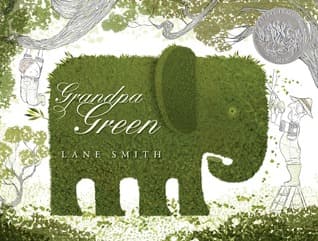
Lane Smith's distinctive illustrations are not merely supplementary but are essential to the storytelling. The detailed, whimsical, and often poignant artwork directly depicts the topiaries and the memories they represent, often juxtaposing the vibrant green sculptures with sepia-toned flashbacks of Grandpa Green's youth. This visual storytelling allows readers to 'see' Grandpa Green's life unfold alongside the boy's narration. The shift in color palette between the present (vibrant garden) and the past (muted tones) subtly guides the reader through time, enriching the narrative without relying heavily on dense text.
Grandpa Green Quotes
“Grandpa Green was always a little different.”
“He grew up on a farm with a lot of animals and a lot of plants.”
“He loved to draw and paint and sculpt.”
“He even made a sculpture of a giant chicken out of old farm equipment.”
“He always had a sketchbook in his pocket.”
“He went to art school and learned all about art history and art theory.”
“But he never stopped drawing and painting and sculpting the way he wanted to.”
“He planted a garden, but not just any garden.”
“He planted a garden of memories.”
“Each plant, each bush, each tree was a memory of something important.”
“He remembered his first pet, a pig named Hamlet.”
“He remembered his first love, a girl named Rose.”
“And he remembered his grandson, who loved to visit him in his garden.”
“Even though Grandpa Green couldn't always remember things, his garden did.”
“And his grandson would help him remember.”
Quiz
10 questions on the plot and the characters. Each answer comes with a short explanation.
Question 1
What was Grandpa Green's primary profession or hobby before he became a gardener?
- A baker
- A soldier
- An artist
- A musician
Show answer
C. An artist The book description states that Grandpa Green 'was a farmboy and a kid with chickenpox and a soldier and, most of all, an artist.'
Question 2
Who is the narrator of the story, accompanying Grandpa Green through his garden?
- His daughter
- His wife
- His great-grandson
- A neighbor
Show answer
C. His great-grandson The description clearly states, 'readers follow Grandpa Green's great-grandson into a garden he created.'
Question 3
What unique medium does Grandpa Green use to represent his memories in his garden?
- Sculptures made of clay
- Paintings on canvases
- Fanciful topiary trees
- Engravings on stone
Show answer
C. Fanciful topiary trees The text describes the garden as 'a fantastic world where memories are handed down in the fanciful shapes of topiary trees.'
Question 4
What significant life event is mentioned that Grandpa Green experienced as a child?
- Breaking his arm
- Getting chickenpox
- Winning a race
- Moving to a new city
Show answer
B. Getting chickenpox The book description mentions Grandpa Green 'was a farmboy and a kid with chickenpox and a soldier.'
Question 5
How does the book portray the transmission of memories and family history?
- Through old photographs in an album
- Through written journals and letters
- Through the shared experience of exploring the topiary garden
- Through oral storytelling sessions by the fireplace
Show answer
C. Through the shared experience of exploring the topiary garden The description states that in the garden, 'memories are handed down in the fanciful shapes of topiary trees and imagination recreates things forgotten,' implying an interactive, visual transmission.
Question 6
What is one of the overarching themes explored in 'Grandpa Green'?
- The importance of competitive sports
- The challenges of urban living
- Aging, memory, and the bonds of family history and love
- The benefits of organic farming
Show answer
C. Aging, memory, and the bonds of family history and love The summary explicitly states, 'Lane Smith explores aging, memory, and the bonds of family history and love.'
Question 7
What does the phrase 'imagination recreates things forgotten' imply about Grandpa Green's memory?
- He has perfect recall of all past events.
- His memories are sometimes unclear or partially lost, requiring imaginative interpretation.
- He deliberately invents new memories for his great-grandson.
- He only remembers things that are visually stimulating.
Show answer
B. His memories are sometimes unclear or partially lost, requiring imaginative interpretation. The phrase 'imagination recreates things forgotten' suggests that while some memories may fade, imagination, likely spurred by the topiaries, helps to reconstruct or interpret them.
Question 8
Given the description, what kind of emotional tone does the book aim to evoke in readers?
- Primarily humorous and lighthearted
- Mainly suspenseful and mysterious
- By turns touching and whimsical
- Overwhelmingly melancholic and sad
Show answer
C. By turns touching and whimsical The summary describes the work as 'by turns touching and whimsical,' indicating a blend of emotional experiences.
Question 9
How does the 'fantastic world' of the garden primarily serve its purpose in the narrative?
- As a place for the great-grandson to play hide-and-seek.
- As a literal representation of Grandpa Green's current mental state.
- As a metaphorical landscape where abstract concepts like memory and history gain tangible form.
- As a secret hideout from the rest of the family.
Show answer
C. As a metaphorical landscape where abstract concepts like memory and history gain tangible form. The garden is a 'fantastic world where memories are handed down in the fanciful shapes of topiary trees,' making it a metaphorical space for exploring memory and history.
Question 10
The book is described as having 'Common Core connections.' What does this generally imply about its educational value?
- It is primarily designed to teach advanced mathematics.
- It can be used to develop literacy skills, critical thinking, and understanding of complex themes in an educational setting.
- It features historical facts about gardening techniques.
- It is exclusively for children in kindergarten.
Show answer
B. It can be used to develop literacy skills, critical thinking, and understanding of complex themes in an educational setting. Common Core State Standards aim to ensure students are college and career ready by the time they graduate high school, focusing on literacy, critical thinking, and analytical skills, which a book exploring memory, aging, and family would support.
Grandpa Green FAQ
What is the central premise of 'Grandpa Green'?
The book centers on a young boy exploring a fantastical topiary garden created by his great-grandfather, Grandpa Green. Through the shapes of the topiaries, the boy recounts key moments and stages from Grandpa Green's life, from childhood to old age, celebrating his artistic spirit and the legacy of his memories.
Who is Grandpa Green, and what is his defining characteristic?
Grandpa Green is the great-grandfather of the story's narrator, depicted as an elderly man with memory loss. His defining characteristic is his lifelong passion for art and creativity, which he expresses through his extraordinary topiary garden, even as his cognitive abilities decline.
How does the book depict Grandpa Green's life stages?
The book illustrates Grandpa Green's life through various topiaries: a farm boy, a child with chickenpox, a soldier, and most notably, an artist. These visual representations allow the reader to trace his journey from youth to old age, highlighting significant experiences and roles he embraced.
What role does the great-grandson play in the narrative?
The great-grandson acts as the narrator and guide, leading the reader through Grandpa Green's garden and recounting his great-grandfather's life story. He serves as a symbol of the enduring family bond and the transmission of memories and legacy across generations, even when Grandpa Green himself struggles to recall them.
What is the significance of the topiary garden in the story?
The topiary garden is the central metaphor of the book, representing Grandpa Green's memories, creativity, and the physical manifestation of his life's journey. Each sculpted bush symbolizes a specific event or period, allowing his past to be visually preserved and shared with his great-grandson.
Are there any subtle visual cues about Grandpa Green's memory condition?
Yes, the book subtly hints at Grandpa Green's memory loss through his vacant stare and the occasional blankness in his eyes in certain illustrations. The narrator also directly states that Grandpa Green 'doesn't remember everything,' reinforcing his cognitive decline.
What is the significance of the 'chickenpox' topiary?
The chickenpox topiary, depicted as a dotted bush, is a specific and relatable childhood memory. It emphasizes that Grandpa Green's life, like anyone's, was made up of both grand moments and ordinary, yet memorable, childhood experiences, making him a more rounded and human character.
How does the book connect Grandpa Green's past as a soldier to his later life?
The book shows Grandpa Green as a young soldier, likely in a historical war, through a topiary of him in uniform. This experience is presented as a significant part of his past, contributing to the rich tapestry of his life, though the specific impact on his later gardening is left to interpretation.
Is there a hidden message about the continuity of creativity or legacy?
Yes, the narrative implies that the great-grandson is inheriting or continuing Grandpa Green's creative spirit. The boy's active engagement with the garden and his detailed retelling of the stories suggest that he is internalizing and preserving his great-grandfather's artistic legacy, ensuring it lives on.
How does the book address the theme of aging and memory loss?
The book addresses aging and memory loss with gentle sensitivity, portraying Grandpa Green as an elderly man who 'doesn't remember everything.' However, it emphasizes that while memories may fade, the essence of a person's life and their impact can still be preserved and appreciated through their creations and family connections.
What psychological comfort might the great-grandson derive from the garden?
The great-grandson likely finds comfort in the garden as a tangible link to his great-grandfather's past and identity. It allows him to understand and connect with Grandpa Green's life story, providing a sense of continuity and reassurance even as his great-grandfather's memory declines.
How does the book portray the emotional bond between the great-grandson and Grandpa Green?
The book portrays a deep, loving emotional bond, evidenced by the great-grandson's tender recounting of Grandpa Green's life and his patient presence with his elderly relative. Despite Grandpa Green's memory issues, the boy's narrative highlights affection and respect, showing love transcends cognitive decline.
What might be the psychological impact of creating art, like Grandpa Green's topiaries, in later life?
Creating art like the topiaries can provide a sense of purpose, self-expression, and a way to externalize internal thoughts and memories, even when verbal recall is difficult. For Grandpa Green, it allowed him to leave a lasting, beautiful legacy that communicates his life story to future generations.
Could the garden be interpreted as a metaphor for the mind itself?
Yes, the garden can be interpreted as a metaphor for Grandpa Green's mind or memory. The sculpted bushes represent distinct, vivid memories, some perhaps clearer than others, while the overall structure of the garden reflects the complex, interconnected nature of a life's experiences, even as some parts become 'forgotten.'
Is the ending of the book optimistic or melancholic regarding memory loss?
The ending is generally optimistic, emphasizing that even if Grandpa Green 'doesn't remember everything,' his essence, creativity, and the love he shared are preserved and celebrated through his garden and his great-grandson's memory. It's a tribute to enduring legacy rather than a lament for loss.
What is the book's message about legacy and intergenerational connections?
The book powerfully conveys that legacy isn't just about what one achieves, but how one's life story and creative spirit are passed down and remembered. It highlights that intergenerational connections allow memories and love to endure, even as individuals age and change.
How does the book challenge traditional notions of 'remembering'?
The book challenges traditional notions of 'remembering' by showing that memories don't always need to be verbally recalled to be present and meaningful. Grandpa Green's garden allows his memories to exist in a tangible, visual form, accessible and understood by others, even when he himself cannot articulate them.
What is the significance of the book being a 'Caldecott Honor' book?
Being a Caldecott Honor book signifies that 'Grandpa Green' is recognized for its distinguished illustrations, contributing significantly to the American picture book genre. Lane Smith's unique artistic style, use of texture, and imaginative visual storytelling are central to its critical acclaim and effectiveness in conveying its themes.
About the author

Lane Smith is an American author and illustrator known for his work in children's literature. His book "Grandpa Green" explores themes of memory and family through a visually engaging narrative. Smith's contributions to the field have garnered attention for their unique artistic style and storytelling approach.
Similar books
- Harry Potter and the Sorcerer's Stone
J.K. Rowling
4.5 (7M) average on GoodreadsFantasyRescued from a miserable life under the stairs, an orphaned boy discovers he's a wizard destined for a magical school, where he uncovers a dangerous secret tied to the dark wizard who murdered his parents.
- The Hobbit, or There and Back Again
J.R.R. Tolkien
4.3 (2.9M) average on GoodreadsFantasyA comfort-loving hobbit named Bilbo Baggins is whisked away by a mischievous wizard and a band of dwarves on an unexpected journey to reclaim stolen treasure from a fearsome dragon, discovering courage and a magical ring along the way.
- Harry Potter and the Goblet of Fire
J.K. Rowling
4.6 (2.6M) average on GoodreadsFantasyA bewildered Harry Potter, underage and thrust into a deadly Triwizard Tournament, must brave dragons, mermaids, and a resurgent dark magic to survive a year that will forever alter the wizarding world.
- Harry Potter and the Order of the Phoenix
J.K. Rowling
4.5 (2.5M) average on GoodreadsFantasyIn a year of oppressive secrets and the threat of Voldemort, Harry Potter and Dumbledore's Army secretly train for war, shown through Jim Kay and Neil Packer's dark illustrations.
- The Lightning Thief
Rick Riordan
4.3 (2M) average on GoodreadsFantasyThrust into a world of mythological monsters and divine treachery, an ordinary boy discovers he's the son of Poseidon and must embark on a perilous quest across modern America to prevent an Olympian war.
- The Giver
Lois Lowry
4.1 (1.8M) average on GoodreadsFantasyIn a world where everyone is the same, a young boy named Jonas learns about true memory, forcing him to see the cost of his community's peaceful ignorance.






Enjoyed the summary?
A summary gives you the shape of the book. The book itself has the detail, the examples and the voice.
Find Grandpa Green on AmazonAs an Amazon Associate, BookBrief earns from qualifying purchases. How we're funded