Estimated read time: 9 min read
One Sentence Summary
"Growth of the Soil" by Knut Hamsun follows the life of Isak, a pioneering farmer, as he cultivates the land in rural Norway, exploring themes of nature, hard work, and the simple virtues of rural existence.
Table of Contents
Introduction
Imagine starting life anew, deep in the Norwegian wilds, where each seed planted is a gamble and every sunrise a quiet victory. Growth of the Soil by Knut Hamsun is a literary masterpiece that captures the raw beauty and struggle of pioneering life. First published in 1917 and winner of the Nobel Prize in Literature in 1920, this novel has inspired readers and scholars alike with its deep philosophical questions, lyrical prose, and powerful depiction of man’s relationship with nature. Whether you’re a college student exploring modernist literature, a lecturer seeking to spark class debates, or just someone looking for a profound read, this summary will guide you through the essential landscapes—both literal and metaphorical—of Hamsun’s great novel.
Historical Context
Set against the backdrop of Norway’s rural frontier at the turn of the twentieth century, Growth of the Soil emerges from an era obsessed with progress and industrialization. The world was changing fast—cities grew, machines roared, and people left the countryside for urban promise. Yet Hamsun’s novel offers a compelling counter-narrative. He draws inspiration from real-life homesteaders and the Scandinavian back-to-the-land movement, reflecting a romantic yet realistic view of agrarian life.
Norway itself was finding its national identity after gaining independence from Sweden in 1905. The nation’s literature began celebrating the rugged beauty of its landscape and the strength of its rural people. In this way, Hamsun’s work is a love letter to the soil—and a subtle critique of modernity’s rush to forget its roots.
Brief Synopsis
Plot Overview
At its heart, Growth of the Soil chronicles the life of Isak, a stoic, unassuming settler who hacks a livelihood from the wilderness. Starting with nothing but his hands and unyielding determination, Isak builds a farm, a family, and a way of life—brick by brick, furrow by furrow. The novel follows his journey over decades, tracing the joys, sorrows, and moral dilemmas that arise as “progress” intrudes on his simple world.
While Isak is the novel’s anchor, many characters orbit his life, each embodying different responses to nature, society, and change. Hamsun’s narrative is episodic, moving through seasons and years, never hurried, always attentive to the rhythms of land and life.
Setting
The novel unfolds in a remote, untamed region of northern Norway—a place where civilization is a rumor and the land is both adversary and ally. Hamsun’s descriptions are vivid: forests thick with pine, boggy marshes, fields slowly wrested from stone and root. The atmosphere is elemental, at once harsh and nurturing, shaping every character’s destiny.
Main Characters
Here’s a handy table to keep the central figures straight:
| Name | Role | Key Traits | Importance to the Plot |
|---|---|---|---|
| Isak | Protagonist, settler | Stoic, hardworking, honest | Embodies the novel’s agrarian ideal |
| Inger | Isak’s wife | Resilient, complex, secretive | Represents the costs of isolation |
| Sivert | Isak’s son | Loyal, practical | Heir to Isak’s legacy |
| Eleseus | Isak’s elder son | Sensitive, restless | Symbolizes urban temptation |
| Geissler | District officer | Charismatic, unpredictable | Brings change and outside influence |
| Oline | Inger’s relative | Scheming, gossipy | Adds humor and social tension |
Plot Summary
Let’s break down the narrative into digestible sections, each brimming with drama, struggle, and a touch of Norwegian humor.
The Foundation: Isak’s Arrival
Isak stumbles into the wild, a lone man with a spade and boundless determination. He claims a patch of forested earth, builds a rough shelter, and dreams of a future carved from the soil. His first sheep arrives—a comical, stubborn animal that sets the tone for a life where nothing comes easy. But Isak is relentless.
Building a Home: Inger’s Arrival
Inger, scarred both physically and emotionally, joins Isak as his wife. Their relationship is practical, at first, but deepens over shared toil and hope. Together, they clear more land, plant crops, and raise livestock. Children arrive—Sivert and Eleseus—each bringing new joys and challenges.
The Encroachment of Change
As Isak’s farm prospers, rumors of wealth—especially the discovery of copper—draw outsiders like Geissler, the enigmatic district officer. Roads are built, neighbors arrive, and with civilization comes complication. Isak’s world is no longer his alone.
Inger’s Crime and Punishment
A dark turn: Inger, overwhelmed by isolation and her own anxieties, commits a desperate crime. She is arrested and sent away to prison. Isak’s stoicism is tested as he cares for their children alone, but the land, as always, demands his labor and attention.
Return and Renewal
Inger returns, changed by her time away—more refined, perhaps, but also more distant. The family strives to heal, but the world is changing around them. Eleseus leaves for the city, chasing dreams that seem foreign to the soil.
Legacy and Endurance
As Isak ages, Sivert steps into his father’s shoes, ready to continue the work. The land remains, indifferent but generous to those who treat it with respect. Life, Hamsun suggests, is a cycle—growth, decay, renewal—rooted in the eternal earth.
Themes and Motifs
The Primacy of Nature
Growth of the Soil is a meditation on humanity’s relationship with the land. Hamsun suggests that true fulfillment comes from honest labor and a deep connection to nature. The soil is more than a backdrop—it’s a living character, shaping and being shaped by those who work it.
Tradition vs. Progress
The novel contrasts the steady, rhythmic life of the farm with the chaos and temptation of modernity. Eleseus’s urban ambitions and the arrival of outsiders highlight the costs and uncertainties of progress.
Isolation and Community
While Isak’s independence is admirable, Hamsun doesn’t shy away from the loneliness and moral ambiguities of frontier life. Inger’s crime and Oline’s meddling remind us that no one is truly self-sufficient.
The Cycle of Life
Birth, death, planting, harvest—the novel is structured around natural cycles. Hamsun uses these rhythms to explore themes of legacy, endurance, and the smallness of individual ambition against the vastness of nature.
Table: Key Themes and Their Manifestations
| Theme | Manifestation in the Novel | Broader Relevance |
|---|---|---|
| Nature’s Primacy | Isak’s labor, the soil’s rewards and punishments | Environmental ethics, rural studies |
| Tradition vs. Progress | Eleseus’s departure, Geissler’s interventions | Modernization, rural depopulation |
| Isolation | Inger’s struggles, Oline’s gossip | Mental health, social dynamics |
| Life Cycles | Seasonal work, generational change | Continuity, ecological thinking |
Literary Techniques and Style
Hamsun’s style is deceptively simple—clear, direct, almost biblical in its cadence. Yet beneath this surface lies a wealth of subtlety. He uses:
- Third-person limited narration: We see the world mostly through Isak’s earthy perspective, grounding us in the character’s humble wisdom.
- Symbolism: The soil itself is a symbol of life, struggle, and renewal.
- Irony and understated humor: Oline’s antics, Isak’s dry wit, and the sheep’s stubbornness add levity.
- Cyclical structure: The narrative moves through seasons and generations, mirroring the cycles of nature.
Hamsun’s prose is full of vivid imagery—pine needles glittering in frost, the stubborn gleam of copper, the soft tread of a new lamb. These details make the novel both a sensory feast and a philosophical meditation.
Author's Background
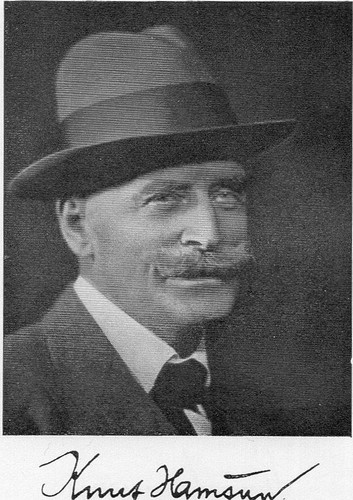
Knut Hamsun was born in rural Norway in 1859, growing up in poverty and working many years as a laborer, teacher, and even a tram conductor. His early struggles informed his writing, which often celebrates the dignity of manual work and the beauty of the natural world.
Hamsun’s literary style was revolutionary for its time. He broke with urban realism and psychological introspection popular in late nineteenth-century literature, instead championing a “return to the soil.” His influence can be seen in later writers such as Ernest Hemingway and John Steinbeck.
However, Hamsun’s legacy is complicated. His later support for Nazi Germany tainted his reputation, a topic still hotly debated among scholars. Yet Growth of the Soil remains a high point of literary achievement, admired for its artistry, philosophical depth, and emotional resonance.
Key Takeaways
- Nature is not just a setting, but a living force that shapes human destiny.
- True fulfillment comes from honest labor and humility before the land.
- Progress brings both opportunity and loss—what we gain in convenience, we may lose in meaning.
- Isolation can breed both strength and tragedy.
- Life is cyclical: every ending is a new beginning, every harvest a prelude to new growth.
Reader's Takeaway
Reading Growth of the Soil is a bit like spending time in the woods—at first, you notice the silence, then the subtle music of wind and birds. The novel invites you to slow down, to marvel at the ordinary, and to ponder what really matters. It reminds us that even in a world obsessed with speed and innovation, there is wisdom in patience, joy in simplicity, and beauty in the stubborn persistence of life itself.
You may find yourself rooting for Isak as he digs another ditch or simply laughing at Oline’s outrageous gossip. The novel’s emotional power lies in its quiet moments—a lamb born on a frosty night, a family meal shared in silence, a father’s pride in his son.
Conclusion
Growth of the Soil is more than a story about farming—it’s a celebration of endurance, a meditation on what it means to be human, and a cautionary tale about the costs of forgetting where we come from. Knut Hamsun’s masterpiece stands as a testament to the power of land, labor, and love. Whether you’re reading for class or for pleasure, this novel invites you to dig deeper—into the soil, into your own life, and into the timeless questions that bind us all.
So, if you’re seeking a novel that offers both intellectual challenge and emotional reward, Growth of the Soil is a journey worth taking. Let it remind you, as it has reminded generations, that all true growth—of soil, of self, of society—begins at the roots.
Growth of the Soil FAQ
What is 'Growth of the Soil' about?
'Growth of the Soil' is a novel by Knut Hamsun that tells the story of Isak, a pioneering settler in rural Norway, and his struggles and triumphs as he builds a life from scratch on unspoiled land. The novel explores themes of nature, simplicity, human endurance, and the relationship between people and the land they cultivate.
Who is the main character in 'Growth of the Soil'?
The main character is Isak, a stoic and hardworking man who settles in the Norwegian wilderness. The novel follows his journey as he builds a home, raises a family, and develops a farm from the ground up.
Why is 'Growth of the Soil' considered an important novel?
'Growth of the Soil' is regarded as a landmark in Norwegian literature and played a significant role in earning Knut Hamsun the Nobel Prize in Literature in 1920. The novel's celebration of rural life and its critique of modernity resonated with readers and critics alike.
What are the main themes of 'Growth of the Soil'?
The novel explores themes such as the connection between people and nature, the value of hard work, the simplicity of rural life, the dangers of modernization, and the impact of progress on traditional ways of living.
Is 'Growth of the Soil' based on real events?
'Growth of the Soil' is a work of fiction, but it is inspired by the rural Norwegian landscape and the lives of settlers who cultivated the land. Hamsun's own experiences and observations of country life influenced the novel.
What style is 'Growth of the Soil' written in?
The novel is written in a realistic and straightforward style, with detailed descriptions of nature and daily life. Hamsun uses a third-person narrative, focusing closely on Isak's experiences and inner thoughts.
How does 'Growth of the Soil' reflect Knut Hamsun’s philosophy?
Hamsun believed in the virtues of simplicity, closeness to nature, and the dangers of urbanization. These beliefs are reflected in the novel through the depiction of Isak's fulfilling life in harmony with the land, contrasted with the problems brought by modernization.
Has 'Growth of the Soil' been translated into English?
Yes, 'Growth of the Soil' has been translated into English multiple times. The most well-known translation was done by W.W. Worster in the early 1920s.
Did 'Growth of the Soil' receive any awards?
Yes, 'Growth of the Soil' was a major reason Knut Hamsun was awarded the Nobel Prize in Literature in 1920.
Is 'Growth of the Soil' suitable for modern readers?
Yes, the novel's themes of resilience, the human connection to nature, and the exploration of simple living are still relevant today. However, readers should also be aware of the historical context and Hamsun's controversial political views, which are separate from the novel's content.