
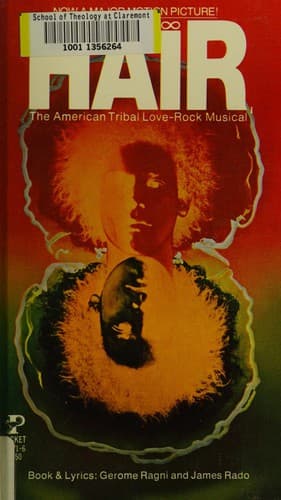
Synopsis
Covers the whole plot, including the ending.
- Difficulty
- Easy
- Pacing
- Fast
- Mood
- Energetic, Rebellious, Poignant, Hopeful
- Read it if
- You enjoy musicals, stories about counter-culture movements, or explorations of freedom vs. conformity.
- Skip it if
- You are offended by themes of drug use, sexual liberation, or anti-establishment sentiment.
Hair Plot Summary
Covers the whole plot, including the ending.
Opening: Aquarius and the Tribe
The musical starts with the 'tribe' – a group of free-spirited, anti-establishment hippies – in Central Park, celebrating their shared life and the start of the Age of Aquarius. Claude Bukowski, a young man from Oklahoma, has just arrived in New York City after being drafted into the Vietnam War. He watches the tribe with interest and some worry. Berger, the lively leader, immediately likes Claude, inviting him into their world of love, peace, and protest. Sheila Franklin, a student activist, and Jeanie, a pregnant tribe member, are also introduced, setting up the group's main relationships and beliefs.
Hair and Identity
The tribe performs 'Hair,' a song celebrating their long, messy hair as a clear rejection of social rules and a symbol of their freedom. This scene shows the clash between older generations' expectations and young people's desire for self-expression. Claude, still dealing with his draft and family expectations, feels drawn to their ideas but is slow to fully join. He shows the inner conflict many young men faced, torn between duty and the growing counter-culture. Berger and the others try to get Claude to let go and embrace their life, including their protest against the war.
Draft Card Burning
The tribe protests the Vietnam War in several ways, including a symbolic draft card burning. Berger tries to get Claude to burn his own draft card, seeing it as the ultimate act of defiance and loyalty to their cause. Claude is clearly torn, afraid of legal trouble but also feeling more sympathy for the tribe's anti-war stance. This moment is a key turning point, showing the intense pressure on young men to pick a side. While some tribe members have already burned theirs, Claude's hesitation highlights how serious such a decision is and its personal cost.
Confronting Parents and Society
During a drug-induced 'trip,' the tribe confronts and makes fun of the authority figures and social expectations they reject. Parents, politicians, and military leaders appear as exaggerated characters, showing the conservative values and pro-war ideas the youth are rebelling against. This strange scene uses humor and absurdity to show the generation gap and the tribe's deep distrust of the establishment. Claude watches these visions, further taking in the tribe's criticisms of society, though his personal struggle with fitting in stays central. The scene comments strongly on the perceived hypocrisy of the adult world.
Love, Sex, and Freedom
The tribe openly embraces free love and sexual liberation, challenging old ideas about relationships and sex. Songs like 'Sodomy' and 'Black Boys/White Boys' celebrate different sexualities and a rejection of prudishness. Sheila, Berger, and Claude navigate a complex love triangle, showing how relationships are fluid within the tribe. Sheila is drawn to Claude's honesty but also to Berger's rebellious spirit. This part of their lifestyle is presented as another form of freedom and a break from their parents' restrictive norms, stressing their search for real connection over traditional structures.
Claude's Internal Conflict
Claude's inner struggle grows as his draft date gets closer. He wants the freedom and friendship of the tribe but is also haunted by a sense of duty and the fear of breaking the law. He expresses his worries and doubts in songs like 'Manchester, England' and 'I Got Life,' showing his desire for a meaningful life beyond the war. Berger and Sheila try to convince him to resist the draft, offering him a sense of belonging and a cause, but the weight of his decision is his alone. His journey shows the moral problem many young men faced during the Vietnam era.
The Be-In and Protest
The tribe plans and takes part in a large 'be-in' and protest against the Vietnam War, drawing a bigger crowd of like-minded people. This scene shows their collective strength and their strong commitment to peace and social change. They chant, sing, and take symbolic actions to show their anger and demand an end to the conflict. The energy of the protest is clear, highlighting the collective voice of the anti-war movement. Claude is there, seeing the tribe's passion and belief, but still on the edge, his personal decision heavy on his mind amid the excitement.
Claude's Decision and Departure
Despite the tribe's efforts and his own deep doubts, Claude makes the difficult decision to report for army induction. He says a quiet goodbye to his friends, knowing his path, for now, is different from theirs. This moment is marked by a deep sadness, as Claude chooses to follow social expectations rather than fully embracing the counter-culture. His departure reflects the personal sacrifices and hard choices made during wartime, showing the individual cost of the conflict and the limits of rebellion for some.
The Draft Card Revelation
In a strong, symbolic act of defiance, Berger burns what he thinks is Claude's draft card. He does this with conviction, meaning to protect his friend and further their anti-war cause. However, the audience knows Claude has already reported for duty, making Berger's action pointless for Claude's immediate fate. This dramatic irony shows the sad gap between the tribe's hopes and the harsh facts of war and conscription, highlighting the futility of some protests and the individual paths people take.
War and Loss
The tribe continues their life of protest and shared living, but the war's shadow hangs over them. News eventually reaches them that Claude has been killed in Vietnam. This devastating news breaks the tribe's hopeful spirit, bringing the harsh reality of the war directly into their lives. The earlier optimism is replaced by deep loss and grief. The final scenes show the tribe mourning Claude, their lively energy subdued by the weight of his sacrifice, showing the terrible human cost of the conflict they so strongly opposed. They gather in memory, their future uncertain.
Requiem and Hope
After Claude's death, the tribe performs a moving requiem, a strong and emotional tribute to their lost friend. The song 'Let the Sunshine In' becomes a song of lasting hope and strength, even amid deep sorrow. While Claude's death is a clear reminder of the war's brutality, the tribe's continued singing and shared spirit suggest their ideals of peace, love, and freedom will last. The ending is bittersweet, acknowledging the tragedy but also confirming the power of their movement and their shared belief in a better future, even as they face an uncertain world without Claude.
Hair Characters
Claude Bukowski
Protagonist
A naive Oklahoman drafted into the Vietnam War, torn between duty and the counter-culture.
Claude is initially a shy, uncertain young man from a conservative background. He is drafted into the Vietnam War and arrives in New York City, where he encounters the 'tribe.' He is deeply conflicted, yearning for the freedom and ideals of the hippies but also burdened by a sense of duty and the fear of defying authority. He struggles with his identity and his place in a rapidly changing world. His internal battle reflects the moral dilemmas faced by many young men during the Vietnam era, caught between traditional expectations and the burgeoning anti-war movement.
Relationships: Berger (Friend and mentor figure, who tries to persuade Claude to join the tribe's cause.); Sheila Franklin (Love interest, who is drawn to Claude's sincerity but also connected to Berger.); The Tribe (His surrogate family and a source of conflicting ideals and camaraderie.)
Berger
Supporting Character / Co-Protagonist
The charismatic, rebellious leader of the tribe, a passionate advocate for peace and freedom.
Berger is the free-spirited and charismatic leader of the tribe, an embodiment of the counter-culture movement. He is fiercely anti-establishment, a vocal opponent of the Vietnam War, and a proponent of free love and communal living. He is confident, mischievous, and often pushes boundaries, but also deeply loyal to his friends. Berger acts as a mentor figure to Claude, trying to draw him into their way of life. He represents the unbridled defiance and idealism of the hippie generation, unafraid to challenge authority and societal norms.
Relationships: Claude Bukowski (Close friend whom he tries to save from the draft.); Sheila Franklin (Love interest, part of a complex love triangle.); The Tribe (Leader and spiritual guide, deeply connected to all members.)
Sheila Franklin
Supporting Character
A politically active student and a central figure in the tribe's emotional landscape.
Sheila is a politically aware and passionate student, actively involved in anti-war protests and civil rights. She is intelligent, sensitive, and deeply committed to the tribe's ideals, but also possesses a more grounded and sometimes conflicted nature than Berger. She is caught in a love triangle between Berger and Claude, drawn to Berger's rebellious spirit but also to Claude's quiet sincerity. Sheila represents the intellectual and emotional core of the movement, fighting for change while also navigating complex personal relationships within the communal setting.
Relationships: Claude Bukowski (Love interest, drawn to his innocence and sincerity.); Berger (Love interest and fellow activist, sharing a deep, complex bond.); The Tribe (Dedicated member and advocate for their cause.)
Jeanie
Supporting Character
A pregnant member of the tribe, embodying the fragility and hope of their communal future.
Jeanie is a pregnant member of the tribe, providing a grounded and somewhat vulnerable presence amidst the group's more outspoken members. She is kind-hearted and deeply integrated into the communal lifestyle, embodying the themes of new life and the tribe's hope for a future free from war. Her pregnancy highlights the domestic and personal aspects of the counter-culture movement, showing that their ideals extend beyond protest to the creation of alternative family structures. She often expresses her anxieties and hopes, reflecting the personal stakes involved for the tribe.
Relationships: The Tribe (Integral member, relying on their support during her pregnancy.); Claude Bukowski (Friend, sharing anxieties about the future.)
Woof
Supporting Character
A free-spirited and openly gay member of the tribe, challenging sexual norms.
Woof is a flamboyant and openly gay member of the tribe, unafraid to express his sexuality and challenge societal norms. He is a symbol of sexual liberation and the breaking down of traditional taboos within the counter-culture. His character adds to the diverse tapestry of the tribe, emphasizing their acceptance of all forms of love and identity. Woof's playful and often provocative nature contributes to the group's rebellious spirit and their rejection of conservative morality, particularly regarding sexuality.
Relationships: The Tribe (Dedicated member, freely expressing himself within the group.)
Hud
Supporting Character
A confident and outspoken Black member of the tribe, representing racial identity and protest.
Hud is a confident and outspoken Black member of the tribe, bringing themes of racial identity and civil rights into the broader anti-war narrative. He is a strong voice for social justice and equality, often challenging both racial prejudice and the war itself. His character adds another layer to the tribe's diverse protest, highlighting the intersectionality of various liberation movements during the era. Hud's assertiveness and pride in his heritage contribute to the group's collective defiance against oppressive systems.
Relationships: The Tribe (Integral member and voice for social justice within the group.)
Dionne
Supporting Character
A powerful vocalist and prominent female voice within the tribe.
Dionne is a strong and soulful vocalist, often leading many of the tribe's musical numbers. She is a prominent female voice within the group, embodying the energy and passion of their collective spirit. Her character contributes significantly to the musical's vibrant atmosphere, representing the artistic and expressive side of the counter-culture movement. Dionne's presence reinforces the idea of communal expression and the power of music as a tool for protest and unity.
Relationships: The Tribe (Integral member, contributing her powerful voice to their collective expression.)
Various Tribe Members
Supporting/Mentioned
A diverse ensemble representing the broader counter-culture movement.
The other unnamed and named members of the tribe (e.g., Crissy, Suzannah) collectively form the vibrant backdrop and communal heart of the musical. They represent the diverse individuals drawn to the counter-culture movement, each contributing to the group's shared ideals of peace, love, and freedom. They embody the collective spirit of rebellion against the establishment, providing support, companionship, and a sense of belonging to Claude and each other. Their presence emphasizes the communal nature of the movement, where individual identities merge into a collective voice.
Relationships: Claude Bukowski (Offer him acceptance and an alternative family.); Berger (Follow his lead and share his rebellious spirit.)
Hair Themes
The Vietnam War and Anti-War Protest
The Vietnam War is the main background, forcing young men like Claude into unwanted military service. The tribe's whole life is a protest against this war, shown in draft card burnings, be-ins, and songs that question authority and the war's morality. The war's terrible impact is finally shown through Claude's tragic death, turning abstract political arguments into a very personal loss for the tribe. Scenes like the draft card burning and the final song for Claude directly address the human cost of the conflict and the deep disappointment it caused.
“What is the reason for this war? Do you know? Do you know why?”
Freedom vs. Conformity
Claude's inner struggle shows this theme. The tribe lives for ultimate freedom – freedom of expression (long hair), sexual freedom (free love), and political freedom (anti-establishment). Claude, however, is caught between this liberating life and the social pressure to conform, especially regarding his draft notice. His decision to report for duty, despite his growing connection to the tribe, shows how hard it is to choose freedom over perceived safety or duty, leading to his death. The contrast between Claude's initial appearance and the tribe's radical style visually highlights this theme.
“I got life, mother, I got laughs, father, I got good times, brother, and I ain't nothin' but free.”
Identity and Self-Expression
The musical celebrates finding and showing individual and group identity, especially through hair. For the tribe, long hair is not just a style; it is a political statement, a rejection of conservative norms, and a symbol of their unique identity. The characters explore their identities through their sexuality (Woof), their racial pride (Hud), and their collective voice in protest. Claude's journey is about finding his own identity, whether as a 'soldier' or a 'hippie,' and the pain of not fully being able to bring these competing selves together. The opening 'Aquarius' number and the song 'Hair' directly show this theme.
“Give me a head with hair, long beautiful hair. Shining, gleaming, streaming, flaxen, waxen.”
Love, Community, and Generational Divide
The tribe shows an ideal of shared love and support, forming an alternative family based on shared values rather than old structures. They practice free love, challenging traditional monogamy and social taboos. This sense of community gives comfort and strength against the outside pressures of war and conservative society. This contrasts sharply with the 'straight' world, showing the big generation gap between the youth's progressive ideas and their parents' more traditional values. The love triangle between Claude, Berger, and Sheila, and Jeanie's pregnancy within the tribe, all show different parts of love and community.
“Let the sunshine, let the sunshine in, the sunshine in.”
Rebellion and Social Change
The entire story is filled with rebellion against the establishment, shown in various ways: political protest against the war, rejection of consumerism, challenging sexual norms, and embracing alternative lifestyles. The tribe's actions are driven by a desire for social change, pushing for peace, equality, and a more caring world. While their methods are often unusual, their goal is to change society. Berger's leadership and the tribe's collective actions, like the be-in, directly show this rebellious drive for change.
“We are the youth of the world.”
Plot Devices & Literary Techniques
Symbolism of Hair
Long hair as a visual and ideological symbol of rebellion and freedom.
The long, unkempt hair of the tribe members is not merely a stylistic choice; it's a potent symbol. It represents a defiant rejection of conservative societal norms, military haircuts, and the 'straight' world's expectations. It signifies freedom, individuality, and a break from the past. The song 'Hair' explicitly celebrates this symbolism, making it a central motif. For Claude, the idea of growing his hair long is initially a step towards embracing the tribe's ideals, and its absence marks his conformity.
Dramatic Irony
The audience's knowledge of events that characters are unaware of, particularly regarding Claude's fate.
Dramatic irony is powerfully used in the scene where Berger burns Claude's draft card. The audience knows that Claude has already reported for duty, rendering Berger's defiant act tragically futile in terms of Claude's personal situation. This creates a profound sense of pathos, highlighting the disconnect between the tribe's idealistic actions and the harsh realities of war. It underscores the ultimate powerlessness of individual acts of protest against a larger, unyielding system, making Claude's death even more impactful.
Hallucinatory Sequences / 'Trip'
Surreal, drug-induced visions used to satirize society and explore characters' inner worlds.
The hallucinatory 'trip' sequence serves as a powerful theatrical device. It allows the musical to visually and audibly satirize figures of authority (parents, politicians, generals) and the societal values the tribe rejects. This surrealism breaks away from conventional narrative, immersing the audience in the subjective experience of the characters. It also provides a metaphorical space for Claude to confront his fears and the conflicting pressures he faces, revealing his subconscious anxieties and the tribe's collective disillusionment with the establishment in a highly stylized manner.
The 'Be-In' and Collective Performance
Large-scale communal gatherings and musical numbers that embody the spirit of the movement.
The 'be-in' scenes and many of the musical's large ensemble numbers function as a plot device by showcasing the collective power, unity, and expressive nature of the counter-culture movement. These moments are not just entertainment; they are acts of protest and community building. They immerse the audience in the energy of the era, demonstrating how music and communal gathering were central to the hippies' way of life and their fight against the war. They visually and audibly represent the tribe's strength in numbers and their shared ideology.
Hair Quotes
“I'm a walking, talking, breathing example of the American dream.”
“Let the sun shine in.”
“Harmony and understanding, sympathy and trust abounding.”
“I got my hair, I got my head, I got my brains, I got my ears, I got my eyes, I got my nose, I got my mouth, I got my smile, I got my tongue, I got my chin, I got my neck, I got my boobs, I got my ass, I got my arms, I got my hands, I got my fingers, I got my legs, I got my feet, I got my toes, I got my liver, I got my blood, I got life.”
“Why do I live, why do I die? What is the reason?”
“We don't want to die. We just want to live.”
“How can people be so heartless? How can people be so cruel?”
“Gimme some truth.”
“The mind is a beautiful thing to waste.”
“I believe in love, not war.”
“I am a psychedelic, soul-searching, love-giving, free-wheeling freak!”
“This is the dawning of the Age of Aquarius.”
“My generation wants to change the world.”
“I'm not a hippie, I'm just me.”
Quiz
10 questions on the plot and the characters. Each answer comes with a short explanation.
Question 1
Which major historical event serves as the backdrop for the musical 'Hair'?
- The Korean War
- The Vietnam War
- World War I
- The Cuban Missile Crisis
Show answer
B. The Vietnam War 'Hair' is set during the late 1960s, a period deeply marked by the Vietnam War and the anti-war movement.
Question 2
What is Claude's primary internal conflict throughout the musical?
- Whether to pursue a career in music or art
- His struggle between the counterculture lifestyle and the pressure to conform and serve in the Vietnam War
- His decision between Berger and Sheila
- His desire to leave New York for California
Show answer
B. His struggle between the counterculture lifestyle and the pressure to conform and serve in the Vietnam War Claude embodies the conflict of many young men at the time, torn between the ideals of the hippie movement and the reality of the draft.
Question 3
The song 'Aquarius' opens the show and references which astrological age?
- The Age of Pisces
- The Age of Leo
- The Age of Aquarius
- The Age of Gemini
Show answer
C. The Age of Aquarius The song 'Aquarius' is a direct reference to the dawning of the 'Age of Aquarius,' a new era of peace and understanding, a central theme of the show.
Question 4
Which character serves as the charismatic, free-spirited leader of the tribe?
- Woof
- Hud
- Berger
- Claude
Show answer
C. Berger Berger is consistently portrayed as the energetic, flamboyant, and often provocative leader of the hippie tribe.
Question 5
What significant act do the tribe members perform in defiance of societal norms, as celebrated in the show's title song?
- They refuse to pay taxes
- They burn their draft cards
- They grow their hair long
- They protest nude in public
Show answer
C. They grow their hair long The song 'Hair' explicitly celebrates the growing of long hair as a symbol of rebellion, freedom, and defiance against conservative society.
Question 6
Sheila's character primarily represents which aspect of the counterculture movement?
- The pursuit of corporate success
- The radical political activism and intellectualism
- The embrace of hedonism and drug use
- The desire for traditional family values
Show answer
B. The radical political activism and intellectualism Sheila is often depicted as the most politically conscious and active member of the tribe, frequently engaging in protests and advocating for social change.
Question 7
Which character is known for his song 'Black Boys / White Boys,' highlighting racial fluidity and attraction?
- Claude
- Woof
- Hud
- Berger
Show answer
B. Woof Woof sings 'Black Boys / White Boys,' a song that openly expresses attraction across racial lines and challenges sexual norms.
Question 8
The 'Be-In' scene is a direct reference to what type of real-life counterculture gathering?
- A formal political debate
- A structured religious service
- A communal, often spontaneous gathering for protest and celebration
- A military recruitment drive
Show answer
C. A communal, often spontaneous gathering for protest and celebration Be-Ins were actual events in the 1960s where hippies gathered to promote peace, love, and counterculture ideals, often involving music and communal activities.
Question 9
What is the ultimate fate of Claude, which serves as a poignant and tragic commentary on the Vietnam War?
- He successfully evades the draft and lives a long, peaceful life
- He becomes a successful rock star and leaves the tribe behind
- He is drafted, sent to Vietnam, and dies in combat
- He joins a commune in California and loses touch with his friends
Show answer
C. He is drafted, sent to Vietnam, and dies in combat In a stark and tragic ending, Claude is drafted, goes to Vietnam, and is killed, symbolizing the devastating impact of the war on the youth of that generation.
Question 10
The musical 'Hair' is notable for being one of the first Broadway shows to feature what controversial element onstage?
- Live animals
- Full frontal nudity
- Audience participation in a sing-along
- A rotating stage design
Show answer
B. Full frontal nudity 'Hair' broke boundaries by including a scene with full frontal nudity, a bold statement challenging societal taboos and embracing the era's themes of freedom and naturalism.
Hair FAQ
What is the core premise of 'Hair' by Gerome Ragni?
'Hair' revolves around Claude Hooper Bukowski, a young man from Oklahoma facing conscription into the Vietnam War. He becomes entangled with a tribe of free-spirited, anti-establishment hippies in New York City's East Village, exploring themes of peace, love, rebellion, and the counterculture movement of the 1960s.
Who are the main characters Claude interacts with in the 'Hair' musical?
Claude primarily interacts with Berger, the charismatic and wild leader of the tribe; Sheila, a NYU student and activist who is romantically linked to both Berger and Claude; and Woof, the gentle and often high pacifist. Other notable members include Jeanie, Chrissy, and Hud, each contributing to the tribe's diverse dynamic.
What significant event marks a turning point for Claude's internal conflict?
The pivotal moment for Claude's internal conflict is receiving his draft notice. This forces him to directly confront the choice between conforming to societal expectations and potentially fighting in a war he doesn't believe in, or fully embracing the counterculture lifestyle and its ideals.
How does the musical 'Hair' utilize its song structure to convey its themes?
'Hair' uses a series of vignettes and short, often overlapping songs rather than a traditional linear narrative. This fragmented structure mirrors the chaotic, free-flowing nature of the hippie movement and allows for rapid shifts in mood and perspective, covering numerous social and political issues.
What is the symbolic meaning behind the title 'Hair' itself?
The title 'Hair' symbolizes rebellion, freedom, and nonconformity against the military and societal norms of the 1960s, where short hair was expected. Growing long hair was a visible act of defiance, representing a break from the establishment and an embrace of alternative values.
What is the significance of the 'Be-In' scene in Central Park?
The 'Be-In' scene is significant as it introduces Claude to the tribe's communal lifestyle and their public acts of protest and celebration. It visually establishes the vibrant, communal, and often defiant spirit of the counterculture movement, contrasting sharply with Claude's more conventional background.
Are there any subtle allusions to historical figures or events within the lyrics?
Yes, 'Hair' contains numerous subtle allusions to contemporary figures and events. For instance, 'Frank Mills' references a seemingly ordinary individual, contrasting with the larger-than-life figures of the era, while songs like 'Manchester, England' and 'Sodomy' subtly critique societal norms and political leaders of the time.
What is the deeper meaning behind the 'Flesh Failures (Let the Sunshine In)' sequence?
'Flesh Failures' is a powerful and often disturbing sequence that depicts the ultimate cost of war and societal decay. The imagery of body parts and the eventual 'Let the Sunshine In' serves as a desperate plea for peace and renewal, juxtaposed with the grim reality of conflict and loss.
How does the 'Aquarius' song set the stage for the entire musical's themes?
'Aquarius' acts as a prophetic overture, heralding a new age of peace, understanding, and love, a direct challenge to the prevailing societal conflicts and wars. It establishes the optimistic, spiritual, and utopian aspirations of the hippie movement, even as the narrative explores its challenges and failures.
Analyze Claude's psychological journey from conformity to rebellion.
Claude's journey is one of profound internal conflict, initially driven by a desire to fit in and fulfill societal expectations. His exposure to the tribe's freedom and anti-war stance gradually erodes his conventional beliefs, leading to a struggle between his ingrained sense of duty and a newfound yearning for individual liberation and peace.
What role does Berger play in Claude's psychological development?
Berger acts as both an idol and an antagonist for Claude. He embodies the uninhibited freedom Claude desires but also represents a chaotic, sometimes irresponsible, lifestyle. Berger challenges Claude's inhibitions and forces him to confront his own suppressed desires for rebellion and self-expression.
How do the tribe members' individual psychologies contribute to the group dynamic?
Each tribe member represents a facet of the counterculture's collective psychology. Sheila embodies activism and intellectualism, Woof represents gentle pacifism, and Hud embodies Black power and cultural pride. Their diverse psychologies create a rich, sometimes conflicting, tapestry that reflects the broad spectrum of the movement.
What is the psychological impact of the draft on the characters?
The draft creates immense psychological pressure, forcing characters like Claude to confront mortality, patriotism, and personal ethics. It fuels anxiety, anger, and a desperate search for alternatives to war, profoundly shaping their choices and reinforcing their anti-establishment sentiments.
Is 'Hair' ultimately an optimistic or pessimistic portrayal of the counterculture movement?
'Hair' offers a complex portrayal that balances optimism with underlying pessimism. While it celebrates the ideals of peace and love, the ending, particularly with Claude's fate, suggests the tragic limitations and eventual failures of the movement to fully overcome the powerful forces of war and conformity.
How does the musical challenge traditional notions of patriotism?
'Hair' directly challenges traditional patriotism by questioning the validity of the Vietnam War and celebrating individual conscience over blind obedience to the state. Songs like 'I Got Life' and 'The War Department' satirize military culture and promote a broader sense of global humanity over nationalistic fervor.
What is the significance of the breaking of the fourth wall and audience interaction in the original production?
The breaking of the fourth wall and inviting the audience on stage was a radical act of blurring the lines between performers and spectators. It symbolized the counterculture's desire for communal experience and direct participation, inviting the audience to momentarily join the 'tribe' and share in their ideals.
Does 'Hair' offer a definitive answer to Claude's dilemma, or is it left ambiguous?
The musical deliberately leaves Claude's ultimate fate ambiguous, particularly in its original stage version. While the ending strongly implies his death in Vietnam, the lack of explicit confirmation allows the audience to grapple with the tragic inevitability of his choice and the broader consequences of war.
How does the nudity scene contribute to the musical's overall message?
The brief nudity scene is a powerful act of protest and liberation, symbolizing the tribe's rejection of societal taboos, shame, and the artificiality of the establishment. It represents a return to a more 'natural' state, embracing the body and freedom of expression as part of their anti-war and pro-love philosophy.
What contemporary relevance does 'Hair' still hold today?
'Hair' remains profoundly relevant today, as its themes of anti-war sentiment, environmentalism, social justice, and the search for identity continue to resonate. Its exploration of generational divides and the struggle against oppressive systems ensures its enduring power and message.
Similar books
- On The Road
Jack Kerouac
3.6 (349k) average on GoodreadsLifestyleExplores themes of freedom, rebellion, and a search for meaning in a post-war America.
- The Goldfinch
Donna Tartt
3.9 (720k) average on GoodreadsLiterary FictionHaunted by a tragic explosion and clutching a stolen Dutch masterpiece, a young orphan navigates the opulent drawing rooms of New York and the gritty underbelly of the art world, desperately seeking connection and redemption amidst a life spiraling into crime and obsession.
- Girl with a Pearl Earring
Tracy Chevalier
3.9 (627k) average on GoodreadsHistorical FictionA young servant in 17th-century Delft finds her quiet world intertwined with the painter Johannes Vermeer as she becomes his muse, blurring the lines of class, art, and forbidden desire.
- The Story of Art
E.H. Gombrich
3.9 (311k) average on GoodreadsReferenceExplore thousands of years of human creativity, from ancient cave art to modern masterpieces, with Gombrich's classic account, updated with new insights into art's changing story.
- The New Drawing on the Right Side of the Brain
Betty Edwards
3.9 (297k) average on GoodreadsPsychologyLearn to draw by using the often-ignored visual side of your brain, changing how you see the world.
- Ways of Seeing
John Berger
3.9 (251k) average on GoodreadsHistoryJohn Berger's "Ways of Seeing" changes how we see art by showing the historical and social forces that shape our view, making us question the power dynamics in every image.





Enjoyed the summary?
A summary gives you the shape of the book. The book itself has the detail, the examples and the voice.
Find Hair on AmazonAs an Amazon Associate, BookBrief earns from qualifying purchases. How we're funded