
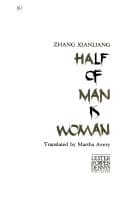
Synopsis
Covers the whole plot, including the ending.
- Difficulty
- Medium
- Pacing
- Moderate
- Mood
- Gritty, Reflective, Passionate, Melancholy
- Read it if
- You are interested in a powerful, intimate story of love and survival set against the backdrop of China's Cultural Revolution, exploring themes of masculinity, art, and political oppression.
- Skip it if
- You prefer light-hearted reads or are sensitive to explicit sexual content and descriptions of political persecution.
Half of Man is Woman Plot Summary
Covers the whole plot, including the ending.
Arrival at the Re-education Camp
The novel begins with Zhang Niannian, an intellectual and poet, sent to a re-education camp in the desolate deserts of Northwest China. He is a 'rightist,' condemned for his art and independent thinking. He immediately faces the harsh realities of camp life: hard physical labor, small food portions, and constant ideological checks. His name is erased, and he becomes a number in the system. Zhang struggles with losing his intellectual freedom and the psychological burden of his new life, finding comfort only in the vast, empty landscape and faint memories of his past as a writer.
Encounter with Huang Xiangji
While working on a construction project, Zhang Niannian meets Huang Xiangji, a local peasant woman from a nearby village. Huang is strong, practical, and free from the intellectual worries that trouble Zhang. Their first meetings are brief and careful, following strict camp rules that forbid prisoners from interacting with villagers. However, Zhang is drawn to her earthy energy and strength, which contrasts with his own weakened state. Huang, in turn, seems interested in the educated, melancholic poet. Their growing connection offers Zhang a glimpse of humanity and intimacy in a dehumanizing place.
A Secret Relationship Begins
Driven by mutual attraction and a desperate need for human connection, Zhang Niannian and Huang Xiangji begin a secret affair. Their meetings are short, often in hidden parts of the construction site or at night. For Zhang, Huang represents a link to life, physicality, and a basic freedom he has lost. For Huang, Zhang offers a look into a world of intellect and sensitivity she has never known. Their physical intimacy becomes a powerful act of defiance against the oppressive system, a sanctuary where they can briefly reclaim their identities and desires, even as the constant threat of discovery hangs over them.
The Struggle for Masculinity
Zhang Niannian's time in the labor camp has deeply affected his physical and mental health, leading to a period of impotence. This weakness is a direct result of the dehumanizing conditions, constant hunger, and suppression of his individual will. He feels very inadequate in his relationship with Huang Xiangji, unable to fully be a man. This struggle with his masculinity becomes a central internal conflict, symbolizing his broader loss of self and power. Huang, though patient, also feels the frustration of this unfulfilled desire, showing how the political system impacts even the most private parts of human life.
Huang's Practicality and Sacrifice
Facing Zhang Niannian's continued impotence and her own unmet needs, Huang Xiangji, with her usual practicality, suggests a temporary solution: she will seek intimacy with another man to have a child. She sees this as necessary for her future and their potential life together. This idea, while practical for Huang, deeply hurts Zhang. He understands her logic but is consumed by jealousy and a strong feeling of failure. This event highlights the vast cultural and psychological differences between them, as well as the extreme circumstances that force such compromises. It further shows Zhang's internal conflict between his intellectual ideals and the harsh realities of survival.
A Glimmer of Hope and Renewal
Through sheer will and perhaps a gradual improvement in his physical condition, along with emotional support (and challenge) from Huang, Zhang Niannian's masculinity slowly returns. This restoration is a key moment, symbolizing his return to self and a victory over the dehumanizing forces of the camp. Their physical intimacy reignites, stronger and deeper than before. This renewal brings Zhang great joy and a sense of completeness, allowing him to fully embrace his relationship with Huang and experience a form of freedom and self-worth that had been lost. Their shared passion shows the enduring human spirit.
The Threat of Exposure
As Zhang Niannian and Huang Xiangji's relationship deepens, the risks of discovery grow. The constant watch of camp authorities and other prisoners creates an atmosphere of tension. Any hint of a forbidden relationship could lead to severe punishment for Zhang, and possibly for Huang. They become better at hiding their affair, but the stress of keeping it secret takes a toll. This constant threat highlights the oppressive nature of the regime, which tries to control not only people's thoughts and actions but also their most private desires and connections, seeing them as rebellious.
A Brief Period of Relative Freedom
Through luck or a change in camp duties, Zhang Niannian is temporarily moved to a less demanding role, giving him more time and some privacy with Huang Xiangji. During this time, they create a makeshift home, sharing meals and daily routines that resemble domestic life. This brief break from the camp's harsh realities allows their relationship to deepen beyond physical passion, becoming a companionship built on shared experiences and mutual support. It offers a precious, though fragile, taste of normalcy and happiness amidst ongoing hardship, strengthening their bond against an uncertain future.
The Cultural Revolution Intensifies
The political situation outside the camp quickly worsens with the Cultural Revolution's growth. News of purges, public accusations, and strong ideological fervor reaches even the remote labor camp, creating an atmosphere of increased paranoia and fear. The authorities become even more watchful, and 're-education' efforts stricter. This outside political turmoil directly impacts Zhang Niannian and Huang Xiangji's fragile life, making their forbidden relationship even more dangerous. The growing ideological pressure threatens to crush any remaining individual freedom, forcing Zhang to face the impossibility of a truly private life under such a regime.
The Inevitable Separation
The relentless pressure of the Cultural Revolution and the labor camp's strict rules finally make Zhang Niannian and Huang Xiangji's relationship impossible. Whether through an order for Zhang's transfer, a forced relocation of Huang, or the sheer impossibility of keeping their secret amidst increasing surveillance, they are separated. This parting is heartbreaking, showing the political system's victory over individual desire and human connection. Zhang is left again with a deep sense of loss, but also with the lasting memory of Huang's strength and their shared moments of intimacy, which have changed him forever.
Reflections on Manhood and Society
After his separation from Huang, Zhang Niannian enters a period of deep self-reflection. He thinks about his journey of losing and then regaining his masculinity, not just physically but also emotionally and intellectually. He considers the meaning of freedom, both personal and political, and how the oppressive system tried to strip individuals of their core. His relationship with Huang, though ended, helps him understand the complex interaction between human nature, societal limits, and the lasting need for love and connection. He realizes that true selfhood is not just about political freedom but also about the ability to love and be loved.
Lingering Scars and Enduring Spirit
The novel ends with Zhang Niannian's survival through the harsh years of the labor camp and the Cultural Revolution. While he endures, his experiences, especially his relationship with Huang and the struggle for his own identity, leave lasting marks. He carries the scars of his past, both physical and psychological, but also a deep understanding of human strength and the enduring power of the human spirit. The ending suggests a complex form of liberation, where physical freedom may be regained, but the inner self has been changed forever by suffering and love. Zhang shows the human ability to find meaning and connection even in the most desolate situations.
Principal Figures
Zhang Niannian
Protagonist
An intellectual poet condemned to a labor camp, struggling for survival and self-identity.
Zhang Niannian is a sensitive and introspective intellectual, a poet whose 'rightist' views lead to his incarceration in a remote labor camp. Initially, he is physically and psychologically broken by the dehumanizing conditions, suffering from emasculation and a profound loss of purpose. His intellectual mind constantly analyzes his surroundings and internal state. He yearns for freedom, both political and personal, and finds solace in nature and, eventually, in his forbidden relationship with Huang Xiangji. He represents the educated class persecuted during the political movements.
Relationships: Huang Xiangji (Lover; a complex relationship of passion, dependence, and mutual growth amidst adversity.)
Huang Xiangji
Supporting
A pragmatic and resilient peasant woman who becomes Zhang's lover and source of vitality.
Huang Xiangji is a strong, earthy, and practical peasant woman from a local village near the labor camp. Unburdened by intellectual anxieties, she possesses a robust vitality and a clear-headed approach to survival. She is direct, honest, and fiercely independent, valuing physical connection and the practicalities of life. Her resilience and straightforwardness offer a stark contrast to Zhang Niannian's intellectual complexities, and she becomes a grounding force for him. She is driven by basic human needs and desires, including the desire for a family and genuine connection.
Relationships: Zhang Niannian (Lover; she provides physical and emotional sustenance, challenging his intellectualism with her practicality.)
The Camp Authorities
Antagonist (Collective)
The faceless, oppressive force representing the state's control and ideological enforcement.
The 'Camp Authorities' represent the omnipresent, dehumanizing power of the state and its ideological apparatus. They are largely faceless, acting as instruments of control, surveillance, and punishment. Their primary role is to 're-educate' the prisoners, stripping them of their individuality and forcing ideological conformity through grueling labor, meager rations, and constant scrutiny. They embody the oppressive political system that condemns Zhang Niannian and seeks to crush the human spirit. Their actions create the constant threat that looms over Zhang and Huang's relationship.
Relationships: Zhang Niannian (Oppressor and oppressed; they are the source of his suffering and lack of freedom.)
Fellow Prisoners
Supporting/Mentioned
Other inmates who share Zhang's fate, providing a backdrop of shared suffering and occasional camaraderie.
The fellow prisoners are a diverse group of individuals, all condemned 'rightists' or political dissidents, who share Zhang Niannian's fate in the labor camp. They represent the collective suffering and resilience of those persecuted by the regime. While most are depicted as broken or resigned, some offer fleeting moments of camaraderie, shared understanding, or even betrayal. They serve to highlight the universality of the experience of political repression and the varied ways individuals cope with extreme adversity. Their presence reinforces the harsh realities of camp life.
Relationships: Zhang Niannian (Shared fate; they are fellow sufferers and occasional witnesses to his struggles.)
The Desert/Nature
Supporting/Symbolic
The vast, indifferent natural landscape that serves as both a prison and a source of solace.
The desolate desert landscape of Northwest China functions almost as a character in itself. It is both a physical prison, isolating the camp from the outside world, and a vast, indifferent witness to human suffering. For Zhang Niannian, it is initially a symbol of his despair and confinement, but it gradually becomes a source of profound, almost spiritual, solace. Its raw beauty and harshness reflect the inner turmoil and resilience of the characters. It is a constant backdrop against which the intimate drama of human survival and connection unfolds.
Relationships: Zhang Niannian (Confiner and confidante; it both imprisons him and offers him a sense of freedom and reflection.)
Themes & Insights
The Dehumanizing Effects of Political Oppression
The novel shows how totalitarian political systems, like the Cultural Revolution, strip individuals of their identity, dignity, and basic humanity. Zhang Niannian's weakness and the reduction of prisoners to numbers illustrate the regime's goal to control not just actions but also thoughts and desires. Constant surveillance and fear of accusation create an environment where trust erodes, and individual expression is brutally suppressed. This theme is central, as Zhang's fight to reclaim his selfhood is a direct response to this systemic dehumanization.
“Half of man is woman, and half of man is also beast. And half of man is also God.”
The Reassertion of Masculinity and Self-Identity
A main theme is Zhang Niannian's journey to reclaim his masculinity, which is deeply tied to his overall identity. The camp system initially makes him impotent, symbolizing his broader weakness as an intellectual and a free individual. His physical and emotional recovery, especially through his relationship with Huang Xiangji, signifies a victory over the oppressive forces that tried to diminish him. This is not just about sexual potency, but about regaining his control, his ability to love, and his sense of worth as a man and a human being in the face of great hardship.
“It was as if I had been reborn. My manhood, which had been buried for so long, had finally resurrected.”
Love and Intimacy as Acts of Resistance
In a world designed to crush individual spirit and connection, Zhang and Huang's secret affair is a powerful act of resistance. Their intimacy, both physical and emotional, provides a refuge from the camp's harsh realities and a way to reclaim their humanity. Their love defies the ideological control that tries to regulate all parts of life. It shows the lasting human need for connection, passion, and belonging, even under the most oppressive conditions. Their relationship is a private rebellion against a public tyranny.
“In that vast, desolate place, only our bodies knew what true freedom was.”
The Contrast Between Intellectualism and Primal Existence
The novel sharply contrasts Zhang Niannian's intellectual, reflective nature with Huang Xiangji's earthy, practical, and instinctive approach to life. Zhang, a poet, grapples with abstract ideas of freedom and identity, while Huang focuses on immediate survival and physical needs. This dynamic highlights different forms of human strength and understanding. Zhang's journey involves learning to appreciate and incorporate Huang's more basic wisdom, suggesting that true completeness requires a balance between mind and body, intellect and instinct. The harsh environment forces Zhang to confront the limits of a purely intellectual existence.
“She was like the earth itself, fertile and unyielding, while I was just a seed, blown by the wind.”
The Enduring Power of Nature
The vast, desolate landscape of the Northwest desert is a powerful backdrop and a character itself. It symbolizes Zhang's imprisonment and also offers deep comfort and a place for thought. Nature's indifference contrasts with the small cruelties of human politics, offering perspective and a sense of timelessness. Zhang often finds comfort and a connection to something larger than himself in the stark beauty of the natural world, suggesting that nature's grandeur can provide a spiritual escape and a reminder of life's strength even when humans cause suffering.
“The desert stretched endlessly, indifferent to our suffering, yet in its vastness, I found a strange kind of peace.”
Plot Devices & Literary Techniques
Symbolism of Emasculation/Potency
Zhang's physical impotence symbolizes his broader loss of power and identity under political oppression.
Zhang Niannian's initial impotence is a powerful symbol of the dehumanizing effects of the labor camp system. It represents not just a physical affliction but also his emasculation as an intellectual, a free thinker, and a man stripped of his agency and self-worth. His eventual recovery of potency, largely through his relationship with Huang Xiangji, symbolizes his reclamation of self, vitality, and human dignity. This device highlights how political oppression can penetrate and corrupt even the most intimate aspects of an individual's being, and how personal resilience can lead to a profound reassertion of self.
First-Person Narrative
The story is told from Zhang Niannian's subjective viewpoint, offering deep insight into his psychological state.
The novel employs a first-person narrative, allowing the reader direct access to Zhang Niannian's internal thoughts, reflections, and emotional struggles. This perspective is crucial for understanding the psychological impact of the labor camp, his intellectual analyses of his situation, and the profound introspection surrounding his relationship with Huang Xiangji and his own masculinity. It creates an intimate and subjective experience, emphasizing the personal cost of political oppression and making Zhang's journey of self-discovery deeply resonant.
The Desert Setting
The desolate Northwest desert functions as a character, symbolizing isolation, harshness, and a primal freedom.
The remote, vast, and often brutal desert landscape of Northwest China is more than just a backdrop; it acts as a symbolic character. It represents the physical and psychological isolation of the labor camp, the harshness of the conditions, and the indifference of the natural world to human suffering. However, it also offers moments of stark beauty and a sense of primal freedom that contrasts with the artificial constraints of the camp. For Zhang, the desert becomes a space for profound contemplation and a connection to something enduring beyond human politics, mirroring his internal journey.
Flashbacks and Internal Monologue
Zhang's memories and introspective thoughts provide context and deepen understanding of his past and present.
The narrative frequently uses flashbacks to Zhang Niannian's past life as a poet and intellectual, providing context for his current predicament and highlighting what he has lost. These are often interwoven with extensive internal monologues, where Zhang analyzes his experiences, his relationship with Huang, and his struggle with identity and masculinity. This device allows for a rich exploration of his psychological landscape, demonstrating the enduring power of memory and intellect even under oppressive conditions, and emphasizing the internal conflict between his past self and his present reality.
Half of Man is Woman Quotes
“In this world, the only thing that cannot be stolen is wisdom. But wisdom is also the only thing that cannot be given to you by others.”
“A man without a woman is only half a man; a woman without a man is only half a woman.”
“Freedom is not the absence of chains, but the ability to choose your own chains.”
“The greatest tragedy of our era is that people have forgotten how to laugh at themselves.”
“Man's greatest enemy is not others, but his own desires.”
“To be alive is to suffer, to survive is to find some meaning in the suffering.”
“Love is not a gift, but a struggle, a constant effort to understand and be understood.”
“The past is like a ghost that haunts you, but also teaches you.”
“Sometimes, silence is the only language left to express the deepest pain.”
“Hope is a fragile thing, easily crushed, but essential for life.”
“The greatest prison is not built with bars, but with one's own mind.”
“Beauty is not in the object itself, but in the eye of the beholder who sees it.”
“Even in the darkest times, a small flicker of humanity can ignite a revolution.”
Quiz
10 questions on the plot and the characters. Each answer comes with a short explanation.
Question 1
What is the primary reason Zhang is sent to the labor camp at the beginning of the novel?
- He was accused of theft.
- His poetry was deemed politically incorrect.
- He attempted to escape the country.
- He engaged in a physical altercation with an official.
Show answer
B. His poetry was deemed politically incorrect. Zhang's initial imprisonment in the labor camp is a direct consequence of his poetry being considered subversive or politically incorrect by the authorities.
Question 2
What is the name of the peasant woman Zhang falls in love with while in the labor camp?
- Li
- Wang
- Huang
- Chen
Show answer
C. Huang The woman Zhang falls in love with and marries is Huang, a peasant woman he meets in the camp.
Question 3
Which of the following best describes the setting of the novel?
- A bustling urban center during the Cultural Revolution.
- A remote rural labor camp in China.
- A military base during the Sino-Soviet split.
- An academic institution in post-Mao China.
Show answer
B. A remote rural labor camp in China. The story is predominantly set in a remote labor camp where Zhang is incarcerated, highlighting the harsh realities of such environments.
Question 4
What major internal conflict does Zhang experience regarding his masculinity and intellectualism while in the camp?
- The struggle between his desire for material wealth and his artistic integrity.
- The conflict between conforming to political ideology and maintaining his personal beliefs.
- The tension between his intellectual pursuits and the physical demands/suppression of his sexuality.
- The dilemma of choosing between loyalty to his family and loyalty to the state.
Show answer
C. The tension between his intellectual pursuits and the physical demands/suppression of his sexuality. A central theme is Zhang's internal struggle to reconcile his intellectual identity and suppressed male sexuality (often symbolized by his penis, which he feels is 'half of man') within the dehumanizing environment of the camp.
Question 5
How does the novel portray the relationship between individuals and the state in China during the period depicted?
- As a harmonious coexistence where individual needs are prioritized.
- As one of absolute state control and suppression of individuality.
- As a period of democratic reforms and personal freedoms.
- As a partnership where citizens actively participate in governance.
Show answer
B. As one of absolute state control and suppression of individuality. The novel explicitly details the overwhelming power of the state over individuals, particularly through the labor camp system and the suppression of Zhang's intellectual and personal freedoms.
Question 6
What specific natural element often provides Zhang with solace and a sense of beauty amidst his suffering?
- The bustling cityscapes outside the camp.
- The sound of distant machinery and industry.
- The vast, open landscapes and natural environment around the camp.
- The interior decor of the camp's administrative buildings.
Show answer
C. The vast, open landscapes and natural environment around the camp. Despite the harshness of his environment, Zhang frequently finds solace and beauty in nature, such as the vast desert landscapes or the sky, which offers a stark contrast to his confinement.
Question 7
What is the metaphorical significance of the title 'Half of Man is Woman' in relation to Zhang's personal journey?
- It refers to the equal number of men and women in the labor camp.
- It symbolizes Zhang's struggle to reclaim his full identity, particularly his suppressed sexuality and masculinity, which he views as essential to being a 'whole' man.
- It describes the gender imbalance in Chinese society during that era.
- It highlights the idea that women are inherently weaker than men.
Show answer
B. It symbolizes Zhang's struggle to reclaim his full identity, particularly his suppressed sexuality and masculinity, which he views as essential to being a 'whole' man. The title refers to Zhang's sense of incompleteness due to the suppression of his sexuality and personal freedom. He feels that without the 'woman' (representing his sexual and emotional fulfillment, and thus his full masculinity), he is only 'half of man.'
Question 8
How does the narrative structure primarily convey Zhang's experiences and thoughts?
- Through a series of objective third-person accounts from various characters.
- Primarily through Zhang's first-person internal monologue and reflections.
- Through epistolary exchanges between Zhang and his family.
- As a series of journalistic reports and interviews.
Show answer
B. Primarily through Zhang's first-person internal monologue and reflections. The novel is largely a deep dive into Zhang's mind, presented through his first-person perspective, allowing the reader direct access to his intellectual ponderings, emotional struggles, and philosophical reflections.
Question 9
What is the ultimate fate of Zhang's relationship with Huang by the end of the novel?
- They remain together, finding happiness in their shared struggle.
- They are forcibly separated by the authorities.
- Their relationship deteriorates, leading to their separation as Zhang gains some measure of freedom and his 'manhood' is restored.
- Huang sacrifices herself to save Zhang from the camp.
Show answer
C. Their relationship deteriorates, leading to their separation as Zhang gains some measure of freedom and his 'manhood' is restored. As Zhang's intellectual and sexual vitality gradually returns, his relationship with Huang, which was born out of shared hardship and necessity, ultimately unravels, suggesting that their bond was tied to his state of suppression.
Question 10
How does the novel use the theme of sexuality to comment on political repression?
- It suggests that sexual freedom is irrelevant under totalitarian regimes.
- It portrays the suppression of sexual expression as a metaphor for the broader political control and dehumanization of individuals.
- It argues that strong sexual drives lead to political rebellion.
- It indicates that sexual relations are the only true form of resistance.
Show answer
B. It portrays the suppression of sexual expression as a metaphor for the broader political control and dehumanization of individuals. The novel explicitly links the suppression of Zhang's sexual identity and desire to the political repression he experiences, using his 'half of man' state as a metaphor for the way the regime attempts to strip individuals of their fundamental humanity and agency.
Half of Man is Woman FAQ
What is the central conflict driving the narrative of 'Half of Man is Woman'?
The central conflict revolves around Zhang's internal struggle to reclaim his masculinity, intellectual freedom, and human dignity while enduring the dehumanizing conditions of the labor camp and the oppressive political climate. This is further complicated by his passionate, yet often fraught, relationship with Huang, which challenges his preconceived notions of love and societal roles.
Who is Zhang and what is his background before being sent to the labor camp?
Zhang is an intellectual and a poet, originally sent to the labor camp for his 'rightist' tendencies and his politically incorrect poetry. His background highlights a clash between his refined artistic sensibilities and the brutal reality of manual labor and political persecution he faces, which deeply impacts his sense of self and masculinity.
Describe the character of Huang and her significance to Zhang.
Huang is a strong, earthy peasant woman who represents a stark contrast to Zhang's intellectual world. She becomes Zhang's lover and a crucial figure in his journey, offering him physical and emotional solace, challenging his intellectual arrogance, and ultimately becoming a symbol of both his connection to the earth and his complex relationship with traditional femininity.
How does the setting of the labor camp influence Zhang's personal transformation?
The labor camp strips Zhang of his former identity, forcing him into manual labor and confronting him with basic human needs and desires. This harsh environment, paradoxically, also becomes a crucible for his self-discovery, where he grapples with his masculinity, sexuality, and the very essence of what it means to be human beyond societal constructs.
What role does nature play in Zhang's experience and his artistic sensibility?
Nature, particularly the vast, desolate landscapes surrounding the camp, serves as a source of both solace and profound reflection for Zhang. It inspires his poetry, allows him to find beauty amidst suffering, and often mirrors his internal emotional states, providing a backdrop against which his philosophical ponderings unfold.
What is the significance of the 'half of man is woman' metaphor in the title?
The metaphor suggests the idea of human incompleteness and the necessity of integrating both masculine and feminine principles within oneself for wholeness. For Zhang, it reflects his struggle to reconcile his intellectual, 'feminine' side with the physical, 'masculine' demands of the labor camp, and his desire to understand and embrace the 'other half' represented by Huang.
Are there any symbolic animals or recurring natural imagery that hold deeper meaning?
The recurring imagery of horses, particularly the stallions, often symbolizes raw masculinity, untamed desire, and physical strength, contrasting with Zhang's initial intellectual fragility. The vast, empty plains and the changing seasons also serve as powerful symbols of endurance, cyclical change, and the indifferent grandeur of nature against human suffering.
How does the novel subtly critique the political system beyond explicit statements?
The novel critiques the political system through its depiction of the dehumanizing effects of the labor camp, the suppression of intellectual freedom, and the pervasive fear that shapes personal relationships. It highlights how ideology distorts human nature and prevents authentic expression, even in intimate moments between Zhang and Huang.
What is the underlying psychological impact of the labor camp on Zhang's sense of masculinity?
The labor camp severely challenges Zhang's sense of masculinity, forcing him to confront his physical weakness, his reliance on others, and his inability to protect Huang. This leads to deep introspection about what truly constitutes masculinity beyond societal expectations of physical strength and dominance, pushing him towards a more nuanced understanding.
How does Zhang's intellectualism both help and hinder his survival and personal growth?
Zhang's intellectualism provides him with a refuge through poetry and philosophical thought, helping him maintain his sanity and sense of self amidst the brutality. However, it also initially hinders his ability to adapt to physical labor and connect authentically with Huang, as he often overthinks and intellectualizes basic human experiences.
Analyze the power dynamics in Zhang and Huang's relationship.
The power dynamics are complex and shifting. Initially, Zhang, as an intellectual, holds a perceived social superiority, but Huang possesses practical survival skills and a grounded understanding of life that often gives her an emotional advantage. Their sexual relationship also introduces another layer of power, as they both seek and assert control in different ways.
In what ways does Zhang experience a 'rebirth' or profound psychological change by the end of the novel?
Zhang experiences a profound psychological change, moving beyond his initial intellectual arrogance and physical weakness. He learns to embrace his sexuality, understands the value of physical labor, and develops a more integrated sense of self, accepting both his vulnerabilities and strengths, ultimately achieving a more holistic understanding of what it means to be human.
Is 'Half of Man is Woman' primarily a political novel, a love story, or a philosophical exploration of self?
The novel deftly weaves elements of all three. While deeply embedded in the political context of the Cultural Revolution, it transcends mere political critique to become a profound love story and, more significantly, a philosophical exploration of identity, masculinity, and the human spirit's resilience in the face of extreme adversity.
How does the depiction of sex in the novel contribute to its themes, rather than merely being explicit?
The explicit depictions of sex are integral to the novel's themes, serving as a raw exploration of human desire, vulnerability, and the search for connection in a dehumanizing environment. It represents Zhang's attempt to reclaim his body, his masculinity, and his primal self, often blurring the lines between love, lust, and survival.
What is the ultimate message or takeaway regarding human resilience in the face of political oppression?
The novel suggests that human resilience isn't just about enduring hardship, but about the profound internal struggle to maintain one's humanity, intellectual freedom, and capacity for love even when stripped of everything else. It highlights the enduring power of the individual spirit to seek wholeness and self-definition against oppressive forces.
How does Zhang's relationship with Huang evolve and what does it ultimately signify for him?
Zhang's relationship with Huang evolves from initial physical attraction and need to a complex bond of love, frustration, and mutual dependence. She becomes a catalyst for his self-discovery, forcing him to confront his intellectual biases and embrace a more primal, grounded existence, ultimately signifying his integration of the 'feminine' aspect of life.
Does the novel offer any hope for the future, either for Zhang or for China?
While the novel concludes with Zhang's personal transformation and a sense of internal liberation, it offers a more ambiguous hope for China, reflecting the ongoing complexities of its political landscape. For Zhang, the hope lies in his newfound self-awareness and integrity, allowing him to face an uncertain future with a stronger sense of self.
Similar books
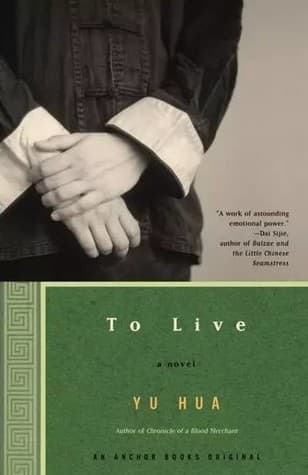
- To Live
Yu Hua
4.3 (8k) average on GoodreadsHistorical FictionExplores the resilience of individuals through tumultuous periods of Chinese history.
- Balzac and the Little Chinese Seamstress
Dai Sijie
3.6 (56k) average on GoodreadsHistorical FictionFeatures re-education camps and the transformative power of literature in challenging times.
- The Unbearable Lightness of Being
Milan Kundera
4.1 (342k) average on GoodreadsLiterary FictionExamines complex relationships, philosophy, and the individual's struggle against political systems.
- Harry Potter and the Sorcerer's Stone
J.K. Rowling
4.5 (7M) average on GoodreadsFantasyRescued from a miserable life under the stairs, an orphaned boy discovers he's a wizard destined for a magical school, where he uncovers a dangerous secret tied to the dark wizard who murdered his parents.
- The Hunger Games
Suzanne Collins
4.3 (6.4M) average on GoodreadsFantasyIn a future where children fight to the death on live television, Katniss Everdeen volunteers for the arena, turning a death sentence into a fight for survival and a spark of rebellion.
- Nineteen Eighty-Four
George Orwell
4.2 (5.5M) average on GoodreadsFictionWinston Smith dreams of truth and rebellion in a world where Big Brother watches all, but he confronts the terrifying power of a regime that controls not just actions, but thoughts.





Enjoyed the summary?
A summary gives you the shape of the book. The book itself has the detail, the examples and the voice.
Find Half of Man is Woman on AmazonAs an Amazon Associate, BookBrief earns from qualifying purchases. How we're funded