

Synopsis
Covers the whole plot, including the ending.
- Difficulty
- Easy
- Pacing
- Moderate
- Mood
- Reflective, poignant, hopeful, subtly rebellious, melancholic
Balzac and the Little Chinese Seamstress Plot Summary
Covers the whole plot, including the ending.
Arrival at Phoenix Mountain
In 1971, the narrator and his friend Luo, sons of 'reactionary' doctors, are sent from Chengdu to Phoenix of the Sky mountain for re-education. They have difficult tasks, like carrying buckets of excrement and working in rice paddies. The villagers, mostly uneducated, distrust their urban backgrounds and intelligence. Their only possessions are a violin and an alarm clock. The local headman, a stern man, first dislikes them, especially after Luo tries to play a Mozart sonata, which he cleverly renames 'Mozart Thinks of Chairman Mao' to avoid trouble. This early time involves hard work, loneliness, and constant fear of political problems.
The Little Seamstress
Soon after arriving, the narrator and Luo meet the Little Seamstress, the beautiful daughter of the local tailor. She cannot read but has a natural charm and curiosity that immediately draws both boys. Luo, being more outgoing, quickly starts to court her. They often tell her stories or describe the outside world, sparking her imagination. The Little Seamstress becomes important in their lives, giving them a needed break from the tough re-education and a source of young romance in their bleak existence. Her father, the tailor, is a skilled worker but also uneducated.
The Discovery of Forbidden Books
One day, visiting a fellow re-educated youth named Four-Eyes in a nearby village, Luo and the narrator make a discovery. Four-Eyes has a hidden suitcase full of forbidden Western novels, including works by Balzac, Flaubert, Stendhal, Dumas, and Victor Hugo. Authorities consider these books dangerous. The boys, hungry for intellectual stimulation, are thrilled. They plan to 'borrow' or steal these texts. This discovery changes things, offering them a secret world of imagination and knowledge that goes against the strict rules of the Cultural Revolution.
Smuggling the Books
Luo and the narrator carry out a plan to get Four-Eyes's books. They trick Four-Eyes into thinking they can help him get transferred off the mountain by making up a story about a powerful contact. In exchange for their supposed help, Four-Eyes agrees to lend them the books. They manage to steal the entire suitcase when Four-Eyes is busy, saying their great need for intellectual nourishment justified it. Getting these books is a dangerous act of rebellion, as having them could lead to severe punishment. They hide the books carefully, reading them in secret, their lives now having a hidden purpose.
Reading to the Seamstress
With their new books, the boys begin to read the stories aloud to the Little Seamstress. Balzac, especially, captivates her. His tales of passion, romance, and city life open her eyes to a world beyond her remote mountain village. The boys take turns narrating, often making the stories simpler and adapting them for her. The Little Seamstress, who started out uneducated, listens to these stories with intense curiosity, her imagination sparked. The books become a shared secret, a deep connection between the three of them, and a strong tool for her intellectual and emotional awakening.
Luo's Illness and the Narrator's Role
Luo gets malaria and becomes very sick. The narrator, despite his own fears, takes care of his friend, nursing him back to health. During Luo's illness, the narrator continues to visit the Little Seamstress, keeping the connection and the secret of the books alive. He reads to her, and their bond grows. This time shows the narrator's loyalty and compassion. It also hints at a growing, unspoken affection between the narrator and the Little Seamstress, though he respects Luo's claim on her. The books become an even more important support during this time of weakness and uncertainty.
The Tailor's Request
The Little Seamstress's father, the tailor, notices the change in his daughter and becomes interested in the stories the boys are sharing. He asks them to tell him some of the tales, especially those that might inspire new clothing designs. The tailor, while uneducated, has a keen artistic sense and a desire for new things. The boys agree, telling him simpler versions of the Western classics. This interaction shows the widespread influence of the forbidden literature, spreading beyond the initial three and subtly challenging the cultural isolation enforced by the regime, even if the tailor's interest is only practical.
The Seamstress's Transformation
Under the influence of the Western novels, especially Balzac's, the Little Seamstress changes greatly. She begins to dress differently, adopting a more sophisticated and individual style, often inspired by descriptions of heroines in the books. Her manners become more refined, and her view of the world expands beyond her mountain village. She develops a strong sense of self and a desire for a life with more opportunities and passion, like the characters she admires. The books awaken in her an ambition and a longing for self-discovery that were previously quiet.
The Abortion
The Little Seamstress becomes pregnant by Luo. Facing the serious problems of an illegitimate child in their conservative and politically charged environment, she seeks an abortion. Luo is away on an errand, leaving the narrator to help her. The narrator takes her to a local doctor, bribing him with the alarm clock, and helps her through the painful and dangerous procedure. This event is a clear reminder of the harsh realities and limited choices available to them, especially to women, during this time. It also shows the depth of the narrator's loyalty and affection for the Little Seamstress.
The Seamstress Departs
One day, to Luo's and the narrator's shock, the Little Seamstress announces she is leaving. Inspired by the independence of the literary heroines she read about, she decides to leave the mountain village to seek a new life in the city. She explains that Balzac taught her 'one thing: a woman's beauty is a priceless treasure.' She refuses to be limited by her upbringing. Her departure, while heartbreaking for the boys, shows the ultimate success of their 're-education' through literature, as she embodies the spirit of self-improvement and aspiration the forbidden books encouraged in her.
Luo's Despair and the Narrator's Reflection
Luo is devastated by the Little Seamstress's departure, unable to understand her decision. He is heartbroken and struggles with her absence. The narrator, though also sad, seems to understand her reasons better. He thinks about how much the Western novels affected all three of them, especially the Little Seamstress. He recognizes that her change, though painful for them, shows the liberating power of literature. The story ends with the narrator thinking about the lasting impact their time on Phoenix Mountain and the forbidden books had on their lives.
Principal Figures
The Narrator
Protagonist
Luo's intellectual and observant friend, a son of a dentist.
The unnamed narrator is a thoughtful, sensitive, and observant young man, initially overwhelmed by the harshness of re-education. He is a talented violinist, a skill that initially saves him from some of the harder labor. He possesses a deep appreciation for literature and becomes a key participant in the secret book readings. While often overshadowed by Luo's more flamboyant personality, he is loyal, compassionate, and provides a quiet strength, particularly during Luo's illness and the Little Seamstress's abortion. He acts as the chronicler of their shared experiences.
Relationships: Luo (Best friend and intellectual companion); The Little Seamstress (Unrequited love, shared secret-keeper, intellectual partner)
Luo
Protagonist
The charismatic and rebellious friend of the narrator, a son of a doctor.
Luo is the narrator's best friend, a quick-witted, charming, and somewhat impulsive young man. He is more daring and resourceful than the narrator, often taking the lead in their schemes, such as acquiring the forbidden books. He is deeply in love with the Little Seamstress and is determined to 'civilize' her through literature. Despite his charisma, he can be self-centered and struggles to understand the Little Seamstress's evolving independence, leading to his heartbreak at her departure. He is fiercely loyal to his friends but also driven by his desires.
Relationships: The Narrator (Best friend and intellectual companion); The Little Seamstress (Lover, object of his 're-education' project)
The Little Seamstress
Supporting
The beautiful, uneducated village girl whose life is transformed by forbidden literature.
The Little Seamstress is a beautiful, vivacious, and initially uneducated girl from the mountain village. She is the daughter of the local tailor and is known for her charm and natural curiosity. She quickly becomes the object of both boys' affections, particularly Luo's. Her life is dramatically altered by the stories from the forbidden Western novels, which ignite her imagination and awaken a desire for independence and a more sophisticated life. She embodies the transformative power of literature, ultimately choosing to leave her village to pursue her own path, much like the heroines she has read about.
Relationships: Luo (Lover); The Narrator (Confidant, intellectual partner, unacknowledged admirer); The Tailor (Father)
Four-Eyes
Supporting
A fellow re-educated youth who possesses a hidden collection of forbidden books.
Four-Eyes is another re-educated youth, distinguishable by his spectacles and his seemingly more privileged background. He is initially portrayed as arrogant and possessive of his hidden suitcase of forbidden Western literature. He is cautious and politically astute, unwilling to share his precious books. He is easily tricked by Luo and the narrator, who exploit his ambition to leave the mountain. His character highlights the hypocrisy and self-preservation that could exist even among those targeted by re-education, as well as serving as the catalyst for the main plot device.
The Headman
Supporting
The stern and authoritative leader of the mountain village.
The Headman is the strict and imposing leader of Phoenix of the Sky mountain village. He represents the official authority and the ideological rigidity of the Cultural Revolution. He is suspicious of the city youths and their intellectual backgrounds, constantly scrutinizing their behavior. He assigns them arduous labor and enforces the rules of re-education. Despite his stern demeanor, he is somewhat susceptible to flattery and practical benefits, as seen when Luo renames a Mozart piece for Chairman Mao. He is a symbol of the oppressive regime and the unyielding environment the boys must navigate.
The Tailor
Supporting
The Little Seamstress's father, a skilled craftsman with an appreciation for stories.
The Tailor is the father of the Little Seamstress, a highly skilled but uneducated craftsman in the village. He is initially unaware of the content of the books but becomes intrigued by the stories the boys tell, particularly their potential to inspire new clothing designs. He represents a segment of the uneducated populace who, despite their lack of formal learning, possess an innate appreciation for artistry and narrative. His character demonstrates how the influence of literature can subtly permeate even the most isolated communities, albeit sometimes for unexpected reasons.
Relationships: The Little Seamstress (Daughter)
The Old Miller
Supporting
A wise old villager who shares local legends and acts as a minor confidant.
The Old Miller is a minor character, a wizened and respected elder in the village. He is a repository of local folklore and traditional stories, often sharing them with the boys. He represents the ancient, oral storytelling tradition that exists alongside the 'forbidden' written literature. He is more accepting and less suspicious of the boys than some other villagers. His character provides a contrast to the modern, Western literature and highlights the universal human need for stories and narrative, regardless of their origin.
Themes & Insights
The Power of Literature and Storytelling
The main theme is how literature can change people. The forbidden Western novels offer an escape from the harshness of re-education, providing intellectual stimulation and emotional comfort. They spark the imaginations of the narrator, Luo, and especially the Little Seamstress, opening their minds to new ideas, possibilities, and a world beyond their isolated village. Literature becomes a tool for personal growth, rebellion, and ultimately, freedom, showing its ability to challenge oppressive systems and inspire individual liberty.
“Before, I had only my own life. Now I have a hundred others. I'm a hundred times richer.”
Freedom vs. Constraint
The novel is set during the Cultural Revolution, a time of extreme ideological control and repression. The characters are physically and intellectually confined by the re-education program. However, finding the forbidden books introduces a strong opposing force: freedom of thought and imagination. The books represent intellectual freedom, letting the characters go beyond their physical limits. The Little Seamstress's final decision to leave the mountain directly shows her new understanding of personal freedom and self-determination, inspired by the independent heroines in the novels.
“Balzac, he said, was a mountain of a writer. And when it came to women, he was an absolute genius.”
Love, Desire, and Education
The novel looks at young love and desire during hard times. Luo and the narrator both fall for the Little Seamstress, and their efforts to 'educate' her through literature are tied to their romantic feelings. Luo, in particular, tries to shape her into his ideal woman using the books. However, literature eventually gives the Little Seamstress the tools to educate herself and define her own desires, leading to her independent decision to leave. This theme shows how education, even informal, can lead to self-awareness and change romantic relationships.
“One day, I'll take her to a big city, and she'll be a modern woman, a woman of the new China.”
The Clash of Cultures (East vs. West)
The story clearly compares traditional Chinese culture, especially the rural, uneducated life forced by the Cultural Revolution, with the sophisticated, romantic, and individualistic ideas in Western literature. The forbidden books represent a dangerous 'Western bourgeois' influence. The boys, from urban Chinese culture, bridge this gap by interpreting and sharing these Western stories with the villagers. The Little Seamstress's transformation shows this clash, as she adopts a worldview shaped by Western ideals of beauty and independence, ultimately choosing a path that differs from traditional Chinese expectations.
“Balzac made me realize that a woman's beauty is a priceless treasure.”
Plot Devices & Literary Techniques
The Suitcase of Forbidden Books
A hidden collection of Western literature that drives the narrative.
The suitcase containing works by Balzac, Flaubert, Stendhal, and others is the central plot device. It represents intellectual freedom, rebellion against the regime, and the transformative power of literature. Its discovery and subsequent 'theft' by the boys initiate the core narrative of their secret readings and the 're-education' of the Little Seamstress. The books act as a catalyst for all major character developments and thematic explorations, directly leading to the Little Seamstress's awakening and departure. Without these books, the story's trajectory would be entirely different.
The Violin
A symbol of art, intellectualism, and a means of temporary reprieve.
The narrator's violin serves as an important symbol and plot device. It represents the boys' intellectual and artistic heritage, which is suppressed during re-education. Its ability to create beautiful music, particularly when Luo renames Mozart's sonata 'Mozart Thinks of Chairman Mao,' highlights the need for clever adaptation and the enduring power of art, even under oppressive regimes. It initially saves the narrator from certain arduous tasks and provides moments of beauty and emotional escape, contrasting with the harsh reality of their labor.
The Alarm Clock
A practical item that becomes a symbol of sacrifice and desperation.
The alarm clock, initially a practical possession the boys bring from the city, functions as a plot device during the Little Seamstress's abortion. It is the only valuable item they possess that can be used to bribe the local doctor into performing the dangerous procedure. This act of sacrifice underscores the desperation of their situation and the narrator's deep concern for the Little Seamstress. It symbolizes the harsh realities they face and the lengths they must go to protect each other, highlighting the themes of survival and illicit actions under duress.
Quiz
10 questions on the plot and the characters. Each answer comes with a short explanation.
Question 1
What historical event serves as the backdrop for the novel 'Balzac and the Little Chinese Seamstress'?
- The Great Leap Forward
- The Cultural Revolution
- The Sino-Vietnamese War
- The establishment of the People's Republic of China
Show answer
B. The Cultural Revolution The novel is set during the peak of Mao's Cultural Revolution in 1971.
Question 2
What is the primary task assigned to the two protagonists in the re-education camps?
- Farming barren land
- Teaching illiterate villagers
- Carrying buckets of excrement
- Building infrastructure
Show answer
C. Carrying buckets of excrement The boys are forced to perform the arduous and unpleasant task of carrying buckets of excrement up and down mountain paths.
Question 3
What discovery significantly impacts the lives of the two protagonists?
- A collection of traditional Chinese poetry
- A hidden suitcase of Western novels
- A map to a forgotten treasure
- A secret communication device
Show answer
B. A hidden suitcase of Western novels The discovery of a hidden suitcase filled with nineteenth-century Western novels is a turning point for the boys.
Question 4
Who is the author of 'Balzac and the Little Chinese Seamstress'?
- Mo Yan
- Yu Hua
- Dai Sijie
- Gao Xingjian
Show answer
C. Dai Sijie The author of the novel is Dai Sijie.
Question 5
What does the phrase 're-education' in the context of the novel imply?
- A formal academic program to impart knowledge
- A process of ideological indoctrination and labor
- Therapy to overcome past traumas
- Skill-building workshops for future employment
Show answer
B. A process of ideological indoctrination and labor In the context of the Cultural Revolution, 're-education' referred to sending intellectuals and perceived dissidents to labor camps to be ideologically reformed and to perform manual labor.
Question 6
What is the significance of Balzac in the novel?
- He is a character who travels from France to China
- He represents the forbidden Western literature that transforms the characters
- He is the leader of the re-education camp
- He is a historical figure who inspired the revolution
Show answer
B. He represents the forbidden Western literature that transforms the characters Balzac is a prominent Western author whose novels are discovered by the protagonists, symbolizing the transformative power of forbidden literature.
Question 7
What role does the 'little Chinese seamstress' play in the narrative?
- She is a spy sent to monitor the protagonists
- She is a fellow student at the re-education camp
- She is a love interest and a recipient of the stories from the books
- She is the leader of the local tailor's guild
Show answer
C. She is a love interest and a recipient of the stories from the books The seamstress is a key character who becomes captivated by the stories from the Western novels, and her life is profoundly changed by them.
Question 8
The novel suggests that the protagonists' primary coping mechanism during their harsh labor is:
- Religious faith
- Physical strength
- Their sense of humor
- Political activism
Show answer
C. Their sense of humor The text explicitly states that the protagonists have 'only their sense of humour to keep them going'.
Question 9
What is the thematic significance of the Western novels discovered by the protagonists?
- They provide practical skills for survival
- They represent a forbidden world of art, romance, and individual expression, contrasting with the regime's ideology
- They contain coded messages for escaping the camp
- They are historical documents about the revolution itself
Show answer
B. They represent a forbidden world of art, romance, and individual expression, contrasting with the regime's ideology The Western novels symbolize a different way of thinking and living, emphasizing individual emotions, art, and a broader human experience that was suppressed during the Cultural Revolution.
Question 10
The phrase 'Their lives are transformed' primarily refers to:
- Their physical condition improving due to manual labor
- Their acceptance of the Communist ideology
- Their intellectual and emotional awakening through literature and culture
- Their successful escape from the re-education camp
Show answer
C. Their intellectual and emotional awakening through literature and culture The transformation is not physical or political, but an internal, intellectual, and emotional one brought about by exposure to Western literature and ideas.
Balzac and the Little Chinese Seamstress FAQ
What is Balzac and the Little Chinese Seamstress about?
The novel is set during China's Cultural Revolution and follows two teenage boys, sons of intellectuals, who are sent to a rural village for re-education. Their lives are profoundly changed by their encounters with forbidden Western literature and a talented young seamstress.
When does Balzac and the Little Chinese Seamstress take place?
The story is set during the height of Mao Zedong's Cultural Revolution, specifically starting in 1971.
Who are the main characters in Balzac and the Little Chinese Seamstress?
The main characters are two unnamed boys, sons of doctors sent for re-education, and the 'Little Chinese Seamstress,' the beautiful daughter of the local tailor.
What is the significance of the Western novels in the book?
The forbidden Western novels, particularly those by Balzac, represent a gateway to a different world and way of thinking for the boys. They offer escape, intellectual stimulation, and a profound awakening that contrasts sharply with the ideology of the Cultural Revolution.
What does 're-education' mean in the context of the book?
In the context of the Cultural Revolution, 're-education' involved sending educated youths, particularly the children of perceived enemies of the state, to rural areas to perform manual labor and be indoctrified with Maoist ideology.
How does the book portray the Cultural Revolution?
The book depicts the Cultural Revolution as a period of severe political and social upheaval, characterized by ideological repression, the destruction of traditional culture, and the forced labor of intellectuals and their children.
Is Balzac and the Little Chinese Seamstress a true story?
While the novel is fictional, it is heavily inspired by the author Dai Sijie's own experiences during the Cultural Revolution in China. Many elements reflect the realities of that era.
What are the main themes in Balzac and the Little Chinese Seamstress?
Key themes include the power of literature and storytelling, the conflict between tradition and modernity, the search for individual identity, the impact of political ideology on personal lives, and the awakening of desire and intellectual curiosity.
What is the role of humor in the book?
Humor is presented as a vital coping mechanism for the boys, helping them endure the harsh realities of their re-education. It provides a sense of resilience and humanity in the face of oppression.
How does reading Western literature change the characters?
Reading Western literature transforms the boys by opening their minds to new ideas, emotions, and possibilities beyond the strict confines of Maoist ideology. It fuels their imagination, their desire for knowledge, and their understanding of themselves and the world.
About the author

Dai Sijie is a Chinese French author and filmmaker.
Similar books
- The Kite Runner
Khaled Hosseini
4.3 (2.4M) average on GoodreadsHistorical FictionBoth "Balzac and the Little Chinese Seamstress" and "The Kite Runner" are historical fiction novels that explore themes of friendship, betrayal, and redemption against significant political upheaval (China's Cultural Revolution vs. Afghanistan's Soviet invasion and Taliban rule). However, their narrative focus differs. Sijie's novel centers on the intellectual and emotional liberation brought by forbidden literature, with the political climate serving as a catalyst for this internal journey. Hosseini's work, while also deeply personal, delves more explicitly into the complexities of guilt, atonement, and the lasting impact of past actions, often involving more direct and visceral depictions of violence and social injustice. "Balzac" is a more introspective and subtle exploration of freedom, while "The Kite Runner" is a more dramatic and emotionally charged narrative of personal responsibility and historical trauma.
- To Kill a Mockingbird
Harper Lee
4.3 (4.5M) average on GoodreadsHistorical FictionIn the 1930s Jim Crow South, Harper Lee writes about racial injustice, moral growth, and the quiet courage of a lawyer father, Atticus Finch, as seen through his young daughter's eyes.
- The Great Gatsby
F. Scott Fitzgerald
3.9 (3.8M) average on GoodreadsHistorical FictionIn the opulent Roaring Twenties, a mysterious millionaire's lavish parties hide his desperate, tragic pursuit of a lost love, exposing the emptiness within the American Dream.
- Pride and Prejudice
Jane Austen
4.3 (3M) average on GoodreadsHistorical FictionIn a society focused on status and money, Elizabeth Bennet navigates love and pride, challenging Mr. Darcy and social expectations to find true affection.
- Angels & Demons
Dan Brown
3.9 (2.7M) average on GoodreadsThrillerA Harvard symbologist races through Rome's ancient sites, deciphering cryptic clues to unmask the Illuminati and stop a vengeful plot to destroy the Vatican with a stolen antimatter weapon.
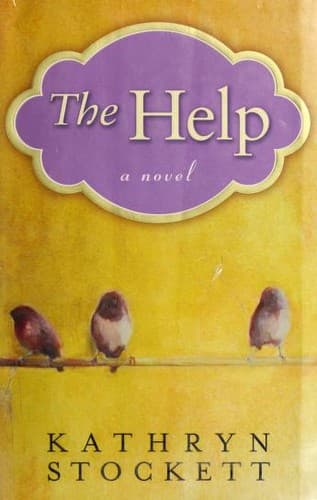
- The Help
Kathryn Stockett
4.5 (2.2M) average on GoodreadsHistorical FictionIn 1960s Mississippi, an aspiring writer and two Black maids risk everything to expose the harsh realities of their lives, defying societal norms with stories that start a quiet revolution.





Enjoyed the summary?
A summary gives you the shape of the book. The book itself has the detail, the examples and the voice.
Find Balzac and the Little Chinese Seamstress on AmazonAs an Amazon Associate, BookBrief earns from qualifying purchases. How we're funded