

Synopsis
Covers the whole plot, including the ending.
- Difficulty
- Medium
- Pacing
- Moderate
- Mood
- Thought-provoking, Humorous, Melancholy, Realistic
- Read it if
- You enjoy stories about unconventional, intelligent children, grappling with complex social dynamics and the power of words, or if you're looking for a classic children's book with depth.
- Skip it if
- You prefer protagonists who are immediately likable and well-adjusted, or if you're sensitive to stories where a child faces intense social rejection and deals with difficult emotions.
Harriet the Spy Plot Summary
Covers the whole plot, including the ending.
Harriet's Daily Routine and Spy Route
Harriet M. Welsch, an observant ten-year-old, lives a structured life in New York City with her wealthy parents, who are often busy. Her main confidante is her nanny, Ole Golly, a practical woman who supports Harriet's curiosity and independent spirit. Every day after school, Harriet follows her 'spy route' through her neighborhood. She observes neighbors, including Harrison Withers who collects cats, the wealthy Robinsons, and the troubled Dei Santis, writing her honest and often critical thoughts in her secret notebook. These notes help her understand the world and its people.
School Life and Friendships
At school, Harriet has a complex relationship with her two best friends, Sport and Janie Gibbs. Sport Rocque, a sensitive and responsible boy, lives with his struggling writer father and often acts like a parent. Janie Gibbs is an intelligent and somewhat unstable girl interested in science experiments, especially those with explosions. Harriet's observations influence her interactions with them; she notes Sport's home life and Janie's scientific passion. Despite their close bond, Harriet's private thoughts in her notebook reveal her critical opinions of them, as well as her own worries about fitting in and the future, often feeling like an outsider even among friends.
Ole Golly's Departure
A major event happens when Ole Golly announces her engagement to Mr. Waldenstein and her upcoming departure. Harriet is crushed. Ole Golly has been the most consistent and understanding adult in Harriet's life, offering guidance and accepting her quirks. Her leaving creates a deep emptiness. Before she goes, Ole Golly gives Harriet final advice about life and truth, which Harriet initially struggles to understand. Harriet's parents hire a new nanny, Miss Agatha K. Plummer, who is strict and distant, further isolating Harriet and increasing her feelings of loss and unhappiness.
The Notebook is Discovered
During a game of tag in the schoolyard, Harriet accidentally leaves her secret notebook. Her classmates find it, including Marion Hawthorne, a popular but manipulative girl, and Rachel Hennessey, her friend. They gather students and begin reading Harriet's entries aloud. The children are shocked and hurt by Harriet's honest, often harsh, and unflattering opinions. Entries describe Marion as a future 'Lady Hitler,' Pinky Whitehead as repulsive, and even her friends Sport and Janie are not spared. The discovery breaks the class's fragile social peace.
Classroom Retaliation and Ostracization
The notebook's discovery brings a wave of anger and resentment from Harriet's classmates. They form a 'Spy Catcher Club' to torment Harriet. They refuse to play with her, whisper about her, trip her, and even steal her lunch. Sport and Janie, though conflicted at first, eventually join in the exclusion, feeling betrayed by Harriet's private thoughts. Harriet is completely alone, unable to understand how deeply she hurt them or how to fix the broken relationships. Her attempts to interact are met with hostility, leaving her isolated and confused by the results of her actions.
Harriet's Declining Behavior
As the exclusion continues, Harriet's emotional state worsens. She becomes withdrawn, irritable, and defiant. At home, she refuses to eat, acts out against Miss Plummer, and makes life difficult for her parents. At school, her grades drop, and she becomes disruptive, unable to focus. Her parents, initially dismissing her problems, worry about her alarming change in behavior. Harriet herself is confused and overwhelmed, unable to explain her pain or her classmates' anger, leading to a downward spiral.
Parental Intervention and Therapy
Harriet's parents, Mr. and Mrs. Welsch, are at a loss. Their attempts to understand and discipline Harriet fail. After talking with the school and seeing Harriet's continued decline, they decide to send her to a child psychiatrist. Harriet resists the idea, seeing it as another punishment or an invasion of her privacy. The sessions are largely unhelpful, as Harriet remains guarded and unwilling to share her true feelings or the cause of her problems. The psychiatrist offers general advice, showing the parents' lack of connection to Harriet's inner life and their superficial understanding.
Ole Golly's Letter
In desperation, Harriet's parents contact Ole Golly, explaining Harriet's situation. Ole Golly, now in another city, writes a letter to Harriet. In it, Ole Golly acknowledges Harriet's pain and validates her unique way of seeing the world. She advises Harriet that 'lying is the most fun a girl can have without taking her clothes off, but you can't lie to yourself.' She also says, 'sometimes you have to lie. But to yourself you must always tell the truth.' She tells Harriet to apologize and to consider that 'sometimes you have to make up your mind to be a little bit wrong.' This letter offers Harriet the guidance she needs.
Harriet's Apology and Reconciliation
Inspired by Ole Golly's letter, Harriet begins to think about the advice. She realizes the impact of her words and the need to take responsibility. Her parents, finally understanding the problem, arrange for her to become the editor of the class newspaper. This position lets her use her writing skills constructively. As editor, Harriet writes a public apology to her classmates, admitting her mistakes and expressing regret for the hurt she caused. While not all her classmates immediately forgive her, the apology marks a start, allowing the slow process of reconciliation to begin.
New Beginnings and Self-Acceptance
The class newspaper gives Harriet a new outlet for her observational talents, now used with more empathy and responsibility. While she does not stop her spy route entirely, her approach changes; she learns to balance her observations with consideration for others' feelings. Some friendships slowly begin to heal, especially with Sport and Janie, who, though still cautious, start to interact with her again. Harriet understands that truth and honesty are important but must be balanced with kindness and social awareness. She learns to accept herself, not just as a spy, but as a complex person capable of both sharp observation and genuine connection, ultimately finding her place in the world.
Harriet the Spy Characters
Harriet M. Welsch
Protagonist
A fiercely independent and observant ten-year-old aspiring writer and spy.
Harriet is a highly intelligent, inquisitive, and often socially awkward ten-year-old girl. She is driven by an insatiable curiosity about human behavior and a desire to understand the world around her. Her primary method of exploration is her 'spy route' and her secret notebook, where she records brutally honest observations about everyone, including her closest friends and family. Harriet is fiercely independent, preferring her own company and thoughts to superficial social interactions. She struggles with empathy and understanding the impact of her words, leading to her ostracization.
Relationships: Ole Golly (mentor and maternal figure); Sport Rocque (best friend, often a foil to her bluntness); Janie Gibbs (best friend, intellectual peer in some ways); Mr. and Mrs. Welsch (loving but often distant and misunderstanding parents); Marion Hawthorne (class rival and leader of the 'Spy Catcher Club')
Ole Golly
Supporting
Harriet's wise and pragmatic nanny who encourages her intellectual curiosity.
Ole Golly is Harriet's beloved nanny and the most significant adult influence in her life. She is a practical, intelligent, and unconventional woman who respects Harriet's unique mind and encourages her observational habits, while also providing subtle guidance on life's complexities. Ole Golly understands Harriet in a way her parents do not and fosters her independence. Her departure is a major turning point for Harriet, but her ultimate advice through a letter proves crucial for Harriet's growth. She represents wisdom and unconditional acceptance.
Relationships: Harriet M. Welsch (mentor and surrogate mother); Mr. Waldenstein (fiancé)
Sport Rocque
Supporting
Harriet's responsible and sensitive best friend, living with his struggling writer father.
Sport is one of Harriet's two best friends. He is a sensitive, kind, and unusually responsible boy who often takes on a parental role in his own household due to his father's preoccupation with writing and financial struggles. Sport represents a grounded, empathetic counterpoint to Harriet's often detached observations. He is initially hurt and participates in Harriet's ostracization but ultimately shows a capacity for forgiveness and understanding, reflecting his generally good nature.
Relationships: Harriet M. Welsch (best friend); Mr. Rocque (father)
Janie Gibbs
Supporting
Harriet's intelligent and volatile best friend, obsessed with science and explosions.
Janie is Harriet's other best friend, a brilliant and somewhat eccentric girl with a singular passion for science, particularly chemistry and explosions. She is fiercely intelligent and often intense, matching Harriet's intellectual curiosity but lacking her friend's interest in people as subjects. Janie is more volatile than Sport and initially more unforgiving when the notebook is discovered, reflecting her strong reactions and black-and-white view of loyalty. She provides an intellectual companionship for Harriet, albeit one that is challenged by Harriet's personal observations.
Relationships: Harriet M. Welsch (best friend); Mr. and Mrs. Gibbs (parents, often exasperated by her experiments)
Marion Hawthorne
Antagonist
A popular, manipulative classmate who leads the charge against Harriet.
Marion Hawthorne is a classmate of Harriet's and the de facto leader of the popular girls. She is portrayed as somewhat manipulative, status-conscious, and quick to judge. When Harriet's notebook is discovered, Marion spearheads the 'Spy Catcher Club' and orchestrates Harriet's ostracization, fueled by her own vanity and anger at Harriet's unflattering description of her. She embodies the social pressures and retaliatory nature of the peer group, acting as Harriet's primary antagonist following the notebook's discovery.
Relationships: Harriet M. Welsch (classmate and rival); Rachel Hennessey (sidekick/friend)
Mr. and Mrs. Welsch
Supporting
Harriet's wealthy but often distant and socially preoccupied parents.
Harriet's parents are affluent and generally well-meaning but largely oblivious to their daughter's inner life and emotional needs. They are more concerned with their social calendar and maintaining appearances than with truly understanding Harriet's unique personality. Their attempts to help Harriet after her crisis are often superficial or misguided, such as hiring a new nanny or sending her to a psychiatrist, highlighting their disconnect. However, they do eventually reach out to Ole Golly, demonstrating a willingness to seek effective help.
Relationships: Harriet M. Welsch (parents, often distant); Ole Golly (employee, later a source of guidance)
Harrison Withers
Mentioned
An eccentric neighbor on Harriet's spy route known for his many cats.
Harrison Withers is one of the peculiar neighbors Harriet observes on her spy route. He is a reclusive man who lives with an abundance of cats, often engaging in strange rituals like having tea with them. He represents the kind of quirky, individualistic character that fascinates Harriet and provides fodder for her notebook entries. His character highlights Harriet's interest in the unconventional and her detached observation of others' lives.
Relationships: Harriet M. Welsch (subject of observation)
Miss Agatha K. Plummer
Supporting
Harriet's strict and unapproachable new nanny.
Miss Agatha K. Plummer is the nanny hired to replace Ole Golly. In stark contrast to her predecessor, Miss Plummer is rigid, humorless, and lacks any understanding or empathy for Harriet's unique personality. She represents the conventional, uninspired adult world that Harriet finds stifling. Her presence exacerbates Harriet's loneliness and frustration after Ole Golly's departure, making Harriet's home life even more miserable during her crisis.
Relationships: Harriet M. Welsch (nanny, adversarial relationship)
Harriet the Spy Themes
The Nature of Truth and Honesty
The novel explores the complexities of truth, especially the difference between objective truth and personal view, and what happens when honesty is unfiltered. Harriet's notebook holds her 'truth' about people, but this truth is often harsh and lacks empathy. When the notebook is found, Harriet faces the idea that truth, without kindness, can be damaging. Ole Golly's advice about lying to others but never to oneself highlights the internal honesty of truth versus its use in social settings. Harriet learns that while honesty is important for self-understanding, it must be balanced with consideration for others' feelings in social interactions, as shown when she apologizes to her classmates.
“Sometimes you have to lie. But to yourself you must always tell the truth.”
Identity and Self-Discovery
Harriet's journey is one of self-discovery. Her spying and notebook are her attempts to understand the world and her place in it. She grapples with who she is—a spy, a writer, a friend—and how these roles conflict or combine. Her isolation after the notebook's discovery forces her to re-evaluate her identity and the impact of her actions. By the end, she does not abandon her core identity as an observer but learns to combine it with a more empathetic understanding of human relationships. Her growth is about finding a more mature and complete sense of self that can navigate both her inner world and the external social world.
“She was Harriet M. Welsch. She was a spy. She had a notebook. It was her duty to write down everything she saw.”
Childhood Isolation and Belonging
Harriet experiences deep isolation, both self-imposed and caused by others. Her secretive nature and critical observations set her apart from her peers, even her best friends. The discovery of her notebook leads to her complete exclusion, making her feel utterly alone and misunderstood. This period of isolation is painful for Harriet and is made worse by Ole Golly's departure, her only true confidante. The theme explores the universal childhood need to belong and the pain of being an outsider. Harriet's eventual reconciliation, however uncertain, shows her slow return to a sense of community, teaching her the value of connection.
“The world was a lonely place when you were ten and had no friends.”
The Role of Mentorship and Guidance
Ole Golly is Harriet's main mentor, providing the intellectual and emotional guidance that Harriet's parents often do not. Ole Golly encourages Harriet's unique talents while subtly teaching life lessons about truth, perception, and human nature. Her departure leaves a significant gap, and Harriet struggles without her direct influence. However, Ole Golly's final letter, sent at a crucial time, gives Harriet the wisdom she needs to handle her crisis and begin to understand and reconcile. This shows the deep impact a wise mentor can have on a child's development, even when not physically present.
“You just keep on writing. But try to remember that people are sensitive.”
Plot Devices & Literary Techniques
The Secret Notebook
A physical manifestation of Harriet's inner world and a catalyst for conflict.
Harriet's secret notebook is the central plot device. It serves as an extension of her mind, a private repository for her unfiltered thoughts, observations, and judgments. It is through these entries that the reader gains insight into Harriet's intelligence, wit, and often brutal honesty. The notebook's accidental discovery by her classmates is the inciting incident that propels the main conflict of the story, leading to Harriet's ostracization. Its contents drive the plot, revealing character motivations and forcing Harriet to confront the consequences of her actions and words.
Ole Golly's Letter
A turning point providing crucial advice and a path to resolution.
Ole Golly's letter is a pivotal plot device that arrives at Harriet's lowest point. It functions as a deus ex machina of sorts, providing the wisdom and guidance Harriet desperately needs after her parents' attempts at intervention fail. The letter's advice about truth, lying, and the necessity of sometimes being 'a little bit wrong' is the catalyst for Harriet's change in perspective and her eventual apology. It allows Harriet to process her experiences and move towards reconciliation, demonstrating the lasting impact of a mentor's words even in absence.
The Spy Route
A structural element that frames Harriet's observations and exploration of her world.
Harriet's daily 'spy route' is a recurring structural device that establishes her routine and her primary method of engaging with the world. It provides a consistent framework for her observations of various eccentric neighbors and allows the narrative to introduce a diverse cast of characters through Harriet's unique lens. The route itself symbolizes Harriet's quest for understanding and her detached, analytical approach to life. It emphasizes her identity as an observer and writer, setting the stage for the later conflict when her private observations become public.
Harriet the Spy Quotes
“Harriet had a theory that you should always know a lot about things.”
“She was a spy. She had been a spy for as long as she could remember.”
“There were a lot of things she didn't know, and she intended to find them out.”
“She wrote down everything. Not just facts, but opinions.”
“The world was full of secrets, and she was going to find them all.”
“Sometimes she felt like a cat, watching everything, but not being part of it.”
“You just have to write it down. Everything. No matter what.”
“If you don't write it down, you forget it. And if you forget it, it's gone forever.”
“She wasn't mean. She just wrote down what she saw.”
“Ole Golly said that life was an adventure, and you should live it to the fullest.”
“She felt a great loneliness, a loneliness that was peculiar to her, and she hugged it to herself.”
“It was impossible to be a spy without a notebook.”
“She wanted to know what made people tick.”
“Sometimes, for no reason at all, she would feel like crying.”
Quiz
10 questions on the plot and the characters. Each answer comes with a short explanation.
Question 1
What is the primary object Harriet uses to record her observations?
- A tape recorder
- A camera
- A secret notebook
- A diary with a lock
Show answer
C. A secret notebook Harriet carries a secret notebook where she writes down all her observations and thoughts about people.
Question 2
What is the name of Harriet's nanny?
- Agnes
- Charlotte
- Ole Golly
- Miss Daisy
Show answer
C. Ole Golly Ole Golly is Harriet's wise and insightful nanny who often offers her advice and perspectives.
Question 3
What happens that causes Harriet's classmates to discover her notebook?
- Harriet accidentally drops it during a game of tag.
- Her parents find it and show it to their friends.
- Ole Golly leaves it out for them to find.
- She intentionally shows it to Sport.
Show answer
A. Harriet accidentally drops it during a game of tag. Harriet accidentally drops her notebook during a game of tag, and her classmates find it and read her harsh observations.
Question 4
Which of Harriet's friends is known for being quiet and often drawing?
- Sport
- Janey Gibbs
- Carrie Andrews
- Janie Gibbs
Show answer
D. Janie Gibbs Janie Gibbs is Harriet's friend who is often quiet and spends her time drawing and conducting experiments.
Question 5
What is one of the main themes explored through Harriet's spying and the consequences?
- The importance of physical fitness
- The balance between truth and kindness
- The benefits of strict parenting
- The joy of solitary hobbies
Show answer
B. The balance between truth and kindness The book explores the complex theme of how honesty, especially when unvarnished and critical, can hurt others, and the need to consider others' feelings.
Question 6
What is the name of the 'man with the cats' whom Harriet often observes?
- Mr. Withers
- Mr. Harrison
- Mr. Robinson
- Mr. Peterson
Show answer
B. Mr. Harrison Mr. Harrison is the eccentric neighbor Harriet observes, known for having many cats and a peculiar lifestyle.
Question 7
After her notebook is discovered, how do Harriet's classmates initially react to her?
- They try to help her understand their feelings.
- They ignore her and pretend she doesn't exist.
- They form a 'Spy Catcher Club' and torment her.
- They apologize for reading her private thoughts.
Show answer
C. They form a 'Spy Catcher Club' and torment her. Her classmates, deeply hurt by her observations, form a 'Spy Catcher Club' to ostracize and torment Harriet in retaliation.
Question 8
What advice does Ole Golly give Harriet about lying before she leaves?
- Always tell the truth, no matter what.
- Lying is acceptable if it protects your friends.
- Sometimes you have to lie, but don't do it often.
- A good spy has to be able to lie.
Show answer
D. A good spy has to be able to lie. Ole Golly tells Harriet, 'Sometimes you have to lie. But to yourself you must always tell the truth. A good spy has to be able to lie.'
Question 9
What significant change does Harriet's mother implement in response to Harriet's behavior and the school's complaints?
- She sends Harriet to a boarding school.
- She grounds Harriet indefinitely.
- She hires a new nanny for Harriet.
- She forbids Harriet from writing in her notebook.
Show answer
D. She forbids Harriet from writing in her notebook. Harriet's mother, under pressure from the school and other parents, forbids Harriet from writing in her notebook, which deeply distresses Harriet.
Question 10
Which of Harriet's friends has a father who is a writer and is often seen reading?
- Janie Gibbs
- Pinky Whitehead
- Sport
- Marion Hawthorne
Show answer
C. Sport Sport, whose real name is Simon, is Harriet's friend whose father is a struggling writer, and Sport often takes on adult responsibilities at home.
Harriet the Spy FAQ
What is the central premise of 'Harriet the Spy'?
The book centers on Harriet M. Welsch, an eleven-year-old aspiring writer who meticulously observes everyone around her and records her brutally honest, often harsh, thoughts in a secret notebook. Her daily spy route and jottings are crucial to her understanding of the world and her future career.
Who are Harriet's closest friends and how do they feature in her observations?
Harriet's closest friends are Janie Gibbs, an aspiring scientist obsessed with explosions, and Sport, a kind and responsible boy who manages his eccentric father and the household. Harriet observes Janie's scientific experiments and Sport's domestic struggles, often noting their quirks and vulnerabilities in her notebook.
What kind of 'spying' does Harriet engage in, and who are her typical subjects?
Harriet's spying involves daily observations of her neighbors and classmates on her 'spy route,' often peering into windows or listening from hidden spots. Her subjects include the eccentric Mrs. Agatha K. Plumber, the wealthy Harrison Withers and his many cats, and her schoolmates like Marion Hawthorne and Pinky Whitehead.
How is Harriet's secret notebook discovered, and what are the immediate consequences?
Harriet's notebook is accidentally left at school and discovered by Marion Hawthorne and other classmates. Upon reading Harriet's cruel and candid opinions about them, they form a 'Spy Catcher Club' and begin to ostracize and torment Harriet, leading to her social isolation and distress.
What role does Ole Golly play in Harriet's life, and how does her departure affect Harriet?
Ole Golly is Harriet's wise and unconventional nanny who encourages Harriet's intellectual curiosity and spying. Her sudden departure to get married leaves Harriet feeling abandoned and without her primary confidante and mentor, exacerbating her emotional turmoil after the notebook's discovery.
What is the significance of the 'Tomato Surprise' in the story?
The 'Tomato Surprise' is a disgusting concoction that Harriet's classmates force her to eat as part of their retaliation. It symbolizes their collective anger and their desire to make Harriet suffer and conform, highlighting the bullying she endures and her struggle to maintain her individuality.
How does Harriet's parents' reaction to the notebook differ from her expectations?
Harriet's parents are initially dismissive of her spying but become deeply concerned and embarrassed when the school reports her behavior. They confiscate her notebook and send her to a psychiatrist, failing to understand the creative and observational impulse behind her writing, which deeply frustrates Harriet.
Is there a subtle connection between Harriet's spying and Ole Golly's advice?
Ole Golly often advises Harriet that 'a good spy always knows everything' and encourages her to observe the world closely. This subtly connects to Harriet's later realization that she must also consider the feelings of others, showing that Golly's lessons extend beyond mere observation to encompass empathy.
What does Harriet's obsessive need to write in her notebook reveal about her personality?
Harriet's compulsive writing reveals her deep need for control and understanding of her environment, as well as her intense introversion and analytical mind. It's her primary method of processing the world and her identity, making the notebook a crucial extension of herself.
How does Harriet's social ostracism impact her psychological development?
The social ostracism forces Harriet to confront the real-world consequences of her unchecked honesty and lack of empathy. It triggers an identity crisis, making her question her methods and her own self-worth, pushing her towards a painful but necessary maturation.
What psychological defense mechanisms does Harriet employ when confronted by her peers?
Initially, Harriet employs denial and projection, believing her peers are overreacting or that their anger is somehow unjustified. She also withdraws emotionally, demonstrating a form of intellectualization by trying to analyze their reactions rather than genuinely connect with their hurt.
How does Harriet's relationship with Ole Golly reflect an attachment style?
Harriet exhibits a strong, almost dependent, attachment to Ole Golly, who provides stability and intellectual stimulation. Golly's departure creates a significant emotional void, highlighting Harriet's reliance on Golly as a secure base and mentor, and causing her considerable distress.
Is Harriet's ending a true redemption or merely a pragmatic compromise?
Harriet's ending is often debated; while she makes amends and learns to temper her honesty, some argue it's a pragmatic compromise to regain social standing rather than a full transformation of her inner self. She still retains her observational nature, but now with a learned filter.
What is the book's stance on honesty versus kindness?
The book doesn't advocate for absolute honesty or kindness, but rather explores the tension between them. It suggests that while honesty is valuable, it must be tempered with empathy and consideration for others' feelings to avoid causing unnecessary harm, highlighting the complexity of social interactions.
Does Harriet truly change her core personality by the end of the book?
Harriet's core personality as an observer and writer remains, but her understanding of social dynamics and the impact of her words evolves. She learns to be more diplomatic and empathetic, suggesting a maturation rather than a complete personality overhaul, allowing her to integrate her talents more constructively.
How does the book challenge traditional notions of childhood innocence?
The book challenges childhood innocence by portraying Harriet as complex, flawed, and capable of both profound insight and cruelty. It suggests that children, like adults, grapple with difficult emotions, social hierarchies, and the consequences of their actions, moving beyond a simplistic view of childhood.
What is the broader message about the nature of writing and observation?
The book suggests that writing and observation are powerful tools for understanding the world, but they also carry a responsibility. It highlights how an uncritical or purely self-serving approach to these activities can be destructive, while a more thoughtful approach can lead to growth and connection.
About the author

Louise Fitzhugh was an American author known for her contributions to children's literature. She is best known for her novel "Harriet the Spy," which explores themes of observation and friendship, as well as "Sport," a story about a young boy navigating his identity. Fitzhugh's works often feature complex characters and address social issues relevant to children.
Similar books
- From the Mixed-Up Files of Mrs. Basil E. Frankweiler
E.L. Konigsburg
4.2 (189k) average on GoodreadsChildren'sFeatures a clever, independent child protagonist on an adventure, with a focus on self-discovery and unique perspectives.
- Pippi Longstocking
Astrid Lindgren
4.1 (168k) average on GoodreadsFantasyExplores themes of childhood independence and unconventional living, with a strong, memorable female lead.
- A Wrinkle in Time
Madeleine L'Engle
4.0 (1.1M) average on GoodreadsFantasyFeatures a young, intelligent, and somewhat awkward protagonist who learns to embrace her unique qualities and navigate complex relationships.
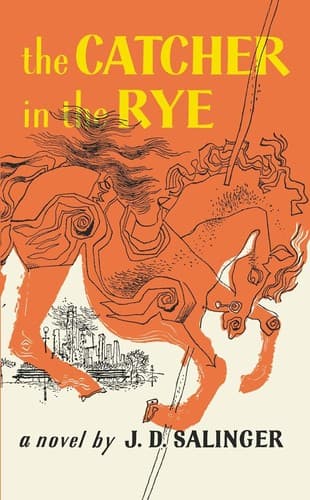
- The Catcher in the Rye
J.D. Salinger
3.8 (2.7M) average on GoodreadsYoung AdultWhile Salinger's The Catcher in the Rye is a young adult novel for an older audience, it shares thematic parallels with Harriet the Spy in its portrayal of an alienated, observant protagonist who critically views the 'phoniness' of the adult world. Both Holden Caulfield and Harriet M. Welsch struggle with social integration and express their disillusionment through cynical observations. However, Harriet's journey ultimately leads to a form of reconciliation and self-acceptance within her community, whereas Holden's narrative concludes with a more ambiguous and unresolved sense of alienation. Fitzhugh offers a path towards understanding and empathy that Salinger's character largely resists.
- Harry Potter and the Sorcerer's Stone
J.K. Rowling
4.5 (7M) average on GoodreadsFantasyRescued from a miserable life under the stairs, an orphaned boy discovers he's a wizard destined for a magical school, where he uncovers a dangerous secret tied to the dark wizard who murdered his parents.
- The Hobbit, or There and Back Again
J.R.R. Tolkien
4.3 (2.9M) average on GoodreadsFantasyA comfort-loving hobbit named Bilbo Baggins is whisked away by a mischievous wizard and a band of dwarves on an unexpected journey to reclaim stolen treasure from a fearsome dragon, discovering courage and a magical ring along the way.




Enjoyed the summary?
A summary gives you the shape of the book. The book itself has the detail, the examples and the voice.
Find Harriet the Spy on AmazonAs an Amazon Associate, BookBrief earns from qualifying purchases. How we're funded