

Synopsis
Covers the whole plot, including the ending.
- Difficulty
- Medium
- Pacing
- Variable
- Mood
- Atmospheric, Unsettling, Dark, Provocative, Surreal
- Read it if
- You enjoy experimental, genre-bending short stories that explore feminist themes with a dark, often surreal, and unsettling edge.
- Skip it if
- You prefer straightforward narratives, avoid horror elements, or are sensitive to discussions of body horror and violence against women.
Her Body and Other Parties Plot Summary
Covers the whole plot, including the ending.
The Husband Stitch
The narrator recounts her life with her husband, from their first meeting as teenagers through marriage and parenthood. Throughout their relationship, she wears a green ribbon around her neck, an object of constant fascination and frustration for her husband. She refuses to remove it, despite his pleas, arguments, and even attempts to untie it while she sleeps. The ribbon becomes a symbol of her autonomy and a secret part of her identity that she withholds from him. She shares other stories, too, including a chilling childhood encounter with a girl who had no head, and the urban legend of a girl whose ribbon, when removed, caused her head to fall off. The husband's persistence grows with age, and the mystery of the ribbon deepens.
The Green Ribbon's Secret
Years pass, and the narrator and her husband grow old together. The ribbon remains, a silent reminder of their enduring, yet incomplete, intimacy. As she lies on her deathbed, frail and near the end, her husband makes one final, desperate plea for her to remove the ribbon. Consumed by a lifetime of curiosity and the impending finality, she relents. With trembling hands, she unties the green ribbon. To her husband's horror and her own quiet, expected demise, her head detaches from her body, rolling onto the pillow beside her. The secret was not a whimsical choice, but a life-sustaining necessity, a boundary her husband could never truly cross without devastating consequences.
Difficult at Parties
The narrator attends various parties and social events, but her experiences are colored by the lingering trauma of a recent sexual assault. At these parties, she often dissociates, seeing herself as if from a distance, or experiencing moments where the music and conversations become distorted and unreal. She tries to engage in small talk and dance, but the memories of the assault continually resurface, manifesting as vivid, disturbing images and sensations. The simple act of being in a social setting, particularly one with alcohol and proximity to others, becomes a minefield of triggers and internal struggles, making genuine connection and enjoyment nearly impossible.
Inventory
The narrator lists every sexual encounter she has ever had, from childhood experiments to adult relationships, as a devastating plague sweeps across the globe. Each entry is brief, almost clinical, yet collectively they paint a portrait of a life lived through physical intimacy and connection. As the plague progresses, society collapses, and the world empties out. Her list becomes a chronicle of the dwindling human population, with each encounter representing a person who may no longer exist. The act of cataloging her past becomes a way to affirm her own existence and the importance of human touch in a world rapidly losing both.
Especially Heinous: 272 Views of 'Law & Order: SVU'
This novella reimagines the entire run of 'Law & Order: Special Victims Unit' through a phantasmagoric lens. Detectives Benson and Stabler are perpetually haunted by the ghosts of the victims they couldn't save. The 'SVU' squad room becomes a liminal space where the living and dead intertwine. Victims reappear as doppelgangers, girls with bells for eyes, or spectral presences, offering cryptic clues or simply observing the ongoing investigations. The perpetrators are often monstrous, almost supernatural figures, and the lines between reality and the supernatural blur completely, exposing the inherent violence and trauma at the heart of the show and society.
Especially Heinous: The Haunting Continues
The constant exposure to trauma and the haunting presences of the victims take a severe toll on Benson and Stabler. Their personal lives unravel, and their sanity is frequently questioned. Stabler's wife leaves him, and his children become distant. Benson struggles with her own identity and the weight of the cases. The ghosts are not just external entities; they become internal, a part of the detectives' own psyches. The novella explores the psychological toll of constantly confronting extreme violence and the way trauma can permeate and distort one's entire existence, transforming the familiar procedural into a psychological horror story.
Real Women Have Bodies
The narrator works at a boutique specializing in prom dresses. She notices that some of the dresses seem unnaturally beautiful, almost too perfect. As she examines them more closely, she discovers that the intricate, shimmering details are not mere sequins or beads, but human skin and hair. The dresses are literally made from the bodies of missing girls, victims who have been 'disappeared' and transformed into these garments. The revelation is horrific, exposing a dark, predatory industry beneath the glamorous facade of teenage rites of passage. She grapples with this macabre truth while continuing her mundane work, the horror hidden in plain sight.
Eight Bites
The narrator, after years of struggling with her weight, undergoes gastric bypass surgery. While the surgery is physically successful, leading to significant weight loss, she begins to experience a strange phenomenon. A spectral, corpulent version of her former self appears, haunting her home and her life. This 'ghost' of her past body is a constant, unsettling presence, a manifestation of her internal struggle with body image, self-acceptance, and the emotional baggage associated with her weight. The ghost is not malicious, but rather a mournful reminder of what she left behind, questioning whether she truly shed her old self or merely displaced it.
The Resident
A writer attends a remote artists' residency in a secluded, snowy environment. She hopes to find inspiration and focus for her work. However, the isolation quickly becomes oppressive. She struggles with writer's block and a growing sense of unease. The other residents are distant, and the landscape itself feels menacing. She begins to experience strange occurrences and unsettling visions, blurring the lines between reality and her own deteriorating mental state. The residency, meant to aid creativity, instead becomes a crucible for her anxieties and fears, hinting at a darker, possibly supernatural, influence within the isolated setting.
House of the Saints
The narrator comes from a long line of women in a specific family who possess the ability to 'see' or prophesy, though often in cryptic or unsettling ways. She struggles with the burden of this inherited gift and the expectations of her family. The 'saints' in their house are not traditional religious figures but the preserved, mummified bodies of their female ancestors, each embodying a specific aspect of their lineage and power. The story explores themes of inheritance, the weight of legacy, female power, and the complex relationship between the living and the dead within this unique, matriarchal family structure. The narrator questions her own place in this line and the true nature of their 'sight'.
Her Body and Other Parties Characters
The Narrator (The Husband Stitch)
Protagonist
A woman defined by the mysterious green ribbon she wears around her neck.
She is an enigmatic figure, fiercely protective of her autonomy and her personal boundaries. Throughout her life, she maintains a secret, represented by the green ribbon, even from her most intimate partner. She is observant, reflective, and carries a deep understanding of the power dynamics inherent in relationships. Her actions are driven by a need to retain a core part of herself that she believes is vital to her existence, even if it means withholding from others.
Relationships: Her Husband (Husband; deeply curious about her secret, ultimately causing her death by insisting on its reveal.)
The Husband (The Husband Stitch)
Supporting
The narrator's husband, obsessed with unraveling the mystery of her green ribbon.
He is a loving but ultimately possessive man, whose affection is intertwined with a desire for complete intimacy and knowledge of his wife. His curiosity about the green ribbon borders on obsession, becoming a lifelong quest. He represents a patriarchal desire to fully 'know' and possess a woman, failing to respect her boundaries. His actions are driven by a longing for absolute transparency and an inability to accept that some parts of a person may remain private.
Relationships: The Narrator (Wife; her mysterious ribbon is the focus of his lifelong curiosity and desire for control.)
The Narrator (Difficult at Parties)
Protagonist
A survivor of sexual assault grappling with trauma and dissociation in social settings.
She is a vulnerable yet resilient woman, navigating the complex aftermath of a sexual assault. Her experiences at parties are marked by dissociation, vivid flashbacks, and a struggle to reconnect with her body and her sense of self. She attempts to appear normal and engage with others, but her internal world is dominated by the trauma. She is driven by a desire to reclaim her life and find a way to cope with her pain, even as it constantly threatens to overwhelm her.
The Narrator (Inventory)
Protagonist
A woman cataloging her sexual history as the world succumbs to a plague.
She is a methodical and reflective individual, whose act of cataloging her sexual encounters serves as both a personal history and a poignant commentary on human connection in a dying world. She is driven by a need to document, to remember, and perhaps to find meaning in physical intimacy as society collapses around her. Her tone is often detached, almost academic, yet her inventory reveals a deep human need for connection and touch.
Detective Olivia Benson (Especially Heinous)
Protagonist
A 'Law & Order: SVU' detective haunted by the victims she couldn't save.
Reimagined as perpetually haunted, Benson is a dedicated but increasingly frayed detective whose empathy for victims is magnified to a supernatural degree. She carries the weight of every case, experiencing the trauma of the victims as a tangible presence. Her drive is to seek justice, but her methods are often influenced by the spectral clues and visitations. She is driven by a profound sense of responsibility and a deep weariness from the endless cycle of violence.
Relationships: Detective Elliot Stabler (Partner; shares the burden of their haunted work, their bond deepened by shared trauma.)
Detective Elliot Stabler (Especially Heinous)
Protagonist
A 'Law & Order: SVU' detective whose personal life crumbles under the weight of his haunted profession.
In this reinterpretation, Stabler is a gruff, outwardly stoic detective whose internal world is ravaged by the supernatural elements of his cases. His personal life, particularly his marriage and family relationships, deteriorates as he becomes more consumed by the spectral hauntings. He is driven by a fierce desire to protect the innocent, but his methods become increasingly desperate and his grip on reality more tenuous. He embodies the toll that constant exposure to violence and trauma takes on an individual.
Relationships: Detective Olivia Benson (Partner; their professional and personal lives become inextricably linked by the haunting nature of their work.)
The Narrator (Real Women Have Bodies)
Protagonist
A salesclerk who uncovers a horrifying secret about the prom dresses she sells.
She is an observant and initially naive young woman working in a seemingly ordinary boutique. Her discovery of the dresses made from human skin reveals a hidden world of horror and exploitation. She is driven by a quiet sense of unease and curiosity that leads her to uncover the gruesome truth. Her character represents the ordinary person confronted with unimaginable evil, forced to reconcile the mundane with the monstrous.
The Narrator (Eight Bites)
Protagonist
A woman haunted by the spectral image of her former, larger self after weight loss surgery.
She is a woman who has undergone a significant physical transformation through gastric bypass surgery. While she achieves her desired weight loss, she struggles with the psychological and emotional aftermath. She is driven by a desire for a healthier, more accepted body, but finds herself haunted by the 'ghost' of her past self, which embodies her unresolved issues with body image and self-acceptance. She is complex, embodying both the triumph of change and the lingering pain of the past.
The Narrator (The Resident)
Protagonist
A writer struggling with isolation and unsettling visions at an artists' residency.
She is an aspiring writer seeking inspiration and solitude, but instead finds herself increasingly isolated and plagued by unsettling experiences. She is introspective and sensitive, making her particularly susceptible to the psychological pressures of the remote environment. Her struggle with writer's block mirrors her struggle with her own mental state, blurring the lines between external reality and internal breakdown. She is driven by a desire to create, but her journey becomes one of confronting her own anxieties and the potential malevolence of her surroundings.
The Narrator (House of the Saints)
Protagonist
A woman grappling with her inherited 'oracle' abilities and her family's unique traditions.
She is a woman from a matriarchal lineage of seers, burdened by the expectations and traditions of her family. She is both fascinated and repulsed by her inherited gift and the mummified 'saints' in her house. She is driven by a desire to understand her place within this lineage and the true nature of her power, while also seeking to define herself beyond her family's legacy. She is introspective, questioning, and struggles with the weight of her past and future.
Her Body and Other Parties Themes
The Female Body as a Site of Violence and Autonomy
Machado consistently explores the female body as a battleground—a site of both vulnerability to external violence and a powerful source of personal autonomy. In 'The Husband Stitch,' the green ribbon symbolizes a woman's right to withhold a part of herself, even from her husband, and the tragic consequences when that boundary is violated. 'Real Women Have Bodies' takes this to a literal extreme, depicting women's bodies being consumed and transformed into objects, highlighting the commodification and objectification of women. Conversely, 'Eight Bites' explores the internal struggle with body image and the aftermath of physical transformation, showing that even self-directed change can leave emotional scars. The stories collectively show how women's bodies are policed, desired, violated, and fiercely defended.
“A story is not a thing. A story is an axe.”
Trauma and Its Lingering Effects
Trauma, particularly sexual trauma, is a pervasive theme, manifesting in various forms throughout the collection. In 'Difficult at Parties,' the protagonist experiences dissociation and vivid flashbacks, illustrating the psychological fragmentation that follows assault. 'Especially Heinous' amplifies this by having the ghosts of victims literally haunt the detectives, externalizing the persistent, inescapable nature of trauma for both victims and those who witness it. The stories suggest that trauma is not something that simply passes, but reshapes reality, leaving indelible marks on individuals and the spaces they inhabit. It explores how trauma can distort perception, erode sanity, and demand constant, often unwelcome, remembrance.
“I was not a ghost, but I was haunted.”
The Blurring of Reality and Fantasy/Horror
Machado blurs the lines between the mundane and the monstrous, the real and the fantastical, often creating a sense of uncanny dread. 'Real Women Have Bodies' starts with a seemingly ordinary job in a dress shop but escalates into body horror with dresses made of human skin. 'Especially Heinous' transforms a familiar police procedural into a phantasmagoric narrative where ghosts and doppelgangers are commonplace. This blurring suggests that the horrors of the world are often just beneath the surface of everyday life, or that internal psychological states can manifest as external, surreal phenomena. It challenges readers to question their understanding of reality and confront the unsettling truths hidden within the ordinary.
“The world is full of ghosts, I thought. I just didn’t know they were real.”
Intimacy, Secrecy, and the Unknowable Self
Many stories explore the complexities of intimacy, particularly the tension between shared connection and the parts of ourselves that remain private, even from our closest partners. 'The Husband Stitch' is the quintessential example, where the green ribbon symbolizes an ultimate secret that, when revealed, proves fatal to the narrator. This highlights the idea that true intimacy might not require complete transparency, and that attempting to fully 'possess' another person can be destructive. Similarly, 'Inventory' details a lifetime of sexual encounters, but the narrator remains an enigma, her inner world largely unrevealed even as her physical history is laid bare. The theme suggests that there are always parts of the self that remain unknowable, and perhaps should, for the sake of one's own identity and autonomy.
“There are some things that are sacred, and a woman’s neck is one of them.”
Plot Devices & Literary Techniques
The Unreliable Narrator
Characters whose perceptions and memories are distorted by trauma or surreal events.
Machado frequently employs unreliable narrators, particularly in stories like 'Difficult at Parties' and 'The Resident.' In 'Difficult at Parties,' the narrator's dissociation and flashbacks due to sexual assault cause her to perceive events in a fragmented, distorted manner, making it difficult for the reader to fully grasp objective reality. In 'The Resident,' the writer's increasing isolation and mental distress lead to unsettling visions and a blurring of what is real and imagined. This device immerses the reader in the characters' subjective experiences, emphasizing the psychological impact of their situations and challenging the reader's trust in the narrative voice, mirroring the characters' own struggles with reality.
Body Horror
The grotesque or surreal transformation of the human body to evoke fear and disgust.
Body horror is a prominent device used to explore themes of violence, objectification, and the unsettling nature of the physical self. In 'The Husband Stitch,' the literal detachment of the narrator's head upon removal of the ribbon is a shocking moment of body horror that underscores the violation of her boundaries. 'Real Women Have Bodies' escalates this by depicting dresses made from human skin and hair, transforming women's bodies into commodities in a viscerally disturbing way. 'Eight Bites' presents a more psychological form of body horror with the spectral manifestation of the protagonist's former, larger self, externalizing internal struggles with body image. This device serves to physically manifest the psychological and societal anxieties surrounding the female body.
Magical Realism/Fabulism
The integration of fantastic or surreal elements into a realistic narrative.
Machado seamlessly blends the everyday with the extraordinary, creating worlds where the fantastical is presented as matter-of-fact. The green ribbon in 'The Husband Stitch' is a prime example, a fantastical element that exists without explicit explanation in an otherwise realistic domestic setting. 'Especially Heinous' takes the familiar procedural genre and injects it with ghosts, doppelgangers, and girls with bells for eyes, treating these supernatural occurrences as an inherent part of the narrative world. This device allows Machado to explore complex psychological and social issues through a heightened, allegorical lens, making the underlying truths more vivid and unsettling by defamiliarizing the familiar. It suggests that reality itself is often stranger and more profound than we perceive.
Intertextuality and Metafiction
Referencing other texts or drawing attention to the act of storytelling itself.
Machado frequently employs intertextuality, most notably in 'Especially Heinous,' which is an explicit reimagining of 'Law & Order: SVU' episodes. By deconstructing and recontextualizing a widely known cultural product, she comments on the nature of storytelling, media consumption, and the perpetuation of violence in popular culture. 'The Husband Stitch' also incorporates a classic urban legend (the girl with the green ribbon) and references other folk tales, drawing attention to the power and enduring nature of stories. This device allows Machado to engage in a dialogue with existing narratives, offering new perspectives and critiques while simultaneously highlighting the constructed nature of fiction and its impact on our understanding of the world.
Her Body and Other Parties Quotes
“The thing about a dream is that it’s not real, but it’s still a part of you.”
“A woman’s body is a landscape, and I am the cartographer.”
“There are some stories you can’t tell, even to yourself.”
“The world is full of women who are told to swallow their pain.”
“Sometimes, the only way to get through it is to make a game of it.”
“We are all just trying to survive the stories we tell ourselves.”
“The truth is a thing that changes with the telling.”
“Every woman I have ever known has a story about being afraid.”
“To be a woman is to be a repository of stories, some of them not even your own.”
“The body is a house, and sometimes the tenants are unruly.”
“There is a kind of violence in being seen, sometimes.”
“The world is full of monsters, and they don’t always look like monsters.”
“You can never really know what’s going on inside someone else’s head, even if you share a bed with them.”
“The past is a living thing, and it breathes down your neck.”
Quiz
10 questions on the plot and the characters. Each answer comes with a short explanation.
Question 1
In 'The Husband Stitch,' what object does the wife consistently refuse to remove despite her husband's pleas?
- A silver locket
- A green ribbon from around her neck
- A wedding ring
- A pair of spectacles
Show answer
B. A green ribbon from around her neck Throughout 'The Husband Stitch,' the wife wears a green ribbon around her neck, which she adamantly refuses to remove, representing her bodily autonomy and a secret she keeps from her husband.
Question 2
What is the primary theme explored in 'The Husband Stitch' regarding the green ribbon?
- The importance of marital trust
- The right to bodily autonomy and personal secrets
- The dangers of keeping secrets in a marriage
- The beauty of traditional marriage vows
Show answer
B. The right to bodily autonomy and personal secrets The green ribbon in 'The Husband Stitch' symbolizes the wife's personal space and the right to keep parts of herself private, even from her husband, emphasizing themes of bodily autonomy.
Question 3
In 'The Resident,' what type of residency is the narrator attending?
- A medical residency
- A writing residency
- A culinary residency
- A spiritual retreat
Show answer
B. A writing residency 'The Resident' features a narrator attending a writing residency, where she grapples with her craft, isolation, and unsettling experiences.
Question 4
What unusual physical characteristic do some of the 'girls' possess in 'Especially Heinous'?
- Eyes that glow in the dark
- Hair made of vines
- Bells for eyes
- Skin covered in scales
Show answer
C. Bells for eyes In 'Especially Heinous,' a reimagining of Law & Order: SVU, some of the victims and characters are described as having 'bells for eyes,' adding to the story's surreal and phantasmagoric atmosphere.
Question 5
In 'Inventory,' what is the narrator doing as a plague slowly consumes humanity?
- Collecting rare books
- Building a bunker
- Recounting her sexual encounters
- Searching for a cure
Show answer
C. Recounting her sexual encounters As a plague devastates humanity in 'Inventory,' the narrator meticulously lists and recounts her past sexual encounters, creating a unique and intimate 'inventory' of her life and connections.
Question 6
What does the salesclerk discover within the seams of the prom dresses in 'Eight Bites' or a similar story?
- Hidden jewels
- A horrifying, organic growth
- Secret messages
- Lost wallets
Show answer
B. A horrifying, organic growth In 'The Green Ribbon' (a story that shares elements with 'Eight Bites' in its focus on bodily horror and consumerism, though the prompt refers to a salesclerk in a mall), a salesclerk makes a horrifying discovery within the seams of prom dresses, specifically a living, organic growth, intertwining beauty with decay.
Question 7
The collection frequently blends psychological realism with elements of what other genres?
- Historical fiction and romance
- Science fiction, comedy, and horror
- Memoir and biography
- Political thrillers and espionage
Show answer
B. Science fiction, comedy, and horror The book description explicitly states that Machado 'blithely demolishes the arbitrary borders between psychological realism and science fiction, comedy and horror, fantasy and fabulism,' making these genres central to her style.
Question 8
In 'Eight Bites,' what is the 'houseguest' that results from the protagonist's surgery-induced weight loss?
- A literal stranger who moves in
- A spectral embodiment of her lost weight/former self
- A pet that she wasn't expecting
- Her estranged sister
Show answer
B. A spectral embodiment of her lost weight/former self In 'Eight Bites,' the protagonist's surgery to lose weight results in a bizarre, unwanted 'houseguest'—a physical manifestation of the weight she lost, representing her past self and lingering insecurities.
Question 9
What common societal pressure or expectation does 'Eight Bites' subtly critique through its fantastical premise?
- The pressure to achieve professional success
- The societal obsession with female body image and weight loss
- The expectation for women to have children
- The struggle for financial independence
Show answer
B. The societal obsession with female body image and weight loss By presenting a literal manifestation of lost weight as an unwanted houseguest, 'Eight Bites' critiques the intense societal pressures on women to conform to specific body ideals and the often-unforeseen psychological consequences of such transformations.
Question 10
The novella 'Especially Heinous' reimagines episodes from which popular television show?
- CSI: Crime Scene Investigation
- Criminal Minds
- Law & Order: Special Victims Unit
- The X-Files
Show answer
C. Law & Order: Special Victims Unit The description explicitly states that 'Especially Heinous' 'reimagines every episode of Law & Order: Special Victims Unit,' transforming the police procedural into something phantasmagoric.
Her Body and Other Parties FAQ
What is the central theme explored in 'The Green Ribbon'?
The central theme of 'The Green Ribbon' revolves around autonomy and the right to privacy within a relationship. The wife, unnamed but determined, steadfastly refuses her husband's lifelong pleas to untie the green ribbon, symbolizing a part of herself she keeps separate, even from her most intimate partner, until her deathbed.
How does 'Especially Heinous' re-envision 'Law & Order: SVU'?
'Especially Heinous' transforms 'Law & Order: SVU' into a surreal, horror-infused police procedural. It reimagines the detectives, victims, and even the format of the show with elements like ghostly girls with bells for eyes, doppelgangers, and a pervasive sense of dread, highlighting the unseen trauma and cyclical nature of violence against women.
What is the significance of the house in 'The Husband Stitch'?
In 'The Husband Stitch,' the house serves as a symbol of the wife's domesticity and the life she shares with her husband. It represents the space where their relationship unfolds, but also the physical manifestation of her personal boundaries, specifically regarding the secret of her green ribbon, which she defends within its walls.
What is the 'plague' in 'Inventory' and what does it signify?
The 'plague' in 'Inventory' is a rapidly spreading, unnamed contagion that leads to the slow decay and death of humanity. It signifies the inevitable end and acts as a backdrop against which the narrator recounts her numerous sexual encounters, exploring themes of connection, intimacy, and survival in the face of apocalypse.
How does 'The Resident' explore the concept of artistic creation and self-destruction?
'The Resident' delves into an unnamed writer's retreat experience, where her creative process is intertwined with unsettling visions and a deteriorating sense of self. The story suggests that intense artistic creation can border on self-consumption, blurring the lines between inspiration, madness, and the supernatural forces that seem to inhabit the retreat.
What is the subtle connection between the prom dresses in 'Eight Bites' and 'The Virgin Suicides'?
While not directly stated, the prom dresses in 'Eight Bites' (and the general setting of the mall) evoke a sense of discarded femininity and societal expectations, subtly echoing the themes of restrictive girlhood and tragic beauty found in 'The Virgin Suicides.' The story itself focuses on the physical manifestations of self-perception after bariatric surgery, which can be seen as a form of societal pressure.
Are the 'girls with bells for eyes' in 'Especially Heinous' literal or metaphorical?
The 'girls with bells for eyes' in 'Especially Heinous' exist in a liminal space, functioning as both literal spectral presences and potent metaphors. They represent the countless forgotten or unseen victims of violence, their bells signifying a haunting, constant alarm that society often ignores, making their suffering audible but not always acknowledged.
What is the significance of the narrator's unnamed status in several stories, such as 'The Husband Stitch'?
The unnamed status of narrators in stories like 'The Husband Stitch' highlights their representational quality, making them archetypes of female experience rather than specific individuals. This allows Machado to explore universal themes of bodily autonomy, societal expectations, and the internal lives of women, making the characters more broadly relatable.
What is the 'perfect story' mentioned in 'Mothers, Lock Up Your Daughters' and what does it imply?
The 'perfect story' in 'Mothers, Lock Up Your Daughters' refers to the elusive, idealized narrative that the author character is constantly striving for but never quite achieves. It implies the unattainable nature of perfection in art and life, and perhaps also the impossibility of fully capturing the complexities of female experience without resorting to genre tropes.
How does the narrator's relationship with her body evolve in 'Eight Bites'?
In 'Eight Bites,' the narrator's relationship with her body undergoes a profound and unsettling transformation after bariatric surgery. Initially, she seeks control and societal acceptance through weight loss, but the physical manifestation of her former self as a separate entity forces her to confront her past identity and the complex psychological toll of such a drastic change.
What psychological implications does the ending of 'The Green Ribbon' have for the husband?
The ending of 'The Green Ribbon' reveals a profound psychological impact on the husband, who finally sees his wife without the ribbon, only to find her head detach. This suggests a lifelong obsession and a desire for absolute intimacy that was ultimately destructive, leaving him with a grotesque fulfillment of his deepest, albeit misguided, curiosity and a confrontation with the ultimate unknowability of another person.
How does the concept of 'unreliable narration' manifest in 'The Resident'?
In 'The Resident,' unreliable narration is central as the reader experiences the events through the protagonist's increasingly fractured perception. Her isolation, the strange occurrences at the artist's retreat, and her deteriorating mental state make it difficult to discern reality from hallucination, reflecting the psychological toll of intense creative pressure and isolation.
What is the psychological impact of constant exposure to violence on the detectives in 'Especially Heinous'?
In 'Especially Heinous,' the detectives, particularly Benson and Stabler, exhibit profound psychological scarring from their constant exposure to horrific violence. They become desensitized yet deeply haunted, experiencing hallucinations, doppelgangers, and a blurring of reality, which illustrates the cumulative trauma of their work and the pervasive nature of the violence they fight.
Is the ending of 'The Husband Stitch' a triumph of female autonomy or a tragic consequence?
The ending of 'The Husband Stitch' can be interpreted as both a triumph of female autonomy and a tragic consequence. While the wife maintains her agency by revealing the ribbon's secret on her own terms, the subsequent detachment of her head upon its removal signifies a final, literal severing of self, underscoring the high cost of maintaining personal boundaries against constant external pressure.
How does Machado use genre-bending to deepen the themes in 'Her Body and Other Parties'?
Machado masterfully uses genre-bending—blending realism with horror, fantasy, and fabulism—to deepen the themes by externalizing internal female experiences. For example, the literal manifestation of a past self in 'Eight Bites' or the surreal horror of 'Especially Heinous' makes the psychological and societal pressures on women physically visceral and unforgettable, pushing beyond mere metaphor.
What is the implied critique of 'true crime' narratives in 'Especially Heinous'?
'Especially Heinous' offers an implied critique of 'true crime' narratives by exaggerating and distorting the familiar 'Law & Order: SVU' format. By introducing supernatural elements and endless cycles of violence, Machado highlights how such narratives can desensitize audiences, exploit victims' trauma, and ultimately fail to address the systemic issues underlying gendered violence.
Does 'Inventory' offer a hopeful or nihilistic view of humanity's end?
'Inventory' presents a complex, ambiguous view of humanity's end, leaning towards a quiet resignation rather than outright nihilism. While the world is ending, the narrator's focus remains on human connection and the experience of intimacy, suggesting that even in the face of oblivion, the search for connection and meaning persists, albeit transiently.
What role does the supernatural play in challenging traditional gender roles in the collection?
The supernatural elements in the collection often serve to challenge and subvert traditional gender roles by giving women agency or manifesting their internal struggles externally. From the wife's ribbon in 'The Husband Stitch' to the ghostly figures in 'Especially Heinous,' these fantastical elements empower female characters to resist patriarchal norms or embody the societal pressures placed upon them in a visceral way.
About the author

Carmen Maria Machado is a celebrated author known for her genre-bending fiction. Her debut short story collection, "Her Body and Other Parties," garnered critical acclaim and was a finalist for the National Book Award. Machado's writing often explores themes of gender, sexuality, and the uncanny, blending elements of horror, fantasy, and literary fiction.
Similar books
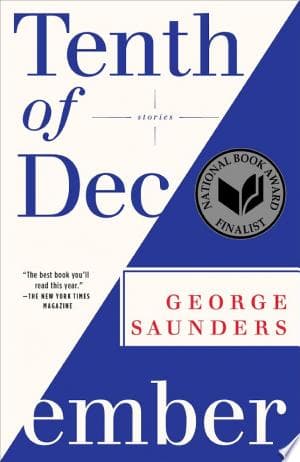
- Tenth of December
George Saunders
4.0 (62k) average on GoodreadsLiterary FictionExplores human nature through diverse, sometimes surreal, short stories.
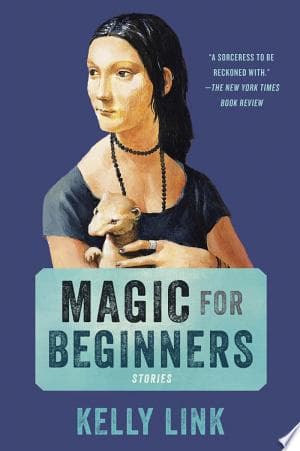
- Magic for Beginners
Kelly Link
3.8 (9k) average on GoodreadsFantasyKnown for blending fantasy, horror, and literary fiction in short story collections.
- Harry Potter and the Sorcerer's Stone
J.K. Rowling
4.5 (7M) average on GoodreadsFantasyRescued from a miserable life under the stairs, an orphaned boy discovers he's a wizard destined for a magical school, where he uncovers a dangerous secret tied to the dark wizard who murdered his parents.
- The Hunger Games
Suzanne Collins
4.3 (6.4M) average on GoodreadsFantasyIn a future where children fight to the death on live television, Katniss Everdeen volunteers for the arena, turning a death sentence into a fight for survival and a spark of rebellion.
- 1984
George Orwell
4.2 (3.1M) average on GoodreadsPoliticsIn a future where surveillance and thought control are absolute, a man's search for truth clashes with the Party, showing that hope can be a form of rebellion.
- Divergent
Veronica Roth
4.2 (2.9M) average on GoodreadsFantasyIn a society divided by virtues, a sixteen-year-old's difference from the norm starts a rebellion that threatens her world.




Enjoyed the summary?
A summary gives you the shape of the book. The book itself has the detail, the examples and the voice.
Find Her Body and Other Parties on AmazonAs an Amazon Associate, BookBrief earns from qualifying purchases. How we're funded