
Synopsis
Covers the whole plot, including the ending.
- Difficulty
- Medium
- Pacing
- Slow
- Mood
- Gritty, Reflective, Somber, Authentic, Profound
- Read it if
- You want an unflinchingly realistic, character-driven account of trench warfare in WWI from a soldier's perspective, focusing on psychological impact and camaraderie.
- Skip it if
- You prefer fast-paced action, clear plot arcs with definitive resolutions, or find detailed depictions of war's grim realities too challenging.
Her Privates We Plot Summary
Covers the whole plot, including the ending.
Joining the Battalion
Private Bourne, an educated and thoughtful man, becomes a private in the British Army during World War I, serving in France. He joins B Company, 9th Battalion, and quickly adapts to the friendships and difficulties of trench life. His first experiences involve the routine of army life – drilling, chores, and the constant threat of enemy shells. He forms close bonds with his fellow privates, especially Marfell and Martlow, sharing their cynical humor and calm acceptance of their grim situation. Bourne's intelligence makes him different from many of his comrades, yet he tries to fit in and endure the shared suffering without complaint, observing the war's absurdity and brutality with a distant but deeply felt view.
Life in the Trenches
Life in the trenches is a brutal cycle of boredom, fear, and discomfort. Bourne and his section spend days in muddy, rat-filled dugouts, enduring constant shelling, the smell of death, and the threat of gas attacks. They do exhausting tasks like digging, repairing barbed wire, and standing watch. The soldiers develop dark humor and strong loyalty to each other as a way to cope. Bourne sees how his comrades react to the stress: some become tough, others withdrawn, and a few break down. He thinks about how war takes away humanity, where individual identity is lost in the group struggle for survival, and the only certainty is the next order or shell.
A Brief Respite
After a tough time on the front lines, Bourne's company is relieved and moves to billets behind the lines. This offers a temporary break from the constant danger and discomfort, allowing the men to clean up, eat proper meals, and experience something like normal life. They visit local cafes, drink, and enjoy lively company. Bourne, while appreciating the break, remains fully aware that their peace is temporary. He watches the men try to forget the horrors they have seen and the worries of their inevitable return to the trenches. This rest period, though important for morale, always carries the knowledge that the war continues, and their lives are still on hold.
The Absurdity of Command
Bourne often sees the military hierarchy's inefficiencies and occasional absurdities. He and his fellow privates often question the logic of orders given by officers who seem far removed from the harsh realities of trench warfare. There is constant tension between the men at the front, who do most of the fighting, and the command structure, which sometimes appears uncaring or incompetent. Bourne's thoughts highlight the class divide in the army, where officers, often from privileged backgrounds, struggle to understand the working-class soldiers' mindset and experiences. This disconnect fuels the privates' cynical humor and their quiet, often unspoken, dislike for authority, even as they follow orders.
Loss and Grief
The war constantly takes the lives of Bourne's comrades; each death is a stark reminder of his own mortality. He sees the sudden, brutal deaths of friends like Martlow, killed by a shell, and others who are wounded or disappear. These losses are met with a mix of shock, grief, and tough acceptance. The men become stoic, learning to put their sorrow aside to survive. Bourne, despite his intellectual distance, feels the deep weight of these losses, recognizing the individual lives ended and the impact on those left behind. The constant presence of death reinforces how uncertain their existence is and how random survival is in the trenches; one moment of bad luck can be fatal.
The Somme Offensive
Bourne and his battalion are sent to the Somme, a notorious battlefield known for its massive scale and casualties. They take part in a major offensive, experiencing the full horror of a large-scale attack. The scene is one of complete chaos: constant artillery fire, machine-gun fire, and countless dead and wounded. Bourne describes the terrifying experience of going 'over the top,' charging into enemy fire, and the confusing struggle to advance through a landscape turned into mud and craters. The offensive is brutal and costly, and Bourne sees firsthand the immense human sacrifice and the futility of many attacks, further solidifying his cynical view of the war's purpose.
Psychological Toll
The continuous exposure to violence, death, and extreme stress badly affects Bourne and his fellow soldiers mentally. Signs of 'shell shock' are clear, though often misunderstood or ignored by command. Men become withdrawn, prone to sudden outbursts, or simply unable to function. Bourne himself feels the war's weight on his mind, struggling with insomnia and constant replays of traumatic events. He observes how the war strips away individuality and emotional sensitivity, forcing men to become numb to survive. The novel subtly explores the lasting mental scars that will surely trouble these soldiers, even if they survive the conflict physically.
Moments of Humanity
Despite the dehumanizing conditions, moments of deep humanity and friendship break through the grim reality. Soldiers share scarce rations, comfort the wounded, and risk their lives for each other. Bourne finds comfort in the shared experiences and unspoken understanding among his fellow privates. Their dark humor, shared complaints, and mutual support create a strong bond that goes beyond rank and background. These instances show the resilience of the human spirit and the lasting capacity for empathy, even in the worst circumstances. These small acts of kindness are vital for maintaining morale and preventing complete mental collapse, reminding the men that they are not alone.
A Near Miss
Bourne has several close calls during his time in the trenches; one particularly clear moment involves a shell landing dangerously close to him. He describes the raw terror and the immediate aftermath, the ringing in his ears, and the smell of gunpowder. Such experiences are common, and each narrow escape reinforces how random survival is. It is not skill or bravery that decides who lives or dies, but often pure luck. These moments leave Bourne shaken but also with a stronger sense of fatalism, further confirming his belief that his fate is largely out of his hands. He sees the immediate, devastating effects of these near misses on others, some of whom are not as lucky.
The Enduring Spirit
Even amid the constant horror and despair, Bourne and his fellow privates keep a remarkable resilience and lasting spirit. Their capacity for dark humor, their defiant complaints, and their steady loyalty to each other show an inner strength that the war cannot entirely extinguish. Bourne, though deeply affected, continues to observe and think, keeping his intellectual curiosity even in widespread suffering. The novel shows that while war can brutalize and dehumanize, it cannot completely erase the individual spirit or the bonds of human connection. The soldiers' ability to find small moments of joy, however brief, shows their will to survive.
A Sense of Futility
As the war continues and casualties mount, Bourne's initial, perhaps naive, understanding of the conflict gives way to a deep sense of futility. He sees the immense suffering, destruction, and loss of life, with little clear progress or meaningful result. The grand statements of politicians and generals seem empty and separate from the muddy, bloody reality of the front lines. Bourne's thoughts increasingly focus on the senselessness of it all, questioning why such huge sacrifices are made. This growing disappointment is shared by many of his comrades, who express their despair through cynical jokes and bitter complaints, feeling like pawns in a game they do not understand.
The Weight of Experience
By the end of his documented experiences, Bourne is a deeply changed man. The war has removed any illusions he might have had, leaving him with deep cynicism, a heightened awareness of death, and a lasting understanding of human suffering. While he survives physically, the psychological scars are clear. His intellectual detachment remains, but it is now softened by deep weariness and a sense of having seen the absolute worst of humanity. The friendships he found, though vital, cannot erase the trauma. He is left with the weight of his experiences, a silent sign of trench warfare's devastating impact on the individual soul, forever marked by the mud and blood of France.
Principal Figures
Private Bourne
Protagonist
An educated and introspective private soldier in the British Army during WWI.
Bourne is the central consciousness of the novel, an educated and reflective man who observes the horrors of World War I with a cynical yet deeply empathetic eye. He is not a natural soldier, but he endures the privations and terrors of trench life with a stoic resignation, blending in with his working-class comrades despite his intellectual background. He uses his sharp wit and observational skills to process the absurdity and brutality around him, often questioning the motives of command and the ultimate purpose of the war. He values camaraderie and authenticity, despising cant and hypocrisy.
Relationships: Marfell (Close comrade and friend, sharing cynical humor.); Martlow (Close comrade and friend, whose death profoundly affects Bourne.); Various Privates (Fellow soldiers, forming a bond of shared suffering and camaraderie.)
Private Marfell
Supporting
A pragmatic and loyal private, close friend to Bourne.
Marfell is one of Bourne's closest companions, a pragmatic and resilient soldier who embodies the common sense and stoicism of the average private. He is less intellectual than Bourne but shares his cynical outlook on the war and their officers. Marfell is a reliable and loyal friend, often serving as a sounding board for Bourne's observations and providing a grounded perspective amidst the chaos. He represents the enduring spirit and resourcefulness of the front-line soldier, focused on survival and the immediate realities of trench life, always ready with a dry comment or a practical solution.
Relationships: Bourne (Close comrade and friend, sharing cynical humor.); Martlow (Fellow comrade and friend.)
Private Martlow
Supporting
A cheerful and somewhat naive private, also a close friend to Bourne.
Martlow is another of Bourne's close friends, initially characterized by his cheerful disposition and a certain youthful innocence, despite the grim surroundings. He is good-natured and, like Marfell, shares a bond of camaraderie with Bourne. Martlow's presence often provides moments of levity. His tragic death serves as a stark reminder of the arbitrary and brutal nature of war, deeply affecting Bourne and underscoring the constant threat that hangs over every soldier. His character highlights the immense human cost of the conflict and the loss of individual lives.
Relationships: Bourne (Close comrade and friend.); Marfell (Fellow comrade and friend.)
Sergeant Tozer
Supporting
A strict but fair NCO, representing the immediate authority figure for the privates.
Sergeant Tozer is an experienced non-commissioned officer (NCO) who commands Bourne's section. He is generally portrayed as strict and demanding, but also fair and competent. Tozer understands the realities of trench warfare, having served for a significant period. He represents the crucial link between the officers and the privates, often having to enforce unpopular orders while also trying to look out for his men's welfare. He earns the grudging respect of the privates due to his experience and his ability to navigate the complexities of military life, both on and off the front line.
Relationships: Bourne (Superior officer, respected for competence.); Various Privates (Commander of their section.)
Corporal Hamley
Supporting
A pragmatic and sometimes harsh corporal.
Corporal Hamley is another NCO in Bourne's company. He is often depicted as more focused on strict adherence to rules and maintaining discipline, sometimes to the irritation of the privates. While not malicious, Hamley represents the more rigid aspects of military authority. He is a practical soldier, concerned with the efficient execution of duties, and less prone to the philosophical musings of Bourne or the cynical humor of Marfell. His character helps to illustrate the various personalities within the NCO ranks and the challenges of leadership in a brutal environment.
Relationships: Bourne (Superior officer.); Sergeant Tozer (Fellow NCO.)
Lieutenant Manning
Supporting
An officer who shows some understanding of the privates' plight.
Lieutenant Manning is one of the company's officers, often seen from the privates' perspective. He is generally portrayed as more sympathetic and understanding than some of the higher-ranking officers, occasionally showing a glimmer of awareness regarding the brutal realities faced by the men under his command. While still part of the 'them' (officer class), he is sometimes viewed with less animosity by the privates. His presence highlights the class divide within the army but also suggests that not all officers are entirely detached or unsympathetic to their men's suffering.
Relationships: Bourne (Superior officer.); Various Privates (Commander of their platoon.)
The Officers (collectively)
Antagonistic/Supporting
The command structure, often seen as detached and sometimes incompetent by the privates.
The officers, from lieutenants to the commanding officer, are often viewed collectively by Bourne and his comrades as a separate entity, distinct from the privates. They represent the distant authority that issues orders, often without a full understanding of the front-line realities. While some officers, like Manning, might show flashes of empathy, the overall impression is one of a detached, sometimes incompetent, and often oblivious class. This collective 'them' fuels the privates' cynicism and resentment, highlighting the class divide and the disconnect between command and the fighting men.
Relationships: Bourne (Superior officers, often viewed with skepticism.); The Privates (Commanders of the fighting men.)
The Privates (collectively)
Supporting
The collective body of soldiers who share the common experience of trench warfare.
Beyond the named individuals, the 'privates' form a collective character, representing the shared experience, resilience, and camaraderie of the common soldiers. They are a diverse group, but their individual identities are often subsumed by their shared suffering, their dark humor, and their mutual dependence. This collective voice provides the chorus of complaints, cynical observations, and unspoken understanding that binds Bourne to his peers. They embody the stoicism, the fatalism, and the enduring spirit of the men who actually fight the war, distinct from the officers who command them.
Relationships: Bourne (Comrades and fellow sufferers.); The Officers (Subordinates, often resentful of command.)
Themes & Insights
The Brutality and Absurdity of War
The novel clearly shows the constant brutality of trench warfare, from physical discomfort and the threat of death to its mental toll. Bourne's observations highlight the conflict's sheer absurdity, where huge suffering and loss of life often lead to no clear progress. The senselessness of attacks, the random nature of death, and the gap between the front lines and command all contribute to this theme. For example, descriptions of the Somme offensive show the devastating human cost for minimal gains.
“War is a huge, insensate, and remorseless machine, grinding out men's lives and their souls.”
Camaraderie and Human Connection
Despite the dehumanizing conditions, the novel stresses the strong bonds of friendship that form among the soldiers. Sharing danger, discomfort, and a common fate creates an unbreakable connection between Bourne, Marfell, Martlow, and their fellow privates. This shared experience provides comfort, humor, and a sense of belonging in an otherwise isolating environment. Moments of shared rations, dark jokes, and mutual support in the face of death highlight human connection's resilience, as seen in Bourne's private talks with Marfell about their experiences.
“It was impossible to feel alone in the midst of so much companionship; a companionship unique, perhaps, to men who have lived together in the shadow of death.”
Class Divide and Authority
A main theme is the clear class divide within the British Army, especially between officers and privates. Bourne, despite his education, is a private, placing him among the working-class soldiers. He often sees the disconnect between the officers' distant command and the privates' immediate, harsh reality. The privates' cynical attitude toward 'them' (the officers) highlights this divide, fueled by perceived incompetence, privilege, and a lack of understanding from those in charge. This appears in their muttered complaints about orders and their sarcastic remarks about officers' comforts.
“We were 'other ranks,' and they were 'officers.' The gulf was fixed, as it were, by divine ordinance.”
The Erosion of Individuality and Humanity
Constant exposure to violence, death, and strict military structures gradually erodes the soldiers' individuality and, at times, their humanity. Men become cogs in a machine, their personal identities and feelings dulled by the need to survive. Bourne reflects on how the war forces men to become numb to suffering and to separate their emotions. Yet, the novel also shows the struggle to keep a core sense of self, as seen in Bourne's ongoing intellectual thoughts and the privates' defiant humor, which act as small resistances against complete dehumanization.
“One became a thing, a piece of equipment, a cog in the vast, impersonal machine of war.”
Fatalism and Resignation
A widespread sense of fatalism and resignation fills the story. The soldiers, especially Bourne, come to believe that their fates are largely out of their hands, subject to the whims of shells, snipers, and strategic decisions. This leads to a calm acceptance of whatever comes, whether a brief rest or sudden death. This theme is reinforced by the random nature of survival, where luck often plays a bigger role than skill or bravery. The men's dark humor and quiet endurance are coping mechanisms born from this deep belief in an uncontrollable destiny, as seen in their casual talks about death.
“It was just a question of time, a matter of luck, a lottery of life and death.”
Plot Devices & Literary Techniques
First-Person Limited Narration (Bourne's Perspective)
The story is told entirely through the eyes and mind of Private Bourne.
The novel uses a first-person limited narration, with Private Bourne as the central consciousness. This allows the reader to experience the war directly through the eyes of a common soldier, privy to his internal thoughts, observations, and emotional responses. This perspective is crucial for conveying the psychological impact of trench warfare, the cynicism of the privates, and the profound sense of absurdity and futility. It emphasizes the subjective, lived experience of the war, rather than a detached, objective account, making the horrors more immediate and personal. Bourne's intellectual nature adds depth to these observations.
Dark Humor and Cynicism
Soldiers use gallows humor and cynical remarks as coping mechanisms.
Dark humor and cynicism are prevalent plot devices, serving as a primary coping mechanism for the soldiers. The privates frequently engage in sardonic jokes and bitter complaints about their conditions, their officers, and the war itself. This humor, often morbid and irreverent, allows them to process the overwhelming trauma and maintain a semblance of sanity in the face of constant death and discomfort. It also serves to highlight the disconnect between the official rhetoric of war and the brutal reality experienced on the front lines, creating a bond of shared understanding and defiance among the men.
Slice-of-Life Structure
The narrative presents episodic, non-linear vignettes of trench life rather than a conventional plot.
The novel employs a 'slice-of-life' or episodic structure, presenting a series of vignettes and observations from Bourne's time in the trenches rather than a strong, overarching plot with a clear beginning, middle, and end. This structure effectively conveys the monotonous, repetitive, and often random nature of trench warfare. It mirrors the soldiers' experience of living day-to-day, with sudden bursts of intense action punctuated by long periods of waiting and discomfort. This device emphasizes the psychological realism of the war, focusing on the cumulative impact of daily survival rather than a grand narrative arc.
Internal Monologue and Reflection
Bourne's extensive internal thoughts and philosophical reflections.
Bourne's character is heavily developed through his extensive internal monologues and philosophical reflections. These passages allow the author to explore themes of war, humanity, class, and the meaning of existence from a deeply personal and intellectual perspective. Bourne's thoughts often contrast sharply with the grim external reality, providing a rich inner landscape amidst the barrenness of the trenches. This device is essential for conveying the protagonist's intellectual struggle to comprehend and endure the incomprehensible, adding layers of meaning beyond the immediate physical events.
Her Privates We Quotes
“It was impossible to believe that anything could be quite so bad as it was, or that anything quite so bad could be endured.”
“Nothing mattered much in the end, except to go on existing, and that was the hardest thing of all.”
“The greatest freedom of all was the freedom to die.”
“He understood then that courage was not the absence of fear, but the ability to go on in spite of it.”
“War was not a game for gentlemen, but a dirty business for common men.”
“The mind had its own defenses, its own way of shutting out the unbearable.”
“They were all in it together, and that was the only thing that made it bearable.”
“Life became a matter of moments, each one to be endured, each one a step closer to an unknown end.”
“There was no glory in it, only a dull, persistent ache that never left them.”
“To talk of death was to invite it, and so they talked of trivial things, of food, of leave, of women.”
“The true horror was not in the dying, but in the living that led to it.”
“He had lost the power to feel anything very deeply, except a sort of weary indifference.”
“The world had shrunk to the size of a trench, and everything beyond it was a dream.”
“They were all waiting for something, though none of them knew quite what it was.”
Quiz
10 questions on the plot and the characters. Each answer comes with a short explanation.
Question 1
What is the primary setting for the majority of the novel 'Her Privates We'?
- Training camps in England
- The Western Front trenches in France
- Military hospitals behind the lines
- Officers' mess halls away from combat
Show answer
B. The Western Front trenches in France 'Her Privates We' is a trench novel, primarily depicting the daily life, struggles, and horrors experienced by soldiers on the Western Front.
Question 2
What is the name of the main protagonist in 'Her Privates We'?
- Private Miller
- Sergeant Jones
- Lieutenant Richards
- Corporal White
Show answer
A. Private Miller The main character, through whose eyes the reader experiences the war, is Private Bourne, but he is known by his surname, Miller, to his fellow soldiers.
Question 3
Which of the following best describes the tone of the novel regarding the war experience?
- Glorifying and heroic
- Romantic and adventurous
- Gritty, realistic, and often bleak
- Humorous and lighthearted
Show answer
C. Gritty, realistic, and often bleak Manning's novel is renowned for its unvarnished, realistic portrayal of the hardships, boredom, fear, and camaraderie of trench warfare, avoiding romanticization.
Question 4
What is a recurring theme expressed through the soldiers' conversations and internal thoughts in the novel?
- The desire for military promotion and glory
- Philosophical reflections on life, death, and the futility of war
- Plans for post-war business ventures
- Nostalgia for childhood pranks and games
Show answer
B. Philosophical reflections on life, death, and the futility of war Miller, in particular, engages in deep philosophical discussions and internal monologues about the nature of existence, the war's meaninglessness, and humanity's condition.
Question 5
What is the significance of the title 'Her Privates We'?
- It refers to a secret society among the enlisted men.
- It is a play on words, referring to the common soldiers ('privates') and a line from Shakespeare's Henry V about 'we few, we happy few, we band of brothers'.
- It denotes the soldiers' personal belongings that they carry.
- It is a direct quote from a general addressing his troops.
Show answer
B. It is a play on words, referring to the common soldiers ('privates') and a line from Shakespeare's Henry V about 'we few, we happy few, we band of brothers'. The title is a deliberate pun, linking the rank of 'private' with the famous speech from Shakespeare's Henry V, highlighting the shared experience and camaraderie of the common soldiers.
Question 6
How does the novel portray the relationship between officers and enlisted men?
- Strictly hierarchical with little interaction or understanding.
- Characterized by mutual respect and a shared understanding of their predicament, despite rank differences.
- Mostly antagonistic, with officers frequently abusing their power.
- Largely irrelevant, as they operate in completely separate spheres.
Show answer
B. Characterized by mutual respect and a shared understanding of their predicament, despite rank differences. While acknowledging the hierarchy, Manning emphasizes the shared suffering and mutual dependence in the trenches, often showing a degree of understanding and respect between officers and the more experienced privates like Miller.
Question 7
What is the primary function of the frequent use of soldier slang and dialect in the novel?
- To make the dialogue intentionally obscure for the reader.
- To create an authentic and immersive experience of trench life and camaraderie.
- To highlight the lack of education among the enlisted men.
- To serve as coded messages that foreshadow future events.
Show answer
B. To create an authentic and immersive experience of trench life and camaraderie. The authentic and often crude language used by the soldiers is crucial in building the realism of the novel, immersing the reader in their world and illustrating their unique culture and bonds.
Question 8
Which of the following literary techniques does Manning frequently employ to convey the internal state of Private Miller?
- Extensive use of third-person omniscient narration to directly state Miller's feelings.
- Long, descriptive passages focusing solely on the external landscape.
- Stream of consciousness and philosophical monologues.
- Dialogue with other soldiers specifically designed to reveal his inner turmoil.
Show answer
C. Stream of consciousness and philosophical monologues. Miller's character is deeply explored through his internal thoughts, often presented in a stream-of-consciousness style, where he muses on the meaning of war, life, and his own existence.
Question 9
What is the underlying critical commentary Manning makes about the nature of military discipline and authority?
- That strict discipline is always necessary and effective for morale.
- That while necessary for order, it often feels arbitrary and can break the spirit of the individual soldier.
- That soldiers inherently desire and thrive under absolute authority.
- That discipline is rarely enforced and has little impact on the soldiers' daily lives.
Show answer
B. That while necessary for order, it often feels arbitrary and can break the spirit of the individual soldier. Manning portrays discipline as a necessary evil, often highlighting its absurdity and the resentment it can cause among the men, even as they comply. It's a constant source of friction and philosophical debate for Miller.
Question 10
How does the novel conclude regarding Miller's fate?
- He is promoted to a higher rank and transferred away from the front.
- He survives the war and returns home, deeply traumatized.
- He is killed in action during an advance, reflecting the arbitrary nature of death in war.
- He deserts his post and attempts to flee the front lines.
Show answer
C. He is killed in action during an advance, reflecting the arbitrary nature of death in war. The novel ends with Miller's death during an attack, a poignant and stark reminder of the ever-present danger and the random, often meaningless, end for many soldiers.
Her Privates We FAQ
What is the central premise of 'Her Privates We'?
'Her Privates We' follows the day-to-day existence of Private Bourne, a sensitive and intelligent soldier, as he endures the brutal realities of trench warfare on the Western Front during World War I. It meticulously details the monotonous routines, sudden violence, and psychological toll of life in the British Expeditionary Force, focusing on the camaraderie and conflicts within his platoon.
Who is Private Bourne, and what makes him a unique protagonist?
Private Bourne is the central character, an educated and reflective man who volunteered for service despite his intellectual leanings. His uniqueness stems from his ability to observe and articulate the absurdity and horror around him, contrasting his inner world of thought and poetry with the crude, immediate demands of military life, making him an outsider even among his comrades.
What aspects of trench warfare does Manning particularly emphasize?
Manning heavily emphasizes the constant presence of death, the physical discomforts like mud, cold, and lice, and the psychological strain of perpetual danger and boredom. He also highlights the specific language and dark humor developed by soldiers as a coping mechanism, and the arbitrary nature of command decisions affecting the lives of privates.
How does the novel portray the relationship between officers and enlisted men?
The novel portrays a distinct class divide and a frequent disconnect between officers and enlisted men. While some officers are depicted with grudging respect or even affection, there's often an underlying tension and a sense that officers live in a different, less immediate reality, making decisions that privates must execute at great personal cost, as seen in Bourne's observations of Captain Malet.
What role does camaraderie play among Bourne's fellow soldiers?
Camaraderie is a vital survival mechanism, providing essential emotional support and a sense of shared humanity amidst the dehumanizing conditions. Soldiers like Martlow, Miller, and Shem are crucial to Bourne's experience, offering companionship, humor, and mutual aid, which helps to mitigate the isolation and terror of the front.
Are there any specific historical battles or events referenced or depicted in the novel?
While the novel doesn't focus on a single named historical battle like the Somme, it generally depicts the attritional warfare characteristic of the Western Front, including trench raids, artillery bombardments, and the constant threat of enemy snipers. The setting is generalized to evoke the pervasive nature of the conflict rather than pinpointing a specific engagement.
What is the significance of the novel initially being published anonymously?
The initial anonymous publication allowed Manning to present a raw, unfiltered, and deeply personal account without immediate personal repercussions or the need to conform to prevailing patriotic narratives. It lent an air of authenticity, suggesting the truth was too stark for an author to claim openly in the immediate aftermath of the war, and perhaps also protected him from potential criticism for its unvarnished portrayal.
How does Manning use language and dialect to enhance the authenticity of the soldiers' experiences?
Manning meticulously employs the vernacular, slang, and coarse language common among British soldiers of the period, including frequent use of profanity and specific military jargon. This linguistic authenticity immerses the reader in the soldiers' world, reflecting their gritty reality and the unique culture forged in the trenches, making characters like Martlow and Miller incredibly vivid.
Are there any subtle allusions to Manning's own background or intellectual leanings within Bourne's character?
Bourne's intellectualism, his occasional poetic musings, and his reflective nature strongly echo Manning's own background as a poet and scholar. His internal monologues, often contrasting the horrors of war with philosophical or literary thoughts, serve as a direct conduit for Manning to infuse his personal sensibilities and critical observations into the narrative.
How does the novel explore the psychological impact of constant exposure to death and violence?
The novel portrays the psychological impact through Bourne's growing numbness, his recurring nightmares, and the casual way soldiers discuss death, often with dark humor. It shows how the mind adapts to survive, but also the deep scars left by witnessing unimaginable horrors and the constant threat of one's own demise, leading to moments of profound despair and existential questioning.
What is the significance of Bourne's internal monologues and his attempts to maintain his intellectual identity?
Bourne's internal monologues are crucial for his psychological survival, serving as a refuge from the brutal external world. His attempts to cling to his intellectual identity, through recalling poetry or philosophical thoughts, are a way of asserting his individuality and humanity against the dehumanizing forces of war, preventing him from becoming just another cog in the military machine.
How do the soldiers cope with the extreme boredom and monotony of trench life?
Soldiers cope with boredom through a variety of mundane activities: eating, sleeping, gambling, gossiping, writing letters, and engaging in dark humor. These small routines and interactions, often centered around the acquisition of food or a good smoke, become disproportionately important, serving as distractions and anchors in an otherwise unchanging and dangerous environment.
Does Bourne experience shell shock or other forms of combat stress, and how is it depicted?
While the term 'shell shock' isn't explicitly used, Bourne exhibits symptoms consistent with combat stress, such as extreme fatigue, emotional detachment, and an underlying sense of dread. His moments of profound weariness and his struggle to reconcile the brutality with any sense of meaning are clear indicators of the psychological toll, showing a gradual erosion of his inner peace.
Is 'Her Privates We' an anti-war novel, or does it offer a more nuanced perspective?
While it unflinchingly depicts the horrors of war, making a strong case against its brutality, 'Her Privates We' is arguably more nuanced than a simplistic 'anti-war' label. It focuses on the human experience within war, exploring themes of duty, courage, and camaraderie alongside the suffering, rather than solely condemning the conflict itself. It's a deep dive into the soldier's reality.
How does the novel's ending contribute to its overall message about war?
The novel's ending, particularly Bourne's fate, underscores the arbitrary and impersonal nature of death in war. It avoids a heroic or redemptive conclusion, instead presenting a sudden, almost casual demise that reflects the common reality of the front. This reinforces the message that individual lives are easily extinguished, often without grand meaning, highlighting the tragic futility.
How does 'Her Privates We' compare to other classic World War I novels like 'All Quiet on the Western Front'?
While both offer stark depictions of trench warfare, 'Her Privates We' often delves more deeply into the internal, psychological landscape of a specific individual (Bourne) and the nuanced class dynamics within the British army. Remarque's 'All Quiet' presents a broader, more collective experience of German soldiers, but both share a powerful emphasis on the dehumanizing aspects and the loss of innocence.
What is the significance of the title 'Her Privates We'?
The title is a play on words, referencing the common military phrase 'His Majesty's Privates' (enlisted men) and subtly alluding to the privates' individual, often hidden, thoughts and experiences. It suggests that the true story of war lies not in grand strategies but in the intimate, unrecorded lives and sufferings of the ordinary soldiers, whom 'we' (the reader and author) are now privy to.
Does the novel offer any hope or redemption for its characters?
The novel offers very little in terms of traditional hope or redemption. Any solace found is usually in the brief moments of human connection, dark humor, or the sheer act of survival. The pervasive atmosphere is one of endurance rather than triumph, and the ending, in particular, reinforces the bleak and unredemptive nature of the conflict for the common soldier.
About the author
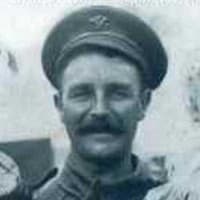
Frederic Manning was an Australian poet and novelist.
Similar books
- All Quiet on the Western Front
Erich Maria Remarque
4.0 (355k) average on GoodreadsHistorical FictionShares a similar focus on the psychological toll of WWI and the bonds between soldiers.
- The Naked and the Dead
Norman Mailer
3.9 (23k) average on GoodreadsHistorical FictionExplores the dehumanizing aspects of war and the varied experiences of soldiers in a similar realistic style.
- A Farewell to Arms
Ernest Hemingway
3.8 (263k) average on GoodreadsHistorical FictionHemingway's 'A Farewell to Arms' differs significantly by weaving a prominent love story into its war narrative, focusing on Lieutenant Frederic Henry's personal escape from the conflict. While both authors employ a spare, realistic prose style, Hemingway's narrative is driven by a more conventional plot of romance and desertion, contrasting sharply with Manning's almost documentary-style focus on the collective experience of the common soldier in the trenches. Manning's work is less about individual agency to escape the war and more about the psychological endurance within it, lacking the romantic subplot that defines much of Hemingway's novel.
- Nineteen Eighty-Four
George Orwell
4.2 (5.5M) average on GoodreadsFictionWinston Smith dreams of truth and rebellion in a world where Big Brother watches all, but he confronts the terrifying power of a regime that controls not just actions, but thoughts.
- The Frozen River
Ariel Lawhon
4.4 (600k) average on GoodreadsFictionIn 1789 Maine, a heroic midwife's diary helps her expose a murder and get justice in a town that wants to silence her.
- A Man Called Ove
Fredrik Backman
4.4 (569k) average on GoodreadsFictionA stubborn widower, who lives by strict rules, finds his quiet world changed by a lively new family next door, making him face his past and find happiness in human connection.






Enjoyed the summary?
A summary gives you the shape of the book. The book itself has the detail, the examples and the voice.
Find Her Privates We on AmazonAs an Amazon Associate, BookBrief earns from qualifying purchases. How we're funded