

Synopsis
Covers the whole plot, including the ending.
- Difficulty
- Medium
- Pacing
- Moderate
- Mood
- Melancholy, Disillusioned, Romantic, Tragic
- Read it if
- You want a classic, stark portrayal of love and loss set against the backdrop of World War I, with a focus on human emotion and the disillusionment of war.
- Skip it if
- You prefer fast-paced plot-driven narratives, or find minimalist prose and tragic endings unappealing.
A Farewell to Arms Plot Summary
Covers the whole plot, including the ending.
The Italian Front and Catherine Barkley
Lieutenant Frederic Henry, an American ambulance driver for the Italian army, returns to the front in Gorizia after leave. He spends time with his fellow officers, Rinaldi, a surgeon, and the priest, engaging in their usual talk about women and war. Rinaldi, a close friend, introduces Frederic to Catherine Barkley, an English nurse's aide at the British hospital. Catherine is still grieving her fiancé, killed in the war. Frederic, at first seeing their interaction as a casual flirtation, pursues her, drawn by her vulnerability, though he does not feel genuine love yet.
Wounding and Hospitalization in Milan
During an offensive, Frederic is badly wounded in the leg by a mortar shell in a dugout with his Italian ambulance drivers. One driver is killed, another injured. Frederic is taken to a field hospital, then to a larger American hospital in Milan for treatment. To his surprise, Catherine Barkley is also transferred to the Milan hospital, assigned to nurse him. Their relationship deepens significantly during his recovery; they spend intimate time together, sharing stories and growing closer amid the war. They fall deeply in love, their bond strengthening through shared vulnerability and the intensity of their circumstances.
Love in Milan
In Milan, Frederic has surgery for his leg. Catherine cares for him, and their relationship becomes a passionate affair. They spend their days together, talking, reading, and making love in his hospital room. Frederic feels a deep connection to Catherine, a sense of belonging and peace he has not known before. They discuss their future, though the war constantly threatens to separate them. Catherine reveals she is pregnant, a secret that adds complexity and urgency to their relationship, forcing them to face their situation beyond the hospital.
Return to the Front
After recovering from his injury, Frederic is ordered back to the Italian front. The separation from Catherine is agonizing for both. They say a heartfelt goodbye, promising to write and be together again. Frederic returns to his unit, now stationed further north. The jovial atmosphere he once knew among his officers is strained, and the war effort seems increasingly futile. He feels detached from the camaraderie and purpose he once felt, his thoughts constantly on Catherine and their future, making the grim realities of war harder to bear.
The Caporetto Retreat
The Italian army suffers a catastrophic defeat at the Battle of Caporetto, leading to a massive, disorganized retreat. Frederic, along with his ambulance drivers, Aymo, Bonello, and Piani, tries to transport wounded soldiers and supplies amid the chaos. Roads are jammed with fleeing soldiers and civilians; the situation quickly becomes panic and disorder. Frederic struggles to maintain order and do his duty, but the scale of the collapse makes it nearly impossible. The retreat is marked by confusion, fear, and a breakdown of military discipline, with officers executed by battle police.
Desertion and Escape
During the Caporetto retreat, Frederic and his men are separated from the main column. They encounter Italian battle police executing officers suspected of desertion or incompetence. Frederic narrowly escapes execution by jumping into a river and swimming to safety. He feels a deep disillusionment with the war and the military. Having 'made a separate peace,' he decides to desert the army. He travels by train to Milan, hoping to find Catherine. Their reunion is emotional; relief washes over them as they are finally together again, away from the immediate dangers of the front.
Hiding in Stresa
Frederic and Catherine travel to Stresa, a town on Lake Maggiore, where they plan their escape to Switzerland. They stay in a hotel, trying to live a normal life while waiting to cross the border. They spend their days together, enjoying a brief time of peace, but the constant threat of discovery and the war's reach loom over them. They meet an old friend, Emilio, a bartender, who helps them. Catherine grows anxious about her pregnancy and the uncertain future, while Frederic tries to stay optimistic for her.
Crossing the Lake
Emilio warns Frederic that the carabinieri are looking for him and plan to arrest him in the morning. Realizing they must act immediately, Frederic and Catherine decide to escape across Lake Maggiore into neutral Switzerland under cover of darkness. Frederic rents a rowboat, and they embark on a long, arduous journey across the stormy lake. Catherine, heavily pregnant, endures the physical strain and fear with courage. They row through the night, eventually reaching the Swiss shore, exhausted but relieved, having evaded capture and the war.
Life in Switzerland
Upon arriving in Switzerland, Frederic and Catherine are detained by Swiss border officials but are granted asylum after Frederic falsely claims to be a professional athlete. They settle in a quiet mountain town, enjoying a time of peace and happiness. They spend their days skiing, reading, and anticipating their child's birth. Despite their joy, Catherine's health becomes a growing concern, and she expresses fears about childbirth and their future. Frederic tries to reassure her, but an underlying sense of dread permeates their otherwise idyllic existence.
Childbirth and Tragedy
Catherine goes into labor, which is long and difficult. After many hours, doctors decide a Cesarean section is needed. The baby is stillborn, a boy. Catherine survives the surgery but soon begins to hemorrhage. Despite the doctors' efforts and Frederic's desperate prayers, Catherine's condition worsens quickly. Frederic stays by her side, holding her hand, as she dies from childbirth complications. Her death leaves Frederic devastated and alone, having lost both his love and their child quickly.
The End
After Catherine's death, Frederic is in shock and grief. He tries to say goodbye to her body in the hospital room, but the reality of her absence is overwhelming. He walks away from the hospital in the rain, alone and stripped of everything he held dear. The war, which he had deserted, seems less significant than the personal tragedy he has endured. His journey has ended in sorrow, leaving him with an empty future, a solitary figure walking away from the loss of his love and child.
A Farewell to Arms Characters
Frederic Henry
Protagonist
An American ambulance driver serving in the Italian army.
Lieutenant Frederic Henry is a reserved and reflective American who volunteers to drive ambulances for the Italian army during World War I. Initially detached and somewhat cynical about the war and love, he finds himself drawn into a passionate affair with Catherine Barkley. He is observant, pragmatic, and values loyalty among his comrades. Despite his attempts to remain emotionally guarded, Catherine breaks through his defenses, leading him to experience profound love and devastating loss. His journey is one from youthful indifference to mature, tragic understanding.
Relationships: Catherine Barkley (Passionate, all-consuming love affair, eventually a committed partnership.); Rinaldi (Close friend and fellow officer, a surgeon.); The Priest (Confidante and moral compass, often a subject of friendly teasing.); Aymo (Loyal ambulance driver and comrade, tragically killed.)
Catherine Barkley
Love Interest / Supporting
A beautiful English nurse's aide, grieving her lost fiancé.
Catherine Barkley is an English nurse's aide working at a British hospital in Italy. She is introduced as a woman still deeply traumatized and grieving the death of her fiancé, who was killed in the war. Her vulnerability, beauty, and emotional intensity immediately captivate Frederic. She seeks solace and escape in their relationship, often expressing anxieties about the future, death, and their love. She is fiercely devoted to Frederic, but her grief and fears manifest in a fragile, sometimes possessive, personality. Her character embodies the tragic impact of war on personal lives.
Relationships: Frederic Henry (Passionate, all-consuming love affair, eventually a committed partnership.)
Rinaldi
Supporting
An Italian surgeon and Frederic's boisterous, womanizing friend.
Rinaldi is a charming, often boisterous Italian surgeon and Frederic's closest friend among his fellow officers. He is a skilled doctor with a penchant for women and a jovial, if sometimes cynical, outlook. He genuinely cares for Frederic, often teasing him about his romantic endeavors and offering a strong sense of camaraderie. Rinaldi represents the more carefree, yet ultimately war-weary, aspect of military life, contrasting with the priest's more spiritual perspective.
Relationships: Frederic Henry (Close friend and fellow officer.); The Priest (Friendly rival in conversation and philosophy.)
The Priest
Supporting
A humble, devout Italian priest, often teased but respected.
The priest is a quiet, devout, and often mocked figure among Frederic's fellow officers. He is the target of much teasing, particularly from Rinaldi, but Frederic develops a genuine respect and affection for him. The priest represents moral integrity, faith, and a quieter, more spiritual perspective on life and war. He offers Frederic advice and a sense of calm, often discussing abstract concepts like love and God, contrasting sharply with the pragmatic and often hedonistic attitudes of the other officers.
Relationships: Frederic Henry (Confidante and moral sounding board.); Rinaldi (Recipient of friendly teasing.)
Helen Ferguson
Supporting
A Scottish nurse and Catherine Barkley's close friend.
Helen Ferguson is a Scottish nurse and Catherine Barkley's colleague and close friend. She is practical, sharp-tongued, and fiercely protective of Catherine. Ferguson is wary of Frederic's initial intentions and becomes increasingly disapproving of their relationship, especially after Catherine becomes pregnant. She represents a voice of caution and concern, embodying the societal expectations and moral judgments of the time, and ultimately reflects the anxieties faced by women during wartime.
Relationships: Catherine Barkley (Close friend and colleague.); Frederic Henry (Initially distrustful, later disapproving.)
Aymo
Supporting
One of Frederic's loyal and brave Italian ambulance drivers.
Aymo is one of Frederic's Italian ambulance drivers, a simple, loyal, and brave man. He is dedicated to his duty and to Frederic. During the chaotic Caporetto retreat, Aymo remains steadfast, trying to help Frederic and their fellow drivers. His tragic death at the hands of Italian battle police highlights the senseless brutality and breakdown of order during the retreat, serving as a stark reminder of the arbitrary nature of death in war.
Relationships: Frederic Henry (Subordinate and comrade.)
Bonello
Supporting
Another of Frederic's ambulance drivers, a pragmatic and cynical man.
Bonello is one of Frederic's Italian ambulance drivers, known for his pragmatic and often cynical outlook. He is a survivor, quick to adapt to desperate situations. During the Caporetto retreat, he makes the practical decision to desert and join the infantry, recognizing the futility of their position. His actions reflect the self-preservation instinct that emerges amidst the collapse of military order.
Relationships: Frederic Henry (Subordinate and comrade.)
Piani
Supporting
A calm and reliable Italian ambulance driver under Frederic's command.
Piani is another of Frederic's Italian ambulance drivers, characterized by his calm demeanor and reliability. He remains steadfast and follows Frederic's orders even during the most chaotic moments of the Caporetto retreat. Piani's presence offers a small measure of stability and loyalty in a rapidly disintegrating situation, demonstrating quiet resilience under extreme pressure.
Relationships: Frederic Henry (Subordinate and comrade.)
A Farewell to Arms Themes
The Brutality and Futility of War
Hemingway vividly portrays World War I's grim realities, stripping away romantic notions of heroism. The war is chaotic, senseless, and destructive, both physically and psychologically. Scenes like the Caporetto retreat, where officers are executed and soldiers flee in panic, show the breakdown of order and the arbitrary nature of death. Frederic's desertion, making a 'separate peace,' means rejecting the war's logic and recognizing its futility. It is not a war of grand ideals, but one of suffering, injury, and death.
“I was not made to think. I was made to eat. My God, yes. Eat, eat, eat. And drink, drink, drink. And sleep, sleep, sleep. But not to think. Oh, no, not to think.”
Love as an Escape and a Sanctuary
The passionate love affair between Frederic and Catherine is a sanctuary against the brutal war. Their relationship offers a temporary escape from the horrors of their external world. In Milan, their hospital room becomes a private haven where they can forget the war and focus solely on each other. Their desire to escape to Switzerland is a desperate attempt to preserve this love and create a life free from conflict. However, the novel suggests that even love cannot fully protect individuals from the world's harsh realities and the inevitability of loss.
“We could feel the war going on and on. But we had made a separate peace.”
Loss and Disillusionment
Loss is a theme throughout the novel, appearing in many forms. Frederic experiences the loss of his comrades, his leg, his faith in the military, and ultimately, Catherine and their child. The initial idealism of war gives way to disillusionment as Frederic sees its senseless brutality and the breakdown of order. His 'separate peace' results directly from this disillusionment. The final tragedy of Catherine's death shows the powerlessness of individuals against fate and the crushing weight of a world without justice or inherent meaning.
“It was like saying good-bye to a statue. After a while I went out and left the hospital and walked back to the hotel in the rain.”
The Nature of Manhood and Courage
Hemingway explores what it means to be a man and show courage in a world without traditional heroic narratives. Frederic's courage is not in grand battlefield heroics, but in enduring injury, making difficult moral choices (like desertion), and providing emotional support to Catherine. The book questions traditional notions of duty and honor, suggesting that true strength lies in facing personal truths and protecting those one loves, even if it means abandoning military obligations. The quiet resilience of characters like Frederic and Catherine in the face of adversity redefines heroism.
“I was not made to think. I was made to eat. My God, yes. Eat, eat, eat. And drink, drink, drink. And sleep, sleep, sleep. But not to think. Oh, no, not to think.”
Plot Devices & Literary Techniques
The 'Separate Peace'
Frederic's internal decision to abandon the war and its values.
The concept of making a 'separate peace' is a pivotal plot device. It signifies Frederic Henry's complete disillusionment with the war and his formal desertion from the Italian army after narrowly escaping execution during the Caporetto retreat. This decision is not just an act of physical escape but a profound psychological and moral break from the collective madness of war. It allows Frederic to fully commit to his love for Catherine, symbolizing a turning inward, prioritizing personal connection over national duty, and setting the stage for their desperate attempt to build a life together outside the conflict's reach.
The Rain Motif
Symbolic foreshadowing of sadness, death, and despair.
Rain is a recurring motif throughout the novel, often accompanying moments of sadness, danger, or death. It is raining when Frederic is wounded, during the chaotic Caporetto retreat, and most significantly, when Catherine and the baby die, and Frederic walks away from the hospital alone. The rain acts as a powerful symbol of the pervasive sorrow and inescapable tragedy that blankets the characters' lives. It reflects the external environment mirroring internal despair, foreshadowing the inevitable heartbreak and emphasizing the bleakness of their existence, particularly in the face of insurmountable loss.
The Hospital as a Haven
A temporary sanctuary from the war's brutality.
The hospital in Milan serves as a crucial plot device by providing a temporary sanctuary for Frederic and Catherine, allowing their love to blossom away from the immediate horrors of the front. It is within the confines of the hospital that their relationship deepens and becomes truly intimate. This setting creates a stark contrast between the external chaos of war and the internal world of their burgeoning romance. However, even this haven proves temporary, as Frederic is eventually sent back to the front, demonstrating that no place can offer permanent escape from the pervasive reach of the war and fate.
The Unreliable Narrator
Frederic Henry's stoic, understated narration that often masks deeper emotions.
Frederic Henry's narration is characterized by its stoic, understated, and often detached tone. While he describes events with precision and objectivity, his emotional responses are frequently implied rather than explicitly stated. This narrative style forces the reader to infer his feelings, particularly his profound grief and love, through his actions and sparse dialogue. This device reflects Frederic's own attempts to control his emotions in a world of chaos and pain, a coping mechanism that makes the moments of raw emotion, when they do surface, all the more impactful. It creates a sense of realism and restraint that defines Hemingway's prose.
A Farewell to Arms Quotes
“Abstract words such as glory, honor, courage, or hallow were obscene beside the concrete names of villages, the numbers of roads, the names of rivers, the numbers of regiments and the dates.”
“If people bring so much courage to this world the world has to kill them to break them, so of course it kills them. The world breaks everyone, and afterward, some are strong at the broken places. But those that will not break it kills. It kills the very good and the very gentle and the very brave impartially. If you are none of these you can be sure it will kill you too but there will be no special hurry.”
“I was not made to think. I was made to eat. And to drink. And to make love. And to sleep. And to be happy. And to be sad. And to be a human being.”
“The world breaks everyone, and afterward, some are strong at the broken places.”
“We were never made for love. We were made for war.”
“But I did not love Catherine Barkley nor had any idea of loving her. This was a game, like bridge, in which you said things instead of playing cards. I was learning to play it.”
“I was always embarrassed by the words sacred, glorious, and sacrifice and the expression in vain. We had heard them, sometimes standing in the rain almost out of earshot, so that only the shout came through, and what was sacred, and what was glorious? There were no words that you could stand to hear without vomiting.”
“It is a fine thing to be in love.”
“There are many people that are in love with the hero and cannot marry him.”
“We had a good time. We were happy.”
“I was not made to think. I was made to eat. And to drink. And to make love. And to sleep. And to be happy. And to be sad. And to be a human being.”
“That was what you did. You died. You did not know what it was about. You never had time to learn. They threw you in and told you the rules and the first time they caught you off base they killed you. Or they killed you before you had even gotten to first base.”
“You'll never be anything but a wet nurse to the army.”
“I had gone to war, and I had been wounded. I had been in love, and I had been betrayed. I had lost everything, and I had found nothing.”
Quiz
10 questions on the plot and the characters. Each answer comes with a short explanation.
Question 1
What is Frederic Henry's profession in the Italian army at the beginning of 'A Farewell to Arms'?
- Infantry Officer
- Ambulance Driver
- Field Surgeon
- Artillery Commander
Show answer
B. Ambulance Driver Frederic Henry serves as an American ambulance driver in the Italian army during World War I.
Question 2
Where does Frederic Henry first meet Catherine Barkley?
- At a military hospital in Milan
- At a field hospital near the front
- In a cafe in Rome
- During a leave in Switzerland
Show answer
B. At a field hospital near the front Frederic meets Catherine, an English nurse, at a field hospital where he is recovering from an injury.
Question 3
What tragic event deeply affects Catherine Barkley before she meets Frederic Henry?
- Her parents died in an air raid
- Her brother was killed in the war
- Her fiancé was killed in the war
- She lost her nursing license
Show answer
C. Her fiancé was killed in the war Catherine's fiancé was killed in the war, which leaves her with profound grief and emotional trauma.
Question 4
What specific injury does Frederic Henry sustain that sends him to Milan for treatment?
- A gunshot wound to the chest
- Shrapnel wounds to his legs
- A concussion from a shell blast
- Frostbite during a winter campaign
Show answer
B. Shrapnel wounds to his legs Frederic is wounded by a mortar shell, suffering severe shrapnel wounds to his legs, requiring extensive medical care in Milan.
Question 5
Which major historical military retreat does Frederic Henry participate in, leading to his 'farewell to arms'?
- The Battle of Verdun
- The Retreat from Mons
- The Battle of Caporetto
- The Gallipoli Campaign
Show answer
C. The Battle of Caporetto Frederic deserts the Italian army during the chaotic and deadly retreat from the Battle of Caporetto, narrowly escaping execution.
Question 6
What is the primary reason Frederic Henry deserts the Italian army?
- He is captured by the enemy and escapes
- He is disillusioned with the war and fears being executed by his own side
- He receives orders to transfer to a different front
- He is discharged due to his injuries
Show answer
B. He is disillusioned with the war and fears being executed by his own side During the Caporetto retreat, Italian battle police are executing officers suspected of desertion. Frederic is pulled from the line and, realizing he is in danger, escapes by jumping into a river.
Question 7
How do Frederic and Catherine escape to Switzerland?
- They travel by train with forged papers
- They hike through the mountains with a guide
- They row a boat across a lake at night
- They are smuggled across the border in a truck
Show answer
C. They row a boat across a lake at night After Frederic's desertion, he and Catherine escape by rowing across Lake Maggiore under the cover of darkness to reach neutral Switzerland.
Question 8
What is the ultimate fate of Catherine Barkley and her baby?
- They both survive and live happily ever after with Frederic
- Catherine dies during childbirth, and the baby is stillborn
- Catherine dies, but the baby survives and is adopted
- They are separated from Frederic and never seen again
Show answer
B. Catherine dies during childbirth, and the baby is stillborn Catherine endures a long and difficult labor, resulting in a stillborn baby. She then suffers a hemorrhage and dies, leaving Frederic alone.
Question 9
Which of the following themes is most prominent in 'A Farewell to Arms'?
- The glory of military combat and patriotism
- The destructive nature of war and the search for personal meaning amidst chaos
- The importance of traditional family values
- The triumph of justice over tyranny
Show answer
B. The destructive nature of war and the search for personal meaning amidst chaos The novel critically portrays the brutality and futility of war, with Frederic's 'farewell to arms' symbolizing his rejection of its meaninglessness in favor of individual love and survival.
Question 10
How does Frederic Henry generally cope with the emotional pain and trauma he experiences throughout the novel?
- By actively seeking revenge against those who wronged him
- Through philosophical reflection and religious devotion
- By adopting a stoic, detached demeanor and finding solace in fleeting pleasures and Catherine's love
- By openly expressing his feelings and seeking psychological help
Show answer
C. By adopting a stoic, detached demeanor and finding solace in fleeting pleasures and Catherine's love Frederic often deals with trauma through a detached, understated manner, avoiding overt emotional displays. He finds temporary escape and meaning in his relationship with Catherine and simple pleasures.
A Farewell to Arms FAQ
What is the core premise of 'A Farewell to Arms'?
The novel centers on Frederic Henry, an American ambulance driver serving in the Italian Army during World War I, and his love affair with Catherine Barkley, an English nurse. It explores their attempts to find personal peace and happiness amidst the chaos and brutality of war, ultimately questioning the value of traditional ideals like patriotism and glory.
Who are the main characters, and what are their initial roles?
Frederic Henry is an expatriate American architecture student who volunteers as an ambulance driver (tenente) for the Italian army. Catherine Barkley is a Voluntary Aid Detachment (VAD) nurse from England, grappling with the recent death of her fiancé in the war, which initially makes her emotionally vulnerable and guarded.
What significant historical event forms a backdrop for a major plot point?
The novel prominently features the Battle of Caporetto, a disastrous retreat by the Italian army in October 1917. Frederic Henry's experience during this retreat, including his near-execution by Italian battle police, serves as a catalyst for his desertion and his 'farewell to arms.'
How does Frederic Henry become injured early in the novel, and what is its immediate consequence?
Frederic is severely wounded in the knee by a trench mortar shell while eating cheese and macaroni in a dugout. This injury leads to his hospitalization in Milan, where he is reunited with Catherine Barkley and their romance truly begins to develop.
What is the ultimate fate of Catherine Barkley and the child?
Catherine Barkley dies during childbirth due to a hemorrhage, and her baby is stillborn. This tragic double loss leaves Frederic Henry utterly alone and devastated, concluding the novel with a profound sense of loss and the futility of their attempts to escape fate.
What is the significance of the recurring rain motif throughout the novel?
Rain often symbolizes impending doom, sorrow, and the tragic inevitability of fate for Frederic and Catherine. From the retreat at Caporetto occurring in the rain to Catherine's fear of rain, and her eventual death occurring during a storm, it consistently foreshadows negative events and reinforces the novel's bleak outlook.
How does Frederic's relationship with the priest evolve, and what does it represent?
Initially, Frederic is somewhat dismissive of the priest's faith, but over time, he develops a grudging respect and even a friendship. The priest represents an alternative, spiritual form of solace and integrity, contrasting with the war's cynicism and offering Frederic a glimpse of a different kind of 'purity' he cannot quite grasp.
What is the symbolic meaning behind the title 'A Farewell to Arms'?
The title signifies Frederic Henry's literal abandonment of his military service after deserting during the Caporetto retreat. More profoundly, it represents his disillusionment with the ideals of war, patriotism, and structured society, as well as his ultimate 'farewell' to the emotional and physical 'arms' of Catherine, leaving him isolated.
How does Catherine Barkley's initial grief over her fiancé influence her relationship with Frederic?
Catherine's unresolved grief makes her initially clingy and dependent, seeking comfort and an escape from her pain through Frederic. Her emotional vulnerability and desire to merge identities with him (e.g., cutting her hair short like his) are direct manifestations of her trauma and her attempt to fill the void left by her fiancé's death.
Analyze Frederic Henry's psychological journey from enthusiasm to disillusionment.
Frederic begins the war with a detached, almost indifferent attitude, viewing it as a job. His initial injury and subsequent romance with Catherine start to humanize him, but it is the brutality of the Caporetto retreat and the arbitrary execution of officers that completely shatters his remaining illusions, leading to his profound disillusionment and desertion.
How does Hemingway portray the psychological impact of war on individuals beyond physical injury?
Hemingway meticulously illustrates the psychological toll through characters like the traumatized soldiers in the hospital, Rinaldi's increasing cynicism and eventual breakdown, and Catherine's deep-seated grief and fear. The constant threat of death, the loss of comrades, and the breakdown of societal order contribute to a pervasive sense of nihilism and emotional numbness.
To what extent is Frederic Henry's desertion an act of cowardice versus a rational decision?
This is debatable. While some might view it as cowardice, it can also be interpreted as a rational decision born of extreme disillusionment. After witnessing the senseless execution of Italian officers and realizing the war's futility and lack of personal stake, Frederic chooses self-preservation and the pursuit of individual happiness with Catherine over a cause he no longer believes in.
Is the love between Frederic and Catherine truly romantic, or is it a form of escapism from the war?
Their love is complex and arguably both. While it provides genuine comfort and passion, it also serves as a desperate attempt to create a private world of meaning and happiness as an escape from the brutal realities of war. The intensity of their bond is heightened by their shared isolation and the constant threat of loss.
How does the novel challenge traditional notions of heroism and patriotism?
Hemingway subverts traditional heroism by portraying Frederic as a reluctant participant who ultimately deserts. Patriotism is depicted as hollow rhetoric, especially during the chaotic Caporetto retreat where order collapses and men are senselessly killed. The novel suggests that true courage lies in enduring personal suffering and striving for individual integrity rather than blindly serving a national cause.
What is the significance of the novel's ending, particularly the final sentence: 'After a while I went out and walked back to the hotel in the rain'?
The ending is profoundly bleak, emphasizing Frederic's complete isolation and the futility of their attempts to find happiness outside of the world's harsh realities. The rain symbolizes his renewed grief and the inescapable sorrow, leaving him with nothing but a solitary walk, suggesting that life continues indifferently despite personal tragedy.
How does Hemingway's 'iceberg theory' manifest in 'A Farewell to Arms'?
The iceberg theory is evident in the novel's spare prose and understated emotional expression. Much of the characters' trauma, fear, and love is implied rather than explicitly stated, requiring the reader to infer deeper meanings from dialogue, actions, and recurring motifs like rain or the mountains. Frederic's stoicism often hides profound inner turmoil.
What role do secondary characters like Rinaldi and the priest play in Frederic's development?
Rinaldi, the jovial but increasingly cynical surgeon, represents Frederic's pre-war camaraderie and eventual disillusionment with male bonding in wartime. The priest, conversely, offers a moral and spiritual counterpoint, representing faith, kindness, and a different kind of strength, providing Frederic with a rare, albeit unaccepted, alternative to his nihilism.
Discuss the 'nada' concept in relation to the novel's themes.
The concept of 'nada' (nothingness) permeates the novel, reflecting the existential void and meaninglessness Frederic experiences after the war's absurdity and Catherine's death. It underscores the idea that life, love, and heroism can ultimately be reduced to nothing by indifferent forces, leaving individuals isolated and powerless against fate.
About the author
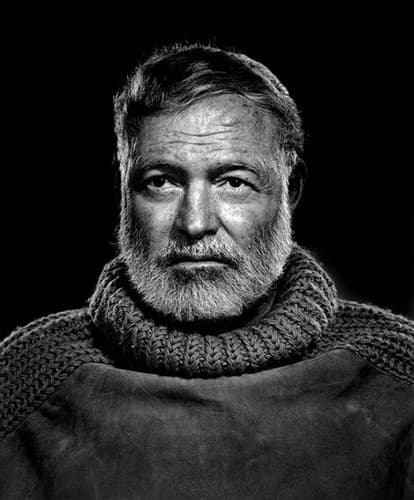
Ernest Miller Hemingway was an American novelist, short-story writer, and journalist. His economical and understated style—which included his iceberg theory—had a strong influence on 20th-century fiction, while his adventurous lifestyle and public image brought him admiration from later generations. Hemingway produced most of his work between the mid-1920s and the mid-1950s, and he was awarded the 1954 Nobel Prize in Literature. He published seven novels, six short-story collections, and two nonfiction works. Three of his novels, four short-story collections, and three nonfiction works were published posthumously. Many of his works are considered classics of American literature.
Similar books
- All Quiet on the Western Front
Erich Maria Remarque
4.0 (355k) average on GoodreadsHistorical FictionBoth are iconic WWI novels exploring the brutality of war and its psychological impact on soldiers.
- The Sun Also Rises
Ernest Hemingway
3.8 (366k) average on GoodreadsHistorical FictionShares Hemingway's signature prose style, themes of disillusionment, and focus on character relationships.
- For Whom the Bell Tolls
Ernest Hemingway
4.0 (249k) average on GoodreadsLiterary FictionAnother Hemingway novel set during wartime, exploring love and duty amidst conflict.
- To Kill a Mockingbird
Harper Lee
4.3 (4.5M) average on GoodreadsHistorical FictionIn the 1930s Jim Crow South, Harper Lee writes about racial injustice, moral growth, and the quiet courage of a lawyer father, Atticus Finch, as seen through his young daughter's eyes.
- The Great Gatsby
F. Scott Fitzgerald
3.9 (3.8M) average on GoodreadsHistorical FictionIn the opulent Roaring Twenties, a mysterious millionaire's lavish parties hide his desperate, tragic pursuit of a lost love, exposing the emptiness within the American Dream.
- Pride and Prejudice
Jane Austen
4.3 (3M) average on GoodreadsHistorical FictionIn a society focused on status and money, Elizabeth Bennet navigates love and pride, challenging Mr. Darcy and social expectations to find true affection.






Enjoyed the summary?
A summary gives you the shape of the book. The book itself has the detail, the examples and the voice.
Find A Farewell to Arms on AmazonAs an Amazon Associate, BookBrief earns from qualifying purchases. How we're funded