
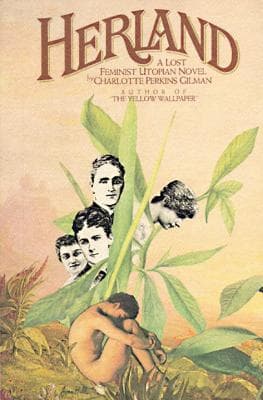
Synopsis
Covers the whole plot, including the ending.
- Difficulty
- Easy
- Pacing
- Moderate
- Mood
- Thought-provoking, Utopian, Reflective, Didactic
- Read it if
- You're interested in classic feminist utopian fiction, thought experiments on gender roles, and societal structures without patriarchal influence.
- Skip it if
- You prefer fast-paced action, complex character arcs, or find didactic prose off-putting.
Herland Plot Summary
Covers the whole plot, including the ending.
The Expedition's Genesis
Vandyck Jennings, Terry Nicholson, and Jeff Margrave, three American men with different views on women, start an expedition into an unknown, mountainous region. Vandyck, the narrator, studies societies and is interested in a world without men. Terry is a rich, very masculine adventurer who thinks women are weaker and need male protection. Jeff is a kind, romantic idealist who admires women. They are driven by rumors of a hidden land populated only by women. Terry strongly dismisses this idea, while Jeff finds it intriguing. Their journey is dangerous, involving difficult land and an airship to cross the mountains, showing their strong desire to confirm the extraordinary legend.
Discovery and Capture
After successfully crossing the mountain range, the three men see a highly cultivated, park-like land below. They parachute down, landing near a group of women who initially scatter. However, the women quickly regroup and, with surprising efficiency and strength, surround and capture the explorers. The men, despite their initial arrogance, find themselves completely outmatched. They are disarmed, their airship secured, and gently but firmly led away. This immediate capture challenges their old ideas about female weakness, setting a clear tone for their time in Herland.
Initial Impressions and 'Re-education'
The men are taken to a comfortable home, given food, clothing, and excellent care, but they are watched constantly and gently. They cannot speak due to a language barrier, so their 'hostesses' begin to teach them the Herland language using gestures, object lessons, and patient repetition. The women, especially Somel, Alima, and Ellador, are intelligent and observant, studying the men with scientific curiosity. The men, particularly Terry, struggle with losing their freedom and the reversal of traditional gender roles, feeling treated more like interesting children than conquerors.
Understanding Herland's Genesis
As the men learn the language, they start to understand Herland's unique history. About 2,000 years ago, a volcanic eruption cut off their country from the rest of the world. At the same time, a war killed most of their male population, leaving only women. Through parthenogenesis, a virgin birth process, they managed to reproduce, ensuring their race survived. This history explains their deep respect for motherhood, their focus on collective well-being, and their lack of understanding of traditional male-female dynamics, including romantic love and warfare. The men are shocked by this, especially the idea of reproduction without men.
The Herland Social Structure
The men learn that Herland is a well-organized society focused on shared good, education, and raising children. There is no private property, no crime, and no government as they understand it. Instead, collective decisions are made for everyone's benefit. Children are raised together by expert 'mothers' and educators, ensuring every child receives the best care and training. The Herlanders value intelligence, cooperation, and efficiency. Their entire culture aims for continuous improvement and nurturing life. This is very different from the competitive, individualistic, and male-dominated societies the men come from.
Courtship and Cultural Clashes
After several months, the men propose marriage to three Herlander women: Vandyck to Ellador, Jeff to Celis, and Terry to Alima. Their attempts at traditional courtship are met with confusion and amusement by the women, who do not understand flirtation, jealousy, or romantic possessiveness. Jeff's gentle admiration somewhat resonates with Celis, but Terry's aggressive approach deeply offends Alima, who sees it as rude. Vandyck finds Ellador intellectually stimulating but struggles with her lack of traditional emotional responses and her scientific interest in his 'maleness.' The cultural gap between them regarding love and relationships is significant.
The Marriages and Their Immediate Aftermath
The Herlanders agree to the marriages, seeing them as a chance for further study and possible genetic diversity. Jeff and Celis find some happiness, with Celis appreciating Jeff's devotion, though she remains puzzled by his strong emotions. Vandyck and Ellador have deep intellectual discussions, with Ellador particularly interested in the 'outside world.' Terry's marriage to Alima, however, is a failure. His attempts to assert dominance and treat Alima as subordinate are met with her firm resistance. He sees her strength as a rejection of his masculinity, leading to increasing frustration.
Terry's Expulsion
Terry's inability to adapt to Herland's ways and his continued attempts to dominate Alima lead to a violent event. After Alima refuses his sexual advances, Terry tries to force himself on her, believing it is his right as a husband. Alima, strong and unaccustomed to such aggression, easily defends herself and alerts the community. The Herlanders, who do not understand sexual assault and see it as a serious break in their peaceful society, quickly decide Terry is a danger. He is gently but firmly escorted out of Herland, a clear consequence of his inability to change his patriarchal mindset.
Ellador's Departure
After Terry's expulsion and the general realization that the men's presence is causing significant disruption, the Herlanders decide it is best for the remaining two men to leave. However, Ellador, driven by strong intellectual curiosity about the outside world and a desire to understand 'maleness' and the societies Vandyck describes, asks to go with him. The Herlanders, after careful thought, agree, seeing it as an opportunity for Ellador to learn and possibly bring back valuable knowledge. Vandyck and Ellador leave Herland, leaving Jeff and Celis behind, to begin a journey of mutual discovery in the wider world.
Reflections on Herland's Impact
As Vandyck and Ellador travel, Vandyck reflects on how much Herland has changed him. He realizes how deeply ingrained his patriarchal assumptions were and how Herland's society, built on cooperation and intelligent design, offers a powerful alternative to the competitive and often destructive male-dominated world he knows. He begins to see the strengths of women that his own society often suppresses and the potential for a more harmonious existence. Ellador, in turn, offers a fresh, unbiased view of the 'outside world,' challenging Vandyck to rethink everything he once took for granted. Their journey together is a symbol of the potential for intellectual and social growth.
Principal Figures
Vandyck Jennings
Protagonist/Narrator
A sociologist who observes and narrates the Herland experience.
Vandyck, or 'Van,' is the most open-minded of the three explorers. As a sociologist, he is genuinely curious about Herland and approaches its society with an analytical, though initially biased, perspective. He acts as the primary observer and narrator, offering insights into the Herland culture and the reactions of his companions. He is thoughtful and reflective, grappling with his preconceived notions about gender roles as he learns from the Herlanders. His primary drive is intellectual understanding and the scientific study of society.
Relationships: Ellador (Intellectual partner and eventual wife; their relationship is based on mutual curiosity and respect.); Terry Nicholson (Friend and foil; Van often critiques Terry's aggressive masculinity.); Jeff Margrave (Friend and fellow explorer; Van observes Jeff's romantic idealism.)
Terry Nicholson
Antagonist/Foil
A wealthy, hyper-masculine adventurer resistant to Herland's values.
Terry is the embodiment of patriarchal masculinity. He is a wealthy, athletic, and fiercely traditional man who believes in male superiority, female weakness, and the necessity of male dominance. He is arrogant, impulsive, and prone to aggression, viewing women primarily through a lens of sexual conquest and domestic subservience. His inability to adapt to Herland's egalitarian society and his persistent attempts to assert dominance ultimately lead to his expulsion. He represents the rigid, destructive aspects of conventional gender roles.
Relationships: Alima (Unwilling wife; Terry attempts to dominate her, leading to conflict and his expulsion.); Vandyck Jennings (Friend and intellectual opponent; Van frequently challenges Terry's views.); Jeff Margrave (Friend; Terry often dismisses Jeff's gentler nature.)
Jeff Margrave
Supporting Character
A gentle, romantic idealist who reveres women.
Jeff is the most conventionally 'feminine' of the three men. He is a romantic, poetic, and gentle soul who idealizes women, placing them on a pedestal and viewing them as delicate creatures to be adored and protected. While his reverence for women is genuine, it is also based on traditional, somewhat superficial notions. He adapts more easily to Herland than Terry, but still struggles with the Herlanders' practical, non-romantic view of relationships and their lack of traditional 'feminine' helplessness. He represents a softer, but still patriarchal, view of women.
Relationships: Celis (Wife; their relationship is based on Jeff's devotion and Celis's appreciation of his gentleness.); Vandyck Jennings (Friend; Van observes Jeff's romantic nature.); Terry Nicholson (Friend; Terry often finds Jeff's softness frustrating.)
Somel
Supporting Character
One of the chief Herlander educators and the men's primary guide.
Somel is a wise, intelligent, and patient Herlander woman who serves as one of the men's main teachers and interlocutors. She embodies the collective wisdom and calm rationality of Herland. She is an expert educator and deeply committed to the well-being of her society. Somel approaches the men with scientific curiosity and maternal care, calmly explaining Herland's customs and challenging the men's assumptions with logic and observation. She is a symbol of Herland's advanced social and intellectual development.
Relationships: Vandyck Jennings (Teacher and guide; she patiently explains Herland's ways to him.); Terry Nicholson (Authority figure; she calmly manages his aggression.); Jeff Margrave (Teacher and guide; she helps him understand Herland's values.)
Ellador
Supporting Character
Vandyck's wife; an intellectually curious and insightful Herlander.
Ellador is one of the younger Herlander women, chosen to marry Vandyck. She is highly intelligent, perceptive, and possesses an insatiable curiosity about the outside world and the nature of 'maleness.' She approaches life and relationships with a scientific, analytical mind, lacking the emotional and romantic conditioning of the men's world. Her questions often challenge Vandyck's assumptions and force him to articulate and justify his own cultural norms. She represents the potential for intellectual growth and cross-cultural understanding.
Relationships: Vandyck Jennings (Intellectual partner and husband; their relationship is a journey of mutual discovery.); Somel (Mentor and elder; Ellador respects Somel's wisdom.)
Alima
Supporting Character
Terry's wife; a strong and independent Herlander.
Alima is the Herlander woman chosen to marry Terry. She is physically strong, independent, and deeply rooted in Herland's cooperative and respectful culture. She is utterly bewildered and offended by Terry's aggressive, possessive, and dominant behavior, which she perceives as crude and uncivilized. Her unwavering resistance to his attempts at control highlights the stark contrast between Herland's egalitarian values and the patriarchal norms Terry represents. She is a symbol of Herland's inherent strength and its rejection of male aggression.
Relationships: Terry Nicholson (Unwilling wife; their relationship is defined by conflict and his eventual expulsion.); Celis (Friend and fellow Herlander.)
Celis
Supporting Character
Jeff's wife; a gentle and appreciative Herlander.
Celis is the Herlander woman who marries Jeff. She is portrayed as gentle and kind, but like all Herlanders, she is also rational and self-possessed. She appreciates Jeff's devotion and gentleness, finding his romantic idealization of women somewhat amusing but not threatening. While she doesn't fully grasp the intensity of his emotional attachment, she responds to his affection with a quiet warmth and intellectual curiosity. She represents a softer aspect of Herland's nature, capable of appreciating traditional affection within their own cultural framework.
Relationships: Jeff Margrave (Wife; their relationship is built on his adoration and her gentle acceptance.); Alima (Friend and fellow Herlander.)
Themes & Insights
The Nature of Gender and Society
This theme explores how gender roles are shaped by society rather than being natural. Herland shows a society where traditional 'masculine' and 'feminine' traits, as understood by the explorers, are either missing, redefined, or shared by everyone. The Herlanders demonstrate that traits like strength, intelligence, and leadership are not specific to one gender, and that a society without male aggression or competition can be very advanced and peaceful. This challenges the men's traditional assumptions, making them rethink what men and women 'should' be. For example, the Herlanders' physical strength and logical problem-solving directly contradict Terry's belief in female weakness.
“What they were was women—women, all women, only women—but such women!”
The Power of Motherhood and Nurturing
Herland is a society built around the idea of motherhood, not just having children but also the broader concept of nurturing and shared child-rearing. The Herlanders view motherhood as the highest calling and organize their entire social structure around the best development of children. This focus on nurturing, education, and communal care creates a society without crime, poverty, or war. The 'mother-sense' is elevated to a collective guiding principle, showing how a society that values life and well-being can achieve great peace and progress. The efficient system of shared child-rearing is a good example of this theme.
“We are mothers, we are a nation of mothers. We have put all our motherhood into our culture.”
The Critique of Patriarchy and Male Aggression
Through its contrasting societies, Gilman strongly criticizes patriarchal structures and the negative effects of male aggression and dominance. Terry Nicholson is the main example of this criticism; his possessiveness, jealousy, and eventual attempt at sexual assault highlight the destructive potential of unchecked male power and traditional views of female submission. Herland, with its peaceful, cooperative, and equal nature, is a direct opposite, suggesting that many societal problems come from patriarchal competition and the subjugation of women. The Herlanders' confusion about the men's ideas of war and crime further emphasizes this criticism.
“The greatest danger we have to face is not from famine or disease, but from the uncontrolled male.”
Utopia and Social Engineering
Herland acts as a feminist utopian ideal, carefully designed for social harmony and progress. The novel explores the possibilities of a society created from scratch, free from old patriarchal influences. The Herlanders' control over reproduction (parthenogenesis), their shared child-rearing, universal education, and lack of private property are all elements of deliberate social planning aimed at creating the best environment for human flourishing. The society's efficiency, cleanliness, and intellectual advancement show the potential for a planned, cooperative society, sharply contrasting with the chaotic and often unfair 'outside world.'
“Here was a whole nation, a country full of women, who were Mothers, and nothing else, but who were, in that perfect devotion to the child, far beyond any men's conception of a mother.”
Evolution and Progress
The novel suggests that societies can change and improve, both biologically and socially. The Herlanders' development of parthenogenesis is a biological change that allows their society to continue. More importantly, their social development, driven by collective intelligence and a focus on nurturing, has led to a highly advanced and peaceful civilization. The contrast with the 'outside world,' which Vandyck admits has stagnated in many ways due to outdated gender roles and conflict, highlights the potential for ongoing improvement when social structures are re-evaluated and optimized for human potential. Ellador's desire to learn about the outside world marks a further step in this process.
“We have been developing for two thousand years. You have been developing for two thousand years, too. But the lines of development are different.”
Plot Devices & Literary Techniques
Utopian Setting
A hidden, idealized society used to critique existing social norms.
Herland itself functions as a utopian setting. By creating an isolated, all-female society that has developed independently, Gilman establishes a contrast to the patriarchal world of the explorers. This allows her to present an alternative social structure, free from the perceived flaws of male-dominated societies (war, crime, poverty, gender inequality), and to highlight the potential for human flourishing when different values are prioritized. The utopian setting is not merely a backdrop but an active participant in the story, forcing the characters and the reader to question their own societal assumptions.
First-Person Narration (Vandyck)
The story is told through the eyes of the most open-minded male explorer.
Vandyck's first-person narration is crucial. As a sociologist, he is positioned as an observer who attempts to be objective, yet his initial biases are evident. This perspective allows the author to gradually reveal the wonders and complexities of Herland through a process of discovery and re-education, mirroring the reader's own journey. His internal reflections and struggles to reconcile Herland's reality with his preconceived notions make the critique of patriarchal society more impactful, as it comes from a character who is actively undergoing a transformation.
Foil Characters (Terry and Jeff)
Contrasting male characters used to represent different patriarchal attitudes.
Terry Nicholson and Jeff Margrave serve as foils to Vandyck and to each other. Terry embodies aggressive, dominant masculinity, representing the most extreme and destructive aspects of patriarchy. Jeff, on the other hand, represents a gentler, romanticized, but still ultimately patriarchal view of women. By presenting these two contrasting figures alongside the more analytical Vandyck, Gilman showcases the spectrum of male attitudes towards women and effectively demonstrates how even seemingly benign idealization (Jeff) can be problematic, while overt dominance (Terry) is irreconcilable with a truly egalitarian society.
Language Barrier and Education
The initial inability to communicate serves as a metaphor for cultural understanding.
The initial language barrier between the men and the Herlanders is a significant plot device. It forces the men to be passive recipients of information and to learn the Herland culture from the ground up, much like children. This process of re-education is not just about language acquisition but about a fundamental shift in worldview. The Herlanders' patient, pedagogical approach to teaching their language and customs reflects their societal values of education and nurturing, while simultaneously highlighting the profound cultural chasm the men must bridge.
Herland Quotes
“The women of Herland were not content to merely exist; they were builders, thinkers, and creators.”
“Motherhood, to them, was not a burden but a sacred trust, a continuous act of creation.”
“For a country to have no men! And for the women to be so strong, so capable, so utterly sufficient!”
“They had no need of competition, for they had no need of power over one another.”
“Their education was a continuous unfolding, a natural growth, not a forced imposition.”
“We had assumed that civilization meant men and women together. Here was a civilization of women alone.”
“The very air of Herland seemed to hum with a quiet, efficient energy, a sense of purposeful peace.”
“Their religion was simply the worship of life, the celebration of growth, the service of the future.”
“They had no sense of private property, only of common wealth, to be nurtured and shared.”
“Beauty, to them, was not an adornment but an expression of health, utility, and joy.”
“We were three men, accustomed to dominate, to lead, to explain. Here, we were merely guests, observers.”
“To them, a child was not 'mine' but 'ours,' a precious trust for the entire community.”
“The greatest danger for Herland, they explained, was not external invasion, but internal stagnation.”
“They had perfected the art of living without men, not through hatred, but through sheer self-sufficiency.”
Quiz
10 questions on the plot and the characters. Each answer comes with a short explanation.
Question 1
Which of the three male explorers is the most open-minded and least prejudiced towards the Herlanders from the outset?
- Terry O'Neill
- Van Dyck
- Jeff Margrave
- Colonel Weatherby
Show answer
B. Van Dyck Van Dyck, the narrator, is presented as the most analytical and least prone to the immediate biases and assumptions that Terry and Jeff exhibit.
Question 2
What is the primary method of reproduction in Herland?
- Sexual reproduction with male partners
- Artificial insemination
- Parthenogenesis (virgin birth)
- Cloning
Show answer
C. Parthenogenesis (virgin birth) The Herlanders reproduce solely through parthenogenesis, a key element of their all-female society.
Question 3
What is the name of the Herland woman whom Van Dyck eventually marries?
- Celis
- Ellador
- Alata
- Marget
Show answer
B. Ellador Van Dyck marries Ellador, who becomes his primary interlocutor and a window into Herland's culture.
Question 4
What is the Herlander's primary method of population control, ensuring a sustainable society?
- Infanticide of weaker children
- Strict birth quotas and a focus on quality over quantity
- Sending excess population to other lands
- Encouraging a high mortality rate among the elderly
Show answer
B. Strict birth quotas and a focus on quality over quantity The Herlanders carefully manage their population, prioritizing the health and upbringing of a limited number of children, a concept expressed as 'quality over quantity'.
Question 5
What does Terry O'Neill attempt to do that ultimately leads to his expulsion from Herland?
- He tries to steal valuable resources from the Herlanders.
- He attempts to force himself on Alata, despite her clear rejection.
- He openly criticizes their religious beliefs in public.
- He tries to escape Herland without permission.
Show answer
B. He attempts to force himself on Alata, despite her clear rejection. Terry's aggressive and disrespectful behavior towards Alata, rooted in his patriarchal assumptions, directly causes his banishment.
Question 6
Which specific animal is revered and symbolized as the 'Mother' in Herland's cultural and spiritual practices?
- The lioness
- The cow
- The cat
- The deer
Show answer
C. The cat The cat is a significant symbol in Herland, representing the 'Mother' and embodying maternal qualities and independence.
Question 7
What is the central philosophical concept that underpins Herland's social structure and individual identity, reflecting their matriarchal and communal values?
- Individual liberty and self-reliance above all else
- The glorification of military prowess and conquest
- The 'Mother-Spirit' and a collective sense of motherhood/community
- Strict adherence to ancient traditions and rituals
Show answer
C. The 'Mother-Spirit' and a collective sense of motherhood/community The 'Mother-Spirit' is a foundational concept in Herland, emphasizing communal well-being, nurturing, and the collective identity derived from their shared motherhood.
Question 8
How do the Herlanders initially react to the concept of 'war' and 'competition' as described by the male explorers?
- They are fascinated and eager to learn about military strategies.
- They express confusion and find the idea illogical and wasteful.
- They are horrified but understand it as a necessary evil.
- They dismiss it as an outdated concept only practiced by primitive societies.
Show answer
B. They express confusion and find the idea illogical and wasteful. The Herlanders, having no concept of male-driven competition or warfare, find these ideas baffling and inefficient, highlighting a core theme of the novel about gendered societal constructs.
Question 9
What is the primary reason the Herlanders have no concept of 'privacy' in the same way the male explorers do?
- Their homes are designed with open layouts and no individual rooms.
- They have developed telepathic communication, making secrets impossible.
- Their society is built on complete trust and communal living, with no perceived need for individual concealment.
- They are constantly under surveillance by a governing council.
Show answer
C. Their society is built on complete trust and communal living, with no perceived need for individual concealment. The Herlanders' society is characterized by deep trust, transparency, and a lack of individualistic shame or need for concealment, which renders the male concept of 'privacy' largely irrelevant to them.
Question 10
What historical event is implied to have isolated Herland from the rest of the world and led to its unique development?
- A massive volcanic eruption that cut off their mountain pass.
- A devastating plague that wiped out all other civilizations.
- A deliberate act of self-isolation by their ancestors.
- A change in global climate that made their region inaccessible.
Show answer
A. A massive volcanic eruption that cut off their mountain pass. The narrative suggests that a geological catastrophe, specifically a volcanic eruption, created the impassable barrier that isolated Herland centuries ago, leading to their unique evolutionary path.
Herland FAQ
What is the central premise of 'Herland'?
'Herland' centers on three male explorers—Vandyck, Terry, and Jeff—who stumble upon a hidden, ancient civilization composed entirely of women. This society, having existed in isolation for 2,000 years, challenges the men's preconceived notions about gender roles, societal structure, and human potential, forcing them to confront their patriarchal biases.
Who are the three male explorers, and what are their primary characteristics?
Vandyck (Van) is the sociologist and narrator, offering a more open-minded and analytical perspective. Terry O'Neill is the stereotypical 'man's man,' hyper-masculine and initially dismissive of Herland's women. Jeff Margrave is the romantic idealist, who quickly idolizes and seeks to serve the women, particularly Ellador.
How did Herland become an all-female society?
Herland's all-female status originated from a catastrophic natural disaster that killed most of their male population centuries ago. The remaining women, through a unique evolutionary adaptation, developed the ability of parthenogenesis, allowing them to reproduce exclusively female offspring without male fertilization, ensuring their society's continuation.
What are some key features of Herland's society and culture?
Herland is characterized by its advanced social engineering, communal childcare, universal education, and a strong emphasis on cooperation and collective well-being. There is no war, poverty, or crime, and their religion centers on 'Motherhood' as a sacred, life-giving force, revering the 'Great Mother' principle.
How do the Herlanders react to the arrival of the male explorers?
The Herlanders, led by figures like Celis, Marget, and Ellador, initially approach the men with a mixture of curiosity, scientific interest, and cautious observation. They treat the men more like children or specimens to be educated, rather than as potential invaders or romantic interests, slowly introducing them to their way of life.
What is the significance of the cats mentioned by the Herlanders?
The Herlanders occasionally mention cats as a species they once had but allowed to die out. This detail subtly highlights their practical, utilitarian approach to nature and their environment; they only keep what serves a clear purpose, contrasting with human sentimentality or pet ownership, and showing their control over their ecosystem.
Are there any hints about the outside world's perception of Herland before its discovery?
The explorers themselves mention rumors and legends of a hidden 'lost race' or a 'forbidden land' in the remote mountains, which fueled their expedition. These vague tales suggest Herland's existence was a persistent myth in the patriarchal world, often dismissed as fantasy, until their direct encounter.
What is the implied fate of Terry O'Neill after his expulsion?
Terry is expelled from Herland for his attempted assault on Alima, indicating he is sent back to the more 'civilized' world he came from. His aggressive and unrepentant nature suggests he will likely struggle to adapt to any society that doesn't cater to his patriarchal desires, potentially facing further conflict.
How does the Herlanders' concept of 'Motherhood' differ from traditional patriarchal views?
In Herland, 'Motherhood' is an exalted, spiritual, and communal function, not solely a biological or domestic role tied to a male partner. It encompasses creation, education, and societal nurturing, elevating women's procreative power to a sacred, independent force, free from male control or definition.
Analyze Jeff's psychological transformation and its limitations.
Jeff quickly shifts from a traditional romantic to an almost worshipful admirer of Herland's women, particularly Ellador. While he sheds some patriarchal assumptions, his 'chivalry' merely replaces one form of male dominance with another—idealization and self-effacing service, rather than true equality or understanding of their independent strength.
How does Van's internal conflict evolve throughout the narrative?
Van, as the narrator, grapples with his ingrained societal biases while genuinely trying to understand Herland. He moves from academic curiosity to a profound personal re-evaluation of gender, ultimately finding respect and love with Ellador, though still occasionally reverting to his old thought patterns, showing the difficulty of unlearning.
What psychological impact does the absence of competition have on Herland's women?
The lack of competition, both sexual and economic, fosters an environment of profound cooperation and mutual support among Herland's women. This leads to a collective consciousness focused on societal improvement and intellectual growth, free from the anxieties, rivalries, and status-seeking often observed in patriarchal societies.
Is 'Herland' a utopian novel, or does it contain subtle critiques of its own ideal society?
While often presented as a utopia, 'Herland' has subtle critiques. The Herlanders' complete lack of experience with men or external conflict makes them somewhat naive to the complexities of the outside world. Their highly rational, planned society might also be seen as lacking spontaneity or individual eccentricity, hinting at potential limitations.
How does Gilman use the concept of 'work' in Herland to challenge traditional gender roles?
In Herland, all 'work' is valued and shared, from childcare and education to agriculture and infrastructure, without gendered divisions. This contrasts sharply with the patriarchal world where women's domestic labor is often unpaid and undervalued, demonstrating that meaningful contribution is not limited by sex but by societal organization.
What is the ultimate message about gender equality that Gilman conveys through the explorers' interactions?
Gilman conveys that genuine gender equality requires a fundamental re-evaluation of societal structures, not just individual attitudes. The explorers' struggles highlight how deeply ingrained patriarchal assumptions are, suggesting that true equality necessitates dismantling power imbalances and recognizing women's inherent capabilities and autonomy.
Could Herland's society survive if it were suddenly exposed to the wider world?
It's debatable. Herland's peace and stability rely on its isolation and the women's collective values. Exposure to the competitive, aggressive, and patriarchal outside world, as represented by Terry, would likely introduce conflict, disease, and potentially undermine their unique social fabric, making survival challenging without significant adaptation.
What is the significance of Ellador choosing to leave Herland with Van?
Ellador's decision to leave with Van signifies a bridge between two worlds and a willingness to learn and adapt. It represents the potential for mutual understanding and growth between genders, but also acknowledges that the path to a more balanced future may require engaging with, and transforming, the existing patriarchal world.
How does the novel address the concept of 'progress'?
'Herland' suggests that true progress is not merely technological but social and moral, focusing on human well-being, cooperation, and sustainable living. The Herlanders' advanced society, free from war and poverty, stands as a model of progress achieved through collective intelligence and a matriarchal value system, rather than male-dominated industrialization.
About the author
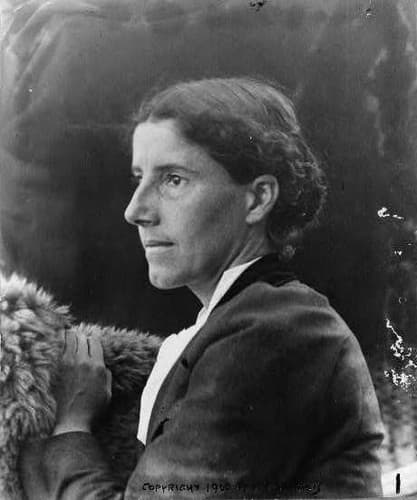
Charlotte Perkins Gilman, also known by her first married name Charlotte Perkins Stetson, was an American humanist, novelist, writer, lecturer, advocate for social reform, and eugenicist. She was a utopian feminist and served as a role model for future generations of feminists because of her unorthodox concepts and lifestyle. She has been inducted into the National Women's Hall of Fame. Her best remembered work today is her semi-autobiographical short story "The Yellow Wallpaper", which she wrote after a severe bout of postpartum psychosis.
Similar books
- The Dispossessed
Ursula K. Le Guin
4.2 (88k) average on GoodreadsPoliticsExplores an anarchist utopian society and contrasts it with a capitalist world.
- The Handmaid's Tale
Margaret Atwood
4.1 (1.5M) average on GoodreadsFantasyExamines a dystopian society with rigid gender roles, offering a counterpoint to Herland's utopia.
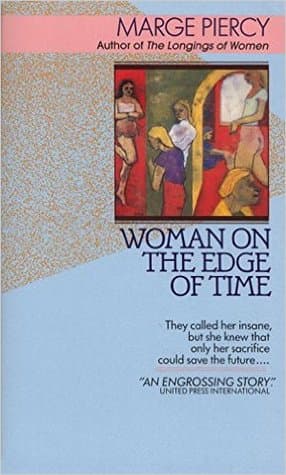
- Woman on the Edge of Time
Marge Piercy
4.0 (14k) average on GoodreadsFantasyFeatures an individual transported to a future utopian society with gender fluidity and communal living.
- Harry Potter and the Sorcerer's Stone
J.K. Rowling
4.5 (7M) average on GoodreadsFantasyRescued from a miserable life under the stairs, an orphaned boy discovers he's a wizard destined for a magical school, where he uncovers a dangerous secret tied to the dark wizard who murdered his parents.
- The Hunger Games
Suzanne Collins
4.3 (6.4M) average on GoodreadsFantasyIn a future where children fight to the death on live television, Katniss Everdeen volunteers for the arena, turning a death sentence into a fight for survival and a spark of rebellion.
- 1984
George Orwell
4.2 (3.1M) average on GoodreadsPoliticsIn a future where surveillance and thought control are absolute, a man's search for truth clashes with the Party, showing that hope can be a form of rebellion.



Enjoyed the summary?
A summary gives you the shape of the book. The book itself has the detail, the examples and the voice.
Find Herland on AmazonAs an Amazon Associate, BookBrief earns from qualifying purchases. How we're funded