
Synopsis
Covers the whole plot, including the ending.
- Difficulty
- Medium
- Pacing
- Moderate
- Mood
- Philosophical, Thought-provoking, Reflective, Utopian/Dystopian
- Read it if
- You enjoy thought-provoking science fiction that delves deep into political philosophy, anarchism, capitalism, and the nature of freedom and society. Ideal for readers who appreciate complex world-building and moral dilemmas.
- Skip it if
- You prefer fast-paced action or clear-cut heroes and villains. The book is rich in philosophical discussion and can be slow in its development of plot.
The Dispossessed Plot Summary
Covers the whole plot, including the ending.
Shevek's Departure from Anarres
The novel opens with Shevek, a physicist, getting ready to leave Anarres for Urras. His decision is new, as Anarres, a moon settled by Odonian anarchists centuries ago, stays separate from its home planet, Urras. Shevek wants to 'break the wall' of isolation, believing that scientific progress, especially his General Temporal Theory, needs cooperation and idea exchange with Urrasti scientists. His fellow Anarresti are divided; many see his departure as a betrayal of Odonian ideas and a dangerous surrender to a hierarchical society. His partner, Takver, and close friend, Bedap, support him, though they worry about the results for Anarres and their relationship. The trip itself is a symbol, the first time an Anarresti has willingly visited Urras since the original settlement.
Life on Anarres: Shevek's Childhood and Early Education
Through flashbacks, Shevek's early life on Anarres is shown. He grows up in a communal dorm, learning Odonian ideas of togetherness, mutual help, and the rejection of private property. Education is practical and self-guided, focusing on helping society. Shevek shows an early talent for math and physics. He forms close bonds with his childhood friends, especially Bedap, and experiences the challenges of Anarresti life, including times of scarcity and the constant need for group effort to keep their simple society going. No money system and a focus on work for the common good are key to his early years, shaping his understanding of society and individual duty.
Arrival on Urras and Initial Impressions
Shevek arrives on Urras, in the wealthy country of A-Io, and immediately sees a world very different from Anarres. He stays in luxurious rooms at the Ioti University, a sharp contrast to the plain living conditions he knows. The abundance of food, resources, and personal items confuses him. He sees the huge wealth gap, with both the rich elite and the poor working class. The idea of private property, which is foreign to him, appears in every part of Urrasti life, from personal items to land and labor ownership. He struggles to make sense of Urrasti scientific advances with their social unfairness, feeling uneasy despite the hospitality.
Anarresti Adolescence and the Call for Change
During his teenage years on Anarres, Shevek, with Bedap and other friends, notices a growing conservatism in Odonian society. While anarchist ideas are kept, a slow bureaucracy and subtle social pressure to conform have started to stop new ideas and individual expression. They question the strict following of tradition and the unspoken 'walls' of custom that are forming. Shevek's scientific questions, especially his interest in theoretical physics, are sometimes met with doubt, as practical, immediately useful work is often given priority. This time marks the start of his desire to 'break the wall' not just between planets, but within Anarresti thinking itself.
Scientific Collaboration and Disillusionment on Urras
Shevek begins working with Urrasti physicists, mainly with the well-known Sabul. At first, he is excited by access to advanced equipment and the chance to share his General Temporal Theory. However, he soon finds that Sabul and the Ioti scientific community are more interested in using his work for their own fame and possibly for military uses than in truly working together to gain knowledge. His theories are published under Sabul's name, or with Sabul getting too much credit. Shevek feels more and more alone, treated more as a curiosity or a tool than an equal. He sees the constant competition and intellectual property fights that go against his Anarresti values, leading to deep disappointment.
Love and Family on Anarres
Flashbacks describe Shevek's relationship with Takver, a biologist. Their relationship has intellectual companionship and a shared commitment to Odonian ideals. They choose to 'bond' and have children, Tirin and Sadik, a decision made without formal ceremony but with deep personal meaning in Anarresti society. Their life together is one of mutual support and shared duty, handling the challenges of communal living and the demands of their work. Takver's practical nature and strong morals help ground Shevek, and their family shows the close, personal connections that grow within Anarres's larger communal structure, showing the emotional richness possible even in a simple society.
Urras's Political Turmoil and Shevek's Activism
As Shevek becomes more disappointed with the Ioti scientific community, he starts to connect with Urrasti dissenters and thinkers who criticize the A-Io government and its social inequalities. He sees a violent protest by the working class, which affects him deeply and strengthens his Odonian beliefs. Driven by his principles, Shevek decides to speak publicly, criticizing the Urrasti system and supporting the values of togetherness and freedom he knows from Anarres. His speeches connect with some, but also cause hostility from the authorities. He becomes a symbol of hope for the oppressed but also a target for the powerful, further solidifying his decision to 'break the wall' in a political sense, not just a scientific one.
The Wall Broken: Shevek's Escape and the Terran Embassy
After his public activism and growing political danger, Shevek must flee the Ioti university. He finds safety at the embassy of Terra, humanity's ancestral home, which stays neutral on Urras. There, he reveals his complete General Temporal Theory, which he had purposely kept from the Urrasti, fearing its misuse. He explains his true reason for coming to Urras: to share his work with all humanity, not just one group, and to challenge Anarres's isolation. He hopes to encourage true communication and cooperation between worlds, believing that the 'wall' must be broken for everyone's benefit. His actions at the Terran Embassy are a turning point, making his work available to a wider, neutral audience.
Return to Anarres and Uncertain Future
After successfully sending his theory and getting a promise of wider sharing, Shevek returns to Anarres. He is joined by Kye, a Terran who wants to visit Anarres, another new act of opening. His return is met with mixed reactions; some Anarresti see him as a hero for ending the isolation, while others remain suspicious or critical of his contact with Urras. He reunites with Takver and his children, a touching moment after their long separation. Shevek's journey has changed him and, by extension, Anarres. The future of Odonian society, now exposed to the wider universe and challenged by its own internal 'walls,' is uncertain, but Shevek has started an unavoidable process of change.
The Dispossessed Characters
Shevek
Protagonist
Brilliant physicist from Anarres who travels to Urras to 'break the wall' of isolation.
Shevek is a theoretical physicist from the anarchist moon Anarres, driven by an insatiable intellectual curiosity and a deep commitment to Odonian principles. He is the first Anarresti in centuries to voluntarily travel to Urras, believing that the 'wall' of isolation between the two worlds hinders scientific and social progress. While deeply rooted in Anarresti communal values, he challenges the growing conservatism and unacknowledged hierarchy within his own society. He is intelligent, idealistic, and often naive about the complexities of Urrasti society, leading to both profound insights and significant disillusionment. His journey is one of both scientific and political awakening.
Relationships: Takver (Life partner and intellectual equal); Bedap (Close childhood friend and fellow reformist); Sabul (Urrasti physicist, initially a collaborator but later an exploiter); Oiie (Urrasti intellectual and friend)
Takver
Supporting
Shevek's partner and a biologist on Anarres, representing the heart of Odonian family life.
Takver is Shevek's life partner and the mother of their children on Anarres. A biologist, she is pragmatic, resilient, and deeply committed to the Odonian way of life. While supportive of Shevek's decision to go to Urras, she grapples with the emotional and practical implications of his absence. She embodies the strength and groundedness of Anarresti women, managing work assignments, raising children, and maintaining their communal bonds amidst scarcity. Her letters to Shevek provide a crucial link to Anarres and a reminder of the values he is fighting to protect and share. She is a voice of reason and emotional depth.
Relationships: Shevek (Life partner, intellectual companion, and co-parent); Tirin (Son); Sadik (Daughter)
Bedap
Supporting
Shevek's childhood friend and fellow Odonian reformist, advocating for internal change on Anarres.
Bedap is Shevek's closest childhood friend and a fellow intellectual on Anarres. He shares Shevek's concerns about the growing conservatism and unacknowledged hierarchies within Odonian society. While supportive of Shevek's external mission to Urras, Bedap focuses more on internal reform within Anarres, advocating for greater freedom of thought and challenging bureaucratic inertia. He is intelligent, articulate, and dedicated to the pure ideals of Odonism, often acting as Shevek's conscience and intellectual sparring partner. His role highlights the internal struggles and potential for stagnation within even an anarchist society.
Relationships: Shevek (Close childhood friend and intellectual ally)
Sabul
Antagonist/Supporting
Prominent Urrasti physicist who initially collaborates with Shevek but ultimately exploits his work.
Sabul is a highly respected and ambitious physicist at the Ioti University on Urras. He initially welcomes Shevek, seeing an opportunity to advance his own career and the prestige of his institution by associating with the groundbreaking Anarresti scientist. However, Sabul embodies the competitive, proprietary nature of Urrasti science. He subtly manipulates Shevek, takes credit for his work, and seeks to control the dissemination of his theories for personal and national gain. He represents the systemic flaws of a hierarchical, capitalist scientific system that prioritizes individual achievement and ownership over collective knowledge.
Relationships: Shevek (Scientific collaborator and exploiter)
Oiie
Supporting
Urrasti intellectual and friend to Shevek, offering insights into Urrasti society.
Oiie is an Urrasti intellectual and academic who develops a friendship with Shevek during his time on Urras. Unlike Sabul, Oiie is more genuinely interested in understanding Anarres and its unique social structure. He provides Shevek with a more nuanced perspective on Urrasti society, explaining its complexities and internal contradictions without necessarily endorsing them. Oiie represents a segment of the Urrasti population capable of critical thought and empathy, offering Shevek some intellectual and emotional solace amidst his growing disillusionment. He helps Shevek navigate the cultural differences.
Relationships: Shevek (Friend and intellectual confidant)
Paedir
Supporting
Anarresti administrator who represents the cautious, bureaucratic side of Odonian society.
Paedir is an Anarresti administrator who frequently interacts with Shevek, particularly regarding his work assignments and his eventual journey to Urras. Paedir embodies the more conservative, pragmatic, and sometimes bureaucratic aspects of Anarresti society. While not malicious, he represents the forces of stability and tradition that can, at times, stifle innovation and individual initiative. He questions Shevek's motives and the wisdom of his journey, reflecting the anxieties of many Anarresti about breaking their long-standing isolation. He highlights the inherent tension between individual freedom and collective responsibility in an anarchist system.
Relationships: Shevek (Administrative contact, often in conflict over policy)
Kye
Supporting
A Terran who accompanies Shevek back to Anarres, symbolizing the 'breaking of the wall'.
Kye is a Terran who works at the Terran Embassy on Urras. After Shevek reveals his full theory and his intentions, Kye expresses a desire to visit Anarres, becoming the first non-Anarresti to willingly travel to the anarchist moon. Kye's presence on the return journey symbolizes the successful 'breaking of the wall' that Shevek sought. Kye represents the broader humanity beyond the Urras-Anarres dichotomy, a neutral observer and potential bridge between cultures, embodying the possibility of interworld communication and understanding that Shevek hopes to foster.
Relationships: Shevek (Companion on the return journey to Anarres)
Veo
Mentioned
Shevek's mother, who provides a glimpse into Anarresti child-rearing practices.
Veo is Shevek's biological mother, briefly mentioned in the flashbacks of his childhood. In Anarresti society, children are raised communally, so while she is his mother, her role is not one of exclusive caretaking. She is depicted as a competent and respected worker, like all Anarresti. Her presence helps to illustrate the communal nature of family and child-rearing on Anarres, where biological parents are part of a larger network of caregivers, emphasizing the collective responsibility for the next generation.
Relationships: Shevek (Biological mother)
The Dispossessed Themes
Anarchism vs. Capitalism
This theme explores the basic differences between an anarchist society (Anarres) and a capitalist, hierarchical society (Urras). Le Guin carefully contrasts their economic systems, social structures, values, and individual freedoms. On Anarres, no private property or government encourages togetherness but also brings struggles with scarcity and possible stagnation. Urras, with its wealth and technology, suffers from great inequality, exploitation, and a constant threat of war. The novel asks readers to consider the strengths and weaknesses of each system, showing that neither is perfect.
“You cannot buy the revolution. You cannot make it. You can only be it. It is there, or it is not. It is up to you.”
Freedom and Walls
The idea of 'walls' is a common metaphor in the novel, representing both physical barriers (the space between planets, the prison walls on Urras) and metaphorical ones (social customs, ideological rules, intellectual property, gender roles). Shevek's journey is an attempt to 'break the wall' of isolation between Anarres and Urras, but he also faces internal 'walls' within Anarresti society—the subtle pressures of conformity and bureaucracy. The novel questions what true freedom means and how societies, regardless of their beliefs, can accidentally create limits that restrict individual and group potential.
“The wall is not a wall. It is an idea.”
Identity and Self-Discovery
Shevek's journey is a deep one of self-discovery. By leaving Anarres, he gains a new view of his home world, seeing both its strengths and its limits. On Urras, he must confront his Anarresti identity in a very different culture, leading to a deeper understanding of his values and principles. The novel explores how one's identity is shaped by society and how challenging those societal norms can lead to personal growth and a new look at what it means to be an individual within a group.
“He had to go to Urras, to break the wall, to bring the worlds together, to bring the human race together.”
The Nature of Time and Progress
Shevek's scientific work, the General Temporal Theory, is central to this theme. It explores the philosophical ideas of time as a non-linear, relative concept, challenging usual perceptions. This scientific question reflects the novel's larger exploration of societal progress. Is progress linear? Can a society truly advance without outside influence? The contrast between Anarres's steady, often unchanging progress and Urras's fast, exploitative, yet creative advancement makes one think about what true societal 'progress' is and whether it can be achieved with both freedom and responsibility.
“The only thing that makes life possible is permanent, intolerable uncertainty: not knowing what comes next.”
Science and Ethics
The novel looks at the ethical duties of scientists and how scientific knowledge can both free and destroy. Shevek's experience on Urras shows the dangers of science being used for profit, fame, or military power, as Sabul tries to use his theory. On Anarres, science is meant for the common good, but it can be held back by a lack of resources or too much focus on immediate practical use. Le Guin asks how scientific inquiry can grow while staying ethical, supporting the free exchange of ideas over private control.
“To make a thing is to make a wall, to be a possessor. It is to hold.”
Plot Devices & Literary Techniques
Alternating Chapters/Dual Timeline
The narrative alternates between Shevek's present on Urras and his past on Anarres.
The novel employs an alternating chapter structure, with odd-numbered chapters detailing Shevek's current experiences on Urras and even-numbered chapters flashing back to his life on Anarres. This non-linear narrative allows Le Guin to draw direct comparisons and contrasts between the two societies, highlighting their similarities and differences in real-time for the reader. It builds suspense regarding Shevek's motivations and the events that led to his unprecedented journey, while also enriching the character development and world-building of both planets simultaneously. This structure effectively demonstrates how Shevek's past shapes his present actions and perceptions.
The Wall (Metaphor)
A central metaphor representing physical, social, and ideological barriers.
The 'wall' is a dominant and multifaceted metaphor in 'The Dispossessed.' It literally refers to the physical barrier of space between Anarres and Urras, but extends to the ideological 'wall' of isolation maintained by Anarres, the economic 'wall' of private property on Urras, the social 'walls' of class and gender, and even the internal 'walls' of dogma and conformity within Odonian society. Shevek's mission is to 'break the wall,' symbolizing his desire for open communication, shared knowledge, and the dismantling of oppressive structures, both external and internal. It underscores the novel's central theme of freedom and its limitations.
Anarresti Language and Names
Reflects the communal, non-possessive nature of Anarresti society.
Le Guin crafts the Anarresti language to reflect their anarchist principles. Names are typically derived from a random word generator, often with a prefix indicating gender, and are unique to each individual rather than being inherited. This detail subtly reinforces the Anarresti rejection of lineage, hierarchy, and private ownership—even of names. The language also lacks possessive pronouns in the same way Standard Terran does, further emphasizing their communal ethos. This linguistic detail is a powerful, understated world-building element that immerses the reader in the Odonian worldview and highlights its fundamental differences from Urrasti culture.
The General Temporal Theory
Shevek's scientific discovery, a fictional theory of time, central to the plot and themes.
Shevek's General Temporal Theory is a fictional scientific discovery that serves as both a key plot device and a profound thematic element. It is the catalyst for his journey to Urras and the object of Urrasti exploitation. Philosophically, the theory—which posits time as a relative and non-linear phenomenon—mirrors the novel's exploration of societal progress and the cyclical nature of revolution and stagnation. Its potential applications, both for scientific advancement and for military weaponry, raise ethical questions about the responsibility of knowledge and the free dissemination of scientific findings, tying into the themes of science, ethics, and freedom.
Quiz
10 questions on the plot and the characters. Each answer comes with a short explanation.
Question 1
What is the name of the anarchist society on the moon Anarres where Shevek grows up?
- Urras
- Anarres
- Terra
- Hain
Show answer
B. Anarres Anarres is the moon where the anarchist society is established, founded by revolutionaries from Urras. Shevek is born and raised there, which shapes his philosophical and scientific outlook.
Question 2
What is the name of the physics theory that Shevek develops, which is central to the plot?
- General Relativity
- Quantum Mechanics
- The Principle of Simultaneity
- The Theory of Everything
Show answer
C. The Principle of Simultaneity Shevek's work on the Principle of Simultaneity aims to unify temporal physics, allowing for instantaneous communication across space. This theory drives the conflict as both Anarres and Urras seek to control it.
Question 3
Why does Shevek decide to travel to Urras, the planet Anarres orbits?
- To escape persecution on Anarres
- To share his scientific work and promote unity between the worlds
- To seek wealth and luxury
- To overthrow the government of Urras
Show answer
B. To share his scientific work and promote unity between the worlds Shevek believes that his theory should be freely shared to benefit all humanity, and he hopes to bridge the ideological divide between Anarres and Urras, despite the risks and opposition he faces.
Question 4
What is the primary economic and social system on Urras, as depicted in the book?
- Anarchism
- Capitalism
- Feudalism
- Communism
Show answer
B. Capitalism Urras is portrayed as a capitalist society with stark class divisions, contrasting sharply with the anarchist, non-hierarchical system of Anarres. This difference highlights the book's themes of politics and inequality.
Question 5
Who is Takver, and what is her relationship to Shevek?
- Shevek's mother
- A government official on Urras
- Shevek's partner and the mother of his children
- A rival scientist
Show answer
C. Shevek's partner and the mother of his children Takver is Shevek's lifelong partner on Anarres, a biologist who shares his commitment to anarchist principles. Their relationship represents stability and personal connection amidst societal pressures.
Question 6
What event on Anarres leads to a severe famine during Shevek's childhood?
- A war with Urras
- A global pandemic
- A prolonged drought
- An economic blockade
Show answer
C. A prolonged drought A multi-year drought causes crop failures and scarcity on Anarres, testing the anarchist society's principles of mutual aid and resilience. This event shapes Shevek's early experiences and views on community.
Question 7
How does the society on Anarres handle governance and decision-making?
- Through a centralized government
- Via direct democracy and consensus in syndicates
- By a monarch or dictator
- Through corporate boards
Show answer
B. Via direct democracy and consensus in syndicates Anarres operates on anarchist principles with no formal government. Decisions are made through syndicates (work groups) and assemblies based on consensus, emphasizing voluntary cooperation and individual responsibility.
Question 8
What is the 'Odonian' philosophy that underpins the society on Anarres?
- A religious doctrine worshiping a single god
- A form of anarchism inspired by the ideas of Odo
- A scientific theory about time travel
- A capitalist economic model
Show answer
B. A form of anarchism inspired by the ideas of Odo Odonianism is the anarchist philosophy founded by Odo, whose teachings inspired the revolution that led to the settlement of Anarres. It emphasizes freedom, mutual aid, and the rejection of hierarchy and property.
Question 9
In the end, what does Shevek do with his completed theory of simultaneity?
- Sells it to the highest bidder on Urras
- Destroys it to prevent misuse
- Gives it freely to all worlds via the ansible network
- Keeps it secret for Anarres only
Show answer
C. Gives it freely to all worlds via the ansible network Shevek transmits his theory through the ansible, a device for instantaneous communication, making it available to all planets. This act aligns with his Odonian ideals of sharing knowledge for the common good.
Question 10
What critical flaw does Shevek observe in the anarchist society of Anarres as it has evolved?
- It has become too militaristic
- It has developed a covert bureaucracy and conformity
- It has abandoned all technology
- It has merged with Urras politically
Show answer
B. It has developed a covert bureaucracy and conformity Shevek criticizes how Anarres, intended to be free and non-hierarchical, has developed informal power structures, social pressure, and resistance to change, mirroring some oppressive aspects of Urras despite its ideals.
The Dispossessed FAQ
What is 'The Dispossessed' about?
The novel follows physicist Shevek, who travels from the anarchist moon Anarres to the capitalist planet Urras to complete his revolutionary theory of time. It explores his struggles with societal constraints, political ideologies, and personal integrity as he navigates the contrasting worlds, ultimately seeking to bridge their divide through his work.
Why should I read 'The Dispossessed'?
It offers a profound exploration of anarchism, capitalism, and human nature through a compelling sci-fi lens. Le Guin's nuanced characters and thought-provoking themes on freedom, community, and scientific ethics make it a timeless work that challenges readers to reconsider societal structures.
What is the background/setting of 'The Dispossessed'?
Set in the twin planets of Anarres and Urras, Anarres is a barren moon settled by anarchists who fled Urras's oppressive regimes, while Urras is a lush, wealthy world with capitalist and authoritarian nations. The story alternates between Shevek's life on both worlds, highlighting their stark environmental and ideological contrasts.
What are the most memorable quotes?
Key quotes include 'True journey is return,' reflecting Shevek's cyclical view of time and homecoming, and 'You cannot buy the revolution. You cannot make the revolution. You can only be the revolution,' emphasizing the anarchist ideal of personal embodiment over transactional change.
What writing style does the author use?
Le Guin employs a clear, philosophical prose with alternating chapters between Anarres and Urras, using parallel timelines to contrast Shevek's past and present. Her style blends scientific detail with introspective narrative, creating a slow-burn exploration of ideas rather than action-driven plot.
What minor details add significant meaning?
The recurring motif of walls—like the one around the Anarres spaceport or Shevek's room on Urras—symbolizes both physical and ideological barriers. Small acts, such as Shevek sharing his food on Anarres, subtly reinforce the anarchist principle of mutual aid versus Urras's individualism.
What are some subtle foreshadowing moments?
Early mentions of Shevek's childhood fascination with time and his mother's stories about Urras hint at his future journey. The tension in Anarres's syndicates over resource allocation foreshadows the societal pressures that eventually drive him to leave.
What unexpected character connections exist?
Shevek's mentor Sabul, who initially supports his work on Anarres, later becomes a bureaucratic obstacle, mirroring the corrupt scientist Atro on Urras. This reveals how both societies, despite opposing ideologies, can stifle innovation through control.
What are unspoken character motivations?
Shevek's deep-seated desire for connection and understanding drives his physics work, beyond mere intellectual pursuit. Takver's steadfast support stems from a silent commitment to anarchist principles of solidarity, even when it strains their family life.
What psychological complexities do characters exhibit?
Shevek grapples with guilt over leaving Anarres and ambivalence toward Urras's luxuries, reflecting internal conflict between ideals and practicality. Bedap's cynicism masks a fear of Anarres losing its revolutionary spirit, showing how ideology can breed paranoia.
What are the major emotional turning points?
Shevek's decision to publish his theory freely on Urras, defying both planets' expectations, marks a climax of personal integrity. His reunion with Takver on Anarres after years apart symbolizes hope for reconciliation between individual and community.
How do relationship dynamics evolve?
Shevek and Takver's partnership deepens through shared hardships on Anarres, but is tested by separation and societal pressures. His interactions with Urrasti like Vea shift from curiosity to disillusionment, highlighting the fragility of cross-cultural understanding.
Which parts remain ambiguous or open-ended?
The ultimate impact of Shevek's theory is left unclear—whether it will truly unite the worlds or be co-opted by power structures. The fate of Anarres's anarchist experiment after Shevek's return is not resolved, inviting debate on its sustainability.
What are controversial scenes or decisions?
Shevek's choice to work with Urrasti authorities, despite their oppressive systems, sparks debate on compromising ideals for progress. The portrayal of Anarres's conformity and scarcity challenges romanticized views of anarchism as utopian.
'The Dispossessed' ending explained: how it ends & what it means
Shevek returns to Anarres with his completed theory, having shared it freely, and reunites with Takver. The ending suggests a cyclical hope for change, implying that true revolution is an ongoing process of return and renewal, rather than a final victory.
About the author
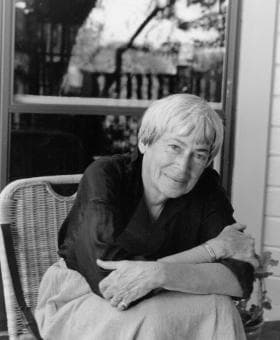
Ursula Kroeber Le Guin was an American author best known for her works of speculative fiction, including science fiction works set in her Hainish universe, and the Earthsea fantasy series. She was first published in 1959, and her literary career spanned nearly sixty years, producing more than twenty novels and over a hundred short stories, in addition to poetry, literary criticism, translations, and children's books. Frequently described as an author of science fiction, Le Guin has also been called a "major voice in American Letters". Le Guin said she would prefer to be known as an "American novelist".
Similar books
- Walden Two
B.F. Skinner
3.5 (6k) average on GoodreadsPsychologyExplores a utopian society with a focus on social engineering and psychological principles.
- Brave New World
Aldous Huxley
4.0 (1.4M) average on GoodreadsFantasyExamines a highly structured society and its implications for individuality and freedom, though with a different ideological foundation.
- News from Nowhere
William Morris
3.3 (3k) average on GoodreadsDepicts a utopian, post-scarcity society with anarchist undertones, focusing on art and community.
- Ecotopia
Ernest Callenbach
3.6 (4k) average on GoodreadsPoliticsCallenbach's Ecotopia (1975) envisions a secessionist Pacific Northwest that has developed an ecologically sustainable and socially progressive society. Like The Dispossessed, it presents an alternative to mainstream Western capitalism and explores themes of community and environmentalism. However, Ecotopia tends to be more overtly celebratory and less critical of its own utopian design. Callenbach's Ecotopia is largely successful and stable, whereas Le Guin's Anarres is perpetually struggling, facing internal dissent, scarcity, and the psychological burden of its ideals. Le Guin's exploration of anarchism is more complex and less romanticized, highlighting the continuous effort required to maintain such a society, making it a more 'realistic' utopia in its imperfections than Callenbach's vision.
- 1984
George Orwell
4.2 (3.1M) average on GoodreadsPoliticsIn a future where surveillance and thought control are absolute, a man's search for truth clashes with the Party, showing that hope can be a form of rebellion.
- Animal Farm
George Orwell
4.0 (2.7M) average on GoodreadsPoliticsA farm animals' rebellion against humans turns into a pig-led dictatorship, showing how power corrupts and revolutionary ideals are betrayed.






Enjoyed the summary?
A summary gives you the shape of the book. The book itself has the detail, the examples and the voice.
Find The Dispossessed on AmazonAs an Amazon Associate, BookBrief earns from qualifying purchases. How we're funded