
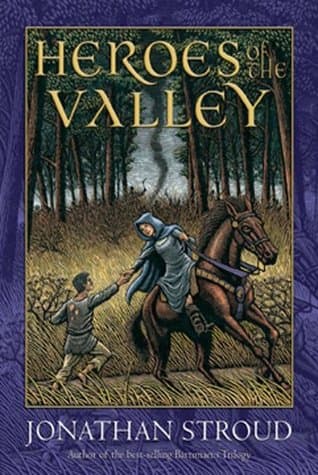
Synopsis
Covers the whole plot, including the ending.
- Difficulty
- Medium
- Pacing
- Moderate
- Mood
- Adventurous, Mythic, Introspective, Slightly Dark
- Read it if
- You enjoy coming-of-age stories with a hero's journey, a blend of traditional fantasy adventure and a touch of historical fiction, and a protagonist who learns that heroism isn't always what it seems.
- Skip it if
- You prefer high-stakes epic fantasy with complex magic systems, a fast-paced plot from the very beginning, or a story without significant moral ambiguity.
Heroes of the Valley Plot Summary
Covers the whole plot, including the ending.
Halli's Impulsive Challenge
Halli Sveinsson, a restless and small boy from the House of Svein, is bored with the Valley's peaceful life. Wanting adventure and to prove himself, he impulsively throws a rock at the window of the House of Hakon during a feast, hitting Hakon Thorkellson. This act, a serious break of the Valley's strict laws against violence, leads to a hearing before the Council. Halli receives a reprimand, and his mother, Aud, feels deep shame. At the hearing, the Old Mother, a seer, warns Halli that he will face a 'Nine-Day Night,' 'kill a hero,' and 'become one himself,' a prophecy that unsettles everyone.
The Arrival of the Strangers
Soon after Halli's incident, two strangers, Ragnar and Pipa, arrive in the Valley. They claim to be traders from beyond the mountains, a place the Valley folk rarely visit. Ragnar, a large man, brags about his fighting skills and knowledge of the Trows, monsters from old legends. Pipa, quieter, is observant and carries a carved wooden bird. Their arrival causes curiosity and fear among the Valley houses, as the Trows are believed to be long gone, just children's stories. Ragnar's tales of the Trows' return outside the Valley begin to create doubt and worry about the Valley's long peace.
The Disappearance of Aud and the Search
One morning, Halli's mother, Aud, disappears without a trace. The House of Svein and the other houses search the Valley, but Aud is nowhere. The Council is confused, unable to explain her sudden absence. Halli, filled with grief and guilt over his recent behavior, is set on finding her. His cousin, Groa, a practical and clever girl, secretly agrees to help him. Together, they decide to go beyond the Valley's known borders, believing Aud must have gone into the forbidden lands outside, despite the dangers they've heard about.
Encountering the Trows
As Halli and Groa venture into the wilderness, they quickly find that the Trow legends are real. They encounter a group of these monstrous, shadowy creatures, barely escaping. During their escape, Ragnar and Pipa unexpectedly help them, revealing they are experienced Trow hunters. Ragnar shows his combat skills against the creatures, confirming his image as a strong warrior. Pipa, meanwhile, shows surprising knowledge of the land and the Trows' weaknesses. They explain that the Trows have indeed returned and pose a threat to all human settlements.
The Truth About Aud and the Trows' Plan
Ragnar and Pipa reveal that Aud was taken on purpose by the Trows. They explain that the Trows are not just mindless beasts but are organized and led by a powerful Trow-Lord. The Trows plan to use Aud, who knows about the Valley's defenses and hero burial sites, to break the Valley's protective wards and attack its people. Halli is devastated by this news, understanding the true seriousness of his mother's abduction. He becomes even more determined to rescue her and protect his home, realizing the Valley's peace is in danger.
Return to the Valley and the Council's Reaction
Halli, Groa, Ragnar, and Pipa return to the Valley to warn the Council and the people of the coming Trow invasion. Halli, despite his youth and past mistakes, passionately tells of their encounters with the Trows and the danger ahead. However, the Valley elders, used to generations of peace and skeptical of outside threats, struggle to believe the warnings' severity. They view Ragnar and Pipa with suspicion, questioning their reasons and origins. Fear and denial stop the Council from acting, showing the Valley's unreadiness for true conflict after centuries of calm.
The Nine-Day Night Begins
As the Old Mother predicted, the 'Nine-Day Night' begins. The Trows launch a large, coordinated attack, overwhelming the Valley's outer defenses. The peaceful people, unprepared for such brutality, fall into chaos. Many are captured or killed. The House of Svein and other houses barricade themselves, trying to fight off the relentless attacks. Ragnar and Pipa, with a few brave Valley warriors, lead the defense, but the Trows' numbers and ferocity are too much. Halli, seeing the destruction, feels the weight of his earlier actions and the prophecy, understanding the true cost of violence.
The Unveiling of Ragnar's Treachery
During the Trow siege, a shocking betrayal comes to light. Ragnar, who had presented himself as a savior, is working with the Trows. He tries to deliver Aud to the Trow-Lord, planning to use her knowledge to dismantle the Valley's ancient protections. His real goal is to gain power by helping the Trows conquer. Pipa, who had been an unwitting helper, is horrified by Ragnar's treachery and sides with Halli. This reveal shatters Halli's view of heroism and trust, forcing him to face the complex nature of good and evil.
Halli's Desperate Plan and the Heroes' Graves
With Ragnar's betrayal and the Valley nearing collapse, Halli realizes that normal fighting won't work. Remembering the legends of ancient heroes and their powerful items, he plans a desperate move. He believes that the relics buried with the heroes in their tombs might hold the key to defeating the Trows. With Groa and Pipa's help, Halli goes into the forbidden burial mounds, a place of reverence and fear for the Valley folk. He confronts the spirits of the dead heroes, seeking their help and the weapons that once defeated the Trows, hoping to honor their legacy.
The Confrontation and the Death of a Hero
Halli, now armed with an ancient hero's sword, confronts Ragnar in a final battle. Ragnar, a strong warrior, represents the 'hero' the prophecy spoke of—a hero of the old, violent ways, though a traitor. Halli, despite his inexperience, fights with courage and resolve, driven by his wish to protect his family and home. In a brutal struggle, Halli defeats and kills Ragnar, fulfilling the Old Mother's prophecy. This act is a turning point for Halli, making him accept the violence he once avoided, but doing so for a greater good.
Defeating the Trow-Lord
After Ragnar's death, Halli, Pipa, and Groa confront the Trow-Lord. Halli uses the ancient hero's sword and his understanding of the Trows' weaknesses, learned from Pipa and the legends, to battle the powerful creature. He shows not just physical bravery but also strategic thinking, outmaneuvering the Trow-Lord. The Trow-Lord is a strong enemy, but Halli's mix of ancient power and growing courage leads to its defeat. The Trow-Lord's fall breaks the remaining Trow forces, ending the Nine-Day Night and saving the Valley from total destruction.
Aftermath and a New Beginning
With the Trows defeated and Aud rescued, the Valley slowly recovers from the destruction. Many lives are lost, and the land is scarred, but the people are safe. Halli, though marked by the experience, is no longer the reckless boy he once was. He has fulfilled the prophecy, becoming a hero, but not as he first imagined. He understands that heroism is not just about glory and violence, but about responsibility, sacrifice, and protecting one's home. The Valley now faces rebuilding, and Halli, with Groa and Pipa, will help shape its future, using the lessons from the Nine-Day Night.
Heroes of the Valley Characters
Halli Sveinsson
Protagonist
A restless and impulsive boy who yearns for adventure and becomes an unlikely hero.
Halli is a small, often underestimated boy from the peaceful House of Svein. He is bored with the Valley's quiet life and constantly seeks excitement, often getting into trouble due to his impulsiveness and desire to prove himself. He initially romanticizes the ancient heroes and their violent deeds, wishing for a similar glorious destiny. Despite his recklessness, he possesses a strong sense of loyalty, particularly towards his mother, Aud. His journey forces him to confront the harsh realities of violence and true heroism.
Relationships: Aud (Devoted son, deeply loves and seeks to protect his mother.); Groa (Cousin and close companion, shares a bond of trust and mutual support.); Ragnar (Initially views him as a heroic figure, later becomes his betrayer and enemy.); Pipa (Forms a bond of trust and alliance, learns from her knowledge of the outside world.)
Groa
Supporting
Halli's pragmatic and resourceful cousin who accompanies him on his journey.
Groa is Halli's cousin, a practical, intelligent, and level-headed girl. She is grounded in reality and often acts as a foil to Halli's impulsiveness, providing common sense and strategic thinking. She is loyal and brave, willing to venture into dangerous territory to help Halli and protect their family. Groa is adept at observation and problem-solving, skills that prove invaluable during their encounters with the Trows and other challenges. She represents a different kind of strength, one based on wit and resilience rather than brute force.
Relationships: Halli Sveinsson (Cousin and trusted companion, provides practical support and guidance.); Aud (Family member, shares a concern for her well-being.)
Aud
Supporting
Halli's mother, a wise and gentle woman with hidden knowledge.
Aud is Halli's mother, a kind and nurturing woman who embodies the peaceful values of the Valley. She is respected within the House of Svein and is deeply shamed by Halli's initial misbehavior. Aud possesses a hidden depth of knowledge about the Valley's history, its ancient wards, and the legends of the heroes, which becomes crucial to the Trows' plans. Her capture serves as a major catalyst for Halli's journey. She represents the innocent vulnerability of the Valley and the strength that can be found in quiet wisdom.
Relationships: Halli Sveinsson (Loving mother, source of inspiration and motivation for Halli.); Ragnar (Captive of Ragnar, who seeks to exploit her knowledge.)
Ragnar
Antagonist
A charismatic but treacherous warrior who initially appears as a savior.
Ragnar is a large, imposing man who arrives in the Valley claiming to be a Trow hunter. He is charismatic, boastful, and possesses impressive combat skills, quickly garnering admiration and fear. He exploits the Valley's ignorance of the outside world and its peaceful nature. Ragnar embodies the 'hero' of old legends, but his heroism is ultimately revealed to be a facade for his ambition and treachery. He seeks power and is willing to betray anyone to achieve his goals, representing the darker side of traditional heroic ideals.
Relationships: Halli Sveinsson (Initially a mentor figure, later a bitter enemy and betrayer.); Pipa (Travel companion, eventually betrayed by him.); Trow-Lord (Secretly allied with the Trow-Lord for personal gain.)
Pipa
Supporting
A mysterious and knowledgeable woman who aids Halli against the Trows.
Pipa is Ragnar's traveling companion, initially quiet and observant. She is skilled in tracking, survival, and has extensive knowledge of the Trows and the wilderness beyond the Valley. Unlike Ragnar, she is not boastful but acts with quiet competence. Pipa holds a moral compass that eventually leads her to side with Halli against Ragnar's treachery. She represents the true, practical heroism needed for survival and is a source of crucial information and guidance for Halli, helping him understand the real dangers and how to combat them.
Relationships: Halli Sveinsson (Trusted ally and guide, shares knowledge and skills.); Ragnar (Travel companion, later abandons him due to his treachery.)
Old Mother
Supporting
The ancient seer of the Valley who delivers cryptic prophecies.
The Old Mother is a very ancient woman, revered and feared for her prophetic abilities. She is a shadowy figure who appears at key moments to deliver cryptic warnings and predictions, most notably about Halli's 'Nine-Day Night' and his destiny to 'kill a hero' and 'become one himself.' Her prophecies often seem contradictory or obscure but ultimately prove true. She embodies the ancient wisdom and mystical elements that underpin the Valley's history and its connection to the heroes of the past.
Relationships: Halli Sveinsson (Prophet who foretells Halli's destiny.)
Trow-Lord
Antagonist
The leader of the Trows and the ultimate threat to the Valley.
The Trow-Lord is the intelligent and malevolent leader of the Trows. Unlike the common Trows, which are often depicted as brutish monsters, the Trow-Lord exhibits cunning and strategic planning, orchestrating the invasion of the Valley. It seeks to exploit Aud's knowledge to dismantle the Valley's ancient defenses and reclaim the land. The Trow-Lord represents the ultimate external threat, a force of ancient evil that challenges the very foundation of the Valley's peaceful existence and forces its inhabitants to confront the darkness they had long ignored.
Relationships: Ragnar (Secretly allied with Ragnar to achieve its goals.); Aud (Seeks to exploit Aud's knowledge for its invasion plans.)
Hakon Thorkellson
Supporting
An elder of the House of Hakon, victim of Halli's initial mischief.
Hakon Thorkellson is an elder from the House of Hakon, a neighboring house to Svein. He is an example of the peaceful, law-abiding citizens of the Valley, accustomed to resolving disputes through the Council rather than violence. His injury at Halli's hand serves as the initial catalyst for Halli's journey and highlights the Valley's strict adherence to its non-violent code. He represents the established order and the initial shock and disapproval of Halli's actions.
Relationships: Halli Sveinsson (Initial victim of Halli's mischief, leading to Council proceedings.)
Heroes of the Valley Themes
The Nature of Heroism
The novel explores how heroism is redefined beyond old ideas of violence and glory. Halli first admires ancient heroes for their fighting skill, but his journey teaches him that true heroism involves sacrifice, responsibility, and protecting his community, often requiring tough moral choices. Ragnar shows the old, flawed idea of a hero—strong and charming, but ultimately selfish and deceitful. Halli, in contrast, becomes a hero not by seeking fame, but by facing his fears and making choices for the greater good, even if it means using the violence he first romanticized, as seen when he defeats Ragnar and the Trow-Lord.
“A hero is not just a man who kills Trows, boy. A hero is a man who saves his people, no matter the cost to himself.”
The Dangers of Naive Pacifism
The Valley's long peace has made its society unable to handle outside threats. Their strict non-violence and dismissal of old legends as mere stories leave them open to the Trows. This theme shows that while peace is good, a complete refusal to defend oneself can lead to ruin. The Valley's initial disbelief and unreadiness for the Trow invasion, despite Halli and Pipa's warnings, illustrate this danger. The 'Nine-Day Night' forces the Valley to face the harsh truth that some threats cannot be solved peacefully, requiring a new look at their pacifist ideals.
“We have forgotten the old ways, the ways of fighting. We have forgotten what lies beyond the mountains.”
Coming of Age and Self-Discovery
Halli's journey is a classic coming-of-age story. He starts as a restless, impulsive boy seeking adventure and praise, but by facing great danger, betrayal, and loss, he grows significantly. His quest to find his mother and protect his home makes him confront his own fears, make hard choices, and understand the results of his actions. He learns that true strength comes not just from physical ability but from courage, loyalty, and wisdom. His change from a mischievous child to a leader who understands his world's complexities is central to the story, ending with his acceptance of his role as a new kind of hero for the Valley.
“He was no longer just Halli Sveinsson, the boy who threw a rock. He was Halli, who had seen the Trows, who had faced a betrayer, and who had chosen to stand for his people.”
The Weight of History and Legend
The Valley is full of legends about its ancient heroes, but over time, these stories have been cleaned up and their true, violent context forgotten. The novel explores how history can be misunderstood or ignored, leading to a false sense of security. Halli's initial romantic view of the heroes clashes with the grim reality of the past. The Trows' return forces the Valley to reconnect with its history, not as comforting tales but as warnings and sources of forgotten knowledge. The heroes' tombs and relics become important, representing the power and wisdom of the past that must be understood and used now.
“The heroes were not gentle men, boy. They were killers. And sometimes, killers are needed.”
Plot Devices & Literary Techniques
The Prophecy of the Old Mother
A cryptic prediction that foreshadows Halli's journey and destiny.
The Old Mother's prophecy—that Halli will face a 'Nine-Day Night,' 'kill a hero,' and 'become one himself'—serves as a powerful narrative device. It creates suspense and provides a framework for Halli's character arc. Each element of the prophecy is eventually fulfilled, but often in unexpected ways, challenging Halli's and the reader's initial interpretations of what a 'hero' truly means. It adds a layer of destiny and ancient wisdom to the story, tying Halli's personal journey into the larger, mythical history of the Valley.
The Ancient Heroes' Barrows and Relics
Burial mounds containing the weapons and spirits of the Valley's legendary figures.
The barrows of the ancient heroes are central to the plot, representing both a revered past and a source of forgotten power. They are initially forbidden places, symbolizing the Valley's deliberate detachment from its violent history. Halli's decision to enter them signifies his embrace of the past's harsher realities and his willingness to use the tools of violence for defense. The relics, particularly the hero's sword, are not merely magical items but symbols of the legacy Halli must contend with and ultimately adapt for a new kind of heroism.
The Nine-Day Night
A prolonged period of darkness and siege by the Trows, fulfilling a prophecy.
The 'Nine-Day Night' is both a literal event—a sustained Trow invasion—and a symbolic period of intense trial and transformation for Halli and the Valley. It marks the complete breakdown of the Valley's peaceful existence and forces its inhabitants to confront the brutal realities of the outside world. The extended duration of the siege emphasizes the Valley's vulnerability and the depth of the challenge they face, serving as the crucible in which Halli's heroism is forged and the Valley's future is determined.
The Valley's Peaceful Laws
Strict rules against violence that shape the Valley's society and its vulnerabilities.
The Valley's laws prohibiting violence and settling all disputes by the Council are a foundational plot device. They define the society Halli grows up in, explaining his initial boredom and the severe consequences of his rock-throwing incident. These laws highlight the Valley's isolation and its unpreparedness for external threats, making the Trow invasion even more devastating. The gradual erosion and eventual necessity of breaking these laws during the 'Nine-Day Night' underscore the theme of naive pacifism and the difficult choices required for survival.
Heroes of the Valley Quotes
“The gods have no names, and the dead no tales. We are born, we live, we die. What else is there?”
“A hero is someone who does what's right, even when it's hard, even when it's unpopular, even when no one else is watching.”
“Stories are powerful things, boy. They can build a reputation, or they can tear one down. They can make a man a hero, or a villain.”
“It’s easy to be brave when everyone is cheering for you. The real test is when they’re not.”
“Sometimes the greatest victories are not won with a sword, but with a word.”
“The past is a heavy cloak, boy. Don’t let it smother you.”
“Fear is a useful thing, if you know how to use it. It tells you what to avoid, and it tells you what to fight.”
“There are always other ways, if you’re brave enough to look for them.”
“The world doesn't care about your legends, boy. It cares about what you do.”
“Even the greatest heroes start somewhere small. It’s the journey that makes them great, not the beginning.”
“Sometimes the monsters are not in the wild places, but in the hearts of men.”
“The truth is rarely as simple as the stories make it out to be.”
“It’s one thing to hear the old tales, another thing entirely to live your own.”
“You don't always have to be the strongest, or the fastest. Sometimes, you just have to be the smartest.”
Quiz
10 questions on the plot and the characters. Each answer comes with a short explanation.
Question 1
Which House does Halli Sveinsson belong to?
- House of Hakon
- House of Svein
- House of Gunnlaug
- House of Grettir
Show answer
B. House of Svein Halli Sveinsson is a descendant of Svein, one of the original heroes, and belongs to the House of Svein.
Question 2
What is the primary method for settling disputes in Halli's society?
- Trial by combat
- Duels between champions
- Consulting the Oracle
- The Council
Show answer
D. The Council Halli's society has outlawed violence, and disputes are settled peacefully by the Council.
Question 3
What is Halli's primary motivation for leaving the Valley?
- To find a lost treasure
- To escape a forced marriage
- To prove himself a hero and live up to the legends
- To seek out foreign lands and trade
Show answer
C. To prove himself a hero and live up to the legends Halli, despite his society's peaceful ways, is obsessed with the old hero legends and longs to emulate their deeds.
Question 4
Who is the 'Last of the Longcoats' and a significant figure Halli encounters outside the Valley?
- Kroka the Witch
- Aud the Warrior
- Ragnar the Trader
- The outlaw Raud
Show answer
D. The outlaw Raud Raud is a notorious outlaw, described as 'the Last of the Longcoats,' who represents the old, violent ways Halli's society has abandoned.
Question 5
What specific item does Halli initially steal that sets off a chain of events and his eventual banishment?
- A valuable gold ring from his mother
- A ceremonial sword from the House of Hakon
- A magical amulet from the Council chambers
- A rare book of hero legends from the Elder
Show answer
B. A ceremonial sword from the House of Hakon Halli steals a ceremonial sword from the rival House of Hakon, leading to a feud and his banishment from the Valley.
Question 6
What is the main reason the people of the Valley stopped practicing the violent ways of their ancestors?
- They were defeated in a great war and forced to disarm.
- A divine prophecy forbade all forms of combat.
- The endless feuds and bloodshed nearly destroyed their society.
- They discovered a new, more effective form of long-distance communication.
Show answer
C. The endless feuds and bloodshed nearly destroyed their society. The legends describe a time when the heroes' constant feuding and violence brought their society to the brink of ruin, leading to the establishment of the peaceful Council.
Question 7
How does Halli's understanding of heroism evolve by the end of the story?
- He realizes that true heroism only comes from achieving personal glory in battle.
- He learns that heroism is about protecting his community and making difficult, selfless choices, not just individual feats of strength.
- He concludes that heroism is an outdated concept with no place in modern society.
- He decides that the only true heroes are those who can manipulate others to achieve their goals.
Show answer
B. He learns that heroism is about protecting his community and making difficult, selfless choices, not just individual feats of strength. Halli initially equates heroism with the violent, individualistic feats of the old legends, but through his experiences, he comes to understand that true heroism involves responsibility, sacrifice, and protecting his community.
Question 8
What is the significance of the 'Longcoats' in the context of the Valley's history and Halli's journey?
- They are a group of benevolent traders who bring goods to the Valley.
- They represent the ancient, wild, and violent past that the Valley has rejected.
- They are the original founders of the peaceful Council.
- They are mythical creatures rumored to live in the mountains.
Show answer
B. They represent the ancient, wild, and violent past that the Valley has rejected. The Longcoats are a remnant of the old, violent ways of the heroes, living outside the Valley and representing the danger and savagery that Halli's society has tried to leave behind.
Question 9
What role does Halli's cousin, Aud, play in his journey and personal growth?
- She is a constant source of ridicule and hindrance to his ambitions.
- She acts as a loyal companion, a voice of reason, and a capable fighter who challenges his narrow view of strength.
- She betrays him to his enemies for personal gain.
- She is a mystical guide who reveals prophecies to him.
Show answer
B. She acts as a loyal companion, a voice of reason, and a capable fighter who challenges his narrow view of strength. Aud is Halli's steadfast companion, often more practical and skilled than him, and her presence challenges his perception of heroism as solely a male, violent endeavor. She provides balance and support.
Question 10
How does the author use the structure of the narrative (e.g., interspersed legends) to enhance the story's themes?
- The legends serve only as irrelevant historical footnotes.
- The legends provide comic relief from the main plot.
- The legends directly parallel Halli's actions, showing how he repeats the mistakes of the past without realizing it.
- The legends contrast with Halli's reality, highlighting the differences between mythical heroism and practical responsibility, and revealing the flawed nature of the 'heroes'.
Show answer
D. The legends contrast with Halli's reality, highlighting the differences between mythical heroism and practical responsibility, and revealing the flawed nature of the 'heroes'. The interspersed legends of the old heroes often show them as flawed, violent, and self-serving, contrasting sharply with the true challenges Halli faces and forcing him (and the reader) to re-evaluate what heroism truly means beyond the myth.
Heroes of the Valley FAQ
What is the central conflict Halli Sveinsson faces at the beginning of the story?
Halli Sveinsson grapples with the mundane reality of his peaceful valley life, which starkly contrasts with the thrilling, violent hero legends he's been raised on. He feels a deep dissatisfaction with the farming and lack of adventure, yearning for the glory and excitement depicted in the sagas of his ancestors, particularly his namesake, Halli the first.
Who are the 'Heroes' mentioned in the title, and what role do their stories play in the valley's culture?
The 'Heroes' are the legendary figures from the valley's violent past, such as Halli the first, Aud, and Grettir, whose epic deeds of battle and vengeance are recounted in sagas. These stories form the bedrock of the valley's cultural identity, teaching history and values, even as the present society has outlawed the very violence they celebrate.
What event triggers Halli's departure from the traditional valley life?
Halli's impulsive act of attempting to steal a pig from the neighboring House of Hakon, a prank intended to impress the girls, escalates into a violent confrontation with a Hakon boy. This forbidden act of aggression, a direct violation of the valley's peace, forces him to flee to avoid severe punishment from the Council.
Who is Aud, and how does her presence challenge Halli's understanding of heroism?
Aud is a fierce, independent girl from the House of Hakon who initially appears as Halli's rival and later becomes his reluctant companion. She possesses practical survival skills and a pragmatic view of the world, often scoffing at Halli's romanticized notions of heroism, which forces him to reconsider what true bravery entails beyond mere fighting.
What is the significance of the 'Beast' in the deeper lore of the valley?
The 'Beast' is a recurring antagonist in the old sagas, often depicted as a monstrous entity that the heroes of the valley fought and defeated. It represents not just a physical threat but also the chaotic, untamed forces that the heroes' violence was supposedly necessary to subdue, shaping the valley's understanding of danger and protection.
How do the 'Little People' differ from the humans in the valley, and what is their historical relationship?
The 'Little People' are a distinct, smaller race with their own ancient culture and deep knowledge of the land, often perceived as mischievous or dangerous by humans. Historically, their relationship with the valley's human inhabitants has been fraught with conflict and misunderstanding, marked by ancient wars and uneasy truces, a history often romanticized or demonized in human sagas.
What is the true nature of the 'Beast' that Halli encounters, and how does it connect to the past?
The 'Beast' Halli encounters is revealed to be a member of the 'Little People,' specifically a powerful, ancient warrior who was grievously wronged by the human heroes of old. This revelation shatters Halli's simplistic understanding of good versus evil from the sagas, exposing the human heroes' less noble actions and the long-standing cycle of vengeance.
How does the story subtly suggest that the 'heroes' of old were not always honorable figures?
The narrative subtly deconstructs the glorified image of the old heroes by revealing their brutality, greed, and the injustices they inflicted upon the 'Little People.' For instance, the 'Beast's' backstory exposes how Halli the first and his kin were responsible for the destruction of the 'Little People's' homes and the theft of their sacred artifacts, painting a far less heroic picture than the sagas suggest.
What is the significance of the 'stone' that Halli carries, and what does it represent?
The 'stone' is a piece of polished obsidian or similar volcanic rock, traditionally carried by members of the House of Svein as a symbol of their lineage and a reminder of their ancestral heroes. It represents Halli's connection to his past, his yearning for glory, and initially, his adherence to the romanticized ideals of heroism before he understands its true, often darker, history.
How does Halli's journey reflect a common adolescent struggle with identity and inherited legacy?
Halli's journey mirrors the adolescent struggle of reconciling personal desires with inherited expectations and societal norms. He initially tries to define himself by the glorious, albeit violent, legacy of his ancestors, only to discover that true identity requires forging one's own path and critically evaluating the past, rather than blindly emulating it.
In what ways does Aud act as a foil to Halli, highlighting his immaturity and idealism?
Aud's pragmatic, resourceful, and often cynical nature starkly contrasts with Halli's naive idealism and romanticized view of heroism. She frequently challenges his assumptions, points out the folly of his actions, and grounds him in reality, forcing him to confront the practical consequences of his choices rather than just their perceived glory.
How does Halli's understanding of 'courage' evolve throughout the book?
Initially, Halli equates courage with physical prowess, violence, and the grand deeds of battle described in the sagas. As his journey progresses, he learns that true courage encompasses empathy, self-sacrifice, challenging ingrained beliefs, making difficult moral choices, and enduring hardship for the greater good, often without glory or recognition.
What psychological impact does the valley's enforced peace have on its inhabitants, particularly the youth?
The valley's enforced peace, while preventing overt violence, creates a simmering undercurrent of frustration and a romanticization of the forbidden past, particularly among the youth like Halli. It fosters a longing for excitement and a disconnect between the peaceful present and the glorified violent history, leading to impulsive acts and a lack of understanding of true conflict.
Is the ending of the book optimistic or melancholic regarding the future of the valley?
The ending presents a nuanced perspective, leaning towards a cautiously optimistic future for the valley, but with a melancholic acknowledgment of the past's enduring scars. While Halli brings a new understanding and hope for reconciliation, the ingrained prejudices and the cycle of vengeance are not entirely broken, suggesting a long, difficult path ahead for true peace.
How does the author use the sagas and oral tradition to comment on the nature of history and truth?
Stroud uses the sagas to illustrate how history is often subjective, shaped by the victors, and prone to romanticization and distortion. By presenting a 'true' version of events that contradicts the glorified sagas, he comments on how oral traditions can preserve cultural identity but also perpetuate biases and suppress inconvenient truths, challenging readers to question official narratives.
What is the ultimate message about revenge that the book conveys?
The book ultimately conveys that revenge is a destructive, self-perpetuating cycle that harms both the avenger and the avenged, leading to endless suffering and preventing true peace. Halli's realization that the 'Beast's' vengeance stems from legitimate historical wrongs, and his own attempt to break the cycle, highlight the futility and moral bankruptcy of seeking retribution.
To what extent does the book challenge traditional notions of 'good' and 'evil' in fantasy literature?
The book significantly challenges traditional notions of 'good' and 'evil' by demonstrating that neither humans nor the 'Little People' are inherently good or bad. It reveals the human heroes' past atrocities and the 'Beast's' understandable motivations for revenge, forcing the reader to confront the moral ambiguity of all characters and the subjective nature of historical narratives, moving beyond simplistic binaries.
How does Halli's relationship with the 'Little People' evolve, and what does it symbolize?
Halli's relationship with the 'Little People' evolves from initial fear and ingrained prejudice to a gradual understanding, empathy, and eventual alliance. This evolution symbolizes the breaking down of generational biases and the possibility of inter-species reconciliation, representing a hope for peaceful coexistence forged through mutual respect and a willingness to confront historical injustices.
About the author

Jonathan Stroud is a British author known for his work in children's and young adult fiction. His notable books include "Lockwood & Co.: The Empty Grave," "The Whispering Skull," and "The Amulet of Samarkand," which is part of the Bartimaeus series. Stroud's writing often features elements of fantasy and adventure, appealing to a wide range of readers.
Similar books
- The Hobbit, or There and Back Again
J.R.R. Tolkien
4.3 (2.9M) average on GoodreadsFantasyFeatures a reluctant hero embarking on an unexpected journey to confront ancient evils and discover his own courage.
- Eragon
Christopher Paolini
3.9 (1.4M) average on GoodreadsFantasyA young protagonist from a quiet village is thrust into a larger world of conflict and learns about his destiny and the nature of heroism.
- A Wizard of Earthsea
Ursula K. Le Guin
4.0 (241k) average on GoodreadsFantasyLe Guin's classic also features a young, arrogant protagonist, Ged, whose impulsive actions lead to significant consequences, forcing him on a journey of self-discovery. Both authors explore themes of responsibility and identity. However, Le Guin's narrative is more philosophical and focused on the balance of the world and the internal struggles of power and shadow, while Stroud's work is more concerned with the social construction of history and the re-evaluation of communal myths. Stroud's world feels more grounded in a specific historical/cultural tradition, whereas Earthsea is a more purely fantastical creation.
- Harry Potter and the Sorcerer's Stone
J.K. Rowling
4.5 (7M) average on GoodreadsFantasyRescued from a miserable life under the stairs, an orphaned boy discovers he's a wizard destined for a magical school, where he uncovers a dangerous secret tied to the dark wizard who murdered his parents.
- The Hunger Games
Suzanne Collins
4.3 (6.4M) average on GoodreadsFantasyIn a future where children fight to the death on live television, Katniss Everdeen volunteers for the arena, turning a death sentence into a fight for survival and a spark of rebellion.
- 1984
George Orwell
4.2 (3.1M) average on GoodreadsPoliticsIn a future where surveillance and thought control are absolute, a man's search for truth clashes with the Party, showing that hope can be a form of rebellion.





Enjoyed the summary?
A summary gives you the shape of the book. The book itself has the detail, the examples and the voice.
Find Heroes of the Valley on AmazonAs an Amazon Associate, BookBrief earns from qualifying purchases. How we're funded