
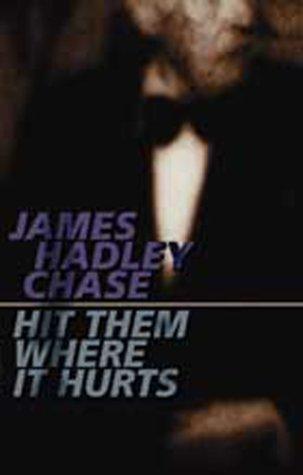
Synopsis
Covers the whole plot, including the ending.
- Difficulty
- Medium
- Pacing
- Fast
- Mood
- Gritty, Suspenseful, Tense, Cynical
- Read it if
- you enjoy classic hardboiled crime fiction, thrillers with a professional assassin protagonist, intricate plots with unexpected twists, and a gritty, no-nonsense narrative style.
- Skip it if
- you prefer character-driven dramas over plot-driven thrillers, are sensitive to violence, or dislike stories with morally ambiguous protagonists.
Hit Them Where It Hurts (Popular Series) Plot Summary
Covers the whole plot, including the ending.
The Proposal
Frank O'Brien, a charming but broke playboy, lives with his beautiful mistress, Jill. Despite their rich lifestyle, Frank's inheritance is shrinking, and he has a lot of debt. To fix their money problems, he suggests a bold plan: to rob a heavily guarded armored car carrying a large payroll from a bank. Jill is first shocked and hesitant, knowing the extreme danger. Frank, though, is convincing and confident, describing a perfect, foolproof scheme that will set them up for life, letting them escape their growing troubles and live in luxury forever. He stresses the careful planning he has already done, trying to calm her fears and convince her the plan will work and bring them freedom.
Recruiting the Team
Convinced by Frank's charm and the promise of a huge fortune, Jill reluctantly agrees. Frank then starts finding the muscle needed for the job. He contacts Max, a ruthless and experienced safecracker and gunman, known for his cold efficiency. Max, in turn, brings in Kelly, a younger, equally dangerous, and unstable person. Frank carefully explains the plan to them, stressing the precision needed and the large share each will get. While Max doubts Frank's 'gentleman' thief persona, the sheer amount of money and the detailed planning convince him to join. Kelly, always eager for action and money, quickly agrees, though his unpredictable nature is hinted at.
The Meticulous Plan
Frank reveals the detailed parts of his plan. He has carefully studied the armored car's route, timings, and security. The target is a specific payroll delivery known for carrying a lot of cash. The plan involves ambushing the vehicle at a remote, pre-chosen spot, quickly disabling the guards, and then making a clean escape. He has even thought about possible police responses and escape routes, ensuring multiple backup plans. Frank's confidence is almost arrogance, as he believes he has considered every possible factor. He gives specific roles to Max and Kelly, using their skills, while he and Jill will handle the logistics and aftermath. The team begins to practice key parts of the plan, in a simulated setting, to ensure perfect coordination.
The Ambush
The day of the robbery arrives. The team executes the first parts of the plan perfectly. They stop the armored car at the chosen spot, using a planned diversion. However, the guards are tougher than expected. A violent shootout happens, and while Max and Kelly manage to stop the guards, Kelly gets a minor injury. The unexpected resistance messes up Frank's 'perfect' plan, causing a brief moment of panic and forcing them to act faster than planned. Despite the problem, they get into the armored car and secure the bags of cash, but the control Frank had shown earlier starts to waver under the pressure of real violence.
The Getaway and Initial Success
With the money secured, the team escapes, following Frank's planned routes. They switch vehicles multiple times, trying to shake off any pursuit. Despite the earlier shootout, they reach their secluded hideout without immediate detection. The initial relief is clear, but it's quickly overshadowed by growing tensions within the group. Kelly, agitated by his injury and the violence, becomes more unstable. Max stays calm but watchful, his distrust of Frank subtly growing. Jill is visibly shaken by the brutality she saw. Frank, though outwardly confident, is bothered by the plan's deviation, realizing that real-world chaos is far less predictable than his theoretical planning.
The Safe House and Growing Paranoia
The team settles into a remote safe house, meant to be their haven until things calm down. However, the isolation and the huge crime begin to affect them. Paranoia sets in, fueled by news reports of the robbery and the wide police search. Kelly's short temper flares often, leading to arguments with Max and undermining Frank's authority. Jill, horrified by the violence and constant fear, starts to question their whole venture and Frank's judgment. Frank, desperate to keep control, tries to reassure everyone, but his own composure is cracking. The large sum of money, initially their salvation, now feels like a heavy burden, causing distrust and suspicion among them, rather than unity.
The Betrayal and Its Aftermath
Frank, never planning to share all the money, creates a new plan: to eliminate Max and Kelly once the immediate danger passes. He gets Jill's reluctant help, convincing her it's the only way to secure their future. However, Max, always smart, senses Frank's dishonesty. He turns the tables on Frank, leading to a violent fight. In the struggle, Kelly, already unstable, sides with Max. Frank's elaborate scheme falls apart completely as his attempt to betray his accomplices backfires badly. The safe house becomes a battleground of betrayal, where the hunters become the hunted, and the carefully built alliances break under the weight of greed and fear.
Jill's Desperation
Jill finds herself in an impossible situation. With Frank's betrayal exposed and his life in danger, she is caught between the ruthless Max and the increasingly unstable Kelly. Her dream of a luxurious future has become a nightmare of violence and fear. Realizing her own life is now in danger, and with no loyalty left to Frank, she makes a desperate, self-preserving decision. She tries to escape, attempting to grab some of the money for herself, hoping to disappear and start over, far from the bloodshed and the criminals. Her actions are driven by pure survival instinct, a sharp contrast to the glamorous life she once imagined with Frank.
The Confrontation and Deaths
The safe house becomes a deadly free-for-all. Max and Kelly, now openly hostile toward each other and Frank, engage in a brutal fight. Frank, despite his earlier confidence, is no match for the hardened criminals. Kelly's unpredictability leads to a chaotic exchange of gunfire. In the violence, Frank is killed. Max, though wounded, manages to overpower and kill Kelly. The grand plan for a clean, profitable heist ends in a bloody massacre, with only one of the original conspirators left standing amidst the carnage and the stolen money, a clear example of the dangers of greed and betrayal.
The Lone Survivor and the Aftermath
Max, the only survivor of the internal bloodshed, is wounded but alive. He gathers the remaining money, determined to escape and enjoy the spoils. However, the police, having put together clues from the robbery and the violence, are closing in. As Max tries to make his final getaway, he is ambushed by law enforcement. A final, desperate shootout occurs, and Max is either killed or captured, his dream of wealth ending in failure and death. The stolen money is recovered, and the intricate, violent plot comes to a definitive end, leaving no one to truly profit from the initial bold plan, showing the pointlessness of a life of crime.
Principal Figures
Frank O'Brien
Protagonist/Antagonist
The charismatic, cunning mastermind of the robbery.
Frank is a sophisticated, charming, and outwardly confident playboy whose luxurious lifestyle is built on rapidly dwindling inherited wealth and mounting debts. He is intelligent and meticulous, capable of planning an intricate, seemingly foolproof heist. However, beneath his polished exterior lies a ruthless pragmatism and a deep-seated arrogance that blinds him to the unpredictable nature of human greed and violence. He believes himself superior to others, particularly the criminals he employs, and views them as expendable tools.
Relationships: Jill (Mistress, accomplice); Max (Hired muscle, eventual betrayer); Kelly (Hired muscle, eventual betrayer)
Jill
Supporting
Frank's beautiful mistress, reluctantly drawn into the crime.
Jill is Frank's beautiful and initially loyal mistress, accustomed to a life of luxury and comfort. She is initially hesitant about the robbery, sensing the inherent danger, but is swayed by Frank's charm and the promise of a secure future. Throughout the ordeal, she is increasingly horrified by the violence and paranoia. She is more a victim of circumstance and Frank's manipulations than an active participant in the criminal underworld, ultimately driven by self-preservation.
Relationships: Frank O'Brien (Lover, manipulator); Max (Feared associate); Kelly (Feared associate)
Max
Antagonist
The cold, calculating, and experienced professional criminal.
Max is a hardened, professional criminal, a skilled safecracker and gunman. He is cold, pragmatic, and highly intelligent, possessing a keen sense of observation and an instinct for danger. Unlike Frank, he operates without illusions, understanding the brutal realities of his trade. He is initially skeptical of Frank but is drawn in by the money. Max is a survivor, always looking out for himself, and quick to recognize and act upon betrayal. He is less volatile than Kelly, but equally ruthless.
Relationships: Frank O'Brien (Employer, target of betrayal); Kelly (Associate, eventual enemy)
Kelly
Antagonist
The volatile, short-tempered, and unpredictable gunman.
Kelly is a younger, more impulsive, and highly volatile criminal. He is quick to anger and prone to violence, making him a dangerous and unpredictable member of the crew. While effective in action, his lack of self-control and paranoia make him a liability. He is driven by greed and a thrill for violence, often acting on instinct rather than careful thought. His instability contributes significantly to the unraveling of Frank's meticulously planned operation.
Relationships: Frank O'Brien (Employer, object of resentment); Max (Associate, rival)
Themes & Insights
The Corrupting Nature of Greed
The main theme is how the pursuit of great wealth corrupts people and ultimately destroys them. Frank's initial reason is to keep a lavish lifestyle, but the large amount of money involved in the heist brings out the worst in him and his accomplices. It fuels paranoia, distrust, and ultimately, a series of betrayals and murders, showing that the 'score' itself causes self-destruction rather than salvation.
“The money was meant to buy freedom, but all it bought was a deeper cage of suspicion and fear.”
The Illusion of Control
Frank O'Brien carefully plans every detail of the heist, believing he has thought of all factors and can control the outcome. However, the story consistently shows this belief to be false. Unexpected resistance during the robbery, the unpredictable nature of his hired criminals (especially Kelly), and Max's cleverness expose how pointless it is to try to control human greed and the chaotic reality of violence. Frank's carefully built world falls apart when faced with real-world unpredictability.
“He had planned for everything, it seemed, except for the inherent treachery of men driven by a fortune.”
Betrayal and Distrust
The story explores how trust breaks down under pressure, especially when a lot of money is involved. Frank plans to betray Max and Kelly, but Max anticipates this and turns the tables. This cycle of expected and actual betrayal creates a toxic atmosphere of distrust within the group. No one can fully trust another, leading to a violent internal conflict where alliances are brief and self-preservation becomes the only guide, ultimately leading to the death of almost everyone involved.
“In their world, loyalty was a currency that depreciated with every stack of stolen cash.”
The Inevitable Consequences of Crime
Despite the initial 'success' of the robbery, the novel consistently shows the grim results of choosing a life of crime. The characters are plagued by paranoia, fear, and violence. The dream of a comfortable, free life funded by illegal gains quickly turns into a nightmare of confinement, conflict, and death. The story is a warning, showing that even perfectly planned crimes rarely lead to the desired outcome, and that justice, in some form, always catches up to those who break the law.
“They had stolen a fortune, but in doing so, they had forfeited their lives, one way or another.”
Plot Devices & Literary Techniques
The Perfect Plan
A meticulously detailed but ultimately flawed heist strategy.
Frank O'Brien's 'perfect plan' serves as a central plot device. It is initially presented as foolproof, creating a sense of tension and anticipation for its execution. However, its 'perfection' is gradually chipped away by unforeseen circumstances and the unpredictable nature of the human element. This device highlights Frank's arrogance and the illusion of control, ultimately setting up the dramatic irony as the plan inevitably unravels, leading to chaos and violence. It underscores the theme that no amount of planning can account for all variables, especially human greed.
The Confined Setting (Safe House)
A remote hideout that becomes a pressure cooker for conflict.
The remote safe house, intended as a sanctuary, functions as a crucial plot device. Its isolation intensifies the paranoia and distrust among the characters. Trapped together with a massive sum of stolen money, the confined space acts as a pressure cooker, forcing their volatile personalities to clash. This setting prevents easy escape and external interference, allowing the internal conflicts and betrayals to escalate unchecked, leading directly to the bloody climax as their mutual suspicion boils over into violence.
Foreshadowing of Betrayal
Subtle hints and character traits signaling impending treachery.
From the outset, the narrative employs foreshadowing to hint at the inevitable betrayals. Frank's dismissive attitude towards his hired muscle, Max's shrewd observations and quiet distrust, and Kelly's volatile nature all subtly suggest that the alliances are fragile. These early indicators create a sense of unease and suspense, preparing the reader for the eventual double-crosses. This device builds tension by allowing the audience to anticipate the unraveling of the group, reinforcing the theme of inherent human perfidy when vast sums are involved.
Hit Them Where It Hurts (Popular Series) Quotes
“He was a man who knew his job and did it well, without fuss or bother. He was a killer, and he killed with the efficiency of a skilled craftsman.”
“Money is the only language that some people understand, and he spoke it fluently.”
“She was a beautiful woman, the kind that men would kill for, and she knew it.”
“He had a way of making people do what he wanted, without them realizing they were being manipulated.”
“The world is a tough place, and you have to be tougher if you want to survive.”
“He didn't believe in luck. He believed in planning, preparation, and a little bit of ruthlessness.”
“Love is a dangerous emotion in his line of work. It makes you careless, and carelessness gets you killed.”
“He had a code, of sorts. He wouldn't kill a woman or a child, but beyond that, he was fair game.”
“Trust is a luxury he couldn't afford. In his world, everyone was a potential enemy.”
“He was a ghost, a shadow that moved through the city, leaving only death and destruction in his wake.”
“When you're in the business of making people disappear, you learn to be very careful about your own tracks.”
“He was a man who lived by the gun, and he was prepared to die by it.”
“The thrill of the chase was almost as addictive as the money.”
“He collected enemies like other men collected stamps. It was a dangerous hobby.”
Quiz
10 questions on the plot and the characters. Each answer comes with a short explanation.
Question 1
What is the primary genre of the book "Hit Them Where It Hurts"?
- Romance
- Science Fiction
- Thriller/Crime Fiction
- Historical Fiction
Show answer
C. Thriller/Crime Fiction James Hadley Chase is renowned for his crime and thriller novels, often featuring fast-paced plots and morally ambiguous characters.
Question 2
Which character is typically the protagonist in a James Hadley Chase novel like this one?
- A detective investigating a crime
- An ordinary person caught in extraordinary circumstances
- A historical figure
- A space explorer
Show answer
B. An ordinary person caught in extraordinary circumstances Chase's protagonists are often individuals, sometimes criminals themselves, who find themselves entangled in dangerous situations, usually involving money or betrayal.
Question 3
What is a common theme in James Hadley Chase's writing?
- The pursuit of academic knowledge
- The corrupting influence of greed and ambition
- The struggles of everyday family life
- The exploration of philosophical concepts
Show answer
B. The corrupting influence of greed and ambition Greed, ambition, betrayal, and the often-fatal consequences of pursuing wealth are recurring themes in Chase's thrillers.
Question 4
The phrase "Popular Series" in the title likely indicates:
- It's a children's book
- It's part of a collection of related novels
- It's a critical review of popular culture
- It's a book recommended by a popular author
Show answer
B. It's part of a collection of related novels In publishing, "Popular Series" or similar phrasing often denotes that the book is part of a sequence or collection of works by the same author, often featuring recurring characters or thematic elements.
Question 5
What kind of tone is usually associated with James Hadley Chase's novels?
- Lighthearted and comedic
- Sentimental and romantic
- Dark, suspenseful, and often violent
- Educational and informative
Show answer
C. Dark, suspenseful, and often violent Chase's books are known for their gritty realism, high stakes, and often brutal plotlines, creating a consistently suspenseful and dark atmosphere.
Question 6
The title "Hit Them Where It Hurts" suggests a plot involving:
- Emotional manipulation
- Physical violence only
- Financial ruin
- Both emotional and financial attacks
Show answer
A. Emotional manipulation The phrase "where it hurts" implies striking at someone's most vulnerable points, which can encompass their emotions, finances, or other deep-seated insecurities, leading to significant damage.
Question 7
James Hadley Chase's writing style is often described as:
- Literary and introspective
- Fast-paced and direct
- Poetic and metaphorical
- Humorous and satirical
Show answer
B. Fast-paced and direct Chase's prose is typically lean, action-oriented, and focused on moving the plot forward quickly, eschewing elaborate descriptions or deep character studies.
Question 8
Considering Chase's typical narrative structure, what might a reader expect to find in "Hit Them Where It Hurts"?
- A slow build-up to a philosophical conclusion
- A series of unexpected twists and betrayals
- A detailed exploration of the protagonist's inner turmoil
- A resolution based on legal proceedings
Show answer
B. A series of unexpected twists and betrayals Chase's thrillers are characterized by their unpredictable nature, with characters often double-crossing each other and plot developments taking sharp, surprising turns.
Question 9
The phrase "popular series" might also suggest that the book is intended to appeal to a broad audience interested in:
- Complex political intrigue
- Sensational and pulpy crime stories
- Avant-garde literary experiments
- Nostalgic historical accounts
Show answer
B. Sensational and pulpy crime stories James Hadley Chase's works, often categorized as 'airport novels' or 'pulpy thrillers,' are designed for mass appeal, focusing on excitement, suspense, and straightforward crime narratives rather than intellectual complexity.
Question 10
In the context of crime fiction, what does it mean to 'hit someone where it hurts' in a more metaphorical sense?
- To inflict physical pain
- To cause emotional distress or financial loss
- To reveal a secret
- To betray trust
Show answer
B. To cause emotional distress or financial loss While physical harm can be involved, the idiom "hit them where it hurts" most often refers to attacking someone's deepest vulnerabilities, such as their pride, their loved ones, or their financial security, causing profound and lasting damage.
Hit Them Where It Hurts (Popular Series) FAQ
What is the plot of James Hadley Chase's 'Hit Them Where It Hurts'?
The novel follows a man named Steve Fagan who gets entangled in a dangerous world of crime and betrayal after a seemingly simple job goes wrong. He finds himself pursued by both the police and ruthless criminals, leading to a desperate fight for survival.
Who are the main characters in 'Hit Them Where It Hurts'?
The central character is Steve Fagan, a resourceful but often out-of-his-depth protagonist. Other key figures include the women in his life and the various dangerous individuals he encounters, such as gangsters and law enforcement officers.
What is the typical writing style of James Hadley Chase?
James Hadley Chase is known for his fast-paced, hard-boiled crime fiction. His writing is characterized by gritty realism, sudden plot twists, and a focus on suspense and danger, often featuring morally ambiguous characters.
Is 'Hit Them Where It Hurts' part of a series?
Yes, 'Hit Them Where It Hurts' is part of James Hadley Chase's extensive body of work, often considered part of his popular crime fiction output. While not always explicitly numbered, his novels share thematic and stylistic connections.
What kind of themes are explored in 'Hit Them Where It Hurts'?
The book delves into themes of greed, betrayal, desperation, and the consequences of criminal activity. It explores how ordinary people can be drawn into extraordinary and perilous situations.
Is 'Hit Them Where It Hurts' a typical thriller novel?
Yes, 'Hit Them Where It Hurts' fits squarely into the thriller genre, specifically the hard-boiled crime thriller. It's designed to keep readers on the edge of their seats with constant tension and unexpected turns.
How does 'Hit Them Where It Hurts' compare to other James Hadley Chase novels?
Like many of Chase's works, 'Hit Them Where It Hurts' delivers the signature blend of suspense, action, and morally complex characters. Readers who enjoy his other books will likely find this novel to be a characteristic example of his style.
Where can I buy 'Hit Them Where It Hurts' by James Hadley Chase?
The book is available through major online booksellers like Amazon, Barnes & Noble, and Abebooks, as well as in many physical bookstores. It may also be found in used book stores or available as an ebook.
Is 'Hit Them Where It Hurts' suitable for a new reader of James Hadley Chase?
Absolutely. 'Hit Them Where It Hurts' is a solid entry point into James Hadley Chase's bibliography. Its straightforward plot and classic Chase elements make it accessible and engaging for newcomers to his work.
What is the overall tone of 'Hit Them Where It Hurts'?
The tone is typically dark, suspenseful, and gritty, reflecting the dangerous world the characters inhabit. There's a sense of urgency and constant threat throughout the narrative.
About the author

James Hadley Chase was a British author known for his crime and thriller novels. His notable works include "No Orchids for Miss Blandish," "This Way for a Shroud," and "Goldfish Have No Hiding Place," which often explore themes of violence and moral ambiguity. Chase's writing gained popularity in the mid-20th century, particularly in the realm of pulp fiction.
Similar books
- The Killer Inside Me
Jim Thompson
3.8 (21k) average on GoodreadsThrillerFeatures a dark, morally compromised protagonist and a bleak, suspenseful atmosphere.
- The Big Sleep
Raymond Chandler
4.0 (126k) average on GoodreadsThrillerWhile both Chase and Chandler operate within the hardboiled genre, "Hit Them Where It Hurts" is more focused on plot mechanics and the unraveling of a criminal scheme, with less emphasis on the philosophical musings or the moral code of a detective. Chandler's prose in "The Big Sleep" is more poetic and evocative, and his protagonist, Philip Marlowe, is a more complex, morally upright figure navigating a corrupt world. Chase's characters are often morally compromised from the outset, driven by self-interest rather than a sense of justice.
- The Postman Always Rings Twice
James M. Cain
3.8 (32k) average on GoodreadsThrillerBoth novels explore themes of illicit passion, murder, and the desperation of individuals. However, Cain's "The Postman Always Rings Twice" delves deeper into the psychological torment and fatalistic nature of its protagonists, focusing on the inevitable consequences of their actions with a more intense, almost suffocating, sense of doom. Chase's "Hit Them Where It Hurts" maintains a faster, more action-oriented pace, with the focus more on the external machinations of the plot and the series of unfortunate events, rather than the internal decay of the characters' souls, though that is certainly present to a degree.
- Harry Potter and the Sorcerer's Stone
J.K. Rowling
4.5 (7M) average on GoodreadsFantasyRescued from a miserable life under the stairs, an orphaned boy discovers he's a wizard destined for a magical school, where he uncovers a dangerous secret tied to the dark wizard who murdered his parents.
- The Hunger Games
Suzanne Collins
4.3 (6.4M) average on GoodreadsFantasyIn a future where children fight to the death on live television, Katniss Everdeen volunteers for the arena, turning a death sentence into a fight for survival and a spark of rebellion.
- Nineteen Eighty-Four
George Orwell
4.2 (5.5M) average on GoodreadsFictionWinston Smith dreams of truth and rebellion in a world where Big Brother watches all, but he confronts the terrifying power of a regime that controls not just actions, but thoughts.





Enjoyed the summary?
A summary gives you the shape of the book. The book itself has the detail, the examples and the voice.
Find Hit Them Where It Hurts (Popular Series) on AmazonAs an Amazon Associate, BookBrief earns from qualifying purchases. How we're funded