
Estimated read time: 5 min read
One Sentence Summary
A powerful and harrowing account of the Holocaust, depicting the resilience and strength of the human spirit in the face of unimaginable horror.
Table of Contents
Introduction
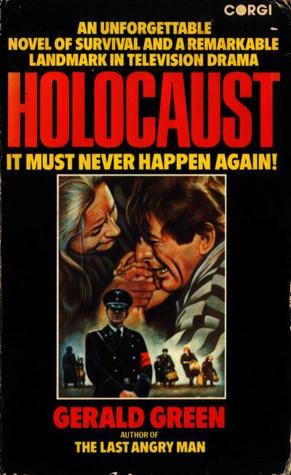
In his powerful and poignant novel, "Holocaust," Gerald Green takes readers on a harrowing journey through one of the darkest periods in history. Set against the backdrop of World War II, this compelling narrative explores the lives of four individuals whose paths intersect as they navigate the horrors of the Holocaust. Through vivid storytelling and meticulous attention to detail, Green sheds light on the resilience of the human spirit and the atrocities committed during this devastating time.
Brief Synopsis
"Holocaust" is a gripping historical fiction novel that tells the story of Rudi Weiss, a German Jew, and his family, as well as Erik Dorf, a Nazi officer, and his wife, Marta. The narrative unfolds in Berlin in the late 1930s, as Hitler's regime gains power and anti-Semitism spreads throughout the city. Rudi, a talented pianist, faces increasing discrimination and persecution, while Erik and Marta slowly become disillusioned with the Nazi party and its ideology.
As the war escalates, Rudi's family is forcibly relocated to the Warsaw Ghetto, where they endure unimaginable hardships and witness the horrors of mass extermination. Meanwhile, Erik finds himself torn between his duty to the Nazi cause and his growing empathy for the Jewish people. Marta, too, grapples with her loyalty to her husband and her own moral compass.
Main Characters
| Character | Description |
|---|---|
| Rudi Weiss | A talented pianist and German Jew who faces discrimination and persecution. Rudi's journey through the Holocaust tests his resilience and showcases his unwavering spirit. |
| Erik Dorf | A Nazi officer who initially supports Hitler's regime but gradually becomes disillusioned. Erik's internal struggle between his duty and his empathy for the Jewish people provides a nuanced perspective on the complexities of human nature. |
| Marta Dorf | Erik's wife, who finds herself torn between her loyalty to her husband and her own moral compass. Marta's character offers insight into the struggles faced by those who were connected to the Nazi party but questioned its actions. |
Summary of Different Story Points over Chapters
Chapter 1: Berlin in the 1930s
- Introduces readers to Rudi Weiss, a talented pianist, and his family.
- Sets the stage for the rising anti-Semitism in Berlin.
- Erik Dorf's introduction as a dedicated Nazi officer.
Chapter 2: Discrimination and Persecution
- Rudi faces increasing discrimination and persecution.
- Erik's initial enthusiasm for the Nazi party.
- The burgeoning relationship between Rudi and Erik.
Chapter 3: Relocation to the Warsaw Ghetto
- Rudi's family is forcibly relocated to the Warsaw Ghetto.
- Descriptions of the horrendous living conditions and the daily struggles faced by the Jewish population.
- Erik's growing doubts about the Nazi ideology.
Chapter 4: Horrors of the Holocaust
- Rudi's family witnesses mass extermination and the horrors of the Holocaust.
- Erik's internal conflict intensifies as he witnesses the atrocities committed by his fellow Nazis.
- Marta's moral dilemma becomes more pronounced.
Chapter 5: Resistance and Survival
- Rudi and his family become involved in acts of resistance within the Warsaw Ghetto.
- Erik and Marta's disillusionment with the Nazi regime deepens.
- The tension between Rudi and Erik reaches its peak.
Chapter 6: Liberation and Aftermath
- The liberation of the Warsaw Ghetto and the end of World War II.
- Rudi and his family's journey to rebuild their lives.
- Erik and Marta's search for redemption and an attempt to come to terms with their past actions.
Main Events
- Rudi's family being relocated to the Warsaw Ghetto.
- The horrors of the Holocaust, including mass extermination and daily struggles for survival.
- Acts of resistance within the Warsaw Ghetto.
- The liberation of the Warsaw Ghetto and the end of World War II.
- Rudi and his family's journey to rebuild their lives.
Themes and Insights
- The resilience of the human spirit in the face of unimaginable adversity.
- The complexities of human morality and the capacity for change.
- The consequences of blind loyalty and the importance of questioning authority.
- The lasting impact of the Holocaust on survivors and future generations.
Reader's Takeaway
"Holocaust" is a gripping and emotionally charged novel that offers a profound exploration of one of the darkest chapters in human history. Through the compelling stories of Rudi Weiss and Erik Dorf, Gerald Green sheds light on the horrors of the Holocaust while highlighting the resilience and strength of the human spirit. This book serves as a powerful reminder of the importance of empathy, compassion, and the pursuit of justice.
Conclusion
In "Holocaust," Gerald Green masterfully tells the story of individuals caught in the grip of one of the most horrifying events in history. Through vivid storytelling, the author brings to life the struggles, sacrifices, and resilience of those impacted by the Holocaust. This novel serves as a powerful testament to the enduring human spirit and a reminder of the atrocities committed during this dark period. "Holocaust" is a must-read for anyone seeking to gain a deeper understanding of the human capacity for both good and evil.
Holocaust FAQ
What is the book 'Holocaust' about?
The book 'Holocaust' by Gerald Green is a historical fiction novel that follows the lives of two Jewish families during World War II and the Holocaust.
Who is the author of 'Holocaust'?
The author of 'Holocaust' is Gerald Green.
Is 'Holocaust' based on a true story?
While 'Holocaust' is a work of fiction, it is based on the historical events of the Holocaust and includes many real-life details.
When was 'Holocaust' published?
'Holocaust' was first published in 1978.
What is the writing style of 'Holocaust'?
The writing style of 'Holocaust' is descriptive and emotive, bringing to life the experiences and emotions of the characters.
Is 'Holocaust' suitable for all readers?
Due to its graphic depiction of the Holocaust and its themes of suffering and loss, 'Holocaust' may not be suitable for younger or sensitive readers.
Are there any movie adaptations of 'Holocaust'?
Yes, 'Holocaust' was adapted into a highly acclaimed TV mini-series in 1978.
How long is the book 'Holocaust'?
The length of 'Holocaust' varies depending on the edition, but it is typically around 600 pages.
What awards has 'Holocaust' won?
'Holocaust' won several awards, including the Emmy Award for Outstanding Limited Series and the Golden Globe Award for Best Television Series.
Where can I purchase a copy of 'Holocaust'?
You can purchase a copy of 'Holocaust' from various bookstores, both online and offline. It is also available as an e-book and audiobook.


