
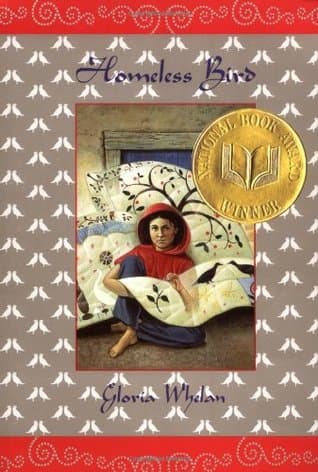
Synopsis
Covers the whole plot, including the ending.
- Difficulty
- Easy
- Pacing
- Moderate
- Mood
- Resilient, Hopeful, Poignant, Culturally Rich
- Read it if
- You enjoy historical fiction about strong female protagonists overcoming adversity in different cultures, particularly stories set in India.
- Skip it if
- You prefer fast-paced plots or shy away from themes of poverty, loss, and social injustice, even with a hopeful ending.
Homeless Bird Plot Summary
Covers the whole plot, including the ending.
A Match Is Made
Thirteen-year-old Koly lives in her village with her parents and younger brother. Her parents, following custom, arrange her marriage to Hari, a boy from a village a few days away. Koly feels both nervous and excited, imagining her new life as a wife. Her father, a schoolteacher, carefully reads letters from Hari's family, the Mehtas. Despite some initial concerns about the dowry, they agree to the match. Koly prepares for her wedding, receiving a red sari and jewelry, and experiences the traditional ceremonies, full of a young bride's innocent hopes.
The Wedding and New Home
Koly's wedding day arrives. She travels a long distance in a bullock cart to Hari's village. She is overwhelmed by the new sights and sounds and the grand wedding ceremony, though her in-laws seem less welcoming than she hoped. When she meets Hari, she notices his frail appearance and sickly cough, unlike the healthy boy her parents were told she was marrying. Despite her growing worry, the wedding continues. Koly moves into the small, crowded Mehta home, where her new mother-in-law, Sass, immediately gives her household chores.
Hari's Decline and Death
Life in the Mehta household is hard for Koly. Sass overworks and often criticizes her. Hari, her husband, continues to get weaker, his cough worsening and his body thinning. Koly soon understands the real reason the Mehtas were so eager for the marriage: they wanted a dowry to pay for his medical care and someone to look after him in his final days. Koly spends her days caring for Hari, feeding him and trying to make him comfortable, developing a quiet fondness for him despite their arranged marriage. Sadly, Hari eventually dies from tuberculosis, leaving Koly a child widow.
Life as a Widow
After Hari's death, Koly's life becomes even worse. As a child widow, people see her as a burden and bad luck. Sass makes her wear a plain white sari and shaves her head, taking away her identity. She gets only the hardest chores and small amounts of food. Hari's younger brother, Gopal, is openly cruel, while his sister, Mala, offers no comfort. Koly finds peace only in the small, hidden poems she writes and in memories of her own family. She endures this harsh life, hoping for some change or escape.
The Pilgrimage and Abandonment
Desperate to get rid of Koly, Sass and her husband, the Headmaster, announce they are taking Koly on a pilgrimage to Vrindavan, the City of Widows. Koly, at first hopeful this might lead to a new life or even a return to her parents, agrees to go. However, once they arrive in the busy, poor city, Sass takes Koly to a temple, gives her a small amount of money, and tells her to wait. Koly soon realizes with a heavy heart that she has been deliberately abandoned, left alone and penniless in a city full of other widows, far from anyone she knows.
Survival in Vrindavan
Alone in Vrindavan, Koly feels deep fear and loneliness. She quickly learns the harsh realities of street life, begging for food and shelter. She sees the despair of other widows, many much older and abandoned for years. Her small amount of money is quickly gone, and she faces hunger and constant danger. She sleeps in doorways and tries to avoid notice, her first hope replaced by a desperate fight to survive. She longs for her family's comfort and the simple life she once had.
Finding a New Family
Just as Koly reaches her lowest point, starving and wondering what to do, Maa Kamala finds her. Maa Kamala is a kind, elderly woman who runs a small home for widows. She offers Koly food, shelter, and a chance to work. Koly begins to learn the art of sari embroidery at a cooperative run by the kind Mr. Govind. She finds purpose and a sense of belonging among the other widows, who become her new family. This work allows her to earn her own money and regain some independence and respect.
Friendship and Learning
At the cooperative, Koly becomes close friends with Chandra, a lively and smart widow. Chandra encourages Koly's poetry, and Koly starts to share her verses. Koly also meets Raji, a young rickshaw driver who delivers supplies to the cooperative. Raji, who also wants to be a writer, shares his books and helps Koly improve her reading and writing. Their shared love for books and learning creates a growing bond between them. Koly's world expands beyond her past suffering, now filled with new friendships and intellectual growth.
The Proposal and Decision
Raji, impressed by Koly's intelligence and spirit, eventually asks her to marry him. Koly is surprised and unsure. Her past as a child bride and widow has made her cautious about marriage, and she values her new independence and the community she has built in Vrindavan. She thinks about leaving her friends and her work. Raji is patient and understanding, giving her time to decide. Koly discusses her situation with Maa Kamala and Chandra, seeking their advice and thinking deeply about what she truly wants for her future.
A New Beginning
After much thought, Koly decides to accept Raji's proposal. She understands that Raji offers a partnership based on mutual respect and shared interests, not the forced service of her first marriage. She also knows she can continue her embroidery and writing, keeping her independence within the marriage. Koly and Raji have a simple, loving ceremony. Koly, now a young woman who has overcome great difficulty, looks forward to a future where she can follow her passions and build a life of her own choosing, breaking free from the traditional limits that once held her.
Principal Figures
Koly
Protagonist
A resilient young Indian girl who navigates the harsh realities of child marriage and widowhood.
Koly begins as an innocent, hopeful thirteen-year-old, eager for her arranged marriage. She is observant and sensitive, finding solace in her inner world and the poetry she secretly writes. Despite facing immense hardship—the death of her child husband, abandonment, and poverty—she possesses an indomitable spirit and a quiet strength. She is intelligent, quick to learn, and values independence and education. Her journey is one of self-discovery and empowerment, as she learns to forge her own path in a world that often seeks to control her destiny.
Relationships: Hari (child husband, whom she cares for as he dies); Sass (Mother-in-law) (antagonistic, abandons Koly); Maa Kamala (mentor and surrogate mother figure); Chandra (close friend and confidante); Raji (intellectual companion and eventual husband)
Sass (Mother-in-law)
Antagonist
Koly's cruel and manipulative mother-in-law who abandons her.
Sass is Koly's first mother-in-law, a harsh and unfeeling woman primarily concerned with her family's financial well-being and social standing. She manipulates Koly's parents into a marriage with her dying son for the dowry and later treats Koly as a burden and an unpaid servant. Her cruelty culminates in abandoning Koly in Vrindavan, showing a complete lack of empathy. She embodies the oppressive traditional forces that restrict women's lives in Koly's society, prioritizing self-interest over compassion or moral responsibility.
Relationships: Koly (abusive mother-in-law to daughter-in-law); Hari (mother to dying son, exploits his illness for dowry); Headmaster (Father-in-law) (husband, co-conspirator in Koly's abandonment)
Hari
Supporting
Koly's first husband, a sickly boy who dies shortly after their marriage.
Hari is Koly's child husband, a frail boy suffering from tuberculosis. He is gentle and quiet, seemingly resigned to his fate. He doesn't actively participate in the deception of his family but is a victim of his illness and the circumstances that force him into an arranged marriage primarily for his family to gain a dowry for his treatment. Koly feels a quiet pity and affection for him during his final days, and his death is the catalyst for Koly's subsequent struggles and eventual transformation.
Relationships: Koly (child husband to child wife); Sass (Mother-in-law) (son to manipulative mother)
Maa Kamala
Supporting
A kind and wise older widow who provides Koly with shelter and guidance in Vrindavan.
Maa Kamala is a benevolent and compassionate woman who runs a home for abandoned widows in Vrindavan. She embodies wisdom, kindness, and resilience, having likely faced similar hardships in her own life. She offers Koly not just physical sustenance but also emotional support, a sense of community, and a path to self-sufficiency through the embroidery cooperative. Maa Kamala acts as a surrogate mother and mentor, guiding Koly towards independence and helping her navigate the complexities of her new life.
Relationships: Koly (mentor and surrogate mother figure); Chandra (guardian to another young widow)
Chandra
Supporting
Koly's spirited and intelligent friend at the embroidery cooperative.
Chandra is a vibrant and intelligent young widow Koly befriends at the embroidery cooperative. She is lively, outspoken, and passionate about learning and reading. Chandra encourages Koly's poetic talents and provides her with much-needed friendship and emotional support. Her presence helps Koly feel less alone and more connected to her new community. Chandra represents the possibility of joy and intellectual companionship even amidst hardship, and her friendship is crucial to Koly's emotional healing and growth.
Relationships: Koly (close friend and confidante); Maa Kamala (ward to guardian)
Raji
Supporting
A kind and educated rickshaw puller who shares Koly's love for learning and becomes her second husband.
Raji is a young, educated man who works as a rickshaw puller and delivers supplies to the embroidery cooperative. He is intelligent, thoughtful, and shares Koly's love for books and learning. Unlike many men of his time, he values education and independence in women. He is patient and respectful, offering Koly books and helping her improve her reading and writing. His proposal to Koly is based on mutual respect and shared interests, representing a modern, more equitable partnership than her first marriage.
Relationships: Koly (intellectual companion and eventual husband)
Koly's Father (Headmaster)
Supporting
Koly's caring and educated father.
Koly's father is a schoolteacher who is more educated and thoughtful than many in his village. He genuinely cares for Koly's well-being and tries to ensure she is marrying into a good family, meticulously reading the letters from the Mehtas. Despite his efforts, he is ultimately deceived about Hari's health. His initial care provides Koly with a loving home before her marriage, and his profession instilled in Koly a value for education.
Relationships: Koly (loving father to daughter)
Koly's Mother
Supporting
Koly's traditional but loving mother.
Koly's mother is a traditional Indian woman who loves her daughter but adheres to societal customs, including arranged marriage. She prepares Koly for her new life with advice and traditional gifts. She mourns Koly's abandonment and the difficulties her daughter faces, but is powerless to intervene due to societal constraints and distance. Her love for Koly is evident, even if her actions are bound by tradition.
Relationships: Koly (loving mother to daughter)
Themes & Insights
Resilience and Empowerment
The novel shows Koly's strength when facing great hardship. From the moment she becomes a child widow and is abandoned, Koly does not give in to despair. She learns to survive on the streets, then to earn her living through embroidery, and finally to choose her own path. Her journey from a helpless victim to an independent woman who makes her own choices, like accepting Raji's proposal on her own terms, is a main part of the story. This theme is clear in her quiet resolve to learn and write poetry even in hardship, and her eventual decision to build a life where she can follow her passions.
“I was a bird, a homeless bird, but I had found a nest.”
The Plight of Widows in India
A main theme is the difficult reality and social exclusion faced by widows, especially child widows, in traditional Indian society. Koly's experience of losing her identity, being forced into hard work, and then abandoned in Vrindavan, the 'City of Widows,' clearly shows this struggle. The story highlights how widows were often seen as bad luck, economic burdens, and were denied basic rights. The cooperative in Vrindavan, where Koly finds help, represents a small hope and a group effort to ease this suffering, showing that community and financial independence can offer an alternative to traditional oppression.
“A widow was a bad omen. She had brought bad luck to her husband. She had no place in the world.”
The Power of Education and Art
Education and art help Koly survive, grow, and discover herself. Her father, a schoolteacher, teaches her to love learning. Even when she is a neglected widow, Koly secretly writes poetry, finding a way to express her feelings and keep her inner world alive. Later, Raji encourages her reading and writing, and the embroidery cooperative gives her a skill and a way to earn money. These things allow Koly to rise above her situation, gain confidence, and build a life that is intellectually and creatively fulfilling, showing how knowledge and creativity can lead to freedom.
“The words were like jewels, shining in my mind.”
Breaking Traditional Constraints
The novel explores the struggle against strict social traditions, especially those about women's roles, arranged marriages, and the fate of widows. Koly's journey defies these limits. Her first marriage is a traditional arrangement that brings suffering, but her second marriage to Raji is based on choice and mutual respect, showing a move away from tradition. By becoming self-sufficient, getting an education, and finally choosing her own husband and lifestyle, Koly actively breaks free from the expectations placed on her as a woman and a widow in her society, creating her own modern path.
“I would not be bound by what others thought was my fate.”
Plot Devices & Literary Techniques
Symbolism of the Homeless Bird
Koly's journey is mirrored by the imagery of a bird seeking a nest.
The title itself, 'Homeless Bird,' is a central symbol for Koly. Initially, she is a young girl leaving her home for an arranged marriage, like a bird leaving its nest. After Hari's death and her abandonment, she truly becomes 'homeless,' wandering in Vrindavan with no family or place. Her eventual finding of Maa Kamala's home and the cooperative, and then her marriage to Raji, represent her finding a new 'nest' or a place of belonging and safety. This symbolism underscores her journey of displacement and her search for a secure and fulfilling life.
First-Person Narration
The story is told from Koly's intimate perspective, allowing insight into her thoughts and feelings.
The novel is narrated entirely from Koly's first-person perspective. This allows readers to experience her innocence, fear, despair, and eventual triumph directly through her eyes. It fosters deep empathy for her struggles and her inner strength. We understand her confusion during her first marriage, her horror at abandonment, and her growing sense of self-worth. This narrative choice makes her journey intensely personal and highlights her internal resilience and development as she navigates a challenging world.
Foil Characters
Characters like Sass and Maa Kamala highlight Koly's journey through contrast.
The novel uses foil characters to emphasize Koly's experiences and the contrasting paths available to women. Sass, Koly's cruel mother-in-law, serves as a direct foil to Maa Kamala. Sass represents the oppressive, traditional, and unfeeling side of society that exploits and abandons widows. In stark contrast, Maa Kamala embodies kindness, community, and empowerment, offering a haven and a path to independence. These contrasting figures highlight the extreme challenges Koly faces and the crucial role of compassion and support in her survival and growth.
Poetry as a Motif
Koly's secret writing of poetry serves as a recurring symbol of her inner life and resilience.
Throughout her hardships, Koly secretly writes poems in her notebook. This motif symbolizes her inner world, her capacity for beauty and reflection, and her intellectual spirit that cannot be suppressed by external suffering. The poems are a private solace and a form of self-expression when she has no other voice. Later, sharing her poetry with Chandra and Raji becomes a way to connect with others and validates her inner self, signifying her growing confidence and the power of art to transcend hardship.
Homeless Bird Quotes
“The sari was lovely, but I knew it was not meant for me.”
“A good wife is like a river, flowing where she is told.”
“I was a homeless bird, flying from branch to branch, never knowing where I would land.”
“The world outside my village was so different, so full of possibilities I had never imagined.”
“Even a small lamp can light a great darkness.”
“My dowry had been too small, my face not pretty enough.”
“It was strange to think that my own family, who had loved me, now saw me as a burden.”
“The colors of the saris were like a rainbow, each one telling a story.”
“I had learned to read, to write, to speak my own mind. These were gifts more precious than any jewelry.”
“Sometimes, the hardest journeys lead to the most beautiful destinations.”
“The river Yamuna held so many secrets, so many prayers.”
“To be a widow was to be invisible, to be a shadow in the bright sun.”
“My voice, once so timid, was now strong enough to sing.”
Quiz
10 questions on the plot and the characters. Each answer comes with a short explanation.
Question 1
What is Koly's age when she gets married?
- Ten
- Thirteen
- Fifteen
- Eight
Show answer
B. Thirteen The book description clearly states that Koly is thirteen years old when she gets married.
Question 2
What is the primary reason Koly's in-laws brought her into their home?
- They genuinely wanted a daughter-in-law to help with household chores.
- They needed her dowry to pay for their son's medical expenses and other debts.
- They sought a companion for their ailing son.
- They hoped she would bring good luck to their family.
Show answer
B. They needed her dowry to pay for their son's medical expenses and other debts. Koly's in-laws were primarily interested in her dowry to cover their son's illness and other financial burdens, rather than her as a wife for their son.
Question 3
What is the name of Koly's husband?
- Rajesh
- Prem
- Hari
- Deepak
Show answer
C. Hari Koly's husband, who is sickly and dies shortly after their marriage, is named Hari.
Question 4
Where does Koly find refuge and a path to independence after being abandoned by her in-laws?
- She returns to her parents' home.
- She finds work as a servant in a wealthy household.
- She joins a group of other widows in a city, eventually finding the Widow's House.
- She becomes a street vendor in a bustling market.
Show answer
C. She joins a group of other widows in a city, eventually finding the Widow's House. After being abandoned, Koly makes her way to a city and eventually finds the Widow's House, a place where widows can live and learn skills.
Question 5
What skill does Koly develop that helps her earn a living and express herself?
- Cooking traditional Indian dishes
- Weaving intricate tapestries
- Embroidery and creating beautiful saris
- Storytelling and reciting poetry
Show answer
C. Embroidery and creating beautiful saris Koly develops a talent for embroidery, which allows her to create beautiful designs on saris and earn money, giving her independence.
Question 6
What is the significant role of the rickshaw puller, Raji, in Koly's life?
- He is her first customer for her embroidery work.
- He becomes a trusted friend and eventually a suitor, offering her a chance at a new life.
- He helps her escape from her in-laws' home.
- He teaches her how to navigate the city alone.
Show answer
B. He becomes a trusted friend and eventually a suitor, offering her a chance at a new life. Raji, the rickshaw puller, is a kind and honorable man who becomes Koly's friend and eventually proposes marriage, offering her a loving and stable future.
Question 7
Which of the following best describes the central theme of 'Homeless Bird'?
- The importance of adhering to traditional customs at all costs.
- The power of resilience and self-determination in overcoming adversity and forging one's own destiny.
- The inescapable nature of poverty in rural India.
- The dangers of traveling alone as a young woman in India.
Show answer
B. The power of resilience and self-determination in overcoming adversity and forging one's own destiny. The story highlights Koly's journey from victim to independent woman, emphasizing her courage and determination to create a better future despite her circumstances.
Question 8
What specific item does Koly carry with her that symbolizes her connection to her past and her artistic aspirations?
- A small wooden doll given to her by her mother.
- A book of poetry from her father.
- Her poetry notebook, where she writes and sketches designs.
- A silver anklet given to her on her wedding day.
Show answer
C. Her poetry notebook, where she writes and sketches designs. Koly's poetry notebook is a constant companion, serving as a repository for her thoughts, poems, and initial embroidery designs.
Question 9
How does Koly's relationship with Maa Kamala, the head of the Widow's House, evolve?
- Maa Kamala remains a distant, authoritative figure throughout Koly's stay.
- Maa Kamala initially distrusts Koly but eventually sees her as a valuable asset.
- Maa Kamala becomes a mentor and a mother figure, guiding Koly toward independence and self-worth.
- Koly and Maa Kamala have a competitive relationship, vying for control of the house.
Show answer
C. Maa Kamala becomes a mentor and a mother figure, guiding Koly toward independence and self-worth. Maa Kamala provides Koly with a safe haven, teaches her valuable skills, and offers emotional support, becoming a crucial mentor and surrogate mother.
Question 10
What significant cultural practice in India during the time period is central to Koly's initial predicament?
- The celebration of Diwali, the festival of lights.
- The tradition of arranged marriages and the system of dowry.
- The practice of joint family living.
- The importance of pilgrimage to holy sites.
Show answer
B. The tradition of arranged marriages and the system of dowry. Koly's tragic marriage is a direct result of the deeply ingrained cultural practices of arranged marriages and the expectation of a dowry, which her in-laws exploited.
Homeless Bird FAQ
What is the central conflict Koly faces after her marriage?
Koly discovers her new husband, Hari, is gravely ill with tuberculosis, a fact deliberately concealed by his family to secure her dowry. This deception leaves her with a dying husband and a future tied to a family who exploited her, shattering her initial hopes for married life.
Who are Hari and Koly, and what is their initial relationship like?
Koly is the thirteen-year-old protagonist from a poor family, and Hari is her arranged husband. Their initial relationship is almost non-existent; Hari is already very sick when Koly arrives, and she barely gets to know him before his rapid decline and death, making their marriage more a transaction than a bond.
How does Koly end up widowed and what are the immediate consequences?
Hari dies shortly after their marriage due to his advanced tuberculosis. As a child widow, Koly is seen as a burden and a bad omen by her in-laws, particularly her mother-in-law, who forces her into menial labor and denies her basic comforts, treating her as a servant rather than family.
What role does Koly's mother-in-law, Mrs. Mehta, play in her hardship?
Mrs. Mehta is the primary antagonist in Koly's early widowhood, exploiting her labor, hoarding her dowry jewelry, and ultimately abandoning her on a train. She represents the harsh societal expectations and economic pressures placed on widows in that era, prioritizing her family's financial gain over Koly's well-being.
How does Koly escape her dire situation after being abandoned?
Koly is abandoned on a train by Mrs. Mehta, who gives her just enough money for a single ticket and leaves her to fend for herself. She eventually finds her way to Vrindavan, the City of Widows, where she seeks refuge and begins to rebuild her life.
What is the significance of the poetry Koly learns and writes?
Koly's love for poetry, initially taught by her father and later fostered by her grandmother-in-law, Saski, becomes a vital coping mechanism and a source of strength. It allows her to express her emotions, connect with her cultural heritage, and eventually contributes to her financial independence when she starts stitching poems onto saris.
Who is Saski and how does she influence Koly?
Saski is Koly's kind grandmother-in-law, Hari's paternal grandmother. She provides Koly with much-needed emotional support and teaches her to read and write, nurturing Koly's intellect and love for poetry. Saski's compassion is a stark contrast to Mrs. Mehta's cruelty, offering Koly a glimpse of kindness within her marital family.
How does Koly's embroidery skill develop and become crucial for her future?
Koly learns embroidery from a woman named Maa in Vrindavan, initially as a way to earn a meager living. Her artistic talent flourishes, and she begins to embroider poems and stories onto saris, making her work unique and highly sought after. This skill ultimately provides her with financial independence and a path to self-sufficiency.
What role do the rickshaw drivers play in Koly's journey in Vrindavan?
The rickshaw drivers, particularly Raji, are instrumental in Koly's daily life and eventual romantic journey. They provide her with transportation, a means to deliver her embroidered goods, and a sense of community. Raji, in particular, becomes a supportive and affectionate presence in her life.
Discuss Koly's resilience in the face of repeated setbacks.
Koly exhibits remarkable resilience, enduring the shock of Hari's illness, the cruelty of her in-laws, and the abandonment in Vrindavan. Instead of succumbing to despair, she consistently seeks new ways to survive and thrive, adapting to her circumstances and finding strength in her skills and inner spirit.
How does Koly's perspective on marriage evolve throughout the novel?
Initially, Koly views marriage with traditional hope and expectation, seeing it as her destiny. After her traumatic first marriage, she becomes wary and independent, prioritizing self-sufficiency. Her eventual openness to Raji's proposal demonstrates a mature perspective, choosing love and companionship on her own terms rather than out of necessity.
Analyze Koly's emotional journey from a naive girl to an independent woman.
Koly begins as a hopeful, innocent girl, quickly thrust into harsh realities that force her to mature rapidly. Her emotional journey involves profound grief, anger at injustice, and a growing sense of self-worth. She transforms from a passive recipient of fate to an active agent in shaping her own future, demonstrating inner strength and determination.
What internal conflicts does Koly face regarding her identity as a widow?
Koly grapples with the societal stigma of being a child widow, feeling shame and ostracization. She struggles with the loss of her expected future and the burden placed upon her. However, she gradually redefines her identity, finding purpose and value not through marriage, but through her skills, independence, and newfound community in Vrindavan.
How does the author portray the balance between tradition and progress in Indian society through Koly's story?
The book starkly contrasts rigid traditions like arranged child marriage and widow ostracization with Koly's progressive journey towards independence and self-determination. It suggests that while traditions can be oppressive, individuals like Koly can forge new paths, demonstrating a gradual shift towards valuing individual agency within a changing society.
Is Koly's eventual remarriage with Raji a triumph or a concession to societal norms?
Koly's remarriage to Raji is portrayed as a triumph because it is a choice made freely and out of genuine affection, contrasting sharply with her first arranged marriage. She enters it as an independent woman with her own means, not out of necessity or coercion, thus subverting traditional expectations for widows.
How does the setting of Vrindavan contribute to Koly's transformation?
Vrindavan, the City of Widows, initially seems a place of final refuge, but it becomes a crucible for Koly's transformation. Surrounded by other women who have faced similar fates, Koly finds community, learns valuable skills, and gains the confidence to build a new life, turning a place of despair into one of opportunity and growth.
What is the overarching message about female empowerment in 'Homeless Bird'?
The overarching message is that female empowerment can be achieved even in restrictive societal contexts through resilience, skill development, and self-belief. Koly's journey demonstrates that women can overcome immense adversity, redefine their destinies, and find agency and fulfillment outside of traditional expectations.
Could Hari's family's deception be justified by their own desperate circumstances?
While Hari's family was likely desperate to cover medical costs and ensure their son's care, the book does not justify their deception. The narrative clearly portrays their actions as exploitative and cruel, particularly in lying about Hari's condition and later abandoning Koly, highlighting the moral bankruptcy of their choices despite any underlying desperation.
Similar books
- Climbing the Stairs
Padma Venkatraman
3.9 (3k) average on GoodreadsHistorical Fiction"Climbing the Stairs" offers a broader historical context of India during the independence movement, embedding personal struggles within larger societal changes. While it also features a young female protagonist navigating traditional expectations, "Homeless Bird" focuses more intimately on the specific, dire consequences of child marriage and widowhood for an individual, rather than a family's experience within a changing political landscape.
- Harry Potter and the Sorcerer's Stone
J.K. Rowling
4.5 (7M) average on GoodreadsFantasyRescued from a miserable life under the stairs, an orphaned boy discovers he's a wizard destined for a magical school, where he uncovers a dangerous secret tied to the dark wizard who murdered his parents.
- The Hobbit, or There and Back Again
J.R.R. Tolkien
4.3 (2.9M) average on GoodreadsFantasyA comfort-loving hobbit named Bilbo Baggins is whisked away by a mischievous wizard and a band of dwarves on an unexpected journey to reclaim stolen treasure from a fearsome dragon, discovering courage and a magical ring along the way.
- Harry Potter and the Goblet of Fire
J.K. Rowling
4.6 (2.6M) average on GoodreadsFantasyA bewildered Harry Potter, underage and thrust into a deadly Triwizard Tournament, must brave dragons, mermaids, and a resurgent dark magic to survive a year that will forever alter the wizarding world.
- Harry Potter and the Order of the Phoenix
J.K. Rowling
4.5 (2.5M) average on GoodreadsFantasyIn a year of oppressive secrets and the threat of Voldemort, Harry Potter and Dumbledore's Army secretly train for war, shown through Jim Kay and Neil Packer's dark illustrations.
- The Lightning Thief
Rick Riordan
4.3 (2M) average on GoodreadsFantasyThrust into a world of mythological monsters and divine treachery, an ordinary boy discovers he's the son of Poseidon and must embark on a perilous quest across modern America to prevent an Olympian war.





Enjoyed the summary?
A summary gives you the shape of the book. The book itself has the detail, the examples and the voice.
Find Homeless Bird on AmazonAs an Amazon Associate, BookBrief earns from qualifying purchases. How we're funded