
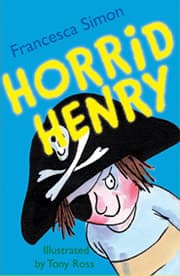
Synopsis
Covers the whole plot, including the ending.
- Difficulty
- Easy
- Pacing
- Fast
- Mood
- Humorous, Lighthearted, Mischievous, Fun
- Read it if
- You enjoy humorous stories about a mischievous protagonist and simple, engaging plots that appeal to young readers.
- Skip it if
- You prefer stories with strong moral lessons or complex character development.
Horrid Henry Plot Summary
Covers the whole plot, including the ending.
Horrid Henry's Perfect Day
Horrid Henry wakes up wanting to have a 'perfect day,' which, for him, means doing everything he should not. He refuses his breakfast, makes a mess, and generally disobeys his parents. When his mother suggests he could be 'perfect' like his brother, Perfect Peter, Henry decides to be as horrid as possible. He throws a tantrum in a shop, refuses to share his toys, and is sent to his room. Despite his parents' frustration, Henry feels he has achieved his goal of a perfectly horrid day, to the annoyance of his family, especially Peter, who is genuinely good.
Horrid Henry's Dance Class
Henry's parents, hoping to teach him manners and control, make him attend a dance class. Henry, of course, hates the idea and plans to make it as bad as possible. He refuses to participate correctly, makes rude noises, trips other children, and generally causes problems in the class, to the anger of Miss Impatience Tutu, the dance teacher. He particularly targets Perfect Peter, who is enjoying the class. Henry's actions eventually lead to chaos, with children falling and the teacher completely fed up. He is eventually removed from the class, which makes him happy, as he successfully ruined it for himself and others.
Horrid Henry and the Bogey Babysitter
When Henry's usual babysitter, the easily tricked Miss Oddbod, is not available, his parents hire a new one: the strict Miss Battle-Axe. Henry, used to scaring his babysitters, tries all his normal tricks – refusing to go to bed, asking for sweets, and making loud noises. However, Miss Battle-Axe is not bothered at all. She makes him eat his vegetables, sends him straight to bed, and even makes him tidy his room. Henry and Peter are both scared of her, and for once, Henry is completely defeated and well-behaved, showing that some adults are even tougher than he is.
Horrid Henry's Birthday Party
It is Horrid Henry's birthday, and he wants to have the best party ever, which means getting all the attention and the best presents. He invites his friends, including Rude Ralph, Moody Margaret, and Sour Susan, as well as Perfect Peter and his 'goofy' friends. Henry tries to grab all the presents, cheat at party games, and generally make sure he wins everything. The party quickly turns into typical Henry chaos, with food fights, arguments over toys, and everyone generally having a horrid time, except for Henry, who enjoys the trouble he created. His parents are left to clean up the mess and deal with his 'perfect' birthday celebration.
Principal Figures
Horrid Henry
Protagonist
A mischievous boy who delights in causing trouble and defying rules.
Horrid Henry is the central character, a primary school-aged boy known for his insatiable desire to be naughty and his complete disregard for rules and politeness. He views being 'horrid' as a virtue and actively seeks to disrupt order, whether at home, school, or social events. He is cunning, manipulative, and often successful in his schemes, though sometimes his plans backfire. His motivations are simple: to avoid anything he dislikes (like vegetables or dance class) and to get what he wants (like attention or presents), usually at the expense of others, especially his brother, Peter.
Relationships: Perfect Peter (Younger brother, constant target of Henry's pranks and jealousy); Mum (Mother, often exasperated by Henry's behavior); Dad (Father, also exasperated by Henry's behavior); Moody Margaret (Friend/rival, often competes with Henry in naughtiness); Rude Ralph (Friend, often an accomplice in Henry's schemes); Miss Battle-Axe (Babysitter, one of the few adults Henry fears)
Perfect Peter
Supporting
Henry's younger brother, who is impeccably behaved and often the victim of Henry's antics.
Perfect Peter is Horrid Henry's younger brother and his complete opposite. He is polite, obedient, tidy, and enjoys things Henry despises, like vegetables and dance class. Peter is often the innocent victim of Henry's pranks and bullying, but he rarely retaliates, instead choosing to be good. While sometimes seen as 'boring' by Henry and his friends, Peter's goodness highlights Henry's 'horridness' and provides a foil for the protagonist's antics. He genuinely tries to please adults and follow rules.
Relationships: Horrid Henry (Older brother, tormentor); Mum (Mother, dotes on Peter's good behavior); Dad (Father, dotes on Peter's good behavior)
Mum
Supporting
Henry and Peter's mother, who often struggles to manage Henry's behavior.
Henry and Peter's mother is a long-suffering parent who frequently finds herself exasperated by Henry's horridness. She tries to enforce rules, encourage good behavior, and maintain order in the household, but often fails when it comes to Henry. She clearly loves both her children but is often at her wit's end with Henry's antics, often comparing him unfavorably to Peter. She is responsible for tasks like taking Henry to dance class and organizing his birthday party, usually with disastrous results thanks to Henry.
Relationships: Horrid Henry (Son, source of constant frustration); Perfect Peter (Son, source of pride and relief); Dad (Husband, co-parent in the struggle against Henry)
Dad
Supporting
Henry and Peter's father, who shares his wife's exasperation with Henry.
Henry and Peter's father is another authority figure who frequently deals with the fallout of Henry's horrid actions. Like Mum, he is often exasperated, tired, and sometimes bewildered by Henry's persistent naughtiness. He supports his wife in trying to discipline Henry and encourage him to be more like Peter. He is less involved in the day-to-day management of Henry's social activities but is present for key moments of chaos, such as Henry's 'perfect day' or his birthday party, often sharing a look of weary resignation with Mum.
Relationships: Horrid Henry (Son, source of constant frustration); Perfect Peter (Son, source of pride and relief); Mum (Wife, co-parent in the struggle against Henry)
Moody Margaret
Supporting
Henry's friend and rival, known for her sulky demeanor and competitive naughtiness.
Moody Margaret is one of Henry's friends and a formidable rival. She is equally as horrid as Henry, often competing with him to be the naughtiest or to have the best of something. She is known for her sulky attitude and her tendency to throw tantrums when she doesn't get her way. She appears at Henry's birthday party, contributing to the general chaos and often getting into arguments with Henry or other children. She is a key member of Henry's 'Purple Hand Gang' (though not explicitly in this book, her personality aligns with it).
Relationships: Horrid Henry (Friend/rival in naughtiness); Sour Susan (Friend)
Rude Ralph
Supporting
One of Henry's friends, who often participates in his schemes.
Rude Ralph is another member of Henry's circle of friends who shares his mischievous tendencies. He is often an accomplice in Henry's naughtiness, readily joining in with disruptive behavior at parties or during play. He is less of a leader than Henry or Margaret but is always keen to be involved in fun and mayhem. He is present at Henry's birthday party, contributing to the general unruly atmosphere and enjoying the chaos that Henry orchestrates.
Relationships: Horrid Henry (Friend and accomplice); Moody Margaret (Friend)
Sour Susan
Supporting
A friend of Moody Margaret, known for her perpetually unhappy expression.
Sour Susan is a friend of Moody Margaret and is often seen accompanying her. As her name suggests, she is rarely seen smiling and often has a grumpy or 'sour' expression. She is less vocal than Margaret or Henry but is part of their mischievous group. She attends Henry's birthday party, adding to the ensemble of unruly children and often siding with Margaret in disputes.
Relationships: Moody Margaret (Friend); Horrid Henry (Acquaintance)
Miss Battle-Axe
Supporting
A strict and formidable babysitter who Henry fears.
Miss Battle-Axe is a new babysitter hired by Henry's parents, known for her stern demeanor and no-nonsense approach. Unlike other adults Henry typically encounters, she is completely immune to his tricks and tantrums. She enforces rules strictly, making Henry eat his vegetables, go to bed on time, and tidy his room, all without argument. She represents a rare instance where Henry is genuinely defeated and scared, providing a significant challenge to his horrid reign.
Relationships: Horrid Henry (Babysitter, object of Henry's fear); Perfect Peter (Babysitter, also feared by Peter)
Miss Impatience Tutu
Mentioned
Henry's dance teacher, who struggles to control him.
Miss Impatience Tutu is the long-suffering dance teacher in 'Horrid Henry's Dance Class.' She tries her best to teach grace and rhythm to a group of children, but Henry's disruptive behavior quickly pushes her to her limits. She is a symbol of the well-meaning adult trying to impart culture, only to be met with Henry's relentless desire for chaos. Her name itself suggests her struggle with patience.
Relationships: Horrid Henry (Student, source of immense frustration)
Themes & Insights
Childhood Rebellion and Non-Conformity
A main theme is Henry's active defiance of adult rules and expectations. He chooses to be 'horrid' instead of 'perfect,' finding joy and identity in his rebellion. This is clear in 'Horrid Henry's Perfect Day' where his goal is to be as disobedient as possible, and in 'Horrid Henry's Dance Class' where he ruins the activity he is forced into. The book celebrates this non-conformist spirit, often showing Henry getting his way, even if it means annoying the adults around him.
“'I'm not perfect,' he said cheerfully. 'I'm horrid!”
Sibling Rivalry
The relationship between Horrid Henry and Perfect Peter is a core part of the book, showing classic sibling rivalry. Henry is always annoyed by Peter's goodness and often tries to bother him or do better than him. Peter, in turn, is often the victim of Henry's pranks. This is clearly seen in 'Horrid Henry's Dance Class' where Henry purposely trips Peter, and in 'Horrid Henry's Birthday Party' where Henry tries to get all the attention and presents, often at Peter's expense. The difference between their personalities creates much of the humor and plot.
“Perfect Peter sighed. He was always sighing. That's what perfect people did.”
The Frustration of Adulthood
The book often shows how frustrated and powerless adults are when dealing with a truly determined and mischievous child like Henry. Henry's parents, Miss Impatience Tutu, and even other children's parents at the birthday party, struggle to control him, often ending up defeated or exhausted. This theme connects with adult readers who can understand the parents' difficult situation, while children enjoy seeing authority figures challenged. Only Miss Battle-Axe manages to change this, showing a moment of adult success.
“His mum and dad just sighed. They did a lot of sighing when Henry was around.”
The Allure of Mischief
The stories consistently show the appeal of being naughty and breaking rules from a child's point of view. Henry finds real enjoyment and satisfaction in his horridness, and his adventures often end with him feeling successful because of the chaos he has caused. This is clear in 'Horrid Henry's Perfect Day,' where he feels he achieved his goal, and in 'Horrid Henry's Birthday Party,' where he enjoys the trouble. The book taps into the common childhood fantasy of getting away with naughtiness.
“Henry grinned. His perfect day was going perfectly.”
Plot Devices & Literary Techniques
Character Foils
Perfect Peter serves as a direct contrast to Horrid Henry, highlighting Henry's 'horridness'.
The most prominent plot device is the use of character foils, specifically the pairing of Horrid Henry and Perfect Peter. Peter's inherent goodness, obedience, and preference for quiet activities directly contrast with Henry's naughtiness, disobedience, and love for chaos. This contrast is not just for comedic effect but also serves to define Henry's character more sharply. Peter's reactions to Henry's antics often underscore just how horrid Henry is, while Henry's disdain for Peter's perfection emphasizes his own rebellious nature.
Episodic Structure
Each chapter is a self-contained short story, focusing on a single event or challenge for Henry.
The book employs an episodic structure, with each chapter functioning as a complete short story. This allows for quick, engaging narratives that don't require complex overarching plots, making it ideal for young readers. Each episode presents Henry with a new situation (a dance class, a new babysitter, his birthday) that he then proceeds to disrupt or dominate through his horridness. This structure allows for a consistent character portrayal without needing significant character development, reinforcing Henry's unchanging nature.
Exaggeration and Hyperbole
Events and Henry's behavior are often exaggerated for comedic effect.
Exaggeration is a key comedic device used throughout the book. Henry's naughtiness is often pushed to extreme levels, such as throwing a full tantrum in a shop or causing complete pandemonium at a dance class. Similarly, the reactions of the adults, particularly the parents' sighs and Miss Impatience Tutu's exasperation, are often hyperbolized. This heightens the humor and makes Henry's actions seem larger than life, engaging young readers who enjoy the outrageousness of his behavior and the dramatic consequences.
Descriptive Naming
Characters' names often reflect their primary personality traits.
Many characters in the book are given names that directly describe their personality or role. 'Horrid Henry' and 'Perfect Peter' are the most obvious examples, immediately establishing their opposing natures. Other characters like 'Moody Margaret,' 'Rude Ralph,' 'Sour Susan,' and 'Miss Impatience Tutu' also have names that give the reader an instant understanding of their key characteristics. This device simplifies character introduction and reinforces their archetypal roles within Henry's world, making them memorable for young readers.
Horrid Henry Quotes
“I'm not eating that! It's green and slimy and smells like socks!”
“Perfect Peter is so perfect, he probably eats broccoli for fun!”
“Why do I have to go to bed? The sun's still up!”
“I'm not doing my homework! Homework is boring and stupid!”
“Moody Margaret is the meanest girl in the whole world!”
“I want to watch TV! Now!”
“Why does Perfect Peter get to have all the fun?”
“I'm not sharing! It's mine!”
“This is the worst day ever!”
“I'm going to be a pirate when I grow up!”
“Why do grown-ups always get to make the rules?”
“I hate brushing my teeth! It's a waste of time!”
“Let's play a trick on Perfect Peter!”
“I'm not going to school! School is for boring people!”
Quiz
10 questions on the plot and the characters. Each answer comes with a short explanation.
Question 1
What is the name of Horrid Henry's little brother who is always well-behaved?
- Moody Margaret
- Perfect Peter
- Silly Simon
- Good George
Show answer
B. Perfect Peter Perfect Peter is Henry's younger brother who constantly contrasts Henry's naughty behavior by being obedient and tidy, as described in the book's introduction.
Question 2
What is the name of the girl who often clashes with Horrid Henry in the stories?
- Perfect Peter
- Moody Margaret
- Happy Harriet
- Cheerful Chloe
Show answer
B. Moody Margaret Moody Margaret is a key character who frequently engages in conflicts and schemes with Henry, adding to the humorous chaos in the book.
Question 3
How many tales are included in the book 'Horrid Henry' as mentioned in the description?
- Three
- Four
- Five
- Six
Show answer
B. Four The description specifies that the book contains 'these four tales' of Horrid Henry, Perfect Peter, and Moody Margaret.
Question 4
What is a central theme in 'Horrid Henry' that contrasts Henry's behavior with his brother's?
- Friendship and loyalty
- Good versus evil
- Sibling rivalry and mischief
- Adventure and exploration
Show answer
C. Sibling rivalry and mischief The book explores themes of sibling dynamics, with Henry's naughty antics often clashing with Perfect Peter's good behavior, highlighting rivalry and humorous mischief.
Question 5
In the context of the book, what does Horrid Henry typically do that earns him his nickname?
- He helps others selflessly
- He studies hard and gets good grades
- He wreaks havoc and causes trouble
- He writes poetry and stories
Show answer
C. He wreaks havoc and causes trouble Henry is called 'Horrid' because he constantly engages in naughty and disruptive behavior, creating chaos in various situations throughout the stories.
Question 6
Which character is described as 'maddeningly good' in the book's introduction?
- Horrid Henry
- Moody Margaret
- Perfect Peter
- The parents
Show answer
C. Perfect Peter Perfect Peter is explicitly noted as 'maddeningly good' in the description, emphasizing his contrast to Henry's behavior.
Question 7
What role does Moody Margaret play in the stories involving Horrid Henry?
- She is Henry's supportive friend
- She is a teacher who disciplines Henry
- She is a rival who often schemes against Henry
- She is Henry's cousin who visits occasionally
Show answer
C. She is a rival who often schemes against Henry Moody Margaret frequently acts as an antagonist or rival to Henry, engaging in conflicts and plots that add to the book's comedic tension.
Question 8
Why might children love to hear about Horrid Henry, according to the book's description?
- Because he always follows rules and sets a good example
- Because he is rapidly establishing himself as a beloved character through his naughty antics
- Because he teaches important moral lessons in every story
- Because he is based on a real historical figure
Show answer
B. Because he is rapidly establishing himself as a beloved character through his naughty antics The description states that Henry is 'rapidly establishing himself as a character children love to hear about,' likely due to his humorous and relatable mischief.
Question 9
In what way does the book use Henry's behavior to engage young readers?
- By showing the severe consequences of misbehavior to deter readers
- By presenting exaggerated naughtiness in a light-hearted, humorous manner
- By focusing on academic achievements and school success
- By depicting Henry as a tragic hero with deep flaws
Show answer
B. By presenting exaggerated naughtiness in a light-hearted, humorous manner The book portrays Henry's havoc-wreaking in a comedic and exaggerated way, making it entertaining for children without being overly moralistic.
Question 10
Which aspect of 'Horrid Henry' makes it a typical children's book based on the description?
- Its complex plot twists and adult themes
- Its focus on a naughty protagonist causing humorous trouble
- Its use of advanced vocabulary and philosophical ideas
- Its setting in a fantasy world with magical creatures
Show answer
B. Its focus on a naughty protagonist causing humorous trouble Children's books often feature relatable, mischievous characters like Henry who engage in funny antics, as seen in the description of him wreaking havoc.
Horrid Henry FAQ
What is 'Horrid Henry' about?
'Horrid Henry' is a children's book featuring four short stories about a mischievous boy named Henry who constantly causes trouble, often targeting his annoyingly well-behaved brother Perfect Peter and his rival Moody Margaret. The stories showcase Henry's creative schemes, such as trying to avoid bedtime or outsmarting his parents, in humorous and relatable situations for young readers.
Why should I read 'Horrid Henry'?
Readers should enjoy 'Horrid Henry' for its laugh-out-loud humor, relatable childhood antics, and engaging storytelling that captures the imagination of children. The book's lighthearted approach to naughtiness, combined with Francesca Simon's witty writing, makes it a fun and accessible read that encourages laughter and empathy for Henry's mischievous perspective.
What is the background/setting of 'Horrid Henry'?
The stories are set in a typical suburban family environment, focusing on Henry's home life with his parents, his brother Perfect Peter, and interactions with neighbors like Moody Margaret. The settings include everyday locations such as the house, school, and local areas, which ground Henry's outrageous antics in familiar, realistic contexts that children can easily recognize.
What are the most memorable quotes?
Memorable quotes often highlight Henry's defiant attitude, such as his exclamations of 'It's not fair!' when faced with rules, or his sarcastic remarks about Perfect Peter's goodness. These lines emphasize Henry's character as a rebellious yet endearing figure, making them catchy and memorable for young readers who relate to his frustrations.
What writing style does the author use?
Francesca Simon uses a lively, humorous, and straightforward writing style with short sentences and vivid descriptions that appeal to children. The narrative is fast-paced, filled with exaggerated scenarios and dialogue that bring Henry's antics to life, making it easy for young readers to follow and enjoy the comedic chaos.
What minor details add significant meaning?
Minor details like Henry's specific schemes, such as hiding vegetables or creating fake messes, add depth by showing his cleverness and persistence in avoiding responsibilities. These small acts highlight his character as not just naughty but resourceful, making his behavior more nuanced and relatable to children who might share similar frustrations.
What are some subtle foreshadowing moments?
Subtle foreshadowing occurs when Henry's initial small misbehaviors, like minor fibs or pranks, escalate into larger conflicts later in the stories. For example, his early attempts to outsmart his parents often hint at the more elaborate schemes he'll devise, building anticipation for the humorous consequences that follow.
What unexpected character connections exist?
Unexpected connections include the rivalry between Henry and Moody Margaret, which often leads to alliances or competitions that reveal shared traits like stubbornness. Additionally, Henry's interactions with Perfect Peter show underlying sibling dynamics where their opposite behaviors sometimes result in unexpected cooperation or mutual understanding amidst the chaos.
What are unspoken character motivations?
Henry's unspoken motivation is often a desire for attention and autonomy, as he feels overshadowed by Perfect Peter's goodness. Similarly, Perfect Peter may secretly crave more freedom or fun, hinted by his occasional envy of Henry's adventures, adding layers to their sibling rivalry beyond surface-level behavior.
What psychological complexities do characters exhibit?
Henry exhibits complexity through his mix of mischief and vulnerability, showing that his naughtiness stems from boredom and a need for excitement rather than malice. Perfect Peter's perfectionism can be seen as a response to sibling competition, while Moody Margaret's moodiness reflects her own struggles with friendship and rivalry, making them multi-dimensional.
What are the major emotional turning points?
Major emotional turning points include moments when Henry's schemes backfire, leading to brief remorse or realization, such as when he gets caught and faces consequences. These scenes add emotional depth by showing his growth or fleeting empathy, balancing the humor with lessons about responsibility and family dynamics.
How do relationship dynamics evolve?
Relationship dynamics evolve through ongoing conflicts and resolutions, such as Henry and Perfect Peter's rivalry occasionally giving way to teamwork against common foes like Moody Margaret. Over the stories, their interactions show a gradual, subtle shift from pure antagonism to moments of mutual support, reflecting the complexities of sibling bonds.
Which parts remain ambiguous or open-ended?
Ambiguous parts include whether Henry truly learns from his mistakes or if he'll revert to his horrid ways, leaving his character development open to interpretation. Additionally, the outcomes of some pranks or conflicts are left humorous without clear moral resolutions, allowing readers to draw their own conclusions about the lessons learned.
What are controversial scenes or decisions?
Controversial scenes might involve Henry's deceptive or rule-breaking actions, such as lying to avoid chores or playing mean tricks, which some readers could view as encouraging bad behavior. However, these are typically framed comically with consequences that mitigate controversy, sparking debate about the balance between humor and moral messaging in children's literature.
'Horrid Henry' ending explained: how it ends & what it means
The book ends with Henry often facing humorous consequences for his antics, such as getting grounded or outsmarted, but without a drastic change in his character. This suggests that the stories celebrate childhood mischief as a phase of fun and learning, implying that naughtiness is part of growing up and that family love endures despite the chaos.
About the author

Francesca Simon is a British author best known for her children's books featuring the character Horrid Henry. Her notable works include "Horrid Henry," "Horrid Henry Tricks the Tooth Fairy," and "Horrid Henry and the Abominable Snowman," which explore the mischievous adventures of a young boy. Simon's writing often combines humor and relatable childhood experiences.
Similar books
- Diary of a Wimpy Kid
Jeff Kinney
4.0 (446k) average on GoodreadsChildren'sWhile both feature flawed protagonists, 'Diary of a Wimpy Kid' offers more nuanced exploration of social dynamics, friendship challenges, and the protagonist's attempts to navigate complex situations, implicitly offering more opportunities for reflection on social intelligence, even if the protagonist doesn't always learn.
- Harry Potter and the Sorcerer's Stone
J.K. Rowling
4.5 (7M) average on GoodreadsFantasyRescued from a miserable life under the stairs, an orphaned boy discovers he's a wizard destined for a magical school, where he uncovers a dangerous secret tied to the dark wizard who murdered his parents.
- The Hobbit, or There and Back Again
J.R.R. Tolkien
4.3 (2.9M) average on GoodreadsFantasyA comfort-loving hobbit named Bilbo Baggins is whisked away by a mischievous wizard and a band of dwarves on an unexpected journey to reclaim stolen treasure from a fearsome dragon, discovering courage and a magical ring along the way.
- Harry Potter and the Goblet of Fire
J.K. Rowling
4.6 (2.6M) average on GoodreadsFantasyA bewildered Harry Potter, underage and thrust into a deadly Triwizard Tournament, must brave dragons, mermaids, and a resurgent dark magic to survive a year that will forever alter the wizarding world.
- Harry Potter and the Order of the Phoenix
J.K. Rowling
4.5 (2.5M) average on GoodreadsFantasyIn a year of oppressive secrets and the threat of Voldemort, Harry Potter and Dumbledore's Army secretly train for war, shown through Jim Kay and Neil Packer's dark illustrations.
- The Lightning Thief
Rick Riordan
4.3 (2M) average on GoodreadsFantasyThrust into a world of mythological monsters and divine treachery, an ordinary boy discovers he's the son of Poseidon and must embark on a perilous quest across modern America to prevent an Olympian war.





Enjoyed the summary?
A summary gives you the shape of the book. The book itself has the detail, the examples and the voice.
Find Horrid Henry on AmazonAs an Amazon Associate, BookBrief earns from qualifying purchases. How we're funded