
Core Idea
- Difficulty
- Easy
- Read it if
- You're looking for a practical toolkit of actionable techniques to spark creativity and generate novel ideas, whether for personal projects, professional challenges, or artistic endeavors. It's ideal for anyone who feels stuck in a creative rut or wants to systematically improve their ideation process.
- Skip it if
- You prefer deep theoretical dives into the psychology of creativity or are looking for a single, overarching philosophical framework for innovation. This book is a 'how-to' manual with diverse methods rather than a unified grand theory.
Key Takeaways from How to Have Great Ideas
Embrace the 'Happy Accident'
Serendipity is a powerful catalyst for innovation if you're open to it.
The book supports the idea that creativity is not always a linear process; often, good ideas come from 'happy accidents' or unexpected combinations. This strategy encourages a playful, experimental approach, where 'mistakes' or unintended outcomes are seen as potential starting points for something new. By combining different elements or using tools and materials in unconventional ways, one can find new solutions and styles that a more rigid process might miss. It is about creating an environment where chance can happen, and staying open to unexpected connections.
“Many great ideas come from unexpected combinations or 'misuses' of existing things.”
In the book: The example of a designer dress crafted from an old typewriter illustrates this beautifully, transforming discarded machinery into high fashion through an unexpected material application.
Try this: Actively seek out opportunities to 'misuse' tools or combine unrelated concepts in your work. During brainstorming, try a 'random word association' exercise where you link your problem to a completely arbitrary object or concept.
Related ideas: serendipity, divergent-thinking, playful-experimentation
Change Your Vantage Point
Shifting your physical or mental environment can unlock fresh perspectives.
Ingledew explains that our physical and mental environments influence our thinking. Stagnation often happens when we are in the same routines, spaces, and thought patterns. By intentionally changing the scenery—whether it is working from a park instead of an office, or actively seeking out diverse cultural experiences—we disrupt usual thinking. This external shift can cause internal shifts, making our brains make new connections and notice details previously overlooked. It is about breaking free from the mental ruts that stop creative flow and letting new stimuli into our awareness.
“Sometimes the best way to solve a problem is to look at it from an entirely different angle, or even in a completely different place.”
In the book: The strategy of 'changing the scenery' is explicitly mentioned, suggesting that a simple environmental shift can be a powerful catalyst for new ideas.
Try this: When stuck, take a walk in an unfamiliar neighborhood, visit a museum, or work from a different coffee shop. Mentally, try to explain your problem to a child or someone completely outside your field to gain a fresh, unburdened perspective.
Related ideas: perspective-shift, environmental-stimuli, cognitive-flexibility
Nature's Blueprint for Innovation
Biomimicry offers elegant, time-tested solutions to complex design challenges.
The natural world is a source of ingenious design, refined by evolution. Ingledew suggests looking to nature for inspiration, a concept known as biomimicry. By studying the forms, processes, and systems in ecosystems—from a bird's wing to the self-cleaning properties of a lotus leaf—designers can find sustainable, efficient, and appealing solutions. This approach goes beyond imitation; it is about understanding the basic principles and adapting them to human challenges, leading to designs that are more resilient and in harmony with their environment.
“Nature has been solving design problems for billions of years; often, the most elegant solutions are already out there.”
In the book: The book explicitly lists 'looking to nature for inspiration' as a key strategy, implying a focus on biomimicry.
Try this: Before designing, research how similar problems are solved in nature. For example, if designing a new structural support, study bone structures or tree branches. If creating a new material, investigate natural self-cleaning surfaces.
Related ideas: biomimicry, natural-systems, sustainable-design
The Power of Constraint
Limitations, rather than hindering creativity, can be its most potent fuel.
Boundless freedom can lead to creative paralysis. Ingledew notes that setting deliberate constraints can spark more innovative thinking. When resources, time, or parameters are limited, the mind is forced to work harder, seeking unconventional paths and optimizing within defined boundaries. This is not about arbitrary restrictions but about strategically narrowing the scope to allow for deeper, more focused problem-solving. Constraints can act as a creative crucible, making designers distill ideas to their essence and find clever workarounds that might never emerge in an environment of unlimited choice.
“When you have too many options, it's hard to choose. When you have fewer, you're forced to be more inventive.”
In the book: The strategy of 'challenging set boundaries' implicitly suggests that by defining and then pushing against limits, new ideas emerge.
Try this: When starting a project, give yourself a seemingly arbitrary limitation: 'design this using only three colors,' or 'create a solution that fits in a shoebox.' This forces you to think more inventively within the given parameters.
Related ideas: design-constraints, scarcity-mindset, problem-solving
Connect the Unconnected
Innovation often arises from synthesizing disparate ideas or systems.
Ingledew emphasizes the power of synthesis: combining different concepts, systems, or objects to create something new. This approach goes beyond simple brainstorming by actively looking for 'hidden links' or forcing 'unusual combinations.' It challenges the designer to break free from conventional categories and explore the area between disciplines. By mixing ideas, one can find new functions, styles, or solutions that would not be apparent by focusing on a single area.
“Great ideas often come from combining two or more things that have never been combined before.”
In the book: The book explicitly mentions 'combining unusual systems' and 'finding hidden links' as key strategies for generating ideas.
Try this: Regularly expose yourself to diverse fields of knowledge. When facing a design challenge, list 5-10 unrelated objects or concepts and try to force a connection between each one and your problem. For example, 'how can a coffee machine inspire a new banking app?'
Related ideas: synthesis, cross-pollination, lateral-thinking
Gamify Your Ideation
Improvisation and play can dismantle creative blocks and foster flow.
The pressure to 'be creative' can often be the biggest barrier to generating ideas. Ingledew suggests using improvisation techniques and playful approaches in the creative process. By adopting a mindset of play, designers can lower their inhibitions, experiment, and move past the fear of failure. Techniques like rapid prototyping, 'yes, and...' thinking from improv theater, or timed ideation games can turn a daunting task into an engaging challenge, helping ideas emerge more freely. It is about making the journey of ideation enjoyable and less self-critical.
“Treating the ideation process like a game can reduce pressure and open up new avenues of thought.”
In the book: The inclusion of 'improvisation techniques' as a strategy directly supports the idea of gamifying the ideation process.
Try this: Before starting a serious design session, do a quick improv exercise with a colleague. Use timed 'sprint' sessions for brainstorming where quantity over quality is the rule, followed by a playful critique session.
Related ideas: playfulness, improvisation, creative-flow
Deconstruct and Reconstruct
Dismantling established norms reveals hidden potential for reimagination.
This strategy supports a critical and analytical approach to existing designs, brands, or systems. By breaking down something—understanding its components, functions, and underlying assumptions—one can identify its core and then imagine new ways to reassemble or reimagine it. This could involve breaking down a brand's visual language to its basic elements and then rebuilding it with a fresh perspective, or dissecting a product's functionality to discover overlooked possibilities. It is about challenging the 'how it's always been done' mentality and actively looking for opportunities for change.
“To truly innovate, you sometimes have to take things apart – physically or conceptually – and then put them back together in a new way.”
In the book: The example of 'reimagining famous brand logos' directly illustrates this strategy, where existing visual identities are broken down and reinterpreted.
Try this: Choose a well-known product or brand and list all its attributes, functions, and associations. Then, try to negate or reverse each one. For example, 'what if a phone was designed to be silent?' or 'what if a luxury brand was affordable?'
Related ideas: deconstruction, reimagination, critical-analysis
Seek Inspiration in the Obscure
The most unexpected sources can yield the most original ideas.
Ingledew encourages designers to broaden their sources of inspiration beyond conventional ones. Instead of relying on industry trends or popular culture, this strategy suggests looking into niche hobbies, forgotten histories, scientific esoterica, or even everyday objects. The less obvious the source, the more likely the resulting idea will be unique and fresh. By having a curious and varied mind, one can draw unexpected connections and generate concepts that stand out, avoiding derivative thinking that often affects creative fields.
“Don't just look where everyone else is looking. The truly novel ideas often hide in plain sight, in the places nobody bothers to check.”
In the book: While not a direct quote, the overall ethos of the book, with its wide array of examples from 'ticket machines powered by recycled bottles in China' to 'mis-use of photocopiers,' supports drawing inspiration from diverse and often overlooked sources.
Try this: Keep a 'curiosity journal' where you note down interesting facts, images, or stories from obscure sources. When starting a project, spend an hour researching a topic completely unrelated to your field (e.g., ancient weaving techniques, quantum physics, forgotten folklore) and then brainstorm connections.
Related ideas: eclectic-inspiration, niche-research, originality
The Value of 'Misuse'
Subverting intended functions can reveal powerful, unforeseen applications.
This strategy is about challenging the purpose of objects, tools, or processes. By deliberately 'misusing' something—applying it in an unintended context or for an unapproved function—designers can find new applications and unlock hidden potential. This often requires a playful, rebellious spirit that questions conventional wisdom and is not afraid to break rules. The history of innovation has many examples where a 'mistake' or a 'misapplication' led to a breakthrough. It is about seeing beyond the obvious and embracing the unexpected usefulness of things.
“Sometimes the most brilliant ideas come from using something in a way it was never designed for.”
In the book: The specific example of 'mis-use of photocopiers' to create art or design effects directly illustrates this concept.
Try this: Take a common household object and brainstorm 10 uses for it that are completely different from its intended purpose. Or, consider a design tool you use regularly and think about how you could deliberately 'break' or 'misuse' it to achieve a new effect.
Related ideas: repurposing, unconventional-use, creative-subversion
How to Have Great Ideas Quotes
“Great ideas are not born in a vacuum; they are the children of curiosity and the willingness to explore the unknown.”
“The best ideas often come when you are not trying to have them—in the shower, on a walk, or just before sleep.”
“To have great ideas, you must first give yourself permission to have bad ones.”
“Look sideways at problems; the solution might be hiding in an unexpected place.”
“Creativity is not a talent; it is a way of operating.”
“The most innovative ideas often arise from connecting seemingly unrelated concepts.”
“Don't wait for inspiration; create the conditions for it to find you.”
“Great ideas are like seeds; they need the right environment to grow.”
“The fear of judgment is the biggest killer of creativity.”
“Ideas are not static; they evolve through collaboration and feedback.”
“Sometimes, the simplest ideas are the most powerful.”
“Your mind is a garden; tend to it with diverse experiences and it will yield rich ideas.”
“Break the rules, but first, you must know what they are.”
“Great ideas often start as questions, not answers.”
Quiz
10 questions on the main ideas. Each answer comes with a short explanation.
Question 1
What is the primary purpose of 'How to Have Great Ideas' according to the book's description?
- To provide a historical overview of design movements
- To offer 53 practical strategies for unlocking innovative ideas in creative fields
- To critique modern advertising techniques
- To teach advanced technical skills in visual arts
Show answer
B. To offer 53 practical strategies for unlocking innovative ideas in creative fields The book is described as 'the essential guide' that 'provides 53 practical strategies for unlocking innovative ideas' specifically for students and young professionals in design, advertising, and communications.
Question 2
Which of these strategies is specifically mentioned in the book description?
- Analyzing market trends
- Looking to nature for inspiration
- Mastering digital software tools
- Studying classical art history
Show answer
B. Looking to nature for inspiration The description explicitly lists 'looking to nature for inspiration' as one of the 53 strategies included in the book, along with improvisation techniques, changing scenery, finding hidden links, and others.
Question 3
What type of examples does the book use to illustrate its strategies?
- Only theoretical concepts without real-world applications
- Exclusively historical examples from before the 20th century
- Successful contemporary and historical designs from various contexts
- Only examples from the author's personal projects
Show answer
C. Successful contemporary and historical designs from various contexts The description states that 'each strategy is packed with great examples of successful contemporary and historical designs' including specific examples like a designer dress made from an old typewriter and ticket machines powered by recycled bottles.
Question 4
Which specific example from the book description involves repurposing everyday objects?
- A sculpture made from recycled plastic bottles
- A designer dress made out of an old typewriter
- A painting created with natural pigments
- A digital animation of brand logos
Show answer
B. A designer dress made out of an old typewriter The description specifically mentions 'a designer dress made out of an old typewriter' as one of the examples that illustrates the book's creative strategies, demonstrating how everyday objects can be repurposed innovatively.
Question 5
What does the book include to help readers overcome creative blocks?
- Theoretical essays on creativity
- Interviews with famous designers
- Practical projects to kick-start inventive thought
- Step-by-step technical tutorials
Show answer
C. Practical projects to kick-start inventive thought The description states the book is 'packed with practical projects to kick-start inventive thought in idea-blocked moments,' emphasizing its hands-on approach to overcoming creative challenges.
Question 6
Which creative field is NOT explicitly mentioned as a target audience in the book description?
- Design
- Advertising
- Architecture
- Communications
Show answer
C. Architecture The description specifies the book is for 'students and young professionals looking to embrace creative thinking in design, advertising and communications.' Architecture is not mentioned, though the book explores creative thinking across 'all visual arts disciplines' more broadly.
Question 7
How does the book suggest challenging conventional thinking according to the description?
- By strictly following established design principles
- By challenging set boundaries and combining unusual systems
- By focusing exclusively on digital media
- By avoiding historical references entirely
Show answer
B. By challenging set boundaries and combining unusual systems The description lists strategies including 'challenging set boundaries' and 'combining unusual systems' as methods to foster innovative thinking, encouraging readers to break from conventional approaches.
Question 8
What is the significance of the example involving ticket machines in China mentioned in the book?
- It demonstrates how to design efficient transportation systems
- It shows the mis-use of photocopiers for creative purposes
- It illustrates innovative use of recycled materials in functional design
- It critiques environmental policies in China
Show answer
C. It illustrates innovative use of recycled materials in functional design The description mentions 'ticket machines powered by recycled bottles in China' as an example that likely illustrates strategies like finding hidden links or combining unusual systems, showing how recycled materials can be innovatively applied to functional designs.
Question 9
Which aspect of the book's approach makes it particularly valuable during 'idea-blocked moments'?
- Its comprehensive history of visual arts
- Its focus on academic theories of creativity
- Its structured, actionable strategies with practical projects
- Its collection of inspirational quotes from famous artists
Show answer
C. Its structured, actionable strategies with practical projects The description emphasizes that the book provides '53 practical strategies' and is 'packed with practical projects to kick-start inventive thought in idea-blocked moments,' offering structured, actionable approaches rather than just theory or inspiration.
Question 10
How does the book's use of examples like 'the reimagining of famous brand logos' support its educational goals?
- By teaching readers how to legally copy existing logos
- By demonstrating how to critique corporate branding
- By showing practical applications of creative strategies in recognizable contexts
- By providing templates for logo design
Show answer
C. By showing practical applications of creative strategies in recognizable contexts Examples like 'the reimagining of famous brand logos' help readers understand how the book's creative strategies (e.g., finding hidden links, challenging boundaries) can be applied to familiar, real-world contexts in design and advertising, making the concepts more tangible and applicable.
How to Have Great Ideas FAQ
What is 'How to Have Great Ideas' about?
It's a practical guide for students and professionals in design, advertising, and communications, offering 53 strategies to boost creative thinking. The book includes techniques like improvisation, changing environments, and drawing inspiration from nature, illustrated with real-world examples.
Does 'How to Have Great Ideas' work for idea-blocked moments?
Yes, the book is packed with practical projects specifically designed to kick-start inventive thought during creative blocks. It provides actionable strategies like finding hidden links and challenging boundaries to overcome stagnation.
What is the 'changing the scenery' strategy?
This strategy involves altering your physical or mental environment to spark new perspectives and ideas. It encourages stepping away from routine settings to break patterns and foster innovation, as highlighted in the book's examples.
How different is 'How to Have Great Ideas' from other creativity books?
Unlike many theoretical guides, this book focuses on 53 hands-on strategies with concrete examples from contemporary and historical design. It emphasizes practical application across visual arts, making it highly actionable for real-world use.
Does 'How to Have Great Ideas' include examples from nature?
Yes, one of the key strategies is looking to nature for inspiration, showcasing how biological systems and natural forms can inform creative designs. The book provides examples that illustrate this approach in practice.
What is 'finding hidden links' in creative thinking?
This concept involves connecting seemingly unrelated ideas or systems to generate innovative solutions. The book explains how to identify and leverage these unexpected connections to enhance creativity in projects.
How does 'How to Have Great Ideas' help in advertising?
It offers tailored strategies for advertising professionals, such as combining unusual systems and reimagining brand logos, to develop fresh campaigns. The examples include successful ad designs that apply these techniques.
What is the 'improvisation techniques' strategy?
This strategy involves using spontaneous, unplanned methods to generate ideas quickly, similar to improvisational arts. The book details how to apply these techniques to bypass overthinking and unlock creative flow.
Does 'How to Have Great Ideas' work for beginners in design?
Yes, it's designed as an essential guide for students and young professionals, with clear, step-by-step strategies and projects. The accessible examples make it suitable for those new to creative fields.
How different is the book's approach from traditional brainstorming?
It moves beyond basic brainstorming by offering diverse, structured strategies like mis-using tools (e.g., photocopiers) and drawing from historical designs. This provides a more varied toolkit for sustained idea generation.
Similar books
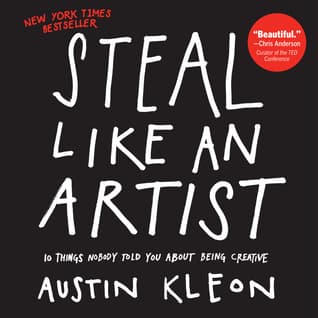
- Steal Like an Artist: 10 Things Nobody Told You About Being Creative
Austin Kleon
3.9 (198k) average on GoodreadsBusinessEncourages drawing inspiration from diverse sources and remixing ideas to create new ones.
- The Story of Art
E.H. Gombrich
3.9 (311k) average on GoodreadsReferenceExplore thousands of years of human creativity, from ancient cave art to modern masterpieces, with Gombrich's classic account, updated with new insights into art's changing story.
- The New Drawing on the Right Side of the Brain
Betty Edwards
3.9 (297k) average on GoodreadsPsychologyLearn to draw by using the often-ignored visual side of your brain, changing how you see the world.
- Go Ask Alice
Anonymous
3.7 (293k) average on GoodreadsReferenceA teenage girl's diary chronicles her swift decline into 1970s drug culture, from an innocent game to addiction, ending in her tragic death.
- Their Eyes Were Watching God
Zora Neale Hurston
3.9 (266k) average on GoodreadsReferenceIn early 20th-century Florida, Janie Crawford searches for identity, love, and independence, defying social norms to find her voice.
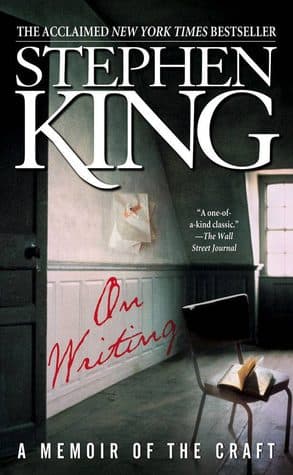
- On Writing: A Memoir of the Craft
Stephen King
4.3 (222k) average on GoodreadsBiography



Enjoyed the summary?
A summary gives you the shape of the book. The book itself has the detail, the examples and the voice.
Find How to Have Great Ideas on AmazonAs an Amazon Associate, BookBrief earns from qualifying purchases. How we're funded