
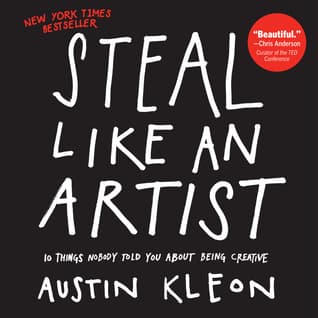
Core Idea
- Difficulty
- Easy
Key Takeaways from Steal Like an Artist
Embrace Creative Theft
No idea is 100% original; all creative work builds on what came before.
Kleon's main idea is that 'stealing' is not only acceptable but necessary for creativity. He says true originality is a myth; every artist gets ideas and techniques from existing works. This is not plagiarism, but learning, remixing, and changing things. He tells artists to be like 'collectors,' gathering ideas and styles they like, then taking them apart to see how they work. By breaking down and rebuilding these elements in their own way, artists can make something new and personal. This view frees creators from the pressure to invent something entirely new, letting them focus on their craft and finding their voice through combining ideas.
“What a good artist understands is that nothing comes from nowhere. All creative work builds on what came before. Nothing is completely original.”
In the book: Kleon points to the history of art, music, and literature, where artists like Pablo Picasso (who famously said, 'Good artists copy, great artists steal') and Bob Dylan openly borrowed and transformed existing works. He emphasizes that even seemingly original works can be traced back to a lineage of influences.
Try this: Start a 'swipe file' or 'inspiration folder' (physical or digital) where you collect anything that sparks your interest: images, quotes, articles, designs, code snippets. Regularly review and analyze these collections to understand *why* they resonate with you, then experiment with incorporating or transforming elements into your own projects.
Start Before You're Ready
Don't wait for perfection or full understanding; begin creating with what you have.
This idea helps with procrastination and creative block, which often come from fear or waiting for a 'perfect' start. Kleon suggests acting immediately, saying that doing the work clarifies ideas and builds momentum. He argues that artists often find their path, refine their style, and understand their vision by creating, not before. Waiting for inspiration or a full plan is a trap; instead, one should accept messy first drafts or sketches. This approach values ongoing progress over static planning, acknowledging that mistakes are part of the creative journey. It makes the creative process easier to understand and access.
“The way to get started is to quit talking and begin doing.”
In the book: Kleon highlights that many successful artists and innovators began with crude prototypes or imperfect early works. He implies that the 'genius' often attributed to them is a result of persistent work rather than an initial perfect vision.
Try this: Instead of planning extensively, commit to a small, tangible action today. Write for 15 minutes, sketch a rough idea, or create a quick prototype. Embrace the 'ugly first draft' mentality, knowing that you can always refine and improve later. The goal is to overcome inertia and engage with the material.
Work with Your Hands
Engage in physical, analog work to foster deeper creative connections and breaks from screens.
This point stresses the value of using physical methods in a mostly digital creative process. Kleon says computers are useful for polishing and sharing, but they can hinder early, raw idea generation. Drawing, writing by hand, cutting and pasting, or building models uses different parts of the brain, often leading to new ideas and a more direct connection to the work. This physical interaction can also offer a break from screen time, encouraging play and experimentation that digital tools sometimes limit. It is a call to balance digital and physical methods, using the strengths of both for better creative results.
“The computer is good for editing your ideas, and it’s good for getting your ideas out into the world, but it’s not so good for generating ideas.”
In the book: Kleon illustrates this by describing his own practice of using index cards, notebooks, and physical collages for brainstorming before moving to digital tools. He suggests that the limitations and tactile nature of analog tools can actually spark more creative solutions.
Try this: Dedicate specific time each day or week to analog creative tasks. Use a physical notebook for brainstorming, sketch ideas on paper, create mood boards with actual clippings, or experiment with physical materials related to your craft. This can be particularly effective for overcoming creative blocks or generating fresh perspectives.
Build a 'Scenius'
Surround yourself with a supportive and inspiring community rather than chasing individual genius.
Kleon uses 'scenius'—a term from Brian Eno—as an alternative to the idea of the isolated genius. Instead of focusing on one person's brilliance, 'scenius' refers to the shared intelligence and creative energy of a group. This is important, especially when individual creators are often praised. Kleon argues that good work rarely appears alone; it grows within a rich system of peers, mentors, and collaborators who share ideas, give feedback, and motivate each other. This focus on community shows that creativity is social, highlighting that diverse perspectives and consistent interaction with a supportive network are more helpful than seeking solitary 'genius' status.
“The more you share, the more people you get to know, the more you get to know, the more people you can learn from, the more people you can learn from, the more you can improve your work.”
In the book: He cites examples like the vibrant art scenes of Paris in the early 20th century or the Silicon Valley tech culture, where a confluence of talent and shared ambition led to widespread innovation, rather than just a few individual breakthroughs.
Try this: Actively seek out and engage with creative communities, both online and offline. Attend workshops, join critique groups, collaborate on projects, and share your work (even if imperfect) to solicit feedback. Focus on building relationships and learning from others, rather than just showcasing your own work.
Share Your Work (and Your Process)
Overcome fear and put your creations, and even your behind-the-scenes, out into the world.
This is one of the book's best ideas for modern creators. In a time when many feel pressured to show only perfect final products, Kleon suggests a more open approach. Sharing your process—sketches, drafts, mistakes, inspirations—not only makes your work clearer but also builds a stronger connection with your audience. It helps people understand the effort and thought behind your creations, building empathy and engagement. Also, by sharing, you invite feedback, new opportunities, and connections that might not otherwise happen. This vulnerability can be hard, but it is necessary for growth and for truly joining a creative discussion. It changes the focus from 'being discovered' to 'being discoverable' through regular, honest sharing.
“Don’t just show your work. Show your process.”
In the book: Kleon himself uses his blog and social media to share his drawings, writing process, and influences, demonstrating how this approach builds an audience and a creative network. He implies that the internet has democratized the ability to share, making it easier than ever.
Try this: Regularly share snippets of your work in progress, behind-the-scenes photos, or insights into your creative journey on social media, a blog, or with trusted peers. Don't wait for perfection; embrace the 'show your work' mentality to build an audience and gather valuable feedback.
Stay Curious and Learn Continuously
Maintain a beginner's mind and never stop exploring new fields and ideas.
Kleon champions constant curiosity as the driver of creativity. He believes artists should always keep a 'beginner's mind,' always seeking new knowledge, skills, and experiences. This means not just learning within your field, but also exploring unrelated areas. Connecting different subjects often leads to new ideas and insights that fuel truly original work. The book encourages an active approach to learning—looking things up, following references, and digging deeper than surface understanding. This continuous intellectual input ensures an artist's ideas stay fresh, relevant, and developing. It is a reminder that creativity needs both input and output.
“Be curious about the world in which you live. Look things up. Chase down every reference. Go deeper than anybody else — that’s how you’ll get ahead.”
In the book: He cites examples of artists and scientists who drew inspiration from diverse fields, suggesting that cross-pollination of ideas is a common thread in innovation. He implicitly encourages wide reading and active engagement with information.
Try this: Make curiosity a daily habit. Read widely outside your comfort zone, listen to podcasts on new topics, visit museums, or take online courses on subjects you know little about. Keep a 'wonder journal' where you jot down questions and ideas you want to explore further.
Don't Discount Your Day Job
A steady job can provide financial stability, creative freedom, and even unexpected inspiration.
While many romanticize the struggling artist, Kleon offers a practical and fresh view: your day job is not necessarily a barrier to your creative pursuits, but can be a help. This idea has limits for those in truly difficult jobs, but for many, it is a useful way to think about things. A steady income provides financial security, easing the pressure to make money from every creative project and allowing for more artistic experimentation. Further, a day job can offer structure, routine, and even unexpected skills or insights that can feed into your creative work. It can be a source of new ideas, a place to develop discipline, and a way to connect with people outside your artistic circle. The key is to manage your energy and time well, ensuring your creative work gets dedicated attention.
“A day job is not something to be endured until your real work can begin. It’s an opportunity to learn and to hone your craft.”
In the book: Kleon himself worked as a web designer while developing his writing and art career, demonstrating how a 'day job' can coexist and even contribute to creative growth. He also cites historical figures who maintained regular employment alongside their artistic practices.
Try this: Instead of resenting your day job, look for ways it can support your creative life. Use the financial stability to fund your projects, practice time management, or find unexpected connections between your professional skills and your artistic ambitions. Protect dedicated time slots for your creative work.
Get Out of Your Head and Into the World
Physical activity and real-world experiences are crucial for generating and processing ideas.
This idea highlights the importance of physical activity and engaging with the outside world for creative energy. Kleon suggests that sitting at a desk brainstorming endlessly can be unhelpful; often, the best ideas come when one steps away from the screen and does something physical or simply observes the world. Walking, exercising, traveling, or even running errands can provide the mental space for ideas to develop, connect, and become clear. These activities offer new sensory input, break mental ruts, and let the subconscious mind work. It is a reminder that creativity is not just an intellectual activity but is deeply linked to our physical being and how we interact with our surroundings.
“The artist is a collector. Not a hoarder, mind you, but a selective gatherer of things that speak to them.”
In the book: He talks about the importance of taking walks, citing how many writers and thinkers found inspiration and clarity during physical movement. He positions the artist as an active observer and collector of real-world stimuli.
Try this: Incorporate regular walks, exercise, or breaks from your workspace into your routine. Actively observe your surroundings, pay attention to details, and allow your mind to wander. Carry a small notebook to capture ideas that emerge during these moments of 'unplugged' observation.
Creativity is Subtraction
Knowing what to leave out is as important as knowing what to put in.
While much of the book focuses on gathering and generating, Kleon offers an important counterpoint: creativity also involves removing things. This idea is especially relevant today, as creators face vast amounts of information, tools, and possibilities. He argues that true skill often means being able to edit, refine, and simplify, removing anything that does not serve the main message or look. This applies not only to the final product but also to the creative process itself—limiting distractions, focusing on key inputs, and setting boundaries can lead to greater freedom and clarity. This idea challenges the notion that more is always better, instead advocating for purpose and conciseness.
“In this age of information overload, the only way to make sense of the world is to limit your input.”
In the book: He draws parallels to minimalist art and design, where the power often comes from what is *not* included. He also discusses the importance of editing in writing, where removing unnecessary words strengthens the overall impact.
Try this: Practice editing and refining your work mercilessly. Identify and remove superfluous elements, whether they are words, visual details, or features in a product. Apply this principle to your creative input as well: intentionally limit your sources of inspiration and information to avoid overwhelm and focus your energy.
Be Boring (to Do Good Work)
Embrace routine, structure, and a stable personal life to free up mental energy for creative breakthroughs.
This final idea is surprising but very practical. Kleon argues against the romantic image of the chaotic, troubled artist, suggesting that a stable, somewhat 'boring' personal life actually helps maintain creative output. By having routines, managing money, keeping healthy relationships, and generally reducing drama, artists can free up mental and emotional energy that would otherwise be used by external stresses. This allows them to focus their energy and creative reserves on their work. This does not mean life has to be dull, but rather that external stability provides fertile ground for internal artistic exploration and risk-taking. It is a strong endorsement of discipline and self-care as basic parts of a productive creative life.
“It’s the having a boring life that makes you a better artist.”
In the book: Kleon alludes to the lives of many successful artists who maintained surprisingly disciplined and orderly personal lives, such as Charles Darwin or Haruki Murakami, who adheres to strict daily routines for writing and running.
Try this: Establish healthy routines for sleep, exercise, and work. Organize your physical and digital workspace. Cultivate stable personal relationships and financial habits. By creating a predictable and calm external environment, you can foster a more focused and adventurous internal creative landscape.
Quiz
10 questions on the main ideas. Each answer comes with a short explanation.
Question 1
What is the central message of 'Steal Like an Artist'?
- Only geniuses can be creative.
- Creativity is exclusive to a select few.
- You don't need to be a genius, just be yourself.
- Artistic talent is inherited, not learned.
Show answer
C. You don't need to be a genius, just be yourself. The book emphasizes that creativity is accessible to everyone and that authenticity is key, rather than relying on innate genius.
Question 2
According to the book, who is creativity for?
- Only professional artists.
- People with a formal art education.
- Everyone.
- Those who have inherited artistic talent.
Show answer
C. Everyone. Austin Kleon's core message is that creativity is a universal human trait, available to all people.
Question 3
What kind of manifesto is 'Steal Like an Artist' described as?
- A manifesto for the industrial age.
- A manifesto for the digital age.
- A manifesto for the traditional art world.
- A manifesto for academic scholars.
Show answer
B. A manifesto for the digital age. The book is positioned as a guide for navigating and fostering creativity in the context of the modern, digital world.
Question 4
What elements does the book use to connect readers with their artistic side?
- Complex theoretical essays and historical analyses.
- Strict rules and prescriptive instructions.
- Graphic look, illustrations, exercises, and examples.
- Abstract philosophical discussions and critiques.
Show answer
C. Graphic look, illustrations, exercises, and examples. The book employs visual elements and interactive components like exercises to make creativity accessible and engaging.
Question 5
The title 'Steal Like an Artist' suggests a particular approach to creativity. What does this imply?
- To plagiarize existing works without attribution.
- To copy others' work directly and claim it as your own.
- To borrow, adapt, and transform existing ideas and works into something new.
- To avoid any influence from other artists' creations.
Show answer
C. To borrow, adapt, and transform existing ideas and works into something new. The concept 'steal like an artist' refers to the process of learning from, borrowing from, and remixing the work of others to create something original, rather than outright copying.
Question 6
What is the primary tone or feeling conveyed by the book's description?
- Pessimistic and discouraging.
- Critical and analytical.
- Positive and empowering.
- Academic and theoretical.
Show answer
C. Positive and empowering. The description highlights a 'positive message' and aims to put readers in touch with their 'artistic side,' indicating an encouraging and uplifting tone.
Question 7
Austin Kleon is described as a 'young writer and artist.' What does this suggest about his perspective?
- He is likely to hold traditional views on art.
- He offers a fresh and contemporary perspective on creativity.
- His advice might be outdated for the digital age.
- He focuses solely on the commercial aspects of art.
Show answer
B. He offers a fresh and contemporary perspective on creativity. Being a 'young writer and artist' in the context of a 'manifesto for the digital age' implies a modern and relevant viewpoint on creativity.
Question 8
The book's 'graphic look and illustrations' are mentioned as key features. What purpose do these likely serve?
- To make the book appear more academic and serious.
- To provide visual distractions from the main content.
- To enhance understanding and engagement through visual communication.
- To showcase the author's personal artistic portfolio.
Show answer
C. To enhance understanding and engagement through visual communication. Visual elements in a book about creativity often serve to make the content more accessible, engaging, and illustrative of the principles discussed.
Question 9
The phrase 'creativity is everywhere, creativity is for everyone' is a core tenet. This implies a belief in:
- The inherent scarcity of creative talent.
- The democratic nature of creative potential.
- The need for rigorous training to unlock creativity.
- The subjective and unattainable nature of creativity.
Show answer
B. The democratic nature of creative potential. This statement directly challenges the notion that creativity is rare or limited, promoting the idea that it is a widespread and accessible human capacity.
Question 10
Considering the book's themes and target audience (implied by 'digital age' and 'artistic side'), what kind of advice would Austin Kleon likely NOT give?
- Embrace your influences and remix them.
- Don't wait for inspiration; just start creating.
- Protect your original ideas fiercely from any external input.
- Find joy in the process of making things.
Show answer
C. Protect your original ideas fiercely from any external input. The core message of 'stealing like an artist' and embracing influences directly contradicts the idea of fiercely protecting original ideas from external input. The book encourages interaction and transformation of existing elements.
Steal Like an Artist FAQ
What is the main message of Steal Like an Artist?
The core message of 'Steal Like an Artist' is that creativity is accessible to everyone and you don't need to be a genius to be creative. It encourages readers to embrace their unique selves and understand that creativity involves borrowing, remixing, and building upon existing ideas.
Is Steal Like an Artist only for visual artists?
No, 'Steal Like an Artist' is not just for visual artists. The book's principles are applicable to anyone looking to be more creative in any field, whether it's writing, music, business, or any other endeavor. It provides a framework for creative thinking that transcends specific disciplines.
What does Austin Kleon mean by 'stealing' like an artist?
When Austin Kleon talks about 'stealing' like an artist, he means openly acknowledging that all creative work builds on what came before. It's about studying the work you admire, understanding its components, and then using those elements as inspiration to create something new and original, rather than trying to be completely novel from scratch.
What are the '10 Things Nobody Told You About Being Creative'?
While the book is structured around ten core ideas, the exact list of ten things isn't explicitly numbered as such in the title. However, the book delves into concepts like 'Steal Like an Artist,' 'Don't Wait for Inspiration,' 'Write Like You Talk,' 'The Geography of Taste,' and 'Share Your Work,' among others, which collectively form the author's advice on cultivating creativity.
How can I apply the ideas from Steal Like an Artist in my business?
In business, you can apply the principles by looking at successful competitors or industry leaders for inspiration, rather than seeing them as threats. Analyze what makes them successful, adapt those ideas to your own context, and foster a culture of experimentation and sharing within your team.
What is the role of inspiration according to the book?
The book suggests that waiting for inspiration is often unproductive. Instead, it advocates for action and practice. By engaging in the creative process, showing up, and doing the work, inspiration is more likely to strike. Creativity is often a result of diligent effort and exploration, not just a sudden flash of genius.
How important is it to share your work, as mentioned in the book?
Sharing your work is presented as a crucial step in the creative process. It allows you to get feedback, connect with an audience, and make your work discoverable. The book encourages consistent sharing, even before you feel your work is perfect, as it helps you learn and grow.
Is this book a guide for beginners or experienced creatives?
The book is highly beneficial for both beginners and experienced creatives. Beginners will find it demystifies the creative process and provides actionable steps to get started. Experienced creatives can use it as a reminder of fundamental principles and a way to reignite their passion and perspective.
What is the difference between 'stealing' and 'copying' in the context of the book?
The book distinguishes between 'stealing' and 'copying' by emphasizing that true artistic 'stealing' involves transformation and originality. Copying is mere imitation, whereas 'stealing' means understanding the essence of something, adapting it, and using it as a foundation to create something uniquely your own.
How does the book encourage readers to be more creative?
The book encourages creativity through practical advice, actionable exercises, and a positive, accessible tone. It breaks down the perceived barriers to creativity, promotes consistent practice, encourages learning from others, and emphasizes the importance of sharing one's work to foster growth and connection.
About the author

Austin Kleon is a "creative" author and speaker whose work explores creativity, originality, and the digital age. His most famous book, "Steal Like an Artist: 10 Things Nobody Told You About Being Creative," has inspired countless individuals to embrace their creative potential. Kleon's writing is known for its accessible and actionable advice, making complex ideas about creativity easy to understand and apply.
Similar books
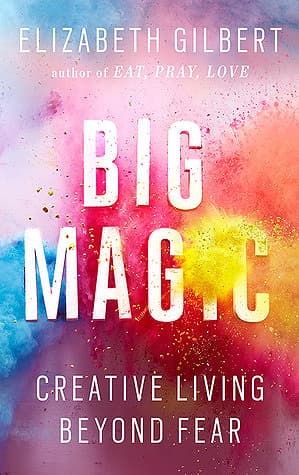
- Big Magic: Creative Living Beyond Fear
Elizabeth Gilbert
3.9 (150k) average on GoodreadsBusinessElizabeth Gilbert's "Big Magic" shares a similar encouraging tone to "Steal Like an Artist" but approaches creativity from a more philosophical and mystical perspective. Gilbert argues that ideas are living entities that seek out human collaborators, encouraging creators to live a life driven by curiosity rather than fear. While Kleon provides concrete, actionable steps for practical creation (like building a swipe file), Gilbert offers a broader mindset shift, emphasizing courage, perseverance, and the importance of engaging with one's creative impulses without attachment to outcomes. "Steal Like an Artist" is about the mechanics of creative production, whereas "Big Magic" is about the metaphysics and psychology of sustained creative living, making Gilbert's book more expansive in its scope, albeit less prescriptive in its immediate application.
- Steve Jobs
Walter Isaacson
4.1 (957k) average on GoodreadsBusinessSteve Jobs was a visionary who fused creativity and technology to revolutionize six industries and shape our digital world.
- Freakonomics: A Rogue Economist Explores the Hidden Side of Everything
Steven D. Levitt
4.0 (709k) average on GoodreadsBusinessThis book uses economic principles to reveal the surprising incentives behind everything from drug dealing and real estate to cheating teachers and the decline of crime.
- The Tipping Point: How Little Things Can Make a Big Difference
Malcolm Gladwell
4.0 (690k) average on GoodreadsBusinessMalcolm Gladwell explains how small, targeted actions can start widespread changes in trends, behaviors, and ideas.
- Outliers: The Story of Success
Malcolm Gladwell
4.2 (556k) average on GoodreadsBusinessMalcolm Gladwell argues that true success is not just about individual talent, but about the hidden advantages of culture, opportunity, and unique experiences that shape extraordinary lives.
- The Subtle Art of Not Giving a F*ck: A Counterintuitive Approach to Living a Good Life
Mark Manson
3.9 (530k) average on GoodreadsBusinessEmbrace your flaws and stomach life's lemons, because true happiness isn't about relentless positivity, but about choosing what truly matters to give a f*ck about.





Enjoyed the summary?
A summary gives you the shape of the book. The book itself has the detail, the examples and the voice.
Find Steal Like an Artist on AmazonAs an Amazon Associate, BookBrief earns from qualifying purchases. How we're funded