
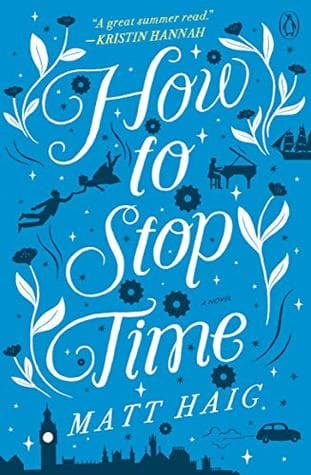
Synopsis
Covers the whole plot, including the ending.
- Difficulty
- Medium
- Pacing
- Moderate
- Mood
- Melancholy, Reflective, Hopeful, Romantic
- Read it if
- You enjoy thought-provoking stories about immortality, the human condition, and the nature of time, with a blend of historical fiction and romance.
- Skip it if
- You prefer fast-paced thrillers or stories without a strong romantic element.
How to Stop Time Plot Summary
Covers the whole plot, including the ending.
A New Beginning, an Ancient Secret
Tom Hazard looks 41 but is centuries old due to a rare condition called 'althusianism.' He moves to London to teach history. He belongs to the Albatross Society, a secret group that protects althusians and has a strict rule: never fall in love, to avoid revealing their condition. Tom's handler, Hendrich, reminds him of the rules and the dangers of attachment. Tom hopes this new life will be quiet, a break from his long and often painful past. On his first day, he meets Camille, a French teacher, who immediately interests him with her kindness and insight.
Echoes of the Past: Rose and the Plague
As Tom gets used to his new teaching job and daily life, his mind often goes back to his past, especially his life in 17th-century France and England. He remembers his deep love for his wife, Rose, and the arrival of the plague. He recalls their attempts to escape the disease, their search for safety, and the sad moment Rose got sick. The pain of her death, and the later loss of their daughter, Marion, who also had his condition and disappeared, remains the central wound of his life. This fuels his desire to find Marion.
Growing Connection with Camille
Despite the Albatross Society's warnings and his own inner struggle, Tom feels drawn to Camille. They talk about history, life, and their experiences. Tom carefully leaves out the truth of his age. Camille's warmth, intelligence, and real interest in him start to break down the emotional barriers Tom has built over centuries. Their connection grows through shared moments, including a school trip where Tom's vast historical knowledge is subtly shown, making Camille curious about his unusual insights.
Hendrich's Manipulation and the Society's True Nature
Tom starts to doubt Hendrich's reasons. He learns that the Albatross Society, while claiming to protect althusians, also controls their lives significantly, often isolating them and discouraging real human connection. Tom discovers that Hendrich has been manipulating althusians for centuries, not just to protect them, but for his own benefit and power. This realization strengthens Tom's defiance and his resolve to break free from the Society's control, especially as his feelings for Camille grow.
The Hunt for Marion Intensifies
Through his centuries of life, Tom has searched for his daughter, Marion, who also is an althusian and disappeared after Rose's death. He carries a small wooden bird carved by Rose, a constant reminder of his family and his mission. As he gets closer to Camille, his desire to find Marion grows, driven by the hope of creating a new, real life that includes both of them. He uses his historical knowledge and subtle questions to find possible clues, believing Marion might still be alive and hidden in the modern world.
Betrayal and Escape
Hendrich, seeing Tom's growing attachment to Camille, becomes more openly threatening. He shows he knows about Tom's past relationships and uses this to control him. Tom realizes that Hendrich is not just a protector but a captor, who sees althusians as tools rather than people. The pressure from Hendrich, combined with Tom's new love for Camille, pushes him to a breaking point. He decides he can no longer live under the Society's control and plans to escape, even if it means cutting ties with the only community of people like him.
A Life-Altering Confession
Convinced he cannot build a future with Camille without being honest, Tom decides to tell her his true age and condition. He explains his centuries-long life, his past, and the Albatross Society. This confession is a huge risk, as it could expose him to danger from Hendrich and possibly scare Camille away. To his surprise and relief, Camille, though shocked at first, listens with an open mind and deep empathy. Her reaction confirms Tom's belief that she is different from anyone he has met before.
The Confrontation with Hendrich
Hendrich, aware of Tom's confession and defiance, confronts him directly. The confrontation shows Hendrich's full power and his harsh methods. Hendrich tries to force Tom back into line, threatening Camille and anyone Tom cares about. Tom, strengthened by his love for Camille and his determination to find Marion, refuses to give in. The encounter is tense and dangerous, pushing Tom to use his centuries of experience and cleverness to outsmart Hendrich, leading to a clear break from the Society's control, though with consequences.
Reunion and New Beginnings
After breaking from Hendrich, Tom, with Camille's help, searches more intensely for Marion. Using clues and his historical memory, he finds her. The reunion with his daughter, after centuries, is emotional. Marion, also an althusian, has been living her own long life. With Marion found, Tom and Camille decide to build a life together, accepting the challenges and joys of their unique situation. They choose to live in the present, finding happiness in their shared future, free from Hendrich's influence.
Embracing the Present, Honoring the Past
Tom, now free from the Albatross Society and reunited with his daughter, finally learns to live fully in the present. He continues to teach history, but now with a new appreciation for human experience, sharing his unique perspective with his students. His relationship with Camille grows deeper, built on honesty, love, and respect. He finds peace in his long life, no longer burdened by the past, but enriched by it. The novel ends with Tom looking forward to the future, ready for whatever centuries may bring, with his loved ones by his side.
How to Stop Time Characters
Tom Hazard
Protagonist
An 'althusian' man, centuries old, seeking an ordinary life and connection.
Tom Hazard is the central protagonist, an althusian who has lived for centuries, appearing as a 41-year-old man. He has witnessed historical events firsthand, from performing with Shakespeare to sailing with Captain Cook. Despite his vast experiences, Tom is deeply scarred by the loss of his wife, Rose, and the disappearance of his daughter, Marion, both of whom are also althusians. He longs for a normal life and genuine human connection, but is bound by the rules of the Albatross Society. He is intelligent, observant, and carries a profound sense of melancholy and loneliness.
Relationships: Rose (Deceased wife, great love of his life); Marion (Long-lost althusian daughter); Camille (Love interest and catalyst for change); Hendrich (Antagonistic handler from the Albatross Society)
Camille
Supporting
A compassionate French teacher who falls in love with Tom.
Camille is a French teacher at the London school where Tom works. She is intelligent, warm, empathetic, and perceptive. She is drawn to Tom's quiet intensity and his unusual depth of knowledge, sensing there is more to him than meets the eye. Camille represents the possibility of a normal life and genuine connection for Tom, challenging his centuries-old emotional barriers. Her acceptance of Tom's true nature is pivotal to his journey of self-acceptance and his decision to break free from the Albatross Society.
Relationships: Tom Hazard (Love interest)
Hendrich
Antagonist
The manipulative leader of the Albatross Society.
Hendrich is the cunning and powerful leader of the Albatross Society, an organization ostensibly dedicated to protecting althusians but which, in reality, controls and manipulates them. He is an althusian himself, even older than Tom, and has cultivated a vast network of influence. Hendrich is ruthless, possessive, and believes that human attachment is a dangerous weakness for althusians. He acts as Tom's handler, constantly reminding him of the rules and threatening him if he deviates. He represents the oppressive forces that keep Tom from living a free and authentic life.
Relationships: Tom Hazard (Handler/controller, later antagonist); Marion (Also controlled by him for a time)
Rose
Supporting
Tom's beloved wife from the 17th century, whose death deeply scarred him.
Rose was Tom's wife in the 17th century and the great love of his life. She was a kind, spirited woman who shared a deep, passionate connection with Tom. Her death from the plague, along with the subsequent disappearance of their althusian daughter, Marion, is the central trauma that defines Tom's centuries of existence. Her memory serves as both a source of profound grief and a driving force behind Tom's longing for connection and his quest to find Marion. She represents the beauty and fragility of human love and life.
Relationships: Tom Hazard (Wife); Marion (Daughter)
Marion
Supporting
Tom and Rose's althusian daughter, lost for centuries.
Marion is Tom and Rose's daughter, who inherited althusianism from Tom. After Rose's death, Marion disappeared, leaving Tom with centuries of agonizing uncertainty and a relentless search. She is a symbol of Tom's lost family and his hope for future connection. Her eventual reunion with Tom is a crucial turning point, allowing him to finally heal from his past grief and embrace a complete life. While her full story isn't detailed, her existence and eventual discovery are central to Tom's emotional arc.
Relationships: Tom Hazard (Father); Rose (Mother)
Omai
Mentioned
A historical figure and fellow althusian Tom encountered.
Omai is a historical figure, a Tahitian man who traveled to Europe with Captain Cook. In Tom's narrative, Omai is also an althusian. Tom reflects on their shared experiences and Omai's struggle to adapt to different cultures and the passage of time. Omai serves as a reminder of the unique challenges and loneliness faced by althusians, but also their capacity for resilience and adaptation. His story highlights the vast historical sweep of Tom's life and the global reach of althusianism.
Relationships: Tom Hazard (Fellow althusian and acquaintance)
Captain Cook
Mentioned
The historical explorer Tom sailed with.
Captain Cook is the famed British explorer whom Tom sailed with during one of his many lives. Tom's recollections of Cook provide a vivid glimpse into his historical past and his experiences at sea. Cook represents the adventurous, world-changing periods Tom lived through, but also the inherent transience of mortal lives compared to his own. His presence in Tom's memories emphasizes the scope of history Tom has witnessed and participated in.
Relationships: Tom Hazard (Employer/commander)
William Shakespeare
Mentioned
The legendary playwright Tom knew personally.
William Shakespeare is another iconic historical figure Tom encountered in his long life, performing alongside him. Tom's memories of Shakespeare offer a personal, intimate view of the literary giant, revealing his human side. This connection underscores the theme of enduring art and human creativity across time, contrasting with the fleeting nature of individual lives. Shakespeare represents the cultural richness of the past that Tom has been privy to.
Relationships: Tom Hazard (Colleague/acquaintance)
How to Stop Time Themes
Identity and Self-Discovery Across Time
The novel explores how identity changes and is challenged by living for centuries. Tom struggles to keep a sense of self through many lives and roles, often feeling like a collection of memories rather than one person. His journey is about connecting his past with his present, accepting his unique condition, and finding an authentic self that can love and connect. His choice to teach history, which he has lived, is part of this search for purpose and identity.
“I had existed whole years without her, but that was all it had been. An existence. A book with no words.”
Love, Loss, and the Burden of Immortality
A main theme is the deep pain of loving and losing mortals when one lives forever. Tom's lasting grief for Rose and his search for Marion show the heavy emotional cost of his condition. The Albatross Society's rule against love comes from this burden, aiming to protect althusians from repeated heartbreak. However, the novel argues that love, despite its pain, is necessary for a meaningful life, even for those who live 'forever.'
“The only way to stop time is to fall in love.”
The Nature of Time and Memory
The book looks at how time feels. For Tom, time is not a straight line but a vast, connected web of memories, with past events as clear as the present. His ability to recall specific moments shows how memory shapes perception. The story moves between centuries, showing Tom's inner experience and emphasizing how history is not just facts but a living part of his mind. It questions what it means to truly 'live' through time versus just existing.
“Time is not a thing. It is a feeling. It is a rhythm. It is a memory.”
Freedom vs. Control
The conflict between individual freedom and group control is shown in Tom's fight against the Albatross Society and its leader, Hendrich. The Society, while claiming to protect althusians, actually limits their lives, telling them where to go and forbidding love. Tom's journey is about breaking free from this oppressive system to live a life he chooses, making his own decisions about love, family, and purpose. It explores the idea that real protection should not come at the cost of personal freedom and emotional fulfillment.
“We are not free. We are just in a bigger cage.”
The Human Condition and Connection
Despite his long lifespan, Tom wants the simple, deep connections that define human experience. His initial isolation and fear of attachment are eventually overcome by his desire for real closeness with Camille and reunion with Marion. The novel suggests that true humanity is not about how long one lives, but about the quality of relationships and the courage to be vulnerable. It shows the universal need for belonging and understanding, no matter one's unique circumstances.
“To be alone is to be a seed, waiting for the soil. To be with someone is to be a tree, with roots, with leaves, with fruit.”
Plot Devices & Literary Techniques
Flashbacks and Non-Linear Narrative
Interweaving Tom's past lives with his present-day experiences.
The novel employs frequent flashbacks, seamlessly shifting between Tom's current life as a history teacher in London and his centuries of past experiences. These non-linear narrative segments are not merely historical accounts but vivid, emotionally charged memories that directly inform Tom's present actions and feelings. This device allows the reader to understand the weight of Tom's past, the origins of his trauma, and the depth of his knowledge, while also creating a sense of timelessness that reflects Tom's own subjective experience of time.
The Albatross Society
A secretive organization controlling and protecting althusians.
The Albatross Society serves as a central plot device, providing both the framework for Tom's existence and the primary source of external conflict. It acts as a secret society that manages and protects althusians, dictating their lives, providing new identities, and enforcing strict rules, most notably the prohibition of falling in love. This organization represents the societal and institutional forces that try to control individual lives, and its leader, Hendrich, embodies the antagonist who must be overcome for Tom to achieve freedom and happiness.
'Althusianism' (The Condition)
The rare condition of extreme longevity and slow aging.
The fictional condition of 'althusianism' is the core speculative element of the novel. It allows certain individuals, like Tom, to age at an incredibly slow rate, granting them practical immortality. This device is the catalyst for all major plot points: Tom's vast historical experiences, his profound loneliness and grief, the existence of the Albatross Society, and his search for his daughter. It creates the fundamental premise that drives the narrative and explores the philosophical implications of living an extraordinarily long life.
The Wooden Bird Carving
A symbolic memento of Tom's lost family and enduring hope.
The small wooden bird carved by Rose, Tom's wife, is a recurring symbolic object. It represents Tom's enduring love for his family, his grief over their loss, and his unwavering hope of finding Marion. The bird is a tangible link to his past, a physical reminder of what he lost and what he is striving to reclaim. Its presence throughout the narrative underscores Tom's internal journey and his deep emotional attachment to his origins, serving as a beacon of memory and a promise of future reunion.
How to Stop Time Quotes
“The greatest gift of all is the present moment.”
“The only way to enjoy time is to not count it.”
“We are all just a collection of memories.”
“Love is the only thing that makes time bearable.”
“The past is never dead. It's not even past.”
“To live is to suffer, to survive is to find some meaning in the suffering.”
“Every life is a story. And every story has an end.”
“Don't wish for time to pass. You'll regret it when it does.”
“The world is always ending, and always beginning.”
“We are all made of stardust and stories.”
“Sometimes you have to be lost to find yourself.”
“The hardest part of living for a long time is watching everyone else die.”
“To be human is to be a collection of contradictions.”
“The future is just a really long present.”
Quiz
10 questions on the plot and the characters. Each answer comes with a short explanation.
Question 1
What is the primary rule enforced by the Albatross Society for people like Tom?
- Never reveal your true age to anyone.
- Never use your longevity for personal gain.
- Never fall in love.
- Never stay in one place for more than ten years.
Show answer
C. Never fall in love. The Albatross Society's most crucial and challenging rule for 'Albas' like Tom is to never fall in love, as it complicates their long lives and risks exposure.
Question 2
What historical figure did Tom Hazard perform with, as mentioned in the book description?
- Wolfgang Amadeus Mozart
- William Shakespeare
- Leonardo da Vinci
- Charles Dickens
Show answer
B. William Shakespeare The book description explicitly states that Tom lived history, 'performing with Shakespeare,' highlighting one of his many historical encounters.
Question 3
What is Tom Hazard's current profession when the story begins in London?
- A librarian
- A museum curator
- A high school history teacher
- A university professor
Show answer
C. A high school history teacher Tom moves back to London to 'settle down and become a high school history teacher,' a role that ironically suits his vast personal experience.
Question 4
How does Tom Hazard's condition manifest physically?
- He appears to age in reverse.
- He looks like an ordinary 41-year-old, despite being centuries old.
- His appearance changes subtly with each passing decade.
- He can change his physical appearance at will.
Show answer
B. He looks like an ordinary 41-year-old, despite being centuries old. The description states, 'He may look like an ordinary 41-year-old, but owing to a rare condition, he's been alive for centuries,' indicating his physical stasis.
Question 5
What is the primary internal conflict Tom faces throughout the novel?
- His desire to become mortal versus his fear of death.
- His struggle to reconcile his past experiences with his longing for an ordinary life and love.
- His wish to expose the Albatross Society versus his loyalty to its members.
- His inability to adapt to modern technology and culture.
Show answer
B. His struggle to reconcile his past experiences with his longing for an ordinary life and love. Tom's central conflict is between his vast, lonely past and his desire for a normal, loving present, explicitly stated as deciding 'whether to remain stuck in the past, or finally begin living in the present.'
Question 6
Who is the 'captivating French teacher' Tom meets at his new school?
- Rose
- Camille
- Isabelle
- Genevieve
Show answer
B. Camille The description mentions he 'meets a captivating French teacher at his school.' While her name isn't in the provided synopsis, Camille is the French teacher who becomes Tom's love interest in the full novel.
Question 7
The book description includes a quote: 'A book with no words.' What feeling or state of being does this quote primarily convey for Tom?
- His excitement for new experiences.
- His profound sense of loneliness and emptiness before finding love.
- His frustration with the lack of recorded history.
- His desire to write his own autobiography.
Show answer
B. His profound sense of loneliness and emptiness before finding love. The quote 'I had existed whole years without her, but that was all it had been. An existence. A book with no words' emphasizes Tom's feeling of an unfulfilled, meaningless life prior to finding love, highlighting his deep loneliness.
Question 8
Which of the following historical figures did Tom NOT explicitly share a known experience with, according to the provided text?
- William Shakespeare
- Captain Cook
- F. Scott Fitzgerald
- Ernest Hemingway
Show answer
D. Ernest Hemingway The description mentions 'performing with Shakespeare, exploring the high seas with Captain Cook, and sharing cocktails with Fitzgerald.' Hemingway is not listed among Tom's explicit historical acquaintances in the synopsis.
Question 9
What is the primary danger posed by the 'erratic behavior of the Society's watchful leader'?
- The leader might force Tom to leave London against his will.
- The leader's actions could expose the Albatross Society and its members.
- The leader could punish Tom for his past transgressions.
- The leader might prevent Tom from teaching history.
Show answer
B. The leader's actions could expose the Albatross Society and its members. The leader's 'erratic behavior' threatens to 'derail his new life and romance.' Given the Society's secretive nature, the ultimate danger of erratic behavior from its leader would be the exposure of their existence and the individuals within it.
Question 10
The book description highlights 'the inevitability of change.' How does this theme relate to Tom's personal journey?
- It refers to his constant need to change identities and locations to avoid detection.
- It signifies his internal struggle to accept that while the world changes, he remains physically the same, forcing him to adapt emotionally.
- It suggests that even immortal beings eventually face a natural end.
- It is about the changing nature of history itself, which he teaches.
Show answer
B. It signifies his internal struggle to accept that while the world changes, he remains physically the same, forcing him to adapt emotionally. While Tom physically doesn't change, the world around him constantly does. The theme of 'inevitability of change' for Tom is about his internal struggle to adapt to and embrace the present, rather than remaining emotionally 'stuck in the past,' despite his unchanging physical state.
How to Stop Time FAQ
What is "How to Stop Time" about?
"How to Stop Time" is about Tom Hazard, a man who appears 41 but has lived for centuries due to a rare condition that causes him to age extremely slowly. He's trying to live a quiet life as a history teacher in London, but his secret is complicated by the rules of the Albatross Society, which protects people like him, and his growing feelings for a captivating French teacher, Camille.
Why should I read "How to Stop Time"?
You should read "How to Stop Time" for its unique blend of historical fiction, romance, and a touch of fantasy, all centered around the poignant theme of learning to live in the present. It offers fascinating glimpses into various historical periods through Tom's eyes and explores the emotional weight of immortality and the power of human connection, even against strict rules.
What is the background/setting of "How to Stop Time"?
The primary contemporary setting is London, where Tom Hazard works as a high school history teacher. However, the narrative frequently jumps back in time through Tom's memories, transporting readers to Elizabethan England, 1920s Paris, the South Seas with Captain Cook, and other historical periods, showing his diverse experiences across centuries.
What are the most memorable quotes?
One memorable quote is, "She smiled a soft, troubled smile and I felt the whole world slipping away, and I wanted to slip with it, to go wherever she was going... I had existed whole years without her, but that was all it had been. An existence. A book with no words." This beautifully encapsulates Tom's longing for connection and his profound emotional response to Camille.
What writing style does the author use?
Matt Haig employs a reflective, often melancholic yet hopeful writing style. He uses vivid descriptions to bring historical periods to life and deep introspection to convey Tom's complex emotions and the burden of his long life. The prose is accessible yet poetic, blending historical detail with profound philosophical musings.
What minor details add significant meaning?
The detail of Tom's constant internal counting, measuring time in heartbeats to slow down his perception, subtly highlights his struggle to live in the present moment. It's a coping mechanism developed over centuries, but also a barrier to truly experiencing life, showing how deeply ingrained his 'long-life' habits are.
What are some subtle foreshadowing moments?
Early mentions of the Albatross Society's strict rules and the 'lost' members subtly foreshadow the dangers Tom faces, both from the Society's enforcement and the possibility of other long-livers breaking rules or suffering consequences. It hints that Hendrich's control is not absolute and that dissent exists.
What unexpected character connections exist?
An unexpected connection is revealed between Tom's daughter, Rose, and another long-liver, which adds a deeply personal and heartbreaking layer to his centuries-long search for her. This connection highlights the vast network of long-livers and the tragic ways their paths can intertwine or diverge.
What are unspoken character motivations?
Hendrich's unspoken motivation, beyond protecting long-livers, is his profound fear of loneliness and loss, stemming from his own long life. This drives his authoritarian control over the Albatross Society, as he believes strict rules are the only way to prevent the painful attachments that lead to suffering, and to maintain his own power.
What psychological complexities do characters exhibit?
Tom exhibits profound psychological complexity, grappling with anhedonia and an existential weariness from witnessing centuries of human folly and loss. He struggles with forming attachments, fearing the inevitable pain of outliving loved ones, and is trapped between the desire for an 'ordinary' life and the burden of his extraordinary existence.
What are the major emotional turning points?
A major emotional turning point is Tom's decision to embrace his feelings for Camille, despite the Albatross Society's strict 'no love' rule. This marks his shift from merely existing and avoiding pain to actively choosing to live and risk heartbreak for the sake of connection and happiness, signifying a profound personal evolution.
How do relationship dynamics evolve?
The relationship dynamics between Tom and Camille evolve from a cautious, intriguing attraction to a deep, committed love that challenges Tom's centuries of self-imposed emotional isolation. Their bond forces Tom to confront his past and re-evaluate his understanding of time and happiness, ultimately making him choose between safety and genuine connection.
Which parts remain ambiguous or open-ended?
The exact origin of the 'long-life' condition remains somewhat ambiguous; it's presented as a rare genetic mutation rather than a magical or scientific explanation. While some characters discuss theories, a definitive, scientific cause is never fully detailed, leaving a touch of mystery about the condition itself.
What are controversial scenes or decisions?
Hendrich's decision to manipulate and control the lives of other long-livers, including Tom, by dictating where they live and whom they can love, is a controversial aspect. His methods, though intended to protect, infringe heavily on individual freedom and lead to resentment and rebellion within the Albatross Society.
"How to Stop Time" ending explained: how it ends & what it means
The ending sees Tom finally breaking free from Hendrich's control and the oppressive rules of the Albatross Society. He chooses to live openly with Camille, accepting the risks and the fleeting nature of their time together. It signifies Tom's decision to embrace life, love, and the present moment, rather than being perpetually stuck in the past or fearing the future. He finds a different way to 'stop time' – by living fully in each moment.
About the author

Matt Haig is a British author known for his fiction that often explores themes of time, mental health, and the human experience. His notable works include "How to Stop Time," which delves into the complexities of living through centuries, "Reasons to Stay Alive," a memoir reflecting on his struggles with depression, and "The Midnight Library," a novel about choices and regrets.
Similar books
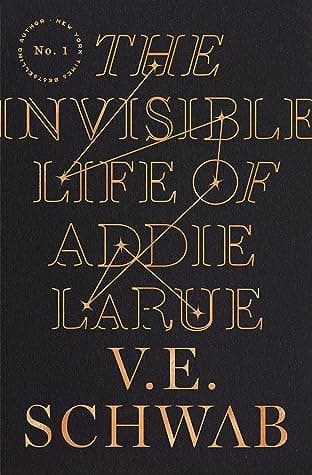
- The Invisible Life of Addie LaRue
V.E. Schwab
4.5 (17k) average on GoodreadsFantasyExplores themes of immortality, love across centuries, and the longing for an ordinary life against the backdrop of a unique condition.
- Orlando
Virginia Woolf
3.9 (61k) average on GoodreadsFantasyFeatures a protagonist who lives for centuries and experiences history firsthand, with shifts in identity and perspective over time.
- The Midnight Library
Matt Haig
Shares a similar introspective and philosophical tone, exploring choices, regrets, and the search for happiness and meaning in life.
- Never Let Me Go
Kazuo Ishiguro
3.8 (471k) average on GoodreadsLiterary FictionBoth books involve a unique group of individuals living somewhat apart from mainstream society with a hidden truth about their existence. However, Ishiguro's novel presents a more meticulously crafted and philosophically deep exploration of societal structures, ethics, and the implications of difference, whereas Haig's 'Alba' organization feels less fully realized and its antagonist less nuanced.
- Harry Potter and the Sorcerer's Stone
J.K. Rowling
4.5 (7M) average on GoodreadsFantasyRescued from a miserable life under the stairs, an orphaned boy discovers he's a wizard destined for a magical school, where he uncovers a dangerous secret tied to the dark wizard who murdered his parents.
- The Hunger Games
Suzanne Collins
4.3 (6.4M) average on GoodreadsFantasyIn a future where children fight to the death on live television, Katniss Everdeen volunteers for the arena, turning a death sentence into a fight for survival and a spark of rebellion.




Enjoyed the summary?
A summary gives you the shape of the book. The book itself has the detail, the examples and the voice.
Find How to Stop Time on AmazonAs an Amazon Associate, BookBrief earns from qualifying purchases. How we're funded