

Synopsis
Covers the whole plot, including the ending.
- Difficulty
- Medium
- Pacing
- Variable
- Mood
- Whimsical, Reflective, Satirical, Philosophical
- Read it if
- You enjoy experimental narratives, explorations of gender and identity, or a satirical look at English literary history and societal norms.
- Skip it if
- You prefer linear plots, traditional character development, or find stream-of-consciousness writing challenging.
Orlando Plot Summary
Covers the whole plot, including the ending.
The Elizabethan Boy
Orlando begins as a sixteen-year-old boy in the Elizabethan era, a wealthy nobleman with a love for poetry and romance. He is first seen cutting at a Moor's head, a symbol of his family's military past, but he soon leaves such activities for thought and writing. Queen Elizabeth I favors him, giving him lands and titles, and making him her favorite. Orlando enjoys court life but also wants solitude and beauty. He falls deeply in love with a Russian princess named Sasha, who visits the English court. He experiences the joys and sorrows of first love, but Sasha betrays him by sailing away with a sea captain, leaving Orlando heartbroken and disappointed with love.
The Jacobean Poet
After Sasha leaves, Orlando goes back to his family home, Oakdean, a large estate that reflects his complex and old heritage. He devotes himself to writing poetry, filling notebooks with verses, but struggles with publishing and how his work is received. He hosts an intellectual salon, attracting writers of the Jacobean age, but feels increasingly alone due to his artistic nature. His search for ideal beauty often conflicts with the everyday parts of life, leading to times of sadness and thought. He continues to think about the meaning of love and identity, often feeling a gap between his inner self and his outward appearance.
The Ambassador in Constantinople
King Charles II makes Orlando ambassador to Constantinople. He takes on this new role with his usual enthusiasm, enjoying the culture and wealth of the Ottoman Empire. There, he gets involved in diplomatic matters and finds personal satisfaction. However, during a time of unrest, Orlando falls into a deep, seven-day sleep. He wakes up to find himself a woman. This change happens without any physical or emotional trouble; it is simply a change in biological sex, while he keeps all his memories, personality, and intelligence. The story does not explain this event, presenting it as a natural, though unusual, occurrence.
The Eighteenth-Century Lady
As a woman, Orlando deals with the different social expectations and limits placed on women in the 18th century. Many suitors pursue her, including the Archduchess Harriet, who later turns out to be Archduke Harry. Orlando struggles with corsets, social roles, and the expectations of marriage and home life, which are very different from her previous freedom as a man. She escapes these pressures by running away with a group of gypsies in Turkey, finding a brief time of wild freedom and a deeper connection to nature. However, she eventually wants to return to England and her writing.
Return to England and the Georgian Age
Orlando returns to England, now in the Georgian era, and faces legal battles over her property and titles because of her sex change and long absence. Her legal situation is complicated because she is legally still a man, despite being physically a woman. These legal disputes highlight the absurdity and strictness of social norms and gender roles. She observes the changing English society, from social rituals to new intellectual movements. She continues to write, but her work largely goes unrecognized, adding to her internal struggles with identity and artistic value.
The Victorian Wife
In the Victorian era, Orlando, now a woman for several centuries, is drawn to the customs of the time. She meets and marries Marmaduke Bonthrop Shelmerdine, a sea captain who shares her love for adventure and unconventional spirit. Their marriage is a union of two independent people, marked by respect and a shared understanding of life's complexities. This period sees Orlando dealing with the expectations of Victorian womanhood, home life, and growing social changes. She continues to revise her long poem, 'The Oak Tree,' a work that has been with her through all her changes, showing her lasting artistic ambition.
The Modern Woman
As the novel nears the present day (1928), Orlando navigates the quickly changing world of the early 20th century. She experiences cars, electricity, and the decline of traditional aristocratic life. She reflects on the vast history she has seen, the evolution of human nature, and the continuous struggle between social expectations and individual freedom. Her identity, once fluid, begins to become firm as she embraces all her past selves. She has lived through centuries, changed sex, and experienced countless human emotions, all while keeping a core sense of self.
The Completion of 'The Oak Tree'
Through the centuries, Orlando has carefully worked on her epic poem, 'The Oak Tree,' a reflection of her lasting connection to her family home and her own varied existence. This poem is a metaphor for her life – rooted in history but always growing and changing. Finally, in 1928, the poem is published, bringing her some literary recognition, though perhaps not the deep understanding she has always sought. The publication marks the end of her artistic journey and her long search for self-expression, showing her persistent spirit and her unique view of life and literature.
The Present Moment
The novel ends with Orlando in the present day (1928), reflecting on her extraordinary life, her changes, and the many experiences that have shaped her. She is a woman of great wisdom and a deep understanding of human nature, having lived for four centuries. Her thoughts are rich with memories, insights, and a strong sense of continuity despite the changes she has gone through. As the clock strikes midnight, her husband, Marmaduke Bonthrop Shelmerdine, returns, symbolizing the cyclical nature of time and love. Orlando looks out at her estate, feeling all her past selves come together in the present moment, a complete being.
Principal Figures
Orlando
Protagonist
A poet who lives for centuries and changes sex from man to woman.
Orlando is a fascinating and complex character, embodying the fluidity of identity and the enduring human spirit. Initially a sixteen-year-old nobleman in Elizabethan England, he is passionate, romantic, and deeply introspective, driven by a desire for beauty and a love for poetry. His journey spans four centuries, during which he experiences life as both a man and a woman, adapting to the social norms and expectations of each era while retaining a core sense of self. He is an observer and participant in history, a seeker of truth and beauty, and a perpetual outsider despite his aristocratic lineage. His defining characteristic is his adaptability and his unwavering dedication to his artistic pursuits.
Relationships: Queen Elizabeth I (Patron and admirer); Sasha (First love, a Russian princess who betrays him); Archduchess Harriet/Archduke Harry (Suitor and comedic foil); Marmaduke Bonthrop Shelmerdine (Husband, a fellow adventurer)
Queen Elizabeth I
Supporting
The powerful monarch who favors young Orlando.
Queen Elizabeth I is depicted as a formidable and capricious monarch, drawn to Orlando's youthful charm and beauty. She bestows upon him lands and titles, making him her favorite, but also demands his constant attention and loyalty. Her presence in the early chapters establishes Orlando's initial social standing and introduces the theme of power dynamics. She represents the rigid social hierarchy and the expectations placed upon individuals within that system. Her affection for Orlando is possessive and demanding, highlighting the constraints even a favored courtier might experience under a powerful ruler. She embodies the grandeur and the restrictive nature of the Elizabethan court.
Relationships: Orlando (Royal patron and object of affection)
Sasha
Supporting
A captivating Russian princess and Orlando's first love.
Sasha is a beautiful and enigmatic Russian princess who visits the English court. She captivates young Orlando with her exotic allure and independent spirit, becoming his first intense love. Their passionate affair is marked by both ecstasy and torment. Sasha is portrayed as elusive and ultimately untrustworthy, betraying Orlando by eloping with a sea captain. Her departure leaves Orlando heartbroken and disillusioned, profoundly shaping his views on love and fidelity for centuries to come. She represents the fleeting nature of youthful romance and the pain of betrayal, a pivotal figure in Orlando's emotional development.
Relationships: Orlando (Love interest and source of heartbreak)
Archduchess Harriet / Archduke Harry
Supporting
A persistent suitor to Orlando, initially as a woman, then as a man.
Archduchess Harriet is a persistent suitor to Orlando when Orlando is a woman. She is portrayed as somewhat grotesque and comically persistent. Later, she reveals herself to be Archduke Harry, a man, highlighting the performative nature of gender and societal roles. This character serves as a comedic foil and a vehicle for exploring the superficiality of social conventions. The Archduchess/Archduke's relentless pursuit of Orlando underscores the pressures placed upon women to marry and conform to societal expectations, while also subtly questioning the fixed nature of gender identity through their own transformation.
Relationships: Orlando (Persistent suitor)
Marmaduke Bonthrop Shelmerdine
Supporting
Orlando's husband, a sea captain with a shared spirit of adventure.
Marmaduke Bonthrop Shelmerdine is Orlando's husband in the Victorian era. He is a sea captain, an adventurous and somewhat mysterious figure who shares Orlando's love for exploration and an unconventional approach to life. Their relationship is one of mutual respect and understanding, characterized by a shared spirit of independence rather than traditional romantic dependency. He is often absent due to his travels, which allows Orlando her own space and freedom. Shelmerdine represents a more mature and harmonious form of companionship for Orlando, one that accommodates her unique nature and centuries of experience, providing a stable, yet unbound, presence in her long life.
Relationships: Orlando (Husband, a supportive and understanding partner)
The Narrator
Mentioned
The omniscient, often playful, and philosophical voice of the biography.
The narrator of Orlando is not a character in the traditional sense, but an omnipresent and highly distinctive voice that guides the reader through Orlando's life. This narrator is often witty, ironic, and philosophical, frequently interjecting with personal opinions, historical commentary, and direct addresses to the reader. The narrator is self-aware of the act of writing a biography, often commenting on the challenges of historical accuracy and the subjective nature of truth. This narrative voice is a key element of the novel's satirical and experimental style, blurring the lines between fiction and non-fiction, and giving the book its unique tone and intellectual depth.
Themes & Insights
Gender Fluidity and Identity
The main theme is the fluidity of gender and identity. Orlando's change from a man to a woman, without explanation or distress, questions fixed ideas of sex and gender. The novel explores how social expectations and roles change greatly based on one's perceived gender. Orlando experiences firsthand the different limits and freedoms as a man in Elizabethan England versus a woman in the Georgian or Victorian eras. The story suggests that identity is not fixed but always changing, shaped by time, experience, and social context, going beyond biological sex. Orlando's inner self stays consistent, showing the artificiality of gender divisions. This is clear when Orlando, as a woman, sees the Archduchess Harriet become Archduke Harry, further blurring these lines.
“For here again, very largely, the biographer is at a loss to account for the extraordinary changes that took place in Orlando herself.”
The Nature of Time and History
Orlando's centuries-long life offers a way to look at time and history. The novel compresses long historical periods, showing the repeating patterns of fashion, literature, and social norms, while also pointing out big changes. Orlando experiences history not as a straight line but as a continuous present, where past selves and memories always inform the current moment. This theme questions traditional historical narratives, suggesting that 'history' is often a subjective and incomplete account. The changing landscape of Oakdean, Orlando's family home, reflects the passing of time and the evolution of English society, acting as a constant background to Orlando's enduring presence.
“A biography, however, is a work that is not to be lightly undertaken; and we can but pray that we may be granted the patience, the insight, and the courage which are required.”
Art and Literature
Art and literature are central to Orlando's life and the novel's main message. Orlando is a poet at heart, driven by a strong passion for writing. The novel makes fun of literary conventions, the difficulties of publishing, and the changing nature of critical reception across different eras. Orlando's long poem, 'The Oak Tree,' acts as a symbolic anchor, growing and gaining meaning throughout their centuries of life. This theme explores the lasting power of creative expression, the artist's struggle for recognition, and how literature reflects and shapes its times. The novel itself comments on biography and literary form, playfully subverting its own genre.
“As for the oak tree, it was part of her; she had been born with it; it was her life.”
Love and Relationships
The novel explores different forms of love and relationships across eras. From the passionate, yet betraying, first love with Sasha, to the more unconventional and understanding marriage with Marmaduke Bonthrop Shelmerdine, Orlando experiences the range of human connection. The limits placed on love by social expectations, especially for women, appear often. The novel suggests that true love goes beyond gender and social norms, focusing instead on a deep, spiritual connection between people. Orlando's ongoing search for companionship, combined with their strong independent spirit, highlights the complexities of finding genuine connection in a world defined by superficialities.
“It was love, she thought, that was to blame. For love has a thousand guises.”
Plot Devices & Literary Techniques
The Sex Change
Orlando's unexplained transformation from man to woman.
The central plot device is Orlando's spontaneous and unexplained change of sex during his ambassadorship in Constantinople. This fantastical event is presented without scientific or magical justification, simply as a fact. It serves as the primary mechanism for exploring gender fluidity, societal expectations, and the continuity of identity beyond biological sex. By changing sex, Orlando experiences firsthand the vastly different social, legal, and emotional landscapes for men and women across centuries, allowing the novel to satirize and critique gender roles. This device is crucial for the novel's feminist undertones and its experimental approach to biography and identity.
Immortality / Extended Lifespan
Orlando's ability to live for centuries.
Orlando's extended lifespan, allowing him/her to live from the Elizabethan era to the early 20th century, is a key plot device. This grants the narrative a vast historical scope, enabling the exploration of social, cultural, and literary changes over four centuries through a single, continuous consciousness. It allows the author to comment on the cyclical nature of history, the evolution of human behavior, and the enduring aspects of the human spirit. The long lifespan also emphasizes the theme of identity, as Orlando's core self persists despite centuries of external change and gender transformation, highlighting the subjective experience of time.
The Oak Tree (Poem)
Orlando's long-running poetic masterpiece.
'The Oak Tree' is Orlando's epic poem, a work they labor on throughout all their centuries and transformations. This poem functions as a symbolic plot device, representing Orlando's enduring artistic ambition, their connection to their ancestral home, and the continuity of their inner life. The poem itself evolves and is revised across different historical periods, mirroring Orlando's own development and the changing literary tastes. Its eventual publication in 1928 signifies the culmination of Orlando's artistic journey and provides a tangible achievement that ties together the disparate threads of their long and varied existence. It is a metaphor for the self – rooted yet constantly growing.
The Omniscient and Self-Aware Narrator
A playful, philosophical, and intrusive narrative voice.
The narrator is a highly distinctive and self-aware voice that directly addresses the reader, comments on the act of writing a biography, and often offers philosophical digressions. This narrative style is a crucial plot device, as it allows the author to break conventional biographical structure, inject humor and irony, and directly engage with themes of truth, history, and the subjective nature of storytelling. The narrator's intrusions and musings serve to both guide the reader through Orlando's extraordinary life and to playfully subvert the expectations of a traditional biography, making the narrative itself a character in its own right and a vehicle for Woolf's commentary.
Orlando Quotes
“For the first time in his life Orlando felt his kinship with the Duke.”
“He—for there could be no doubt of his sex, though the fashion of the time did something to disguise it—was in the act of poising himself to bring the head of a Moor, which he had severed from its body, and was now holding by the hair, to the ground.”
“Life, it has been agreed by all thinking men, is a luminous halo, a semi-transparent envelope surrounding us from the beginning of consciousness to the end.”
“He had a great variety of selves to call upon, far more than most people, and it was a relief to him to think that he was not, as his present employer would have it, a single, indivisible being, but many.”
“Change had taken place in the very fabric of his being.”
“The great advantage of being a woman is that one can pass through a crowd without exciting very much attention.”
“She had to choose, and choose at once, between the life of a man and the life of a woman, with all their different values.”
“For it is love, the poet has said, that makes the world go round.”
“She was not a woman. She was not a man. She was an angel.”
“The past is beautiful because one never realises an emotion at the time. It expands later, and thus we don't have to suffer.”
“As long as she thinks of a man, nobody objects to a woman thinking.”
“And there, in the very centre of the room, stood a girl, whose head was bare, whose feet were bare, and whose clothes were of the scantiest.”
“The age of the earth in which we live is 1928.”
“It was impossible to say whether Orlando was a man or a woman.”
“For she had a great variety of selves to call upon, far more than most people can boast.”
Quiz
10 questions on the plot and the characters. Each answer comes with a short explanation.
Question 1
Orlando begins his life as a young nobleman during which historical period?
- The Victorian Era
- The Elizabethan Era
- The Georgian Era
- The Edwardian Era
Show answer
B. The Elizabethan Era Orlando is introduced as a young man of noble birth during the reign of Queen Elizabeth I, specifically at the beginning of the novel.
Question 2
What is the primary reason Orlando falls into a deep, seven-day sleep after being appointed ambassador to Constantinople?
- He is poisoned by a rival diplomat.
- He is overwhelmed by the political intrigue and social demands.
- He is heartbroken by the betrayal of a lover.
- It is during this sleep that he changes sex from man to woman.
Show answer
D. It is during this sleep that he changes sex from man to woman. While ambassador in Constantinople, Orlando falls into a profound sleep, and upon waking, finds himself transformed into a woman. This is the pivotal moment of his sex change.
Question 3
Which historical figure does Orlando, as a young man, fall in love with and pursue during the Frost Fair on the frozen Thames?
- Queen Victoria
- Sasha, a Russian princess
- Lady Mary Wortley Montagu
- Nell Gwyn
Show answer
B. Sasha, a Russian princess During the famous Frost Fair on the frozen Thames, Orlando, as a young man, becomes infatuated with and pursues the enigmatic Russian princess, Sasha.
Question 4
What is the central theme explored by Orlando's ability to live for centuries and change sex?
- The pursuit of wealth and power across different eras.
- The fluid nature of identity, gender, and time.
- The unchanging essence of human nature despite external changes.
- The cyclical rise and fall of aristocratic families.
Show answer
B. The fluid nature of identity, gender, and time. Orlando's long life and sex change are central to the novel's exploration of identity as something fluid and constructed, rather than fixed, challenging traditional notions of gender and time.
Question 5
After returning to England as a woman, Orlando spends a significant period living with which group?
- A group of aristocratic ladies in London society.
- A community of Romany (Gypsies) in the wilderness.
- A convent of nuns in the English countryside.
- A group of struggling artists in a bohemian commune.
Show answer
B. A community of Romany (Gypsies) in the wilderness. After her transformation and return to England, Orlando lives for a period with a group of Romany people, experiencing a different way of life away from English society.
Question 6
What is the title of the long poem that Orlando works on throughout many centuries of her life?
- The Immortal Soul
- The Oak Tree
- A History of England
- The Changing Heart
Show answer
B. The Oak Tree Orlando continuously revises and works on a long poem titled 'The Oak Tree' throughout her many centuries of life, reflecting her enduring artistic pursuits.
Question 7
Which literary device does Woolf primarily employ to satirize the conventions of biography and historical writing?
- Strict adherence to chronological order and factual accuracy.
- The use of an omniscient, detached, and highly critical narrator.
- Exaggeration, anachronism, and direct addresses to the 'reader' about the difficulties of biography.
- Focusing solely on the internal thoughts and feelings of the protagonist.
Show answer
C. Exaggeration, anachronism, and direct addresses to the 'reader' about the difficulties of biography. Woolf uses exaggeration, anachronisms, and direct meta-commentary from the 'biographer' narrator to playfully mock and deconstruct the rigid conventions of traditional biographical writing.
Question 8
What is the significance of the year 1928, the year the novel concludes?
- It marks the year Orlando finally achieves immortality.
- It is the year the novel 'Orlando' was first published.
- It is the year Orlando marries her final love, Shelmerdine.
- It marks the end of Orlando's literary career.
Show answer
B. It is the year the novel 'Orlando' was first published. The novel concludes in 1928, the very year 'Orlando' was published, bringing the fictional 'biography' up to the present moment of its creation.
Question 9
How does Orlando's experience of 'the spirit of the age' (or 'Zeitgeist') change after her sex transformation?
- She becomes completely oblivious to societal norms and expectations.
- She finds herself more constrained by social conventions and expectations as a woman than as a man.
- She gains greater freedom and opportunities as a woman than she had as a man.
- Her perception of the 'spirit of the age' remains entirely unchanged, regardless of her gender.
Show answer
B. She finds herself more constrained by social conventions and expectations as a woman than as a man. As a woman, Orlando experiences the 'spirit of the age' differently, finding herself more restricted by societal expectations regarding dress, behavior, and legal rights (e.g., property ownership) compared to her life as a man.
Question 10
Who is the real-life individual that 'Orlando' is widely considered to be a literary portrait of?
- T.S. Eliot
- Virginia Woolf herself
- Vita Sackville-West
- E.M. Forster
Show answer
C. Vita Sackville-West The novel 'Orlando' is famously a fictionalized biography and love letter to Virginia Woolf's lover and close friend, the aristocratic poet and novelist Vita Sackville-West.
Orlando FAQ
What is the central premise of 'Orlando'?
'Orlando' follows its titular protagonist, a young nobleman in Elizabethan England, through several centuries of English history. The narrative details Orlando's adventures, loves, and literary pursuits, most notably chronicling a mysterious change of sex from male to female around the 18th century, and their continued existence into the novel's present day of 1928.
Who is Orlando based on, and what was Virginia Woolf's relationship with this person?
Orlando is a fictionalized biography of Vita Sackville-West, a poet, novelist, and aristocrat with whom Virginia Woolf had a passionate affair. Woolf intended the novel as a love letter to Sackville-West, celebrating her personality, lineage, and the fluidity of her identity, while also playfully immortalizing their shared experiences and private jokes.
What significant transformation does Orlando undergo, and how is it explained in the novel?
Orlando undergoes a miraculous sex change from male to female while serving as ambassador in Constantinople during the 18th century. The novel offers no scientific or supernatural explanation; Orlando simply wakes up one morning to find themselves a woman, accepting the change with a sense of continuity and curiosity, highlighting the arbitrary nature of gender assignment.
How does the novel address the concept of time and mortality?
The novel defies conventional linearity, allowing Orlando to live for over 300 years without aging significantly, experiencing various historical periods firsthand. This extended lifespan challenges traditional notions of mortality and allows Woolf to explore how societal norms, literary trends, and personal identity evolve across centuries, emphasizing the enduring spirit over fleeting existence.
What is the significance of Orlando's poetry throughout the novel?
Orlando's lifelong ambition is to write a great poem, 'The Oak Tree,' which spans centuries in its creation and revision. This poem serves as a metaphor for artistic endeavor, personal growth, and the pursuit of truth, reflecting Orlando's changing perspectives and experiences as they live through different eras and genders, eventually achieving publication in 1928.
Are there any subtle clues about Orlando's sex change before it actually happens?
While not explicitly stated as 'clues,' the narrative frequently emphasizes Orlando's androgynous qualities and his attraction to both men and women even in his male form. For instance, his deep connection with Sasha, a Russian princess, and his later marriage to Marmaduke Bonthrop Shelmerdine, a figure who also blurs gender lines, subtly foreshadow the fluidity of identity that culminates in his sex change.
What is the significance of the recurring 'spirit of the age' motif?
The 'spirit of the age' is a pervasive force dictating fashion, manners, and thought, often presented as a character in itself, influencing Orlando's behavior and perspectives in each era. It subtly highlights how external societal pressures shape individual identity and expression, yet Orlando's core self remains, suggesting an enduring essence beneath superficial changes.
How does the novel subtly critique biographical writing and historical accuracy?
Woolf satirizes traditional biography by presenting a fantastical, impossible 'life' filled with anachronisms and subjective interpretations, while maintaining the tone of a serious biographer. This playful approach challenges the idea of a single, objective truth in historical accounts, suggesting that biographies are inherently interpretive and influenced by the biographer's own biases and affections, much like her own for Vita.
What role does the natural world, particularly the oak tree, play in Orlando's development?
The ancient oak tree on Orlando's estate is a constant throughout their centuries-long life, serving as a symbol of continuity, grounding, and the enduring power of nature against the fleetingness of human existence. It's also the namesake and inspiration for Orlando's magnum opus, 'The Oak Tree,' representing the deep roots of creativity and personal history.
How does Orlando's internal monologue evolve as they transition between genders and eras?
Orlando's internal monologue consistently reflects a search for self and identity, but its focus shifts. As a man, there's an emphasis on ambition and societal expectations; as a woman, the monologue delves into the constraints and freedoms of female existence, yet always maintaining a sense of curious observation and a philosophical detachment that transcends specific gender roles, ultimately seeking a unified self.
Discuss the psychological impact of Orlando's prolonged existence and lack of aging.
Orlando's centuries-long life and agelessness lead to a unique psychological state characterized by a vast accumulation of experience and a detachment from conventional human concerns like mortality. While it grants them profound wisdom and perspective, it also fosters a sense of loneliness and an ongoing struggle to reconcile their multiple past selves with their present identity, constantly seeking an authentic 'I'.
How does Orlando grapple with the societal expectations placed upon them as they change gender?
Orlando experiences firsthand the stark differences in societal expectations for men and women across various epochs. As a man, they enjoy freedom and status; as a woman, they confront legal incapacities, restrictive clothing, and a shift in social perception. Orlando often feels constrained by these roles but also finds new forms of expression and understanding through them, highlighting the performative nature of gender.
What psychological journey does Orlando undertake in reconciling their multiple identities?
Orlando's journey is one of integration, as they strive to reconcile the diverse 'selves' accumulated over centuries and across genders into a coherent identity. They frequently refer to their 'thousand selves,' constantly seeking the 'true' self amidst the shifting social masks and historical contexts, ultimately embracing a fluid, multifaceted identity that transcends singular definitions.
Is 'Orlando' primarily a feminist text, a transgender narrative, or both?
'Orlando' can be interpreted as both a feminist and a proto-transgender narrative, and indeed, many scholars argue it is both. It critiques patriarchal society by showing the limitations imposed on women, while also exploring gender fluidity and identity beyond binary classifications, making it a foundational text for both feminist and gender studies, though the term 'transgender' did not exist in Woolf's time.
To what extent does the novel suggest that gender is a social construct rather than an inherent biological fact?
The novel strongly suggests that gender is a social construct. Orlando's effortless transition from male to female, with no internal confusion about their core identity, and the subsequent change in how society perceives and treats them, highlights that many attributes associated with gender are external performances and societal dictates rather than intrinsic biological realities. Their 'soul' remains consistent despite the physical change.
How does the ending of the novel, with Orlando in 1928, reflect Woolf's commentary on modernity?
The ending, set in the bustling, modern year of 1928, finds Orlando (now a woman) grappling with the speed and fragmentation of contemporary life. The arrival of airplanes and motorcars symbolizes the rapid changes of modernity, contrasting with the slower pace of past centuries. It suggests a sense of both liberation and disorientation, reflecting Woolf's own complex views on the modern world and its impact on identity.
What is the broader message about identity that Woolf conveys through Orlando's journey?
Woolf conveys that identity is fluid, multifaceted, and not confined by gender, time, or societal roles. Orlando's journey illustrates that the self is an accumulation of experiences, memories, and perspectives, constantly evolving yet retaining a core essence. The novel champions the idea of an authentic self that transcends conventional categories, embracing contradiction and change as integral to being.
How does the novel's satirical tone contribute to its deeper themes?
The novel's pervasive satirical tone, particularly in its playful treatment of historical figures, literary conventions, and biographical seriousness, allows Woolf to critique societal norms and intellectual pretensions without being didactic. This lightheartedness makes the profound explorations of gender, time, and identity more accessible and engaging, inviting readers to question established norms with a similar spirit of inquiry.
About the author

Adeline Virginia Woolf was an English writer. She is considered one of the most important modernist 20th-century authors and a pioneer in the use of stream of consciousness as a narrative device.
Similar books
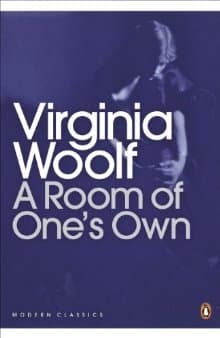
- A Room of One's Own
Virginia Woolf
4.2 (118k) average on GoodreadsCreativityExplores feminist themes and the role of women in society and literature through an essayistic style.
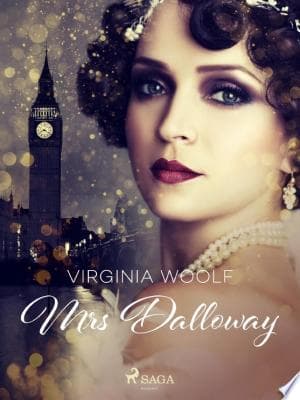
- Mrs Dalloway
Virginia Woolf
3.8 (361k) average on GoodreadsFictionShowcases Woolf's stream-of-consciousness style and deep character introspection over a single day.
- One Hundred Years of Solitude
Gabriel García Márquez
4.1 (753k) average on GoodreadsLiterary FictionFeatures a multi-generational saga with fantastical elements and a sprawling historical scope.
- A Passage to India
E.M. Forster
3.7 (70k) average on GoodreadsHistorical FictionForster's A Passage to India is a modernist novel that provides a critical social commentary on colonialism and cultural misunderstandings in British India. While both Woolf and Forster are modernists, Forster's narrative style is generally more accessible and his focus is on social realism and interpersonal dynamics within a specific historical context. Orlando, in contrast, is far more experimental in form and less concerned with external social realism, instead delving into the internal landscape of its protagonist and the fluidity of identity across vast stretches of time.
- Harry Potter and the Sorcerer's Stone
J.K. Rowling
4.5 (7M) average on GoodreadsFantasyRescued from a miserable life under the stairs, an orphaned boy discovers he's a wizard destined for a magical school, where he uncovers a dangerous secret tied to the dark wizard who murdered his parents.
- The Hunger Games
Suzanne Collins
4.3 (6.4M) average on GoodreadsFantasyIn a future where children fight to the death on live television, Katniss Everdeen volunteers for the arena, turning a death sentence into a fight for survival and a spark of rebellion.




Enjoyed the summary?
A summary gives you the shape of the book. The book itself has the detail, the examples and the voice.
Find Orlando on AmazonAs an Amazon Associate, BookBrief earns from qualifying purchases. How we're funded