
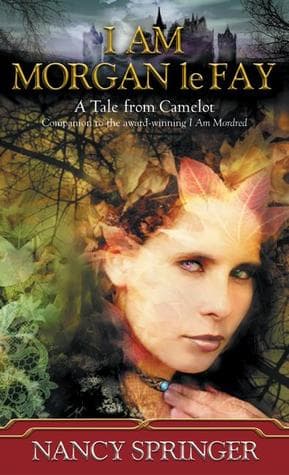
Synopsis
Covers the whole plot, including the ending.
- Difficulty
- Medium
- Pacing
- Moderate
- Mood
- Mythic, Empowering, Melancholy, Magical
- Read it if
- You enjoy re-imaginings of classic legends from a fresh, female perspective, with a focus on a powerful, complex protagonist's journey into magic and destiny.
- Skip it if
- You prefer a strictly traditional retelling of the Arthurian legend or dislike morally ambiguous main characters.
I Am Morgan le Fay Plot Summary
Covers the whole plot, including the ending.
Childhood at Tintagel
Morgan, a young girl with striking mismatched eyes, lives a free childhood at Tintagel Castle with her loving parents, Duke Gorlois and Igraine, and her elder sisters, Morgause and Elaine. She is a wild child, often exploring the Cornish cliffs and forests, feeling a deep connection to nature and sensing a nascent magic within herself. Her peaceful life ends when King Uther Pendragon attacks Tintagel. Her father, Gorlois, is killed during a discussion, and Uther, using a magical disguise from Merlin, seduces and marries Igraine, who is already pregnant with Uther's child, Arthur. Morgan sees the brutal aftermath and her mother's quick shift in loyalty, leaving her feeling alone and betrayed.
Life at Uther's Court
After her father's death and mother's remarriage, Morgan is brought to Uther Pendragon's court, a place she dislikes. She is largely ignored by Igraine, who is focused on her new role as queen and her son, Arthur. Morgan feels isolated and angry, her wild spirit stifled by court expectations. She begins to consciously explore her magical abilities, often practicing in secret. She finds some comfort in watching the court's schemes and the whispers of old traditions, further cementing her feeling of being an outsider.
The Prophecy and Merlin's Influence
Merlin, the court wizard, takes an interest in Morgan, recognizing her natural magical talent and her potential. He tries to guide her, speaking in riddles and offering unclear advice about her future and Britain's fate. Morgan, however, distrusts Merlin, seeing him as helping destroy her family and as an agent of Uther's rule. She resents his attempts to control her powers, determined to make her own way. Their interactions are often tense, a battle of wills between two powerful magic-users, each with their own vision for the land's future. Merlin hints at a greater destiny for her, one tied to Arthur's fate.
The Death of Uther and Arthur's Ascension
Uther Pendragon becomes ill and dies, sending Britain into a period of chaos as lords fight for power. The young Arthur, still a boy, is presented by Merlin as the rightful heir, his claim proven by pulling the Sword from the Stone. Morgan sees this event with a mix of disbelief and growing cynicism. She sees it not as a divine right, but as another manipulation by Merlin. Despite her personal feelings, she recognizes the power of the symbol and the lords' reluctant acceptance of Arthur. She continues to improve her magic, sensing that her destiny is now linked to her half-brother's reign, whether she likes it or not.
Morgan's Education and Exile
Feeling increasingly restricted and unsafe at Arthur's court, Morgan seeks teachers to further her magical studies. She travels to various places, learning from wise women and old traditions, embracing the wilder, earth-based magic that she connects with. During these travels, she experiences more betrayals and heartbreaks, strengthening her distrust of men and the established order. She learns shape-shifting and healing, deepening her connection to the mystical forces of the land. Her experiences outside the court harden her resolve and sharpen her magical abilities, changing her from an angry girl into a powerful sorceress determined to protect herself and her heritage.
The Isle of Avalon
Morgan eventually finds her way to the mysterious Isle of Avalon, a place of ancient magic and powerful priestesses. Here, she is welcomed and taught the deeper mysteries of the Old Religion. She leaves behind her courtly past and fully embraces her identity as a woman of power, a priestess of the Goddess. Avalon becomes her sanctuary, a place where she can freely develop her magic without fear of persecution or control. She learns advanced healing, prophecy, and the intricate connections between the natural world and the spiritual realm. This period marks a major change, solidifying her power and her loyalty to the pre-Christian ways.
The Birth of Mordred
Driven by a desire for revenge against Arthur and the patriarchal system he represents, Morgan plans a deliberate act of seduction. Using her magic to disguise herself as a beautiful noblewoman, she sleeps with Arthur, knowing the union will produce a child. This child, Mordred, is born out of calculated spite and a desire to undermine Arthur's reign. The act is not one of love, but of cold, strategic manipulation, a direct challenge to the prophecy and the established order. The birth of Mordred sets in motion events that will ultimately lead to the fall of Camelot, fulfilling Morgan's complex and often contradictory motivations.
Conflict with Camelot
As Arthur's reign strengthens and Christianity grows, Morgan increasingly disagrees with Camelot. She sees Arthur's court as a force that suppresses old ways, diminishes women's power, and destroys Britain's natural magic. She uses her sorcery to subtly and sometimes openly challenge Arthur, often through illusions, enchantments, and political schemes. Her actions are driven by a mix of personal vendetta, a desire to protect the ancient religion, and a deep belief that Arthur's rule is ultimately bad for the land. She becomes a strong opponent, her magic a constant problem for the growing Christian kingdom.
The Rise of Mordred and the Fall of Camelot
Morgan watches Mordred grow, subtly influencing him and encouraging his resentment towards Arthur. She sees him as her tool, a way to end Arthur's reign and restore the old ways. Mordred, fueled by his own ambitions and a sense of illegitimacy, eventually challenges Arthur for the throne. Morgan, while not directly in the final battle, helps create the circumstances that lead to the devastating conflict. The Battle of Camlann results in the deaths of both Arthur and Mordred, fulfilling Morgan's dark prophecy and bringing about the tragic end of the Age of Camelot, though at a great cost to Britain.
Arthur's Final Journey to Avalon
After the catastrophic Battle of Camlann, a mortally wounded Arthur is brought to the shores of Avalon. Morgan, now the powerful sorceress and High Priestess of Avalon, is among the three queens who receive him. Despite their long-standing animosity, there is a complex moment of shared destiny and perhaps even a hint of old affection or familial duty. She guides him to the mystical isle, where he is laid to rest or, as legend suggests, waits to return. This act makes Morgan not just Arthur's adversary, but also a key figure in his ultimate fate, forever linking their destinies in Britain's legends. She is the keeper of the old ways, the one who receives the dying king.
Principal Figures
Morgan le Fay
Protagonist
A powerful sorceress, priestess of the Old Religion, and Arthur's half-sister.
Morgan is introduced as a wild, intelligent, and deeply perceptive child, marked by her mismatched eyes. She possesses an innate connection to magic and the natural world. Her idyllic childhood is shattered by Uther Pendragon's treachery, leading to a profound sense of betrayal and a lifelong resentment towards Arthur and the patriarchal, Christian order he represents. She is driven by a desire for independence, a fierce loyalty to the Old Ways, and a complex need for both revenge and recognition. Her actions are often morally ambiguous, but always rooted in her belief in her own destiny and the ancient magic of Britain.
Relationships: Igraine (Daughter, feels abandoned and betrayed by her mother); Gorlois (Loving daughter, mourns his death deeply); Arthur Pendragon (Half-sister and complex antagonist; both family and rival); Merlin (Antagonistic mentor, resists his control); Mordred (Mother, uses him as an instrument against Arthur); Morgause (Sister, a more conventional and politically ambitious sibling)
Arthur Pendragon
Supporting
Morgan's half-brother, the legendary King of Camelot.
Arthur is presented through Morgan's eyes, initially as an innocent child, then as a king whose reign symbolizes the encroaching Christian order and the suppression of the Old Ways. He is depicted as a charismatic but sometimes naive leader, often influenced by Merlin and his own chivalric ideals. While he strives for justice and a unified Britain, his actions inadvertently contribute to Morgan's resentment and the eventual downfall of his kingdom. He is a figure of destiny, chosen to unite Britain, but also a symbol of the changing times that Morgan resists.
Relationships: Morgan le Fay (Half-brother and complex adversary); Uther Pendragon (Father, though unaware of his true parentage for a time); Igraine (Mother); Merlin (Mentor and advisor)
Merlin
Supporting
The powerful wizard who orchestrates Arthur's rise and often clashes with Morgan.
Merlin is a wise and ancient sorcerer, deeply connected to the land's magic, but also a pragmatist who believes in guiding Britain towards a new era under Arthur. He is a master of illusion and prophecy, often speaking in cryptic terms. While he recognizes Morgan's power, he views her as a disruptive force that needs to be controlled or guided. He is instrumental in Uther's deception and Arthur's ascension, making him a figure of both respect and suspicion for Morgan. His actions, though often for the 'greater good' of Britain, are frequently at odds with Morgan's more ancient, feminine magic.
Relationships: Morgan le Fay (Antagonistic mentor, attempts to guide and control her); Arthur Pendragon (Primary mentor and advisor); Uther Pendragon (Advisor, orchestrates his deception of Igraine)
Igraine
Supporting
Morgan's mother, who marries Uther Pendragon after Gorlois's death.
Igraine is initially presented as a loving mother to Morgan. However, her character shifts dramatically after Gorlois's death and her marriage to Uther. She becomes consumed by her new role as queen and her son, Arthur, seemingly forgetting her previous life and neglecting Morgan. She represents the fragility of female power and the compromises women were forced to make in a patriarchal society. Morgan views her mother's actions as the ultimate betrayal, a symbol of how women can be swayed by male power and ambition, rather than remaining true to their own children and heritage.
Relationships: Morgan le Fay (Mother, but neglects and betrays her); Gorlois (First husband); Uther Pendragon (Second husband); Arthur Pendragon (Son)
Duke Gorlois
Supporting
Morgan's father, Duke of Tintagel, murdered by Uther Pendragon.
Gorlois is depicted as a strong, honorable, and loving father to Morgan. He represents the old, independent order of Cornish nobility before Uther's conquest. His death at Uther's hands is the inciting incident that shatters Morgan's world and fuels her lifelong resentment. His memory serves as a constant reminder to Morgan of the treachery and violence of men, and the injustice that she feels she must avenge or at least resist. His influence is primarily through Morgan's cherished memories of him and the profound grief and anger his loss instills in her.
Relationships: Morgan le Fay (Loving father); Igraine (Husband); Uther Pendragon (Enemy, murdered by him)
Uther Pendragon
Antagonist
King of Britain, who murders Morgan's father and takes her mother as his queen.
Uther Pendragon is portrayed as a ruthless and ambitious king, driven by lust and a desire for power. His actions – the murder of Gorlois and the forced marriage to Igraine, facilitated by Merlin's magic – are the primary source of Morgan's trauma and her subsequent animosity towards Arthur's lineage. He embodies the patriarchal, conquering force that Morgan, with her adherence to the Old Ways, fundamentally opposes. He is a symbol of the destructive male power that seeks to dominate and control, leaving a legacy of violence and betrayal that shapes Morgan's entire life.
Relationships: Igraine (Husband, takes her by force and deception); Gorlois (Enemy, murders him); Arthur Pendragon (Father); Merlin (Advisor, uses his magic for his own ends)
Mordred
Supporting
Morgan's son with Arthur, who ultimately challenges Arthur for the throne.
Mordred is the product of Morgan's calculated revenge against Arthur. He grows up with a complicated lineage and a sense of being an outsider, often manipulated by Morgan. He embodies the destructive consequences of Morgan's machinations and the internal conflicts within Arthur's court. He is ambitious and resentful, a dark mirror to Arthur's own kingship, ultimately becoming the instrument of Camelot's downfall. His existence is a testament to Morgan's power to shape destiny and her willingness to use others to achieve her goals.
Relationships: Morgan le Fay (Son, used as an instrument against Arthur); Arthur Pendragon (Father, but becomes his greatest enemy)
Themes & Insights
The Clash of Old Religion and Christianity
This theme is central, with Morgan representing the ancient, earth-based Old Religion, and Arthur's court symbolizing the rise of Christianity. Morgan's magic connects deeply to nature, the Goddess, and the cycles of life and death, often seen as wild. Arthur's adoption of Christianity shows a shift towards a structured belief system that views magic with suspicion and seeks to suppress the old ways. The conflict between these two spiritual forces drives much of Morgan's opposition to Arthur, as she fights to preserve her heritage and the sacredness of the land. Her refuge on Avalon shows her commitment to the Old Religion, contrasting sharply with the Christian knights of Camelot.
“They would call it sorcery, but it was only the old ways, the true ways, woven into the very fabric of the land.”
Betrayal and Revenge
Betrayal is the main trauma of Morgan's life, starting with Uther's murder of her father and her mother's subsequent 'betrayal' by marrying him. This initial wound fuels a deep desire for revenge, which shapes many of Morgan's actions. Her seduction of Arthur to conceive Mordred is an example of a calculated act of revenge, designed to undermine his reign. Her resentment is not just personal, but also extends to the perceived betrayal of the Old Ways by the new Christian order. This theme explores the lasting impact of trauma and how it can motivate both destructive and empowering choices.
“He took my father, he took my mother, he took my home. And now, he takes my country. I will have my due.”
Female Power and Agency
Morgan's journey explores female agency in a patriarchal world. From a young age, she resists attempts to control her, whether by Uther, Merlin, or court expectations. Her magic is tied to her femininity and her connection to the earth, giving her power outside male-dominated political structures. On Avalon, she fully embraces her role as a priestess, a figure of spiritual and magical authority. The story supports her determination to make her own way, even if it means being an outsider or an opponent in others' eyes. Her deliberate creation of Mordred, while morally complex, is an undeniable act of personal agency.
“They thought to cage me, to tame me, but my spirit was born of the wild wind and the ancient stones.”
Destiny vs. Free Will
The novel constantly questions whether Morgan is merely a pawn of prophecy or a woman actively shaping her own fate. Merlin often speaks of destiny, implying a predetermined path for both Morgan and Arthur. However, Morgan consistently resists these attempts at control, asserting her own will and making choices that defy expectations. Her transformation into Morgan le Fay is not just a fulfillment of prophecy, but a conscious decision to embrace her power and identity. The birth of Mordred, for instance, is a deliberate act of free will, intended to alter the course of history, even if it aligns with certain prophetic outcomes. This theme questions how much individuals can truly determine their own future.
“Let them speak of destiny. I will carve my own.”
Plot Devices & Literary Techniques
Mismatched Eyes
A physical trait symbolizing Morgan's duality and unique nature.
Morgan's emerald and violet eyes immediately set her apart, visually representing her dual nature and her connection to both the human and magical worlds. One eye might symbolize her connection to the earth and ancient magic, while the other her human emotions or her more volatile side. This physical anomaly also serves as a mark of her 'otherness' and foreshadows her destiny as a powerful and often misunderstood figure. It makes her instantly recognizable and reinforces her unique position between worlds, neither fully belonging to the court nor to the purely spiritual realm.
The Isle of Avalon
A mystical sanctuary and source of ancient feminine power.
Avalon functions as a powerful symbolic setting and a crucial plot device. It is Morgan's refuge, her school, and eventually her home, representing a place where the Old Religion thrives and female magic is celebrated. It provides Morgan with the knowledge, power, and community she needs to fully embrace her identity as a sorceress and priestess. Its very existence, shrouded in mist and accessible only to the chosen, emphasizes the hidden and sacred nature of the magic Morgan wields. Avalon is where Morgan truly becomes 'le Fay', the fairy woman, a master of ancient arts, and the ultimate destination for the dying King Arthur.
Prophecy and Foreshadowing
Cryptic pronouncements and hints that guide and challenge character actions.
Merlin's enigmatic prophecies and various omens are used throughout the story to hint at future events and the intertwined destinies of the characters. These prophecies often serve to both guide and constrain characters, making them question whether their actions are truly their own or merely fulfilling a predetermined fate. For Morgan, prophecies often represent attempts to control her, which she actively resists. The use of foreshadowing builds suspense and reinforces the epic scope of the Arthurian legend, suggesting that the characters are part of a larger, unfolding narrative, even as they fight for their individual agency.
Shape-shifting
A magical ability used for deception, disguise, and asserting power.
Shape-shifting is a key magical ability Morgan develops, symbolizing her mastery over illusion and her rejection of fixed identities. It allows her to move between worlds, gather information, and execute her plans with cunning. The most significant instance is her transformation to seduce Arthur and conceive Mordred, a deliberate act of deception with profound consequences. This ability highlights her skill and resourcefulness, but also her willingness to manipulate and deceive to achieve her goals. It underscores her connection to wild, untamed magic and her capacity to become 'other' to achieve her aims.
I Am Morgan le Fay Quotes
“I was born in the purple, the color of royalty, and also the color of bruises. I was born to be queen, and also to be broken.”
“Magic is not a thing you do, it is a thing you are.”
“The world is a harsh place, little one, but it is also beautiful. And you, my dear, are both.”
“Love is a cage. A gilded cage, perhaps, but a cage nonetheless.”
“A woman's power lies in her mind, and in her will, not in her beauty or her weakness.”
“Sometimes, the only way to save yourself is to become the monster others believe you to be.”
“Grief is a wound that never truly heals, but it can be a source of strength, if you let it.”
“There are many kinds of truth, and not all of them are kind.”
“The whispers of the past are louder than the shouts of the present, if you only listen.”
“Forgiveness is not for the one who wronged you, but for yourself.”
“Even queens bleed, and even sorceresses weep.”
“The greatest magic is to know yourself, and to be true to that knowing.”
“To be feared is a kind of power, but to be understood is a different, and perhaps greater, one.”
“The path to destiny is rarely straight, and often fraught with thorns.”
“My name is Morgan, and I am not a villain. I am simply a woman who dared to live.”
Quiz
10 questions on the plot and the characters. Each answer comes with a short explanation.
Question 1
What is the most distinctive physical characteristic of Morgan mentioned in the book's description?
- Her fiery red hair
- Her mismatched eyes of emerald and violet
- A birthmark shaped like a crescent moon
- Her unusual height for her age
Show answer
B. Her mismatched eyes of emerald and violet The description explicitly states Morgan has 'mismatched eyes of emerald and violet,' which is a key identifying feature.
Question 2
What tragic event marks the end of Morgan's childhood?
- She is sent away to a convent.
- King Uther Pendragon murders her father and steals her mother.
- A magical accident renders her mute.
- She discovers she has no magical abilities.
Show answer
B. King Uther Pendragon murders her father and steals her mother. The synopsis clearly states that Morgan's childhood ends when 'King Uther Pendragon murders her father and steals away her mother.'
Question 3
What happens after King Pendragon dies, according to the description?
- Morgan is immediately crowned queen.
- A period of peace and prosperity begins.
- The country becomes warring, with no one to claim the throne, and many want Morgan dead.
- Morgan loses her magical abilities.
Show answer
C. The country becomes warring, with no one to claim the throne, and many want Morgan dead. The text states, 'Then Pendragon dies and, in a warring country with no one to claim the throne, there are many who want Morgan dead.'
Question 4
What is Morgan's initial personality described as before her childhood ends?
- Shy and reclusive
- Willful and mischievous
- Reserved and studious
- Quiet and obedient
Show answer
B. Willful and mischievous The description introduces Morgan as 'a willful, mischievous girl.'
Question 5
What central ability does Morgan possess that allows her to influence events?
- Exceptional combat skills
- The power to change the course of history and become other
- Unparalleled diplomatic negotiation skills
- The ability to predict the future with perfect accuracy
Show answer
B. The power to change the course of history and become other The text highlights her power: 'Morgan has power, and magic. She is able to change the course of history, to become other, to determine her own fate-and, thus the fate of Britain.'
Question 6
What is the ultimate role Morgan is destined to become, as stated in the synopsis?
- Queen of Camelot
- Lady of the Lake
- Morgan le Fay
- A humble healer
Show answer
C. Morgan le Fay The final sentence of the description explicitly states, 'She will become Morgan le Fay.'
Question 7
The book description implies Morgan's magic is not just for personal gain, but also for what broader purpose?
- To secure immense personal wealth
- To determine the fate of Britain
- To exact revenge on King Uther Pendragon's ghost
- To live a peaceful life away from conflict
Show answer
B. To determine the fate of Britain The text states she will 'determine her own fate-and, thus the fate of Britain,' indicating a larger scope for her power.
Question 8
The phrase 'Springer wields language like a sword, and both blood and flowers spring to these pages in vivid hues' primarily comments on what aspect of the book?
- The historical accuracy of the setting
- The author's writing style and descriptive power
- The intricate political plots within the story
- The balance between violence and romance in the narrative
Show answer
B. The author's writing style and descriptive power This quote is a review comment focusing on the author's craft ('wields language like a sword') and vivid imagery ('blood and flowers spring to these pages in vivid hues').
Question 9
Considering the genre 'Historical Fiction' and Morgan's ability to 'change the course of history,' what is a likely thematic tension explored in the book?
- The conflict between modern technology and ancient magic.
- The interplay between predetermined destiny and individual free will.
- The struggle between different alien species for control of Earth.
- The economic impact of magic on a medieval society.
Show answer
B. The interplay between predetermined destiny and individual free will. Morgan's ability to 'determine her own fate' and 'change the course of history' directly sets up a theme of individual agency versus the pre-existing historical narrative or destiny.
Question 10
Given Morgan's personal tragedy and the subsequent danger she faces, what kind of character arc is most strongly implied for her?
- A journey of peaceful self-discovery and retreat from the world.
- A transformation from a vulnerable girl into a powerful, self-determining figure.
- A descent into madness and villainy due to her powers.
- A story where she consistently relies on others to save her.
Show answer
B. A transformation from a vulnerable girl into a powerful, self-determining figure. The description moves from her childhood ending tragically to her gaining 'power, and magic' and being able to 'determine her own fate,' culminating in her becoming 'Morgan le Fay,' strongly suggesting a journey of empowerment and self-determination.
I Am Morgan le Fay FAQ
What is the central premise of 'I Am Morgan le Fay'?
The book reimagines the origin story of Morgan le Fay, focusing on her childhood and adolescence as she navigates political turmoil and personal tragedy. It details her transformation from a mischievous girl with magical abilities into the powerful sorceress destined to shape Arthurian legend, all while seeking agency in a world dominated by men.
Who are Morgan's parents and what happens to them early in the story?
Morgan's father is the Duke of Cornwall, Gorlois, who is murdered by King Uther Pendragon. Her mother, Igraine, is then forcibly taken by Uther and marries him, becoming Queen. This traumatic event profoundly impacts young Morgan, fueling her desire for vengeance and her distrust of authority.
What unique physical characteristic does Morgan possess, and what does it symbolize?
Morgan has mismatched eyes, one emerald green and one violet. This striking feature symbolizes her dual nature, her connection to both the natural, earthy magic and the more mysterious, otherworldly powers. It also sets her apart, marking her as different and destined for a unique path.
How does the death of Uther Pendragon affect Morgan's life and the political landscape?
Uther Pendragon's death plunges Britain into chaos, creating a power vacuum and civil war. For Morgan, it removes her stepfather, but also leaves her vulnerable, as many factions see her as a threat due to her lineage and potential magical power. This forces her to rely on her own ingenuity and burgeoning magic for survival.
What role does Merlin play in Morgan's early life, and how does their relationship evolve?
Merlin is initially a mentor figure, recognizing Morgan's magical potential and guiding her, albeit sometimes reluctantly. Their relationship is complex, marked by both a shared understanding of magic and conflicting visions for Britain's future. He represents the established order of magic, while Morgan embodies a wilder, more personal power.
Are there any subtle hints about Arthur's true parentage or his connection to Morgan's family that foreshadow later events?
Yes, the narrative strongly implies Arthur is Uther's son with Morgan's mother, Igraine, conceived shortly after Uther murdered Gorlois and forced Igraine to marry him. This makes Arthur Morgan's half-brother, a detail that adds significant dramatic irony and emotional complexity to their future interactions, especially given Morgan's resentment towards Uther.
How does the book subtly introduce the concept of the 'old religion' or pagan beliefs versus nascent Christianity?
The book portrays Morgan's magic as deeply rooted in nature and ancient, pre-Christian traditions, often contrasting it with the emerging Christian faith that is gaining prominence. Her connection to the earth, spirits, and the changing seasons aligns her with the 'old ways,' which are depicted as powerful but increasingly marginalized.
Are there any specific magical artifacts or places mentioned that gain greater significance later in Arthurian lore?
While not explicitly named as 'Excalibur' or 'Camelot,' the book features powerful swords and fortresses that are clearly precursors or foundational elements to those iconic symbols. The magical items Morgan encounters and the sacred places she visits are imbued with a sense of ancient power that hints at their future legendary status.
How does Morgan's trauma from her father's murder and mother's abduction manifest in her personality and actions?
Morgan's trauma manifests as deep-seated distrust, a fierce need for control, and a drive for vengeance against those who wronged her family. She becomes self-reliant and emotionally guarded, using her magic not just for power but as a shield and a means to assert her own will in a world that has repeatedly victimized her.
What psychological journey does Morgan undergo as she embraces her magical abilities?
Morgan's journey involves moving from a child's intuitive, sometimes uncontrolled, magic to a more deliberate and powerful command of her abilities. This transformation is tied to her self-discovery and her acceptance of her identity as a powerful, independent woman. She learns to channel her emotions, particularly her rage and sorrow, into her magic.
How does the book explore the themes of identity and self-determination through Morgan's character?
Morgan constantly struggles with her identity, torn between being a noblewoman, a sorceress, and a pawn in political games. Her journey is one of self-determination, as she rejects the roles imposed upon her by men and society, choosing instead to forge her own path and embrace her true power, even if it means becoming an outcast.
In what ways does Morgan challenge traditional gender roles and expectations of women in her era?
Morgan vehemently rejects the passive roles typically expected of women, refusing to be a mere trophy wife or a demure lady. She actively seeks power, learns forbidden magic, and makes her own decisions, often through cunning and force, directly challenging the patriarchal structures of her time and asserting her agency.
Is Morgan presented as inherently evil, or is her villainy a product of her circumstances and choices?
The book strongly argues that Morgan is not inherently evil. Her actions, though sometimes vengeful or manipulative, stem from deep-seated trauma, a desire for justice for her family, and a need for survival and self-preservation in a hostile world. Her 'villainy' is largely a response to the injustices inflicted upon her and a means to gain agency.
How does the author's portrayal of Morgan le Fay differ from more traditional Arthurian legends?
Springer's portrayal humanizes Morgan, offering a sympathetic origin story that explains her motivations rather than simply depicting her as an evil sorceress. It emphasizes her agency, her personal pain, and her development, contrasting sharply with legends that often reduce her to a one-dimensional antagonist to Arthur and Camelot.
What is the significance of Morgan's ability to 'become other' as mentioned in the synopsis?
Morgan's ability to 'become other' refers to her shapeshifting magic and her capacity for profound personal transformation. It signifies her adaptability, her mastery over illusion, and her refusal to be confined by a single identity or fate. This power allows her to manipulate events and survive in dangerous situations, fundamentally shaping her destiny.
Does the book suggest that Morgan's magic is a force for good or ill, or something more nuanced?
The book presents Morgan's magic as a neutral force, capable of both good and ill depending on her intent and the circumstances. It is a powerful tool she wields for survival, protection, and sometimes revenge. It is neither inherently benevolent nor malevolent, but rather a reflection of Morgan's complex and often morally ambiguous character.
How does the book explore the theme of fate versus free will through Morgan's journey?
Morgan's journey is a constant battle against a seemingly predetermined fate, as she actively strives to 'determine her own fate' despite prophecies and societal expectations. Her magic empowers her to deviate from the path laid out for her, suggesting that while destiny may exist, individual will and choice play a crucial role in shaping one's life and, consequently, the fate of Britain.
About the author

Nancy Springer is an American author known for her works of fiction, particularly in the young adult and fantasy genres. She is recognized for her Enola Holmes series, which includes titles such as The Case of the Missing Marquess, The Case of the Peculiar Pink Fan, and The Case of the Cryptic Crinoline. Additionally, she has written I Am Morgan le Fay and I Am Mordred, exploring themes from Arthurian legend.
Similar books
- The Mists of Avalon
Marion Zimmer Bradley
4.1 (192k) average on GoodreadsFantasyOffers an alternative, female-centric perspective on the Arthurian legend, focusing on the pagan priestesses and magic.
- Circe
Madeline Miller
4.3 (343k) average on GoodreadsFantasyA powerful mythological re-imagining from the perspective of a complex, ostracized magical woman.
- Uprooted
Naomi Novik
4.1 (167k) average on GoodreadsFantasyFeatures a young woman with latent magic discovering her powers and destiny in a fantastical, folklore-inspired setting.
- Harry Potter and the Sorcerer's Stone
J.K. Rowling
4.5 (7M) average on GoodreadsFantasyRescued from a miserable life under the stairs, an orphaned boy discovers he's a wizard destined for a magical school, where he uncovers a dangerous secret tied to the dark wizard who murdered his parents.
- The Hunger Games
Suzanne Collins
4.3 (6.4M) average on GoodreadsFantasyIn a future where children fight to the death on live television, Katniss Everdeen volunteers for the arena, turning a death sentence into a fight for survival and a spark of rebellion.
- 1984
George Orwell
4.2 (3.1M) average on GoodreadsPoliticsIn a future where surveillance and thought control are absolute, a man's search for truth clashes with the Party, showing that hope can be a form of rebellion.





Enjoyed the summary?
A summary gives you the shape of the book. The book itself has the detail, the examples and the voice.
Find I Am Morgan le Fay on AmazonAs an Amazon Associate, BookBrief earns from qualifying purchases. How we're funded