
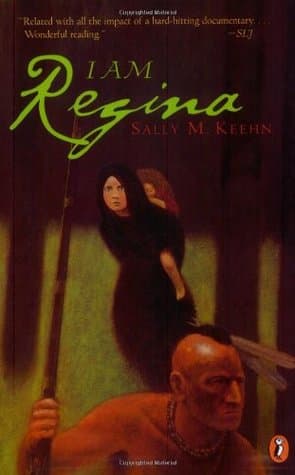
Synopsis
Covers the whole plot, including the ending.
- Difficulty
- Medium
- Pacing
- Moderate
- Mood
- Historical, Reflective, Resilient, Poignant
- Read it if
- You enjoy historical fiction based on true stories, especially those focusing on resilience and cultural adaptation during frontier times.
- Skip it if
- You prefer fast-paced action over introspective character development or find stories of captivity distressing.
I Am Regina Plot Summary
Covers the whole plot, including the ending.
The Attack on the Leininger Homestead
In October 1755, ten-year-old Regina Leininger lives with her family in a small cabin in rural Pennsylvania. Her mother, Barbara, is away visiting a neighbor. While Regina, her father, and her brother, Christian, are home, a group of Allegheny Indians violently breaks down the cabin door. The intruders immediately murder Regina's father and Christian. They set fire to the cabin, destroying everything. Amidst the chaos and horror, Regina and her younger sister, Barbara, are taken captive by the Indians. This sudden, brutal event shatters Regina's peaceful life and is the beginning of her forced assimilation into a new, terrifying world, leaving her with only memories of her former life and the faint hope of reunion with her mother.
Journey to Kittanning and First Encounters
After the attack, Regina and Barbara are forced to march for days with their captors, enduring hunger, cold, and exhaustion. During this arduous journey, Regina sees the harsh realities of their new life, including the deaths of other captives who cannot keep up. Upon reaching Kittanning, an Allegheny village, the sisters are separated. Regina is given to an old woman named Aunt, who treats her with a mix of sternness and surprising care. Regina resists her new identity, Tskinnak, struggling with the language, customs, and the deep grief for her lost family. She clings to the hope of escape and reunion, remembering her mother's words and the German hymns.
Life in Kittanning
In Kittanning, Regina, now called Tskinnak, begins the slow and painful process of adapting to her new life. She learns to perform daily chores, gather food, and understand the Allegheny language. Aunt, her new guardian, teaches her practical skills like preparing deer hides and making moccasins. While she initially resents her captors and their ways, Regina starts to form connections, particularly with Aunt and a girl named Wecheelah. She observes the community's rituals, dances, and their deep respect for nature. Despite moments of despair and longing for her past, Regina's survival instinct and resilience push her to integrate, finding small comforts and a sense of belonging within the unfamiliar culture.
The War and Shifting Loyalties
The ongoing French and Indian War affects life in the Allegheny villages. French soldiers visit Kittanning, bringing goods and encouraging the Alleghenies to fight against the English colonists. Regina sees skirmishes and the return of war parties with captives and scalps, which deeply disturbs her. The constant threat of English retaliation hangs over the village. During this period, Regina's understanding of the conflict grows. She sees it not just from a colonial perspective but also from the Alleghenies' viewpoint, as they fight to protect their land and way of life. These events further complicate her identity, as she feels caught between two warring cultures.
Move to the Allegheny Mountains
Kittanning is eventually attacked by English forces, forcing Regina and her adopted family to flee. They journey deep into the Allegheny Mountains, establishing a new, more remote village. This move means Regina is further immersed in the Allegheny way of life, as the community becomes even more isolated from colonial influence. She continues to improve her survival skills, becoming adept at hunting, foraging, and navigating the wilderness. While the physical separation from her past life grows, Regina holds onto the memory of her mother, often humming the German hymns her mother taught her. This period strengthens her bond with Aunt and other villagers, making her feel increasingly like Tskinnak.
Years Pass and Growing Up
As years pass, Regina grows from a frightened girl into a capable young woman, fully integrated into the Allegheny community. She is respected for her skills and her quiet resilience. She participates in all aspects of village life, from ceremonies to daily tasks, and her command of the Allegheny language is fluent. Despite her deep integration, she never completely forgets her past or her birth mother. The memories, though distant, remain a part of her identity, a secret inner world. She often reflects on the stark contrast between her two lives, and a quiet yearning for her mother persists, a thread connecting her to her origins.
The Treaty of Easton and Whispers of Peace
News of the Treaty of Easton and subsequent peace efforts begins to reach the Allegheny villages. These treaties include provisions for the exchange of captives, sparking a flicker of hope in Regina. She overhears discussions among the elders about the possibility of returning to the English. This news creates a deep internal conflict within Regina. While the idea of seeing her mother is powerful, she also feels a strong loyalty and affection for her adopted Allegheny family and her way of life. The thought of leaving Aunt and Wecheelah, who have become her true family, is almost as painful as the thought of never seeing her birth mother again.
Colonel Bouquet's Expedition
In 1764, Colonel Henry Bouquet leads an English expedition into the Ohio Country, demanding the return of all captives held by the Native American tribes. This event brings the possibility of Regina's return to a head. The Allegheny council debates their response, with some reluctant to give up their adopted family members. Regina is aware of the impending decision that will determine her future. The emotional weight of this moment is immense, as she faces the prospect of choosing between the only family she has known for years and the mother she barely remembers but has never stopped yearning for. Her identity is at a crossroads.
The March to Fort Pitt
The Allegheny leaders eventually agree to release some of their captives. Regina, along with other white captives, is escorted by Allegheny warriors to Fort Pitt. The journey is full of mixed emotions for Regina. She observes the grief of her Allegheny family as they say goodbye, and she feels a deep sadness at leaving them. As they approach Fort Pitt, the sight of English soldiers and settlers is both familiar and alien. She prepares herself for the daunting task of being identified, knowing that many years have passed and her appearance has changed drastically, making recognition difficult.
The Identification at Fort Pitt
At Fort Pitt, a crowd of colonial families has gathered, desperate to find their lost loved ones among the returned captives. Regina observes the heartbreaking scene of parents trying to identify their children, many of whom have forgotten their English language and former identities. Her mother, Barbara Leininger, is among them, tirelessly searching. When it seems all hope is lost, Barbara begins to sing a German hymn, 'Jesus, I Live To Thee.' Hearing the familiar melody and words, Regina's memories are stirred, and she instinctively joins in. This shared hymn is the undeniable proof of their connection, leading to a tearful and miraculous reunion between mother and daughter, a moment of deep emotional release.
The Return Home
After the emotional reunion, Regina and her mother, Barbara, begin their journey back to what remains of their former home. The transition is not easy. Regina struggles to readjust to colonial life, finding the customs strange and the language difficult after so many years of speaking Allegheny. She misses Aunt, Wecheelah, and the freedom of the wilderness. Her mother, while overjoyed to have Regina back, also faces the challenge of understanding the daughter who is now culturally Allegheny. They must navigate a new dynamic, bridging the gap between Regina's two worlds and slowly rebuilding their relationship amidst the lingering trauma and cultural differences.
Principal Figures
Regina Leininger (Tskinnak)
Protagonist
A young girl captured by Allegheny Indians who must adapt to a new life.
Regina is a ten-year-old German immigrant girl living a simple life in Pennsylvania before her world is shattered by an Indian raid. Intelligent, observant, and resilient, she is forced to adapt to Allegheny culture, learning their language, customs, and survival skills. Despite her deep integration, she secretly holds onto the memory of her mother and her German heritage, particularly through hymns. She is driven by a deep longing for her past but also develops a profound connection to her adopted family.
Relationships: Barbara Leininger (Mother) (Birth mother; source of her longing and identity); Aunt (Adopted Allegheny mother; stern but caring guardian); Wecheelah (Adopted Allegheny sister; close friend and confidante); Christian Leininger (Brother, murdered during the attack); Barbara Leininger (Sister) (Younger sister, also captured but separated early on)
Barbara Leininger (Regina's Mother)
Supporting
Regina's birth mother, who tirelessly searches for her lost daughter.
Barbara Leininger is a strong, determined, and deeply loving mother. After the attack, she is left alone, her husband and son murdered, and her daughters captured. Driven by an unwavering hope and faith, she spends years searching for Regina, attending every opportunity to identify returned captives. She embodies perseverance and the enduring power of maternal love. Her German hymns are a crucial link to Regina's past and ultimately become the key to their reunion.
Relationships: Regina Leininger (Daughter, whom she never gives up hope of finding); Regina's Father (Husband, murdered during the attack); Christian Leininger (Son, murdered during the attack)
Aunt
Supporting
Regina's Allegheny adopted mother, who teaches her survival skills.
Aunt is an elderly Allegheny woman who takes Regina (Tskinnak) into her home after the raid. She is stern, practical, and a survivor, teaching Regina the necessary skills for life in the wilderness – from preparing food to making moccasins. While her methods are sometimes harsh, she also shows Regina kindness and a surprising degree of affection, fulfilling the role of a mother figure. She represents the Allegheny culture and its capacity for both sternness and deep familial bonds.
Relationships: Regina Leininger (Adopted daughter and pupil); Wecheelah (Granddaughter or related young woman, also part of her household)
Wecheelah
Supporting
Regina's adopted Allegheny sister and close friend.
Wecheelah is a young Allegheny girl, close in age to Regina, who lives in Aunt's household. She becomes Regina's first friend and companion in the Allegheny village, helping her learn the language and customs. Wecheelah is kind, patient, and embodies the innocence and camaraderie that helps Regina adapt. Their bond grows strong over the years, making Wecheelah a true sister to Regina, and their eventual separation is deeply painful for both.
Relationships: Regina Leininger (Adopted sister and best friend); Aunt (Grandmother/guardian)
Christian Leininger
Mentioned
Regina's older brother, murdered during the raid.
Christian is Regina's older brother, a kind and protective figure in her early life. He is tragically killed during the Allegheny raid on their homestead. His death, along with their father's, is a traumatic event that deeply impacts Regina and serves as a constant reminder of the violence and loss she endured. Though his presence is brief, his memory symbolizes the innocence and family life Regina lost.
Relationships: Regina Leininger (Sister); Barbara Leininger (Mother) (Son)
Regina's Father
Mentioned
Regina's father, murdered during the raid.
Regina's father is a hardworking frontiersman who provides for his family in rural Pennsylvania. He is the first victim of the Allegheny raid, brutally murdered in front of Regina. His death, along with Christian's, marks the abrupt end of Regina's childhood and the beginning of her ordeal. He represents the lost security and stability of her former life.
Relationships: Regina Leininger (Daughter); Barbara Leininger (Mother) (Wife)
Colonel Henry Bouquet
Supporting
British officer who demands the return of captives.
Colonel Henry Bouquet is the British officer who leads the expedition into the Ohio Country in 1764, demanding the return of all white captives from the Native American tribes. He represents the colonial power and the official efforts to bring peace and repatriate the kidnapped. His actions set in motion the events that lead to Regina's eventual reunion with her mother, serving as a crucial historical figure in the story's climax.
Themes & Insights
The Trauma of Captivity and Loss
The novel portrays the deep trauma Regina experiences from the moment her family is attacked and she is taken captive. The sudden loss of her father, brother, and home, followed by the separation from her sister, leaves deep psychological scars. Regina constantly grapples with grief, fear, and the memory of violence. This theme is clear in her initial resistance to her new life, her recurring nightmares, and the quiet sorrow she carries even as she adapts. The trauma of loss is also reflected in her mother's tireless search, highlighting how frontier violence affects families.
“My family was gone. My home was gone. My old life was gone. I was alone in a world that was as cold and dark as the night.”
Identity and Cultural Assimilation
A central theme is Regina's struggle with her identity as she is forced to assimilate into Allegheny culture. She is given a new name, Tskinnak, learns a new language, and adopts new customs and beliefs. Over time, she becomes proficient in Allegheny ways, forming deep bonds with her adopted family, particularly Aunt and Wecheelah. This process creates a dual identity, where she is neither fully German nor fully Allegheny. The conflict comes to a head when she faces the prospect of returning to her birth culture, highlighting how environment and nurture affect one's sense of self.
“I was Tskinnak. I spoke their language. I danced their dances. I wore their clothes. But I was still Regina. I still remembered the hymns. I still remembered my mother.”
Resilience and Survival
Regina's journey shows the human spirit's capacity for resilience and survival in the face of unimaginable hardship. From enduring the grueling march after her capture to learning to live off the land and navigate a foreign culture, Regina consistently shows inner strength. Her ability to adapt, learn, and even find moments of joy and connection amidst her trauma shows her remarkable fortitude. This theme is not just about physical survival but also the emotional and psychological endurance needed to maintain hope and a sense of self throughout years of captivity.
“I had to keep going. I had to live. For my mother. For the hope of finding her again.”
The Enduring Power of Family and Memory
Despite years of separation and cultural immersion, the memory of Regina's birth family, especially her mother, remains a guiding force. Her mother's German hymns are a powerful symbol of this enduring connection. They are a tangible link to her past and ultimately the key to her identification. Similarly, her mother's unwavering belief that Regina is alive drives her relentless search. The novel emphasizes that familial bonds, whether birth or adopted, are deeply ingrained and can transcend cultural divides and years of separation, providing comfort, purpose, and identity.
“My mother's voice, singing the old German hymns, was a thread that tied me to a life I barely remembered, but never forgot.”
Plot Devices & Literary Techniques
First-Person Narrative
The story is told entirely from Regina's perspective.
The use of a first-person narrative allows readers to experience Regina's journey intimately. We witness her fear, confusion, gradual adaptation, and internal conflicts directly through her thoughts and feelings. This perspective builds empathy and makes her transformation and struggle with identity deeply personal. It also emphasizes her isolation and the subjective nature of her experience, as she processes events from her limited, child-like understanding, maturing as the story progresses.
Symbolism of the German Hymns
Hymns represent Regina's lost heritage and a link to her mother.
The German hymns, particularly 'Jesus, I Live To Thee,' serve as a powerful symbol throughout the novel. For Regina, they are a secret link to her past, her mother, and her original identity, a memory she clings to amidst her assimilation. For her mother, the hymns are a desperate, final attempt to identify her lost daughter. Their shared knowledge of the hymns transcends language barriers and years of separation, becoming the undeniable proof of their bond and facilitating their miraculous reunion. They symbolize cultural memory and the enduring power of familial connection.
Historical Context (French and Indian War)
The ongoing conflict provides the backdrop for Regina's captivity.
The French and Indian War (Seven Years' War in North America) is not just a backdrop but an active force shaping Regina's experience. It explains the reasons for the Allegheny raid, the shifting loyalties, and the eventual efforts to return captives. The war's brutality and its impact on both colonial settlers and Native American tribes are depicted, providing a larger context for Regina's personal ordeal. This historical setting adds realism and urgency to the narrative, grounding the personal story in factual events of the era.
Foreshadowing (Mother's Absence)
The mother's absence at the time of the raid subtly hints at her survival.
The detail that Regina's mother, Barbara, is away visiting a neighbor at the exact moment of the raid serves as subtle foreshadowing. While it initially creates a sense of greater loss for Regina, it simultaneously plants the seed of hope that Barbara survived and might one day search for her daughters. This narrative choice ensures that the possibility of reunion remains alive for both the character and the reader, providing a driving force for Regina's endurance and her mother's tireless search.
I Am Regina Quotes
“I am Regina. I am an Indian. I am white. I am. I am.”
“The forest was my mother, my father, my brother, my sister. It was my home.”
“Sometimes the hardest thing to do is to forgive, especially when the person you need to forgive is yourself.”
“Silence can speak louder than words, if you know how to listen.”
“A dream is a path the spirits want you to take.”
“You cannot un-see what you have seen, or un-know what you have known.”
“The wind carries the whispers of those who have gone before.”
“Fear is a dark cloud that covers the sun of your courage.”
“Home is not just a place, but a feeling in your heart.”
“To forget is to lose a part of yourself.”
“The river flows, always changing, always the same.”
“Sometimes, the strongest prayer is just to keep breathing.”
“You carry your people within you, no matter where you go.”
“There are many ways to be brave, not all of them with a weapon in your hand.”
Quiz
10 questions on the plot and the characters. Each answer comes with a short explanation.
Question 1
What event immediately precedes Regina's capture by the Allegheny Indians?
- Regina's family is preparing for a journey.
- Her father and brother are murdered, and their home is burned.
- Regina is out gathering berries in the forest.
- A neighboring family warns them of an impending attack.
Show answer
B. Her father and brother are murdered, and their home is burned. The book states that the cabin door crashes open, and in a few minutes, Allegheny Indians murder her father and brother, burn their home, and take Regina captive.
Question 2
What new name is Regina given by the Allegheny Indians?
- Waneta
- Tskinnak
- Minnehaha
- Nokomis
Show answer
B. Tskinnak After her capture, Regina 'becomes Tskinnak, who learns to catch fish, dance the Indian dance, and speak the Indian tongue.'
Question 3
Who is the only member of Regina's immediate family safe from the initial attack?
- Her younger sister
- Her grandmother
- Her mother
- Her older brother
Show answer
C. Her mother The synopsis explicitly states, 'Only her mother, who is away from home, is safe.'
Question 4
What is one of the key skills Regina learns while living with the Allegheny Indians?
- Weaving intricate baskets for trade.
- Hunting large game with a bow and arrow.
- Catching fish and speaking the Indian tongue.
- Building sturdy longhouses from timber.
Show answer
C. Catching fish and speaking the Indian tongue. The text mentions that as Tskinnak, Regina 'learns to catch fish, dance the Indian dance, and speak the Indian tongue.'
Question 5
Which of the following best describes Regina's internal conflict after her capture?
- She struggles with her desire for revenge against her captors.
- She yearns for her past life while adapting to her new people.
- She debates whether to convert to the Allegheny spiritual beliefs.
- She fears losing her memories of her original family.
Show answer
B. She yearns for her past life while adapting to her new people. The synopsis states, 'Torn from her family, Regina longs for the past, but she must begin a new life. ... As the years go by, her new people become her family . . . but she never stops wondering about her mother.' This highlights her internal conflict between her old and new lives.
Question 6
What is the primary genre of 'I Am Regina'?
- Fantasy Adventure
- Science Fiction Dystopian
- Historical Fiction
- Contemporary Romance
Show answer
C. Historical Fiction The book is described as 'Historical Fiction' in the provided information, specifically 'based on the true story of a young woman held by Indians from 1755-1763.'
Question 7
According to the 'School Library Journal' review, how is the story of Regina's captivity presented?
- As a lighthearted adventure tale.
- With the impact of a hard-hitting documentary.
- As a purely fictional account with no historical basis.
- Through a series of whimsical, dreamlike sequences.
Show answer
B. With the impact of a hard-hitting documentary. The 'School Library Journal' review states it is 'related with all the impact of a hard-hitting documentary.'
Question 8
What specific time period does Regina's captivity span, as mentioned in the summary?
- 1776-1783
- 1755-1763
- 1800-1808
- 1680-1688
Show answer
B. 1755-1763 The 'School Library Journal' review mentions the book is 'based on the true story of a young woman held by Indians from 1755-1763.'
Question 9
Which theme is most central to Regina's character development throughout her captivity?
- The pursuit of wealth and status.
- The struggle for identity and belonging amidst cultural change.
- The importance of formal education and literacy.
- The desire for political power and leadership.
Show answer
B. The struggle for identity and belonging amidst cultural change. Regina's journey involves being 'Torn from her family,' learning a new way of life ('becomes Tskinnak'), and her 'new people become her family,' while still 'wondering about her mother.' This highlights her struggle with identity and finding belonging across two distinct cultures.
Question 10
What is the underlying question that drives the narrative even as Regina adapts to her new life?
- Will Regina ever lead the Allegheny tribe?
- Will Regina marry and start a family among the Allegheny?
- Will Regina and her mother ever meet again?
- Will Regina discover a hidden treasure?
Show answer
C. Will Regina and her mother ever meet again? The synopsis explicitly ends with the question: 'Will they ever meet again?' referring to Regina and her mother, indicating this as a driving narrative question.
I Am Regina FAQ
What is the central conflict Regina faces after her capture?
Regina's central conflict is the struggle to reconcile her past identity as Regina Leininger with her forced new identity as Tskinnak among the Allegheny Indians. She constantly battles between longing for her biological family and the life she lost, and adapting to the customs, language, and people of her captors, who eventually become a new kind of family.
Who are the key figures in Regina's life among the Allegheny Indians?
Among the Allegheny, Regina is adopted by a kind woman named Naotkwa, who becomes her surrogate mother and teaches her their ways. She also forms a close bond with Naotkwa's daughter, who becomes like a sister to her. These figures are crucial in helping Regina integrate into her new community.
How does Regina maintain a connection to her past identity despite living as Tskinnak?
Regina maintains a connection to her past by clinging to memories of her mother and the faint hope of reunion, often recalling details of her previous life. She also keeps a small, hidden item from her past, a hymn book, which serves as a tangible link to her family and Christian faith, reminding her of who she once was.
What event ultimately leads to Regina's potential return to white society?
The event that leads to Regina's potential return is Colonel Henry Bouquet's expedition to negotiate peace treaties and the return of captives after the French and Indian War. This expedition, specifically the council at Muskingum, creates the opportunity for captives like Regina to be identified and reunited with their original families.
What is the significance of the hymn 'Alone Yet Not Alone' in the story?
The hymn 'Alone Yet Not Alone' is deeply significant as it is the song Regina's mother used to sing and the one that ultimately allows her mother to identify her at the Muskingum council. It represents Regina's enduring memory of her mother, her Christian faith, and the unbreakable bond between them, serving as the key to their reunion.
Are there any subtle indications of Regina's internal conflict regarding her 'two lives' before the final reunion?
Yes, subtle indications include Regina's occasional dreams of her old home and family, her secret practice of Christian prayers, and her internal debates about whether she truly belongs with the Allegheny or if her 'true' home is elsewhere. These moments reveal her persistent struggle to fully embrace one identity over the other.
How does the author portray the Allegheny culture and Regina's integration into it?
The author portrays Allegheny culture with respect, showing Regina learning their language, hunting and fishing skills, ceremonies, and daily routines. Regina's integration is gradual but deep, as she comes to love her adopted family and appreciate their way of life, highlighting the complexities of cultural assimilation.
What role does Naotkwa play in shaping Regina's psychology during her captivity?
Naotkwa plays a crucial role as Regina's adoptive mother, providing her with love, security, and a sense of belonging in a new, terrifying world. Her kindness and patient teaching help Regina to cope with her trauma, adapt to her new environment, and develop affection for her captors, fostering a complex sense of loyalty.
How does the trauma of Regina's capture manifest in her behavior and thoughts throughout the book?
The trauma manifests in Regina's initial shock, fear, and profound grief for her lost family. She experiences moments of despair and loneliness, often retreating into her memories. Over time, while she adapts externally, internal struggles with identity, loyalty, and the fear of further loss persist, shaping her cautious and resilient demeanor.
Does Regina experience Stockholm Syndrome, or is her bond with her captors more nuanced?
Regina's bond with her captors is more nuanced than typical Stockholm Syndrome. While she adapts and forms genuine attachments to her adoptive family, particularly Naotkwa, she never entirely abandons her identity or hope of reuniting with her mother. Her affection grows out of a need for survival and belonging, alongside genuine care, rather than a complete psychological identification with her captors' aggression.
How does Regina's faith evolve or change during her time with the Allegheny?
Regina's Christian faith is challenged and tested during her captivity. While she initially clings to it as a link to her past, she also learns about Allegheny spiritual beliefs. Her faith becomes more personal and internal, sustained by her memories and the hidden hymn book, rather than through communal practice, demonstrating resilience and adaptation.
Is Regina's decision to return with her mother at the end a clear-cut choice, or is there internal conflict?
Regina's decision to return is fraught with internal conflict. By the time of the reunion, she has spent years with the Allegheny, grown to love her adoptive family, and integrated into their way of life. Leaving them means another profound loss, making her choice incredibly difficult and highlighting the deep emotional ties she has formed on both sides.
What is the book's stance on the concept of 'home' and belonging?
The book suggests that 'home' is not just a physical place but also where one's deepest emotional connections and sense of belonging reside. Regina experiences two 'homes' and two 'families,' demonstrating that belonging can be fluid and complex, shaped by circumstance, love, and adaptation, rather than solely by birth.
How does the first-person narrative enhance the reader's understanding of Regina's experience?
The first-person narrative provides intimate access to Regina's thoughts, fears, and emotions, allowing readers to deeply empathize with her profound loss, adaptation, and internal conflicts. It makes her journey more immediate and personal, highlighting the psychological impact of her captivity and cultural assimilation from her unique perspective.
Does the book offer a critical perspective on the historical treatment of Native Americans, or is it solely focused on Regina's individual story?
While primarily focused on Regina's individual story, the book implicitly touches upon the broader historical context of conflict and displacement between European settlers and Native Americans during the French and Indian War. It portrays the Allegheny as complex individuals with their own culture and motivations, rather than one-dimensional antagonists, offering a nuanced view within Regina's personal narrative.
What is the lasting impact of Regina's experience on her life after her return?
The lasting impact of Regina's experience is profound; she carries the memories and cultural influences of her time with the Allegheny. While she reunites with her mother and returns to settler society, she is forever changed, having lived two distinct lives. She retains a unique perspective, shaped by her resilience and the deep bonds formed in both worlds.
Similar books
- The Witch of Blackbird Pond
Elizabeth George Speare
4.0 (135k) average on GoodreadsChildren'sFeatures a young protagonist adapting to a new, challenging colonial environment and cultural differences.
- Calico Captive
Elizabeth George Speare
4.0 (5k) average on GoodreadsChildren'sAlso a historical fiction novel about a young girl's captivity by Native Americans during the French and Indian War.
- Island of the Blue Dolphins
Scott O'Dell
3.8 (292k) average on GoodreadsChildren'sFocuses on a young girl's survival, resilience, and adaptation in a solitary and wild environment.
- The Last of the Mohicans
James Fenimore Cooper
3.7 (89k) average on GoodreadsHistorical FictionCooper's novel, an iconic work of American historical fiction, also set during the French and Indian War, presents a broader, more epic scope of the conflict, incorporating elements of adventure, romance, and warfare. While both deal with frontier life and Native American interactions, Cooper's portrayal of Indigenous characters is often romanticized or stereotypical, reflecting 19th-century biases, whereas Keehn attempts a more empathetic, if simplified, view through Regina's eyes. 'I Am Regina' is a personal journey, while 'The Last of the Mohicans' is a grander, albeit historically flawed, narrative of a nation in formation.
- Harry Potter and the Sorcerer's Stone
J.K. Rowling
4.5 (7M) average on GoodreadsFantasyRescued from a miserable life under the stairs, an orphaned boy discovers he's a wizard destined for a magical school, where he uncovers a dangerous secret tied to the dark wizard who murdered his parents.
- The Hobbit, or There and Back Again
J.R.R. Tolkien
4.3 (2.9M) average on GoodreadsFantasyA comfort-loving hobbit named Bilbo Baggins is whisked away by a mischievous wizard and a band of dwarves on an unexpected journey to reclaim stolen treasure from a fearsome dragon, discovering courage and a magical ring along the way.





Enjoyed the summary?
A summary gives you the shape of the book. The book itself has the detail, the examples and the voice.
Find I Am Regina on AmazonAs an Amazon Associate, BookBrief earns from qualifying purchases. How we're funded