
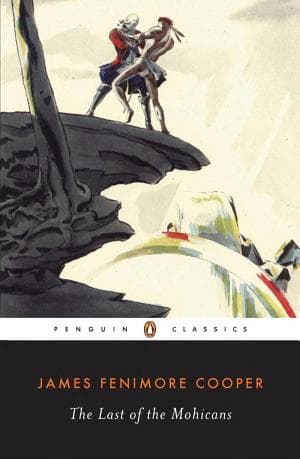
Synopsis
Covers the whole plot, including the ending.
- Difficulty
- Medium
- Pacing
- Variable
- Mood
- Epic, Adventurous, Reflective, Tragic
- Read it if
- You enjoy classic American historical fiction, epic adventures in the wilderness, and stories that explore themes of nature, race, and the formation of a nation.
- Skip it if
- You prefer fast-paced modern prose, are sensitive to outdated racial portrayals, or dislike detailed descriptions of wilderness and military strategy.
The Last of the Mohicans Plot Summary
Covers the whole plot, including the ending.
A Perilous Journey to Fort William Henry
In 1757, during the French and Indian War, Major Duncan Heyward escorts Colonel Munro's two daughters, Cora and Alice, from Fort Edward to their father at Fort William Henry. Their guide is Magua, a Huron Indian who claims loyalty to the British. Magua secretly hates Colonel Munro, who once publicly whipped him. Unbeknownst to Heyward and the sisters, Magua leads them into an ambush, planning to give them to the French and get his revenge. As they travel, the group becomes uneasy about Magua's strange route and behavior, signaling the danger they face.
Rescue by Hawk-eye and the Mohicans
Magua's betrayal becomes clear when he leads Heyward, Cora, and Alice into an ambush by his Huron warriors. As hope fades, the frontier scout, Natty Bumppo (Hawk-eye), and his two Mohican companions, the chief Chingachgook and his son Uncas, rescue them. Hawk-eye and the Mohicans, who had been tracking Magua, intervene just in time. They lead the group to a hidden cave behind a waterfall, a temporary safe place from the pursuing Hurons. This meeting begins the alliance that will guide the Munro sisters through the dangerous frontier.
The Siege of Fort William Henry and a Brief Reunion
After escaping Magua's ambush, Hawk-eye, the Mohicans, Heyward, Cora, and Alice continue their journey. They travel through the wilderness, facing constant threats from enemy patrols. They eventually reach Fort William Henry, which is under siege by French forces led by General Montcalm and his many Indian allies. The sisters are briefly reunited with their father, Colonel Munro, who looks aged and stressed by the siege. Their relief is short-lived, as the fort's situation is bad, with dwindling supplies and Montcalm's overwhelming forces. The brief rest shows the grim reality of their circumstances.
The Massacre and Renewed Captivity
Colonel Munro, facing impossible odds, agrees to surrender Fort William Henry to General Montcalm under honorable terms, allowing the British garrison and civilians to retreat safely. However, as the British column marches out, Magua incites his Huron warriors to ignore the surrender terms. A brutal attack follows, with the Hurons attacking the retreating British soldiers and their families. Amid the chaos, Magua captures Cora and Alice Munro, along with Major Heyward and David Gamut, a singing master. Magua intends to take Cora as his wife and get further revenge on Colonel Munro; the others are his prisoners.
The Pursuit and Divided Captives
Hawk-eye, Chingachgook, and Uncas, having seen the attack and the sisters' recapture, immediately pursue Magua and his Huron group. Magua, expecting their pursuit, divides his captives. He takes Cora and David Gamut with one group, intending to bring Cora to his village. Alice and Major Heyward are taken by another group of Hurons. This division makes rescue harder, forcing Hawk-eye and his companions to choose which trail to follow first. The chase becomes a race against time, with the sisters' fate uncertain.
Uncas's Capture and Recognition
Following the trail of Alice and Heyward, Uncas, disguised as a Huron, enters the Huron village where they are held. He plans their escape. However, his true identity is discovered when a tattoo on his chest, a turtle, shows him to be the last chief of the Mohicans. His capture is a setback, but his noble manner and the recognition of his status earn him some respect, even among his enemies. This moment shows Uncas's leadership and the lasting power of his family heritage.
The Rescue of Alice and Heyward
With Uncas captured, Hawk-eye and Chingachgook, helped by David Gamut's brave singing, plan to rescue Alice, Heyward, and Uncas from the Huron village. Gamut, pretending to be a harmless madman, distracts the warriors with his hymns, creating an opportunity for the others. Hawk-eye, disguised in Indian war paint, and Chingachgook expertly enter the village under cover of darkness. They free Alice, Heyward, and Uncas, escaping into the wilderness, leaving the Hurons in disarray. This daring rescue shows their teamwork and skill, but Cora's fate remains unknown.
Cora's Fate in the Delaware Village
Magua, still wanting Cora as his wife, takes her to a Delaware tribe village, seeking their council and hoping for their support. The Delawares, though generally neutral or allied with the British, follow old customs. Unbeknownst to Magua, Hawk-eye, Chingachgook, Uncas, Heyward, Alice, and Gamut also arrive at the Delaware village, having tracked Cora. They request an audience with Tamenund, the wise elder chief of the Delawares. The stage is set for a confrontation over Cora's destiny, where tribal laws and personal revenge meet.
Tamenund's Judgment and Uncas's Revelation
Before Chief Tamenund, Magua formally presents his case for claiming Cora. Following old customs, Tamenund initially rules in Magua's favor, upsetting the British and Mohicans. However, Uncas steps forward and reveals the turtle tattoo on his chest, showing his royal lineage as the last of the Mohican chiefs, a family line that once held influence over the Delawares. Tamenund, recognizing the old symbol and Uncas's nobility, is moved. He reconsiders his judgment, allowing Uncas and his allies to leave with Cora, defying Magua and upholding the old ties between the Mohicans and Delawares.
The Final Confrontation and Tragic Deaths
Enraged by Tamenund's decision, Magua gathers his remaining Huron warriors and attacks the retreating Mohican and British party. A fierce battle happens in the wilderness. During the fight, Uncas defends Cora against Magua and his men, but Magua's knife kills him. Cora, rather than surrender to Magua, chooses to fall to her death from a cliff, or is killed by a Huron warrior, after Uncas's death. Hawk-eye and Chingachgook pursue Magua. Hawk-eye, with a precise shot, kills Magua, who falls from the same cliff, ending his terror but not before the loss of Uncas and Cora.
Mourning and the End of a Lineage
After the final, devastating fight, the survivors mourn the deaths of Uncas and Cora. Colonel Munro is heartbroken by his daughter's loss. Chingachgook, the last living Mohican, grieves his son, Uncas, marking the end of their tribe. Hawk-eye, affected by his friend's loss, offers condolences to Chingachgook. The scene is full of sorrow and thought about the costs of war and the vanishing way of life for the native tribes. The future of the frontier, now without the 'last of the Mohicans,' is uncertain for all.
Principal Figures
Natty Bumppo (Hawk-eye)
Protagonist
Skilled frontier scout, master marksman, and moral compass of the wilderness.
Hawk-eye is a white man raised among the Mohicans, possessing unparalleled knowledge of the wilderness, tracking, and marksmanship. He embodies the idealized frontiersman, living by a strict moral code rooted in nature's laws and a deep respect for his Mohican companions. He views himself as a 'man without a cross' (mixed blood), navigating between the white and Native American worlds. His loyalty to Chingachgook and Uncas is absolute, and he acts as a protector and guide for the Munro sisters and Major Heyward. He is driven by a strong sense of justice and a desire to preserve the dwindling natural world and its inhabitants.
Relationships: Chingachgook (Adoptive father figure and best friend); Uncas (Adoptive brother and close friend); Cora Munro (Protector, admirer of her spirit); Alice Munro (Protector); Major Duncan Heyward (Reluctant ally, initially skeptical but eventually respectful)
Uncas
Protagonist
The last and noblest chief of the Mohican tribe, embodying courage and honor.
Uncas is Chingachgook's son and the last true chief of the Mohicans. He is portrayed as the epitome of the 'noble savage' – handsome, brave, swift, and skilled in battle and tracking. He possesses a calm dignity and an innate sense of justice. Uncas develops a strong, unspoken affection for Cora Munro, recognizing her strength and spirit. His actions are consistently heroic, driven by a desire to protect his friends and uphold the honor of his tribe. His lineage is a significant plot point, granting him respect among various Native American tribes, particularly the Delawares.
Relationships: Chingachgook (Son); Natty Bumppo (Hawk-eye) (Adoptive brother and close friend); Cora Munro (Unrequited love interest, protector); Alice Munro (Protector)
Chingachgook
Supporting
The aging chief of the Mohicans, father of Uncas, and Hawk-eye's closest companion.
Chingachgook is a venerable and wise Mohican chief, the father of Uncas, and Hawk-eye's lifelong friend and adoptive father figure. He is a skilled warrior and tracker, embodying the fading glory of his tribe. He is stoic, reflective, and deeply connected to the traditions and spiritual world of his people. Chingachgook often offers sage advice and demonstrates unwavering loyalty. His character represents the tragic decline of Native American culture in the face of European expansion, a theme amplified by the loss of his son, Uncas, making him truly 'the last of the Mohicans.'
Relationships: Uncas (Father); Natty Bumppo (Hawk-eye) (Lifelong friend and adoptive father figure to Hawk-eye); Cora Munro (Protector); Alice Munro (Protector)
Cora Munro
Protagonist
The strong-willed, dark-haired elder daughter of Colonel Munro, possessing courage and moral conviction.
Cora Munro is the more mature and independent of the two sisters. She possesses dark hair, a spirited temperament, and a strong sense of moral justice. She is courageous, intelligent, and compassionate, often showing more resilience and understanding of the Native American characters than her younger sister. Cora is not afraid to speak her mind, even to her father or Major Heyward, and she earns the respect of Hawk-eye and Uncas. She is the object of Magua's vengeful desire to make her his squaw, which ultimately leads to her tragic fate. Her mixed heritage (implied African ancestry through her mother) is subtly hinted at and explains her darker complexion.
Relationships: Alice Munro (Half-sister); Colonel Munro (Father); Major Duncan Heyward (Respectful acquaintance, initially attracted to her, but later shifts affection to Alice); Uncas (Mutual, unspoken affection); Magua (Object of his vengeful desire and hatred)
Alice Munro
Supporting
The fair-haired, delicate younger daughter of Colonel Munro, often requiring protection.
Alice Munro is the younger, more delicate, and fairer-haired of the two sisters. She is often portrayed as more timid and fragile than Cora, requiring frequent protection and comfort. Alice represents a more conventional ideal of femininity for the era, and her vulnerability makes her a symbol of innocence in peril. She is devoted to her father and sister and is the object of Major Heyward's affections. While she endures the same hardships as Cora, her reactions are often characterized by fear and distress, highlighting the brutal realities of frontier warfare through a more sheltered perspective.
Relationships: Cora Munro (Half-sister); Colonel Munro (Father); Major Duncan Heyward (Love interest, future husband); Natty Bumppo (Hawk-eye) (Protector); Uncas (Protector)
Major Duncan Heyward
Supporting
A brave but conventional British officer, initially naive to frontier life.
Major Duncan Heyward is a young, honorable, and well-meaning British officer. He is initially attracted to Cora but later shifts his affection to Alice, whom he eventually marries. Heyward embodies the typical European military perspective, often struggling to understand the nuances of frontier warfare and Native American cultures. While brave, his conventional military training is often useless in the wilderness, making him reliant on Hawk-eye and the Mohicans. He grows throughout the story, learning to respect the unique skills and wisdom of the frontiersmen and Native Americans, though he never fully sheds his European worldview.
Relationships: Alice Munro (Love interest, future husband); Cora Munro (Initially attracted to her, later respects her); Colonel Munro (Subordinate officer, future son-in-law); Natty Bumppo (Hawk-eye) (Relies on his expertise, eventually respects him); Magua (Enemy)
Magua
Antagonist
A cunning and vengeful Huron warrior, driven by hatred for Colonel Munro.
Magua is the primary antagonist, a Huron warrior consumed by a deep-seated desire for revenge against Colonel Munro, who once publicly humiliated him. He is portrayed as cunning, treacherous, and cruel, often manipulating others with false promises. Magua's hatred extends to the British in general, and he is a fierce ally of the French. He seeks to make Cora Munro his squaw as the ultimate act of vengeance and humiliation against her father. His character embodies the darker aspects of frontier conflict and tribal animosity, serving as a foil to the noble Mohicans.
Relationships: Colonel Munro (Sworn enemy, seeks revenge upon); Cora Munro (Object of his vengeful desire); Natty Bumppo (Hawk-eye) (Adversary); Uncas (Adversary, ultimately kills Uncas)
Colonel Munro
Supporting
The beleaguered British commander of Fort William Henry and father of Cora and Alice.
Colonel Munro is a brave but aging and weary British officer, commander of Fort William Henry. He is a devoted father to Cora and Alice, and his primary concern is their safety amidst the brutal realities of war. His past actions, specifically whipping Magua, set in motion the antagonist's vengeful plot. Munro is a man of honor, but his military decisions are often constrained by inadequate resources and the shifting alliances of the Native American tribes. He experiences profound grief and despair over the losses he endures, particularly the death of Cora.
Relationships: Cora Munro (Daughter); Alice Munro (Daughter); Major Duncan Heyward (Subordinate officer, future son-in-law); Magua (His past actions against Magua fuel the antagonist's revenge)
David Gamut
Supporting
A simple-minded, devout singing master with a peculiar but useful talent.
David Gamut is a peculiar, devout singing master who travels with the Munro sisters. He is a pacifist and somewhat naive, often oblivious to the dangers around him, finding solace and expression in his hymns. While often a burden, his unique ability to sing and his perceived 'madness' by the Native Americans prove surprisingly useful. He acts as a sort of innocent fool, whose unusual behavior sometimes allows him to move freely or distract enemies, making him an accidental asset in several critical moments, particularly during the rescue from the Huron village.
Relationships: Cora Munro (Travel companion); Alice Munro (Travel companion); Natty Bumppo (Hawk-eye) (Travel companion, often bewildered by him)
Themes & Insights
Clash of Civilizations and Cultures
The novel shows the contrast between European colonial society (British and French) and various Native American cultures (Mohican, Huron, Delaware). It explores different values, laws, and understandings of land, war, and honor. Hawk-eye, as a 'man without a cross,' lives between these two worlds. The attack at Fort William Henry, where European rules of war are ignored by Native American allies, is an example of this theme. The book also shows divisions within Native American tribes, like the Mohicans against the Hurons.
“'I am a man without a cross... I have no tribe, and I don't want one. I am a white man, and I can shoot a rifle better than any redskin, but I love the woods and the ways of the redskins better than the towns and the ways of the palefaces.'”
Nature vs. Civilization
Cooper romanticizes the American wilderness as a place of moral purity, freedom, and spiritual connection, separate from the problems of European civilization. Hawk-eye and the Mohicans live in harmony with nature, using its resources and respecting its laws. The advance of European settlers, driven by conquest and material gain, harms both the environment and the indigenous way of life. The forests are a backdrop for beauty and brutal conflict, showing nature's indifference to human struggles and its eventual control.
“'The whole district is a garden of paradise! What a pity that it should be so soon swept away!'”
Racial Identity and Prejudice
The novel explores racial identity and prejudice through interactions between white and Native American characters. While Cooper often idealizes Uncas and Chingachgook, he also shows the 'savage' side in characters like Magua. 'Blood' and family line are important, especially for Uncas as the last Mohican chief and Cora's hinted mixed heritage. Prejudice is seen in Europeans' general dislike for Native Americans, but also in the Mohicans' and Hawk-eye's distinction between 'good' and 'bad' tribes, challenging simple ideas of race.
“'There is a difference in the blood, though it may not be plain to the eye. The Mohicans are a great race, and their blood is pure; but the Hurons are dogs, and their fathers were born of a lie.'”
Heroism and Sacrifice
Heroism is central to the story, shown in various ways. Hawk-eye's skill and moral strength, Uncas's brave defense of Cora, and Cora's choice of death over dishonor are examples. Major Heyward, though less skilled, also shows courage in protecting the sisters. Acts of heroism often involve sacrifice, especially the giving of one's life for a cause or loved ones. The deaths of Uncas and Cora show the high cost of heroism in a brutal war and the impact on those left behind.
“'My day is come!'”
Revenge and Justice
Magua's pursuit of revenge against Colonel Munro for a past humiliation drives much of the plot. His desire to make Cora his wife is a key part of this revenge. This contrasts with the Mohicans' and Hawk-eye's pursuit of justice, aiming to rescue the innocent and punish the wicked. The novel questions the nature of justice in a lawless frontier and shows the destructive cycle of revenge, which ultimately consumes Magua. The theme is also explored in tribal warfare, where old grievances fuel ongoing conflicts.
“'The Huron is a dog, and the Mohican is a dog, but Magua is a wolf!'”
Plot Devices & Literary Techniques
The Noble Savage Archetype
Idealized portrayal of Native Americans, embodying purity and connection to nature.
Cooper employs the 'Noble Savage' archetype, primarily through Uncas and Chingachgook. These characters are depicted as inherently virtuous, brave, honorable, and deeply connected to the natural world. They possess superior tracking skills, wisdom, and a moral code often contrasted with the perceived corruption and artificiality of European civilization. Uncas, in particular, embodies this ideal, with his physical prowess, dignity, and tragic death solidifying his status as a symbol of a vanishing, purer way of life. This device serves to highlight the perceived loss of innocence and the destructive impact of colonial expansion.
Foil Characters
Characters who highlight each other's contrasting traits.
The novel uses foil characters to emphasize particular traits and themes. Cora and Alice Munro are foils: Cora is dark-haired, strong-willed, and independent, while Alice is fair-haired, delicate, and dependent, highlighting different aspects of femininity and resilience. Similarly, Uncas and Magua serve as foils, representing the 'noble' and 'savage' extremes of Native American character, respectively. Hawk-eye, as a 'man without a cross,' acts as a foil to both the European officers and the full-blooded Native Americans, bridging and contrasting their worlds.
The Wilderness as a Character
The natural environment plays an active, shaping role in the narrative.
The vast, untamed American wilderness is not merely a setting but an active force in the story. Its dense forests, hidden caves, treacherous rivers, and mountains dictate travel routes, provide cover, and present constant challenges. Survival skills, such as tracking, hunting, and navigating by natural signs, are paramount, making characters like Hawk-eye and the Mohicans indispensable. The wilderness also serves as a symbol of freedom, danger, and a spiritual realm, reflecting the beauty and brutality of the frontier and shaping the characters' actions and fates.
The Lost Lineage/Last of a Kind
The narrative focus on the extinction of a significant cultural line.
The central plot device, explicitly stated in the title, is the theme of the 'last of a kind.' Chingachgook and Uncas represent the final members of the Mohican tribe, a once-proud and powerful nation. Uncas's death signifies the complete extinction of this lineage. This device evokes a sense of profound melancholy and nostalgia for a vanishing way of life, emphasizing the irreversible impact of historical events and colonial expansion on indigenous cultures. It imbues the Mohican characters with a tragic grandeur, making their actions and sacrifices even more poignant.
The Last of the Mohicans Quotes
“The air, itself, was so pure that it seemed to enter the body with the exhilarating effect of a draught of wine.”
“My father fought for the French in the old war. He was a brave man, though a red-skin.”
“I am a man without a cross. The pale-faces make their talk, and the red-skins make their talk; but I am of neither.”
“Accursed be the man who first brought into these wilds the scourge of war!”
“The gifts of our colors may be different, but God has so placed us in this world that we may all live in friendship.”
“There are no two beings of the same nature under the canopy of heaven.”
“The whole design of this nation is to exterminate us.”
“A Delaware, a Mohican, and a white man, are all children of the Great Spirit.”
“I am a man of no tribe, and whose heart is never for a moment quiet.”
“The trail is open, and the feet of the young men are ready.”
“The Great Spirit has made us of different colors, but he has given us the same hearts.”
“Such is the fate of the last of the Mohicans!”
“Death is but a sleep, and the grave is but a bed.”
“The gifts of our colors may be different, but God has so placed us in this world that we may all live in friendship.”
Quiz
10 questions on the plot and the characters. Each answer comes with a short explanation.
Question 1
Against which historical event is 'The Last of the Mohicans' primarily set?
- The Battle of Quebec
- The Siege of Louisbourg
- The French and Indian siege of Fort William Henry
- The Pontiac's Rebellion
Show answer
C. The French and Indian siege of Fort William Henry The book's plot unfolds during the critical period of the French and Indian War, specifically focusing on the siege of Fort William Henry in 1757, as mentioned in the summary.
Question 2
Who are the two sisters struggling to be reunited with their father in the novel?
- Elizabeth and Jane Bennet
- Cora and Alice Munro
- Catherine and Isabella Morland
- Lucy and Charlotte Honeychurch
Show answer
B. Cora and Alice Munro The summary explicitly states that the story 'recounts the story of two sisters, Cora and Alice Munro, daughters of the English commander,' who are seeking their father.
Question 3
Who is the 'savage Indian traitor' who captures the sisters and desires Cora?
- Chingachgook
- Uncas
- Mangua
- Magua
Show answer
C. Mangua The provided text refers to 'the Mangua, the savage Indian traitor who captures the sisters, wanting Cora to be his squaw.' Note the spelling provided in the summary.
Question 4
Which characters are described as 'the only two survivors of the Mohican tribe'?
- Hawk-eye and Chingachgook
- Chingachgook and Uncas
- Uncas and Mangua
- Cora and Alice
Show answer
B. Chingachgook and Uncas The summary clearly states that Hawk-eye's companions are 'Chingachgook and Uncas, the only two survivors of the Mohican tribe.'
Question 5
What is Hawk-eye's primary role or description in the story?
- An English commander
- A French spy
- A frontier scout
- A Mohican warrior
Show answer
C. A frontier scout Hawk-eye is identified as 'a frontier scout' who aids the sisters in their journey.
Question 6
What key theme, besides heroism and romance, is highlighted as being criticized in the novel?
- The importance of industrialization
- The destruction of nature and tradition
- The superiority of European culture
- The benefits of colonial expansion
Show answer
B. The destruction of nature and tradition The description notes that the novel 'combines heroism and romance with powerful criticism of the destruction of nature and tradition.'
Question 7
How did Cooper, through this novel, significantly influence the American sense of itself as a nation?
- By promoting a unified European identity for the colonies.
- By advocating for a purely isolationist foreign policy.
- By setting Indian against Indian and the brutal society of the white man against the civilization of the Mohican.
- By exclusively glorifying the actions of the colonial military.
Show answer
C. By setting Indian against Indian and the brutal society of the white man against the civilization of the Mohican. The text states: 'In setting Indian against Indian and the brutal society of the white man against the civilization of the Mohican, Cooper, more than any author before or since, shaped the American sense of itself as a nation.'
Question 8
What is the relationship between Cora and Alice Munro and the English commander?
- They are his nieces.
- They are his daughters.
- They are his wards.
- They are his distant cousins.
Show answer
B. They are his daughters. The summary clearly states that Cora and Alice Munro are 'daughters of the English commander,' whom they are trying to reunite with.
Question 9
The novel is categorized as which genre?
- Science Fiction
- Gothic Romance
- Historical Fiction
- Social Satire
Show answer
C. Historical Fiction The very first line of the provided text identifies the book as 'Historical Fiction.'
Question 10
What year is specified as the setting for the French and Indian siege of Fort William Henry?
- 1776
- 1757
- 1783
- 1763
Show answer
B. 1757 The summary explicitly states the setting as 'Set against the French and Indian siege of Fort William Henry in 1757.'
The Last of the Mohicans FAQ
What is 'The Last of the Mohicans' about?
'The Last of the Mohicans' is a historical fiction novel set in 1757 during the French and Indian War. It follows the perilous journey of Cora and Alice Munro, daughters of the English commander, as they attempt to reunite with their father amidst the siege of Fort William Henry, aided by the frontier scout Hawk-eye and the last two Mohican warriors, Chingachgook and Uncas, while being pursued by the villainous Huron, Magua.
Why should I read 'The Last of the Mohicans'?
You should read 'The Last of the Mohicans' for its thrilling adventure, vivid portrayal of frontier life, and its exploration of themes like the clash of cultures, the destruction of nature, and the vanishing traditions of Native American tribes. Cooper's novel offers a foundational look at the American identity, blending heroism and romance with sharp social commentary on the brutal realities of colonial expansion.
What is the background/setting of 'The Last of the Mohicans'?
The novel is set in the wilderness of upstate New York during the French and Indian War in 1757, specifically around the siege of Fort William Henry. The setting emphasizes the untamed American frontier, where European colonial powers vie for control, and Native American tribes align with different factions, leading to frequent skirmishes and a constant sense of danger.
What are the most memorable quotes?
One memorable quote is Hawk-eye's declaration, 'I am a man without a cross.' This highlights his unique identity, unaligned with any specific European nation or Native American tribe, embodying a distinct American frontiersman spirit. Another is Chingachgook's lament, 'My race is the setting sun,' encapsulating the tragic theme of the vanishing Mohican people and the loss of their way of life.
What writing style does the author use?
James Fenimore Cooper employs a descriptive and often formal writing style, rich with detailed portrayals of nature and action sequences. His prose can be verbose, but it effectively builds suspense and paints a vivid picture of the untamed wilderness and the cultural clashes occurring within it, though modern readers sometimes find his dialogue and pacing challenging.
What minor details add significant meaning?
The varying colors of the characters' hair and skin, particularly Cora's darker complexion, subtly allude to her mixed heritage, a detail often overlooked but crucial to understanding her character's unique position and Magua's specific desire for her. Also, Hawk-eye's refusal to scalp his enemies, despite the common practice, underscores his moral code that distinguishes him from both European and some Native American combatants.
What are some subtle foreshadowing moments?
Early in the narrative, Magua's intense, watchful gaze and his slightly too-eager offers of guidance subtly foreshadow his betrayal of the English party. Additionally, Uncas's immediate connection with Cora, often expressed through shared glances and unspoken understanding, hints at the tragic bond that will form between them and their intertwined destinies.
What unexpected character connections exist?
A significant unexpected connection is Magua's past with Colonel Munro; Magua was once flogged by Munro for drunkenness, a humiliation that fuels his deep-seated desire for revenge against the Colonel and his daughters. This personal history transforms Magua from a generic antagonist into a character driven by a specific, albeit twisted, sense of justice.
What are unspoken character motivations?
Magua's unspoken motivation extends beyond mere revenge; he seeks to reassert his power and dignity after the public shaming by Munro, viewing the capture of Cora as a way to reclaim honor and build a new life on his own terms. Uncas's unspoken motivation for protecting Cora seems to stem from a profound sense of duty, admiration, and perhaps love, transcending tribal differences.
What psychological complexities do characters exhibit?
Hawk-eye exhibits a complex psychology of living between two worlds, adhering to a strict moral code while understanding the brutal necessities of frontier survival. Magua, despite his villainy, displays the psychological complexity of a man deeply scarred by injustice, whose actions, though cruel, are rooted in a desire for retribution and a twisted sense of reclaiming his lost status.
What are the major emotional turning points?
A major emotional turning point is the massacre at Fort William Henry, which shatters the illusion of safety and forces the characters into a desperate fight for survival, deepening their bonds and revealing their true characters. Another is the tragic deaths of Uncas and Cora, which serve as the emotional climax, highlighting the devastating costs of the conflict and the loss of innocence and hope.
How do relationship dynamics evolve?
The relationship between Cora and Uncas evolves from mutual respect to a profound, unspoken love that transcends their cultural divide, making their eventual separation and deaths all the more poignant. The bond between Hawk-eye, Chingachgook, and Uncas deepens into an unbreakable familial unit, representing an idealized harmony between man and nature, and between different 'races', contrasting sharply with the broader conflict.
Which parts remain ambiguous or open-ended?
The precise nature of Cora's mixed heritage is often hinted at but never explicitly detailed, leaving readers to infer the full implications of her background on her character and destiny. The long-term fate of the colonial powers and the Native American tribes beyond the immediate conflict also remains open-ended, reflecting the ongoing and unresolved historical struggles of the period.
What are controversial scenes or decisions?
The depiction of Native Americans is a major source of controversy; Cooper presents a dichotomy between the 'noble savage' (Mohicans) and the 'savage Indian' (Hurons), which has been criticized for perpetuating stereotypes. The decision to have Cora, a woman of implied mixed race, die alongside Uncas, the 'last of the Mohicans', has also been debated as a symbolic sacrifice that reinforces a narrative of racial purity and the tragic end of a 'vanishing race'.
'The Last of the Mohicans' ending explained: how it ends & what it means
The novel ends tragically with the deaths of both Uncas and Cora. Uncas is killed by Magua while attempting to rescue Cora, who is then also killed by a Huron warrior. Magua himself is subsequently killed by Hawk-eye. Chingachgook is left as truly 'the last of the Mohicans.' The ending signifies the tragic extinction of the Mohican line and the irreversible loss of an idealized way of life, symbolizing the destructive impact of colonial expansion and the inevitable fading of traditional Native American cultures in the face of European settlement.
About the author
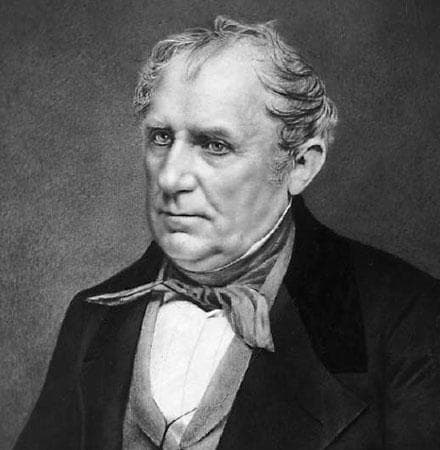
James Fenimore Cooper was an American writer of the first half of the 19th century, whose historical romances depicting colonial and indigenous characters from the 17th to the 19th centuries brought him fame and fortune. He lived much of his boyhood and the last fifteen years of life in Cooperstown, New York, which was founded by his father William Cooper on property that he owned. Cooper became a member of the Episcopal Church shortly before his death and contributed generously to it. He attended Yale University for three years, where he was a member of the Linonian Society.
Similar books
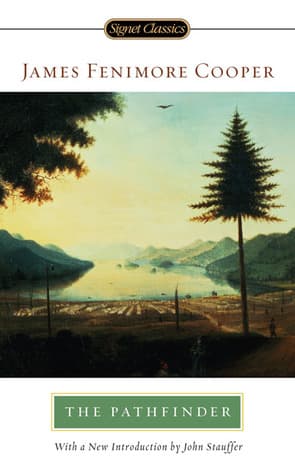
- The Pathfinder
James Fenimore Cooper
3.9 (4k) average on GoodreadsHistorical FictionAnother Leatherstocking Tale, featuring Hawk-eye in a different frontier adventure.
- Lonesome Dove
Larry McMurtry
4.5 (149k) average on GoodreadsHistorical FictionAn epic American frontier story with strong character development and themes of adventure and loss, though set in a different era.
- To Kill a Mockingbird
Harper Lee
4.3 (4.5M) average on GoodreadsHistorical FictionIn the 1930s Jim Crow South, Harper Lee writes about racial injustice, moral growth, and the quiet courage of a lawyer father, Atticus Finch, as seen through his young daughter's eyes.
- The Great Gatsby
F. Scott Fitzgerald
3.9 (3.8M) average on GoodreadsHistorical FictionIn the opulent Roaring Twenties, a mysterious millionaire's lavish parties hide his desperate, tragic pursuit of a lost love, exposing the emptiness within the American Dream.
- Pride and Prejudice
Jane Austen
4.3 (3M) average on GoodreadsHistorical FictionIn a society focused on status and money, Elizabeth Bennet navigates love and pride, challenging Mr. Darcy and social expectations to find true affection.
- Angels & Demons
Dan Brown
3.9 (2.7M) average on GoodreadsThrillerA Harvard symbologist races through Rome's ancient sites, deciphering cryptic clues to unmask the Illuminati and stop a vengeful plot to destroy the Vatican with a stolen antimatter weapon.





Enjoyed the summary?
A summary gives you the shape of the book. The book itself has the detail, the examples and the voice.
Find The Last of the Mohicans on AmazonAs an Amazon Associate, BookBrief earns from qualifying purchases. How we're funded