
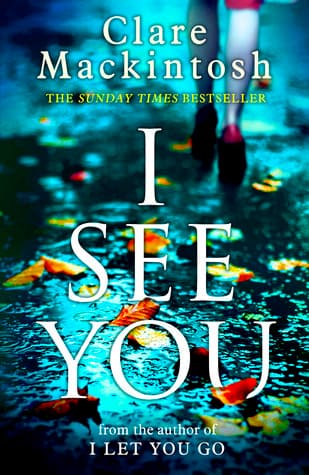
Synopsis
Covers the whole plot, including the ending.
- Difficulty
- Medium
- Pacing
- Fast
- Mood
- Suspenseful, Paranoid, Gripping, Unsettling
- Read it if
- You enjoy psychological thrillers with a high-concept premise, multiple perspectives, and a creepy sense of being watched.
- Skip it if
- You prefer thrillers with less focus on domestic drama or find themes of stalking and surveillance too unsettling.
I See You Plot Summary
Covers the whole plot, including the ending.
The Classified Ad
Zoe Walker, a mother of two, is on her usual London Underground commute when she sees a small photo of herself in the *Evening Standard*'s classifieds. Below the photo is a website address and a phone number, but no explanation. She first thinks it's a coincidence or someone who looks like her. But the photo stays with her, and she shows it to her partner, Paul, and their children, Mallory and Adam. Paul tries to reassure her, suggesting it's a mistake, but Zoe feels something more sinister is happening. The incident disrupts her routine, bringing an unexpected fear.
A Pattern Emerges
The next day, Zoe buys the *Evening Standard* again and finds a different woman's photo in the same spot. The day after, another new face appears. This pattern deeply worries Zoe. She starts looking into the women in the ads, checking their photos against news reports. To her horror, she finds that each woman in the classifieds has recently been a crime victim—from muggings to more serious assaults, even a fatal accident. This confirms her worst fears: the ads are not random but a deliberate, chilling system. She tries to report her findings to the police, but they are initially doubtful, thinking her concerns are just imagination.
Detective Kelly Swift's Investigation
Detective Constable Kelly Swift, a determined officer, first dismisses Zoe's claims as paranoia, but a feeling of unease leads her to look closer. Swift, dealing with her own problems and a difficult work environment, starts to notice connections between the classified ads and a series of unrelated incidents. She realizes that the victims are all women who use London's public transport, specifically the Tube. Swift's careful approach begins to uncover a network behind the ads, one that tracks women's movements and makes them targets. Her investigation faces resistance from her bosses, who prefer to see individual crimes rather than a coordinated effort.
The 'Commuter Watch' Website
Following the website address below the classified photos, Zoe and Kelly find a dark web platform called 'Commuter Watch.' This site is a marketplace where people can track women using their public transport data, social media, and even live CCTV feeds. Users pay to access detailed profiles of women, including their daily routes, habits, and weaknesses. The site's creators sell access to women's lives, allowing predators to find and target them. The realization that their privacy has been so violated and sold shocks both Zoe and Kelly, showing the scary implications of modern tracking.
Targeting Zoe's Family
As Zoe learns more about the mystery, the people behind 'Commuter Watch' start to threaten her and her family directly. Her daughter, Mallory, receives disturbing messages, and her son, Adam, experiences unsettling incidents. Paul, initially dismissive, becomes worried as the threats become more personal. The family's sense of safety crumbles, and Zoe realizes her investigation has made them a target. The stress on Zoe is huge, as she tries to protect her children while exposing the network. The line between her public fight and private life blurs, straining her relationships.
Paul's Secret
Amid the growing terror, Zoe finds out Paul has been having an affair with a colleague. This betrayal shatters Zoe's trust, adding a personal blow to her already overwhelming situation. The news leaves her feeling alone and questioning everything about her life, increasing her fear. She struggles to accept Paul's infidelity while he is still her partner and the father of her children, further eroding her sense of security. The discovery of his secret creates a rift in their relationship, making it harder for them to face the outside threats together.
Kelly's Personal Connection
DC Kelly Swift's dedication to the case grows when she uncovers a personal connection. She realizes that her sister, who died years ago in what was called an accidental death, was likely a victim of the 'Commuter Watch' system. The classified ad with her sister's photo had been ignored at the time. This turns the professional investigation into a personal quest for justice. Kelly's determination is fueled by a desire to avenge her sister and prevent other women from suffering the same fate, making her relentless in pursuing the mastermind behind the site.
The Mastermind Revealed
Through police work and Zoe's help, Kelly Swift eventually finds the mastermind behind 'Commuter Watch.' The person is someone close to the system, a seemingly harmless individual who has been building this network for years. The motive is chilling: a desire to control and exploit women, stemming from a misogynistic worldview and past personal grievances. The revelation of the culprit's identity is a shocking twist, showing how easily evil can hide in plain sight and use modern society and technology's weaknesses.
Confrontation and Resolution
Zoe and Kelly, now working together, plan to confront the mastermind. This leads to a tense and dangerous showdown where both women risk their lives. The confrontation tests their courage and strength as they face the person who has terrorized many women. Through their combined efforts and quick thinking, they expose the 'Commuter Watch' network, leading to the mastermind's arrest and the dark website's shutdown. The resolution brings justice, but the psychological scars remain, showing the lasting impact of the ordeal.
Aftermath and Healing
Afterward, Zoe and her family begin to heal. The experience has changed Zoe, making her more aware of hidden dangers but also stronger. Her relationship with Paul is strained, but they start to rebuild trust. Kelly Swift, having avenged her sister and caught a dangerous criminal, finds peace and renewed purpose in her career. Both women emerge stronger, though scarred. The novel ends with a reflection on tracking and the need for vigilance in a connected world. The ending highlights the ongoing fight for privacy and safety.
Principal Figures
Zoe Walker
Protagonist
A suburban mother whose discovery of her own photo in a newspaper ad unravels a dark conspiracy.
Zoe is a seemingly ordinary, busy working mother in London, juggling family life with her job. She is initially depicted as somewhat complacent and trusting, but her discovery of the classified ad ignites a fierce determination and resilience. She is observant and possesses a strong sense of justice, which drives her to investigate despite the increasing danger. Her vulnerability as a woman navigating daily life makes her a relatable figure, and her journey transforms her from an unwitting target into an active participant in uncovering the truth.
Relationships: Paul Walker (Husband; their relationship is strained by his infidelity and the threats to their family.); Mallory Walker (Daughter; Zoe is fiercely protective of her.); Adam Walker (Son; Zoe is fiercely protective of him.); DC Kelly Swift (Ally and collaborator in uncovering the 'Commuter Watch' conspiracy.)
DC Kelly Swift
Protagonist/Supporting
A tenacious and intuitive detective who connects Zoe's claims to a wider pattern of crimes.
Kelly Swift is a dedicated and somewhat unconventional detective constable, often underestimated by her male colleagues. She is sharp, intuitive, and possesses a strong moral compass. Kelly is driven by a personal tragedy – the unresolved death of her sister – which fuels her relentless pursuit of justice. She is methodical and analytical, gradually piecing together the seemingly disparate clues. Her professional integrity often puts her at odds with her superiors, but her persistence ultimately proves crucial in solving the case. She is also dealing with personal struggles, adding depth to her character.
Relationships: Zoe Walker (Ally and collaborator; their professional relationship evolves into a partnership based on trust and shared purpose.); Her Sister (Deceased; her death is a central motivator for Kelly's investigation.)
Paul Walker
Supporting
Zoe's husband, initially dismissive of her fears, who is later revealed to have secrets of his own.
Paul is Zoe's husband and the father of their two children. Initially, he represents the voice of reason and skepticism, trying to reassure Zoe that her fears are unfounded. He is portrayed as a busy professional, somewhat detached from the emotional intensity of Zoe's discovery. As the threats escalate and directly impact their family, he becomes more involved and concerned. However, his character is complicated by the revelation of his infidelity, which adds a layer of betrayal and strain to his relationship with Zoe, making him a more complex and morally ambiguous figure.
Relationships: Zoe Walker (Husband; their marriage is severely tested by his affair and the external threats.); Mallory Walker (Daughter; he is a protective father.); Adam Walker (Son; he is a protective father.)
Mallory Walker
Supporting
Zoe and Paul's teenage daughter, who becomes a target of the perpetrators.
Mallory is Zoe and Paul's teenage daughter, navigating the typical challenges of adolescence. She is initially depicted as a somewhat independent and tech-savvy teen. As the threats against her family escalate, she becomes directly impacted, receiving unsettling messages and experiencing frightening incidents. This exposure to danger forces her to mature quickly and makes her more aware of the perils of online activity and personal privacy. Her experiences highlight the vulnerability of young people in the digital age and add a layer of urgency to Zoe's investigation.
Relationships: Zoe Walker (Mother; she relies on Zoe for protection and guidance.); Paul Walker (Father; she relies on Paul for protection and guidance.)
Adam Walker
Supporting
Zoe and Paul's younger son, also affected by the escalating threats.
Adam is Zoe and Paul's young son. While not as central to the plot as Mallory, his experiences with the escalating threats add to the family's sense of terror. He is a typical young boy, innocent and vulnerable, making him a symbol of what Zoe is fighting to protect. The incidents he experiences, though perhaps less direct, contribute to the overall atmosphere of fear and demonstrate the pervasive reach of the perpetrators. His safety is a constant concern for Zoe, driving her determination.
Relationships: Zoe Walker (Mother; he is protected by Zoe.); Paul Walker (Father; he is protected by Paul.); Mallory Walker (Sister; they share a typical sibling relationship.)
The Mastermind (Various Aliases)
Antagonist
The shadowy figure behind the 'Commuter Watch' website, exploiting public data for nefarious purposes.
The Mastermind is the primary antagonist, a highly intelligent and technologically adept individual who orchestrates the 'Commuter Watch' network. This character is driven by a deep-seated misogyny and a desire for control, viewing women as objects to be tracked, exposed, and ultimately targeted. The Mastermind operates with cold calculation, exploiting modern surveillance technologies and social media to build detailed profiles of unsuspecting women. Their identity is a major reveal, highlighting how insidious threats can come from unexpected sources and how easily malevolence can be masked by anonymity and digital distance.
Relationships: Zoe Walker (Target and primary adversary.); DC Kelly Swift (Investigator and adversary.)
DCI Marritt
Supporting
Kelly Swift's skeptical and by-the-book superior officer.
DCI Marritt is Kelly Swift's direct superior, representing the bureaucratic and often slow-moving nature of police work. He is initially dismissive of Zoe's claims and skeptical of Kelly's intuitive leaps, preferring established procedures and tangible evidence. Marritt embodies the institutional resistance to unconventional theories and the difficulty of addressing crimes that don't fit traditional molds. His skepticism frustrates Kelly, but he eventually comes around as the evidence becomes undeniable, showcasing a shift in perspective when faced with overwhelming facts.
Relationships: DC Kelly Swift (Superior officer; initially dismissive, later supportive.)
Themes & Insights
The Pervasiveness of Surveillance and Loss of Privacy
The novel shows how easily personal data, public transport records, and social media can be collected and used as weapons, leading to a loss of privacy. The 'Commuter Watch' website is the clearest example of this, showing a terrifying marketplace where people's routines and weaknesses are sold. This is clear when Zoe finds her photo in the paper, a direct result of her movements being tracked, and later when Mallory receives messages detailing her activities. The book makes readers question their own digital footprints and the unseen eyes that might be watching.
“You don't know who's watching you...until it's too late.”
Vulnerability of Women in Public Spaces
A main theme is the vulnerability of women, especially in city public spaces, and how this vulnerability is used. The classified ads specifically target women, showing the constant threat they face from strangers and the systemic nature of male violence. The 'Commuter Watch' site uses this, providing tools for predators to find and stalk female commuters. Zoe's fear for herself and her daughter, Mallory, reflects the worries many women have about their safety when moving through the world, showing that even daily commutes can become dangerous.
“Every woman on that train, every woman walking home, was a potential victim. And someone was selling them.”
Trust and Betrayal
The novel explores different kinds of trust and betrayal, both personal and societal. Zoe's trust in her husband, Paul, is broken by his affair, adding personal trouble to her outside crisis. This betrayal makes her question her judgment and who she can trust. On a larger scale, the 'Commuter Watch' system represents a societal betrayal—the breaking of trust people place in public systems (transport, internet) and the expectation of personal safety. The antagonist's use of this trust shows the insidious nature of the crime.
“The feeling of being watched was bad enough, but the knowledge that it had been *sold*… that was a different kind of violation.”
The Power of Intuition vs. Skepticism
This theme shows the importance of trusting one's instincts, especially when official channels are dismissive. Zoe's initial feeling that the classified ad is more than a coincidence is met with doubt from her family and the police. Similarly, DC Kelly Swift often relies on her instincts, even when her superiors demand proof. The novel shows that while logic and evidence are important, intuition can be a strong guide, especially with unusual crimes that are hard to explain. It supports the idea that sometimes, the 'feeling' that something is wrong is the first step to finding a deeper truth, making the reader consider the limits of purely rational analysis.
“Sometimes, the things you couldn't prove were the most dangerous.”
Plot Devices & Literary Techniques
Red Herring
Misleading clues or characters designed to distract from the true culprit.
The novel employs several red herrings to keep the reader guessing about the mastermind's identity. For instance, initial suspicions might fall on seemingly peripheral characters or even Zoe's close circle due to their behavior or proximity to events. Paul's infidelity serves as a significant personal red herring, diverting Zoe's and the reader's attention to domestic betrayal while the larger, more sinister plot unfolds. These diversions effectively build suspense and ensure that the final reveal of the true antagonist is both surprising and impactful, making the reader re-evaluate earlier assumptions and observations.
Dual Perspective Narrative
Alternating viewpoints between two protagonists to provide a fuller picture.
The story is primarily told through the alternating perspectives of Zoe Walker, the civilian victim, and DC Kelly Swift, the investigating officer. This device allows the reader to experience the unfolding horror from both a personal, emotional level (Zoe's fear, confusion, and determination) and a professional, procedural level (Kelly's investigative steps, challenges with bureaucracy, and eventual breakthroughs). This dual narrative enriches the plot by providing a comprehensive understanding of the crime's impact and the efforts to solve it, while also creating dramatic irony as one character might know something the other doesn't yet.
The Unreliable Narrator (Subtle)
Elements of a character's perception or memory that may not be entirely accurate.
While not a classic unreliable narrator, the novel subtly uses Zoe's initial perception of events and her own life as a form of unreliability. Her initial dismissal of the ad, her trust in Paul, and her seemingly ordinary life are all challenged and proven to be less stable than she believed. Her perspective is colored by her fear and personal issues, leading her to misinterpret signs or initially overlook crucial details. This device makes the reader question what is real and what is perceived, adding to the psychological tension and the sense of disorientation Zoe experiences as her world unravels.
Digital Footprint as a Weapon
The use of an individual's online and public data against them.
This is a central and terrifying plot device. The 'Commuter Watch' website weaponizes the vast amount of data individuals unknowingly leave behind in their daily lives – Oyster card taps, social media posts, CCTV footage, and public records. The classified ads themselves are the visible manifestation of this weaponization. This device highlights a modern fear, transforming abstract concerns about privacy into a tangible threat where digital information is used to facilitate real-world harm, making the antagonists' methods feel chillingly plausible and contemporary. It serves as a stark warning about the dangers of an over-connected world.
I See You Quotes
“Every day, millions of people use the London Underground. And every day, millions of people are watched.”
“The thing about being invisible is that you can see everything. And no one sees you.”
“It’s not paranoia if they really are watching you.”
“The greatest trick the devil ever pulled was convincing the world he didn't exist. The greatest trick a stalker pulls is making you believe you're imagining things.”
“We all leave a digital footprint, whether we mean to or not. And sometimes, those footprints lead directly to us.”
“Fear has a smell. And it’s not always the one you expect.”
“You never truly know someone until you see them under pressure. Or when they think no one is watching.”
“The city is a beast. It feeds on anonymity, on the idea that you can disappear into the crowd.”
“Sometimes the most dangerous things are the ones you invite into your life, unknowingly.”
“The line between observation and obsession is incredibly thin.”
“We tell ourselves we're safe, that it can't happen to us. Until it does.”
“The truth is rarely simple. And often, it's far more terrifying than any lie.”
“There are eyes everywhere. You just don't always know whose they are, or what they want.”
“It’s amazing how quickly your perception of reality can shift when someone else starts to control it.”
Quiz
10 questions on the plot and the characters. Each answer comes with a short explanation.
Question 1
What does Zoe Walker first discover that makes her realize something is wrong?
- A strange car parked outside her house every day.
- Her photo in the classifieds section of a London newspaper.
- An anonymous letter threatening her family.
- A series of unusual charges on her credit card statement.
Show answer
B. Her photo in the classifieds section of a London newspaper. Zoe first sees her own photo in a newspaper classified, leading her to investigate the mystery.
Question 2
What is the primary method used by the perpetrators to track their victims?
- GPS trackers hidden in personal belongings.
- Hacking into victims' smartphones and computers.
- Using public transport CCTV and data from Oyster cards.
- Employing private investigators to follow people.
Show answer
C. Using public transport CCTV and data from Oyster cards. The criminals exploit the public transport system's CCTV and Oyster card data to meticulously track people's movements.
Question 3
Who is the main detective investigating the disappearances and the newspaper adverts?
- DI Ray Stevens
- DS Kelly Swift
- Inspector John Davies
- Sergeant Emily Finch
Show answer
B. DS Kelly Swift DS Kelly Swift is the dedicated detective who takes Zoe's concerns seriously and investigates the pattern of disappearances.
Question 4
What is the ultimate goal of the group behind the 'I See You' operation?
- To expose the lack of privacy in modern society.
- To create a dating service based on observed routines.
- To sell people's routines and personal information to criminals for profit.
- To conduct a psychological experiment on public paranoia.
Show answer
C. To sell people's routines and personal information to criminals for profit. The group's sinister motive is to identify vulnerable individuals through their predictable routines and then sell this information to criminals for various nefarious purposes.
Question 5
Which member of Zoe's family initially dismisses her concerns about the photo?
- Her daughter, Katherine.
- Her son, Sam.
- Her husband, Paul.
- Her sister, Laura.
Show answer
C. Her husband, Paul. Paul, Zoe's husband, is initially skeptical and suggests it's just someone who looks like Zoe.
Question 6
What specific routine detail about Zoe is highlighted by the perpetrators, making her realize the extent of their surveillance?
- Her daily coffee order at a specific café.
- Her exact train journey and the station where she changes lines.
- The time she leaves her house for work each morning.
- Her weekly visit to the local library.
Show answer
B. Her exact train journey and the station where she changes lines. The advert shows a photo of her at a specific interchange station on her commute, revealing they know her exact journey.
Question 7
What is the name of the website advertised alongside the photos in the newspaper?
- FindMyRoute.com
- YourJourney.co.uk
- SeeYourself.net
- MyLifeMyWay.com
Show answer
D. MyLifeMyWay.com The website 'MyLifeMyWay.com' is consistently shown in the classifieds, leading victims to a platform where their routines are detailed.
Question 8
The novel explores the theme of modern-day surveillance and the erosion of privacy. What technological aspect is most central to this theme?
- Smart home devices and virtual assistants.
- Facial recognition software in public spaces.
- CCTV cameras and Oyster card data on public transport.
- Social media data mining.
Show answer
C. CCTV cameras and Oyster card data on public transport. The entire premise of the 'I See You' operation hinges on the exploitation of public transport CCTV and Oyster card usage, highlighting how seemingly innocuous data can be used for sinister purposes.
Question 9
What is the significant personal connection that DS Kelly Swift discovers linking her to one of the earlier victims or the 'I See You' case?
- She recognizes one of the victims from her childhood neighborhood.
- Her own photo appears in the classifieds at one point.
- She discovers her sister was a victim of a previous, similar crime.
- She realizes her partner is involved with the perpetrators.
Show answer
C. She discovers her sister was a victim of a previous, similar crime. Kelly's personal involvement deepens when she realizes her own sister, Maria, was a victim of a similar targeting several years prior, which fuels her determination to solve the case.
Question 10
What is the ultimate fate of the main antagonist, Adrian, and his operation?
- He successfully flees the country and continues his operation elsewhere.
- He is arrested and his operation is dismantled by the police.
- He is killed by one of his former associates.
- He manages to evade capture but his operation collapses due to exposure.
Show answer
B. He is arrested and his operation is dismantled by the police. Adrian, the mastermind behind the 'I See You' operation, is ultimately caught and arrested, leading to the dismantling of his criminal enterprise.
I See You FAQ
What initially prompts Zoe Walker's investigation in 'I See You'?
Zoe Walker discovers her own photograph in the classifieds section of a London newspaper, accompanied only by a website address and a phone number, with no explanation for its presence. This unsettling discovery ignites her determination to uncover the reason behind it, despite her family's initial dismissals.
Who are the key members of Zoe Walker's immediate family and what are their initial reactions to the classified ad?
Zoe's family consists of her husband, Nick, and their two children, Justin and Katie. Initially, Nick and the children dismiss the photo, suggesting it's merely someone who resembles Zoe, failing to grasp the sinister implications she immediately senses.
What is the pattern of the classified ads that Zoe observes after her own photo appears?
After Zoe's photo, subsequent ads feature different women each day, always with the same website and phone number. This recurring pattern, showing new individuals daily, confirms Zoe's suspicion that these are not random occurrences but part of a deliberate, escalating scheme.
What is the primary motive behind the classified ad scheme revealed in the book?
The scheme is a sophisticated, predatory operation where the classified ads are used to identify potential victims for criminals. By publishing photos of women and then selling their travel patterns and personal information, the perpetrators facilitate crimes like theft, assault, and even murder.
Who is Kelly and what role does she play in Zoe's investigation?
Kelly is a police detective who initially dismisses Zoe's concerns about the classified ads, attributing them to paranoia or coincidence. However, as more women linked to the ads become victims, Kelly eventually realizes the gravity of Zoe's claims and becomes a key ally in uncovering the network.
What is the significance of the specific website address and phone number included in the classified ads?
The website and phone number are crucial components of the criminal operation. They serve as the portal through which personal information and travel itineraries of the featured women are sold to other criminals, effectively acting as a marketplace for targeting victims.
How are the perpetrators able to obtain the photos and detailed travel information of their victims?
The perpetrators exploit publicly available information, particularly from social media and security camera footage, to identify women and track their movements. They meticulously piece together daily routines, travel patterns, and personal details, then use these to generate the ads and sell the data.
What is the hidden connection between Zoe's past and the broader criminal network?
It is revealed that Zoe herself, through seemingly innocuous daily routines and public transport use, provided the very data that enabled her photo to be selected and her information sold. Her past actions, unknowingly, made her a target within the network.
How does the book explore the psychological impact of constant surveillance on its characters, particularly Zoe?
The book vividly portrays Zoe's descent into paranoia and anxiety as she grapples with the realization that her every move might be monitored. This constant fear of being watched erodes her sense of security and trust, profoundly affecting her mental state and relationships.
Discuss the psychological motivations of the individuals behind the classified ad scheme.
The perpetrators are driven by a cold, calculating desire for profit, seeing human lives as commodities to be traded. Their motivation appears to be primarily financial, coupled with a detached, almost clinical disregard for the suffering they inflict, suggesting a lack of empathy and a highly organized criminal mindset.
How does Zoe's relationship with her family evolve under the pressure of the investigation and the threat?
Initially, Zoe feels isolated as her family dismisses her fears, creating a rift. As the danger becomes undeniable, her family members, particularly Nick, eventually come to believe her, leading to a strained but ultimately stronger bond as they face the threat together, albeit with lingering trust issues.
What psychological vulnerabilities does the novel suggest modern society faces due to ubiquitous technology and data sharing?
The novel highlights the profound vulnerability of individuals in a world saturated with digital footprints and surveillance. It suggests that our reliance on technology and the public sharing of personal data, even seemingly innocuous details, can be weaponized, leading to a pervasive sense of insecurity and loss of privacy.
Is 'I See You' primarily a critique of public transport security or a broader commentary on digital privacy?
'I See You' is a broader commentary on digital privacy and the dangers of ubiquitous surveillance, using public transport as a key example of how everyday movements can be tracked and exploited. While public transport security is a setting, the core message extends to all forms of data collection and its misuse.
To what extent is Zoe responsible for her own predicament, if at all, according to the novel's themes?
The novel suggests Zoe is not 'responsible' in a culpable sense, but rather a victim of a system that exploits common human behaviors. Her predicament highlights how ordinary, innocent actions like using public transport or having a public social media profile can inadvertently make anyone a target, shifting the blame to the perpetrators and the system itself.
Does the ending offer a complete resolution, or does it leave room for continued vulnerability?
While the immediate threat to Zoe is neutralized and some perpetrators are caught, the ending suggests a lingering sense of vulnerability. The novel implies that the underlying mechanisms for such crimes—ubiquitous surveillance and data exploitation—persist, leaving the reader with the unsettling thought that similar schemes could continue to operate.
What is the broader societal message Clare Mackintosh conveys about trust and anonymity in urban environments?
Mackintosh conveys that anonymity in urban environments is an illusion, and that trust, even in public spaces, is constantly eroded by unseen eyes. The book warns that the very infrastructure designed for convenience can be weaponized, fostering a pervasive sense of mistrust and making individuals feel perpetually exposed.
How does the novel use the character of Kelly to explore the institutional response to modern, data-driven crime?
Kelly initially represents the institutional skepticism and slow adaptation of law enforcement to new forms of crime that exploit data rather than traditional physical evidence. Her journey from dismissiveness to belief highlights the challenge police forces face in recognizing and combating sophisticated, technologically driven criminal enterprises.
About the author
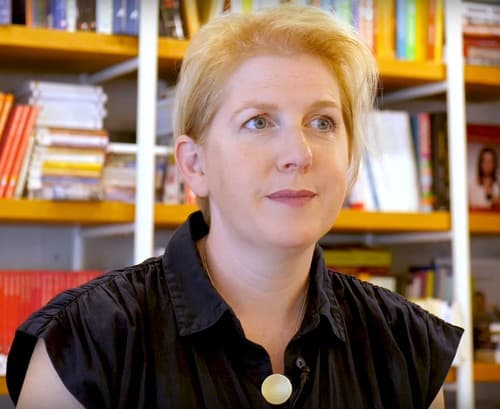
Clare Mackintosh is a former police detective turned bestselling author. Her debut novel, 'I Let You Go,' was a Richard & Judy Book Club pick and a number one bestseller. Known for her gripping psychological thrillers, including 'I See You,' Mackintosh crafts compelling narratives with unexpected twists.
Similar books
- The Girl on the Train
Paula Hawkins
3.9 (2.1M) average on GoodreadsThrillerFeatures an unreliable narrator and a mystery unfolding around commuters.
- Behind Closed Doors
B.A. Paris
3.9 (1k) average on GoodreadsThrillerExplores a woman's desperate situation and the hidden dangers within seemingly normal lives.
- I Let You Go
Clare Mackintosh
4.1 (107k) average on GoodreadsThrillerAnother twisty, character-driven thriller from the same author with unexpected turns.
- Before I Go to Sleep
S.J. Watson
3.9 (290k) average on GoodreadsThrillerWhile both "I See You" and "Before I Go to Sleep" are psychological thrillers that involve a woman discovering a dark truth about her life, they approach the mystery differently. Watson's novel centers on amnesia and the manipulation of memory, creating an intimate sense of betrayal within a marriage. Mackintosh's book, conversely, externalizes the threat, focusing on a broader, more public form of surveillance and the chilling idea that anyone can be a target, moving beyond the confines of a single household to encompass the anonymity of urban life. Mackintosh also offers a clearer, more traditional detective procedural alongside the victim's unfolding terror, whereas Watson's narrative is almost entirely confined to Christine's subjective experience.
- Angels & Demons
Dan Brown
3.9 (2.7M) average on GoodreadsThrillerA Harvard symbologist races through Rome's ancient sites, deciphering cryptic clues to unmask the Illuminati and stop a vengeful plot to destroy the Vatican with a stolen antimatter weapon.
- Gone Girl
Gillian Flynn
4.1 (2.3M) average on GoodreadsThrillerA wife's sudden disappearance on her fifth anniversary reveals a web of lies and psychological warfare, exposing the secrets within a seemingly perfect marriage.






Enjoyed the summary?
A summary gives you the shape of the book. The book itself has the detail, the examples and the voice.
Find I See You on AmazonAs an Amazon Associate, BookBrief earns from qualifying purchases. How we're funded