

Synopsis
Covers the whole plot, including the ending.
- Difficulty
- Medium
- Pacing
- Moderate
- Mood
- Dark, Thought-provoking, Intense, Melancholy, Resilient
- Read it if
- You are interested in post-colonial literature, social justice issues, and the struggles of marginalized communities, particularly indigenous tribes in India.
- Skip it if
- You prefer lighthearted or escapist fiction, or are sensitive to graphic depictions of violence, exploitation, and profound human suffering.
Imaginary Maps Plot Summary
Covers the whole plot, including the ending.
Pterodactyl, Pirtha, and Puran Sahay: The Arrival of Puran
Puran Sahay, a journalist from Calcutta, travels to Pirtha, an isolated tribal village in the forest. He has heard rumors of a pterodactyl and plans to write a story. He meets the Munda and Santhal villagers, who are cautious and confused by his presence. Puran is a modern man with cameras and notebooks, but Pirtha's old ways and beliefs challenge his urban views. The village elder, Ganpat, and other tribals see the pterodactyl not as a scientific curiosity but as a symbol of their past and uncertain future, a creature representing their forgotten history and current marginalization. Puran at first struggles to understand their view, seeing their explanations as superstition.
Pterodactyl, Pirtha, and Puran Sahay: The Village's History and the Pterodactyl's Meaning
As Puran spends more time in Pirtha, he starts to learn about the village's sad history of exploitation by outsiders—landlords, moneylenders, and government officials. He learns about their fight for land rights, their decreasing resources, and the loss of their traditional life. For the villagers, the pterodactyl is not just a creature but a living memory, a symbol of their ancient line and their possible extinction. It represents their lost glory, cultural identity, and resistance against the modern world that threatens to erase them. Puran sees their rituals and stories, which are deeply tied to the land and their ancestors. He begins to question his initial journalistic goal, realizing the deep meaning the pterodactyl holds for the community, beyond just an animal sighting.
Pterodactyl, Pirtha, and Puran Sahay: Puran's Transformation and the Truth
Puran Sahay's understanding of Pirtha grows as he sees the injustices the tribals face. He sees their poverty, their strength, and their strong connection to the land. His first goal of a sensational story changes into a growing empathy and a realization of his own role, as an urban intellectual, in their marginalization. He starts to see the pterodactyl not as a real animal, but as a strong metaphor for forgotten history and the threat to tribal life. The villagers, especially the women, share stories of their ancestors and struggles, slowly changing Puran's ideas. He realizes that the 'pterodactyl' is a shared memory, a desperate call for recognition, and a symbol of their fight for survival against a world that wants to erase them.
Douloti the Bountiful: Douloti's Life of Labor and Exploitation
Douloti, a young Uraon tribal woman, lives in extreme poverty and constant exploitation. She works as a bonded laborer in a brick kiln, a brutal life where she endures hard work and sexual abuse from the kiln owner and his overseers. Her life is a cycle of labor, hunger, and violence, with no escape. Despite her suffering, Douloti has an inner strength and a desperate hope for a better future, especially for her unborn child. The story clearly shows the dehumanizing conditions tribal laborers face, highlighting the systemic oppression and lack of power for women like Douloti. Her body, her labor, and her life are treated as goods, showing the extreme vulnerability of marginalized communities.
Douloti the Bountiful: The Arrival of the Doctor and the Festival
In Douloti's harsh life, a kind doctor, Dr. R.N. Lahiri, arrives, bringing medical help and a rare sense of humanity to the exploited laborers. His presence offers a short break from their daily suffering. During a local festival, Douloti, despite her tiredness and poor health, takes part in the celebrations. This brief moment of joy and community connection shows the deep cultural roots and resilience of the tribal people, even when facing great hardship. However, the festival also contrasts sharply with her daily life, showing how short-lived happiness is and the constant threat of exploitation. The doctor's brief help, while offering some relief, cannot change the systemic problems that trap Douloti and others.
Douloti the Bountiful: Douloti's Tragic End
Douloti's life ends in a sad and symbolic death. After repeated sexual assaults and enduring harsh labor, she gets a serious illness. Her body, already weakened by malnutrition and abuse, gives in to the sickness. Her death is not just a personal tragedy but a strong accusation of the systemic violence and exploitation tribal women face. Her last moments include a desperate plea for recognition and dignity, as she leaves behind a child who will likely share her fate. Douloti's death is a clear reminder of the devastating effects of social and economic injustice, and the deep vulnerability of those on society's edges, whose lives are seen as disposable by the powerful.
The Hunt: Mary Oraon's Resistance
Mary Oraon, a spirited and defiant young tribal woman, faces a tense situation during a traditional communal hunt. The hunt, an important cultural event for her community, is interrupted by a powerful colonial officer, Mr. Sanyal, who represents the oppressive force of the British Raj and its lasting influence. Mary, unlike many others, refuses to be scared. She challenges Sanyal's authority and his attempts to exploit the tribals and their resources. Her defiance comes from a strong connection to her ancestral land and a fierce pride in her tribal identity. The hunt becomes a small example of the bigger fight for land, dignity, and self-determination against colonial and post-colonial exploitation.
The Hunt: The Conflict Over Land and Identity
The story looks at the historical and ongoing conflict between tribal communities and outside powers—represented by Mr. Sanyal and the systems he embodies. The land, which is sacred and central to the tribals' identity and living, is constantly threatened by logging, mining, and farming expansion. The hunt is not just about catching animals; it is a ritual that confirms their connection to the forest and their traditional way of life. Mary's resistance highlights the struggle to keep their cultural heritage and economic independence in the face of constant pressure. The story shows how losing land means losing identity and the erosion of their very existence as a distinct people, facing a constant battle for survival.
The Hunt: Mary's Act of Defiance and Its Aftermath
Driven by years of oppression and personal wrongs, Mary Oraon takes a decisive and violent stand against Mr. Sanyal. During the hunt, she uses her traditional skills and forest knowledge to outsmart him, eventually killing him. This act is not just revenge but a symbolic reclaiming of power and a desperate cry for justice. Her action, while sad in its immediate results, is a strong statement against the exploitation and dehumanization of her people. Mary then faces the unavoidable consequences, yet her act leaves a lasting mark, raising awareness and showing the lasting spirit of resistance among the marginalized.
Imaginary Maps: The Interconnectedness of Suffering
Across all three stories, Mahasweta Devi carefully shows how suffering connects various tribal communities in India. Whether it is the threat symbolized by the pterodactyl in Pirtha, Douloti's brutal exploitation in the brick kiln, or Mary Oraon's defiant act in 'The Hunt,' the themes of land loss, economic exploitation, cultural erasure, and gender violence are always present. The 'imaginary maps' are not just about geography but also about ideas, charting the social and political situations of marginalized lives. The stories reveal how outside forces, from colonial legacies to modern capitalism, work together to dispossess and dehumanize these communities, creating a shared experience of struggle and resilience against great odds, connecting their fates.
Imaginary Maps Characters
Puran Sahay
Protagonist (Pterodactyl, Pirtha, and Puran Sahay)
An urban journalist who initially seeks a sensational story but undergoes a profound transformation.
Puran Sahay is a journalist from Calcutta, representing the educated, urban Indian elite. Initially driven by a desire for a sensational story about a pterodactyl, he embodies a modern, rational worldview that struggles to comprehend the deep cultural and mythical significance of the tribals' beliefs. He is initially detached and analytical, viewing the villagers through a lens of scientific curiosity and mild skepticism. As he spends more time in Pirtha, witnessing the tribals' poverty, their history of exploitation, and their profound connection to their land and myths, his perspective gradually shifts.
Relationships: Ganpat (Village elder who guides Puran's understanding of tribal culture and history.); Pirtha villagers (His subjects who slowly challenge his worldview and inspire his empathy.)
Douloti
Protagonist (Douloti the Bountiful)
A young Uraon tribal woman, a bonded laborer, enduring extreme exploitation and violence.
Douloti is a symbol of the extreme vulnerability and resilience of tribal women in the face of systemic exploitation. Working as a bonded laborer in a brick kiln, she endures relentless physical and sexual abuse, hunger, and dehumanization. Despite her suffering, she possesses an inner strength and a desperate hope, particularly for her unborn child. Her character embodies the tragic consequences of economic and social injustice, where her body and labor are treated as commodities. Her life is a stark portrayal of the voiceless and the dispossessed, yet she holds onto fragments of dignity and hope.
Relationships: Kiln Owner and Overseers (Her exploiters and abusers.); Dr. R.N. Lahiri (A compassionate doctor who offers brief, limited medical aid.)
Mary Oraon
Protagonist (The Hunt)
A fierce and defiant young tribal woman who resists colonial and post-colonial oppression.
Mary Oraon is a powerful figure of resistance and agency. Unlike Douloti, who is victimized, Mary actively challenges the forces that oppress her community. She is deeply connected to her ancestral land and fiercely proud of her tribal identity. Her character represents the spirit of rebellion against injustice, embodying the anger and frustration of a people whose land and culture are under constant threat. She is skilled in traditional hunting and survival, using these abilities to confront her oppressors. Her actions are driven by a profound sense of justice and a refusal to be silenced or subjugated.
Relationships: Mr. Sanyal (The colonial officer and symbol of oppression whom she confronts and ultimately kills.); Her community (Her people, whose suffering she seeks to avenge and protect.)
Ganpat
Supporting (Pterodactyl, Pirtha, and Puran Sahay)
An elder of Pirtha village, repository of tribal wisdom and history.
Ganpat is a wise and patient Munda elder in Pirtha. He serves as Puran Sahay's primary informant and guide, gradually revealing the complex history, myths, and struggles of his community. Ganpat represents the living memory of the tribal people, their deep connection to the land, and their ancestral traditions. He explains the symbolic significance of the pterodactyl, helping Puran understand that it's not merely an animal but a manifestation of their past, their present suffering, and their future anxieties. He embodies the resilience and quiet dignity of a people facing extinction.
Relationships: Puran Sahay (His interlocutor, to whom he imparts tribal knowledge and history.)
Dr. R.N. Lahiri
Supporting (Douloti the Bountiful)
A compassionate doctor who offers limited medical aid and a rare glimpse of humanity.
Dr. R.N. Lahiri is a benevolent figure who appears in 'Douloti the Bountiful.' He is a doctor who provides medical assistance to the exploited laborers in the brick kilns. His presence offers a brief moment of hope and compassion in Douloti's otherwise brutal existence. He represents a glimmer of external conscience and humanitarian effort, though his individual actions are ultimately insufficient to counteract the pervasive systemic exploitation. He is a witness to the suffering, but his ability to effect large-scale change is limited, highlighting the immense scale of the problem.
Relationships: Douloti (A patient whom he treats with care, though unable to save her.)
Mr. Sanyal
Antagonist (The Hunt)
A powerful colonial officer embodying the oppressive forces exploiting tribal communities.
Mr. Sanyal is the antagonist in 'The Hunt,' representing the enduring legacy of colonial power and the ongoing exploitation of tribal people and their resources. He is arrogant, dismissive of tribal rights and culture, and driven by self-interest. He symbolizes the external forces – government, industry, and powerful individuals – that seek to control and profit from tribal lands, often at the expense of the indigenous inhabitants. His presence during the traditional hunt is an intrusion, a manifestation of his dominance and disregard for local customs. He is the direct target of Mary Oraon's desperate act of rebellion.
Relationships: Mary Oraon (His victim and eventual killer, representing the clash between oppressor and oppressed.)
The Kiln Owner
Antagonist (Douloti the Bountiful)
The cruel and exploitative owner of the brick kiln, a symbol of capitalist oppression.
The kiln owner in 'Douloti the Bountiful' is a nameless but omnipresent figure of brutal capitalist exploitation. He is responsible for the bonded labor and sexual abuse of Douloti and countless other tribal workers. He embodies the ruthlessness of a system that prioritizes profit over human dignity, treating his laborers as disposable commodities. His lack of a specific name reinforces his role as a representative of a larger, systemic evil rather than an individual villain. He is the direct cause of Douloti's suffering and eventual death, symbolizing the unchecked power of the rich over the poor.
Relationships: Douloti (Her primary oppressor and abuser.); Other laborers (His exploited workforce.)
Imaginary Maps Themes
Exploitation and Marginalization
This is a main theme in all three stories, showing the systematic exploitation of indigenous tribal communities in India. 'Douloti the Bountiful' clearly shows economic exploitation through bonded labor and sexual abuse in the brick kiln. 'The Hunt' depicts the ongoing struggle against land loss and the taking of resources by outside powers like Mr. Sanyal. In 'Pterodactyl, Pirtha, and Puran Sahay,' the tribals' marginalization is clear in their forgotten history and the threat to their cultural identity. Devi consistently reveals how these communities are pushed aside, their lives and livelihoods seen as disposable by the dominant society.
“There are people like us, and there are human beings. We are people. They are human beings.”
Loss of Identity and Cultural Erasure
The stories strongly convey the loss of tribal identity and culture under the constant pressure of modernization and outside control. In 'Pterodactyl, Pirtha, and Puran Sahay,' the pterodactyl symbolizes the vanishing past and the possible end of tribal memory and heritage. The villagers hold onto their myths and rituals to preserve their identity against a world that ignores them. 'The Hunt' shows how losing ancestral land directly leads to losing cultural practices and self-sufficiency. Devi stresses how their distinct languages, traditions, and spiritual ties to nature are systematically weakened, causing a deep sense of displacement and cultural emptiness.
“The pterodactyl is our past, our present, and our future. It is our memory, flying away.”
Resistance and Resilience
Despite huge challenges, the tribal characters show remarkable resilience and, at times, strong resistance. Mary Oraon in 'The Hunt' directly shows this theme through her violent act of defiance against her oppressor, a desperate but powerful assertion of control. Even Douloti, in her extreme suffering, has an inner strength and a will to survive for her child, representing a more passive but lasting form of resilience. The villagers in Pirtha, though seemingly passive, keep their cultural stories and beliefs in the face of outside misunderstanding, a quiet form of resistance against cultural erasure. Devi highlights that even when facing great tragedy, the spirit of these communities is not fully broken.
“If we do not fight, who will remember us? If we do not fight, we will cease to be.”
The Power of Narrative and Memory
Devi uses storytelling and memory as important tools for understanding and preserving tribal experience. In 'Pterodactyl, Pirtha, and Puran Sahay,' the villagers' myths about the pterodactyl are not just superstition but important historical stories that capture their past struggles and current worries. Puran's journey is about learning to 'read' these indigenous stories. The oral traditions and shared memories of exploitation and survival are central to the tribals' identity and their resistance. The act of telling these stories, both within the fiction and by Devi herself, is an act of bearing witness and making sure these marginalized voices are heard, challenging official histories that often erase them.
“History is not just what is written. It is also what is remembered, what is felt in the blood.”
Plot Devices & Literary Techniques
Symbolism of the Pterodactyl
The pterodactyl represents the vanishing past, cultural memory, and impending extinction of tribal life.
In 'Pterodactyl, Pirtha, and Puran Sahay,' the mythical creature is not a literal animal but a potent symbol. For the Pirtha villagers, it embodies their ancient lineage, their forgotten history, and the looming threat of cultural erasure. It is a living memory, a reminder of what they once were and what they stand to lose. For Puran Sahay, it initially represents a sensational news story, but as he delves deeper, it becomes a metaphor for the profound injustices and existential crisis faced by the tribals. Its existence, or perceived existence, is a desperate cry from a marginalized people to be seen and remembered before they vanish entirely.
The Unreliable Narrator/Perspective Shift
The narrative often begins with an outsider's perspective, which is then challenged and transformed.
This device is most prominent in 'Pterodactyl, Pirtha, and Puran Sahay,' where the story starts through Puran Sahay's urban, rational lens. His initial skepticism and journalistic detachment gradually give way to empathy and understanding as he is confronted with the realities of tribal life and their unique worldview. This shift in perspective allows the reader to experience the transformation alongside the character, moving from a superficial understanding to a deeper appreciation of the tribals' plight. It serves to critique the dominant narrative and highlight the validity of indigenous perspectives, inviting the reader to question their own preconceived notions.
Foreshadowing through Traditional Beliefs
Tribal myths, omens, and traditional stories often hint at future events or underlying truths.
Throughout the stories, particularly in 'Pterodactyl, Pirtha, and Puran Sahay' and 'The Hunt,' the traditional beliefs, myths, and interpretations of nature by the tribal characters often foreshadow the tragic outcomes or reveal deeper socio-political truths. The villagers' understanding of the pterodactyl as a harbinger of change or the significance they place on certain natural signs are not mere superstitions but reflections of their deep connection to their environment and their historical consciousness. These elements subtly guide the narrative, adding layers of meaning and reinforcing the idea that indigenous knowledge systems hold profound insights often dismissed by the 'modern' world.
The Body as a Site of Resistance/Suffering
Characters' physical bodies become powerful symbols of their oppression and their struggle.
In 'Douloti the Bountiful,' Douloti's body is a central plot device, serving as the primary site of her exploitation and suffering. It is subjected to relentless labor, sexual violence, and disease, making her physical state a stark testament to the dehumanizing conditions of bonded labor. Conversely, in 'The Hunt,' Mary Oraon's body, skilled and capable, becomes an instrument of resistance and revenge. Her physical prowess and knowledge of the forest enable her decisive act. In both cases, the female body, whether enduring or retaliating, becomes a powerful symbol through which Devi explores themes of gendered violence, resilience, and the fight for dignity.
Imaginary Maps Quotes
“Because they were always there, and we were always here. And the forest was always ours.”
“The maps they drew were imaginary for us. They did not show our rivers, our trees, our gods.”
“A woman is not a field to be ploughed and left fallow at will.”
“History is written by the victors, but memory lives in the bones of the vanquished.”
“The hunger in the belly is the only truth.”
“They gave us names, but they could not name our spirits.”
“When the forest dies, we die. We are the forest.”
“Justice is a word for those who can afford it.”
“Even a small spark can burn down a whole forest if it's dry enough.”
“Their religion was in their books. Our religion was in our lives.”
“The earth remembers. The trees remember. And we remember.”
“They built roads to take our wealth away, not to bring us anything.”
“What good is freedom if you're still hungry?”
“The wind carries stories. Listen to the wind.”
“We are not beggars. We are owners of this land.”
Quiz
10 questions on the plot and the characters. Each answer comes with a short explanation.
Question 1
In 'The Hunt,' what significant event triggers Mary Oraon's transformation and her decision to take a stand?
- The death of her father in a logging accident.
- The attempted rape by the forest officer, Tehsildar.
- Her arranged marriage to a man from a distant village.
- The destruction of her family's crops by wild animals.
Show answer
B. The attempted rape by the forest officer, Tehsildar. Mary Oraon's turning point in 'The Hunt' is the attempted rape by Tehsildar, which solidifies her resolve to fight against the exploitation and injustice faced by her community.
Question 2
What is the primary meaning of 'Douloti the Bountiful' in the context of the story?
- Douloti's abundant harvest from her small plot of land.
- Her physical resilience and ability to endure immense suffering.
- Her being a source of wealth (prostitution) for the landowners and contractors.
- Her generosity in sharing what little she has with others in her village.
Show answer
C. Her being a source of wealth (prostitution) for the landowners and contractors. The 'bountiful' in Douloti's name is a bitter irony, referring to her forced prostitution which generates 'wealth' for others, highlighting the exploitation of tribal women.
Question 3
In 'Pterodactyl, Pirtha, and Puran Sahay,' what does the pterodactyl primarily symbolize?
- The encroachment of modern technology into tribal lands.
- The ancient, forgotten history and suffering of the tribal people.
- A mythical creature revered as a protector by the villagers.
- The academic's detached observation of tribal life.
Show answer
B. The ancient, forgotten history and suffering of the tribal people. The pterodactyl symbolizes the ancient, almost prehistoric, and largely unacknowledged suffering and history of the tribal communities, resurfacing into the present consciousness.
Question 4
Who is the central character in 'The Hunt' and what is her tribal affiliation?
- Douloti, a Santhal woman.
- Pirtha, a Lodha woman.
- Mary Oraon, an Oraon woman.
- Puran Sahay, a Munda man.
Show answer
C. Mary Oraon, an Oraon woman. Mary Oraon is the protagonist of 'The Hunt,' belonging to the Oraon tribal community, and she embodies the resistance against colonial and post-colonial exploitation.
Question 5
How does Douloti die at the end of 'Douloti the Bountiful'?
- She commits suicide by drowning in a well.
- She is killed by her pimp for trying to escape.
- She collapses and dies from exhaustion and disease, bleeding from her mouth and nose.
- She is trampled to death during a village protest.
Show answer
C. She collapses and dies from exhaustion and disease, bleeding from her mouth and nose. Douloti dies from the cumulative effects of exploitation, malnutrition, and disease, collapsing and bleeding from her mouth and nose, a visceral depiction of her suffering.
Question 6
What role does Puran Sahay play in 'Pterodactyl, Pirtha, and Puran Sahay'?
- He is a local tribal elder who guides the narrative.
- He is an academic/researcher attempting to document the tribal history and the pterodactyl's appearance.
- He is a government official sent to investigate land disputes.
- He is a young tribal man who falls in love with Pirtha.
Show answer
B. He is an academic/researcher attempting to document the tribal history and the pterodactyl's appearance. Puran Sahay is an academic figure who attempts to understand and document the phenomenon of the pterodactyl and its connection to the tribal memory and suffering, representing an intellectual's engagement.
Question 7
A key theme across all three stories is the critique of 'development' and 'progress' from whose perspective?
- The national government's perspective.
- The international aid organizations' perspective.
- The marginalized indigenous tribal communities' perspective.
- The landowning class's perspective.
Show answer
C. The marginalized indigenous tribal communities' perspective. Devi's stories consistently critique the often-destructive impact of 'development' and 'progress' on indigenous tribal communities, showing how these concepts lead to their further marginalization and exploitation.
Question 8
In 'The Hunt,' what weapon does Mary Oraon ultimately use to confront her oppressors?
- A stolen rifle.
- A traditional bow and arrow.
- A hunting knife.
- A sharpened bamboo stick.
Show answer
B. A traditional bow and arrow. Mary Oraon uses a traditional bow and arrow, symbolizing her connection to her tribal heritage and her resistance against modern forms of oppression.
Question 9
Gayatri Chakravorty Spivak's readings of these stories emphasize connecting 'power lines' between what structures?
- Local and international structures of power (patriarchy, nationalisms, late capitalism) and the university.
- Ancient myths and contemporary political movements.
- Individual suffering and collective action.
- Rural tribal life and urban intellectual discourse.
Show answer
A. Local and international structures of power (patriarchy, nationalisms, late capitalism) and the university. As stated in the provided text, Spivak's readings connect power lines between local and international structures of power (patriarchy, nationalisms, late capitalism) and also to the university.
Question 10
The three stories in 'Imaginary Maps' are noted for weaving together which elements?
- Science fiction, historical fiction, and romance.
- History, myth, and current political realities.
- Autobiography, travelogue, and philosophical essays.
- Detective fiction, psychological thrillers, and fantasy.
Show answer
B. History, myth, and current political realities. The introductory text explicitly states that Devi's stories weave together 'history, myth and current political realities' to explore contemporary Indian life.
Imaginary Maps FAQ
What is the overarching theme connecting the three stories in 'Imaginary Maps'?
The collection's overarching theme is the exploration of the marginalized existence and exploitation of indigenous tribal communities in India under decolonization, linking their specific fates to those of other oppressed peoples globally. Mahasweta Devi uses history, myth, and current politics to illuminate their struggles against various power structures.
Who is Gayatri Chakravorty Spivak and what is her contribution to 'Imaginary Maps'?
Gayatri Chakravorty Spivak is a renowned cultural and literary critic whose 'readings' accompany Mahasweta Devi's stories in the collection. Her contribution involves analyzing the 'power lines' within the narratives, connecting local and international structures of power like patriarchy, nationalism, and late capitalism, and even linking them to the university's role.
Briefly summarize the plot of 'The Hunt'.
'The Hunt' centers on Mary Oraon, an indigenous woman who challenges the patriarchal norms and colonial exploitation in her community, ultimately taking a stand against the oppressive forces embodied by the forest contractors and the systemic violence they represent. The story depicts her fierce independence and resistance.
What is the central tragedy depicted in 'Douloti the Bountiful'?
'Douloti the Bountiful' portrays the tragic life of Douloti, a bonded laborer and sex worker from a marginalized community, whose body becomes a site of extreme exploitation and violence. Her story culminates in a devastating image of her literally mapping the borders of India with her dying body, symbolizing the nation's forgotten and abused citizens.
What allegorical figures are central to 'Pterodactyl, Pirtha, and Puran Sahay'?
This story features the mythical Pterodactyl, symbolizing a lost tribal heritage and a vanishing way of life, and Pirtha, a tribal village. Puran Sahay is a sympathetic anthropologist who attempts to understand and document the tribal agony, grappling with the complexities of representation and intervention.
How does the 'hunt' in 'The Hunt' function on a symbolic level beyond a literal chase?
Beyond a literal hunt for game, the 'hunt' in the story symbolizes the relentless pursuit and exploitation of tribal resources, land, and women by outsiders and dominant power structures. It also represents Mary Oraon's own hunt for justice and autonomy, and the cyclical violence inherent in her world.
What is the significance of Douloti's final act of tracing the map of India with her body?
Douloti's final act is a powerful and horrifying symbol. It signifies how the nation of India is built upon and defined by the exploited bodies and forgotten lives of its most marginalized citizens, particularly tribal women. Her suffering literally outlines the boundaries of a nation that has failed her.
In 'Pterodactyl, Pirtha, and Puran Sahay', what does the reappearance of the Pterodactyl signify?
The Pterodactyl's reappearance signifies the haunting memory of a vibrant, pre-colonial tribal past and a warning of its imminent, irreversible extinction due to modern exploitation and neglect. It serves as a spectral reminder of what has been lost and continues to be lost in Pirtha.
How do Mahasweta Devi's stories challenge traditional notions of 'history'?
Devi's stories challenge official, state-sanctioned histories by giving voice to the subaltern and incorporating oral traditions, myths, and the lived experiences of tribal peoples. She demonstrates that 'history' is often a narrative constructed by the powerful, omitting the suffering and resistance of the marginalized.
Discuss the psychological impact of systemic exploitation on characters like Douloti.
Douloti's psychological state is one of profound dehumanization and trauma. The constant abuse and objectification strip her of agency and self-worth, leading to a fragmented sense of self where her body becomes a commodity rather than her own. Her resilience is ultimately overwhelmed by the relentless violence.
How does Mary Oraon in 'The Hunt' exhibit psychological resilience in the face of oppression?
Mary Oraon displays remarkable psychological resilience through her unwavering defiance and refusal to be victimized. Despite the threats and violence, she maintains a strong sense of identity and agency, choosing to fight back and protect her community, even if it means resorting to violence herself.
What is Puran Sahay's internal conflict in 'Pterodactyl, Pirtha, and Puran Sahay'?
Puran Sahay's internal conflict stems from his role as an outsider anthropologist trying to document tribal suffering without further exploiting or misrepresenting it. He grapples with the ethics of his work, the limitations of academic understanding, and his own complicity in a system that perpetuates the very conditions he studies.
How do Devi's female characters, like Douloti and Mary, represent different facets of tribal women's struggles?
Douloti represents the extreme vulnerability and brutal exploitation faced by tribal women caught in systems of bonded labor and sex trafficking, often leading to their physical and psychological annihilation. Mary, in contrast, embodies fierce resistance and agency, showcasing a woman who actively fights against patriarchal and colonial oppression, even with violent means.
How does Mahasweta Devi use violence in her stories, and what is its interpretative significance?
Devi uses violence not gratuitously, but as a stark reflection of the brutal realities of tribal life under exploitation. Its interpretative significance lies in exposing the systemic nature of oppression, the desperation of the marginalized, and sometimes, the only means of resistance available to them. It forces readers to confront uncomfortable truths.
What is Spivak's interpretation of the 'power lines' connecting local and international structures in these stories?
Spivak interprets the 'power lines' as the intricate connections between localized instances of exploitation (e.g., patriarchal village structures, individual contractors) and broader global forces (e.g., late capitalism, nationalistic policies, colonial legacies). She argues that these stories reveal how macro-level power dynamics manifest and perpetuate micro-level suffering.
Is there a sense of hope or nihilism in Devi's portrayal of tribal futures?
Devi's portrayal often leans towards a bleak outlook, highlighting the relentless nature of exploitation and the difficulty of escaping systemic oppression, particularly in 'Douloti the Bountiful'. However, characters like Mary Oraon introduce a flicker of defiant hope, suggesting that resistance, even if violent or solitary, is still possible and necessary, preventing absolute nihilism.
How does the 'allegory' in 'Pterodactyl, Pirtha, and Puran Sahay' function to convey tribal agony?
The allegory functions by using the mythical Pterodactyl and the dying village of Pirtha to represent the broader, systemic destruction of tribal cultures and environments. Puran Sahay's struggle to understand and articulate this agony allegorically mirrors the broader intellectual and political challenges of addressing indigenous suffering, making it universally resonant.
What is the role of 'myth' in Devi's narratives, and how does it interact with 'history'?
Myth in Devi's narratives serves as a vital repository of tribal identity, memory, and alternative ways of knowing, often contrasting with official historical accounts. It interacts with history by providing a lens through which to understand the present suffering and lost past, asserting a cultural continuity that resists colonial erasure.
How do the stories collectively critique the concept of 'development' in post-colonial India?
The stories collectively critique 'development' by showing how it often comes at the expense of indigenous communities, leading to displacement, environmental destruction, and increased exploitation rather than genuine progress for all. They expose the hypocrisy of policies that claim to uplift but instead marginalize tribals further, questioning who truly benefits from 'development'.
About the author

Mahasweta Devi was an Indian author and social activist known for her powerful storytelling and focus on marginalized communities. Her notable works include "Imaginary Maps," a collection of stories that explore themes of identity and displacement, and "Breast Stories," which addresses issues of gender and exploitation. Devi's writing often reflects her commitment to social justice and the struggles of the oppressed.
Similar books
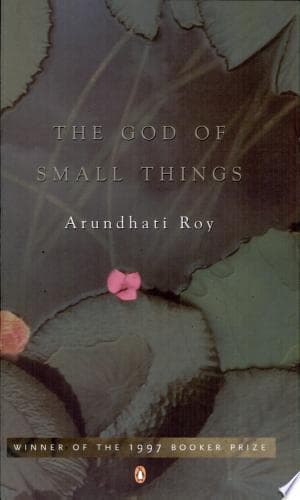
- The God of Small Things
Arundhati Roy
3.9 (244k) average on GoodreadsLiterary FictionExplores social injustice, caste, and complex family dynamics in India with a lyrical yet critical eye.
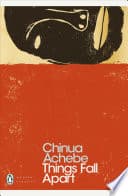
- Things Fall Apart
Chinua Achebe
3.7 (288k) average on GoodreadsHistorical FictionExamines the devastating impact of colonialism on indigenous cultures and traditional ways of life.
- A Fine Balance
Rohinton Mistry
4.3 (129k) average on GoodreadsLiterary FictionMistry's "A Fine Balance" also portrays the struggles of marginalized individuals in India during the Emergency, depicting themes of poverty, oppression, and resilience. However, Mistry's narrative often features a larger ensemble cast and explores the interconnectedness of their lives across different social strata in an urban setting. Devi's work, particularly in "Imaginary Maps," is more intensely focused on rural adivasi life and the specific, often brutal, forms of exploitation they face from landowners, moneylenders, and the state, utilizing a more activist-oriented narrative approach than Mistry's broader social panorama.
- Nineteen Eighty-Four
George Orwell
4.2 (5.5M) average on GoodreadsFictionWinston Smith dreams of truth and rebellion in a world where Big Brother watches all, but he confronts the terrifying power of a regime that controls not just actions, but thoughts.
- The Frozen River
Ariel Lawhon
4.4 (600k) average on GoodreadsFictionIn 1789 Maine, a heroic midwife's diary helps her expose a murder and get justice in a town that wants to silence her.
- A Man Called Ove
Fredrik Backman
4.4 (569k) average on GoodreadsFictionA stubborn widower, who lives by strict rules, finds his quiet world changed by a lively new family next door, making him face his past and find happiness in human connection.



Enjoyed the summary?
A summary gives you the shape of the book. The book itself has the detail, the examples and the voice.
Find Imaginary Maps on AmazonAs an Amazon Associate, BookBrief earns from qualifying purchases. How we're funded