
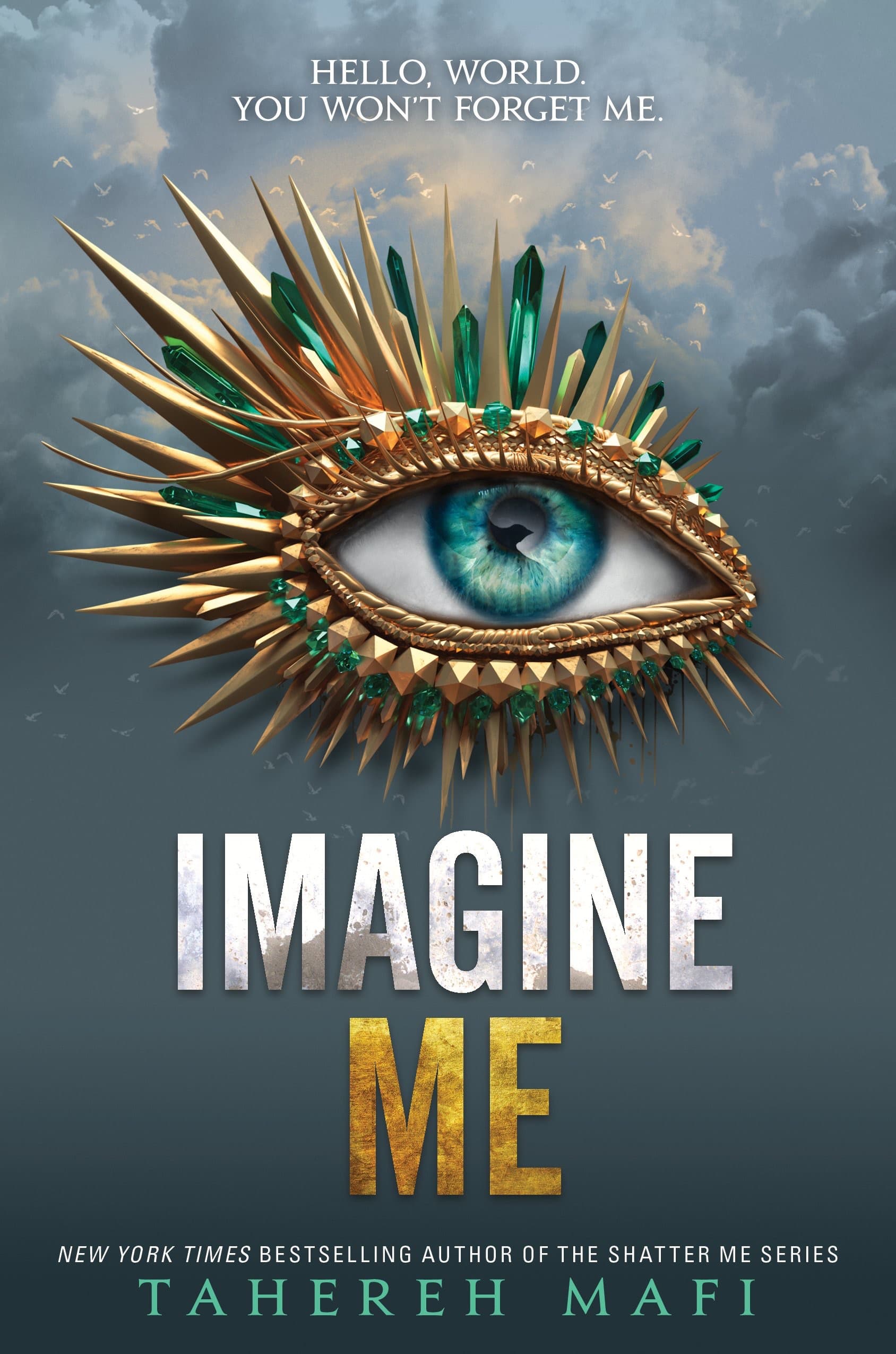
Synopsis
Covers the whole plot, including the ending.
- Difficulty
- Medium
- Pacing
- Fast
- Mood
- Intense, Emotional, Suspenseful, Hopeful
- Read it if
- You've followed Juliette's journey through the entire 'Shatter Me' series and crave a high-stakes, emotional conclusion with significant character development and a definitive resolution to the overarching conflict.
- Skip it if
- You prefer standalone novels or haven't read the preceding books in the 'Shatter Me' series, as this is the final installment and heavily relies on established plot points and character relationships.
Imagine Me Plot Summary
Covers the whole plot, including the ending.
Juliette's Unraveling Mind and the Asylum's Return
Juliette Ferrars, known as Ella Sommers, is in a fragile mental state after 'Defy Me.' Her mind is fragmented, reliving traumatic memories from the asylum where she was held. She struggles with her identities as Juliette, the leader of Sector 45, and Ella, the Supreme Commanders' daughter. Her unstable powers worsen this internal conflict. Kenji Kishimoto, her friend, tries to keep her focused, but Juliette's hold on reality is weak. She has terrifying hallucinations and dissociates, making it hard to lead the resistance against the Reestablishment, especially as Anderson's forces attack.
Warner's Desperation and the Search for a Cure
Aaron Warner, in love with Juliette, wants to save her. He knows her mental state is getting worse and believes he can help her by understanding the source of her powers and her unique genes. This makes him confront his father, Anderson, the Supreme Commander of North America, who has important information about Ella's past and the experiments done on her. Warner will risk his life to find a solution, driven by his love for Juliette and guilt over her suffering because of his family. He thinks his father has the answer to stabilize her, even if it means entering enemy territory.
The Discovery of the Compound and the Truth
Following clues from Anderson, Warner and Kenji go to a hidden, heavily guarded compound where the Reestablishment did its worst experiments. Inside, they find research labs and data logs about super-soldiers, including Ella. They learn Ella was made to be the ultimate weapon, able to absorb and control others' powers, and her unique genes cause her current mental instability—a side effect of the experiments. The compound also shows Anderson's cruelty and how he manipulated his children, Warner and Emmaline, to gain ultimate power and control.
Emmaline's Awakening and the Hive Mind
The most shocking discovery at the compound is the truth about Emmaline, Warner's sister. She is not just in a coma; she is the center of a global psychic network, a 'hive mind' the Reestablishment uses to control and watch the world. Her powers are huge, but she has been kept in a drug-induced coma to stop her from fully waking and unleashing her destructive potential. It is revealed that Ella's powers are linked to Emmaline's, and Ella was created as a backup or counterpart to Emmaline. The Reestablishment planned to use both sisters for their own goals, controlling them to maintain their hold on humanity. This discovery adds more complexity to Ella's identity and her connection to the system she fights.
Juliette's Sacrifice and the Power Transfer
Realizing Emmaline's suffering and the danger she poses if she fully awakens without control, Juliette makes a brave, selfless decision. She understands her unstable powers connect to Emmaline's and that the only way to save her sister and prevent disaster is to absorb Emmaline's vast abilities. This is a dangerous, painful process, pushing Juliette's mind and body to their limits. The power transfer is excruciating, threatening to shatter her fragile mind. Warner and Kenji watch this terrifying event, helpless but supportive, as Juliette fights for control over an unimaginable force, hoping to stabilize herself and Emmaline.
The Final Confrontation with Anderson
With her new, stable powers, Juliette, Warner, and Kenji confront Anderson, the cause of their suffering and the Reestablishment's leader. The confrontation is a brutal, emotional battle. Anderson, a strong opponent with his own enhanced abilities and ruthlessness, shows his true evil, trying to manipulate and destroy them. Juliette, now fully accepting both her Ella and Juliette identities, uses her powers, showing control and strength she never had. Warner fights with her, using his abilities, while Kenji offers support, leading to a fight that decides the fate of the Reestablishment and the world.
Anderson's Defeat and the Reestablishment's Fall
Juliette and Warner defeat Anderson. The battle is fierce, causing significant injuries and emotional pain, but they beat the Supreme Commander. Anderson's defeat marks the end of the Reestablishment's rule. With their leader gone and their power source (Emmaline's hive mind, now stabilized by Juliette) neutralized, the remaining Reestablishment forces are in disarray. The victory is hard-won, but it starts a new era of freedom and hope for the world, though the past's scars will remain for everyone.
The Aftermath and the Path Forward
After Anderson's defeat, the survivors, including Juliette, Warner, Kenji, James, and Adam, begin rebuilding. The world is devastated, and new governance systems are needed. Juliette, though victorious, has the huge responsibility of leading this new world. She deals with her past, her current power, and the uncertain future. Her relationship with Warner grows stronger, solidified by their shared trials. Kenji remains her friend and confidante, offering support and advice. The future is uncertain, but there is hope as they work to create a better, fairer society, free from the Reestablishment's tyranny.
Emmaline's Recovery and the Future of Powers
After the power transfer, Emmaline slowly recovers. She is no longer a comatose weapon but a young woman with a chance at a normal life, her vast powers now contained and understood. Juliette, having absorbed and stabilized Emmaline's abilities, understands the nature of their powers and their potential for creation and destruction. The existence of people with extraordinary abilities is now known, and the challenge is how to integrate them into society and prevent past abuses. Juliette, with her unique understanding, can guide this process, ensuring powers are used for good, not oppression.
A New Beginning for Juliette and Warner
With the war over and the Reestablishment gone, Juliette (now embracing Ella, but also acknowledging Juliette's strength) and Warner can finally imagine a future together. Their love, forged in hardship, is stronger than ever. They commit to building a life where they can be their true selves, free from their past. They face the challenges of rebuilding the world and leading a new society, doing so together, with Kenji and their friends. The ending offers closure to their personal journey while acknowledging the ongoing work needed to create a truly free and peaceful world.
Principal Figures
Juliette Ferrars / Ella Sommers
Protagonist
The powerful leader of Sector 45, grappling with her true identity and immense abilities.
Juliette, whose true name is Ella Sommers, is the central protagonist. In 'Imagine Me,' she is at her most vulnerable mentally, suffering from severe dissociation and trauma due to her past and the genetic experiments performed on her. She struggles to reconcile her two identities – the strong, decisive leader Juliette, and the innocent, experimented-upon Ella. Her powers, initially destructive, become unstable, reflecting her internal turmoil. She is driven by a desire to protect her friends and Warner, and ultimately makes a selfless sacrifice to save Emmaline and stabilize her own powers. She evolves from a frightened girl to a powerful, self-aware leader capable of immense control.
Relationships: Aaron Warner (Fiancé, deep romantic connection); Kenji Kishimoto (Best friend, confidant); Emmaline Sommers (Sister, linked by power and genetics); Anderson (Biological father, tormentor)
Aaron Warner
Protagonist/Love Interest
Supreme Commander of Sector 45, fiercely loyal to Juliette and driven to save her.
Aaron Warner, also known as Aaron Warner Anderson, is the son of the Supreme Commander and Juliette's fiancé. In 'Imagine Me,' his primary drive is to save Juliette from her deteriorating mental state. He is fiercely protective, resourceful, and willing to defy his father and risk everything for Juliette's well-being. He carries the burden of his family's legacy and his own past actions, seeking redemption. Warner's love for Juliette is unwavering, and he supports her through her darkest moments, fighting alongside her in the final confrontation. He demonstrates immense courage and strategic thinking.
Relationships: Juliette Ferrars / Ella Sommers (Fiancée, deep romantic connection); Kenji Kishimoto (Friend, comrade-in-arms); Anderson (Father, antagonist); Emmaline Sommers (Sister)
Kenji Kishimoto
Supporting
Juliette's loyal best friend and comic relief, offering unwavering support.
Kenji is Juliette's best friend and a vital member of the resistance. He possesses the ability to become invisible and is a skilled fighter. In 'Imagine Me,' he acts as Juliette's anchor to reality, providing emotional support, humor, and practical advice when she struggles with her mental health. He is fiercely loyal, often putting himself in danger for his friends. Kenji's straightforwardness and empathy make him a crucial confidante for both Juliette and Warner, mediating their tense moments and offering a necessary dose of levity amidst the darkness. He is the moral compass and emotional backbone of the group.
Relationships: Juliette Ferrars / Ella Sommers (Best friend, confidant); Aaron Warner (Friend, comrade-in-arms); James Kent (Friend, fellow resistance member)
Anderson
Antagonist
The Supreme Commander of North America and Juliette's biological father, a ruthless manipulator.
Anderson is the primary antagonist, the Supreme Commander of North America, and the biological father of Juliette (Ella), Warner, and Emmaline. He is a cruel, calculating, and power-hungry individual who orchestrated the genetic experiments on his own children to create ultimate weapons for the Reestablishment. He views his children as tools rather than individuals, showing no remorse for the pain he inflicts. In 'Imagine Me,' his true depths of depravity are revealed, and he is the ultimate obstacle Juliette and Warner must overcome to secure freedom. He is driven by an insatiable desire for control and global domination.
Relationships: Juliette Ferrars / Ella Sommers (Biological daughter, victim of his experiments); Aaron Warner (Biological son, constantly manipulated); Emmaline Sommers (Biological daughter, kept in a coma for her powers)
Emmaline Sommers
Supporting
Juliette's sister, kept in a comatose state as the hub of a global psychic network.
Emmaline is Juliette's biological sister, Warner's sister, and a key figure in the Reestablishment's control. She has immense psychic powers and has been kept in a drug-induced coma for years to prevent her from fully awakening. She is essentially the 'hive mind' that the Reestablishment uses to monitor and control the population. Her suffering is profound, and her unstable power poses a global threat. Juliette's decision to absorb Emmaline's power is a pivotal moment, leading to Emmaline's potential recovery and a chance at a normal life, free from her role as a weapon.
Relationships: Juliette Ferrars / Ella Sommers (Sister, linked by power); Aaron Warner (Brother); Anderson (Father, tormentor)
James Kent
Supporting
A young member of the resistance, Adam's younger brother and a symbol of hope.
James is Adam's younger brother and a kind, empathetic member of the resistance. Despite his youth, he displays remarkable resilience and moral clarity. He represents the innocence and hope that the resistance is fighting to protect. His bond with Kenji is strong, and he often provides emotional support to the group. James's presence reminds the older characters of the future they are striving to build, a world where children can grow up free from the Reestablishment's tyranny. He is a gentle soul who cares deeply for his friends.
Relationships: Adam Kent (Brother); Kenji Kishimoto (Friend); Juliette Ferrars / Ella Sommers (Friend)
Adam Kent
Supporting
Warner's half-brother and former love interest of Juliette, struggling with his past.
Adam is Warner's half-brother and Juliette's former love interest. He has a complicated relationship with both of them, marked by resentment towards Warner and lingering feelings for Juliette, as well as the trauma of his past. In 'Imagine Me,' he continues to grapple with his anger and the emotional scars left by the Reestablishment. While not as central to the final confrontation, he remains a part of the larger group, slowly coming to terms with his own role and the changes happening around him. He represents the lingering human cost of the conflict and the difficulty of overcoming personal grudges.
Relationships: James Kent (Brother); Aaron Warner (Half-brother); Juliette Ferrars / Ella Sommers (Former love interest)
Castle
Supporting
Leader of the resistance, a wise and enigmatic figure.
Castle is a powerful and enigmatic figure who leads the resistance movement. He possesses the ability to phase through objects and is a mentor to Juliette. He provides strategic guidance and a moral compass for the group. In 'Imagine Me,' he continues to be a source of wisdom and support, helping to orchestrate the final stages of the rebellion against the Reestablishment. He represents the older generation fighting for freedom and justice, offering historical context and a broader perspective on the conflict. His calm demeanor and experience are invaluable to the younger, more impulsive leaders.
Relationships: Juliette Ferrars / Ella Sommers (Mentor, leader); Kenji Kishimoto (Fellow resistance member); Aaron Warner (Ally)
Themes & Insights
Identity and Self-Acceptance
The novel explores Juliette's struggle to accept her past as Ella Sommers, an engineered weapon, and her present as Juliette Ferrars, a rebellion leader. Her fragmented memories and dissociation show the trauma of having her identity stolen and changed. Accepting herself means embracing her painful past and powerful present, leading to a full understanding of who she is. This theme is central to her character, as she must combine 'Ella' and 'Juliette' to control her abilities and her life.
“I am not broken. I am not a monster. I am not a mistake. I am a weapon, yes, but I am also a girl. And I am going to save this world.”
The Nature of Power and Control
'Imagine Me' looks at power's dual nature: its potential for both oppression and freedom. The Reestablishment uses power through fear, manipulation, and forced control of people like Emmaline and Juliette. Juliette's journey is about taking back her power, not to dominate, but to protect and free others. The revelation of Emmaline as a 'hive mind' shows how power can be used as a weapon globally. The novel argues for power used with empathy and responsibility, contrasting with Anderson's pursuit of absolute control.
“Power is not a thing to be feared. It is a thing to be understood.”
Trauma and Healing
Trauma is a common theme, especially in Juliette's severe mental fragmentation and dissociation. The psychological scars from her time in the asylum and genetic experiments are deeply explored. Warner's past with his abusive father and Kenji's experiences also contribute to this theme. The novel shows that healing is not simple; it involves facing painful memories, seeking support from loved ones, and finding inner strength to move forward. Juliette's ability to stabilize her mind and integrate her identities shows this healing journey.
“The past is a monster. It eats the present and drinks the future. But the future is also a weapon. It can kill the past.”
Love and Sacrifice
Love, in its forms—romantic, platonic, and familial—drives sacrifice. Warner's love for Juliette makes him risk everything to save her. Kenji's friendship leads him to support Juliette in her darkest times. Juliette's sacrifice to absorb Emmaline's power is an act of love for her sister and for humanity. These selfless acts show that true love is not possessive but empowering, inspiring characters to make big personal sacrifices for the greater good and for those they care about.
“You are my whole world, Ella. Always have been. Always will be.”
Family and Legacy
Family is explored through the Anderson family. Juliette (Ella), Warner, and Emmaline are siblings, linked by blood and their father's experiments. Anderson's legacy is manipulation and cruelty, forcing his children into roles they did not choose. The characters deal with whether they are defined by their biological family's actions or by their chosen family (the resistance). The novel suggests that while blood ties can cause trauma, true family forms through loyalty, love, and shared purpose, allowing them to create their own, better legacy.
“We are not our parents. We are not our past. We are what we choose to be.”
Plot Devices & Literary Techniques
Fragmented Memories and Dissociation
Used to convey Juliette's severe psychological trauma and internal conflict.
Juliette's mind is a battleground of fragmented memories, hallucinations, and moments of severe dissociation. This device is used to vividly portray her psychological trauma from past experiments and the conflicting identities of Ella and Juliette. It creates a sense of instability and suspense, as readers are unsure what is real and what is a product of her fractured mind. This internal struggle mirrors the external chaos of the war, making her journey to mental integration a crucial part of the plot and character development.
The Hive Mind
A psychic network controlled by Emmaline, symbolizing global oppression and interconnectedness.
The revelation of Emmaline as a 'hive mind' is a major plot device. It explains how the Reestablishment maintained global control and surveillance, turning Emmaline into a living weapon and a symbol of their tyranny. This device also serves to link Juliette's powers intrinsically to Emmaline's, setting up the climactic power transfer. It highlights the Reestablishment's advanced, yet horrific, use of psychic abilities and underscores the immense stakes of the conflict, as Emmaline's instability could lead to global catastrophe.
Power Absorption and Amplification
Juliette's unique ability, central to her character and the resolution of the conflict.
Juliette's power to absorb and amplify others' abilities is a core plot device. In 'Imagine Me,' this ability becomes unstable due to her trauma and genetic makeup. The pivotal moment where she absorbs Emmaline's immense 'hive mind' power is the climax of her character arc, allowing her to gain unprecedented control and stability. This device not only defines her as a super-soldier but also provides the means to defeat the Reestablishment and stabilize Emmaline, making her the ultimate weapon against oppression and the ultimate healer.
The Hidden Compound
A secret facility revealing the origins of the characters and the Reestablishment's true nature.
The discovery of the hidden compound where genetic experiments were conducted is a critical plot device. It serves as the primary location for exposition, revealing the full truth about Ella's creation, Emmaline's role as the hive mind, and Anderson's manipulative schemes. The compound is a physical manifestation of the Reestablishment's dark secrets and scientific hubris, providing the necessary information and setting for the central conflict resolution, including the power transfer and the final confrontation with Anderson.
Imagine Me Quotes
“I am not a pet. I am not a thing to be owned. I am a person, and I will not be silenced.”
“The world is a cruel place, but it is also beautiful. And I will fight for the beauty.”
“Love is not a weakness. It is the only thing that makes us strong.”
“I have spent my life in a cage, but my mind has always been free.”
“Sometimes the hardest battles are the ones we fight within ourselves.”
“We are not defined by our past, but by the choices we make in the present.”
“Fear is a liar. It tells you that you are not enough, that you cannot survive.”
“In the darkness, even the smallest light can guide you home.”
“They tried to break me, but they only made me stronger.”
“The heart is a wild thing. It cannot be tamed, only understood.”
“We are all a little broken, but that is what makes us human.”
“Do not mistake my kindness for weakness. I have a fire inside me that will burn you.”
“The future is not written. We write it with every step we take.”
“Sometimes, the only way to heal is to let go of the pain that holds you back.”
Quiz
10 questions on the plot and the characters. Each answer comes with a short explanation.
Question 1
What is the primary identity crisis that Ella Sommers faces in 'Imagine Me'?
- Choosing between her love for Warner and her duty to the Reestablishment
- Distinguishing between her identity as Ella and her past as Juliette Ferrars
- Deciding whether to use her powers for good or evil
- Balancing her human emotions with her supernatural abilities
Show answer
B. Distinguishing between her identity as Ella and her past as Juliette Ferrars The book's central conflict revolves around Ella's struggle to reconcile her current identity as Ella Sommers with her past as Juliette Ferrars, as highlighted in the synopsis where 'the lines between Ella and Juliette blur.'
Question 2
What major event is approaching for the Reestablishment in 'Imagine Me'?
- A peace treaty negotiation
- The day of reckoning
- A scientific breakthrough in power enhancement
- The coronation of a new leader
Show answer
B. The day of reckoning The synopsis explicitly states 'The day of reckoning for the Reestablishment is coming,' indicating a climactic confrontation or judgment day for the oppressive organization.
Question 3
Why does Ella's future become 'more uncertain than ever' in the book?
- She loses her powers unexpectedly
- She discovers she was created for a specific purpose
- Warner betrays her trust
- The Reestablishment offers her a leadership position
Show answer
B. She discovers she was created for a specific purpose The synopsis notes that Ella now knows 'what she was created for,' which complicates her understanding of her past and makes her future uncertain as she grapples with this revelation.
Question 4
How does the book describe the moral dilemma Ella faces?
- As a choice between saving her friends or saving the world
- As blurred lines between right and wrong
- As a clear battle between good and evil forces
- As a conflict between love and revenge
Show answer
B. As blurred lines between right and wrong The synopsis states that 'the lines between right and wrong... blur,' reflecting the book's theme of moral ambiguity as Ella navigates her complex situation.
Question 5
What complicates Ella's understanding of her past in 'Imagine Me'?
- Newly discovered diaries from her childhood
- The revelation that she was created for a specific purpose
- Memories resurfacing from her time in the asylum
- Conflicting accounts from her parents
Show answer
B. The revelation that she was created for a specific purpose The synopsis indicates that Ella 'knows... what she was created for,' which directly complicates her past and contributes to her identity struggle between Ella and Juliette.
Question 6
Which of the following threats does Ella face from 'old enemies' in the book?
- The Reestablishment
- A new supernatural faction introduced in this book
- Her own family members seeking revenge
- An alien invasion from another planet
Show answer
A. The Reestablishment The synopsis mentions 'old enemies looming,' which in the context of the Shatter Me series refers to the Reestablishment, the oppressive government organization that has been the primary antagonist throughout the series.
Question 7
What does the synopsis suggest about Ella's agency in her own destiny?
- She has complete control over her fate
- She may not get to choose which side she fights on
- She can easily manipulate events to her advantage
- Her destiny is predetermined and unchangeable
Show answer
B. She may not get to choose which side she fights on The synopsis concludes with 'But she may not get to choose what side she fights on,' indicating that external forces or circumstances may limit her ability to control her own destiny.
Question 8
In what way does Ella's knowledge of her creation purpose affect her character development?
- It makes her more confident in her abilities
- It forces her to question her free will and autonomy
- It immediately resolves her identity confusion
- It causes her to reject her powers entirely
Show answer
B. It forces her to question her free will and autonomy Knowing she was 'created for' a specific purpose raises questions about whether her choices are truly her own, contributing to the theme of destiny versus free will that runs through the book.
Question 9
How does the relationship between Ella's past as Juliette and her present identity create narrative tension?
- By presenting two completely separate personalities with no connection
- By forcing her to choose one identity and permanently abandon the other
- By blurring the lines between them and making integration difficult
- By revealing that Juliette was actually a fictional character
Show answer
C. By blurring the lines between them and making integration difficult The synopsis emphasizes that 'the lines between Ella and Juliette blur,' creating tension as Ella struggles to integrate these aspects of herself rather than cleanly separating them.
Question 10
What does the phrase 'which is the truth and which is the lie?' in the synopsis refer to?
- Conflicting accounts of the Reestablishment's origins
- The duality between Ella Sommers and Juliette Ferrars
- Whether Warner truly loves Ella or is manipulating her
- The authenticity of Ella's memories from the asylum
Show answer
B. The duality between Ella Sommers and Juliette Ferrars This rhetorical question in the synopsis directly precedes the discussion of Ella knowing 'who Juliette is,' framing the central conflict as determining what aspects of her identity are authentic versus constructed.
Imagine Me FAQ
What is 'Imagine Me' about?
'Imagine Me' is the explosive finale to the Shatter Me series, following Ella Sommers (formerly Juliette Ferrars) as she grapples with her dual identity. Created as a weapon by the Reestablishment, Ella must confront her past as Juliette while facing old enemies and an uncertain future. The novel culminates in a day of reckoning where Ella struggles to control her own destiny amid blurred lines between right and wrong.
Why should I read 'Imagine Me'?
This book provides a satisfying conclusion to the six-book Shatter Me series, resolving long-standing mysteries about Juliette/Ella's origins and powers. It features intense action sequences, emotional character resolutions, and explores themes of identity, free will, and rebellion against oppression. Fans of the series will appreciate how it ties together plot threads from previous books while delivering dramatic romantic and confrontational moments.
What is the background/setting of 'Imagine Me'?
The story is set in a dystopian future where the Reestablishment—a tyrannical regime—has collapsed, but its remnants still pose threats. The setting spans various locations including Sector 45 headquarters, the Sanctuary, and battlefields where the final confrontation occurs. This post-apocalyptic world features advanced technology, supernatural abilities (like Ella's lethal touch), and a society rebuilding after the Reestablishment's fall.
What are the most memorable quotes from 'Imagine Me'?
Key quotes include Ella's realization 'I am both the weapon and the wielder' reflecting her struggle with identity, and Warner's declaration 'You were never a monster—you were a marvel' highlighting their relationship. The recurring theme 'Which is the truth and which is the lie?' underscores the central conflict between Ella and Juliette's personas, while 'The day of reckoning is coming' foreshadows the final battle.
What writing style does Tahereh Mafi use in 'Imagine Me'?
Mafi employs her signature lyrical, stream-of-consciousness style with poetic prose and striking metaphors, particularly in Ella's internal monologues. The narrative features crossed-out text representing Ella's conflicting thoughts, short impactful chapters, and alternating perspectives between Ella and other characters. This style intensifies the emotional depth and psychological tension as Ella reconciles her dual identity.
What minor details add significant meaning in 'Imagine Me'?
Small details like Ella's recurring nightmares of white rooms hint at her suppressed memories of Reestablishment laboratories. The subtle changes in how characters address her—as 'Juliette' versus 'Ella'—signal shifting perceptions of her identity. Descriptions of her physical sensations when using powers (like energy crackling in her veins) mirror her internal conflict between control and surrender.
What are some subtle foreshadowing moments in 'Imagine Me'?
Early mentions of 'unfinished business' with Anderson foreshadow his return as a key antagonist. Ella's fleeting memories of childhood experiments subtly hint at her true origins before full revelations. Warner's protective behavior contains foreshadowing of sacrifices he'll make, while Kenji's jokes about 'world-saving plans' ironically preview the final battle's scale.
What unexpected character connections exist in 'Imagine Me'?
The novel reveals deeper connections between Ella's creation and other characters with abilities, showing they were all part of the Reestablishment's experiments. Unexpected alliances form between former enemies like some Sector leaders and the resistance. Most surprisingly, certain characters believed dead resurface with ties to both sides of the conflict, complicating loyalties.
What are unspoken character motivations in 'Imagine Me'?
Warner's actions are driven not just by love for Ella but by guilt over his father's crimes and a need for redemption. Kenji's humor masks his fear of losing his found family. Anderson's obsession with controlling Ella stems from seeing her as his greatest creation and failure. Even secondary characters like Castle are motivated by unspoken regrets about their roles in the resistance's earlier failures.
What psychological complexities do characters exhibit?
Ella exhibits dissociative traits as she navigates her Juliette persona, with identity fragmentation manifesting in memory gaps and emotional detachment. Warner shows complex trauma responses from childhood abuse, mixing ruthless efficiency with vulnerable devotion. The Reestablishment leaders display narcissistic god-complexes, believing their cruelty is necessary for order. Even allies like Kenji demonstrate survivor's guilt masked by bravado.
What are the major emotional turning points in 'Imagine Me'?
Key emotional turns include Ella's full memory recovery where she accepts both her Juliette past and Ella present, her confrontation with Anderson that forces her to acknowledge her created nature, and Warner's near-sacrifice that tests their relationship. The moment Ella chooses which side to fight on represents her ultimate assertion of agency, while the final battles force characters to confront their capacities for both violence and mercy.
How do relationship dynamics evolve in 'Imagine Me'?
Ella and Warner's relationship deepens from passionate romance to partnership as equals who acknowledge each other's trauma. Ella's friendship with Kenji evolves from comic relief to profound mutual reliance. Her dynamic with Anderson shifts from pure hatred to complex understanding of their creator-creation bond. Even group dynamics change as the resistance transitions from rebellion to facing the responsibilities of potential victory.
Which parts of 'Imagine Me' remain ambiguous or open-ended?
The fate of certain secondary characters after the final battle is left somewhat open, allowing readers to imagine their paths. The exact mechanics of how Ella's powers work at molecular level remain mysterious. The long-term political structure of the post-Reestablishment world isn't fully detailed, and some character motivations (like certain betrayals) are explained but leave room for interpretation about their ultimate morality.
What are controversial scenes or decisions in 'Imagine Me'?
Ella's ultimate choice regarding her powers and how to use them in the climax sparks debate about whether she embraces or rejects her weaponized nature. Warner's methods in protecting Ella sometimes border on controlling, raising questions about their relationship's health. Certain character deaths feel abrupt to some readers, while the resolution of the love triangle elements continues earlier series debates.
'Imagine Me' ending explained: how it ends & what it means
The ending sees Ella fully integrating her Juliette and Ella identities, using her powers on her own terms to defeat the Reestablishment remnants. She chooses to fight for the resistance while maintaining her relationship with Warner, suggesting she's claimed agency over both her personal and political destiny. The conclusion emphasizes that identity isn't fixed but continually chosen, with the 'truth and lie' dichotomy resolved through acceptance of complexity rather than binary choices.
What is the significance of Ella's dual identity struggle?
Ella's conflict between her Juliette past (the weapon created by the Reestablishment) and Ella present (the person she's become) represents the broader theme of nature versus nurture. This duality explores whether identity is determined by origin or choice, with her journey showing that embracing all parts of oneself—even painful histories—is necessary for wholeness. The resolution suggests that personal truth often lies in synthesis rather than choosing between binaries.
About the author

Tahereh Mafi is an American author known for her young adult fiction, particularly the "Shatter Me" series, which includes "Shatter Me," "Ignite Me," "Restore Me," "Fracture Me," and "Defy Me." She also wrote "A Very Large Expanse of Sea," a standalone novel that explores themes of identity and acceptance. Mafi's work often blends elements of fantasy and contemporary issues.
Similar books
- A Court of Thorns and Roses
Sarah J. Maas
4.2 (476k) average on GoodreadsFantasyFeatures a strong female protagonist with unique powers, a complex romantic relationship, and a high-stakes fantasy world.
- The Hunger Games
Suzanne Collins
4.3 (6.4M) average on GoodreadsFantasyExplores themes of rebellion against a dystopian government, psychological trauma, and a powerful female lead fighting for freedom.
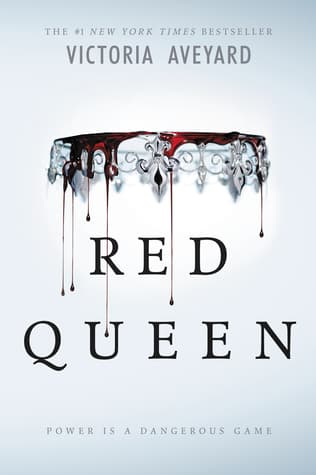
- Red Queen
Victoria Aveyard
4.0 (565k) average on GoodreadsFantasyPresents a world divided by abilities, a protagonist caught between factions, and a blend of fantasy and dystopian elements.
- Divergent
Veronica Roth
4.2 (2.9M) average on GoodreadsFantasyBoth series explore rebellion and societal control, but 'Imagine Me' provides a more nuanced exploration of personal identity within a tyrannical system through its focus on the internal landscapes of characters like Juliette and Warner, offering greater emotional depth than 'Divergent's' more action-driven narrative.
- Harry Potter and the Sorcerer's Stone
J.K. Rowling
4.5 (7M) average on GoodreadsFantasyRescued from a miserable life under the stairs, an orphaned boy discovers he's a wizard destined for a magical school, where he uncovers a dangerous secret tied to the dark wizard who murdered his parents.
- 1984
George Orwell
4.2 (3.1M) average on GoodreadsPoliticsIn a future where surveillance and thought control are absolute, a man's search for truth clashes with the Party, showing that hope can be a form of rebellion.





Enjoyed the summary?
A summary gives you the shape of the book. The book itself has the detail, the examples and the voice.
Find Imagine Me on AmazonAs an Amazon Associate, BookBrief earns from qualifying purchases. How we're funded