“The Indians were not all alike. Some were kind and some were cruel, just like the white people.”
— Mary observes the diverse nature of the Native American tribes and individuals she encounters, challenging simplistic stereotypes.

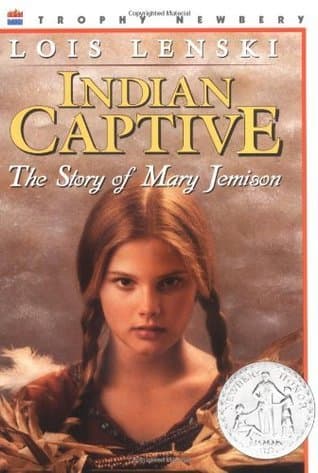
Lois Lenski (1941)
Goodreads Rating
3.86/ 5(10,707 reviews)
Genre
General
Summary Read
10 min
Book Length
240 min
Sign in to track this book
A young girl's life changes forever when she's captured by Shawnee warriors and finds a new home and identity among the Seneca people.
Ask anything about Indian captive and get instant answers grounded in the summary.
The story begins in 1758, introducing twelve-year-old Mary Jemison and her family as they leave their Pennsylvania farm for a new life on the western frontier, near present-day Gettysburg. Her parents, brothers, and sisters are optimistic about the fertile lands and opportunities ahead. They build a new cabin, clear land, and start their farm. Mary, though young, helps with daily chores and responsibilities, learning to adapt to the challenges of their isolated life. The first days are busy with work and the simple joys of family, but the ongoing French and Indian War and the presence of Native American tribes create an undercurrent of tension.
One spring morning, while Mary and her mother prepare breakfast, a Shawnee war party, with a French renegade, suddenly attacks. The family is completely surprised. Mary's parents, her two older brothers, and a neighbor boy are immediately seized. Mary, her younger sister, and an infant brother are also captured. The Shawnee warriors quickly ransack the cabin, taking valuables, then set it on fire. The family is forced to begin a difficult march into the wilderness, their lives changed in minutes, leaving everything they knew behind.
The journey with the Shawnee war party is hard and frightening. The captives are forced to march through dense forests, with little food and constant fear. Mary sees the harsh treatment of her family, especially her parents and older brothers. The French renegade acts as an interpreter and cruel overseer. One evening, after a very tiring march, the war party stops. Mary is separated from her parents and brothers, taken a short distance away with her younger sister and infant brother. From there, she sees the brutal scalping and murder of her entire immediate family, including her parents and brothers. This event leaves a lasting mark on her young mind.
After her family's murder, Mary, her younger sister, and her infant brother continue the march with the Shawnee warriors. They eventually reach Fort Duquesne, a French stronghold. Here, the Shawnee warriors trade their captives and goods with the French. Mary's younger sister is taken by the French, likely for adoption or sale. Mary, however, is kept by the Shawnee, along with her infant brother. The fort is a busy, chaotic place, filled with French soldiers, Native American warriors from various tribes, and traders. It is a harsh introduction to a different world, far from her quiet frontier home, where her fate remains uncertain.
From Fort Duquesne, Mary and her infant brother are taken by two Seneca sisters, who had lost a brother in battle. They travel north to the Seneca village of Little Beard's Town, on the Genesee River. Upon their arrival, Mary undergoes a ceremonial cleansing in the river, symbolizing the washing away of her white identity and her adoption into her new Seneca family. She is given a new name, Deh-he-wä-mis, meaning 'a pretty girl' or 'a pleasant thing.' The sisters are kind and compassionate, treating her with tenderness and affection, seeing her as a replacement for their lost sibling. Her infant brother, however, is given to another family, and Mary loses contact with him.
Mary begins the slow and often difficult process of adjusting to Seneca culture. Her adoptive sisters patiently teach her the Seneca language, customs, and daily routines. She learns to grind corn, prepare food, make moccasins, gather wild plants, and participate in other domestic tasks essential to village life. Initially, she struggles, longing for her former life and family. However, the consistent kindness and acceptance of her new family, along with her own resilience, gradually help her adapt. She begins to understand and appreciate the Seneca way of life, finding a sense of belonging within the community, though memories of her past often resurface.
As Mary grows older, she becomes a full part of the Seneca village. She participates in communal activities, observes traditional ceremonies, and learns about Seneca beliefs and spiritual practices. She sees the men's hunting expeditions and the women's roles in agriculture and community support. The story describes the changing seasons, the annual cycle of planting, harvesting, and hunting, and the social structure of the Seneca people. Mary makes friends with other Seneca girls and feels a real connection to her new home. Despite her great loss, she finds peace and a new identity within the Seneca community, understanding their respect for nature and communal living.
Years pass, and Mary is now a young woman, fully used to her Seneca life. Rumors and news begin to reach the village about the end of the French and Indian War and the possibility of captives returning to their original families. White traders and agents occasionally visit the village, offering opportunities for 'white Indians' to return. This news creates a deep conflict within Mary. While part of her remembers her birth family and the life she lost, another, stronger part feels loyalty and love for her Seneca adoptive family and the life she has built. She struggles with the huge decision of whether to return to a world she barely remembers or stay with the people who saved and raised her.
Faced with the choice to return to white society or stay with the Seneca, Mary struggles with her decision. She thinks about the love and care her adoptive sisters have shown her, the bonds she has formed in the village, and her deep understanding and appreciation of Seneca culture. She considers the uncertainty and potential alienation she might face in a white world she no longer knows. Ultimately, Mary decides to remain with the Seneca people, declaring her loyalty and love for them. This choice confirms her identity as Deh-he-wä-mis, the 'White Woman of the Genesee,' embracing her adopted heritage fully and permanently.
Mary Jemison lives a long and full life among the Seneca people. She marries a Delaware warrior and later a Seneca chief, raising several children who embody both her white and Seneca heritage. She becomes a respected elder in the community, known for her wisdom and unique history. She sees important historical events, including the American Revolution and the changes to Native American lands and ways of life that followed. Despite the hardships and tragedies she faced, Mary's story shows resilience, adaptation, and the complex interplay of cultural identity. Her story ends with her living out her days as a beloved member of the Seneca nation, her choice affirmed by a lifetime of belonging.
The Protagonist
Mary transforms from a traumatized captive into a fully integrated and respected member of the Seneca nation, choosing her adopted family over her birth culture.
The Supporting
Her character serves as a symbol of Mary's lost past and the innocence that was violently stripped away.
The Supporting
His character's tragic end emphasizes the harsh realities and dangers faced by settlers during the French and Indian War.
The Antagonists
Their role is to initiate the central conflict and Mary's journey of displacement and adoption.
The Antagonist
His character emphasizes the moral degradation that can occur during wartime and the multifaceted nature of conflict.
The Supporting
They facilitate Mary's successful integration into Seneca society, becoming her new family and anchors.
The Supporting
The community's collective embrace allows Mary to find belonging and a new identity, contrasting sharply with her traumatic past.
The Supporting
His separation from Mary underscores the complete dismantling of her birth family unit and her isolation.
The story is filled with themes of loss and grief, starting with the murder of Mary's entire birth family. Mary loses her loved ones, her home, her culture, and her childhood innocence. Her journey shows the lasting impact of trauma and the long process of healing. Even after finding a new family and purpose, the memories of her initial loss remain a core part of her identity, shaping her choices and resilience.
“The memory of that awful day, the smoke rising from their cabin, and the screams of her family, would forever be etched into Mary's heart.”
Mary Jemison's story is a powerful example of human adaptation and resilience in the face of extreme hardship. Forced into an entirely new culture, she learns a new language, new customs, and new ways of life. Her ability to not only survive but to thrive and find belonging within the Seneca community speaks volumes about the human capacity to adjust and find strength in challenging situations. Her resilience allows her to build a new identity from the remnants of her past.
“Slowly, painstakingly, she learned the Seneca tongue, the ways of the forest, and the rhythm of their lives, her grief giving way to a quiet determination.”
A main theme is the complex nature of cultural identity and the search for belonging. Mary is born into one culture but is forcibly moved into another. Over time, she embraces Seneca culture, feeling a deeper connection to her adoptive family and community than to the white world she barely remembers. Her final decision to remain with the Seneca highlights the idea that identity is not only determined by birth but can be shaped by experience, love, and choice, leading to a deep sense of belonging.
“Though her skin was white, her heart had become Seneca, bound by love and loyalty to the people who had given her life anew.”
The French and Indian War is the harsh background for Mary's story, showing how conflict devastates innocent lives and families. The story shows the violence and terror of the war, but it also hints at the complexities, showing Native American tribes allied with different European powers and figures like the French renegade. It highlights how war shatters lives, displaces people, and forces individuals into impossible situations, blurring lines between 'enemy' and 'ally.'
“The war, a distant rumble in her Pennsylvania home, had suddenly roared into her life, tearing it apart with terrifying speed.”
The theme of family, both birth and adopted, and the loyalty it inspires, is very important. Mary's initial devotion to her birth family is tragically cut short, but she finds a new, loving family in the Seneca sisters. Her loyalty to them, formed through shared experiences and real affection, becomes the foundation of her adult identity. This theme explores how bonds of love and care can cross cultural differences and how chosen family can become as strong, if not stronger, than blood ties.
“These Seneca women, who had given her a new name and a new home, were now her family, and her heart clung to them with a fierce loyalty.”
Subtle hints of impending danger.
From the very beginning, the narrative employs foreshadowing to build tension and hint at the peril awaiting the Jemison family. Descriptions of their isolated frontier life, the ongoing French and Indian War, and the general anxieties of the time create an atmosphere of unease. These subtle clues prepare the reader for the inevitable tragedy, making the sudden attack more impactful by contrasting it with the brief moments of peace and optimism the family experiences before their capture.
The ritualistic washing away of Mary's white identity.
The ceremonial cleansing of Mary in the river upon her arrival at the Seneca village is a powerful symbolic act. It represents the washing away of her past identity, her grief, and her former life, and her rebirth into the Seneca culture. This ritual marks her official adoption and the beginning of her transformation from a white captive to Deh-he-wä-mis. It visually and emotionally reinforces the theme of cultural assimilation and the profound shift in her identity.
The story is told through Mary's experiences, though not strictly in 'I'.
While the book is written in the third person, it maintains a close, intimate perspective on Mary's thoughts, feelings, and observations. This allows the reader to deeply empathize with her trauma, her struggles, and her eventual acceptance of her new life. By focusing on her internal journey, the narrative effectively conveys the emotional weight of her experiences, making her resilience and her ultimate decision feel authentic and deeply personal.
Highlighting differences between Mary's two lives.
The narrative effectively uses contrast to emphasize the profound changes in Mary's life. It juxtaposes the familiar, settled life of her frontier home with the wild, nomadic existence of her initial captivity. Later, it contrasts the brutal violence of her capture with the gentle, loving adoption by the Seneca sisters. This device highlights the stark differences between her birth culture and her adopted culture, underscoring the challenges of assimilation and the ultimate depth of her transformation and acceptance of her new identity.
“The Indians were not all alike. Some were kind and some were cruel, just like the white people.”
— Mary observes the diverse nature of the Native American tribes and individuals she encounters, challenging simplistic stereotypes.
“She learned to understand their ways, their language, their songs, their dances. She learned to be one of them.”
— Mary's gradual assimilation into the Seneca culture after being captured.
“She missed her family, her home, the familiar ways of her own people. But she also found a new life, a new family, and a new understanding.”
— Mary reflects on the duality of her experience, balancing her longing for her past with her acceptance of her present.
“The forest was her home now. The trees were her friends. The animals were her companions.”
— Mary's deep connection with the natural world and her acceptance of her new surroundings.
“They were not savages. They were people, with families and feelings and hopes, just like her own people.”
— Mary's realization and articulation of the humanity of the Native Americans.
“She was a white girl, but she was also an Indian girl. She belonged to both worlds.”
— Mary's struggle and eventual acceptance of her bicultural identity.
“The white people had taken their land. The Indians had a right to fight for it.”
— Mary begins to understand the historical context of the conflict from the Native American perspective.
“She learned to hunt, to fish, to gather berries. She learned the skills that kept them alive.”
— Mary acquiring practical survival skills from her captors.
“Fear was a constant companion, but so was a growing sense of wonder.”
— Mary's emotional state as she navigates her new and often frightening reality.
“It was a hard life, but it was a full life.”
— Mary's overall assessment of her experiences with the Seneca.
“She knew that the world was not as simple as she had once thought.”
— Mary's dawning realization of the complexities of life and human relationships.
“Her heart was torn between the two worlds, but she knew she had to find a way to live in both.”
— Mary's internal conflict and her determination to reconcile her dual heritage.
Ready to see how well you understood this book? Take our interactive quiz with 10 questions.
Support the author — grab the full book.
As an Amazon Associate, BookBrief earns from qualifying purchases, at no extra cost to you. How we're funded.