

Synopsis
Covers the whole plot, including the ending.
- Difficulty
- Easy
- Pacing
- Moderate
- Mood
- Heartwarming, Reflective, Bittersweet, Hopeful
- Read it if
- You enjoy heartwarming stories about family, grief, and self-discovery, with a unique narrative structure.
- Skip it if
- You prefer fast-paced plots without significant emotional depth or a dual narrative that unfolds slowly.
Walk Two Moons Plot Summary
Covers the whole plot, including the ending.
A Journey Begins
Thirteen-year-old Salamanca Tree Hiddle, or Sal, travels from Euclid, Ohio, to Lewiston, Idaho, with her paternal grandparents, Gram and Gramps. The goal of this urgent trip is for Sal to see her mother, Chanhassen Hiddle, by her mother's birthday. Sal's mother left their farm in Bybanks, Kentucky, for Idaho months ago, promising to return, but she has not. As they drive, Sal tells her grandparents the story of her new friend, Phoebe Winterbottom, whom she met after moving to Euclid with her father, John Hiddle. This journey frames Sal's own emotional processing and storytelling.
Phoebe Winterbottom's Peculiar Life
Sal begins her story about Phoebe Winterbottom, a girl in her new neighborhood in Euclid, Ohio. Phoebe is very imaginative and prone to dramatic statements, often convinced that bad things are happening around her. Sal describes Phoebe's seemingly perfect, but oddly rigid, family. Phoebe's mother, Mrs. Winterbottom, is a tidy homemaker, while her father, Mr. Winterbottom, is a kind but somewhat distant history professor. Phoebe's older sister, Prudence, focuses on her appearance and cheerleading. Sal finds Phoebe's intensity and her family's quirks a sharp contrast to her own, more rustic, Bybanks upbringing.
The Mysterious Lunatic
Soon after Sal meets Phoebe, strange, anonymous notes start appearing on the Winterbottoms' porch, saying things like 'Don't judge a man until you've walked two moons in his moccasins.' Phoebe immediately suspects a 'lunatic,' a idea Sal first dismisses. The notes become more frequent, more personal, and unsettling. This mystery provides the main 'adventure' within Sal's story, pulling Sal deeper into Phoebe's world of suspicion. It also subtly reflects Sal's own worries and search for understanding.
Mrs. Winterbottom's Disappearance
The biggest shock in Phoebe's story happens when Mrs. Winterbottom suddenly disappears without a trace, leaving only a note. Phoebe and Prudence are devastated and confused, and Phoebe is sure that the 'lunatic' kidnapped her mother. Sal, having recently experienced her own mother's departure, feels deep empathy but also sees similarities and differences in their situations. The disappearance creates a void in the Winterbottom home, forcing the family to question their assumptions about Mrs. Winterbottom's life.
The Search for Mrs. Cadaver
Convinced that the 'lunatic' is responsible for her mother's disappearance, Phoebe, with Sal's hesitant help, starts investigating various suspects. Their main target is Mrs. Cadaver, Sal's one-eyed English teacher, who lives next door to Phoebe and seems to have a mysterious past. They watch Mrs. Cadaver, follow her, and try to find clues, often misinterpreting things. Sal also learns that Mrs. Cadaver is a friend of her father's and often visits them, making Sal feel a pang of jealousy and suspicion toward Mrs. Cadaver.
Ben Finney and the Kiss
During her time in Euclid, Sal becomes friends with Ben Finney, a boy in her class who is Mrs. Cadaver's nephew. Ben is quirky and artistic, often drawing and leaving notes for Sal. He tries to hold Sal's hand and even kisses her cheek, which makes Sal feel flustered and confused, as she has never experienced such attention. These interactions add a layer of personal growth for Sal, contrasting with the more serious themes of loss and searching that fill her thoughts about her mother and Phoebe's mother.
The Truth About Sergeant Bickle
Eventually, Phoebe and Sal discover that the supposed 'lunatic' is Sergeant Bickle, a young man who works at a local gas station and is the son of Mrs. Winterbottom's first husband. Sergeant Bickle had been leaving the anonymous notes, not with bad intentions, but as a misguided attempt to reconnect with Mrs. Winterbottom and express his feelings about her past. He is not a dangerous 'lunatic' but a lonely person seeking understanding, which shatters Phoebe's dramatic narrative and forces her to face a more complex reality.
Mrs. Winterbottom's Return and Revelation
Mrs. Winterbottom eventually returns home, but not because she was kidnapped. She explains that she left because she felt a deep need to find her own identity and purpose beyond being a wife and mother. She had been visiting Sergeant Bickle, her son from an earlier marriage, whom she had given up for adoption. This revelation shocks Phoebe and Prudence, who had no idea their mother had a past beyond them. It forces the entire Winterbottom family to re-evaluate their views of Mrs. Winterbottom and their own family dynamics.
Sal's Mother's Story Unfurls
As Sal tells Phoebe's story, her own memories and feelings about her mother, Chanhassen, resurface. She remembers her mother's deep connection to nature, her love for stories, and her increasing sadness after a miscarriage. Sal reveals that her mother felt inadequate and 'bad' after losing the baby and decided to go to Idaho to find herself, believing she was a burden. The similarities between Mrs. Winterbottom's need for identity and Sal's mother's struggle become clear, helping Sal process her own grief and understanding.
Tragedy on the Road
During the road trip, Gram and Gramps have health problems. Gramps suffers a bee sting that causes a severe allergic reaction, and Gram, who has always been adventurous, has a stroke. This medical emergency is a significant setback for their journey and a deep emotional blow to Sal. The urgency of reaching Idaho increases as Sal fears losing her grandmother, just as she lost her mother, and she realizes how precious her family is.
The Final Destination and Heartbreak
Despite Gram's worsening condition, Sal and Gramps continue towards Idaho. They eventually arrive at the bus accident site, a winding road where Sal's mother's bus had crashed months earlier. It is here that Sal finally faces the devastating truth: her mother, Chanhassen, died in that bus accident. Mrs. Cadaver, the English teacher, was the sole survivor of the crash and was also Sal's mother's seatmate and friend. Sal's father had been trying to protect Sal from this painful reality, which is why he moved them to Ohio.
Reunion and Acceptance
After confronting the truth, Sal can finally grieve openly for her mother. Gram eventually recovers from her stroke, though she is not entirely the same. Sal and her father return to Bybanks, Kentucky, bringing Gram and Gramps with them. Sal finds a new sense of peace and understanding. She realizes that her mother will always be a part of her and that love lasts beyond loss. She also embraces her new connections, including her friendship with Ben and her growing bond with her father, finding a new definition of 'home' and family.
Walk Two Moons Characters
Salamanca Tree Hiddle (Sal)
Protagonist
A thirteen-year-old girl on a journey of grief and self-discovery.
Sal is a resilient, thoughtful, and observant thirteen-year-old girl. Originally from a farm in Bybanks, Kentucky, she feels deeply connected to nature and her family's heritage. After her mother's departure and subsequent death, Sal grapples with immense grief, anger, and confusion. She is fiercely loyal and possesses a deep capacity for empathy, which allows her to connect with Phoebe's struggles while simultaneously processing her own. Her storytelling is a coping mechanism and a way to understand the complexities of human emotions and relationships.
Relationships: Chanhassen Hiddle (Mother) (Deep, loving, but complicated by loss and misunderstanding.); John Hiddle (Father) (Loving, supportive, but initially distant due to shared grief.); Gram Hiddle (Close, affectionate, adventurous grandmother.); Gramps Hiddle (Loving, humorous, steady grandfather.); Phoebe Winterbottom (Best friend, whose story mirrors Sal's own journey of discovery.); Ben Finney (Friend and first crush, providing comfort and a new perspective.); Mrs. Cadaver (Initially suspicious, later revealed as a supportive friend and connection to her mother.)
Chanhassen Hiddle (Sal's Mother)
Central, unseen character
Sal's free-spirited mother whose absence drives the plot.
Chanhassen, or Sugar, is Sal's beloved mother, a free-spirited woman deeply connected to nature and full of life. She struggles with feelings of inadequacy and sadness after a miscarriage, believing she is 'bad' and a burden to her family. Her decision to leave for Idaho to 'clear her head' and find herself sets in motion the entire journey and Sal's emotional quest. She is characterized through Sal's memories and descriptions, embodying themes of love, loss, and the search for identity. Her death is the central tragedy of the story.
Relationships: Salamanca Tree Hiddle (Daughter) (Profound, loving, but ultimately heartbreaking.); John Hiddle (Husband) (Deeply loving, yet strained by shared grief and her internal struggles.); Mrs. Cadaver (Friend and seatmate on the fatal bus trip.)
Gram Hiddle
Supporting
Sal's adventurous and loving paternal grandmother.
Gram is Sal's eccentric, adventurous, and warm-hearted paternal grandmother. She loves stories, nature, and has a zest for life, often making impulsive decisions and using colorful language. She is fiercely protective of her family and provides a comforting, stable presence for Sal during the road trip. Her health crisis during the journey adds urgency and emotional weight to Sal's quest, highlighting the fragility of life and the importance of cherishing loved ones.
Relationships: Salamanca Tree Hiddle (Granddaughter) (Close, affectionate, and supportive bond.); Gramps Hiddle (Loving, long-married, playful relationship.); John Hiddle (Son) (Loving mother-son bond.)
Gramps Hiddle
Supporting
Sal's steady and humorous paternal grandfather.
Gramps is Sal's calm, steady, and humorous paternal grandfather. He is devoted to Gram and his family, often indulging Gram's whims and providing a grounding presence. He is a practical man with a deep love for his wife and granddaughter. His quiet strength and unwavering support are crucial for both Sal and Gram during their difficult journey. He represents a sense of stability and enduring love amidst the chaos and grief.
Relationships: Salamanca Tree Hiddle (Granddaughter) (Loving and supportive bond.); Gram Hiddle (Devoted, long-married, and deeply affectionate relationship.); John Hiddle (Son) (Loving father-son bond.)
Phoebe Winterbottom
Supporting
Sal's dramatic and imaginative new friend in Euclid.
Phoebe is Sal's new friend in Euclid, Ohio. She is highly imaginative, prone to exaggeration, and somewhat melodramatic, often seeing conspiracy and danger where there is none. Her story, which Sal recounts, serves as a parallel narrative to Sal's own journey of understanding and loss. Phoebe's initial inability to see her mother as an individual beyond her role as 'mother' mirrors Sal's own early struggles with her mother's departure. Her character highlights themes of perception, judgment, and the complexities of family relationships.
Relationships: Salamanca Tree Hiddle (Close friendship, forged through shared experiences and mysteries.); Mrs. Winterbottom (Mother) (Initially idealized, later understood as a complex individual.); Mr. Winterbottom (Father) (Respectful but somewhat distant.); Prudence Winterbottom (Sister) (Typical sibling rivalry and affection.)
Mrs. Cadaver
Supporting
Sal's one-eyed English teacher with a mysterious past.
Mrs. Cadaver is Sal's English teacher and Phoebe's next-door neighbor. She is a kind and understanding woman, despite her unusual name and the fact that she has only one eye. She is initially viewed with suspicion by Phoebe (and Sal), who believes she might be the 'lunatic.' Later, it is revealed that she was the sole survivor of the bus crash that killed Sal's mother, and she was a friend of Chanhassen. She provides a crucial link to Sal's mother and a deeper understanding of the tragedy, ultimately becoming a source of comfort and truth.
Relationships: Salamanca Tree Hiddle (Teacher, then friend and confidante regarding her mother.); Chanhassen Hiddle (Sal's Mother) (Friend and seatmate on the fatal bus trip.); Ben Finney (Nephew) (Loving aunt-nephew relationship.)
Ben Finney
Supporting
Sal's artistic and affectionate classmate.
Ben is Sal's classmate and Mrs. Cadaver's nephew. He is artistic, a bit quirky, and openly affectionate, often trying to hold Sal's hand or leave her notes. He provides a lighthearted contrast to the heavier themes of grief and mystery. His friendship and innocent romantic gestures help Sal to reconnect with her own feelings and the possibility of new relationships, pulling her out of her shell and reminding her of the simple joys of connection.
Relationships: Salamanca Tree Hiddle (Friend and first romantic interest.); Mrs. Cadaver (Aunt) (Loving aunt-nephew relationship.)
Mrs. Winterbottom
Supporting
Phoebe's mother, who temporarily leaves her family to find herself.
Mrs. Winterbottom is Phoebe's meticulously organized and seemingly perfect mother. However, beneath her composed exterior, she feels unfulfilled and defined solely by her roles as wife and mother. Her temporary disappearance is a pivotal event in Phoebe's story, revealing her hidden struggles for identity and independence. She eventually returns, revealing her past and her need to be seen as an individual, not just a family member, mirroring some of Chanhassen's own unexpressed needs.
Relationships: Phoebe Winterbottom (Daughter) (Initially close but misunderstood; later, a more open relationship.); Mr. Winterbottom (Husband) (Loving but somewhat traditional; learns to respect her individual needs.); Sergeant Bickle (Son) (Previously estranged son from a prior marriage, whom she reconnects with.)
Walk Two Moons Themes
Grief and Loss
The novel looks at the many sides of grief, especially through Sal's journey after her mother's death. It shows how loss can appear as anger, denial, and a desperate clinging to hope, as seen in Sal's initial belief that her mother will return. The story also shows the healing process, emphasizing that grief is not about forgetting but about learning to live with the absence and keeping the loved one's memory in one's ongoing life. The similarities between Sal's and Phoebe's mothers' disappearances highlight different ways of dealing with loss and the universal experience of coping with absence.
“You can't keep the birds of sadness from flying over your head, but you can keep them from building nests in your hair.”
Identity and Self-Discovery
Both Sal and Mrs. Winterbottom struggle with questions of identity. Mrs. Winterbottom leaves to find herself beyond her roles as wife and mother, showing the pressure women can feel to fit societal expectations. Sal's journey is also about self-discovery; by telling Phoebe's story and thinking about her own, she comes to understand who she is without her mother's physical presence and how her mother's spirit lives within her. The 'walking two moons in his moccasins' idea directly speaks to the importance of understanding others' viewpoints and their inner lives to truly know them.
“Don't judge a man until you've walked two moons in his moccasins.”
Family and Belonging
The novel examines the different forms and complexities of family. Sal's initial grief leads her to idealize her past family life in Bybanks. Through her journey, she learns that family is not just about blood relatives but also about chosen connections, like her friendship with Phoebe and Ben, and the lasting love of her grandparents. The Winterbottom family's struggles reveal how a seemingly 'perfect' family can hide secrets and unspoken needs. Ultimately, the story celebrates the idea that 'home' is less a physical place and more a feeling of belonging and love found in relationships.
“We are like a tree. Our roots are in the earth, our branches reach for the sky.”
Perception vs. Reality
A central theme is the difference between how things appear and how they truly are. Phoebe's elaborate theories about a 'lunatic' and her mother's kidnapping are a sharp contrast to the ordinary, yet more emotionally complex, reality of Mrs. Winterbottom's personal struggles. Sal, too, initially has an idealized view of her mother and struggles to accept the truth of her death. The anonymous notes, the mysterious Mrs. Cadaver, and the 'lunatic' all highlight how quickly people jump to conclusions and how important it is to look beneath the surface to find the real story.
“You never know what's in a person's heart until you truly listen.”
Plot Devices & Literary Techniques
Framing Device
Sal's road trip narrative frames the story of Phoebe Winterbottom.
The entire novel is framed by Sal's cross-country road trip with her grandparents, during which she recounts the story of Phoebe. This allows Sal to process her own grief and memories indirectly, by projecting them onto Phoebe's experiences. The road trip provides a physical journey that mirrors Sal's internal emotional journey, moving her closer to the truth about her mother while the embedded story allows her to explore similar themes of loss, identity, and family in a detached, yet deeply personal, way.
Parallel Narratives
Phoebe's story mirrors Sal's own experiences of loss and discovery.
The 'extensively strange story' of Phoebe Winterbottom functions as a parallel narrative to Sal's own, more tragic, story. Both girls experience a mother's disappearance and grapple with the emotional fallout. While Phoebe's mother returns and her 'lunatic' is demystified, these events help Sal to understand and articulate her own mother's motivations and the reality of her death. The parallels allow the author to explore universal themes of grief, identity, and family dynamics through two distinct, yet interconnected, lenses.
Symbolism of Nature
Natural elements represent life, death, and spiritual connection.
Nature serves as a powerful symbolic element throughout the novel, deeply connected to Sal's mother, Chanhassen. The Bybanks farm, the singing tree, the river, and the natural landscape of Kentucky represent life, peace, and spiritual connection. Sal's mother's affinity for nature and her feelings of being a 'country person' are central to her character. The changing landscapes during the road trip reflect Sal's emotional journey. The death of Gram's wild bird and Gramps's snake bite also symbolize the fragility of life and the unexpected turns of fate.
'Two Moons' Motif
The recurring phrase encourages empathy and understanding.
The phrase 'Don't judge a man until you've walked two moons in his moccasins' is a central motif. It appears in the anonymous notes left for Phoebe and is eventually attributed to Sal's mother. This adage encapsulates the novel's core message of empathy and the importance of understanding another person's perspective, history, and internal struggles before forming judgments. It guides Sal's own process of understanding her mother's actions and Phoebe's dramatic interpretations, urging characters and readers to look beyond superficial appearances.
Walk Two Moons Quotes
“Don't judge a man until you've walked two moons in his moccasins.”
“You can't keep the birds of sorrow from flying over your head, but you can keep them from building nests in your hair.”
“Everyone has his own agenda.”
“We were like two trees in a forest, our branches tangled, our roots intertwined.”
“Sometimes you know in your heart you are living a fairy tale, and sometimes you know that you are not.”
“By the time I was eleven, I had learned that the world was a precarious place, and that I was not as safe as I had once thought.”
“You never know what someone is going through unless you ask.”
“The thing about trees is that they stand still. They don't run away.”
“It was all a big circle, and I was just trying to find my way back to the beginning.”
“You could not choose your relatives, but you could choose your friends.”
“We walked on, a little bit sadder, a little bit wiser, and a little bit closer.”
“People are like trees. They have roots, and those roots are important. They hold you up.”
“Sometimes, when you're busy, you don't notice things as much.”
“I was starting to understand that a person's life was like a road, and you couldn't always see around the bends.”
Quiz
10 questions on the plot and the characters. Each answer comes with a short explanation.
Question 1
What is the name of the main character who tells the story to her grandparents?
- Phoebe Winterbottom
- Sal Hiddle
- Mary Lou Finney
- Margaret Cadaver
Show answer
B. Sal Hiddle Sal Hiddle, whose full name is Salamanca Tree Hiddle, is the narrator of the story, recounting Phoebe's adventures to her grandparents during their road trip.
Question 2
Why are Sal and her grandparents traveling across the country?
- To visit Sal's father in a new city.
- To find Phoebe Winterbottom's mother.
- To reach Sal's mother's grave in Lewiston, Idaho, by her birthday.
- For a summer vacation to see national parks.
Show answer
C. To reach Sal's mother's grave in Lewiston, Idaho, by her birthday. Sal and her grandparents are driving from Ohio to Lewiston, Idaho, so Sal can visit her mother's grave by her mother's birthday.
Question 3
What gift does Sal's mother leave for her under the floorboards before she leaves?
- A new pair of moccasins.
- A beautiful seashell.
- A blue ceramic berry basket.
- A hand-carved wooden bird.
Show answer
C. A blue ceramic berry basket. Before her mother leaves, she hides a blue ceramic berry basket under the floorboards for Sal, a symbol of their shared memories of picking berries.
Question 4
What is the primary reason Sal's mother initially left home?
- She wanted to pursue a career as a writer.
- She needed to find herself and heal after a miscarriage.
- She was having an affair and ran away with another man.
- She was tired of living in the country and wanted to move to a city.
Show answer
B. She needed to find herself and heal after a miscarriage. Sal's mother left to clear her head and find herself after suffering a miscarriage, which deeply affected her.
Question 5
Who is the 'lunatic' that Phoebe Winterbottom and Sal believe is stalking Phoebe's mother?
- Mr. Birkway, their English teacher.
- Margaret Cadaver's long-lost brother.
- Ben Finney, Mary Lou's cousin.
- Mrs. Partridge's son, Mike.
Show answer
D. Mrs. Partridge's son, Mike. The 'lunatic' who delivers mysterious messages and is seen with Phoebe's mother turns out to be Mike, Mrs. Partridge's son, and Phoebe's mother's estranged child from a previous marriage.
Question 6
What significant event happens to Sal's mother at the end of her journey to Lewiston, Idaho?
- She decides to return home to Sal and her father.
- She gets into a bus accident and dies.
- She finds a new job and settles down there.
- She meets a new man and starts a new family.
Show answer
B. She gets into a bus accident and dies. Sal's mother died in a bus accident in Lewiston, Idaho, which is why Sal and her grandparents are traveling there to visit her grave.
Question 7
What is the meaning behind the phrase 'Don't judge a man until you've walked two moons in his moccasins'?
- It means you should try new experiences and travel often.
- It emphasizes the importance of understanding another person's perspective and experiences before forming an opinion.
- It's a literal instruction to wear someone else's shoes for two months.
- It suggests that judgment is inevitable, no matter what.
Show answer
B. It emphasizes the importance of understanding another person's perspective and experiences before forming an opinion. This Native American proverb, often quoted by Sal's mother and Sal herself, is a central theme of the book, promoting empathy and understanding.
Question 8
Who is Mrs. Cadaver, and what is her connection to Sal's family?
- She is Phoebe's kind neighbor and a close friend of Sal's mother.
- She is Sal's English teacher and the only survivor of the bus crash that killed Sal's mother.
- She is Sal's father's new girlfriend and the person who encouraged him to move.
- She is a mysterious woman who lives in the woods and gives Sal advice.
Show answer
B. She is Sal's English teacher and the only survivor of the bus crash that killed Sal's mother. Mrs. Cadaver is Sal's English teacher and, tragically, the sole survivor of the bus accident that killed Sal's mother. She later becomes involved with Sal's father.
Question 9
What is the significance of the poem 'The Tide Rises, The Tide Falls' by Henry Wadsworth Longfellow in the story?
- It is a poem Sal's mother loved and often recited to her.
- It is a poem that Mr. Birkway analyzes in class, and its themes of nature's indifference to human life and the cyclical nature of existence resonate with Sal's grief.
- It is found in Phoebe's mother's belongings and provides a clue to her disappearance.
- It is a poem written by Sal herself about her experiences.
Show answer
B. It is a poem that Mr. Birkway analyzes in class, and its themes of nature's indifference to human life and the cyclical nature of existence resonate with Sal's grief. Mr. Birkway uses this poem in class, and its themes of the continuous cycle of nature despite individual loss deeply affect Sal, helping her process her mother's death and the idea that life continues.
Question 10
How does Sal's relationship with her father change or evolve throughout the novel?
- They become more distant as Sal struggles with her grief and his new relationships.
- Sal initially resists her father's move and his new friendship with Mrs. Cadaver, but through her journey and understanding, she comes to accept his need for happiness and their bond strengthens.
- Sal's father becomes increasingly protective, making it difficult for Sal to grow independently.
- They argue frequently about Sal's desire to return to their old farm.
Show answer
B. Sal initially resists her father's move and his new friendship with Mrs. Cadaver, but through her journey and understanding, she comes to accept his need for happiness and their bond strengthens. Sal struggles with her father's decision to move and his growing affection for Mrs. Cadaver. However, by the end of her journey and her understanding of her mother's own quest for self-discovery, Sal begins to accept her father's right to find happiness again, strengthening their bond.
Walk Two Moons FAQ
What is the primary narrative structure of 'Walk Two Moons'?
The novel uses a story-within-a-story structure, where thirteen-year-old Salamanca Tree Hiddle (Sal) recounts the adventures of her friend Phoebe Winterbottom to her grandparents during a cross-country road trip. As Sal narrates Phoebe's dramatic tale of a disappearing mother and a 'lunatic,' her own story of loss and longing for her missing mother gradually unfolds, revealing parallels and deeper meanings.
Who is Phoebe Winterbottom and what role does she play?
Phoebe Winterbottom is Sal's new best friend in Euclid, Ohio, a highly imaginative and somewhat melodramatic girl whose mother mysteriously disappears. Her story, filled with suspicion about a 'lunatic' and a 'secret admirer,' serves as the main narrative Sal tells her grandparents, acting as a mirror and a safe way for Sal to process her own grief and experiences.
What is the purpose of Sal's road trip with her grandparents?
Sal's grandparents, Gram and Gramps, drive her from Euclid, Ohio, to Lewiston, Idaho, to see her mother, Chanhassen 'Sugar' Hiddle, who left months earlier and never returned. This journey is a quest for reunion and understanding, providing the framework for Sal's storytelling and her emotional healing process.
Who is the 'lunatic' that Phoebe is so worried about?
The 'lunatic' is initially perceived by Phoebe and Sal as a suspicious figure who leaves notes and potentially kidnapped Phoebe's mother. It is later revealed to be Margaret Cadaver, the English teacher, who is also the sole survivor of the bus crash that killed Sal's mother and two other passengers, and is romantically involved with Phoebe's father.
What happens to Sal's mother, Chanhassen 'Sugar' Hiddle?
Sal's mother, Chanhassen 'Sugar' Hiddle, leaves her family after experiencing a miscarriage and feeling a need to find herself. She travels to Lewiston, Idaho, but tragically dies in a bus accident on her way back home. Sal's road trip is ultimately a pilgrimage to the site of her mother's death and burial.
How does the 'singing tree' connect to Sal's mother?
The 'singing tree' or 'sugar maple' is a cherished memory from Sal's childhood farm in Bybanks, Kentucky, where her mother would climb it and sing. This tree symbolizes her mother's free spirit, joy, and connection to nature, and represents Sal's longing for her mother and their shared past.
What is the significance of the phrase 'Don't judge a man until you've walked two moons in his moccasins'?
This Native American proverb, often quoted by Sal's mother, is a central theme of the book, encouraging empathy and understanding by urging one to consider another's perspective and experiences before forming judgments. It subtly foreshadows the revelations about characters like Margaret Cadaver and Phoebe's mother, whose actions are later understood in a new light.
What is the true identity of the 'secret admirer' leaving notes for Phoebe's mother?
The 'secret admirer' leaving cryptic notes like 'Everyone has his own agenda' and 'In the course of a lifetime, what does it matter?' is actually Mrs. Cadaver's brother, Mr. Birkway, Phoebe and Sal's English teacher. He was leaving these notes for his sister, Margaret, but they were mistakenly intercepted by Phoebe's mother.
How does Sal's relationship with Ben evolve throughout the story?
Ben is a sweet, quirky boy in Sal's class who frequently tries to hold her hand. Initially, Sal is uncomfortable with his advances, but as she processes her grief and opens up, she gradually warms to him. By the end, their innocent affection blossoms into a tender, supportive connection, offering Sal a sense of new beginnings and comfort.
How does Phoebe's reaction to her mother's disappearance differ from Sal's reaction to her own mother's departure?
Phoebe reacts with suspicion, fear, and a strong desire to uncover a dramatic mystery, inventing elaborate theories about kidnapping and lunatics. Sal, while also deeply affected, processes her grief with a quiet, internalized longing and a more profound understanding of her mother's emotional struggles, using storytelling as a coping mechanism.
What role does storytelling play in Sal's healing process?
Storytelling allows Sal to externalize and process her own buried emotions and experiences by projecting them onto Phoebe's narrative. By telling Phoebe's story, Sal can indirectly explore themes of loss, identity, and family dynamics, helping her to understand her own mother's actions and come to terms with her death.
How does Sal's perspective on her mother change by the end of the book?
Initially, Sal idealizes her mother and struggles with anger and confusion over her departure. Through her journey and reflecting on her mother's struggles with miscarriage and identity, Sal gains a deeper, more empathetic understanding of her mother's humanity, flaws, and reasons for leaving, ultimately accepting her death and cherishing her memory.
Is the ending of 'Walk Two Moons' ultimately hopeful or tragic?
The ending is a poignant blend of both. While Sal's mother's death is a profound tragedy, the story concludes with Sal finding a new sense of belonging in Bybanks, forming connections with Ben and her grandparents, and achieving emotional peace regarding her mother's memory. It's hopeful in its depiction of healing and new beginnings, despite the enduring sadness of loss.
What is the significance of the recurring motif of 'egg' in the novel?
The egg motif symbolizes life, fertility, and new beginnings, but also fragility and the potential for loss. Sal's mother's miscarriages are referred to as 'eggs that didn't hatch,' highlighting her grief and sense of failure. Later, Sal's grandparents' simple joy in eating eggs or collecting them from the hen house represents comfort, home, and the continuation of life.
How do the 'gifts' given by Gram and Gramps to Sal reflect their personalities and their relationship with her?
Gram and Gramps give Sal unconventional 'gifts' like a chicken's head and a 'singing tree' from a vision, which reflect their eccentric, loving, and deeply intuitive personalities. These gifts are not material but symbolic, representing their deep understanding of Sal's emotional needs and their desire to connect her to her heritage and the spiritual world.
How does the author use humor to balance the serious themes of grief and loss?
Sharon Creech masterfully interweaves moments of lighthearted humor, primarily through the antics of Gram and Gramps and the exaggerated drama of Phoebe's story, to provide relief from the heavier themes of death and grief. This balance makes the emotional journey more accessible and emphasizes the resilience of the human spirit amidst hardship.
What is the symbolic meaning of the journey itself in 'Walk Two Moons'?
The physical journey across the country mirrors Sal's internal emotional journey of self-discovery, grief processing, and acceptance. As the landscape changes, so does Sal's understanding of her past, her mother, and herself. It's a pilgrimage towards truth and healing, culminating at the site of her mother's death.
How does the setting of Bybanks, Kentucky, contrast with Euclid, Ohio, and what does this signify for Sal?
Bybanks, Kentucky, represents Sal's rooted past, her family's history, and a deep connection to nature and simple living, embodying warmth and belonging. Euclid, Ohio, is a new, unfamiliar, and initially uncomfortable place that symbolizes disruption and loss. Returning to Bybanks at the end signifies Sal's return to her authentic self and finding a new sense of home and peace.
About the author

Sharon Creech is an American author known for her contributions to children's and young adult literature. Her notable works include "Walk Two Moons," "Love That Dog," "Chasing Redbird," "Hate That Cat," "Granny Torrelli Makes Soup," and "The Great Unexpected." Creech's writing often explores themes of identity, family, and the power of storytelling.
Similar books
- Bridge to Terabithia
Katherine Paterson
4.0 (445k) average on GoodreadsFantasyExplores themes of friendship, loss, and the power of imagination in a poignant children's story.
- A Tree Grows in Brooklyn
Betty Smith
4.3 (388k) average on GoodreadsHistorical FictionA coming-of-age story focusing on a young girl's life, family struggles, and resilience.
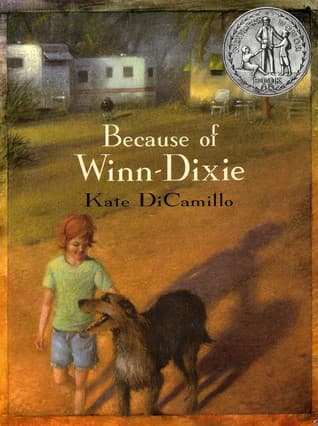
- Because of Winn-Dixie
Kate DiCamillo
4.0 (206k) average on GoodreadsChildren'sFeatures a young girl dealing with an absent mother and finding connection in a new town, with quirky characters.
- Holes
Louis Sachar
4.0 (970k) average on GoodreadsChildren'sBoth Walk Two Moons and Holes are Newbery-winning middle-grade novels that utilize intricate, multi-layered plots and a degree of magical realism or heightened reality. Sachar's Holes masterfully weaves together three distinct timelines and family curses to create a complex mystery and story of redemption, much like Creech interlaces Sal's present journey with Phoebe's past events and her mother's story. However, Holes leans more heavily into adventure, mystery, and social commentary on justice and fate, often with a darkly humorous tone. Walk Two Moons, while having elements of mystery, is fundamentally a character-driven emotional journey focused on internal processing of grief and self-discovery. Sachar's characters are often more broadly drawn for comedic and thematic effect, whereas Creech delves deeper into the psychological nuances of her protagonist.
- Harry Potter and the Sorcerer's Stone
J.K. Rowling
4.5 (7M) average on GoodreadsFantasyRescued from a miserable life under the stairs, an orphaned boy discovers he's a wizard destined for a magical school, where he uncovers a dangerous secret tied to the dark wizard who murdered his parents.
- The Hobbit, or There and Back Again
J.R.R. Tolkien
4.3 (2.9M) average on GoodreadsFantasyA comfort-loving hobbit named Bilbo Baggins is whisked away by a mischievous wizard and a band of dwarves on an unexpected journey to reclaim stolen treasure from a fearsome dragon, discovering courage and a magical ring along the way.





Enjoyed the summary?
A summary gives you the shape of the book. The book itself has the detail, the examples and the voice.
Find Walk Two Moons on AmazonAs an Amazon Associate, BookBrief earns from qualifying purchases. How we're funded