
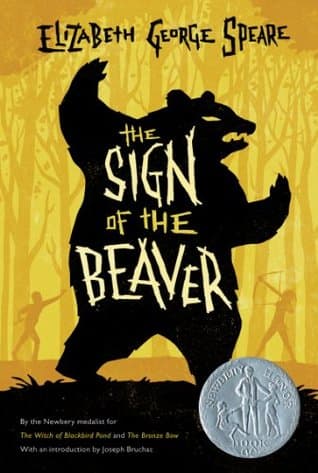
Synopsis
Covers the whole plot, including the ending.
- Difficulty
- Easy
- Pacing
- Moderate
- Mood
- Adventurous, Heartwarming, Reflective, Educational
- Read it if
- You enjoy historical fiction about survival, friendship across cultures, and coming-of-age stories in the wilderness, especially for middle-grade readers.
- Skip it if
- You prefer fast-paced action or stories with complex plots and multiple character perspectives.
The Sign of the Beaver Plot Summary
Covers the whole plot, including the ending.
Matt and Father Build Their Cabin
In the spring of 1768, twelve-year-old Matt Hallowell and his father arrive in the Maine wilderness to build a cabin and clear land for their family. They construct a small log cabin near a stream, working tirelessly. Matt's father teaches him survival skills, including hunting, fishing, and how to use a rifle. After several weeks, the cabin is complete, and a small plot of land is cleared. Matt's father then prepares to leave, promising to return in about seven weeks with Matt's mother, baby sister, and the new baby they are expecting. He leaves Matt with the rifle, a watch, and specific instructions to keep the fire going, protect the cabin, and continue clearing land. Matt feels a mix of apprehension and pride at being left in charge.
The Bear and the Thief
Left alone, Matt diligently follows his father's instructions, fishing, checking snares, and maintaining the fire. One day, he encounters a bear near his cabin. Terrified, he attempts to scare it away, but the bear charges, forcing him to retreat into the cabin. He manages to shoot the bear, but in his fear, he accidentally leaves the cabin door open. A few days later, a rough-looking white man named Ben, a trapper, appears at the cabin. Ben is friendly at first, sharing stories and food with Matt. However, after Ben leaves, Matt discovers that his father's rifle, a tool for survival and protection, has been stolen. This leaves Matt feeling exposed and helpless.
The Bee Tree and the Attack
Desperate for food and feeling the lack of his rifle, Matt begins to explore the woods more cautiously. He stumbles upon a bee tree, filled with honey, a source of sustenance. Eager to collect the honey, he climbs the tree, but the bees swarm out and sting him relentlessly. Matt falls from the tree, blinded and in pain. He stumbles back to his cabin, his face swollen and his eyes nearly shut. His condition is severe, and he fears he might not survive. This incident is a turning point, showing his vulnerability and lack of experience in the wilderness.
Attean's Aid
While Matt lies suffering in his cabin, an old Indian man, Saknis, and his grandson, Attean, discover him. Saknis, a chief of the Beaver tribe, recognizes Matt's dire condition and brings him medicinal herbs to treat his bee stings. Under their care, Matt slowly recovers. Saknis then makes a proposition: if Matt will teach Attean to read English, Saknis will provide Matt with food and help, recognizing Matt's helplessness without his rifle. Matt, grateful for their intervention and desperate for help, agrees to the arrangement, despite his initial apprehension about interacting with Native Americans.
Reading Lessons and Mutual Exchange
The lessons begin, with Matt teaching Attean from his most treasured possession: a copy of 'Robinson Crusoe.' Attean is initially reluctant and often frustrated by the English words and concepts. However, as they spend more time together, a bond slowly forms. Attean, in turn, teaches Matt wilderness skills: how to hunt silently with a bow and arrow, track animals, identify edible plants, make snares, and fish without a hook. He also teaches Matt about the customs, legends, and respect for nature central to his tribe. Through this exchange, Matt gains confidence and a deeper understanding of the forest and its inhabitants.
The Bear Hunt and Attean's Rite of Passage
One day, while hunting with Attean, they encounter a young bear caught in a trap. Attean insists on dispatching the bear with a single, clean shot from his bow, demonstrating his skill and adherence to tribal hunting ethics. This act is part of Attean's journey toward becoming a man and earning his hunting rights. Matt observes Attean's bravery and precision, realizing the depth of his friend's connection to the wilderness and his people's traditions. This experience further solidifies Matt's respect for Attean and the Beaver tribe's way of life, bridging the cultural gap between them.
Finding Attean's Dog
Attean's dog goes missing, causing him great distress. Matt, using the tracking skills he's learned from Attean, helps him search for the dog. They eventually find the dog caught in a steel trap, likely set by white trappers like Ben. Matt, remembering his father's advice about caring for animals, carefully frees the injured dog. Attean is grateful for Matt's compassion and quick thinking. This incident strengthens their friendship, as Matt demonstrates his learned skills and his kindness, proving himself a trustworthy companion in Attean's eyes.
The Feast and the Invitation
As the summer draws to a close, Attean invites Matt to a tribal feast, a significant honor. Matt attends, observing the customs and interactions of the Beaver people. He feels a growing sense of belonging and community. During the feast, Saknis formally offers Matt the opportunity to join their tribe and move north with them to their new hunting grounds. This invitation presents Matt with a dilemma: abandon his hope of his family's return and embrace a new life, or remain loyal to his father's promise and risk being left alone forever in the wilderness.
Matt's Decision and Attean's Departure
Despite the warmth and security offered by the Beaver tribe, Matt ultimately decides to stay and wait for his family. He feels a responsibility to his father's promise and a longing for his own kin. Attean understands and respects Matt's decision. Before leaving, Attean gives Matt a pair of snowshoes and his dog, a gesture of friendship and practical survival. The Beaver tribe departs for their winter hunting grounds, leaving Matt alone once more, but this time he is better equipped, both physically and emotionally, for the challenges ahead.
Winter Vigil and Family Reunion
Winter arrives, bringing bitter cold and heavy snow. Matt, using the skills Attean taught him and relying on Attean's dog for companionship, struggles to survive. He builds a lean-to inside his cabin for warmth, hunts diligently with his bow, and keeps the fire burning. He begins to lose hope as the weeks turn into months, well past his father's promised return. Just as he is at his lowest point, on Christmas Day, he hears a sound. His family, delayed by illness and the birth of a new baby, finally arrives. Matt is overjoyed, and his father expresses pride in his son's resilience and survival.
Principal Figures
Matt Hallowell
Protagonist
Twelve-year-old boy left to guard his family's wilderness cabin.
Matt is a twelve-year-old boy who, despite his young age, is tasked with the immense responsibility of surviving alone in the Maine wilderness. Initially naive and somewhat fearful, he quickly learns to adapt, driven by his loyalty to his family and his father's promise. He is resourceful, eager to learn, and possesses a strong moral compass. His internal struggle between loneliness and hope, and between his own culture and the Native American way of life, forms the core of his journey. He values his father's trust above all else.
Relationships: Father (mentor and source of loyalty); Attean (friend, teacher, cultural bridge); Saknis (mentor, provider, tribal chief); Ben (antagonist, thief)
Attean
Supporting
Grandson of Chief Saknis, who teaches Matt survival skills.
Attean is a proud and skilled Penobscot boy, roughly Matt's age, who is on the cusp of his own manhood ritual. He is initially reserved and somewhat disdainful of Matt's lack of wilderness knowledge. However, he gradually warms to Matt, becoming his teacher in hunting, tracking, and the ways of the forest. Attean is fiercely independent, deeply connected to his tribe's traditions, and protective of his people's land and customs. He views white settlers with suspicion due to past injustices but forms a genuine bond with Matt.
Relationships: Matt Hallowell (friend, student, teacher); Saknis (grandfather, tribal chief, mentor)
Saknis
Supporting
Chief of the Beaver tribe and Attean's grandfather.
Saknis is a wise and respected elder of the Beaver tribe. He is pragmatic and observant, recognizing Matt's helplessness after the bee attack and proposing the exchange of reading lessons for survival skills. He acts as a mentor figure to both Matt and Attean, guiding them in their respective paths toward maturity. Saknis represents the traditional wisdom and dignity of his people. He is fair-minded but also keenly aware of the encroaching white settlement and its implications for his tribe's future.
Relationships: Matt Hallowell (benefactor, mentor); Attean (grandfather, mentor)
Matt's Father (Mr. Hallowell)
Supporting
The patriarch who leaves Matt alone to guard the cabin.
Matt's father is a determined and hardworking pioneer, committed to building a new life for his family in the wilderness. He instills in Matt a strong sense of responsibility and self-reliance, teaching him essential survival skills before his departure. He trusts Matt implicitly and represents the promise of family and civilization that anchors Matt's resolve throughout his solitary vigil. His return is the driving force behind Matt's decision to stay, symbolizing the enduring power of family bonds.
Relationships: Matt Hallowell (father, mentor, object of loyalty)
Ben
Antagonist
A wandering trapper who steals Matt's rifle.
Ben is a transient white trapper who encounters Matt early in the story. He appears friendly at first, sharing stories and food, but he is ultimately untrustworthy and opportunistic. He steals Matt's rifle, leaving the boy vulnerable and exposed. Ben represents the darker, less honorable side of the frontier, highlighting the dangers and moral ambiguities Matt faces. His actions are a catalyst for Matt's dependence on the Native Americans.
Relationships: Matt Hallowell (adversary, thief)
Attean's Dog
Supporting
Loyal companion, initially Attean's, then given to Matt.
Attean's dog is a faithful and skilled hunting companion. Its loss causes Attean great distress, and its rescue by Matt significantly deepens the bond between the two boys. Later, Attean gifts the dog to Matt, symbolizing their friendship and providing Matt with crucial companionship and assistance during the harsh winter. The dog represents loyalty, wilderness wisdom, and a tangible link between Matt and Attean's cultures.
Relationships: Attean (master, companion); Matt Hallowell (companion, gift)
Marie
Mentioned
Attean's younger sister.
Marie is Attean's younger sister, briefly mentioned and seen by Matt. She is shy but curious about Matt. Her presence helps to humanize Attean's family and provides Matt with a glimpse into the domestic life of the Beaver tribe. She is a minor character but contributes to Matt's understanding of the community he is invited to join.
Relationships: Attean (sister); Matt Hallowell (acquaintance)
Grandmother (of Attean)
Mentioned
Attean's grandmother, a respected elder.
Attean's grandmother is briefly mentioned as a traditional elder in the Beaver tribe. She represents the continuity of tribal customs and the wisdom of the older generation. While not a direct participant in many events, her presence reinforces the family structure and cultural richness of Attean's community.
Themes & Insights
Identity and Belonging
Matt grapples with his identity throughout the story. Initially, he identifies strongly with his pioneer family and their mission. However, his prolonged isolation and immersion in the Beaver tribe's culture force him to question where he truly belongs. The invitation to join Attean's tribe presents a choice between his inherited identity as a white settler and a newly formed identity within the Native American community. Ultimately, he chooses to maintain his original identity, but his experiences broaden his understanding of self and community, forever changing him.
“He knew that he would not go with Attean. He would stay, because of the cabin and the land, and because of the promise.”
Cultural Exchange and Understanding
The novel explores the theme of cultural exchange through the relationship between Matt and Attean. Matt teaches Attean English and introduces him to reading, while Attean teaches Matt wilderness survival skills, tribal customs, and respect for nature. This reciprocal learning breaks down initial prejudices and creates mutual respect and friendship between individuals from different backgrounds. It shows the value of learning from other cultures and the potential for harmony despite historical tensions.
“He had learned more from Attean about living in the woods than he could have learned in a lifetime on his own.”
Survival and Self-Reliance
From the moment Matt's father leaves, survival is the central challenge for the protagonist. Matt is forced to quickly learn and apply skills to hunt, fish, build shelter, and protect himself against the dangers of the wilderness. His initial struggles, like the bee attack and the theft of his rifle, show his vulnerability. However, through the guidance of Attean and his perseverance, Matt develops self-reliance, transforming from a dependent boy into a capable frontiersman. This theme emphasizes the realities of pioneer life and human resilience.
“He had proved to himself that he could manage, that he could keep a fire going and catch fish, and even shoot a bear.”
Loyalty and Promise
Loyalty is a driving force for Matt. His commitment to his father's promise—to wait for the family's return—is the primary reason he endures the harsh winter alone and ultimately declines the invitation to join the Beaver tribe. This theme explores the strength of familial bonds and the importance of keeping one's word, even when lonely and facing tempting alternatives. It highlights Matt's moral steadfastness and his connection to his family's future.
“He had promised his father he would wait. He would keep his promise.”
Man vs. Nature
The Maine wilderness is a powerful force throughout the story, presenting Matt with constant challenges. From bears and bees to the cold of winter, nature tests Matt's limits and forces him to adapt. The theme explores humanity's relationship with the natural world, contrasting Matt's initial struggle to conquer it with Attean's harmonious existence within it. Matt learns to respect nature's power and to live in balance with it, rather than attempting to dominate it, ultimately leading to his survival.
“The forest was not a friendly place, not yet. It was a place of hunger and danger.”
Plot Devices & Literary Techniques
Robinson Crusoe (The Book)
A literary foil and symbolic object representing civilization and self-reliance.
Matt's treasured copy of 'Robinson Crusoe' serves multiple purposes. It is the textbook for his reading lessons with Attean, providing a common ground for their cultural exchange. Symbolically, it mirrors Matt's own isolation and struggle for survival in the wilderness, making him feel a kinship with Crusoe. It also represents the world of civilization, learning, and home that Matt longs for, contrasting with the primal world of the forest. The book's presence underscores Matt's connection to his own culture and his intellectual pursuits amidst physical challenges.
The Rifle
A symbol of security, power, and the vulnerability of colonial presence.
The rifle is initially Matt's primary means of defense and food acquisition, entrusted to him by his father as a symbol of his responsibility and capability. Its theft by Ben leaves Matt utterly vulnerable and forces him to seek help from the Beaver tribe, thus initiating his cultural exchange. The rifle represents the technology and perceived superiority of the white settlers, but its loss reveals the fragility of that power in the untamed wilderness, highlighting Matt's dependence on traditional Native American skills for survival.
The Watch
A symbol of time, civilization, and the passage of hope.
Matt's father leaves him a watch, which Matt diligently winds each day. The watch is a constant reminder of the passage of time and the promised return of his family. It symbolizes the structured, civilized world Matt comes from, contrasting with the timeless, natural rhythms of the wilderness. As the weeks turn into months, and his family's return is delayed, the watch becomes a source of both hope and increasing despair, marking the agonizing wait and testing Matt's resolve against the relentless flow of time.
The Cabin
A symbol of home, family, and the encroaching frontier.
The cabin is the physical manifestation of Matt's family's claim on the wilderness and his father's promise of a new life. It represents the safety and comfort of home, becoming Matt's sanctuary and his primary responsibility. Throughout his isolation, the cabin is the focal point of his loyalty and hope. It also symbolizes the encroachment of white settlers onto Native American lands, a tension subtly present in the background of the story, as it transforms the wilderness into a settled space.
The Sign of the Beaver Quotes
“A man is not a man until he has walked alone in the woods and faced the wilderness.”
“You white men think you own the land. You mark it off and say 'this is mine.' But the land belongs to no man.”
“A man does not run from his troubles. He faces them.”
“The beaver is a wise animal. He works hard and prepares for winter. A man should do the same.”
“Words on paper are like tracks in the snow. They tell a story if you know how to read them.”
“My people have lived on this land for many generations. We know its secrets.”
“Hunger is a good teacher. It makes you remember what you have learned.”
“A true friend does not ask for payment. He gives freely.”
“The forest has many voices. You must learn to listen.”
“Sometimes the hardest thing is to wait when you want to act.”
“Your book tells of a man who walked on water. My people tell of a man who walked with the animals.”
“A man's word should be as strong as oak.”
“The sign of the beaver is not just an animal. It is a reminder to be wise and work hard.”
“We are different, you and I. But different does not mean enemy.”
Quiz
10 questions on the plot and the characters. Each answer comes with a short explanation.
Question 1
Why is Matt left alone in the Maine wilderness at the beginning of the book?
- His father is searching for a lost hunting dog
- His father goes to fetch the rest of the family from Massachusetts
- He runs away from home to explore
- His father is injured and needs medical help
Show answer
B. His father goes to fetch the rest of the family from Massachusetts Matt's father leaves him to guard their newly built cabin while he returns to Massachusetts to bring Matt's mother, sister, and the new baby to their settlement in Maine. This sets up the central conflict of Matt's survival and eventual decision.
Question 2
What does Attean initially think of Matt when they first meet?
- He sees Matt as a brave and skilled hunter
- He views Matt with suspicion and disdain as a white settler
- He immediately wants to be friends and share stories
- He thinks Matt is lost and offers to guide him home
Show answer
B. He views Matt with suspicion and disdain as a white settler Attean, a member of the Beaver tribe, is initially hostile and condescending towards Matt because of the historical tensions between Native Americans and white settlers. Their relationship evolves slowly through shared experiences.
Question 3
How does Matt first prove his worth to Attean and the Beaver tribe?
- By saving Attean from a bear attack
- By teaching Attean to read from Robinson Crusoe
- By building a stronger cabin for the tribe
- By finding a hidden treasure in the woods
Show answer
B. By teaching Attean to read from Robinson Crusoe Matt agrees to teach Attean to read English from the book Robinson Crusoe, which he owns. This exchange of knowledge becomes the foundation of their friendship and mutual respect.
Question 4
What is the significance of the 'sign of the beaver' in the book?
- It is a warning symbol left by the tribe to mark dangerous areas
- It represents Matt's family's coat of arms
- It is a carving left by the Beaver tribe to show Matt is under their protection
- It is a secret code used by Matt to communicate with his father
Show answer
C. It is a carving left by the Beaver tribe to show Matt is under their protection After Matt saves Attean from a trapped bear, the Beaver tribe carves the sign of the beaver on a tree near Matt's cabin. This symbol indicates that Matt is under the tribe's protection, a key gesture of acceptance and trust.
Question 5
Why does Matt ultimately decide not to join the Beaver tribe and move north with them?
- He is afraid of the harsh northern winters
- He promises his father he will wait at the cabin for the family's return
- Attean tells him he is not welcome in the tribe
- He finds a map leading to gold in the settlement
Show answer
B. He promises his father he will wait at the cabin for the family's return Despite the strong bond he forms with Attean and the tribe, Matt chooses to honor his promise to his father to stay and guard the cabin until the family arrives. This decision highlights themes of loyalty, responsibility, and cultural identity.
Question 6
What important skill does Attean teach Matt that helps him survive in the wilderness?
- How to read animal tracks and hunt with a bow
- How to build a canoe from birch bark
- How to speak the Beaver tribe's language fluently
- How to farm corn and beans efficiently
Show answer
A. How to read animal tracks and hunt with a bow Attean teaches Matt essential survival skills, such as tracking animals and hunting with a bow and arrow. These lessons transform Matt from a dependent boy into a more self-reliant individual, crucial for his time alone.
Question 7
How does Matt's perception of Native Americans change throughout the story?
- He starts by fearing them but ends up seeing them as cruel and untrustworthy
- He begins with stereotypes but grows to respect their culture and wisdom
- He always views them as inferior and never changes his mind
- He becomes jealous of their wealth and wants to take their land
Show answer
B. He begins with stereotypes but grows to respect their culture and wisdom Initially influenced by common prejudices of the time, Matt holds negative stereotypes about Native Americans. Through his friendship with Attean and interactions with the tribe, he learns to appreciate their skills, values, and way of life, leading to personal growth.
Question 8
What event causes Matt to realize the depth of his friendship with Attean?
- When Attean gives Matt a precious family heirloom
- When Matt saves Attean from a bear trap and Attean saves him in return
- When they discover they are distant relatives
- When Attean helps Matt find his lost dog
Show answer
B. When Matt saves Attean from a bear trap and Attean saves him in return The mutual rescue—Matt freeing Attean from a bear trap and later Attean saving Matt from a bear—solidifies their bond. This reciprocal act of bravery and trust marks a turning point in their relationship, moving beyond teacher-student roles to true friendship.
Question 9
What does the book suggest about the theme of cultural exchange?
- It is always harmful and leads to conflict
- It is unnecessary because cultures should remain separate
- It can be mutually beneficial, as seen in Matt and Attean's friendship
- It only works if one culture dominates the other
Show answer
C. It can be mutually beneficial, as seen in Matt and Attean's friendship Through Matt and Attean's relationship, the book illustrates how cultural exchange—Matt teaching reading, Attean teaching survival skills—can foster understanding, respect, and personal enrichment for both parties, despite historical tensions.
Question 10
In the end, what does Matt leave for Attean as a farewell gift, symbolizing their bond?
- His father's rifle
- The book Robinson Crusoe
- A carved beaver totem
- A map to the family's new settlement
Show answer
B. The book Robinson Crusoe Matt gives Attean his copy of Robinson Crusoe, the book that started their friendship by serving as a reading lesson. This gift represents the shared knowledge and memories between them, and it shows Matt's hope that Attean will continue learning and remembering him.
The Sign of the Beaver FAQ
What is 'The Sign of the Beaver' about?
The story follows twelve-year-old Matt Hallowell, who is left alone in the Maine wilderness in 1768 to guard his family's newly built cabin while his father returns to Massachusetts to bring the rest of the family. Matt struggles with survival until he befriends Attean, a Penobscot Indian boy, who teaches him wilderness skills and invites him to join the Beaver tribe as they migrate north, forcing Matt to choose between waiting for his family or embracing a new life.
Why should I read 'The Sign of the Beaver'?
This book offers a compelling exploration of friendship across cultural divides, survival in the wilderness, and the complexities of identity and belonging. Through Matt's journey, readers gain insight into historical settler-Indigenous relations in 18th-century America, while the emotional depth and moral dilemmas make it a timeless story for both young readers and adults.
What is the background/setting of 'The Sign of the Beaver'?
Set in the Maine wilderness in 1768, the story takes place during a time of westward expansion by European settlers. The setting is isolated and rugged, with Matt's family cabin representing the frontier, while the surrounding forests and rivers are the traditional lands of the Penobscot tribe, highlighting the clash and eventual understanding between two very different ways of life.
What are the most memorable quotes?
Key quotes include Matt's reflection, 'He had learned that a man could be lonely even when he was not alone,' highlighting his emotional growth, and Attean's teaching, 'The forest is not your enemy. It is your home if you know how to live in it,' emphasizing the theme of adaptation. Another is Matt's decision point: 'I have to wait for my family. But I will never forget you,' showing his loyalty and the bittersweet nature of his choice.
What writing style does the author use?
Elizabeth George Speare employs a straightforward, descriptive narrative style that vividly portrays the wilderness setting and Matt's internal struggles. The prose is accessible for young readers yet rich in historical detail and emotional nuance, using dialogue and action to develop characters and themes without heavy exposition.
What minor details add significant meaning?
Small details like the notches Matt carves on a stick to mark days, symbolizing his isolation and hope, and the gift of a knife from Attean, representing trust and cultural exchange, add depth. The recurring image of the beaver dam, which Attean explains as a sign of the tribe's presence, subtly underscores themes of community and belonging in the natural world.
What are some subtle foreshadowing moments?
Early on, Matt's difficulty with hunting and gathering foreshadows his dependence on Attean's teachings. Attean's stories about his tribe's migration patterns hint at the eventual invitation for Matt to join them. Additionally, Matt's growing comfort in the wilderness, contrasted with his lingering hope for his family, foreshadows the central dilemma he faces at the book's climax.
What unexpected character connections exist?
An unexpected connection arises between Matt and Attean's grandfather, the Penobscot chief, who initially views Matt with suspicion but later respects him due to Attean's advocacy. This relationship highlights how mutual respect can bridge cultural gaps. Also, Matt's bond with Attean deepens through shared skills—Matt teaches Attean to read, while Attean teaches survival—creating a reciprocal friendship that defies initial prejudices.
What are unspoken character motivations?
Matt is driven by a deep-seated fear of abandonment and a desire to prove his maturity to his father, which fuels his determination to survive alone. Attean, meanwhile, is motivated by a sense of duty to his tribe and a personal quest to earn his grandfather's approval, which influences his willingness to mentor Matt despite cultural tensions.
What psychological complexities do characters exhibit?
Matt grapples with loneliness, resilience, and conflicting loyalties—to his family and to his new friend Attean—showcasing a child's adaptation to extreme circumstances. Attean exhibits pride in his heritage alongside curiosity about the settler world, revealing the internal conflict of preserving tradition while engaging with change. Both characters evolve from initial distrust to mutual respect, illustrating psychological growth through empathy.
What are the major emotional turning points?
Key emotional moments include Matt's near-starvation early on, which humbles him and opens him to Attean's help; the scene where Attean saves Matt from a bear, solidifying their bond; and the climax when Attean invites Matt to join the tribe, forcing Matt to confront his ultimate choice between two worlds. The farewell, where Matt decides to wait for his family, is a poignant turning point of loss and maturity.
How do relationship dynamics evolve?
Matt and Attean's relationship evolves from cautious interaction, based on necessity, to genuine friendship through shared lessons and mutual rescue. Initially, Matt sees Attean as a means of survival, while Attean views Matt with skepticism, but over time, they develop respect and affection, culminating in Attean's heartfelt invitation. This evolution mirrors the broader theme of bridging cultural divides through personal connection.
Which parts remain ambiguous or open-ended?
The story leaves Matt's long-term future ambiguous—whether his family will actually return or if he will face further challenges alone. Additionally, the fate of the Beaver tribe after their migration is not detailed, leaving readers to ponder the ongoing impact of settler expansion on Indigenous communities. Matt's internal conflict about his choice is resolved, but the broader historical outcomes are left open to interpretation.
What are controversial scenes or decisions?
Some readers debate Matt's decision to stay and wait for his family instead of joining the Beaver tribe, viewing it as a rejection of a potentially enriching cross-cultural life. Others see it as a realistic portrayal of a child's loyalty. Additionally, the portrayal of Indigenous characters, while generally respectful, has been critiqued for romanticizing or simplifying complex cultural dynamics, sparking discussions about historical accuracy in children's literature.
'The Sign of the Beaver' ending explained: how it ends & what it means
The book ends with Matt choosing to stay at the cabin and wait for his family, while Attean and the Beaver tribe migrate north. This decision symbolizes Matt's commitment to his original identity and family ties, but it also represents a mature acceptance of loss and change, as he parts ways with Attean. The ending emphasizes themes of loyalty, cultural intersection, and personal growth, suggesting that true friendship can transcend physical separation.
About the author

Elizabeth George Speare was an American author known for her historical fiction aimed at young readers. Her notable works include "The Witch of Blackbird Pond," which explores themes of friendship and prejudice, "The Sign of the Beaver," focusing on survival and cultural exchange, "The Bronze Bow," set in ancient Judea, and "Calico Captive," which delves into colonial America.
Similar books
- Island of the Blue Dolphins
Scott O'Dell
3.8 (292k) average on GoodreadsChildren'sA story of a young girl's solitary survival in a wilderness setting with themes of resilience.
- Hatchet
Gary Paulsen
3.7 (309k) average on GoodreadsChildren'sFocuses on a boy's survival after being stranded in the wilderness.
- Harry Potter and the Sorcerer's Stone
J.K. Rowling
4.5 (7M) average on GoodreadsFantasyRescued from a miserable life under the stairs, an orphaned boy discovers he's a wizard destined for a magical school, where he uncovers a dangerous secret tied to the dark wizard who murdered his parents.
- The Hobbit, or There and Back Again
J.R.R. Tolkien
4.3 (2.9M) average on GoodreadsFantasyA comfort-loving hobbit named Bilbo Baggins is whisked away by a mischievous wizard and a band of dwarves on an unexpected journey to reclaim stolen treasure from a fearsome dragon, discovering courage and a magical ring along the way.
- Harry Potter and the Goblet of Fire
J.K. Rowling
4.6 (2.6M) average on GoodreadsFantasyA bewildered Harry Potter, underage and thrust into a deadly Triwizard Tournament, must brave dragons, mermaids, and a resurgent dark magic to survive a year that will forever alter the wizarding world.
- Harry Potter and the Order of the Phoenix
J.K. Rowling
4.5 (2.5M) average on GoodreadsFantasyIn a year of oppressive secrets and the threat of Voldemort, Harry Potter and Dumbledore's Army secretly train for war, shown through Jim Kay and Neil Packer's dark illustrations.





Enjoyed the summary?
A summary gives you the shape of the book. The book itself has the detail, the examples and the voice.
Find The Sign of the Beaver on AmazonAs an Amazon Associate, BookBrief earns from qualifying purchases. How we're funded