

Synopsis
Covers the whole plot, including the ending.
- Difficulty
- Medium
- Pacing
- Variable
- Mood
- Epic, Thought-provoking, Grand, Intellectual
- Read it if
- You enjoy epic sagas blending deep world-building, psychic powers, and first contact with ancient alien civilizations.
- Skip it if
- You prefer fast-paced action over detailed political and psychological development, or dislike extensive exposition.
Intervention Plot Summary
Covers the whole plot, including the ending.
The Surveillance: Prologue – The Remillard Family Legacy
The story begins with Rogatien Remillard, a powerful operant in the 21st century, thinking about his family's genetic tendency for mental powers. He introduces his ancestors, especially his grandfather, Denis Remillard, and his great-uncle, Paul Remillard, who were among the first humans to show significant psionic abilities, or 'operancy,' in the late 20th century. Rogatien, writing from the future, places Earth's growing operant population within the Galactic Milieu, an advanced interstellar civilization that has watched humanity for thousands of years. He hints at the coming 'Intervention' and the key role his family will play, setting the scene for a story of evolving human minds and galactic contact.
The Surveillance: The Emergence of Operancy
In the late 20th century, people across the globe start showing unusual mental abilities—telepathy, telekinesis, precognition. These 'operants,' at first alone and confused, slowly become aware of others like them through early farspeech. Governments, especially the United States, try to understand and control this new event, starting secret research and surveillance. At the same time, the five races of the Galactic Milieu—the Lylmik, Poltroyans, Ranks, Gi, and Krondak—increase their secret observation of Earth. They see this rise in operancy as the awaited 'Metaconcert,' the global awakening of human mental potential that signals humanity's readiness for contact and entry into their interstellar civilization.
The Surveillance: The Young Remillards – Denis and Paul
Denis and Paul Remillard, twin brothers born with strong operant potential, become central to this new world. Denis is empathetic, analytical, and wants to use his powers for peace. Paul is more volatile, ambitious, and drawn to using his mental gifts for control and destruction. Their parents, also operants, try to guide their sons, especially Paul, whose darker tendencies become clearer. The brothers' different approaches to their powers hint at a deep disagreement, one that will greatly affect humanity's future. Their early interactions show the ethical problems that come with such immense mental abilities.
The Surveillance: The Psychic Underground and Government Response
As more operants awaken, they form informal, often secret, groups. Some want to understand their powers, others to use them for personal gain, and a few to push for peaceful integration into society. Governments, fearing the instability these new abilities could cause, start secret operations to find, watch, and control operants. The US government, for example, creates Project Cerberus, aiming to build a psychic military force. This leads to a cat-and-mouse game between the emerging psychic underground and the authorities, with both sides developing better ways to hide and detect, further raising tension on Earth.
The Disclosure: Galactic Observers and the Lylmik
The story then details the Galactic Milieu's long observation of Earth. The Lylmik, a mysterious and powerful race, are the main planners and watchers of this 'Surveillance.' They have subtly guided human evolution for thousands of years, patiently waiting for the 'Metaconcert.' Their role is more than just watching; they have a deep, almost spiritual, connection to Earth and humanity's psychic growth. The other Milieu races, though less directly involved, understand the Lylmik's strong commitment. This section explains the Milieu's ethical rules about non-interference and the careful balance they keep while waiting for humanity to be mentally ready for contact.
The Disclosure: The First Milieu Contact
As operant powers grow, some humans, especially those with high mental ability and strong ethics, start to experience subtle, indirect contact with Milieu agents. These first contacts are carefully planned, often appearing as vivid dreams, sudden insights, or telepathic nudges. They are meant to prepare humanity for the truth of their place in a larger galactic community. The Lylmik, through their subtle influence, guide these interactions, making sure that the humans involved are those most likely to respond positively and responsibly. This period marks the start of the 'Disclosure,' a slow revealing of the truth that will change humanity's view of itself and its place in the cosmos.
The Disclosure: The Remillard Conflict Escalates
The philosophical gap between Denis and Paul Remillard grows wider. Denis, now a respected operant who supports responsible use of powers, champions cooperation and peaceful integration. Paul, driven by a desire for control and a cynical view of non-operants, gathers a following of like-minded, more aggressive operants. Their conflict ends in a major confrontation, not just physical, but a battle of wills and ideas that tests their powers and their brotherly bond. This struggle shows the basic choice humanity faces: to use its new mental abilities for good or for control, reflecting the larger ethical challenges of the growing Metaconcert.
The Intervention: The Galactic Council Convenes
With the Metaconcert clearly happening on Earth, the Galactic Milieu's ruling council meets to formally discuss the 'Intervention.' Representatives from the five races present their arguments about humanity's readiness for contact and the possible risks and benefits. The Lylmik, as Earth's ancient guardians, argue for immediate and direct intervention, stressing the need to guide humanity's new operant development. Other races worry about humanity's violent past and the chance of a rogue operant group destabilizing galactic peace. This intense debate shows the deep responsibility the Milieu feels about bringing a new, powerful, and possibly unstable species into its ancient civilization.
The Intervention: Rogatien's Role and the Metaconcert
Rogatien Remillard, writing from a future time, offers more insights into the Metaconcert—the global psychic awakening. He explains how this shared field of mental energy allows for great communication and cooperation among operants, but also increases negative emotions and intentions. Rogatien reveals his own key role in the events, not just as a historian but as a central figure whose unique mental abilities and family line are vital to the Intervention's success. His story combines personal history with galactic destiny, showing how individual lives are tied to the grand cosmic drama of humanity's rise.
The Intervention: The Formal Contact and Its Aftermath
After the Galactic Council's decision, the Milieu makes its formal, undeniable presence known to Earth. This 'Intervention' is a major event, marking humanity's official entry into the interstellar community. Contact is carefully managed to reduce panic and increase understanding, with Milieu representatives explaining their long observation and the opportunities ahead for humanity. The immediate aftermath is a mix of wonder, fear, and huge social change. While many embrace the promise of galactic knowledge and peace, others resist, fearing loss of independence or the imposition of alien ideas. This event permanently changes Earth's path, setting the stage for humanity's complex journey into the stars.
Epilogue: The Future of Humanity and the Milieu
In the epilogue, Rogatien Remillard gives a look into the future, centuries after the first Intervention. He reflects on the deep changes humanity has undergone, both technologically and psychologically, from joining the Galactic Milieu. Earth has become an active member of the galactic community, yet the challenges of cultural assimilation and the remnants of past conflicts, especially those caused by figures like Paul Remillard, still remain. Rogatien highlights humanity's ongoing journey of self-discovery and its unique contributions to the Milieu. He leaves the reader with a sense of both the vast potential and the lasting struggles inherent in humanity's destiny among the stars, hinting at more adventures and moral complexities.
Principal Figures
Rogatien Remillard
Protagonist/Narrator
A powerful future operant and chronicler of humanity's Intervention.
Rogatien is the primary narrator, writing from a century after the main events. He is a highly evolved operant, possessing deep empathy, wisdom, and an extraordinary capacity for farsight and mental manipulation. His perspective is both personal, rooted in his family's legacy, and galactic, understanding the profound cosmic implications of humanity's journey. He is driven by a desire to record and understand the pivotal events that led to humanity's integration into the Galactic Milieu, offering insights into the past while hinting at the future.
Relationships: Denis Remillard (Grandfather, a foundational figure in operant development); Paul Remillard (Great-uncle, an antagonist figure representing the darker side of operancy)
Denis Remillard
Protagonist
A pioneering operant, advocating for peace and responsible use of mental powers.
Denis is Rogatien's grandfather and a key figure in the early days of operancy on Earth. He is characterized by his intelligence, empathy, and a strong moral compass. Denis quickly grasps the ethical implications of his powers and champions their use for understanding, healing, and peaceful coexistence. He becomes a leader among operants who seek to integrate responsibly into society and eventually into the Galactic Milieu. His journey is one of discovery, leadership, and a steadfast commitment to humanity's potential for good.
Relationships: Paul Remillard (Twin brother, ideological opposite and antagonist); Rogatien Remillard (Grandson, whose chronicle is deeply informed by Denis's life)
Paul Remillard
Antagonist
Denis's twin, a powerful operant drawn to coercion and control.
Paul is Denis's twin brother and Rogatien's great-uncle, representing the darker, more dangerous potential of operancy. He is ambitious, charismatic, and manipulative, viewing his mental powers as tools for domination and personal gain. Paul struggles with a deep-seated cynicism towards non-operants and a desire to exert control, leading him to gather a faction of like-minded operants. His actions create significant conflict and pose a major threat to the peaceful integration of humanity into the Galactic Milieu, embodying the moral challenge inherent in great power.
Relationships: Denis Remillard (Twin brother, constant rival and ideological opponent); Rogatien Remillard (Great-nephew, who records his destructive legacy)
The Lylmik
Supporting/Mentioned
Enigmatic, ancient, and immensely powerful race, primary architects of the Earth Surveillance.
The Lylmik are one of the five races of the Galactic Milieu, distinguished by their immense mental powers, ancient origins, and profound connection to Earth. They have been observing and subtly guiding human evolution for millennia, patiently waiting for the 'Metaconcert' to unfold. They act as mentors and guardians, embodying a deep, almost spiritual, understanding of psychic development. Their role is crucial in orchestrating the Intervention and ensuring humanity's readiness for galactic integration, often operating from the shadows with subtle influence.
Relationships: Humanity (Ancient guardians and mentors); Other Milieu Races (Fellow members of the Galactic Milieu, often leading their council decisions regarding Earth)
The Galactic Milieu (Collective)
Setting/Supporting
An advanced interstellar civilization composed of five races, observing humanity.
The Galactic Milieu is a vast, ancient, and highly advanced interstellar civilization formed by five distinct alien races: the Lylmik, Poltroyans, Ranks, Gi, and Krondak. They operate under a strict code of ethics regarding non-interference with developing species, but have a long-standing interest in Earth's psychic potential. Their collective goal is to integrate humanity into their peaceful, technologically and mentally advanced society once the 'Metaconcert' (global psychic awakening) is complete. They represent both the promise of a harmonious future and the challenge of cultural integration.
Relationships: Humanity (Future members, subject of their long-term observation); Lylmik (Often guided by their ancient wisdom regarding Earth)
Nona Remillard (née Vitez)
Supporting
Denis's wife and a strong operant, providing emotional and psychic support.
Nona is Denis Remillard's wife and a powerful operant in her own right. She is characterized by her strength, intuition, and unwavering support for Denis and his ideals. Nona often acts as a grounding force for Denis, providing emotional stability and a practical perspective amidst the burgeoning chaos of operant awakening. Her mental abilities complement Denis's, and she plays a crucial role in the development of their family and the early operant community, embodying resilience and hope.
Relationships: Denis Remillard (Wife and psychic partner); Rogatien Remillard (Grandmother)
Project Cerberus Leadership
Antagonistic/Supporting
Government officials seeking to control and weaponize operant powers.
This collective represents the various government and military figures, primarily from the United States, who are involved in Project Cerberus. They are driven by fear, national security concerns, and a desire to understand and control the emergent operant phenomenon. Their methods often involve surveillance, capture, and experimentation, reflecting a lack of understanding and a reactive, rather than proactive, approach. They serve as a primary human antagonist force, representing the institutional resistance to the unknown and the potential for misuse of power.
Relationships: Operants (e.g., Remillards) (Subjects of surveillance and attempted control); Galactic Milieu (Unaware of their existence until the Intervention)
Themes & Insights
The Evolution of Consciousness and Humanity's Place in the Cosmos
The main theme explores humanity's psychic awakening—the 'Metaconcert'—and its deep effects. It asks what it means to be human when mental powers grow beyond normal understanding, forcing a new look at our species' potential and limits. The story suggests this evolution is not isolated but part of a larger galactic plan, challenging humanity's human-centered view and bringing it into a vast, ancient interstellar community. This theme is clear in the Lylmik's thousands of years of surveillance and the final 'Intervention,' which shows Earth's true cosmic importance.
“For sixty thousand years the five races of the Galactic Milieu have watched and waited for the time when human mental development on Earth is ready for the Intervention...”
The Ethical Dilemmas of Power
This theme looks at the moral duties and dangers that come with immense mental powers. The sharp contrast between Denis and Paul Remillard shows this: Denis wants to use his abilities for peace and understanding, while Paul leans towards coercion and control. The story explores how power can corrupt, but also how it can uplift, making characters and society face basic questions of right and wrong. The Milieu's careful ethical rules for intervention and the conflicts within the operant community show the constant struggle to use power responsibly.
“They tell of a world where the mind has become a weapon; and of two brothers, each possessed of extraordinary powers - one a peace-bringer, the other an advocate of evil...”
Contact and Cultural Assimilation
The novel carefully builds towards the 'Intervention,' the moment of formal contact between humanity and the Galactic Milieu. This theme examines the difficulties and chances in such a huge cross-species meeting. It explores the fear, awe, and social upheaval that follow the revelation of alien life, as well as the long process of cultural exchange and assimilation. The Milieu's patient approach, the Lylmik's guidance, and humanity's varied reactions to the truth all contribute to this theme, showing the complexities of bringing a new species into an ancient galactic civilization.
“As the twentieth century draws to its end, phenomenal mental powers are displayed by 'operants' all across our planet...”
Free Will vs. Destiny/Guidance
The idea of destiny and outside forces influencing human development is a strong theme. The Lylmik's thousands of years of 'Surveillance' and subtle guidance raise questions about human free will. Was humanity's psychic evolution truly natural, or was it subtly directed towards the 'Metaconcert' by the Milieu? The story explores the tension between humanity's independent choices and the larger cosmic plan set by advanced beings, suggesting that while destiny may set the stage, individual choices (like those of Denis and Paul) still greatly shape the outcome.
“For 60 000 years the five races of the Galactic Milieu have watched and waited for the time when human mental development on Earth is ready for the Intervention ...”
Plot Devices & Literary Techniques
Framing Device (Future Narrator)
Rogatien Remillard narrates the past from a future perspective.
The entire story is framed by Rogatien Remillard, writing his memoirs a century after the core events of the Metaconcert and Intervention. This device allows for a retrospective, omniscient viewpoint, providing context, foreshadowing, and deeper philosophical insights that would be unavailable to contemporary characters. It also builds suspense by hinting at future outcomes while still detailing the unfolding past, giving the reader a sense of both the immediacy of the events and their ultimate historical significance. This narrative choice lends authority and a measured tone to the complex story.
The Metaconcert
The global awakening of human mental powers, a key trigger for galactic contact.
The Metaconcert is the central catalyst for the entire plot. It refers to the widespread, simultaneous emergence of significant psionic (operant) abilities across humanity in the late 20th century. This event is not just a plot point but a defining characteristic of the world, creating the conditions for both internal human conflict and external galactic contact. It serves as the 'readiness signal' for the Galactic Milieu, demonstrating that humanity has reached the necessary stage of mental evolution to join their interstellar civilization, thereby driving the 'Intervention'.
The Remillard Family Line
A genetically predisposed family whose members are central to the Metaconcert.
The Remillard family line acts as a genetic and narrative anchor for the story. Their unique predisposition to powerful operant abilities makes them central to the unfolding Metaconcert and the subsequent Intervention. The family's internal conflicts, particularly between Denis and Paul, mirror the larger struggles within humanity regarding the ethical use of power. Rogatien, as a descendant, provides a personal lens through which to view these grand events, making the cosmic struggle intimately human. Their lineage serves to personalize and focus the vast scope of the narrative.
Covert Galactic Surveillance
The long-standing, secret observation of Earth by the Galactic Milieu.
For 60,000 years, the Galactic Milieu, primarily the Lylmik, has been covertly observing Earth, subtly influencing its development without direct interference. This plot device establishes the vast temporal scale of the story and the profound responsibility the Milieu feels towards humanity. It creates a sense of destiny and a long-term plan unfolding, while also raising questions about free will. The surveillance culminates in the decision for 'Intervention' once humanity reaches the 'Metaconcert,' making the Milieu's presence a constant, unseen force guiding Earth's fate.
Intervention Quotes
“The greatest gift you can give another is not your money, but your love. Not your power, but your compassion.”
“History does not repeat itself, but it often rhymes.”
“To be truly free, one must first be free of oneself.”
“Magic is not a force in itself, but a way of understanding and manipulating the forces that already exist.”
“Even the mightiest empires eventually crumble into dust. Only the spirit endures.”
“The future is not a path to be walked, but a garden to be tended.”
“Fear is the mind-killer. It is the little-death that brings total obliteration.”
“There are always choices, even when they seem to be none.”
“The universe is far stranger and more wonderful than any of our limited imaginations can conceive.”
“Sometimes the greatest strength lies in knowing when to yield.”
“Truth is a many-faceted gem; each perspective reveals a different gleam.”
“The greatest battles are often fought not with swords, but within the confines of one's own heart.”
“Ignorance is not bliss; it is merely a temporary blindness.”
“Every ending is but a new beginning, disguised.”
Quiz
10 questions on the plot and the characters. Each answer comes with a short explanation.
Question 1
What is the primary reason the Galactic Milieu has been watching Earth for 60,000 years?
- To exploit Earth's natural resources.
- To observe the development of advanced technology.
- To wait for human mental development to be ready for 'Intervention'.
- To prevent other alien races from colonizing Earth.
Show answer
C. To wait for human mental development to be ready for 'Intervention'. The Galactic Milieu's long watch is specifically stated to be for the time when human mental development is ready for the Intervention.
Question 2
Which century does Rogatien Remillard's chronicle primarily reflect, based on when his memories are written?
- The 19th century
- The 20th century
- The 21st century
- The 22nd century
Show answer
C. The 21st century Rogatien Remillard's memories are 'written a century on' from the 20th century events, placing the writing in the 21st century.
Question 3
What is the profession of Rogatien Remillard, the character whose memories form the core of the chronicle?
- A scientist specializing in mental powers.
- A military strategist.
- A dealer in secondhand books.
- A historian documenting the Milieu.
Show answer
C. A dealer in secondhand books. The text explicitly states Rogatien Remillard is 'a dealer in secondhand books'.
Question 4
What term is used to describe humans who display phenomenal mental powers as the 20th century draws to an end?
- Psychics
- Mutants
- Operants
- Telepaths
Show answer
C. Operants The text refers to these individuals as 'operants' who display phenomenal mental powers.
Question 5
What specific mental abilities are mentioned as being displayed by 'operants'?
- Invisibility and levitation.
- Farspeaking, mental shields, and coercion by mind power.
- Time travel and matter manipulation.
- Precognition and astral projection.
Show answer
B. Farspeaking, mental shields, and coercion by mind power. The description lists 'farspeak' telepathically, building mental shields, and 'coercion by power of mind' as their abilities.
Question 6
The chronicle tells of two brothers, both with extraordinary powers. What is the fundamental difference in their roles?
- One is a scientist, the other an artist.
- One is a peace-bringer, the other an advocate of evil.
- One is human, the other is alien.
- One leads the Milieu, the other opposes it.
Show answer
B. One is a peace-bringer, the other an advocate of evil. The text states the brothers are 'one a peace-bringer, the other an advocate of evil'.
Question 7
How many distinct books make up Julian May's new trilogy of the Galactic Milieu, as described in the summary?
- Three books in total.
- Two books, 'The Surveillance' and 'The Metaconcert', which comprise the trilogy.
- Five books, one for each race of the Galactic Milieu.
- One single book, 'Intervention', split into parts.
Show answer
B. Two books, 'The Surveillance' and 'The Metaconcert', which comprise the trilogy. The summary explicitly states the trilogy 'has been split into two books: The Surveillance... and The Metaconcert'.
Question 8
What is the underlying theme suggested by the phrase 'a world where the mind has become a weapon'?
- The importance of intellectual pursuits.
- The potential for both creation and destruction inherent in advanced mental abilities.
- The necessity of physical combat in a futuristic society.
- The peaceful co-existence of all intelligent life.
Show answer
B. The potential for both creation and destruction inherent in advanced mental abilities. The phrase 'a world where the mind has become a weapon' implies the dual nature of these powers—their capacity for conflict and harm, contrasting with 'peace-bringer' roles.
Question 9
The Galactic Milieu consists of how many races?
- Three races.
- Four races.
- Five races.
- An unspecified number of races.
Show answer
C. Five races. The text clearly states, 'For 60 000 years the five races of the Galactic Milieu have watched and waited'.
Question 10
Given the structure of the trilogy, what is the most likely content of 'The Intervention' section within 'The Metaconcert' book?
- A detailed history of the Galactic Milieu before contacting Earth.
- The actual event or process of the Galactic Milieu interacting with Earth's operants.
- A philosophical debate on the ethics of interspecies contact.
- A prequel detailing the origins of human mental powers.
Show answer
B. The actual event or process of the Galactic Milieu interacting with Earth's operants. The title 'Intervention' strongly suggests the actual event where the Galactic Milieu steps in or interacts with Earth, especially as it's the culmination of their 60,000-year watch.
Intervention FAQ
What is the core premise of 'Intervention' and its place within Julian May's Galactic Milieu series?
'Intervention' serves as the foundational prequel to Julian May's Galactic Milieu trilogy, detailing the pivotal moment when humanity's burgeoning mental powers attract the attention of the established Galactic Milieu. It chronicles the emergence of 'operants' on Earth in the late 20th century, setting the stage for humanity's eventual integration into the galactic community, or potential conflict.
Who are the key protagonists and antagonists introduced in 'Intervention'?
The central figures are the Remillard brothers: Rogatien, a secondhand bookseller whose future memoirs form the narrative's core, and his brother, Denis. Rogatien is portrayed as a peace-bringer and observer, while Denis quickly emerges as a powerful, morally ambiguous figure, an 'advocate of evil' who wields his mental abilities for personal gain and manipulation.
What are 'operants' and what specific mental abilities do they manifest?
Operants are humans who spontaneously develop advanced mental powers as the 20th century closes. Their abilities include 'farspeaking' (telepathy), erecting mental shields for defense, and using 'coercion' (mind control or influence) to compel others. These powers mark humanity's readiness for contact with the Galactic Milieu.
What is the 'Galactic Milieu' and what is its long-standing interest in Earth?
The Galactic Milieu is an ancient confederation of five advanced alien races that has observed Earth for 60,000 years, awaiting humanity's mental evolution. They are preparing for the 'Intervention,' a moment when humanity's psychic development reaches a threshold, prompting official contact and potential integration into their interstellar society.
How does the structure of 'Intervention', split into 'The Surveillance' and 'The Metaconcert', influence the reader's experience?
The split allows for a gradual unveiling of the narrative. 'The Surveillance' focuses on the initial emergence of operants and the Milieu's observation, building suspense. 'The Metaconcert' then shifts to the direct contact and the more profound implications of the Intervention, escalating the stakes and revealing the full scope of the galactic interaction and human response.
How do Rogatien Remillard's future memoirs shape the narrative's perspective and potential for foreshadowing?
Rogatien's memoirs, written a century after the events, provide a retrospective lens, allowing for a more reflective and informed account. This structure inherently offers subtle foreshadowing, as Rogatien, the future chronicler, is aware of subsequent developments, hinting at the long-term consequences of the initial Intervention and the fates of various characters.
What is the significance of the term 'Metaconcert' in the second part of the book?
The 'Metaconcert' refers to the unified, high-level telepathic communication and collaboration among advanced operants and the Milieu races, essential for managing the Intervention. It signifies a collective mental harmony and power, but also highlights the potential for discord if individuals like Denis choose to disrupt this delicate balance with their own agendas.
Are there any subtle clues regarding the specific identities or motivations of the 'five races' of the Galactic Milieu in this introductory novel?
While 'Intervention' primarily focuses on the human perspective, it introduces the concept of the five races as ancient observers. Subtle hints about their advanced mental capabilities and long-term societal goals are woven into their surveillance activities, suggesting a structured, ethically-driven approach to galactic governance, though their individual species characteristics are not fully detailed yet.
How does the sudden emergence of mental powers impact the global socio-political landscape and individual psyches?
The sudden emergence of mental powers throws global society into chaos and fear, disrupting existing power structures. Individually, operants face immense psychological pressure, struggling to control their powers and integrate into a world unprepared for them. This creates a fertile ground for both benevolent leadership and malevolent exploitation, as seen with the Remillard brothers.
Analyze the psychological dichotomy between Rogatien and Denis Remillard. What drives their differing paths?
Rogatien embodies a more contemplative, empathetic psychology, driven by observation and a desire for peace and understanding. Denis, conversely, is characterized by ambition, a hunger for power, and a lack of moral restraint, using his formidable mental abilities for self-aggrandizement. Their differing upbringings and inherent dispositions likely contribute to their divergent ethical frameworks and life choices.
How does the concept of 'coercion' affect the operants' internal moral compass and their relationships with non-operants?
The power of 'coercion' presents a profound moral dilemma, tempting operants to manipulate others for personal gain, blurring lines of consent and free will. This ability can isolate operants, fostering a sense of superiority or paranoia, and fundamentally alters their relationships with non-operants, who become vulnerable to their mental influence.
What are the psychological implications of being constantly 'farspeaking' with other operants, particularly for those new to their powers?
Constant 'farspeaking' can be overwhelming, akin to an inescapable mental cacophony, especially for new operants lacking mental shields. It erodes privacy, blurs individual thoughts with collective consciousness, and can lead to sensory overload, paranoia, or a profound sense of interconnectedness that challenges individual identity.
Is Denis Remillard inherently evil, or is his 'advocacy of evil' a product of circumstance and uncontrolled power?
This is a key interpretive question. While Denis's actions are clearly malevolent, the narrative invites debate on whether he is born 'evil' or corrupted by the immense, sudden power he wields without sufficient moral guidance or self-control. His choices suggest a predisposition to selfishness, but the context of his emergent abilities undoubtedly amplifies his destructive potential.
To what extent is the Galactic Milieu's 'Intervention' truly benevolent, or does it carry its own form of subtle manipulation or control?
The Milieu presents its Intervention as a benevolent act to guide humanity, yet their 60,000-year surveillance and controlled contact suggest a highly structured, almost paternalistic approach. Readers might debate whether their long-term plans for humanity's integration are entirely altruistic or if they subtly impose their own galactic order and values, limiting human autonomy.
How does the book's late 20th-century setting influence its themes, particularly in contrast to the advanced Milieu?
The late 20th-century setting highlights the stark contrast between humanity's technological and social development and the Milieu's ancient, mentally advanced civilization. This contrast underscores themes of societal unpreparedness for profound change, the fragility of existing power structures, and the potential for both wonder and terror when confronted with the truly alien and powerful.
What philosophical questions does the existence of operants and their powers raise about human nature and evolution?
The emergence of operants challenges traditional notions of human nature, suggesting a latent evolutionary potential for mental powers. It prompts philosophical inquiry into whether these abilities are a natural progression or an external catalyst, and how such powers redefine what it means to be human, impacting concepts of free will, morality, and societal organization.
How does the narrative structure, with Rogatien's future perspective, influence the reader's judgment of the unfolding events?
Rogatien's future perspective imbues the narrative with a sense of inevitability and gravitas, as the reader knows these events are historically significant. This structure can lead the reader to view early conflicts and character decisions with a deeper understanding of their long-term consequences, potentially tempering immediate judgment with the wisdom of hindsight.
Could the 'Intervention' be interpreted as a metaphor for humanity's own self-inflicted crises or an external awakening?
The Intervention can be interpreted as a dual metaphor. It represents an external awakening, forcing humanity to confront its place in a larger cosmos. Simultaneously, the internal conflicts among operants, particularly Denis's malevolence, can be seen as a metaphor for humanity's inherent capacity for both creation and destruction, with mental powers amplifying these existing tendencies.
About the author

Julian May is an author known for her contributions to the science fiction and fantasy genres. Her notable works include "The Adversary," which explores themes of conflict and power, and "Intervention," a novel that delves into the complexities of human evolution and extraterrestrial influence.
Similar books
- Dune
Frank Herbert
4.2 (766k) average on GoodreadsFantasyFeatures powerful psychic abilities, intricate political maneuvering, and a grand scope of human evolution and destiny.
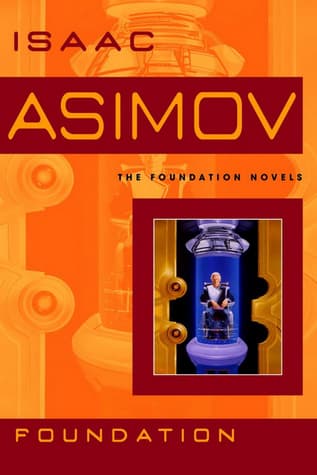
- Foundation
Isaac Asimov
4.0 (11k) average on GoodreadsFantasyWhile both Intervention and Foundation deal with galactic empires and long-term societal evolution, May's work focuses more on the biological and individual evolutionary aspects of psychic powers, contrasting with Asimov's predictive, statistical psychohistory. May's psionics are experienced viscerally by individuals, whereas Asimov's psychohistory operates on a grander, less personal scale. May’s Milieu is a more direct, interactive galactic federation, unlike the declining Galactic Empire of Asimov.
- Harry Potter and the Sorcerer's Stone
J.K. Rowling
4.5 (7M) average on GoodreadsFantasyRescued from a miserable life under the stairs, an orphaned boy discovers he's a wizard destined for a magical school, where he uncovers a dangerous secret tied to the dark wizard who murdered his parents.
- The Hunger Games
Suzanne Collins
4.3 (6.4M) average on GoodreadsFantasyIn a future where children fight to the death on live television, Katniss Everdeen volunteers for the arena, turning a death sentence into a fight for survival and a spark of rebellion.
- 1984
George Orwell
4.2 (3.1M) average on GoodreadsPoliticsIn a future where surveillance and thought control are absolute, a man's search for truth clashes with the Party, showing that hope can be a form of rebellion.
- Divergent
Veronica Roth
4.2 (2.9M) average on GoodreadsFantasyIn a society divided by virtues, a sixteen-year-old's difference from the norm starts a rebellion that threatens her world.





Enjoyed the summary?
A summary gives you the shape of the book. The book itself has the detail, the examples and the voice.
Find Intervention on AmazonAs an Amazon Associate, BookBrief earns from qualifying purchases. How we're funded