

Synopsis
Covers the whole plot, including the ending.
- Difficulty
- Hard
- Pacing
- Variable
- Mood
- Dark, Introspective, Suspenseful, Mysterious
- Read it if
- You enjoy complex narratives with multiple perspectives, psychological thrillers, and stories exploring memory, identity, and moral ambiguity.
- Skip it if
- You prefer straightforward plots, clear-cut heroes and villains, or lighthearted romance.
Invisible Plot Summary
Covers the whole plot, including the ending.
The Encounter with Born and Margot
In the spring of 1967, twenty-year-old Adam Walker, a Columbia University student and aspiring poet, works at a Greenwich Village bookstore. He meets Rudolf Born, a charismatic French political science professor, and his beautiful, mysterious girlfriend, Margot. Born, older and more experienced, shows immediate interest in Adam, inviting him to dinner and offering to help publish his poetry. Adam enters their sophisticated world, fascinated and slightly intimidated by Born's intellect and Margot's quiet charm. Their early conversations include intellectual debates and a subtle tension, as Adam becomes increasingly captivated by the couple, especially Margot.
The Seduction and Jealousy
Born, perhaps as a test, encourages Adam to seduce Margot. This suggestion quickly becomes real as Adam and Margot begin a secret affair. Adam is deeply in love with Margot, and their encounters are passionate and intense, often happening in the apartment Born provides for Adam. The affair is dangerous, with the constant threat of Born discovering it. Adam is torn between his desire for Margot and his uneasy relationship with Born, who seems to control their lives. The emotional stakes rise, leading to more paranoia and a feeling of impending crisis for Adam.
The Violent Confrontation
The tension among the three characters ends in a violent confrontation. Born discovers Adam and Margot's affair, but instead of anger, he proposes a twisted revenge: he will rape Adam's sister, Gwyn, who is visiting. Adam, horrified, tries to protect Gwyn. During a struggle, Born attacks Adam, beating him severely. In self-defense, Adam stabs Born with a letter opener, believing he has killed him. This traumatic event shatters Adam's world, forcing him to flee New York and assume a new identity, forever marked by the violence and betrayal.
Life in Paris
After the confrontation, Adam flees to Paris, taking the name 'Antoine'. He lives a meager life, working odd jobs, constantly looking over his shoulder, and haunted by the events of 1967. He believes Born is dead and that he is a murderer. His time in Paris is marked by isolation and a struggle for identity. He tries to bury his past, but the trauma of his encounter with Born and Margot continues to shape his decisions and perceptions. He starts a relationship with a young woman named Cécile, but even this connection is overshadowed by his secrets and lingering guilt.
The Confession and the Manuscript
Years later, Adam, now living in the Caribbean under another assumed identity, becomes ill. He contacts his old friend, Jim, a writer, and asks him to visit. Adam, feeling his life ending, decides to confess, recounting the entire story of his involvement with Born and Margot, the violence, and his flight. He entrusts Jim with his unfinished manuscript, a raw account of his experiences, hoping Jim will piece together the truth and share his story. This act is Adam's desperate attempt to find some redemption or understanding before his death.
Jim's Narrative and Investigations
Jim, taking on the role of editor and narrator, begins to work on Adam's manuscript. He finds it incomplete and disjointed, full of gaps. Jim decides to add to Adam's account with his own research and interviews, trying to verify details and fill in missing information. He travels to various locations, including Paris, to speak with people who knew Adam there, such as Cécile. Jim's narrative offers a more objective, though still subjective, perspective on Adam's life, showing how memory is unreliable and truth is hard to find. He grapples with the ethics of telling Adam's story.
The Revelation of Gwyn's Account
As Jim continues his work, he receives an unexpected package containing a manuscript written by Adam's sister, Gwyn. Gwyn's account reveals a different version of the 1967 events, especially regarding the confrontation with Born. Her narrative challenges Adam's memory and self-perception, uncovering a darker truth about Born's actions and Adam's involvement. Gwyn's perspective suggests Adam was not just a victim but also an unwitting participant in Born's perverse games, and that the violence went beyond what Adam recalled or admitted. This forces Jim to re-evaluate everything he thought he knew.
Born's Survival and Continued Manipulation
Gwyn's narrative, combined with Jim's further investigations, gradually reveals the truth: Rudolf Born did not die that night in 1967. He survived Adam's stabbing and orchestrated his disappearance, letting Adam believe he was a murderer. Born continued his life of manipulation and cruelty, becoming a successful and influential figure, even marrying Gwyn for a time. This revelation adds another layer of horror and betrayal to Adam's story, showing Born's power and his insidious ability to control the lives of those around him, even from a distance. Born's 'invisible' hand extends through decades.
The Search for Born
Upon learning Born is alive, Adam's guilt turns into a burning desire for justice and revenge. He dedicates his remaining years to finding Born, driven by a need to confront his tormentor and expose his crimes. This quest takes him across continents and through various aliases, changing him from a haunted fugitive into a determined pursuer. His pursuit is not just about personal vengeance, but also about correcting the past and understanding the true nature of the evil that shaped his life. He becomes an avenging spirit, seeking to make the 'invisible' visible.
The Final Confrontation
Adam eventually tracks Born to a remote island in the Caribbean, where Born lives a seemingly idyllic life under a new identity. The final confrontation between Adam and Born is intense, charged with decades of suppressed anger and unresolved trauma. The details of this encounter are somewhat ambiguous, told through Adam's final, fragmented writings and Jim's interpretations. The outcome suggests a form of justice, but not a clean or satisfying one, highlighting the lasting damage of their past. The 'invisible' nature of Born's crimes and his ability to evade justice are finally challenged, but the cost to Adam is immense.
Principal Figures
Adam Walker
Protagonist
An aspiring poet whose life is irrevocably altered by a violent encounter.
Adam Walker begins as a naive and idealistic twenty-year-old student, drawn to intellectual pursuits and the allure of a sophisticated world. He is highly susceptible to influence, particularly from Rudolf Born, and his youthful desires lead him into a dangerous affair with Margot. After the traumatic events of 1967, Adam becomes a haunted fugitive, living under multiple aliases, consumed by guilt and a sense of injustice. He struggles with identity, memory, and the weight of his past. He is driven by a desire for truth and, eventually, revenge against Born.
Relationships: Rudolf Born (mentor, rival, tormentor, nemesis); Margot (lover, object of obsession); Gwyn Walker (sister, victim of Born's manipulation); Jim (friend, confidant, literary executor); Cécile (lover in Paris)
Rudolf Born
Antagonist
A charismatic, manipulative, and profoundly cruel French intellectual.
Rudolf Born is a complex and enigmatic figure, possessing immense charisma and intellectual prowess, which he uses to manipulate those around him. He is a sadist who enjoys exerting psychological control and orchestrating perverse scenarios, viewing people as pawns in his elaborate games. His actions are driven by a deep-seated cruelty and a desire for power, rather than any clear ideology. He is a master of deception, capable of disappearing and reinventing himself, making him 'invisible' to justice. Born represents the embodiment of evil and moral corruption in the novel.
Relationships: Adam Walker (protégé, victim, rival, target of manipulation); Margot (girlfriend, accomplice, victim of control); Gwyn Walker (victim, wife)
Margot
Supporting
Born's silent, seductive girlfriend, entangled in his schemes.
Margot is introduced as Born's alluring and enigmatic girlfriend, often silent and seemingly passive. She is a figure of mystery and desire for Adam, and their affair is a catalyst for the novel's central conflict. While she appears to be a victim of Born's manipulation, her complicity and agency are ambiguous. Her silence and elusive nature make her a projection screen for the desires and fears of Adam and, later, Born. Her true feelings and motivations are never fully revealed, adding to the novel's themes of unreliable memory and hidden truths.
Relationships: Rudolf Born (boyfriend, controller); Adam Walker (lover)
Gwyn Walker
Supporting
Adam's sister, whose testimony provides a crucial, alternative perspective.
Gwyn Walker is Adam's younger sister, initially appearing as a minor character whose visit to New York serves as a trigger for Born's most heinous act. Later, she emerges as a powerful narrator, offering a devastatingly different account of the events of 1967 and the years that followed. Her narrative is crucial for unraveling the full extent of Born's depravity and Adam's incomplete understanding of his own past. Gwyn is strong, resilient, and determined to expose the truth, even when it implicates her own brother in uncomfortable ways. She represents a voice of clarity and painful honesty.
Relationships: Adam Walker (brother); Rudolf Born (attacker, husband)
Jim
Supporting
Adam's friend and the editor/narrator of his fragmented story.
Jim is Adam's long-time friend and a writer. He becomes the primary editor and one of the narrators of Adam's story, tasked with piecing together Adam's fragmented manuscript and filling in the gaps through his own research. Jim is a conscientious and empathetic figure, grappling with the ethical responsibilities of telling another person's potentially unreliable story. He serves as an intellectual guide for the reader, questioning the nature of truth, memory, and authorship. His role highlights the challenges of reconstructing a life from incomplete evidence and biased perspectives.
Relationships: Adam Walker (friend, literary executor)
Cécile
Supporting
Adam's girlfriend during his exile in Paris.
Cécile is a young woman Adam meets and forms a relationship with during his time in Paris under the alias 'Antoine'. She provides him with a semblance of normalcy and affection, a brief respite from his haunted existence. Their relationship is tender but ultimately constrained by Adam's secrets and his inability to fully commit. She represents a connection to a possible future that Adam cannot fully embrace due to his past. Her perspective, later sought by Jim, offers an external view of Adam's psychological state during his exile.
Relationships: Adam Walker (lover)
Themes & Insights
The Elusiveness of Truth and Memory
The novel constantly questions what is real and what is remembered, particularly through its multi-layered narration. Adam's initial account of the 1967 events is challenged by Gwyn's later testimony, revealing significant differences. Jim, as the editor, struggles to reconcile these differing versions, showing how personal biases, trauma, and time distort memory. The novel's structure, with its multiple narrators and fragmented manuscripts, shows that a single, objective truth about the past is unattainable, existing instead as a collection of subjective experiences. The reader must piece together their own understanding, much like Jim.
“Memory is a fiction, a way of telling yourself a story about your life, and the story changes every time you tell it.”
Identity and Reinvention
Adam Walker's journey is a relentless exploration of identity. After the violent encounter with Born, he sheds his name and past, becoming 'Antoine' in Paris and later taking other aliases in the Caribbean. Each new identity tries to escape guilt and trauma, but also to reinvent himself after a shattered past. Born also reinvents himself, disappearing and reappearing under new guises, making him 'invisible' to authorities. The novel suggests that identity is fluid and performed, often shaped by external circumstances and the stories we tell ourselves and others.
“Who are you? The question is always there, lurking in the shadows, waiting to pounce.”
Manipulation and Power
Rudolf Born embodies manipulation and power, controlling the lives of those around him. He manipulates Adam's desires, encourages his affair with Margot, and orchestrates the attack on Gwyn, all to assert his dominance and find perverse pleasure. His ability to survive and thrive under new identities further emphasizes his unchecked power. The novel explores how easily individuals can be caught in another's web of control, and the devastating psychological impact of such manipulation, especially on Adam, who spends decades trying to break free from Born's influence.
“He had a way of making you feel that he knew more about you than you knew about yourself.”
Justice and Revenge
Initially, Adam believes he committed murder and spends years in self-imposed exile, a form of self-punishment. However, upon discovering Born is alive, his focus shifts from guilt to a burning desire for justice and revenge. This quest drives the final section of his life, turning him into an avenging figure. The novel grapples with the complexities of these concepts: Is personal vengeance true justice? Can the scales ever truly be balanced? The ambiguous ending suggests that while some retribution may be achieved, the deep wounds of the past are never fully healed, and the quest for justice can consume a life.
“Justice, in the end, is a lonely business.”
Plot Devices & Literary Techniques
Multiple Narrators
The story is told through the perspectives of Adam Walker, Jim, and Gwyn Walker.
The novel employs a complex narrative structure with three distinct narrators. Adam Walker's fragmented manuscript forms the core, followed by Jim's editorial commentary and investigative additions, and finally, Gwyn Walker's revelatory testimony. This device creates a multi-faceted and often contradictory account of events, highlighting the subjective nature of truth and memory. It forces the reader to actively participate in piecing together the narrative, constantly questioning the reliability of each voice and the gaps between their stories. The shifting perspectives deepen the mystery and psychological complexity of the plot.
Unreliable Narration
Each narrator's account is influenced by their biases, trauma, and limited knowledge.
Central to the novel's thematic exploration of truth, unreliable narration is prevalent throughout. Adam's initial account is a blend of memory, trauma, and perhaps self-deception, particularly concerning the exact details of his confrontation with Born. Gwyn's narrative, while appearing more objective, is also shaped by her own traumatic experiences. Even Jim, as the 'editor,' acknowledges his own interpretive role and the inherent limitations in reconstructing a definitive truth from fragmented evidence. This device immerses the reader in the characters' psychological states and the challenge of knowing what 'really' happened.
Manuscript within a Manuscript
The story unfolds through the discovery and editing of various written documents.
The novel is presented as a collection of texts: Adam's unfinished manuscript, Jim's editorial notes and research, and Gwyn's later submission. This 'found manuscript' device blurs the lines between author and character, fiction and reality. It allows for different voices and styles to coexist, reflecting the fragmented nature of memory and identity. The act of reading becomes an act of interpretation, mirroring Jim's struggle to make sense of Adam's life. This structure emphasizes the constructed nature of narrative and the ongoing process of meaning-making.
The Invisible Man Motif
Characters, particularly Born, evade detection and consequences, becoming 'invisible'.
The title 'Invisible' directly references a key motif. Rudolf Born's ability to disappear, assume new identities, and evade justice makes him metaphorically 'invisible' to the authorities and to those he has wronged. Adam, too, lives an 'invisible' existence as a fugitive, hiding his true identity. This motif underscores themes of power, impunity, and the difficulty of holding individuals accountable for their actions when they can simply vanish. It also speaks to the hidden traumas and unspoken truths that haunt the characters, remaining 'invisible' until brought to light.
Invisible Quotes
“There are books and there are books, and then there are the books that will make you feel as if you have been living in a coma up until the moment you've read them.”
“I didn't want to just live my life; I wanted to understand it.”
“Love is not a feeling, it's a decision. It's a choice you make every single day.”
“We are all made of stories. Some we tell, some we keep hidden, some we don't even know we possess.”
“Sometimes the most important things are the ones you can't see.”
“The past is never dead. It's not even past.”
“Every secret comes with a price, and the longer you keep it, the higher the cost.”
“To be truly alive is to be vulnerable, to expose yourself to the possibility of pain as well as joy.”
“The world is a vast and complicated place, and sometimes the only way to make sense of it is to focus on the small, human connections.”
“Words have a way of changing things, of making them real, even when you wish they weren't.”
“You can't outrun yourself, no matter how far you go.”
“There's a kind of beauty in broken things, a story in every crack and flaw.”
“Sometimes you have to lose yourself completely to find out who you really are.”
“The future is always uncertain, but that's what makes it exciting, isn't it?”
“Every ending is just a new beginning, if you're brave enough to see it that way.”
Quiz
10 questions on the plot and the characters. Each answer comes with a short explanation.
Question 1
In the spring of 1967, where does twenty-year-old Adam Walker first meet Rudolf Born and Margot?
- A cafe in Greenwich Village
- A party in Morningside Heights
- A poetry reading at Columbia University
- An art gallery in SoHo
Show answer
B. A party in Morningside Heights The novel opens with Adam Walker meeting Born and Margot at a party in Morningside Heights in New York City.
Question 2
What is Adam Walker's primary ambition and field of study when he first encounters Rudolf Born?
- A novelist and journalism student
- An aspiring poet and Columbia University student
- A musician and philosophy student
- A playwright and drama student
Show answer
B. An aspiring poet and Columbia University student The book description states Adam Walker is an 'aspiring poet and student at Columbia University' when he meets Born.
Question 3
Which city is NOT explicitly mentioned as a setting for the novel's events?
- New York City
- Paris
- London
- A remote island in the Caribbean
Show answer
C. London The summary mentions New York City, the Left Bank of Paris, and a remote Caribbean island, but not London.
Question 4
What is the central dynamic that forms between Adam Walker, Rudolf Born, and Margot?
- A professional mentorship
- A friendly rivalry
- A perverse triangle
- A collaborative artistic group
Show answer
C. A perverse triangle The summary explicitly states that Walker 'finds himself caught in a perverse triangle' with Born and Margot.
Question 5
How many different narrators are credited with telling the story of 'Invisible'?
- One
- Two
- Three
- Four
Show answer
C. Three The summary states, 'Three different narrators tell the story of Invisible'.
Question 6
What significant event occurs due to the 'perverse triangle' involving Adam, Born, and Margot?
- A major literary collaboration
- A sudden, shocking act of violence
- A public scandal involving plagiarism
- A deep, lasting friendship
Show answer
B. A sudden, shocking act of violence The summary indicates the triangle 'leads to a sudden, shocking act of violence that will alter the course of his life'.
Question 7
Which of the following themes is most central to the novel, as suggested by the description?
- The pursuit of corporate success
- The exploration of space and technology
- The shadowy borderland between truth and memory, authorship and identity
- The history of American political movements
Show answer
C. The shadowy borderland between truth and memory, authorship and identity The description highlights Auster taking us 'into the shadowy borderland between truth and memory, between authorship and identity'.
Question 8
The novel 'Invisible' travels in time across what approximate period?
- From 1950 to 1970
- From 1967 to 2007
- From 1980 to 2000
- From 2000 to 2020
Show answer
B. From 1967 to 2007 The summary explicitly states the novel 'travels in time from 1967 to 2007'.
Question 9
Which of the following emotions or drives is emphasized as a key component of the novel's narrative?
- Serenity and contentment
- Youthful rage, unbridled sexual hunger, and a relentless quest for justice
- Academic curiosity and intellectual debate
- Nostalgia and peaceful reflection
Show answer
B. Youthful rage, unbridled sexual hunger, and a relentless quest for justice The summary describes the book as 'a book of youthful rage, unbridled sexual hunger, and a relentless quest for justice'.
Question 10
What does the 'sudden, shocking act of violence' primarily do for Adam Walker, according to the summary?
- It leads to his immediate arrest and imprisonment.
- It inspires him to write his first successful novel.
- It alters the course of his life.
- It resolves his financial difficulties.
Show answer
C. It alters the course of his life. The summary states the act of violence 'will alter the course of his life', indicating a profound personal impact.
Invisible FAQ
What is the central premise of 'Invisible' and when does it begin?
'Invisible' centers on twenty-year-old Adam Walker, an aspiring poet, in New York City in the spring of 1967. His life takes a drastic turn after he encounters the mysterious Frenchman Rudolf Born and his girlfriend Margot, becoming entangled in a perverse triangle that leads to a violent act.
Who are the primary characters Adam Walker encounters that propel the plot?
Adam Walker's life is irrevocably altered by Rudolf Born, an older, manipulative Frenchman, and his alluring, enigmatic girlfriend, Margot. Their presence introduces Adam to a world of intellectual debate, sexual intrigue, and ultimately, violence.
What significant event fundamentally changes Adam Walker's life early in the story?
Adam's life is drastically altered by a sudden, shocking act of violence that occurs within the perverse triangle involving himself, Rudolf Born, and Margot. This event, hinted at early on, sets the trajectory for the rest of his life and his quest for justice.
How does the novel's structure contribute to its narrative complexity?
The novel is sinuously constructed in four interlocking parts, told by three different narrators, which allows for multiple perspectives on the same events. This fragmented structure challenges the reader to piece together the full truth, mirroring the characters' own struggles with memory and identity.
What themes does 'Invisible' explore regarding truth and memory?
'Invisible' delves deeply into the shadowy borderland between truth and memory, often questioning the reliability of recollection and the subjective nature of perception. The multiple narrators offer conflicting accounts, forcing the reader to discern what is real and what is fabricated.
How does the identity of the narrators evolve throughout the book?
Initially, the story is primarily told by Adam Walker, but later sections introduce a different narrator, James Freeman, and then yet another, Peter Aaron, who is ostensibly editing Adam's manuscript. This shift in narration creates a meta-fictional layer, blurring the lines of authorship and authenticity.
What is the significance of the character Rudolf Born beyond his initial role?
Rudolf Born represents a pervasive, almost demonic force in Adam Walker's life, resurfacing in different guises and locations throughout the decades. His actions are the catalyst for Adam's lifelong quest for justice and revenge, symbolizing the inescapable grip of past traumas.
Are there any symbolic interpretations of the title 'Invisible'?
The title 'Invisible' can be interpreted in several ways: Adam's feeling of being overlooked or unheard, the unseen forces of fate and memory, the hidden truths within a narrative, or even the unseen victims of violence. It also refers to the elusive nature of identity and the way people hide their true selves.
How does the setting of Paris contribute to Adam Walker's psychological journey?
Adam's time in Paris, particularly his encounters with Margot and his brother, adds another layer of emotional and psychological complexity. It's a period of self-discovery, sexual awakening, and further entanglement in the web spun by Born, pushing Adam to confront his desires and moral boundaries.
How does Adam Walker's youthful rage manifest throughout the novel?
Adam's youthful rage, stemming from the initial act of violence and injustice, fuels his relentless quest for retribution against Rudolf Born. This rage becomes a driving force, shaping his decisions and relationships, and consuming much of his adult life as he seeks to right past wrongs.
What is the psychological impact of the 'perverse triangle' on Adam Walker?
The 'perverse triangle' involving Adam, Born, and Margot deeply scars Adam psychologically. It exposes him to manipulation, betrayal, and violence, leading to a profound sense of injustice and a lifelong obsession with rectifying the past, shaping his identity and worldview.
How does Adam's relationship with Margot evolve and affect his psyche?
Adam's relationship with Margot is complex, shifting from initial attraction and seduction to a deeper, more complicated bond forged through shared trauma and a desire for revenge. She represents both temptation and a potential path to understanding, profoundly impacting Adam's emotional and sexual development.
What role does guilt play in the characters' motivations and actions?
Guilt is a powerful motivator, particularly for Adam Walker, who carries the burden of past events and his own complicity, however unwilling. It drives his pursuit of justice and haunts his memories, influencing his decisions and interactions for decades.
Is Rudolf Born an entirely evil character, or is there room for nuance in his portrayal?
While Rudolf Born is undeniably manipulative and violent, the novel allows for some nuance, portraying him as a figure of immense intellectual power and charisma, capable of drawing others into his orbit. His motives, though twisted, are sometimes rooted in a distorted sense of control and superiority.
How does the novel challenge conventional notions of authorship and identity?
Through its multiple narrators and the concept of an 'edited' manuscript, 'Invisible' blurs the lines between who is telling the story and whose story it truly is. This metafictional approach questions the stability of identity and the authority of authorship, suggesting that truth is always mediated.
What is the ultimate message or takeaway regarding justice in 'Invisible'?
The novel suggests that justice is often elusive and complex, rarely providing a clean resolution. Adam's relentless quest for justice spans decades, highlighting the enduring nature of trauma and the difficulty of truly rectifying past wrongs, leaving the reader to ponder the true cost of vengeance.
How does the book's ending contribute to its overall themes?
The ending of 'Invisible' is ambiguous and cyclical, reinforcing themes of unresolved trauma and the enduring power of the past. It suggests that while some forms of closure might be attained, the true 'invisible' forces of memory and identity continue to shape the characters' lives.
What is the significance of the 40-year time span (1967-2007) in the narrative?
The extensive time span allows Auster to explore the long-term psychological impact of the initial events on Adam Walker and other characters. It demonstrates how past traumas can echo through decades, shaping lives and perpetuating a cycle of seeking justice or revenge.
About the author

Paul Benjamin Auster is an American writer and film director. His notable works include The New York Trilogy (1987), Moon Palace (1989), The Music of Chance (1990), The Book of Illusions (2002), The Brooklyn Follies (2005), Invisible (2009), Sunset Park (2010), Winter Journal (2012), and 4 3 2 1 (2017). His books have been translated into more than forty languages.
Similar books
- Atonement
Ian McEwan
4.4 (70) average on GoodreadsDeals with the lasting impact of a single event, the unreliability of memory, and the power of narrative.
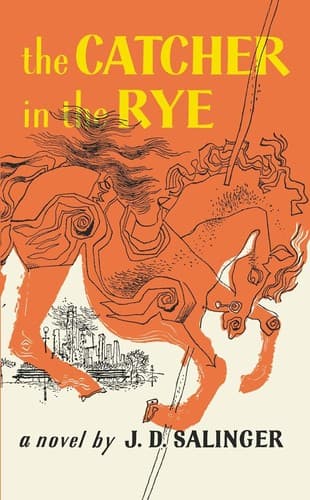
- The Catcher in the Rye
J.D. Salinger
3.8 (2.7M) average on GoodreadsYoung AdultWhile both Invisible and The Catcher in the Rye feature young protagonists grappling with identity and disillusionment, Auster's novel is significantly darker and more complex in its narrative structure. Salinger's Holden Caulfield offers a singular, albeit unreliable, first-person perspective, making his internal world more accessible to YA readers. Invisible, with its multiple, often contradictory narratives, demands a more sophisticated engagement with the concept of truth, moving far beyond the adolescent angst of Salinger's classic. The 'romance' in Invisible is also far more predatory and psychologically damaging than any relationships depicted in Salinger's work.
- Gone Girl
Gillian Flynn
4.1 (2.3M) average on GoodreadsThrillerBoth Invisible and Gone Girl explore the darker aspects of relationships, the unreliability of narrative, and the psychological manipulation between characters. Flynn's novel, however, is more overtly a psychological thriller, with a clear genre framework that manages reader expectations regarding suspense and plot twists. Auster's work, while possessing thriller elements, prioritizes philosophical inquiry into memory and identity over pure suspense. Gone Girl's dual narrative, while effective, is less fragmented and ultimately more resolved than the intricate, often unresolved narrative threads in Invisible. Flynn's characters, while complex, are often more clearly defined in their villainy or victimhood, whereas Auster's characters exist in a more pervasive moral grey area.
- Harry Potter and the Sorcerer's Stone
J.K. Rowling
4.5 (7M) average on GoodreadsFantasyRescued from a miserable life under the stairs, an orphaned boy discovers he's a wizard destined for a magical school, where he uncovers a dangerous secret tied to the dark wizard who murdered his parents.
- The Hunger Games
Suzanne Collins
4.3 (6.4M) average on GoodreadsFantasyIn a future where children fight to the death on live television, Katniss Everdeen volunteers for the arena, turning a death sentence into a fight for survival and a spark of rebellion.
- To Kill a Mockingbird
Harper Lee
4.3 (4.5M) average on GoodreadsHistorical FictionIn the 1930s Jim Crow South, Harper Lee writes about racial injustice, moral growth, and the quiet courage of a lawyer father, Atticus Finch, as seen through his young daughter's eyes.





Enjoyed the summary?
A summary gives you the shape of the book. The book itself has the detail, the examples and the voice.
Find Invisible on AmazonAs an Amazon Associate, BookBrief earns from qualifying purchases. How we're funded