
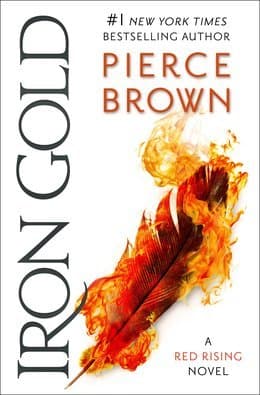
Synopsis
Covers the whole plot, including the ending.
- Difficulty
- Medium
- Pacing
- Variable
- Mood
- Gritty, Epic, War-torn, Politically Charged, Desperate
- Read it if
- You want a sprawling, multi-perspective epic that expands a beloved universe with darker themes and moral ambiguity, and you're ready for a more mature, politically complex narrative.
- Skip it if
- You prefer a single protagonist's journey, are looking for a light or straightforward space opera, or haven't read the original 'Red Rising' trilogy.
Iron Gold Plot Summary
Covers the whole plot, including the ending.
The Tenth Year of War
Ten years after the fall of the Society, Darrow au Andromedus, now a seasoned warlord and husband to Mustang, leads the Republic fleet in a brutal war against the remaining Society forces, primarily the Ash Lord. The war has taken a heavy toll, both on the galaxy and on Darrow personally. He is haunted by the casualties and the constant threat to his family, particularly his young son, Pax. The Republic's resources are strained, and public support for the long conflict is fading. Darrow, feeling the weight of his responsibilities and the sacrifices made, prepares for a desperate, high-stakes offensive against the Ash Lord's stronghold on Mercury, believing it is the only way to end the war.
Ephraim's Desperation
Ephraim ti Horn, a former Gold soldier and veteran of the Rising, is a broken man consumed by grief and addiction after the death of his lover, Trigg. Living in the shadowed underbelly of Mars, he owes a massive debt to the criminal underworld. To settle his debt and secure a future, Ephraim agrees to a dangerous heist: abducting Lysander au Lune and Cassius au Bellona from their secure location in the Sovereign's palace. He assembles a diverse crew of disillusioned veterans and criminals, including the Red hacker Daxo and the Obsidian warrior Volga. The mission is full of danger, forcing Ephraim to confront his past and the moral ambiguities of his actions.
Lysander's Exile and Return
Lysander au Lune, the exiled heir to the former Sovereign, travels the stars with his mentor, Cassius au Bellona. They live a nomadic life, observing the chaos Darrow's revolution caused and seeking a path forward for a new Society. Lysander is torn between his loyalty to Cassius, who has guided him since childhood, and his deep desire to reclaim his family's legacy and restore order to the galaxy. Their journey leads them to the Core worlds, where they meet the formidable Sovereign, Virginia au Augustus (Mustang), Darrow's wife. Their reunion is tense, marked by past betrayals and present political maneuvering, as Lysander tries to negotiate a place for himself in the new galactic order.
Lyra's Flight and New Beginnings
Lyra, a young Red girl, lives in a refugee camp on Venus, struggling to survive amidst the ongoing war and the Republic's neglect. Her life changes when her family is killed during an attack, leaving her orphaned. Desperate for survival, Lyra is forced to make impossible choices, eventually joining a group of Rim Golds. She is taken in by the cunning Queen Asha, who sees potential in Lyra beyond her lowColor. Lyra is thrust into a world of political intrigue and opulence she never imagined, learning the ways of the Rim and slowly changing her old identity while dealing with the trauma of her past.
The Battle for Mercury
Darrow launches his audacious invasion of Mercury, aiming to cripple the Ash Lord's forces and end the long war. The battle is a brutal, grinding fight, showing Darrow's strategic brilliance but also the immense human cost of his leadership. Republic forces face entrenched Society defenses and the Ash Lord's cunning tactics, resulting in heavy casualties. Darrow must make difficult decisions, sacrificing lives to gain ground. The mental and emotional toll of the war weighs heavily on him, as he sees the devastation firsthand and grapples with the morality of his actions, all while knowing his family's safety depends on his success.
Ephraim's Heist Goes Awry
Ephraim's team infiltrates the Sovereign's palace on Mars, a fortress of security, to abduct Lysander and Cassius. The heist is carefully planned, relying on Daxo's hacking skills and Volga's brute strength. They capture Lysander, but Cassius proves a more formidable opponent, escaping their grasp. The operation quickly turns into a desperate fight for survival as Republic security forces close in. Betrayals within Ephraim's own crew add to the chaos, forcing him to improvise and make difficult choices to protect his remaining allies and complete his mission, even if it means altering the original plan.
Lysander's Captivity and Escape
After his abduction by Ephraim's crew, Lysander is a prisoner, stripped of his former status and privilege. He observes his captors, trying to understand their motivations and weaknesses. Despite his situation, Lysander stays calm, using his intellect and charm to subtly manipulate his captors. He learns about their grievances with the Republic and Darrow, deepening his understanding of the fractured galaxy. Lysander eventually stages a daring escape, showing his resilience and resourcefulness, and setting him on a new, unexpected path that will bring him closer to the very forces he seeks to undermine.
Lyra's Ascent in the Rim
Under the guidance of Queen Asha and her son, Seraphina, Lyra quickly adapts to the intricate political landscape of the Rim Golds. She sheds her Red identity, learning the customs, etiquette, and even the martial arts of the Golds. Lyra proves to be a quick learner, showing a keen intellect and a surprising aptitude for strategy. She becomes an invaluable asset to Asha, gaining her trust and rising through the ranks. However, Lyra grapples with the moral compromises required to survive in this new world, and the lingering pain of her past constantly reminds her of the stark contrast between her origins and her current status.
Darrow's Desperate Gamble
The Mercury campaign becomes a long, bloody stalemate. Darrow, desperate to break the Ash Lord's hold and end the war, makes a controversial decision: he orders the deployment of a devastating bioweapon, the Pandora virus, against the Society forces. This act, while tactically effective, deeply disturbs his allies, including Virginia, who sees it as a betrayal of their revolutionary ideals. The decision creates a rift within the Republic leadership, questioning Darrow's judgment and his commitment to the principles he fought for. Darrow, increasingly isolated, believes this horrific measure is a necessary evil to save countless more lives in the long run.
The Consequences of Power
The use of the Pandora virus achieves its military objective but comes at a steep moral and political cost for Darrow. He is publicly condemned, his reputation tarnished, and the trust between him and Virginia is severely strained. Meanwhile, Lysander, now free from Ephraim's captivity, begins to forge his own path, seeking alliances with disaffected elements of the former Society and even some disillusioned Republic factions. Ephraim, having completed his mission, finds himself entangled in new dangers, realizing that escaping his past is far more difficult than he imagined. The galaxy remains fractured, with new conflicts brewing and old wounds festering.
Lyra's Divided Loyalties
As Lyra continues to integrate into the Rim Gold society, she grapples with her divided loyalties. While she has found safety and status, the memory of her Red family and the suffering of her people weighs heavily on her. She sees firsthand the opulence and often cruel indifference of the Golds, a stark contrast to the hardship of the refugee camps. Lyra begins to question her role and her complicity in a system that perpetuates such inequality. Her internal conflict intensifies as she is forced to make choices that will either solidify her place among the Golds or risk everything to help her former people.
A Fragile Peace and New Threats
The war with the Ash Lord finally concludes, but it is a costly victory for the Republic. The galaxy is scarred, its people exhausted, and the political landscape more volatile than ever. Darrow, though victorious, is a man deeply changed, burdened by the moral compromises he made. Lysander, having gained a new perspective on the fractured nature of the galaxy, begins to consolidate power, positioning himself as a potential leader for a new, reformed Society. Ephraim, having settled his debts, finds himself unexpectedly drawn back into the world of intrigue, while Lyra's journey among the Rim Golds positions her for an influential, yet dangerous, future. The peace is fragile, and new threats, both internal and external, loom on the horizon.
Principal Figures
Darrow au Andromedus (The Reaper)
Protagonist
The legendary Red turned Gold warrior, now a general leading the Republic.
Darrow is the central figure of the Rising, a legendary warrior who sacrificed his humanity to break the chains of the Society. In *Iron Gold*, he is a weary, burdened general, ten years into a seemingly endless war. He is driven by a fierce love for his family (Virginia and Pax) and a deep-seated desire for a just peace, but his idealism has been tempered by the brutal realities of war. He is a brilliant strategist and an inspiring leader, yet he grapples with the moral compromises required to win, often making difficult, isolating decisions. He carries the weight of countless lives on his shoulders.
Relationships: Virginia au Augustus (Mustang) (Wife, political rival, intellectual equal); Pax au Andromedus (Son, source of hope and motivation); Cassius au Bellona (Former friend and rival, now an estranged figure); Sevro au Barca (Loyal, chaotic best friend and comrade-in-arms)
Ephraim ti Horn
Supporting Protagonist
A broken ex-Gold soldier turned thief, haunted by grief and addiction.
Ephraim is a former Gold soldier, a veteran of the Rising, who has fallen into a life of crime and addiction after the tragic death of his lover, Trigg. He is cynical, pragmatic, and deeply jaded by the promises of the Republic, viewing Darrow's revolution as having only replaced one form of tyranny with another. Despite his flaws, Ephraim possesses a strong moral compass beneath his hardened exterior, particularly when it comes to protecting those he cares about. He is driven by a desperate need to settle his debts and escape his past, but often finds himself drawn back into conflict.
Relationships: Trigg (deceased) (Deceased lover, source of his grief); Volga (Reluctant ally, Obsidian warrior); Daxo (Member of his heist crew, Red hacker)
Lysander au Lune
Antagonist/Supporting Protagonist
The exiled heir to the former Sovereign, seeking to restore order to the galaxy.
Lysander is the grandson of Octavia au Lune, the former Sovereign, and the last true heir to the Society. He is intelligent, charismatic, and cultured, carrying the weight of his family's legacy and a deep-seated belief in the inherent superiority of the Gold Color. He was raised by Cassius au Bellona after his parents' deaths and views Darrow's revolution as a chaotic, destructive force. Lysander genuinely desires peace and order, but his vision for the galaxy is rooted in the old ways, leading him to become a formidable, nuanced antagonist to Darrow's Republic. He is a keen observer and a skilled manipulator.
Relationships: Cassius au Bellona (Mentor, protector, father figure); Octavia au Lune (deceased) (Grandmother, source of his lineage and ideology); Virginia au Augustus (Mustang) (Political adversary, former acquaintance)
Lyra
Supporting Protagonist
A young Red refugee who rises to power among the Rim Golds.
Lyra is a young Red girl from the impoverished refugee camps of Venus, whose life is shattered by the ongoing war. She is resourceful, resilient, and fiercely intelligent, demonstrating a remarkable capacity for adaptation. After losing her family, she is forced to navigate a dangerous world, eventually finding herself among the opulent and ruthless Rim Golds. Lyra is driven by a primal need for survival and a desire for security, but she also carries the trauma of her past and a latent sense of justice for her people. Her journey explores themes of identity, class, and the moral compromises required to survive.
Relationships: Queen Asha (Patron, mentor, political ally); Seraphina (Son of Queen Asha, potential ally/rival)
Virginia au Augustus (Mustang)
Supporting
The Sovereign of the Republic and Darrow's wife, a brilliant politician.
Virginia is Darrow's wife, the mother of his son, Pax, and the brilliant, pragmatic Sovereign of the nascent Republic. She is a master politician and strategist, often acting as Darrow's moral compass and intellectual foil. While she shares Darrow's vision for a better galaxy, she is more cautious and politically astute, understanding the compromises necessary to govern. She constantly battles to maintain the Republic's fragile peace and legitimacy amidst the ongoing war and Darrow's more impulsive actions. Her relationship with Darrow is complex, marked by deep love, mutual respect, but also significant ideological and political tension.
Relationships: Darrow au Andromedus (Husband, political partner, sometimes rival); Pax au Andromedus (Son, shared hope for the future); Lysander au Lune (Political adversary, former acquaintance)
Cassius au Bellona
Supporting
Lysander's mentor and a legendary Gold warrior, haunted by his past.
Cassius is a legendary Gold warrior, Darrow's former friend and rival, who now serves as Lysander's protector and mentor. He is a man of honor and principle, deeply scarred by the events of the Rising and the loss of his family. Cassius is a skilled fighter and strategist, but he is weary of war and seeks a path to lasting peace. He is fiercely loyal to Lysander, whom he views as the last hope for a noble Society. His interactions with Darrow are fraught with the weight of their shared history and unresolved conflicts, yet a flicker of their old bond remains.
Relationships: Lysander au Lune (Mentee, surrogate son, protected charge); Darrow au Andromedus (Former friend and rival, complex relationship); Octavia au Lune (deceased) (Former sovereign he served)
Volga
Supporting
An Obsidian warrior and reluctant member of Ephraim's crew.
Volga is a powerful Obsidian warrior, initially serving as a muscle for Ephraim's heist crew. She is stoic, incredibly strong, and fiercely loyal once her trust is earned. Volga carries the burden of her people's history of enslavement and the complex legacy of the Obsidians in the new Republic. She is driven by a desire for a better future for her clan and often acts as Ephraim's moral compass, questioning his methods and challenging his cynicism. Despite her intimidating demeanor, she possesses a surprising depth of compassion and a strong sense of justice.
Relationships: Ephraim ti Horn (Reluctant ally, later a trusted friend); Daxo (Fellow crew member)
Themes & Insights
The Cost of War and Revolution
The novel portrays the devastating and lasting costs of the decade-long war following Darrow's revolution. It explores not just the physical destruction and loss of life, but also the psychological toll on its characters. Darrow, once an idealistic liberator, is now a weary general making morally compromising decisions like the use of the Pandora virus, haunted by the casualties. Ephraim's character arc directly reflects the disillusionment and trauma of veterans, showing how the 'peace' promised by the Rising has failed many, leaving them broken and adrift. Lyra's experience as a refugee further shows the widespread suffering of the innocent, demonstrating that even a 'just' war leaves behind generational pain and displacement.
“A decade ago, Darrow was the hero of the revolution he believed would break the chains of the Society. But the Rising has shattered everything: Instead of peace and freedom, it has brought endless war.”
Moral Ambiguity and Compromise
Iron Gold looks at the complex moral landscape of leadership and survival, where clear-cut heroes and villains become blurred. Darrow, the protagonist, is forced to make increasingly difficult and ethically questionable decisions, such as the deployment of the Pandora virus, which alienates his closest allies and raises questions about whether the ends justify the means. Lysander, an antagonist to Darrow, is presented with his own nuanced motivations, genuinely believing he can bring order to a chaotic galaxy, even if through methods Darrow would oppose. Ephraim's journey as a criminal with a hidden moral compass, and Lyra's adaptation to the ruthless Rim Golds, further emphasize that survival often demands compromises that challenge one's core beliefs, making it difficult to maintain purity in a broken world.
“There are no good men in war. Only good causes.”
Identity and Belonging
The theme of identity is central, especially through Lyra's narrative. As a Red refugee forced to assimilate into the opulent and dangerous world of the Rim Golds, Lyra struggles with shedding her past identity while navigating a new, alien culture. Her struggle highlights the fluidity of identity in extreme circumstances and the psychological impact of forced transformation. Similarly, Darrow, once a Red, lives as a Gold, constantly battling the expectations and burdens of both his origins and his adopted Color. Ephraim, a former Gold soldier, struggles with his identity as a veteran and a criminal, feeling he belongs nowhere. This theme explores how characters define themselves in a fractured society, often feeling alienated from their past and uncertain of their future.
“I am not what I was. I am not what I will be. I am not what I should be. I am.”
The Burden of Leadership
The novel intensely explores the immense psychological and emotional burden placed upon leaders, particularly through Darrow and Virginia. Darrow, as the warlord of the Republic, carries the weight of every casualty and every strategic decision, often feeling isolated and misunderstood. His choices, though aimed at saving lives, are often met with criticism and distrust, even from his wife. Virginia, as the Sovereign, must navigate the dangerous political landscape, balancing Darrow's military ambitions with the Republic's fragile stability and public opinion. Both characters are constantly forced to sacrifice personal desires for the greater good, illustrating how leadership in a time of crisis is a lonely and often thankless task, demanding immense personal cost and moral fortitude.
“The weight of the world is not on my shoulders, but in my hands. And I am tired.”
Plot Devices & Literary Techniques
Multiple Perspectives (POV Shifts)
The story is told through the eyes of four distinct characters.
The novel employs a multi-POV structure, shifting between Darrow, Ephraim, Lysander, and Lyra. This device allows the reader to experience the vast, fractured galaxy from different social strata and ideological viewpoints. It provides a comprehensive understanding of the war's impact on various factions—the Republic, the criminal underworld, the remnants of the Society, and the refugee population. This technique deepens the moral ambiguity, as each character's struggles and motivations are presented sympathetically, challenging the reader to form their own judgments about who is 'right' in a complex world where no single truth prevails.
The Pandora Virus
A devastating bioweapon with severe moral and political implications.
The Pandora virus is a critical plot device that serves as a major turning point for Darrow's character and the Republic. Its deployment by Darrow, while militarily effective, represents a profound moral compromise. It creates a deep rift between Darrow and Virginia, alienates key allies, and tarnishes Darrow's reputation as a liberator. This device forces the characters and the reader to confront the ethical boundaries of warfare, the cost of victory, and whether such extreme measures can ever be justified, even in the pursuit of peace. It highlights the erosion of ideals in the face of protracted conflict.
The Grand Heist
Ephraim's mission to abduct Lysander and Cassius.
Ephraim's meticulously planned, yet chaotic, abduction of Lysander and Cassius serves as a crucial plot catalyst. It not only propels Ephraim's personal arc by forcing him to confront his past and engage with the larger galactic conflicts, but also directly impacts Lysander's journey. Lysander's capture and subsequent escape provide him with a new perspective on the Republic's vulnerabilities and the desperation of its underbelly, shaping his future actions. The heist sequence injects high-stakes action and suspense, while also serving to bring disparate character arcs into direct, often violent, collision.
Iron Gold Quotes
“Pax. It means peace. And it means more than that. It means the absence of war. It means justice. It means freedom. It means a world where my son can grow up and not have to fight for his life.”
“The greatest lie ever told is that the Republic is a democracy. It is a bureaucracy. And bureaucracies are run by men, not ideals.”
“Sometimes you have to break things to make them better.”
“Hope is a powerful drug. It can make you do great things, and terrible things.”
“The past is a phantom, but it has claws. It tears at you, even when you think you've escaped it.”
“Grief is a beast. It hunts you down, no matter where you run.”
“There are no good wars, only necessary ones.”
“A man without a cause is a man without a soul.”
“The chains of the mind are often stronger than the chains of the body.”
“Power is not given, it is taken. And once taken, it must be held with an iron grip.”
“To be truly free, you must be willing to lose everything.”
“Love is a weakness, but it is also a strength. It makes us vulnerable, but it also gives us something to fight for.”
“The hardest part of fighting a war isn't the dying, it's the living with what you've done.”
“Even in the darkest night, there is always a flicker of light, if you know where to look.”
Quiz
10 questions on the plot and the characters. Each answer comes with a short explanation.
Question 1
What is the primary reason Darrow undertakes his 'last desperate mission' at the beginning of Iron Gold?
- To retrieve a lost relic from the Society's past.
- To secure new allies for the Republic in the Outer Rim.
- To seize the moon of Io, a crucial source of helium-3 for the Ash Lord's forces.
- To assassinate the Ash Lord and end the war directly.
Show answer
C. To seize the moon of Io, a crucial source of helium-3 for the Ash Lord's forces. Darrow's desperate mission is to capture Io, which is critical for the Ash Lord's war machine due to its helium-3 reserves. He believes this will break the stalemate.
Question 2
What is the name of the young Red girl whose perspective is introduced in 'Iron Gold'?
- Lyra
- Rhone
- Electra
- Lysandra
Show answer
D. Lysandra Lysandra is the young Red girl who starts in a refugee camp and whose journey is a significant new perspective in the book.
Question 3
Which character is an ex-soldier broken by grief and forced into a dangerous task involving theft?
- Sevro au Barca
- Ephraim ti Horn
- Holiday ti Nakamura
- Pax au Telemanus
Show answer
B. Ephraim ti Horn Ephraim ti Horn is the former soldier, haunted by the loss of his lover and child, who is forced to steal for the criminal underworld.
Question 4
What is the relationship between Lysander au Lune and Cassius au Bellona at the beginning of 'Iron Gold'?
- They are estranged brothers seeking revenge.
- Cassius is Lysander's mentor and companion in exile.
- Lysander is Cassius's prisoner, held for ransom.
- They are rival warlords fighting for control of the Outer Rim.
Show answer
B. Cassius is Lysander's mentor and companion in exile. Cassius acts as a mentor and guardian for Lysander, the exiled heir, as they wander the stars together.
Question 5
What significant political shift has occurred in the galaxy a decade after the Rising, as depicted in 'Iron Gold'?
- The Society has been completely dismantled and replaced by a unified Republic.
- A new Golden empire has risen, led by the Ash Lord, challenging the Republic.
- The various color castes have achieved full equality and integrated peacefully.
- The entire galaxy has fallen into a state of lawless anarchy.
Show answer
B. A new Golden empire has risen, led by the Ash Lord, challenging the Republic. The Rising did not bring peace; instead, it led to a prolonged war with the remnants of the Society, primarily led by the Ash Lord, forming a new, formidable opposition to the Republic.
Question 6
What is the name of the child Darrow has with Virginia au Augustus?
- Kavax
- Octavia
- Pax
- Diomedes
Show answer
C. Pax Darrow and Virginia have a son named Pax, a detail that adds significantly to Darrow's personal stakes in the ongoing war.
Question 7
What is the primary internal conflict Darrow faces throughout 'Iron Gold'?
- His struggle to choose between Virginia and another romantic interest.
- His desire for personal peace versus his duty to continue fighting for the Republic.
- His battle with a severe physical illness contracted during the war.
- His inability to lead due to a lack of strategic foresight.
Show answer
B. His desire for personal peace versus his duty to continue fighting for the Republic. Darrow is torn between his yearning for a normal life with his family and the relentless demands of war, feeling the weight of the 'Reaper' persona he has become.
Question 8
What is the 'Obsidian' race's role and state in the galaxy at the start of 'Iron Gold'?
- They have been largely exterminated by the Society remnants.
- They are powerful allies of the Republic, fully integrated into its military.
- They are a fractured people, with some allied to the Republic and others still under the influence or sway of Society-aligned factions, or seeking their own independence.
- They have become the dominant force in the outer rim, enslaving other colors.
Show answer
C. They are a fractured people, with some allied to the Republic and others still under the influence or sway of Society-aligned factions, or seeking their own independence. The Obsidians are not a unified force. Some, like Volkov, fight for the Republic, while others, like the fearsome Valkyrie, are still independent or aligned with other powers, reflecting the complex, fractured state of the galaxy.
Question 9
What is the significance of the passage 'Red Rising was the story of the end of one universe, and Iron Gold is the story of the creation of a new one'?
- It literally means a new galaxy is discovered and colonized in Iron Gold.
- It refers to the transition from the old, rigid Society hierarchy to the tumultuous, uncertain era of the Republic and its new challenges.
- It foreshadows a major character's death that fundamentally alters the existing power structure.
- It indicates a complete genre shift for the series from science fiction to pure fantasy.
Show answer
B. It refers to the transition from the old, rigid Society hierarchy to the tumultuous, uncertain era of the Republic and its new challenges. This statement highlights the thematic shift. 'Red Rising' dismantled the old Society. 'Iron Gold' explores the messy, difficult, and often violent process of building something new from the ashes, with all its moral ambiguities and new conflicts.
Question 10
How does the introduction of multiple PoV characters (Lysandra, Ephraim, Lysander) impact the narrative structure of 'Iron Gold' compared to the previous trilogy?
- It simplifies the plot by focusing on fewer, more direct conflicts.
- It provides a broader, more complex view of the galaxy's state, showing the war's impact from various social strata and perspectives beyond Darrow's.
- It solely serves to set up individual spin-off series for each new character.
- It limits the reader's understanding by only presenting biased viewpoints.
Show answer
B. It provides a broader, more complex view of the galaxy's state, showing the war's impact from various social strata and perspectives beyond Darrow's. The multiple perspectives allow the author to illustrate the widespread impact of the war, the complexities of the new Republic, and the moral ambiguities from different angles, enriching the world-building and thematic depth.
Iron Gold FAQ
What is the central conflict Darrow faces at the beginning of Iron Gold?
Darrow, now thirty-two and a decade into the war, grapples with the fallout of the Rising. He feels the weight of being a warlord rather than a liberator, as the revolution he spearheaded has led to endless conflict instead of peace. His desperate mission to conquer Mercury is an attempt to end the war, but it forces him to risk everything he's built.
Who is Lysander au Lune and what is his primary goal in Iron Gold?
Lysander au Lune is the exiled heir to the former Sovereign, Octavia au Lune. He wanders the stars with Cassius au Bellona, haunted by the destruction of the old Society and dreaming of restoring a semblance of the Golden Age. His primary goal is to reclaim his heritage and bring order to the chaos, often clashing ideologically with Darrow's vision of democracy.
What role does Lyria play in the narrative, and what is her initial situation?
Lyria is a young Red girl who flees tragedy in a refugee camp on Europa. She is forced into servitude under the ruthless criminal syndicate, the Ash Lord's forces, specifically under the Furies. Her journey is one of survival and unexpected elevation as she navigates the dangerous underworld and eventually finds herself in a position of unexpected influence.
Who is Ephraim ti Horn and what is his motivation for his criminal activities?
Ephraim ti Horn is an ex-soldier, a Gray, broken by grief over the loss of his lover, Trigg, and their adopted daughter, Electra. He's forced into a life of thievery, reluctantly leading a crew to steal valuable items for the Syndicate. His motivation is largely driven by a need to survive and a deep-seated cynicism about the war and its leaders.
How does the political landscape of the Solar System differ from the original trilogy?
The Solar System is now fractured, no longer under the monolithic control of the Society. The Republic, led by the Senate and elected officials like Mustang, struggles against the remaining loyalist forces of the Ash Lord and various independent factions. This creates a much more complex and volatile political environment, with constant internal and external threats.
What is the significance of the 'Pandora's Box' that Darrow opens with his Mercury campaign?
Darrow's invasion of Mercury, intended to be a decisive blow against the Ash Lord, inadvertently unleashes the Society's most dangerous weapon: the Abomination, the cloned son of the former Sovereign, Octavia. This move, while strategically sound in theory, creates a new, unpredictable, and terrifying enemy that threatens to unravel the entire Republic.
What subtle hints are given about Lysander's growing internal conflict regarding his mentor, Cassius?
Lysander initially holds Cassius in high esteem, but as the story progresses, he begins to chafe under Cassius's more honorable and less ruthless approach. Lysander's exposure to the harsh realities of the Rim and his own growing ambition subtly push him towards a more pragmatic, and potentially darker, ideology than Cassius's, foreshadowing a future divergence.
How does Lyria's exposure to the higher echelons of power on Luna affect her understanding of the universe?
Lyria, initially a simple Red refugee, is thrust into the sophisticated and dangerous world of the Syndicate and eventually the Republic's political maneuvering on Luna. This exposure shatters her naive perceptions, revealing the intricate web of corruption, power plays, and moral compromises that exist at every level of society, fundamentally changing her worldview.
What is the psychological toll of Darrow's decade of warfare, and how does it manifest?
Darrow carries immense guilt and weariness from the endless war, constantly questioning if his revolution was worth the cost. This manifests as a deep personal isolation, a growing ruthlessness in his tactics, and a struggle to reconcile the 'Reaper' with the 'boy' he once was. He feels the weight of countless lives on his conscience, leading to internal conflict and emotional strain.
How does Ephraim's grief for Trigg and Electra influence his decision-making and morality?
Ephraim's grief has made him deeply cynical and detached, leading him to embrace a life of crime. While he still possesses a moral compass, his actions are often driven by self-preservation and a desire to avoid further emotional pain. His past trauma makes him hesitant to trust or commit to any cause, viewing all power structures with suspicion.
Analyze the psychological impact of Lysander's upbringing in exile on his worldview and leadership style.
Lysander's exile has instilled in him a strong sense of duty to his lineage and a deep-seated belief in the inherent superiority of the Gold class, albeit a more 'enlightened' version. He is driven by a desire to restore order and believes he is destined to lead, but his isolation has also made him somewhat inflexible and prone to seeing the world through the lens of past glory.
How does Lyria's journey from victim to survivor reflect themes of agency and resilience?
Lyria's arc is a powerful exploration of agency. Despite being a victim of circumstance and forced into servitude, she consistently demonstrates resilience, adaptability, and a strong will to survive. Her journey shows how even in the most oppressive situations, individuals can find ways to assert their will, make choices, and ultimately shape their own destiny.
Is Darrow a hero or a villain by the end of Iron Gold, considering his actions and their consequences?
Darrow's status is deeply ambiguous. While his intentions are to secure peace for the Republic, his ruthless pursuit of victory on Mercury leads to the devastating release of the Abomination. He embodies the tragic hero, whose noble goals are achieved through morally questionable means, blurring the lines between savior and destroyer, leaving his heroism open to debate.
Could Lysander's vision for the future of the Solar System be considered a legitimate alternative to Darrow's Republic?
Lysander envisions a return to a more structured, hierarchical society, believing the chaos of the Rising necessitates strong, enlightened leadership. While his ideals are rooted in the old Society, he genuinely believes in restoring a form of stability and order. This presents a complex moral dilemma, challenging readers to consider whether security can justify a return to a caste system, making his vision a contentious alternative.
To what extent does the book suggest that the cycle of violence is inevitable, even after a successful revolution?
Iron Gold strongly suggests that the cycle of violence is incredibly difficult to break. The revolution, while achieving its initial goal, has merely shifted the power dynamics, creating new factions and conflicts. The ongoing war, the rise of new threats like the Abomination, and the internal struggles within the Republic all point to the idea that peace is a fragile and fleeting state, constantly threatened by ambition and residual grudges.
How does the multi-POV structure enhance or complicate the reader's understanding of the war and its moral ambiguities?
The multi-POV structure is crucial for presenting the war's moral ambiguities. By showing the conflict through the eyes of Darrow (the leader), Lysander (the heir in exile), Lyria (the civilian victim), and Ephraim (the disillusioned soldier), the narrative avoids a simplistic good-versus-evil portrayal. It allows readers to understand the motivations and perspectives of all sides, highlighting the complex human cost and differing justifications for actions, making the moral landscape much richer and more challenging.
What is the significance of the Abomination's existence and how does it challenge the core tenets of the Republic?
The Abomination, the cloned son of Octavia au Lune, represents the ultimate weaponization of the old Society's cruelty and scientific prowess. Its very existence is a direct affront to the Republic's ideals of freedom and individual worth, as it embodies genetic manipulation for tyrannical control. Its rise forces the Republic to confront a threat born from the ashes of the past, testing its resolve and potentially forcing compromises on its foundational principles.
How does Sevro's character evolve in Iron Gold, and what does it reveal about his relationship with Darrow?
Sevro, while still Darrow's loyal and deadly Goblin, shows signs of growing weariness and a desire for peace for his family. He becomes more outspoken in his concerns about Darrow's increasingly desperate tactics and the cost of the war. This evolution highlights the strain on their brotherhood, revealing that while their bond is unbreakable, Sevro is not immune to the psychological toll of endless conflict, and he challenges Darrow more directly than before.
About the author

Pierce Brown is an American author known for his work in the science fiction genre. He is best recognized for the "Red Rising" series, which includes the titles "Red Rising," "Golden Son," "Morning Star," and "Iron Gold." His writing often explores themes of power, rebellion, and societal structures.
Similar books
- Leviathan Wakes
James S.A. Corey
4.3 (171k) average on GoodreadsFantasyFeatures a gritty, sprawling space opera with multiple POVs and political intrigue.
- Dune
Frank Herbert
4.2 (766k) average on GoodreadsFantasyBoth Iron Gold and Dune grapple with the long-term consequences of power, messianic figures, and the complexities of governance. However, Iron Gold leans more heavily into character-driven drama and brutal action, while Dune delves deeper into philosophical allegory, sometimes at the expense of the immediate character focus that Brown provides.
- Harry Potter and the Sorcerer's Stone
J.K. Rowling
4.5 (7M) average on GoodreadsFantasyRescued from a miserable life under the stairs, an orphaned boy discovers he's a wizard destined for a magical school, where he uncovers a dangerous secret tied to the dark wizard who murdered his parents.
- The Hunger Games
Suzanne Collins
4.3 (6.4M) average on GoodreadsFantasyIn a future where children fight to the death on live television, Katniss Everdeen volunteers for the arena, turning a death sentence into a fight for survival and a spark of rebellion.
- 1984
George Orwell
4.2 (3.1M) average on GoodreadsPoliticsIn a future where surveillance and thought control are absolute, a man's search for truth clashes with the Party, showing that hope can be a form of rebellion.
- Divergent
Veronica Roth
4.2 (2.9M) average on GoodreadsFantasyIn a society divided by virtues, a sixteen-year-old's difference from the norm starts a rebellion that threatens her world.





Enjoyed the summary?
A summary gives you the shape of the book. The book itself has the detail, the examples and the voice.
Find Iron Gold on AmazonAs an Amazon Associate, BookBrief earns from qualifying purchases. How we're funded