
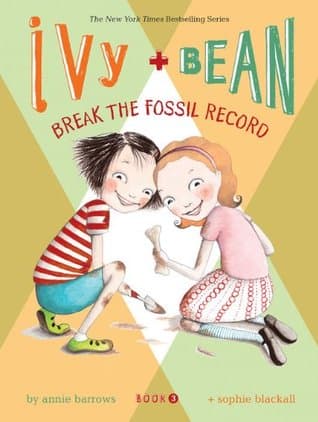
Synopsis
Covers the whole plot, including the ending.
- Difficulty
- Easy
- Pacing
- Moderate
- Mood
- Humorous, Lighthearted, Adventurous, Sweet
- Read it if
- You want a charming, humorous, and relatable story about childhood friendships, big dreams, and the joys of discovery (even if it's not what you expected).
- Skip it if
- You are looking for a complex plot or deep philosophical themes; this is a straightforward children's chapter book.
Ivy and Bean Break the Fossil Record Plot Summary
Covers the whole plot, including the ending.
The World Record Obsession
Mrs. Aruba, the second-grade teacher at Pancake Elementary, introduces her class to world records. She shows them a video of famous record breakers, like the tallest man and the person who ate the most hot dogs. This makes the students excited, and they start thinking of their own record attempts. Ivy, usually quiet, and Bean, always full of energy, get caught up in it. Bean first tries to break the pogo stick jumping record but quickly gives up. The whole class becomes focused on becoming famous by setting a world record.
Bean's Many Failed Attempts
After the pogo stick attempt, Bean tries other solo record ideas. She tries to hold her breath for a long time but can only manage a few seconds. She also tries to balance spoons on her face, but they keep falling off. Ivy watches Bean's enthusiastic but clumsy efforts with amusement and a hidden wish for her own record. Nancy, another classmate, successfully sets a record for putting the most rubber bands around her head. This makes the class more competitive and makes Bean even more determined to find her own record.
The Dinosaur Idea
During a quiet moment, Ivy, who loves to read, suggests a new idea to Bean: finding a dinosaur. Ivy remembers a news report about a child who found a dinosaur bone and realizes they could be the youngest people to ever discover one. Bean immediately likes this big, exciting plan, seeing it as a sure way to set a world record. They decide that finding a dinosaur is more impressive and possible than their earlier, failed tries, and they start planning their expedition.
Research and Preparation
With their new goal, Ivy and Bean go to the library to research dinosaurs. Ivy, being more academic, reads books about paleontology, fossils, and where dinosaurs are found. Bean, less interested in details, focuses on the adventure. They learn that dinosaurs lived millions of years ago and their bones turn into fossils. They decide they need tools like shovels and buckets for digging. They also pack snacks and water, believing their quest needs serious preparation.
The Digging Begins
Ivy and Bean choose Bean's backyard as their main digging site, thinking it's a good and easy place to start. They begin digging with excitement but soon realize that digging for fossils is harder than they thought. The ground is hard, and they mostly find rocks, worms, and dirt. Their initial excitement fades as the physical work proves more difficult than the idea. They keep digging for a while, driven by their desire for a world record, but find no immediate signs of a dinosaur.
Expanding the Search
After several hours of not finding anything in Bean's backyard, Ivy and Bean decide to move. Ivy remembers reading that fossils are often found near water or in exposed rock. They decide to go to the creek bed behind Bean's house, a place they often play. They believe the creek, with its eroding banks and exposed earth, offers a better chance of finding old bones. They pack their shovels and buckets, feeling hopeful that a new spot will bring them closer to their dinosaur discovery.
The Discovery of 'Bones'
At the creek bed, after more digging and searching, Ivy and Bean finally unearth what they are sure are dinosaur bones. They find several large, oddly shaped rocks that, to their imaginative minds, look exactly like old bone pieces. They are thrilled, certain they have found proof of their world-record discovery. They carefully gather their 'fossils,' filled with triumph and the certainty that they are now the youngest dinosaur discoverers in history. Their excitement is clear as they imagine the fame and recognition waiting for them.
Show and Tell
The next day, Ivy and Bean proudly bring their 'dinosaur bones' to school for show and tell. They are very excited, sure they are about to become famous. They present their findings to Mrs. Aruba and their classmates, explaining their trip and the importance of their discovery. Their classmates are at first impressed by the size and look of the 'bones,' and the classroom is full of anticipation and awe for their adventurous friends.
The Truth Revealed
As Ivy and Bean finish, Mrs. Aruba carefully looks at their 'fossils.' Kindly and gently, she explains that while the objects are interesting rocks, they are not dinosaur bones. She clarifies that real fossils have specific features and that what Ivy and Bean found are just ordinary stones. The girls are at first sad and disappointed, their hopes of a world record gone. The class is also a little down, but Mrs. Aruba's explanation is sensitive.
A New Perspective
Even though their dream of breaking the fossil record is over, Ivy and Bean don't stay sad for long. Mrs. Aruba praises their effort, research, and adventurous spirit, saying that the journey and learning were valuable. Ivy and Bean realize that even though they didn't find a dinosaur, they had a great adventure together. They think about the fun they had digging and exploring, and the shared experience makes their bond stronger. They learn that some of the best parts of an adventure are the experiences themselves, not just the result.
The True Record Breakers
As the day ends, Ivy and Bean walk home, talking about their failed record attempt. They realize that while they didn't break the fossil record, they did something else special: they had an amazing adventure together. They decide that their friendship and the fun they have is a type of record—a record for having the most fun or being the best of friends. This realization brings them joy and contentment, shifting their focus from outside praise to the true worth of their bond and shared experiences.
Principal Figures
Ivy
Protagonist
The quiet, bookish, and imaginative half of the duo.
Ivy is a thoughtful and intelligent second-grader who loves to read and learn. She often thinks before she acts and is the more analytical of the two friends. While she enjoys adventure, her approach is often more considered and research-driven. She is the one who comes up with the idea of finding a dinosaur, drawing on her knowledge from books. Despite her quiet nature, she is fiercely loyal to Bean and equally enthusiastic when an idea truly captures her imagination.
Relationships: Bean (Best friend, partner in adventure); Mrs. Aruba (Teacher, guide)
Bean
Protagonist
The energetic, impulsive, and adventurous half of the duo.
Bean is a lively and impulsive second-grader, always ready for an adventure. She is less concerned with rules and more with immediate excitement and fun. Bean is easily bored by mundane tasks but quickly captivated by grand ideas, especially if they involve a chance at fame or a world record. She is the physical force behind their adventures, often leading the charge with digging and exploring. Her enthusiasm is infectious, and she relies on Ivy's ideas to fuel her energy.
Relationships: Ivy (Best friend, partner in adventure); Mrs. Aruba (Teacher)
Mrs. Aruba
Supporting
The patient and understanding second-grade teacher.
Mrs. Aruba is Ivy and Bean's kind and wise second-grade teacher. She is instrumental in sparking the world record fever in her class, but also in gently guiding her students when their dreams don't pan out. She possesses a gentle demeanor and a knack for turning disappointment into a learning opportunity. She encourages her students' curiosity and imagination while also providing a sense of reality and perspective.
Nancy
Supporting
A classmate who achieves a minor world record.
Nancy is one of Ivy and Bean's classmates who successfully sets a minor world record for putting the most rubber bands around her head. Her success initially fuels the competitive spirit in the class and makes Ivy and Bean even more determined to find their own record. She represents the immediate, tangible success that the other children are striving for, highlighting the contrast with Ivy and Bean's more ambitious, but ultimately unsuccessful, endeavor.
Themes & Insights
The Value of Friendship
The book celebrates the friendship between Ivy and Bean. Their adventures, even the ones that don't work out, make their friendship stronger. They learn to support each other's ideas and find joy in being together, no matter the outcome. This is clear in how they plan, dig, and deal with disappointment, realizing their friendship itself is a 'record' (Scene 10, 11).
“Maybe we didn't break the fossil record, but we broke the record for having the most fun.”
Imagination vs. Reality
The story shows children's strong imaginations and how they often clash with reality. Ivy and Bean's belief that they can simply 'find' a dinosaur in a creek shows their big imagination. Mrs. Aruba's gentle explanation that their 'bones' are just rocks (Scene 9) helps them come back from their fantasy, teaching them a subtle lesson about scientific reality without crushing their spirits.
“They were just rocks. Interesting rocks, Mrs. Aruba said. But not dinosaur bones.”
The Joy of the Journey
At first, Ivy and Bean want to break a world record and become famous. But they eventually discover that the adventure itself is more rewarding than the final goal. Their research, digging, and exploration, even without finding a fossil, give them excitement and valuable shared memories. The book highlights that effort, teamwork, and experiences are what truly matter (Scene 10).
“Sometimes the best part of an adventure is just having it.”
The Pursuit of Recognition
The plot starts because the second grade wants recognition from breaking a world record. From Bean's early, clumsy tries to Ivy's more thought-out dinosaur idea, the children are motivated by the promise of fame and being 'the best.' This theme explores how children are influenced by outside praise and slowly learn that inner satisfaction can be more fulfilling.
“Everybody wanted to be famous. Everybody wanted to be the best.”
Plot Devices & Literary Techniques
MacGuffin
The dinosaur fossil serves as the primary goal driving the plot.
The 'dinosaur fossil' acts as a MacGuffin in the story. It is the object that Ivy and Bean are relentlessly pursuing, providing the primary motivation for their adventure, research, and digging. While the actual discovery of a fossil isn't the true point of the story, the quest for it drives all the action and allows the characters to experience growth and strengthen their friendship. The fossil itself is less important than the journey it inspires.
Red Herring
The 'dinosaur bones' found in the creek bed mislead the characters and the reader.
The 'dinosaur bones' that Ivy and Bean unearth in the creek bed serve as a red herring. For a significant portion of the story, both the characters and the reader are led to believe that they might have actually succeeded in their quest. This creates anticipation and excitement, only for the truth to be revealed later by Mrs. Aruba (Scene 9). This device builds tension and then provides a gentle plot twist, reinforcing the themes of imagination versus reality.
In medias res (implied)
The world record fever is already established at the story's outset.
While not strictly 'in medias res' in the traditional sense, the story quickly establishes the 'world record fever' as an ongoing phenomenon in the second grade. The reader is dropped into a classroom already buzzing with ideas and attempts, rather than seeing the very genesis of the idea. This immediately immerses the reader in the book's central conflict and the characters' motivations without lengthy exposition, allowing Ivy and Bean's specific quest to begin quickly.
Mentorship/Guidance
Mrs. Aruba provides gentle, supportive guidance to the protagonists.
Mrs. Aruba acts as a mentor figure for Ivy and Bean. She doesn't directly solve their problems or prevent their mistakes, but she provides the initial spark (the world record presentation) and then, crucially, offers gentle, empathetic guidance when their dreams are dashed. Her explanation about the 'fossils' and her praise for their effort (Scene 9, 10) allows the girls to learn from their experience without feeling shamed, reinforcing positive lessons about resilience and the value of effort.
Ivy and Bean Break the Fossil Record Quotes
“Bean stomped her foot. 'I hate fossils! They're stupid! And boring! And old!'”
“Don't worry, Bean. We'll find something amazing. We always do.”
“It's not just a rock. It's a rock that used to be alive!”
“Bean loved to dig. She loved to get dirty. She loved to find things.”
“Maybe it's a dinosaur tooth! A really, really big one!”
“You can't just wish for a fossil, Bean. You have to look for it.”
“The world was full of amazing things, if you just knew where to look.”
“It's a fossilized wormhole! It leads to another dimension!”
“Bean made a face. 'Why can't we just find a fossilized pizza?'”
“'Even if it's not a dinosaur, it's still pretty cool,' Ivy said.”
“They were archaeologists, paleontologists, and explorers, all rolled into two small girls.”
“'We broke the fossil record!' Bean shouted, even though they hadn't, really.”
“It was just a rock, but it was *their* rock, and they had found it together.”
“Maybe we'll find a fossilized unicorn horn next time!”
Quiz
10 questions on the plot and the characters. Each answer comes with a short explanation.
Question 1
What is the main reason Ivy and Bean decide to try and find a dinosaur?
- They want to keep it as a pet.
- They are inspired by their classmates trying to break world records.
- They were assigned a project about dinosaurs at school.
- They overheard their parents talking about a dinosaur exhibit.
Show answer
B. They are inspired by their classmates trying to break world records. Ivy and Bean get the idea to find a dinosaur because their second-grade class is obsessed with breaking world records, and they want to set one too.
Question 2
What kind of 'dinosaur' do Ivy and Bean initially try to find in Bean's backyard?
- A live, small dinosaur.
- A fossil of a dinosaur.
- A dinosaur egg.
- A toy dinosaur someone lost.
Show answer
B. A fossil of a dinosaur. Their goal is to 'break the fossil record' by finding a dinosaur fossil, not a living dinosaur.
Question 3
What tool does Bean use to dig in her backyard when they first start their dinosaur hunt?
- A garden trowel
- A shovel
- A spoon
- Her hands
Show answer
C. A spoon Bean initially uses a spoon to dig in her backyard, much to Ivy's dismay, who thinks it's not a proper digging tool.
Question 4
What is the 'fossil' that Bean finds in her backyard, which turns out not to be a dinosaur?
- A petrified tree branch
- A very old rock
- A chicken bone
- A piece of broken pottery
Show answer
C. A chicken bone Bean proudly unearths what she believes is a fossil, but Ivy correctly identifies it as a chicken bone.
Question 5
Where do Ivy and Bean decide is a better place to look for dinosaurs after their backyard attempt fails?
- The local museum
- The park
- A construction site
- The library
Show answer
C. A construction site After realizing a backyard isn't ideal for fossils, they decide a construction site, with all its digging, would be a much better place.
Question 6
What do Ivy and Bean use to try and sneak into the construction site?
- They climb over the fence.
- They crawl under a gap in the fence.
- They wait for a worker to open the gate.
- They pretend to be lost children.
Show answer
B. They crawl under a gap in the fence. They manage to get into the construction site by crawling under a small gap at the bottom of the fence.
Question 7
What is the 'giant fossil' they discover at the construction site?
- A large dinosaur bone
- An old, rusty pipe
- A petrified tree trunk
- A large, oddly shaped rock
Show answer
B. An old, rusty pipe Believing they've found a massive dinosaur fossil, they soon realize it's just a very old, rusty pipe.
Question 8
How do Ivy and Bean react when the construction workers discover them on the site?
- They explain their world record attempt calmly.
- They try to hide from them.
- They get scared and run away.
- They ask the workers for help finding fossils.
Show answer
C. They get scared and run away. When the construction workers spot them, Ivy and Bean are terrified and attempt to flee the site.
Question 9
What is the ultimate lesson Ivy and Bean learn about breaking world records in this book?
- It's easy to find a dinosaur if you look in the right place.
- Some records are too dangerous or impossible for kids to break.
- You need adult supervision for all record attempts.
- Digging for fossils is a messy but rewarding activity.
Show answer
B. Some records are too dangerous or impossible for kids to break. Through their failed and dangerous attempt to find a dinosaur, they learn that some world records are simply not feasible or safe for them to attempt.
Question 10
What do Ivy and Bean decide to do with the 'fossil' they found at the construction site, after realizing it's a pipe?
- They leave it there for the workers.
- They try to carry it home with them.
- They bury it again.
- They show it to their parents.
Show answer
B. They try to carry it home with them. Even after realizing it's a pipe, they still try to drag the heavy, rusty pipe out of the construction site, demonstrating their determination.
Ivy and Bean Break the Fossil Record FAQ
What core challenge do Ivy and Bean face in 'Ivy and Bean Break the Fossil Record'?
Ivy and Bean are caught up in the second-grade's world record craze and decide they want to be the youngest people to discover a dinosaur. Their main challenge is figuring out where and how to find a real dinosaur, leading them to various imaginative but ultimately fruitless attempts.
Who initially inspires the world record fever in their second-grade class?
The world record fever is sparked by their teacher, Mrs. Aruba, who introduces the concept of world records to the class. This immediately captivates the students, leading to various attempts at setting new records, such as holding the most marbles in one's mouth or having the longest hair.
What is Ivy's initial idea for finding a dinosaur?
Ivy, being the more imaginative and scientific-minded of the two, suggests that they need to dig for a dinosaur. She believes that dinosaurs are buried underground, leading them to start digging a large hole in Bean's backyard, much to Bean's initial reluctance and eventual exasperation.
How does Bean react to the initial idea of digging for a dinosaur?
Bean is initially skeptical and finds the idea of digging a giant hole to be tedious and dirty. She prefers more immediate and less strenuous activities, but Ivy's enthusiasm and the allure of setting a world record eventually convince her to participate, albeit with frequent complaints.
What do Ivy and Bean use as tools for their dinosaur hunt?
For their digging endeavor, Ivy and Bean primarily use a small shovel and a trowel. They also bring a bucket for collecting dirt, and later, they even try using a spoon and a fork, demonstrating their lack of proper archeological equipment but abundance of determination.
What 'fossil' do they initially find that excites them?
During their digging, Ivy and Bean discover a small, hard, greyish object that Ivy immediately identifies as a fossil. It turns out to be a petrified dog biscuit, which, while not a dinosaur, still briefly fuels their excitement and belief that they are on the right track.
How do Ivy and Bean try to 'bait' a dinosaur?
After realizing that digging is hard work and not yielding results, Bean suggests they try to 'bait' a dinosaur. They decide to leave out various food items, including a peanut butter sandwich and a cookie, hoping to lure a dinosaur into their backyard, demonstrating their childlike logic.
What role does Bean's older sister, Nancy, play in their dinosaur quest?
Nancy, Bean's older sister, often serves as a source of exasperation and occasional, albeit accidental, insight. She teases them about their digging and offers sarcastic comments, but her presence highlights the age difference and often makes Ivy and Bean more determined to prove her wrong.
What unexpected creature do they encounter while digging?
While digging their large hole, Ivy and Bean encounter several earthworms. These worms become a minor distraction and a source of fascination for Ivy, who tries to observe them, while Bean is typically more grossed out or annoyed by their presence.
How does the book explore the concept of scientific inquiry, even at a basic level?
The book subtly introduces scientific inquiry through Ivy's methodical (though flawed) approach to finding a dinosaur. She formulates a hypothesis (dinosaurs are underground), designs an experiment (digging), and interprets findings (the dog biscuit as a fossil), demonstrating the early stages of scientific thought.
What does Ivy and Bean's shared goal of breaking a world record reveal about their psychological development?
Their shared ambition to break a world record, even a silly one like finding a dinosaur, highlights their developing sense of self-efficacy and desire for recognition. It shows their need to feel special and capable, a common psychological trait in young children seeking validation and adventure.
How do Ivy and Bean's individual personalities contribute to their problem-solving styles?
Ivy, being the dreamer and planner, tends to approach problems with imagination and a 'scientific' method, while Bean is more practical, impulsive, and often looks for shortcuts or easier solutions. Their contrasting styles create humor and drive the plot, as they constantly balance each other out.
In what ways do Ivy and Bean demonstrate resilience despite repeated failures in their dinosaur hunt?
Despite the physical effort of digging, the disappointment of finding only a dog biscuit, and the failure of their 'baiting' attempts, Ivy and Bean consistently return to their goal. Their continued enthusiasm and willingness to try new, albeit equally misguided, strategies demonstrate remarkable childhood resilience and optimism.
Does the book ultimately suggest that their quest for a world record is a positive or negative experience for Ivy and Bean?
The book portrays their quest as overwhelmingly positive. While they don't achieve their specific goal, the journey fosters their friendship, stimulates their imaginations, and provides a memorable shared adventure. It emphasizes the value of the experience and the bond formed over the outcome.
What is the underlying message about friendship conveyed through Ivy and Bean's adventure?
The underlying message is that true friendship thrives on shared adventures, even when they are impractical or unsuccessful. Ivy and Bean's ability to compromise, support each other's wild ideas, and find joy in the process, despite their differing personalities, highlights the strength of their bond.
How does the book balance realism with the fantastical aspirations of its young protagonists?
The book grounds its fantastical premise (finding a dinosaur in a backyard) in realistic child behavior and interactions. While the goal is imaginary, their methods (digging, baiting) and reactions (frustration, excitement) are relatable, creating a charming blend of childhood fantasy and everyday reality.
Is there a subtle critique of the 'world record' obsession in the story?
While not a harsh critique, the story subtly highlights the absurdity of some world record attempts (like holding marbles). It suggests that the true value lies not in achieving an arbitrary record, but in the effort, teamwork, and fun experienced during the pursuit, downplaying the competitive aspect.
What might be the significance of the book ending without them actually finding a dinosaur?
The ending emphasizes that the journey and the friendship are more important than the destination or the achievement of a specific goal. It teaches children that not every endeavor results in success, but the shared experience and the effort itself hold significant value and create lasting memories.
About the author

Annie Barrows is the acclaimed author of the popular "Ivy & Bean" series, including "Ivy and Bean Take Care of the Babysitter" and "Ivy and Bean Break the Fossil Record." She also penned the middle-grade fantasy novel "The Magic Half." Barrows is known for her engaging storytelling and relatable characters, appealing to young readers.
Similar books
- Harry Potter and the Sorcerer's Stone
J.K. Rowling
4.5 (7M) average on GoodreadsFantasyRescued from a miserable life under the stairs, an orphaned boy discovers he's a wizard destined for a magical school, where he uncovers a dangerous secret tied to the dark wizard who murdered his parents.
- The Hobbit, or There and Back Again
J.R.R. Tolkien
4.3 (2.9M) average on GoodreadsFantasyA comfort-loving hobbit named Bilbo Baggins is whisked away by a mischievous wizard and a band of dwarves on an unexpected journey to reclaim stolen treasure from a fearsome dragon, discovering courage and a magical ring along the way.
- Harry Potter and the Goblet of Fire
J.K. Rowling
4.6 (2.6M) average on GoodreadsFantasyA bewildered Harry Potter, underage and thrust into a deadly Triwizard Tournament, must brave dragons, mermaids, and a resurgent dark magic to survive a year that will forever alter the wizarding world.
- Harry Potter and the Order of the Phoenix
J.K. Rowling
4.5 (2.5M) average on GoodreadsFantasyIn a year of oppressive secrets and the threat of Voldemort, Harry Potter and Dumbledore's Army secretly train for war, shown through Jim Kay and Neil Packer's dark illustrations.
- The Lightning Thief
Rick Riordan
4.3 (2M) average on GoodreadsFantasyThrust into a world of mythological monsters and divine treachery, an ordinary boy discovers he's the son of Poseidon and must embark on a perilous quest across modern America to prevent an Olympian war.
- The Giver
Lois Lowry
4.1 (1.8M) average on GoodreadsFantasyIn a world where everyone is the same, a young boy named Jonas learns about true memory, forcing him to see the cost of his community's peaceful ignorance.






Enjoyed the summary?
A summary gives you the shape of the book. The book itself has the detail, the examples and the voice.
Find Ivy and Bean Break the Fossil Record on AmazonAs an Amazon Associate, BookBrief earns from qualifying purchases. How we're funded