
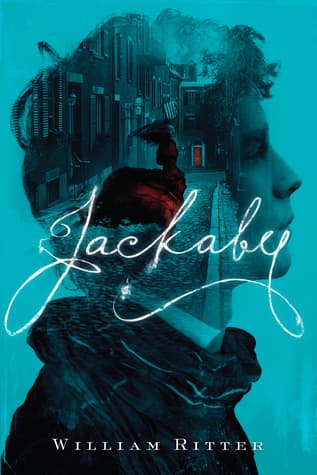
Synopsis
Covers the whole plot, including the ending.
- Difficulty
- Easy
- Pacing
- Moderate
- Mood
- Whimsical, Mysterious, Clever, Slightly Macabre
- Read it if
- You enjoy a blend of historical mystery, quirky humor, and supernatural elements, with a strong 'Holmes and Watson' dynamic where one character sees the unseen and the other grounds them in reality.
- Skip it if
- You prefer hard fantasy without a mystery focus, or if you dislike eccentric characters and a more whimsical approach to the supernatural.
Jackaby Plot Summary
Covers the whole plot, including the ending.
Abigail Rook Arrives in New Fiddleham and Meets Jackaby
Abigail Rook, an Englishwoman who recently returned from a failed archaeological dig in eastern Europe, arrives in New Fiddleham, New England, in 1892. She is looking for a new path and a job. After an unsettling interview with Mrs. Henderson at the employment agency, she is sent to R.F. Jackaby, an investigator of the unexplained, who lives in a house full of strange objects. Jackaby, who sees supernatural things, immediately notices Abigail's sharp observational skills—her ability to see ordinary but important details—and offers her a job as his assistant. His previous assistant was turned into a duck. Abigail is curious and needs work, so she accepts, despite Jackaby's strange manner and the job's supernatural nature.
The First Case: A Serial Killer's Trail
On Abigail's first day as Jackaby's assistant, they are called to a murder scene. A man named Mr. Henderson is dead, his throat ripped out and his body drained of blood. The police, led by Inspector Marlowe, quickly assume it was a regular human murderer. However, Jackaby, using his unique sight, immediately says the killer is not human and points out strange details, like the precise blood removal, that the police miss. Abigail, though initially doubtful, starts to see the subtle clues Jackaby points out, showing her value to his investigations. They also meet Detective Charlie Cane, a young officer who, unlike Marlowe, is open to Jackaby's unusual ideas.
A Second Victim and Supernatural Suspicions Mount
Soon after, a second victim, Mr. Ruddle, is found in the same brutal way. This strengthens Jackaby's belief that they are dealing with a supernatural entity, not a human serial killer. The attack pattern—the specific injuries, the lack of blood, and the seemingly impossible entry and exit—all point to a mythical creature. Inspector Marlowe remains unconvinced, focusing on regular suspects and theories. Jackaby, with Abigail's help, starts researching historical cases and local stories, looking for a creature that matches the killer's method. Abigail's practical insights and ability to ground Jackaby's more unusual theories prove very helpful as they explore the growing mystery.
The Hunt for Clues and Encountering the Unseen
Jackaby and Abigail continue their investigation, visiting various places and talking to potential witnesses, many of whom are unseen or unheard by most people. They go to the local library, where Jackaby talks to a spectral librarian named Jenny, who gives cryptic advice. They also meet other supernatural beings in New Fiddleham, such as centaurs working as stable hands and various spirits. Abigail struggles to fit her scientific view with Jackaby's world of the unseen, but she starts to adjust, noticing the subtle changes in reality that show the supernatural's presence. Her observations of ordinary things, like mud on a shoe or a certain fabric, often provide important links that Jackaby's larger theories sometimes miss.
The Evidence Points to a Banshee
Through his research and observations, Jackaby thinks the killer is a banshee, a spectral entity linked to death and often heard wailing before a death. However, this banshee is not just foretelling death but actively causing it. This banshee seems to be draining life force, or perhaps the 'soul,' instead of just blood. To confirm this, they need to find someone who can hear the banshee's cries. Their search leads them to Mrs. Henderson, the employment agency owner, who, because of her sensitive nature, can perceive subtle supernatural disturbances. She accidentally gives them a key piece of information about a strange sound she heard before the murders.
The Attack on Charlie Cane and the Banshee's True Nature
The investigation becomes personal when Detective Charlie Cane becomes the banshee's next victim. He is found in a catatonic state, drained of his life force, but not dead. This shocking event changes Jackaby's understanding of the creature; it is not just a killer but a possessor, using its victims as hosts. Jackaby deduces that the banshee is not tied to a family line, as traditional banshees are, but to a specific location or object. The attacks are not random but targeted, and the victims are all connected in some subtle way. The case grows urgent as they realize the banshee is getting stronger with each possession.
Uncovering the Connection: The Old Opera House
Abigail, using her careful observation skills, helps Jackaby connect the seemingly unrelated lives of the victims. She notices a subtle commonality that Jackaby's supernatural focus might have missed: all the victims, including Charlie, had some link to the old, abandoned New Fiddleham Opera House. This realization is a breakthrough, suggesting the banshee's origin or current home is in the dilapidated building. They think the banshee is drawing power from the location or from specific people connected to its history. This insight shifts their investigation from tracking an elusive creature to understanding its specific ties to the city's past.
The Confrontation at the Opera House
With this new knowledge, Jackaby and Abigail, along with a still-recovering Charlie Cane and a reluctant Inspector Marlowe (who is finally convinced by the evidence), go into the decaying New Fiddleham Opera House. Inside, they find that the banshee is not evil by nature, but a trapped spirit. It is the ghost of a young opera singer, Jenny Cavanaugh, who was tragically murdered backstage years ago, her voice and life stolen. Her spirit, unable to move on, has become vengeful, draining the life force of those connected to her past or the opera house in a desperate attempt to get back what she lost.
The Banshee's Resolution and Jenny's Peace
During the confrontation, Abigail's empathy and understanding of human emotion are very important. She connects with the banshee, Jenny Cavanaugh, seeing her pain and desire for justice, not just revenge. Jackaby, understanding the spirit's nature, realizes that Jenny needs to be heard and her story acknowledged to find peace. They deduce that Jenny was murdered by a jealous rival or a spurned lover, and her unfinished song and unfulfilled life keep her tied to the world. By acknowledging her suffering and promising to reveal the truth of her death, Abigail helps Jenny release her hold on the living world. Jenny's spectral form finally disappears, bringing a sense of peace.
Aftermath and a New Partnership
With the banshee's spirit finally at rest, Charlie Cane fully recovers, his life force restored. Inspector Marlowe, though still somewhat confused, has seen enough to grudgingly accept Jackaby's unique abilities. New Fiddleham returns to normal, though for Abigail, nothing will ever be ordinary again. She has fully accepted her role as Jackaby's assistant, finding her unique talents essential in his strange world. The experience has made their partnership stronger, combining Jackaby's supernatural sight with Abigail's observations, setting the stage for future adventures in New Fiddleham.
Jackaby Characters
Abigail Rook
Protagonist
Jackaby's practical and observant assistant, new to the world of the supernatural.
Abigail is a pragmatic and intelligent young Englishwoman with a grounded scientific worldview, initially skeptical of the supernatural. Having just returned from a disastrous archaeological expedition, she seeks stability and purpose. Her strength lies in her keen observation of mundane details, her logical deduction, and her unwavering common sense, which perfectly complements Jackaby's eccentric brilliance. She is brave, resilient, and possesses a deep well of empathy, allowing her to connect with others, including the spectral. Throughout the novel, she grapples with the existence of the unseen, gradually accepting and even embracing the supernatural world.
Relationships: R.F. Jackaby (Employer and mentor; a developing partnership based on complementary skills); Charlie Cane (Romantic interest and police contact); Jenny Cavanaugh (Banshee) (Object of investigation; Abigail connects with her pain and helps her find peace)
R.F. Jackaby
Protagonist
An eccentric investigator of the unexplained with the ability to see supernatural beings.
R.F. Jackaby is a brilliant but socially awkward detective who possesses a unique gift: he can perceive supernatural creatures and phenomena that are invisible to others. He often appears unkempt, speaks in riddles, and is oblivious to social norms, prioritizing truth and observation above all else. His mind works in highly associative and unconventional ways, making him a genius in his field but often misunderstood by the mundane world. He relies on Abigail's grounded perspective to translate his insights into practical actions and to notice the ordinary details he sometimes overlooks. He has a strong sense of justice and a deep, if peculiar, understanding of the creatures he investigates.
Relationships: Abigail Rook (Employee and essential partner; a symbiotic professional relationship); Charlie Cane (Police contact; an unlikely ally who respects Jackaby's methods); Jenny Cavanaugh (Banshee) (Object of investigation; he seeks to understand and resolve her haunting)
Detective Charlie Cane
Supporting
A handsome and open-minded police detective who respects Jackaby's methods.
Charlie Cane is a young, earnest, and surprisingly open-minded detective with the New Fiddleham police force. Unlike his superior, Inspector Marlowe, Charlie is willing to consider Jackaby's unconventional theories, even if he doesn't fully understand them. He is kind, observant, and possesses a strong moral compass. He develops a quick rapport with Abigail, which hints at a potential romantic interest. His willingness to listen to Jackaby and Abigail makes him an invaluable liaison between the police and the supernatural investigations, and he becomes a victim of the banshee, highlighting the danger of their case.
Relationships: Abigail Rook (Developing romantic interest and professional ally); R.F. Jackaby (Professional ally and reluctant believer in his methods); Inspector Marlowe (Superior officer, whose skepticism Charlie often navigates)
Inspector Marlowe
Supporting
The skeptical and traditional police inspector who clashes with Jackaby.
Inspector Marlowe is the head of the New Fiddleham police department and represents the staunchly conventional, skeptical view of the world. He is a by-the-book officer who dismisses anything he cannot explain through ordinary means, leading to frequent clashes with Jackaby. He sees Jackaby as an eccentric nuisance and a charlatan, constantly trying to discredit his theories. Despite his stubbornness, he is dedicated to solving crimes, even if his methods are limited. He begrudgingly acknowledges Jackaby's results by the end of the book, but his skepticism remains a defining trait.
Relationships: R.F. Jackaby (Antagonistic professional relationship; a clash of worldviews); Abigail Rook (Initially dismissive, later sees her as a more 'sensible' associate of Jackaby); Charlie Cane (Subordinate officer)
Jenny Cavanaugh (The Banshee)
Antagonist/Supporting
The spectral killer, a tragic figure seeking justice and peace.
Jenny Cavanaugh is the primary antagonist of the story, a banshee whose mournful wails and life-draining attacks terrorize New Fiddleham. She is revealed to be the ghost of a young, talented opera singer who was tragically murdered backstage at the New Fiddleham Opera House years prior. Her spirit, unable to find peace or justice, became twisted into a vengeful entity, draining the life force of those connected to her past or the opera house. She is a figure of profound tragedy, driven by unfulfilled dreams and a desperate longing for her story to be heard and her killer identified. Her actions, though violent, stem from deep-seated pain and injustice.
Relationships: Abigail Rook (Her empathy allows Jenny to connect and find peace); R.F. Jackaby (Object of investigation; he understands her supernatural nature); The victims (e.g., Henderson, Ruddle, Cane) (Targets of her life-draining attacks, connected to her past or the opera house)
Mrs. Henderson
Supporting
The owner of the employment agency, unknowingly sensitive to supernatural presences.
Mrs. Henderson runs the employment agency where Abigail first seeks work. She is a seemingly ordinary woman, but possesses an unwitting sensitivity to supernatural disturbances, often experiencing vague feelings of unease or hearing strange sounds that she dismisses as imagination. Her husband is the first victim of the banshee. She inadvertently provides Jackaby and Abigail with crucial information regarding the banshee's presence, highlighting how the supernatural subtly permeates the mundane world, even for those unaware of it.
Relationships: Abigail Rook (Initial employer/applicant relationship); R.F. Jackaby (Source of indirect information); Mr. Henderson (Her deceased husband, the first victim)
Jenny (the spectral librarian)
Mentioned
A ghostly librarian who provides cryptic advice to Jackaby.
Jenny is a spectral librarian, a ghost who haunts the New Fiddleham Public Library. She is only visible to those with Jackaby's sight and communicates in a somewhat cryptic, ethereal manner. She serves as a source of obscure knowledge and historical information for Jackaby, often providing clues or confirming details about supernatural entities. Her presence further illustrates the pervasive nature of the unseen world within New Fiddleham.
Relationships: R.F. Jackaby (Source of supernatural knowledge and research)
Douglas
Supporting
Jackaby's previous assistant, now a duck.
Douglas is Jackaby's former assistant, who, due to an unfortunate supernatural incident, was transformed into a duck. He now resides in Jackaby's house and occasionally offers 'quacks' that Jackaby interprets, suggesting a lingering intelligence. Douglas serves as both a humorous running gag and a tangible warning about the dangers of Jackaby's profession, illustrating the very real and bizarre consequences of dealing with the supernatural. He is a symbol of Jackaby's peculiar world.
Relationships: R.F. Jackaby (Former assistant, now a transmogrified companion)
Jackaby Themes
Perception vs. Reality
This theme is important to 'Jackaby,' exploring how different people see the world. Jackaby sees a hidden supernatural reality most people cannot, while Abigail initially sees only ordinary things. The police, especially Inspector Marlowe, represent a strict belief in conventional reality, dismissing anything they do not understand. The plot shows that what is 'real' often depends on perspective, and ignoring the unseen can lead to mistakes. Abigail's journey is about learning to see the supernatural, blurring the lines between what is believed and what exists.
“Miss Rook, I am not an occultist,” Jackaby said. “I have a gift that allows me to see truth where others see the illusion--and there are many illusions. All the world’s a stage, as they say, and I seem to have the only seat in the house with a view behind the curtain.”
The Value of Different Intelligences
The novel shows how important it is to combine different kinds of intelligence and observation. Jackaby has a brilliant mind that sees supernatural patterns and connections but often misses ordinary details. Abigail, on the other hand, is grounded, logical, and good at noticing the 'normal' specifics that Jackaby overlooks. Their partnership works because these different intelligences complement each other. The story argues that neither scientific logic nor intuitive perception is enough alone; true understanding and problem-solving happen when these distinct approaches are combined, creating a more complete view of the world.
“Your eyes are excellent, Miss Rook. You see the details others overlook. It is a rare and valuable skill.”
Justice and Unfinished Business
The mystery of the banshee centers on a strong feeling of unfairness and unfinished business. Jenny Cavanaugh, the banshee, is a spirit who cannot rest because she was murdered and her story was never told. Her violent actions come from her pain and her strong desire for the truth of her death to be known. The story's resolution is not about defeating a monster but about giving justice and peace to a wronged spirit. This theme explores how past wrongs can affect the present, and that real peace, even for the dead, often requires truth and acknowledgment.
“Some spirits cling to the living world because they have unfinished business. A wrong unrighted. A truth untold.”
Empathy and Understanding
Abigail's defining trait, empathy, plays a key role in solving the case. Jackaby can identify the supernatural creature, but Abigail connects with Jenny Cavanaugh's humanity and pain. She understands that the banshee is not just a monster but a suffering soul, allowing her to communicate and offer comfort that Jackaby's more detached, analytical approach cannot. This theme shows that empathy is not a weakness but a powerful tool for understanding, even when facing something monstrous, and can be key to resolving conflict and bringing peace.
“Perhaps she doesn’t want to hurt anyone,” I ventured, my voice soft. “Perhaps she just… wants someone to listen.”
Plot Devices & Literary Techniques
The Eccentric Detective and His Practical Assistant
A classic literary pairing for mystery and fantasy narratives.
This is a well-established trope, reminiscent of Sherlock Holmes and Dr. Watson, but given a supernatural twist. Jackaby is the brilliant, socially awkward, and intuitively gifted detective, while Abigail is the grounded, observant, and often skeptical narrator. This dynamic allows for exposition of the supernatural world through Abigail's eyes, making it accessible to the reader. It also provides a balance of logic and intuition, ensuring that both extraordinary and mundane clues are noticed and processed, highlighting the strength of their combined abilities.
First-Person Narrative (Abigail Rook)
Allows for an immersive, skeptical-to-believer perspective.
The story is told entirely from Abigail Rook's point of view. This narrative choice is crucial because it allows the reader to experience the unveiling of the supernatural world alongside a character who is initially as skeptical and bewildered as they might be. Abigail's logical, grounded observations provide a relatable entry point into Jackaby's bizarre reality, gradually building credibility for the fantastic elements. Her internal thoughts and reactions help to humanize the strange events, making the transition from a mundane world to one filled with the unseen more believable and engaging.
Supernatural Sight (Jackaby's Gift)
A magical ability that drives the central conflict and world-building.
Jackaby's unique ability to perceive supernatural beings and phenomena is the primary catalyst for the plot and the foundation of the novel's world-building. This 'sight' allows him to identify the non-human nature of the killer, setting him apart from the conventional police. It also introduces the reader to a hidden world of ghouls, banshees, and other creatures coexisting with humans. The device not only propels the mystery but also highlights the theme of perception vs. reality, as Jackaby sees a truth others cannot, forcing Abigail and, by extension, the reader to question what they believe is real.
The Unfinished Song
A symbolic object representing the banshee's unresolved past.
The unfinished song of Jenny Cavanaugh, the banshee, serves as a powerful symbolic plot device. It represents her unfulfilled life, her stolen voice, and the injustice of her murder. Her spectral wails are not just a sign of her presence but a distorted echo of the music she was never able to complete. Resolving the mystery and bringing peace to Jenny involves acknowledging her lost talent and the truth of her death, effectively allowing her 'song' to finally find its conclusion. This device grounds the supernatural entity in a very human tragedy and desire for artistic expression.
Jackaby Quotes
“The world is a much more interesting place than you give it credit for, Miss Rook. And much more dangerous.”
“There are things in this world that defy explanation, Miss Rook, and it is my business to find them.”
“It is not a question of whether or not you believe in the impossible, Miss Rook. It is a question of whether or not the impossible believes in you.”
“I may not understand the world as others do, but I understand the things that others do not.”
“One does not simply ignore a newly deceased person when there is a perfectly good mystery to be solved.”
“The truth is rarely simple, Miss Rook, and often much stranger than fiction.”
“Normal is a setting on a washing machine, Miss Rook. Not a state of being.”
“My dear Miss Rook, when you have eliminated the impossible, whatever remains, however improbable, must be the truth. Unless it's a goblin.”
“A good assistant, Miss Rook, is not merely a note-taker, but a sounding board, a second pair of eyes, and occasionally, a human shield.”
“Sometimes, Miss Rook, the most monstrous things are hidden in plain sight.”
“The world is full of things that go bump in the night, Miss Rook. And some of them are quite charming, in their own way.”
“It takes a certain kind of person to see what others cannot, Miss Rook. And an even rarer kind to embrace it.”
“Fear, Miss Rook, is often merely a lack of information.”
“I find that a well-placed question can often reveal more than a thousand pronouncements.”
Quiz
10 questions on the plot and the characters. Each answer comes with a short explanation.
Question 1
What year does Abigail Rook arrive in New Fiddleham, New England?
- 1888
- 1892
- 1901
- 1875
Show answer
B. 1892 The book explicitly states that Abigail arrives in New Fiddleham, New England in 1892, setting the historical context for the story.
Question 2
What unique ability does R.F. Jackaby possess?
- He can read minds.
- He can see supernatural beings and truth where others see illusion.
- He can predict the future with perfect accuracy.
- He can communicate with animals.
Show answer
B. He can see supernatural beings and truth where others see illusion. Jackaby states, 'I have a gift that allows me to see truth where others see the illusion,' and the synopsis confirms his ability to 'see supernatural beings.'
Question 3
What is Abigail Rook's primary skill that makes her a suitable assistant for Jackaby?
- Her knowledge of ancient languages.
- Her exceptional strength and combat skills.
- Her gift for noticing ordinary but important details.
- Her ability to blend into any social situation.
Show answer
C. Her gift for noticing ordinary but important details. The synopsis highlights Abigail's 'gift for noticing ordinary but important details,' which complements Jackaby's perception of the extraordinary.
Question 4
What is the initial belief of the police regarding the serial killer on the loose?
- They suspect a foreign spy.
- They are convinced it's an ordinary villain.
- They believe it's a supernatural entity.
- They think it's an inside job within the police department.
Show answer
B. They are convinced it's an ordinary villain. The text states, 'The police are convinced it’s an ordinary villain,' contrasting with Jackaby's supernatural theory.
Question 5
Who is the only police detective mentioned who is open to Jackaby's theories about the nonhuman killer?
- Detective Inspector Lestrade
- Sergeant O'Malley
- Detective Charlie Cane
- Chief Inspector Davies
Show answer
C. Detective Charlie Cane The synopsis specifically names 'a handsome young detective named Charlie Cane' as the exception among the police who deny the nonhuman creature's existence.
Question 6
What literary comparison does the description make to characterize the book's style and themes?
- Harry Potter meets Nancy Drew
- Pride and Prejudice meets The X-Files
- Doctor Who meets Sherlock
- The Hardy Boys meets H.P. Lovecraft
Show answer
C. Doctor Who meets Sherlock The book's description directly states, 'Doctor Who meets Sherlock in William Ritter’s debut novel,' highlighting its blend of paranormal investigation and clever deduction.
Question 7
What is Jackaby's perspective on 'truth' and 'illusion' in the world?
- He believes all truth is an illusion, and vice-versa.
- He sees truth hidden behind illusions that others perceive as reality.
- He thinks that illusions are harmless distractions from the mundane truth.
- He believes truth is always straightforward and never obscured.
Show answer
B. He sees truth hidden behind illusions that others perceive as reality. Jackaby explains, 'I have a gift that allows me to see truth where others see the illusion,' implying that what most people perceive as reality is merely a facade concealing a deeper truth.
Question 8
What genre blend best describes 'Jackaby' according to the provided information?
- Science Fiction, Romance, Historical Fiction
- Fantasy, Historical Fiction, Mystery, Young Adult
- Thriller, Dystopian, Contemporary
- Literary Fiction, Epic Fantasy, Horror
Show answer
B. Fantasy, Historical Fiction, Mystery, Young Adult The genres listed at the beginning of the prompt are 'Fantasy, Historical Fiction, Mystery, Young Adult,' accurately reflecting the book's blend.
Question 9
How does Jackaby perceive the world in relation to the quote, 'All the world’s a stage'?
- He believes everyone is merely acting out predetermined roles.
- He feels he is the only one who can see the reality behind the 'curtain' of the stage.
- He views the world as a place where he must perform for others.
- He thinks the world is a chaotic and unscripted performance.
Show answer
B. He feels he is the only one who can see the reality behind the 'curtain' of the stage. Jackaby elaborates on the 'All the world’s a stage' quote by saying, 'and I seem to have the only seat in the house with a view behind the curtain,' indicating his unique perception of hidden realities.
Question 10
What is the primary conflict established on Abigail's first day working for Jackaby?
- A dispute over property lines with a neighbor.
- A missing person case that leads to a treasure hunt.
- A serial killer on the loose, with a disagreement between police and Jackaby on the killer's nature.
- An argument with a rival investigator over a cold case.
Show answer
C. A serial killer on the loose, with a disagreement between police and Jackaby on the killer's nature. The synopsis clearly states, 'On her first day, Abigail finds herself in the midst of a thrilling case: A serial killer is on the loose,' and highlights the core conflict that 'Jackaby is certain it’s a nonhuman creature, whose existence the police... deny.'
Jackaby FAQ
What is "Jackaby" about?
"Jackaby" is about Abigail Rook, a young woman who, upon arriving in New Fiddleham in 1892, becomes the assistant to R. F. Jackaby, a peculiar investigator with the ability to see supernatural creatures. Together, they must solve a series of murders that the police attribute to an ordinary killer, but Jackaby insists are the work of a nonhuman entity, delving into the town's hidden magical underbelly.
Why should I read "Jackaby"?
You should read "Jackaby" for its unique blend of historical fiction, mystery, and fantasy, offering a fresh take on the detective genre. It features a charmingly eccentric protagonist, Jackaby, and his intelligent, observant assistant, Abigail, along with a world where folklore and the supernatural are real, all wrapped in witty dialogue and a compelling serial killer mystery.
What is the background/setting of "Jackaby"?
The book is set in New Fiddleham, New England, in the year 1892. This historical backdrop provides a contrast to the fantastical elements, grounding the supernatural occurrences in a period of scientific advancement and societal conventions, making Jackaby's 'sight' all the more peculiar and his investigations more challenging against skeptical authorities.
What are the most memorable quotes?
One memorable quote is, "Miss Rook, I am not an occultist... I have a gift that allows me to see truth where others see the illusion--and there are many illusions." This perfectly encapsulates Jackaby's character and his unique perspective. Another is his frequent observation that 'the world is not as simple as it seems,' a recurring theme throughout the narrative.
What writing style does the author use?
William Ritter employs a witty and engaging writing style, often characterized by its dry humor and vivid descriptions. The narrative is told from Abigail Rook's first-person perspective, offering her astute observations and a grounded counterpoint to Jackaby's eccentricities, creating a dynamic and entertaining voice that balances the macabre with lightheartedness.
What minor details add significant meaning?
Abigail's constant need to sketch and document her surroundings, though seemingly a hobby, proves crucial as her detailed drawings capture subtle clues that Jackaby's supernatural sight might overlook. Also, Jackaby's collection of oddities in his home, initially seeming like mere clutter, hints at the vast and diverse supernatural world he navigates daily.
What are some subtle foreshadowing moments?
Early on, the unusual behavior of certain townspeople, like the perpetually nervous landlady Mrs. Henderson, subtly hints at the wider supernatural community existing just beneath the surface of New Fiddleham. Jackaby's casual mentions of various creatures and their habits also foreshadow the eventual revelation of the serial killer's true nature.
What unexpected character connections exist?
An unexpected connection is between Jackaby and the victim of the first murder, Jenny Cavanaugh, who was a banshee. This reveals Jackaby's prior dealings and connections within the supernatural community, showing that the current case is not his first encounter with such beings, and he has a history with many of them.
What are unspoken character motivations?
Jackaby's unspoken motivation for taking on Abigail as an assistant, beyond her observational skills, seems to be a desire for companionship and someone who doesn't immediately dismiss his unique abilities, easing his isolation. Abigail, in turn, is driven not just by a need for employment but a profound curiosity and desire for adventure beyond societal expectations.
What psychological complexities do characters exhibit?
Jackaby exhibits a complex blend of brilliance and social awkwardness, often prioritizing the 'truth' of the supernatural over conventional human decorum, leading to misunderstandings. Abigail, while outwardly practical, grapples with her own identity and desires, torn between the expected path for a young woman in 1892 and the thrilling, dangerous world Jackaby introduces her to.
What are the major emotional turning points?
A major emotional turning point is when Abigail fully embraces Jackaby's world and actively participates in the dangerous investigation, shedding her initial skepticism and fear. Another is when Detective Charlie Cane starts to believe in Jackaby's supernatural theories, signifying a shift in the perceived reality of the police force and validating Jackaby's isolation.
How do relationship dynamics evolve?
The relationship between Jackaby and Abigail evolves from a transactional employer-employee dynamic to a deep partnership built on mutual respect and understanding. Abigail learns to trust Jackaby's eccentricities, and Jackaby learns to value Abigail's grounded observations, forming a formidable investigative duo. Her connection with Charlie also develops from professional to a budding romantic interest.
Which parts remain ambiguous or open-ended?
While the serial killer case is solved, the broader implications of the supernatural world's presence in New Fiddleham and the extent of its influence remain largely open-ended. The true nature and origins of many of the creatures Jackaby casually mentions are not fully explored, leaving room for future adventures and revelations.
What are controversial scenes or decisions?
Jackaby's decision to withhold certain supernatural truths from the police, even from Detective Charlie Cane initially, could be seen as controversial. While it protects the secret of the supernatural world, it also hinders the official investigation and puts human lives at risk, forcing Abigail to question the ethics of his methods.
"Jackaby" ending explained: how it ends & what it means
The book ends with Jackaby and Abigail successfully identifying and stopping the serial killer, a creature known as a 'Redcap' that feeds on life force, specifically targeting supernatural beings. The ending solidifies Abigail's role as Jackaby's assistant and her commitment to the world of the unseen, meaning she has found her place and purpose, while also setting the stage for more supernatural mysteries in New Fiddleham.
About the author
William Ritter is an author known for his work in fiction, particularly the "Jackaby" series. His writing often blends elements of mystery and fantasy, featuring a detective with supernatural abilities. "Jackaby," the first book in the series, introduces readers to this unique character and his adventures.
Similar books
- A Study in Scarlet
Arthur Conan Doyle
4.2 (324k) average on GoodreadsHistorical FictionFeatures a brilliant, eccentric detective and his observant assistant solving a complex mystery.
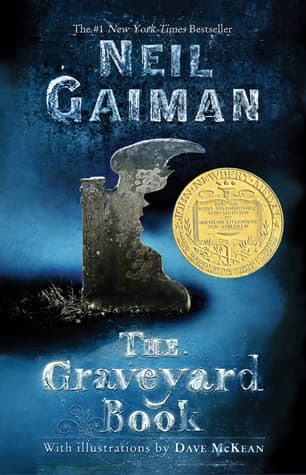
- The Graveyard Book
Neil Gaiman
4.1 (438k) average on GoodreadsFantasyBlends the supernatural with a coming-of-age story and a touch of mystery in a unique setting.
- Miss Peregrine's Home for Peculiar Children
Ransom Riggs
3.9 (977k) average on GoodreadsFantasyCombines peculiar characters, supernatural elements, and a sense of historical mystery.
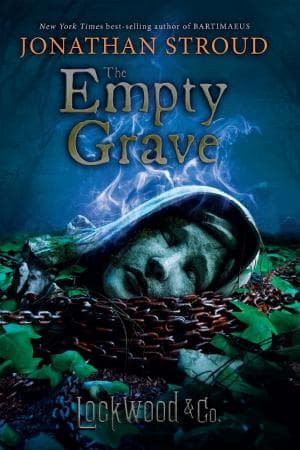
- Lockwood & Co.: The Empty Grave
Jonathan Stroud
4.6 (30k) average on GoodreadsBoth series involve supernatural investigation agencies in a historical (alternate) London. However, 'Lockwood & Co.' is more overtly horror-driven, with genuinely frightening scenarios and a more intricate system of ghost-hunting. 'Jackaby' leans more towards a cozy mystery with magical elements, prioritizing character charm and clever deductions over intense suspense.
- Harry Potter and the Sorcerer's Stone
J.K. Rowling
4.5 (7M) average on GoodreadsFantasyRescued from a miserable life under the stairs, an orphaned boy discovers he's a wizard destined for a magical school, where he uncovers a dangerous secret tied to the dark wizard who murdered his parents.
- The Hunger Games
Suzanne Collins
4.3 (6.4M) average on GoodreadsFantasyIn a future where children fight to the death on live television, Katniss Everdeen volunteers for the arena, turning a death sentence into a fight for survival and a spark of rebellion.




Enjoyed the summary?
A summary gives you the shape of the book. The book itself has the detail, the examples and the voice.
Find Jackaby on AmazonAs an Amazon Associate, BookBrief earns from qualifying purchases. How we're funded