
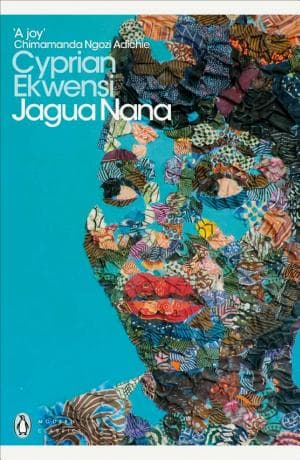
Synopsis
Covers the whole plot, including the ending.
- Difficulty
- Medium
- Pacing
- Moderate
- Mood
- Vivid, Bold, Melancholy, Resilient, Reflective
- Read it if
- You enjoy stories about strong, unconventional female protagonists, vivid depictions of 1960s African urban life, and narratives exploring themes of love, betrayal, and self-discovery.
- Skip it if
- You prefer fast-paced thrillers or stories with clear-cut moral frameworks, as Jagua's life is complex and morally ambiguous.
Jagua Nana Plot Summary
Covers the whole plot, including the ending.
The Tropicana and Freddie
Jagua Nana, a well-known courtesan in Lagos, appears in the busy Tropicana nightclub. Despite her age, her beauty and energy draw everyone, especially her current lover, Freddie. Freddie is a young, ambitious schoolteacher from a good family. Their relationship is strong but not typical. Jagua, though independent, cares deeply for Freddie and hopes for a stable future with him. However, Freddie's family dislikes Jagua's job and influence, causing tension. Their nights are full of dancing, drinking, and the appeal of Lagos nightlife, a world where Jagua is in charge.
Freddie's Ambition and Jagua's Support
Freddie wants to leave teaching and study law in England. Jagua sees this as a way to a proper, stable future for them. She eagerly supports his goal, using her earnings, often from rich clients like Chief Ofubara, to pay for Freddie's schooling. This shows Jagua's strong commitment to Freddie; she gives up her financial freedom and current comforts for his dream. She imagines joining him in England after he settles, a hope that shows her desire for a normal life beyond the Tropicana.
Departure and Betrayal
Freddie leaves for England, with Jagua staying in Lagos. At first, they talk often and lovingly; Freddie expresses thanks and love. Jagua, encouraged by his letters, keeps working hard, saving money, and looking forward to seeing him again. But as time passes, Freddie's letters become less frequent and more formal. The emotional warmth fades, and Jagua starts to feel a growing sense of worry and abandonment. This slow cooling of their relationship hints at a painful betrayal, leaving Jagua to face her lonely life.
The Return of Freddie and His New Life
Years later, Freddie returns to Lagos as a lawyer with status. Jagua, full of hope, expects their reunion and their dreams to come true. But her hopes are broken when she learns Freddie is engaged to Nancy, a woman from a respected, rich family. Freddie, now focused on his social standing and political goals, publicly denies his past with Jagua. This rejection deeply hurts Jagua, who sacrificed so much for him. She is left heartbroken and disappointed by his lack of gratitude and his ambition.
Jagua's Vengeance and Political Intrigue
Freddie's betrayal devastates Jagua, and she vows revenge. She uses her influence and connections in Lagos's underground and social circles to harm Freddie's growing political career. She sides with his political rivals, especially Uncle Taiwo, a clever and tricky politician. Jagua acts out of hurt, anger, and a wish to get back her dignity. During this time, she is deep in the unclear world of Nigerian politics, where power, money, and influence constantly change. Her own cleverness becomes a strong weapon.
The Death of Uncle Taiwo
Jagua's involvement with Uncle Taiwo and the political world turns bad when she sees him murdered during a political gathering. This event shows the extreme violence in Lagos politics. Jagua is deeply shaken, realizing how risky her situation is and the dangers around her. The incident makes her face the harsh facts of the world she has entered, causing her to rethink her choices and want to escape the cycle of revenge and danger.
Return to Ogabu and Reconciliation
After the difficult events in Lagos, Jagua decides to leave the city and return to her village, Ogabu. This move shows a desire for peace and a simpler life away from Lagos's chaos and betrayals. She hopes to reconnect with her past and find a sense of belonging. Her return gets mixed reactions from villagers; some remember her past badly, others with interest. She tries to make peace with her family, especially her brother, and deal with the village rules and traditions she had left behind.
The Palm Oil Trade and New Endeavors
In Ogabu, Jagua tries to start a new life by working in the palm oil trade. This business is hard, as she handles the difficulties of village money and competition. She meets new people, including traders and local figures, who test her strength and business sense. This time marks a big change in Jagua's life, as she moves from city pleasure to country business. Her work in the palm oil trade shows she can adapt and is determined to make her own way, even in a very different place.
Marriage and Motherhood
Despite initial problems, Jagua finds some stability and happiness in Ogabu. She marries a younger man from the village, which further confirms her commitment to her new life. Most importantly, Jagua has a child, fulfilling her long-held dream of motherhood. This brings her great joy and a deep sense of purpose, marking a final, successful step in her journey to a meaningful life. Motherhood gives her a sense of purpose and belonging that Lagos's short-term pleasures could not.
A Visit from Freddie's Son
Many years later, a young man comes to Ogabu looking for Jagua Nana. He says he is Freddie's son, from Freddie's marriage to Nancy. The young man, having heard stories about Jagua, comes to understand the woman who was so important in his father's past. This visit gives Jagua a sense of closure. It allows her to think about her difficult past with Freddie, the things she gave up, and the journey that led her to her current happiness. The meeting shows her final win over past heartbreaks and her success in creating a new, good life.
Principal Figures
Jagua Nana
Protagonist
A glamorous, independent courtesan in 1960s Lagos seeking fulfillment and love.
Jagua Nana is a captivating and resilient woman, renowned for her beauty, vivacity, and independent spirit. She lives a life of hedonism and pleasure in Lagos, enjoying the attention of many men but deeply yearning for genuine love and stability. Despite her profession, she possesses a strong moral compass and a capacity for profound loyalty, particularly towards Freddie. She is shrewd, adaptable, and possesses a remarkable ability to survive and thrive amidst challenging circumstances. Her ultimate desire is for a life of respectability and motherhood.
Relationships: Freddie (Passionate lover, later betrayed by him); Chief Ofubara (Wealthy client and benefactor); Uncle Taiwo (Political associate, later witnesses his death); Nancy (Freddie's respectable wife, rival)
Freddie
Supporting/Antagonist
Jagua's ambitious young lover who betrays her for social advancement.
Freddie is a handsome and ambitious young schoolteacher from a respectable family. He is initially deeply in love with Jagua, but his overriding ambition to become a lawyer and enter politics ultimately leads him to abandon and betray her. He represents the aspirations of a new generation in Nigeria, willing to shed past associations for social and economic advancement. Though he benefits from Jagua's financial support, he eventually prioritizes social acceptance and a 'respectable' marriage over his emotional ties to her.
Relationships: Jagua Nana (Lover, later betrayer); Nancy (Wife, chosen for social standing)
Chief Ofubara
Supporting
A wealthy Lagos chief and one of Jagua's regular patrons.
Chief Ofubara is a prominent and wealthy Lagos chief, a regular client and admirer of Jagua Nana. He represents the older generation of affluent, influential men in Lagos society. While he provides Jagua with financial support and a degree of stability, their relationship is transactional rather than romantic. He serves as a symbol of the resources available to Jagua through her profession and often offers her advice, though sometimes self-serving. His character highlights the economic realities and power dynamics within Jagua's world.
Relationships: Jagua Nana (Client/patron relationship)
Nancy
Supporting
Freddie's respectable fiancée, representing the conventional path he chooses.
Nancy is the woman Freddie chooses to marry after returning from England. She comes from a respectable and wealthy family, making her an ideal partner for Freddie's political and social ambitions. Nancy embodies the conventional societal expectations that Freddie seeks to fulfill, standing in stark contrast to Jagua's unconventional lifestyle. Her existence highlights Freddie's calculated decision to prioritize social status over genuine affection, and she serves as the direct catalyst for Jagua's heartbreak and subsequent quest for revenge.
Relationships: Freddie (Wife/fiancée); Jagua Nana (Rival for Freddie's affection/attention)
Uncle Taiwo
Supporting
A manipulative and dangerous political figure in Lagos.
Uncle Taiwo is a cunning and ruthless politician in Lagos. Jagua aligns with him after Freddie's betrayal, seeking to use his influence for her revenge. He operates in the morally ambiguous world of Nigerian politics, where violence and corruption are common. His character exposes Jagua to the harsh realities and dangers of political power struggles. His eventual violent death serves as a turning point for Jagua, making her realize the futility and peril of her path of vengeance and prompting her departure from Lagos.
Relationships: Jagua Nana (Political associate)
Dennis
Supporting
A jealous and possessive admirer of Jagua in Lagos.
Dennis is one of Jagua's admirers and a minor character who highlights the constant attention and sometimes dangerous jealousy she attracts. He is possessive and prone to violence, particularly when he perceives Jagua's affections are directed elsewhere. His presence underscores the volatile nature of Jagua's world and the personal risks she faces as a woman who lives on her own terms. His jealousy often creates minor conflicts and dramas within the Tropicana setting.
Relationships: Jagua Nana (Admirer/possessive suitor)
Madam Tola
Supporting
A respected older courtesan or madam, a mentor figure to Jagua.
Madam Tola is an older, more experienced woman in Jagua's social circle, possibly a former courtesan or madam. She often offers Jagua advice, drawing from her own life experiences. She represents a potential future for Jagua if she were to remain in the Lagos nightlife. Her character provides a contrast to Jagua's fiery passion, offering a more jaded but pragmatic perspective on life and relationships. She often warns Jagua about the fleeting nature of love and the importance of self-reliance.
Relationships: Jagua Nana (Friend/mentor figure)
Freddie's Son
Mentioned/Supporting
The son of Freddie and Nancy, who visits Jagua years later.
Freddie's son appears at the very end of the novel, years after Jagua has established her new life in Ogabu. He represents a bridge between Jagua's past and present, a living reminder of her tumultuous relationship with Freddie. His visit brings a sense of closure and allows Jagua to reflect on her journey and the choices she made. His curiosity about her history validates her experiences and acknowledges her enduring impact, even on those who were not directly part of her earlier life.
Relationships: Jagua Nana (Visitor seeking understanding of his father's past); Freddie (Son)
Themes & Insights
The Quest for Fulfillment and Identity
Jagua Nana's whole journey is a search for deeper happiness beyond Lagos nightlife. At first, she thinks this happiness is with Freddie and a normal life, giving her money for his education. His betrayal makes her think again, leading her to seek revenge and then to her village, Ogabu. There, she finds her true self not in men or status, but in business, marriage, and most of all, motherhood, which gives her the purpose she always wanted. Her change shows that happiness can be found in unexpected places, often after letting go of what society expects.
“She was Jagua Nana, and she had to live her life.”
Betrayal and Disillusionment
Betrayal is a main theme, mostly through Freddie's actions. Jagua's strong support and money sacrifices for Freddie's education are met with his cold rejection when he returns. He chooses social status and political goals over their past. This betrayal breaks Jagua's dreams and leaves her deeply disappointed with love and the promises of a normal future. It is a key moment that forces her to face the harsh truths of ambition and self-interest, pushing her towards revenge before she seeks a more real life away from the city's bad influences.
“Love was a thing of the moment, a thing to be paid for, or abandoned.”
Urban vs. Rural Life
The novel clearly contrasts Lagos's lively, but morally unclear, city life with Ogabu's traditional, community-focused village life. Lagos, with its Tropicana nightclub, political games, and focus on money, shows a world of pleasure, ambition, and possible corruption, where Jagua does well but finds no lasting happiness. Ogabu, on the other hand, means tradition, community, and a slower life, where Jagua eventually finds stability, respect, and motherhood. Her move from city to village shows a search for what is real and a criticism of how shallow modern city life is. It suggests true contentment might be in simpler, more basic roots.
“Lagos was a city of money, and money was a god.”
The Role of Women in Society
Jagua Nana's story looks at the complex role of women in 1960s Nigerian society, especially those who do not follow normal rules. As a courtesan, Jagua lives in a world that both wants and judges her. She shows her independence and control through her choices, her money skills, and her strength. But she also faces social disapproval, weakness, and a constant struggle for respect. Her eventual path to happiness through business, marriage, and motherhood in Ogabu, rather than through her Lagos life or a man's status, suggests another way for women to be strong and find self-worth and happiness outside of strict social rules.
“A woman must make her own way in this world, or she will be nothing.”
Plot Devices & Literary Techniques
Foreshadowing
Hints and clues about future events, particularly Freddie's betrayal.
The novel uses subtle foreshadowing to prepare the reader for Freddie's eventual betrayal. Jagua's friends and older mentors often warn her about the fickle nature of men and the dangers of investing too much in transient relationships, especially with younger, ambitious men. Freddie's initial discomfort with Jagua's profession and his family's disapproval also hint at the eventual clash between his aspirations and their unconventional relationship. These early warnings create a sense of unease and make Freddie's eventual abandonment feel inevitable rather than sudden, reinforcing the novel's themes of disillusionment and the harsh realities of ambition.
Symbolism of the Tropicana
The nightclub represents the allure, danger, and transient nature of Lagos life.
The Tropicana nightclub serves as a powerful symbol throughout the novel. It embodies the vibrant, hedonistic, and ultimately transient nature of Lagos nightlife and Jagua's early life. It is a place of excitement, music, and fleeting pleasures, where Jagua holds court and feels most alive. However, it also symbolizes the moral ambiguity, superficiality, and potential dangers that lurk beneath the glamour. The Tropicana is where Jagua finds love and heartbreak, joy and despair, reflecting the dual nature of her existence in the city and serving as a microcosm of the larger urban environment.
Journey Motif
Jagua's physical and emotional movement from city to village as a search for identity.
The journey motif is central to Jagua Nana's narrative, representing her physical and emotional quest for fulfillment and identity. Her initial journey from her village to Lagos signifies her embrace of modernity and independence. Her subsequent return to Ogabu after Freddie's betrayal is a metaphorical journey of self-discovery and reconciliation with her roots. This movement between urban and rural settings highlights the contrast between two distinct ways of life and reflects Jagua's internal transformation from a woman seeking external validation to one finding inner peace and purpose. The journey is both literal and symbolic of her evolution.
Dramatic Irony
The reader's awareness of Freddie's probable betrayal while Jagua remains hopeful.
Dramatic irony is employed effectively, particularly concerning Jagua's relationship with Freddie. The reader, often privy to the societal pressures and Freddie's underlying ambition, can anticipate his eventual betrayal and abandonment of Jagua, even as Jagua herself remains hopeful and makes significant sacrifices for him. This creates a sense of pathos and heightens the tragedy of her situation, as the audience watches her invest in a future that they know is likely doomed. It underscores the theme of disillusionment and allows the reader to empathize deeply with Jagua's vulnerability and eventual heartbreak.
Jagua Nana Quotes
“She was no longer young, but she was still beautiful. Her body was full and ripe, her skin smooth and dark, her eyes bright and mischievous.”
“Money was good, but love was better. And a girl could not live on love alone.”
“The city was a monster that swallowed up the young and the innocent and spat them out, broken and disillusioned.”
“She had always known that her beauty was a weapon, and she used it with the skill of a seasoned warrior.”
“A woman's place was in her husband's house, but Jagua Nana had no husband.”
“The night was alive with the sound of music, laughter, and the promise of forbidden pleasures.”
“Every man wanted to possess her, but no man could ever truly own her.”
“She knew the price of everything and the value of nothing.”
“In the city, every day was a struggle for survival, a battle of wits and will.”
“The past was a ghost that haunted her, a reminder of what she had lost and what she could never regain.”
“Love was a dangerous game, and she had played it too many times, always losing in the end.”
“He wanted to save her, but she did not want to be saved. She wanted to live her life on her own terms, even if it meant risking everything.”
“The village was a world away from the city, a place of peace and simplicity, but also of boredom and stagnation.”
“She was a woman of the city, born and bred in its chaos and its glitter, and she could never truly leave it behind.”
Quiz
10 questions on the plot and the characters. Each answer comes with a short explanation.
Question 1
What is the name of Jagua Nana's handsome young boyfriend at the beginning of the novel?
- Uncle Taiwo
- Freddie
- Dennis
- Jide
Show answer
B. Freddie Freddie is Jagua Nana's young lover with whom she spends wild nights in the Tropicana and supports financially.
Question 2
What is Jagua Nana's primary motivation for supporting Freddie's education?
- She wants him to become a successful musician.
- She hopes he will marry her once he is educated.
- She believes he will become a powerful politician and help her.
- She wants him to leave Lagos and start a new life elsewhere.
Show answer
B. She hopes he will marry her once he is educated. Jagua invests in Freddie's education with the hope that he will achieve a respectable status and then marry her, securing her future.
Question 3
What is the name of the popular Lagos nightclub where Jagua Nana frequently spends her evenings?
- The Paradise Club
- The Tropicana
- The Afrobeat Den
- The Lagos Jazz House
Show answer
B. The Tropicana The Tropicana is the iconic nightclub in Lagos where Jagua Nana is often found, enjoying the hedonistic lifestyle with Freddie and other men.
Question 4
Why does Jagua Nana eventually leave Lagos and return to her village, Ogabu?
- She wins the lottery and decides to retire.
- She is disillusioned with her life in Lagos and seeks a new beginning after Freddie leaves her.
- She is forced to flee due to her involvement in shady politics.
- She inherits a large sum of money from a deceased relative there.
Show answer
B. She is disillusioned with her life in Lagos and seeks a new beginning after Freddie leaves her. After Freddie abandons her for a more 'suitable' wife, Jagua feels lost and disillusioned with her Lagos life, prompting her return to her ancestral village.
Question 5
What significant event occurs in Ogabu that involves Jagua Nana and the local community?
- She becomes the village chief's head wife.
- She establishes a successful business selling imported goods.
- She becomes involved in a village land dispute and tragically loses a child.
- She converts to a new religion and becomes a preacher.
Show answer
C. She becomes involved in a village land dispute and tragically loses a child. While in Ogabu, Jagua becomes embroiled in a land dispute, during which she suffers a profound loss, that of her child.
Question 6
What is a central theme explored through Jagua Nana's character and experiences in Lagos?
- The importance of traditional village life over urban modernity.
- The conflict between traditional values and the allure of modern, materialistic city life.
- The inevitability of women's subservience in Nigerian society.
- The triumph of political corruption over individual integrity.
Show answer
B. The conflict between traditional values and the allure of modern, materialistic city life. Jagua's life in Lagos vividly portrays the clash between the expectations of traditional society and the freedom, but also moral ambiguity, of the rapidly modernizing urban environment.
Question 7
How does Jagua Nana primarily earn her living in Lagos?
- As a seamstress and tailor.
- As a successful market trader.
- Through her relationships with wealthy men and her role as a 'good-time' woman.
- She works as a government clerk.
Show answer
C. Through her relationships with wealthy men and her role as a 'good-time' woman. Jagua's income and lifestyle in Lagos are largely sustained by the gifts and support she receives from the various men she entertains and forms relationships with.
Question 8
What is the ultimate outcome of Freddie's political ambitions, partly funded by Jagua?
- He becomes a highly respected and incorruptible leader.
- He achieves significant political power but ultimately betrays Jagua.
- He fails completely and returns to Jagua seeking help.
- He is assassinated before he can achieve his goals.
Show answer
B. He achieves significant political power but ultimately betrays Jagua. Freddie does achieve political success, rising in power, but his ambition leads him to abandon Jagua for a woman he deems more politically suitable, highlighting the transactional nature of their relationship and Lagos politics.
Question 9
What does Jagua Nana's journey from Lagos back to her village and her subsequent experiences there symbolize?
- A complete rejection of all urban influences and a return to purity.
- The difficulty of escaping one's past and the compromises required for survival in any setting.
- The ultimate failure of women to find fulfillment outside of marriage and motherhood.
- The inevitable triumph of traditional communal values over individual desires.
Show answer
B. The difficulty of escaping one's past and the compromises required for survival in any setting. Jagua's return to the village doesn't offer a simple escape; she still faces drama, tragedy, and the need to 'hustle' in a different context, showing that fulfillment is complex and often requires compromise, regardless of location.
Question 10
How does Jagua Nana deal with the loss of her child in the village?
- She immediately leaves the village and returns to Lagos.
- She falls into a deep depression and becomes reclusive.
- She finds a measure of peace and purpose by establishing a shop and helping others in the village.
- She seeks revenge against those she blames for the tragedy.
Show answer
C. She finds a measure of peace and purpose by establishing a shop and helping others in the village. After the profound tragedy of losing her child, Jagua finds a new direction and a form of redemption by dedicating herself to a small business and contributing to her community in the village, finding an unconventional path to fulfillment.
Jagua Nana FAQ
Who is Jagua Nana and what is her primary pursuit in Lagos?
Jagua Nana is the charismatic and aging but still irresistible protagonist, a woman living a life of hedonism in 1960s Lagos. Her primary pursuit is a restless search for something she can't quite grasp, moving from one intense experience to the next, often involving men, parties, and the vibrant nightlife of places like the Tropicana.
Describe Jagua's relationship with Freddie and its significance to her character arc.
Jagua's relationship with Freddie is central to her early character arc, as he is her handsome young boyfriend for whom she has deep affection and makes significant sacrifices. She financially supports his aspirations to study law in England, viewing their connection as a potential anchor in her tumultuous life, despite their age difference and his eventual betrayal.
What role does the Tropicana nightclub play in Jagua's life and the novel's setting?
The Tropicana nightclub serves as a vibrant hub for Jagua's social life and a microcosm of 1960s Lagos's hedonistic culture. It's where she entertains men, engages in wild nights, and experiences many of the city's fleeting pleasures and dramatic encounters, symbolizing the allure and superficiality of her urban existence.
How does Jagua become embroiled in politics, and what are the consequences?
Jagua becomes entangled in shady politics through her association with corrupt politicians and her own attempts to leverage connections for personal gain or protection. This involvement often leads to drama, danger, and disillusionment, highlighting the pervasive corruption of the era and the precarious position of those on its fringes.
What prompts Jagua's eventual return to her ancestral village, and what does she seek there?
Jagua's return to her ancestral village is prompted by a combination of disillusionment with Lagos life, the betrayal by Freddie, and a yearning for a different kind of fulfillment. She seeks to find peace, a sense of belonging, and a more stable, perhaps 'respectable,' existence away from the constant hustle and ephemeral pleasures of the city.
Are there any subtle hints about Jagua's eventual desire for a family or legacy early in the book, despite her lifestyle?
While not explicitly stated as a driving desire, Jagua's significant financial investment in Freddie's education, hoping he will return to marry her and provide a stable future, subtly hints at a deeper longing for connection and a more conventional life. This suggests an underlying yearning for something beyond fleeting pleasures, even if she can't articulate it.
How does Ekwensi use the city of Lagos itself as a character, and what hidden aspects does it reveal about Jagua?
Ekwensi personifies Lagos as a vibrant, alluring, yet ultimately demanding and transactional character that both attracts and consumes Jagua. Its constant hustle and transient nature reflect Jagua's own restless spirit and her struggle to find lasting meaning, revealing her deep immersion in its ethos while also highlighting her eventual alienation from it.
Beyond Freddie, are there other relationships that subtly influence Jagua's understanding of love or loyalty?
Yes, relationships with characters like the kind-hearted but ultimately ineffective Uncle Taiwo, or even the fleeting connections with other 'good-time girls,' subtly influence Jagua. They show her different facets of male reliability, female camaraderie, and the transactional nature of many relationships in Lagos, shaping her evolving understanding of loyalty and genuine affection.
What is the underlying psychological motivation for Jagua's constant movement and inability to settle down in Lagos?
Jagua's constant movement and inability to settle stem from a deep-seated psychological restlessness and a fear of stagnation or irrelevance. She equates activity and new experiences with vitality, perhaps as a way to outrun her aging or to fill an emotional void, making her perpetually chase the next thrill rather than confronting inner emptiness.
Analyze Jagua's self-perception regarding her age and attractiveness, and how it impacts her choices.
Jagua is acutely aware of her fading youth but fiercely clings to her irresistible attractiveness, often using it as her primary tool for survival and influence. This self-perception fuels her hedonistic choices, as she tries to prove her enduring desirability and control over men, but also drives her underlying anxieties about her future and security.
How does Jagua cope with betrayal, particularly Freddie's, and what does this reveal about her emotional resilience?
Jagua copes with betrayal, especially Freddie's, through a mix of initial devastation, anger, and ultimately, a resilient pragmatism. She allows herself to feel the pain but quickly adapts, seeking new avenues for survival or fulfillment, showcasing her remarkable emotional toughness and her ability to rebound from setbacks, albeit with lingering scars.
Discuss Jagua's complex relationship with motherhood and her eventual decision regarding a child.
Jagua's relationship with motherhood is complex, initially appearing distant or secondary to her hedonistic lifestyle. However, her eventual decision to adopt a child in her village signifies a profound shift, indicating a deep-seated yearning for legacy and a different kind of fulfillment, revealing her capacity for nurturing and a desire for a more stable, meaningful existence.
Is Jagua Nana a feminist icon, a tragic figure, or both? Justify your interpretation.
Jagua Nana can be interpreted as both. She embodies a fierce independence and agency in a patriarchal society, making her a proto-feminist icon who forges her own path. However, her constant struggles, betrayals, and the compromises she makes also lend her a tragic dimension, as she often seeks happiness but finds it elusive, highlighting the limitations placed on women of her time.
To what extent is Jagua a product of her environment, and to what extent does she transcend it?
Jagua is significantly a product of 1960s Lagos, embodying its hustle, hedonism, and transactional relationships. Yet, she also transcends it through her unique spirit, resilience, and eventual quest for a different kind of fulfillment away from the city's grip. Her journey to the village represents an attempt to break free from the cycle of urban superficiality.
What is the novel's stance on morality and 'good' vs. 'bad' choices, particularly through Jagua's experiences?
The novel presents a nuanced view of morality, often blurring the lines between 'good' and 'bad' choices. Through Jagua's experiences, Ekwensi suggests that survival and fulfillment in a corrupt and challenging environment often necessitate unconventional or morally ambiguous decisions. It challenges simplistic judgments, emphasizing human complexity and the societal pressures that shape individual actions.
Does Jagua truly find fulfillment by the end of the novel, or is her journey a continuous search?
While Jagua finds a measure of peace and a different kind of purpose in her village, particularly with the adoption of a child, the novel suggests her journey is more of a continuous search than a definitive arrival at ultimate fulfillment. Her restless spirit and the lingering echoes of her past imply that true, lasting contentment remains an ongoing pursuit for her.
How does Ekwensi use Jagua's story to comment on the broader socio-political landscape of post-colonial Nigeria?
Ekwensi uses Jagua's story as a microcosm of post-colonial Nigeria, reflecting the pervasive corruption, the allure and dangers of urbanization, and the struggle for identity and progress in a rapidly changing society. Her entanglement in shady politics and the general 'hustle' of Lagos life serve as sharp critiques of the era's socio-political realities and moral decay.
What is the significance of Jagua's name, 'Nana,' and how does it relate to her character?
The name 'Nana' often signifies a grandmother or an elder woman in various cultures, which is poignant given Jagua's aging status and her eventual maternal role in the village. It subtly foreshadows her transition from a hedonistic 'good-time girl' to a figure seeking a more grounded, nurturing existence, hinting at the wisdom and maturity she gains through her experiences.
About the author
Cyprian Ekwensi was a Nigerian novelist and journalist. He is best known for his novels 'Jagua Nana,' 'Jagua Nana's Daughter,' and 'People of the City,' which explored urban life and social issues in post-colonial Nigeria. Ekwensi's vibrant prose and realistic portrayals of Nigerian society made him a significant figure in African literature.
Similar books
- Things Fall Apart
Chinua Achebe
3.7 (288k) average on GoodreadsHistorical FictionOffers a rich portrayal of Nigerian culture and societal change, though with a different thematic focus.
- The Joys of Motherhood
Buchi Emecheta
4.1 (5k) average on GoodreadsHistorical FictionFeatures a strong Nigerian female protagonist dealing with complex life choices and societal pressures.
- Nineteen Eighty-Four
George Orwell
4.2 (5.5M) average on GoodreadsFictionWinston Smith dreams of truth and rebellion in a world where Big Brother watches all, but he confronts the terrifying power of a regime that controls not just actions, but thoughts.
- The Frozen River
Ariel Lawhon
4.4 (600k) average on GoodreadsFictionIn 1789 Maine, a heroic midwife's diary helps her expose a murder and get justice in a town that wants to silence her.
- A Man Called Ove
Fredrik Backman
4.4 (569k) average on GoodreadsFictionA stubborn widower, who lives by strict rules, finds his quiet world changed by a lively new family next door, making him face his past and find happiness in human connection.
- The Art of Racing in the Rain
Garth Stein
4.2 (452k) average on GoodreadsFictionThrough the eyes of Enzo, a wise and observant dog, a race car driver's family navigates a journey of love, loss, and resilience, learning that life's most important lessons often come in the curves, not just on the straightaways.




Enjoyed the summary?
A summary gives you the shape of the book. The book itself has the detail, the examples and the voice.
Find Jagua Nana on AmazonAs an Amazon Associate, BookBrief earns from qualifying purchases. How we're funded