

Synopsis
Covers the whole plot, including the ending.
- Difficulty
- Medium
- Pacing
- Slow
- Mood
- Bleak, Melancholy, Intense, Reflective, Tragic
- Read it if
- You appreciate classic psychological dramas exploring ambition, betrayal, and the consequences of past choices.
- Skip it if
- You prefer fast-paced plots with clear-cut heroes and villains, or dislike intense, character-driven studies of human suffering.
John Gabriel Borkman Plot Summary
Covers the whole plot, including the ending.
The Borkman Mansion
The play opens in the drawing-room of the Borkman mansion, a once-grand but now dilapidated estate. Mrs. Gunhild Borkman, consumed by bitterness and a desire for social rehabilitation, discusses with her maid, Frida Foldal, the upcoming visit of her son, Erhart. Mrs. Borkman reveals her disdain for her estranged twin sister, Ella Rentheim, who has provided for Erhart's education and well-being since Borkman's disgrace. Mrs. Borkman is obsessed with the idea that Erhart will one day redeem the family name and restore their former glory, a burden she has placed entirely on his shoulders. She resents the financial assistance from Ella, viewing it as a constant reminder of their fallen status and a threat to her own influence over Erhart.
Ella Rentheim's Arrival
Ella Rentheim, Mrs. Borkman's twin sister, arrives unexpectedly. She informs Mrs. Borkman that she is gravely ill and has come to demand Erhart's full attention and companionship, wishing to make him her heir. This declaration sparks a fierce argument between the two sisters. Ella reveals the depth of her sacrifice for the Borkman family: she gave up her love for John Gabriel Borkman to allow him to pursue his ambitions, which included marrying Gunhild for her family's connections and fortune. She accuses Gunhild of trapping Borkman and destroying their lives. Mrs. Borkman, in turn, accuses Ella of trying to steal her son and undermine her authority, escalating the long-standing family feud.
John Gabriel Borkman's Solitude
Upstairs, in a locked room, John Gabriel Borkman paces endlessly, a ritual he has maintained for eight years since his release from prison. He is a ruined man, a former bank director who embezzled funds and served a sentence for fraud. Despite his disgrace, he clings to a grandiose self-perception, believing himself a misunderstood genius whose financial schemes would have revolutionized the country if not for his downfall. He despises his wife, Gunhild, for her inability to understand his vision and for her constant complaints. He also resents Ella for her perceived betrayal. He is visited by Vilhelm Foldal, an old friend and a struggling poet, who shares Borkman's delusions of unappreciated genius, offering him a fleeting connection in his self-imposed exile.
The Confrontation with Ella
Ella Rentheim goes upstairs to confront John Gabriel Borkman. She demands an explanation for his betrayal, specifically why he chose to marry Gunhild over her, despite her deep love for him and her willingness to support his ambitions. Borkman, still believing himself to be a victim of circumstance, attempts to justify his actions, claiming that his marriage to Gunhild was a strategic move necessary for his financial empire. He reveals his belief that he sacrificed his personal happiness for the greater good of his grand industrial vision. Ella, however, sees through his self-serving justifications, calling him out on his emotional coldness and his destruction of her life and their shared love. She declares her intention to take Erhart from him, deepening his despair.
Erhart's Arrival and Resistance
Erhart Borkman finally arrives at the mansion. He is a young man torn between the suffocating expectations of his mother, Gunhild, and the manipulative affection of his aunt, Ella. He is also eager to escape the oppressive atmosphere of his family home. He announces his intention to leave with Mrs. Fanny Wilton, an older, sophisticated woman who has captivated him. Erhart makes it clear that he will not be the instrument of his family's redemption. He expresses a desire to live for himself, to experience joy and freedom, rather than being burdened by the past and the unfulfilled ambitions of his parents. This declaration shatters the hopes of both Gunhild and Ella, who had each envisioned a future for him intertwined with their own desires.
The Parting of Ways
Despite the desperate pleas and emotional manipulation from both Gunhild and Ella, Erhart remains resolute in his decision to leave. He departs with Mrs. Fanny Wilton and, surprisingly, Frida Foldal, who has also been drawn to Mrs. Wilton's more liberated lifestyle. Erhart's departure signifies a definitive break from the suffocating past and the crushing expectations of his family. His refusal to become a pawn in their schemes leaves both his mother and aunt devastated, as their hopes for his future redemption and companionship are irrevocably dashed. This scene shows the generational conflict and Erhart's assertion of individuality against the backdrop of his family's tragic history.
Borkman's Final Stand
After Erhart's departure, John Gabriel Borkman, spurred by a desperate longing for his former power and a belief that he can still rise again, decides to venture outside for the first time in eight years. He is convinced that the world is waiting for his return, for the genius he believes he still possesses. He strides out into the cold winter night, accompanied by Ella, who tries to reason with him. He speaks of the 'millions' he once commanded and the 'mines' he saw as living beings, personifying his lost industrial dreams. He believes his time has come to reclaim his place, but this grand delusion is about to collide with a harsh and unforgiving reality.
The Cold Hand of the Mine Spirit
As Borkman and Ella reach a viewpoint overlooking the valley, Borkman delivers a passionate, almost manic monologue about his vision for the future and the untapped potential of the earth. He speaks of the 'mine spirit' calling to him, yearning for release. Suddenly, he feels a 'cold hand' grip his heart — a symbolic manifestation of the forces he tried to control, or perhaps the psychological toll of his long confinement and delusion. He collapses, dying in the snow, his dreams of redemption and industrial conquest extinguished in the bitter cold. Ella is by his side, witnessing his final moments, a poignant end to their intertwined and tragic lives.
The Sisters' Reconciliation
Gunhild Borkman, having followed them out, discovers John Gabriel's lifeless body. The sight of his death, combined with the earlier departure of Erhart, finally breaks through her hardened exterior. Standing over the body of the man who ruined both their lives, Gunhild and Ella Rentheim are left with nothing but their shared sorrow and the wreckage of their past. In this moment of loss, their lifelong animosity momentarily subsides. They acknowledge that they are united by the dead man, who, in his ambition, destroyed not only himself but also the women who loved him. A fragile, unspoken truce forms between them, born of shared tragedy and the finality of death.
The Weight of the Past
In the aftermath of Borkman's death, Gunhild and Ella reflect on the waste of their lives. Gunhild laments the years spent waiting for a redemption that never came, while Ella mourns the love she sacrificed and the emptiness that filled her existence. They realize that Borkman’s immense ambition, his obsession with power and wealth, consumed not only him but also everyone around him. His 'cold hand' reached out and stifled the warmth and joy in their lives. The sisters are left with the crushing weight of a past they cannot change, and a future devoid of the hopes they once held for Erhart or for themselves. The play concludes with the sisters standing together, bound by their shared sorrow and the tragic legacy of John Gabriel Borkman.
Principal Figures
John Gabriel Borkman
Protagonist/Antagonist
A disgraced former bank director obsessed with his past glory and future redemption.
Borkman is a man consumed by his own ambition and a profound sense of self-importance. Eight years after being released from prison for embezzlement, he lives in self-imposed exile upstairs in his mansion, pacing and dreaming of his grand industrial schemes. He sees himself as a visionary, a genius misunderstood by the world, and believes he sacrificed personal happiness for the greater good of his financial empire. He is emotionally cold, incapable of genuine human connection, and views people as instruments for his ambitions. His pride and delusion prevent him from acknowledging his crimes or the pain he inflicted on others.
Relationships: Gunhild Borkman (Estranged wife, bound by duty and resentment.); Ella Rentheim (Former lover and sister-in-law, betrayed and deeply hurt by him.); Erhart Borkman (Son, whom he sees as a means to restore his name.); Vilhelm Foldal (Old friend and fellow dreamer, who provides him with a sympathetic ear.)
Gunhild Borkman
Supporting
John Gabriel's embittered wife, obsessed with restoring the family's honor through her son.
Gunhild is a proud and rigid woman, deeply humiliated by her husband's disgrace. She lives in the shadow of their ruined reputation, her sole focus being the social rehabilitation of the Borkman name through her son, Erhart. She is fiercely protective of her maternal rights and resents Ella Rentheim's influence over Erhart, viewing it as a threat to her own plans. Gunhild is emotionally hardened by suffering and bitterness, unable to forgive her husband or connect with him. Her love for Erhart is possessive and conditional, tied to her own unfulfilled desires for status and redemption.
Relationships: John Gabriel Borkman (Estranged husband, source of her humiliation and resentment.); Ella Rentheim (Twin sister and rival for Erhart's affection, deeply antagonistic relationship.); Erhart Borkman (Son, on whom she projects all her hopes for family redemption.)
Ella Rentheim
Supporting
Gunhild's twin sister and Borkman's former lover, who sacrificed everything for him.
Ella is a woman of deep emotional capacity who experienced profound betrayal at Borkman's hands. She gave up her love for him and her own happiness to facilitate his ambition, only to see him marry her sister. Despite her suffering, she has shown great generosity, caring for Erhart and providing for his education. Now terminally ill, she seeks to reclaim Erhart's affection and make him her heir, driven by a desperate need for companionship and a sense of having lived a wasted life. She is the moral conscience of the play, confronting Borkman with the reality of his emotional cruelty and the devastation he caused.
Relationships: John Gabriel Borkman (Former lover, betrayed by him, still deeply affected by their past.); Gunhild Borkman (Twin sister and rival, long-standing animosity.); Erhart Borkman (Nephew, whom she raised and sees as her only hope for companionship.)
Erhart Borkman
Supporting
The son, burdened by his family's past and seeking to live his own life.
Erhart is the young, impressionable son of John Gabriel and Gunhild Borkman, and the nephew of Ella Rentheim. He has been the focus of both his mother's and aunt's hopes for redemption and companionship. He is sensitive to the oppressive atmosphere of his home and the expectations placed upon him. Erhart represents the younger generation's desire for freedom, joy, and a life unburdened by the past. He ultimately rejects the familial duties and expectations, choosing to pursue his own happiness with Mrs. Wilton, signaling a break from the cycle of suffering that has defined his family.
Relationships: John Gabriel Borkman (Father, whose disgrace he is expected to redeem.); Gunhild Borkman (Mother, who places immense pressure on him for family honor.); Ella Rentheim (Aunt, who raised him and seeks his companionship.); Mrs. Fanny Wilton (Lover and companion, representing freedom and a new life.); Frida Foldal (Companion, whom he takes with him.)
Mrs. Fanny Wilton
Supporting
A sophisticated, liberated woman who offers Erhart a path to freedom.
Mrs. Wilton is an older, worldly, and independent woman who offers a stark contrast to the suffocating environment of the Borkman household. She is unconcerned with social conventions and represents a liberating force for Erhart. She is frank, charming, and self-possessed, attracting both Erhart and Frida Foldal with her promise of a life filled with joy and experience, rather than duty and sorrow. Her presence highlights Erhart's desire to escape his family's past and pursue personal happiness, offering him a tangible alternative to the burdens placed upon him.
Relationships: Erhart Borkman (Lover, with whom she travels.); Frida Foldal (Companion, whom she takes under her wing.)
Vilhelm Foldal
Supporting
An old friend of Borkman, a struggling poet who shares his delusions.
Vilhelm Foldal is a minor official and a struggling poet, an old friend of John Gabriel Borkman. He is a gentle, somewhat naive character who shares Borkman's delusions of unappreciated genius. Foldal provides Borkman with his only regular human contact and a sympathetic ear, reinforcing Borkman's belief in his own importance. Despite his own failures and poverty, Foldal clings to his artistic aspirations and his loyalty to Borkman. He acts as a foil to Borkman, showing the human cost of shared delusion, but also the comfort it can provide in isolation.
Relationships: John Gabriel Borkman (Old friend and confidant.); Frida Foldal (Daughter.)
Frida Foldal
Supporting
Vilhelm Foldal's daughter, a young musician in the Borkman household.
Frida Foldal is Vilhelm Foldal's daughter, a young woman who works as a maid in the Borkman household and plays the piano for Mrs. Borkman. She is quiet and observant, living a constrained life. She is drawn to Mrs. Wilton's vitality and the promise of a different, more exciting life. Her decision to leave with Erhart and Mrs. Wilton signifies her own desire to escape her dreary circumstances and embrace new possibilities, mirroring Erhart's longing for freedom.
Relationships: Vilhelm Foldal (Father.); Mrs. Gunhild Borkman (Employer.); Erhart Borkman (Companion, with whom she leaves.); Mrs. Fanny Wilton (Companion, with whom she leaves.)
Themes & Insights
The Destructive Nature of Ambition
John Gabriel Borkman's ambition for power and wealth is the central destructive force in the play. His belief that he could sacrifice love and personal relationships for his grand industrial vision ultimately leads to his downfall, imprisonment, and the emotional ruin of his family. He personifies the mines and the 'millions' as living entities, showing how his pursuit of material greatness consumed his humanity. This theme is evident in his betrayal of Ella, his coldness towards Gunhild, and his inability to connect with Erhart, all sacrificed for his unfulfilled dreams.
“I had to choose. I had to choose between my love for you and my calling. And I chose my calling.”
The Weight of the Past and Unfulfilled Dreams
The Borkman mansion itself is a symbol of a past that refuses to die, and the characters are all prisoners of their history and unfulfilled desires. Borkman lives in a delusional past, reliving his glory days. Gunhild is consumed by past disgrace and the dream of restoring family honor. Ella mourns the love and life she lost due to Borkman's betrayal. Erhart is the only one who actively tries to escape this burden, highlighting the suffocating effect of living in the shadow of past events and the failure to achieve one's dreams. The play shows how clinging to the past prevents any possibility of present happiness or future growth.
“We are tied together by the dead man. And by the dead life he lived in us.”
The Conflict Between Love and Duty/Ambition
A core conflict in the play is the struggle between personal love and the demands of duty, social standing, or ambition. Borkman explicitly chose his 'calling' over his love for Ella, rationalizing it as a necessary sacrifice for a greater purpose. Gunhild's 'duty' to restore the family name overshadows any genuine maternal love for Erhart, making her possessive and demanding. Erhart's decision to leave with Mrs. Wilton is a rejection of the 'duty' his mother and aunt impose on him, in favor of personal happiness and freedom. This theme explores the devastating consequences when human connection is sacrificed for external goals.
“I must get out of all this! I must live my own life! I must be happy!”
Isolation and Delusion
Isolation, both physical and psychological, is a pervasive theme. John Gabriel Borkman lives in self-imposed exile upstairs, retreating into his delusions of grandeur. Gunhild lives downstairs, equally isolated by her bitterness and pride. The two sisters, Gunhild and Ella, are estranged, creating emotional isolation within the family. Borkman's delusions about his genius and the world awaiting his return are reinforced by his solitude and the sympathetic ear of Foldal. This isolation prevents the characters from confronting reality, fostering their individual obsessions and ultimately leading to their tragic fates.
“I pace up and down here, as if I were in a vault, with all the millions locked in there.”
Gender Roles and Female Suffering
The play portrays the limited roles and suffering of women in a patriarchal society. Both Gunhild and Ella's lives are defined and ruined by Borkman's actions and ambitions. Gunhild is trapped in a marriage of convenience, her identity tied to her husband's social standing. Ella sacrifices her love and happiness, then spends her life in emotional desolation. Their rivalry over Erhart further underscores their dependent status, as he becomes their only hope for meaning. Their lives show the impact of male ambition on female autonomy and well-being.
“We have been two wounded creatures, lying here and licking our wounds.”
Plot Devices & Literary Techniques
Symbolism of the Borkman Mansion
The dilapidated mansion represents the family's fallen status and psychological state.
The Borkman mansion, once grand but now in disrepair, serves as a powerful symbol. The upstairs room where John Gabriel paces symbolizes his self-imposed isolation and his delusional world, cut off from reality. The downstairs drawing-room, where Gunhild resides, represents her bitterness and her clinging to past social pretensions. The overall decay of the house reflects the moral and emotional ruin of the family, a physical manifestation of their spiritual bankruptcy and the weight of their tragic history. It is a prison for its inhabitants, trapping them in their past.
The 'Cold Hand' Motif
A recurring image representing death, emotional coldness, and the destructive forces of ambition.
The 'cold hand' appears throughout the play, both literally and figuratively. Ella describes Borkman's emotional coldness and the way his ambition stifled their love as a 'cold hand' on her heart. In the climax, Borkman himself feels a 'cold hand' grip his heart as he collapses and dies in the snow. This motif symbolizes not only physical death but also the emotional barrenness that Borkman inflicted on himself and others, the chilling consequences of his ambition, and the ultimate, unforgiving grip of fate or nature on human grandiosity.
Offstage Action and Delays
Key events and characters are often discussed before they appear, building tension and expectation.
Ibsen frequently uses offstage action and delays to heighten dramatic tension. John Gabriel Borkman is discussed extensively by Gunhild and Ella before his actual appearance, building a formidable image of him. Similarly, Erhart's arrival is anticipated, and his character is revealed through others' descriptions before he steps onto the stage. This technique allows the audience to form strong impressions and expectations, which are then either confirmed or subverted when the characters finally appear, creating a sense of foreboding and psychological depth.
The Mine/Gold Motif
Symbolizes Borkman's unfulfilled ambitions, perceived power, and the destructive pursuit of wealth.
The mine and gold are central to Borkman's identity and his downfall. For him, the mines are living beings, waiting to be liberated by his genius, symbolizing his grand vision for industrial power. He speaks of the 'millions' he once controlled and the 'treasures' he sought. This motif represents not just wealth, but also the raw, untamed power of industry and capital. It embodies his destructive ambition, as his obsession with these 'riches' led him to betray love, commit fraud, and ultimately destroy his own life and the lives of those around him, becoming a 'mine spirit' himself.
John Gabriel Borkman Quotes
“For the sin that I committed was the sin of my whole life – the sin of wanting more and ever more, but never enough.”
“Oh, you women! You women! You are the ruin of us!”
“The great, cold, glittering eyes of the world stared at me...”
“But the strangest thing of all is that people don't seem to understand that it's the spirit that gives life to the body, and not the body to the spirit.”
“It is not the crime itself that makes the man, but what he makes of the crime.”
“We have waited for you, John Gabriel, all these long, long years.”
“I lay my hand on the ice-cold forehead of the dead, and I feel the pulse of life beating for me.”
“The past is dead. The future is dead. There is only the present.”
“You killed the love in me, John Gabriel.”
“I have been a prisoner too, for eight long years. A prisoner in this house.”
“We are like two wounded deer, driven from the herd, each seeking its own lonely death.”
“It is the sound of the hammers that keeps me alive.”
“There is a kind of cold, metallic feeling about you, John Gabriel.”
“I am a miner. I have been digging for gold all my life.”
Quiz
10 questions on the plot and the characters. Each answer comes with a short explanation.
Question 1
What is John Gabriel Borkman's current profession or state of being at the beginning of the play?
- He is a successful banker still managing his firm.
- He is imprisoned for embezzlement.
- He lives in self-imposed isolation in an upstairs room.
- He has fled the country to avoid prosecution.
Show answer
C. He lives in self-imposed isolation in an upstairs room. At the play's opening, John Gabriel Borkman has been living in self-imposed isolation in an upstairs room of his house for eight years, after serving a prison sentence for embezzlement.
Question 2
What is the primary reason for Gunhild Borkman's bitterness and resentment towards her husband, John Gabriel?
- He was unfaithful to her with another woman.
- He squandered their family fortune on lavish parties.
- He sacrificed her sister Ella's love and his own integrity for his ambition, leading to their family's ruin.
- He forced their son Erhart into a career he detested.
Show answer
C. He sacrificed her sister Ella's love and his own integrity for his ambition, leading to their family's ruin. Gunhild's deep-seated bitterness stems from John Gabriel's betrayal of Ella Rentheim and his own moral principles, which ultimately led to his downfall and the family's disgrace, shattering her dreams of restoring their name through their son.
Question 3
Who is Ella Rentheim to John Gabriel Borkman?
- His current business partner.
- His estranged sister-in-law and former love.
- His devoted housekeeper.
- A distant cousin who inherited a large sum from him.
Show answer
B. His estranged sister-in-law and former love. Ella Rentheim is Gunhild's twin sister and was John Gabriel's first love, whom he gave up for the sake of his career ambitions.
Question 4
What is John Gabriel Borkman's grand delusion or primary obsession throughout the play?
- He believes he will be elected to a high political office.
- He constantly plots revenge against his former accusers.
- He awaits a summons to return to power and restore his financial empire, believing the world needs him.
- He dreams of becoming a renowned artist and sculptor.
Show answer
C. He awaits a summons to return to power and restore his financial empire, believing the world needs him. Borkman is consumed by the delusion that he will be called upon to resume his position of power and lead society, believing his genius is indispensable.
Question 5
What is Erhart Borkman's main desire or ambition?
- To restore his father's good name and financial empire.
- To escape the suffocating past and live a life of joy and freedom.
- To become a famous scholar and academic.
- To marry Ella Rentheim and inherit her wealth.
Show answer
B. To escape the suffocating past and live a life of joy and freedom. Erhart, stifled by the weight of his family's past and the expectations of his mother and aunt, yearns for 'life' and 'happiness', seeking to break free from their influence.
Question 6
What significant revelation does Ella Rentheim make about her health during her visit?
- She has become extremely wealthy and offers to support the family.
- She is suffering from a terminal illness and has little time left.
- She has found religion and plans to become a nun.
- She intends to marry a younger man.
Show answer
B. She is suffering from a terminal illness and has little time left. Ella reveals that she has a terminal illness, which is a key factor in her desire to claim Erhart as her own and secure her legacy through him.
Question 7
What is the symbolic significance of the 'sick wolf' that Borkman frequently refers to?
- It represents the literal wolves in the nearby forest that threaten his property.
- It symbolizes his own trapped, wounded ambition and the 'mine' of his unfulfilled potential.
- It is a metaphor for the gossip and rumors that plague his family.
- It refers to his son Erhart, whom he sees as weak and ailing.
Show answer
B. It symbolizes his own trapped, wounded ambition and the 'mine' of his unfulfilled potential. Borkman's frequent reference to the 'sick wolf' in the mine is a powerful metaphor for his own trapped, frustrated ambition and the 'mine' of his genius that he believes has been unjustly sealed off from the world.
Question 8
What is the ultimate fate of John Gabriel Borkman?
- He successfully reclaims his position in the banking world.
- He commits suicide out of despair.
- He dies of a heart attack in the cold outdoors, amidst his reflections on his wasted life.
- He is reunited with his family and finds peace.
Show answer
C. He dies of a heart attack in the cold outdoors, amidst his reflections on his wasted life. Borkman dies of a heart attack while wandering outside in the cold, after a final, desperate attempt to embrace the 'kingdom' he believed was waiting for him, ultimately collapsing between the two women who loved him.
Question 9
How do Gunhild and Ella, despite their lifelong animosity, react to Borkman's death?
- They continue their bitter quarrel over his legacy.
- They express relief and freedom from his shadow.
- They are drawn together in shared grief and a sense of their own wasted lives.
- They immediately begin planning Erhart's future without him.
Show answer
C. They are drawn together in shared grief and a sense of their own wasted lives. In the play's poignant final moments, Gunhild and Ella, despite their past, are united in their shared sorrow and the realization of their own sacrificed lives at Borkman's death.
Question 10
What is the central conflict regarding Erhart's future that drives much of the play's action?
- Whether he will pursue a career in law or medicine.
- His mother and aunt both claim him, each wanting him to fulfill their own unlived dreams and restore the family name, while he desires freedom.
- Whether he will inherit Ella's fortune or Borkman's debts.
- His decision to marry Fanny Wilton against his family's wishes.
Show answer
B. His mother and aunt both claim him, each wanting him to fulfill their own unlived dreams and restore the family name, while he desires freedom. Both Gunhild and Ella view Erhart as their last hope, a vessel for their own unfulfilled ambitions and a means to redeem the family's honor, leading to a fierce struggle over his destiny, which Erhart ultimately rejects.
John Gabriel Borkman FAQ
What is the central conflict driving the plot of 'John Gabriel Borkman'?
The central conflict revolves around John Gabriel Borkman, a disgraced former bank director, and his longing for rehabilitation and a return to power after serving time for embezzlement. This ambition clashes with the emotional and social wreckage he caused, particularly the resentment of his wife Gunhild, his sister-in-law Ella Rentheim, and his son Erhart, all of whom have different expectations for his future.
Who are the key characters in the play and what are their primary motivations?
John Gabriel Borkman is driven by an obsessive desire for vindication and a return to his 'calling' in the world of finance. His wife, Gunhild Borkman, seeks to restore the family name through their son, Erhart, and resents John Gabriel for his past actions. Ella Rentheim, Gunhild's twin sister, is motivated by a deep, unfulfilled love for John Gabriel and a desire to reclaim Erhart as her own adopted son, having raised him for years.
What role does Erhart Borkman play in the unfolding drama?
Erhart Borkman represents the future and the object of conflicting desires from his parents and aunt. He is torn between the burden of his family's past and his own yearning for a life of joy and freedom with Fanny Wilton. His decision to leave them all behind for a life of pleasure ultimately shatters the hopes each character had placed upon him.
Where does the majority of the play's action take place, and what is its significance?
The play primarily takes place in the Borkman family's decaying manor house, specifically in the cold, unused drawing-room below and John Gabriel's isolated upstairs parlor. These settings symbolize the family's social and emotional imprisonment, the stagnation of their lives, and the psychological distance between the characters, particularly John Gabriel's self-imposed exile.
What is the 'crime' John Gabriel Borkman committed, and how does it impact his psyche?
John Gabriel Borkman embezzled funds from the bank he directed, driven by a vision of grand industrial expansion and a belief in his own indispensable genius. This crime, and the subsequent eight years of imprisonment, has not broken his spirit but rather solidified his delusion of being a misunderstood titan. He believes his 'true' crime was betraying his love for Ella Rentheim for financial gain, a sin against his own soul and calling.
What is the significance of the 'singing' or 'ringing' of the ore in John Gabriel's hand?
The 'singing' or 'ringing' of the ore is a recurring metaphor that symbolizes John Gabriel's profound connection to the earth's riches and his perceived 'calling' to unlock its potential. It represents his industrial vision and the vital force he believes he possesses, a force that he feels was unjustly stifled by society and his imprisonment. This auditory hallucination underscores his megalomania and his belief in his unique, almost mystical, bond with industry.
How does the relationship between Gunhild Borkman and Ella Rentheim evolve throughout the play?
Initially, their relationship is marked by bitter rivalry and a deep-seated antagonism stemming from their shared past with John Gabriel and their differing claims over Erhart. As the play progresses, particularly in the final act, their animosity gives way to a fragile, almost mournful alliance as they both confront the ultimate loss of Erhart and the futility of their lifelong struggles, finding a shared emptiness.
What is the symbolic meaning of the 'wolf's head' in the play?
The 'wolf's head' is a direct reference to a family coat of arms or an ancestral legacy, often associated with predatory instincts or a powerful, untamed nature. For John Gabriel, it symbolizes his own perceived strength and solitary, almost predatory, ambition. Ella Rentheim also refers to him as having 'wolf's eyes,' highlighting his cold, calculating nature and the destructive impact he has had on those around him, devouring their lives for his own gain.
Discuss John Gabriel Borkman's psychological state during his eight years of self-imposed exile.
John Gabriel Borkman enters a state of profound psychological denial and megalomania during his eight years of exile in the upstairs parlor. He constructs an elaborate fantasy of imminent vindication and a triumphant return to power, believing that the world is waiting for him. This delusion protects him from the crushing reality of his disgrace and allows him to maintain a grandiose self-image, despite his physical and social confinement.
How does the concept of 'living for others' versus 'living for oneself' manifest in the characters?
Gunhild lives for Erhart, hoping he will redeem the family name, denying her own desires. Ella lives for Erhart, seeing him as her only legacy after John Gabriel betrayed her. John Gabriel believes he lived for a grand industrial vision, seeing it as a higher calling. Erhart, however, ultimately rejects these burdens, choosing to live for his own happiness and pleasure with Fanny Wilton, breaking free from their psychological demands.
Analyze the psychological impact of unfulfilled love and ambition on Ella Rentheim.
Ella Rentheim suffers deeply from the psychological impact of John Gabriel's betrayal, which left her with an unfulfilled love and a sense of a life stolen. Her ambition became channeled into nurturing Erhart, whom she raised as her own. The loss of Erhart to his parents and his eventual departure for Fanny Wilton leaves her utterly bereft, highlighting how her entire identity became wrapped in these vicarious relationships, leading to profound loneliness and despair.
How does Ibsen use the motif of 'coldness' to reflect the characters' emotional states?
Ibsen frequently uses the motif of 'coldness' to externalize the characters' internal emotional barrenness and isolation. The 'cold' drawing-room, the 'cold' outside air, and the 'cold' grip of the 'iron hand' of his calling all reflect John Gabriel's emotional detachment and the frigidity that has permeated the family's relationships. Gunhild and Ella also experience a profound emotional coldness from their unfulfilled lives and John Gabriel's actions.
What is the play's commentary on the nature of ambition and its destructive potential?
The play offers a scathing commentary on ambition, particularly when it becomes divorced from human connection and ethical considerations. John Gabriel's ambition, while grand in vision, leads him to betray love, family, and trust, ultimately destroying not only his own life but also the lives of those closest to him. It suggests that unchecked ambition can lead to profound isolation and a tragic, self-serving delusion.
Is John Gabriel Borkman a tragic hero or merely a deluded villain?
This is a matter of debate. Some argue he possesses elements of a tragic hero, a man of immense potential brought low by a fatal flaw (his overweening ambition and self-delusion), evoking a degree of pity. Others see him as a villain, whose actions are purely self-serving and whose ultimate demise is a just consequence of his moral failings, making him an object of condemnation rather than pity.
How does the ending of 'John Gabriel Borkman' resolve (or fail to resolve) the central conflicts?
The ending resolves the central conflicts through a tragic climax: John Gabriel's death on the mountain, still clinging to his delusions of power. It fails to offer a happy resolution for any character; Erhart abandons them all, and Gunhild and Ella are left to face a desolate future together, united only by their shared loss and the 'iron hand' that bound them. The play concludes with profound emptiness and the collapse of all hopes.
What is the significance of John Gabriel's final ascent into the snow-covered mountains?
The final ascent symbolizes John Gabriel's desperate attempt to reclaim his lost power and connect with his 'calling,' the 'singing ore.' The cold, barren mountain reflects his own emotional landscape and the ultimate futility of his ambition. His death there, with the 'iron hand' of his calling crushing him, signifies that his grand visions were ultimately destructive and led only to a solitary, frozen end.
Could Erhart have made a different choice, and what would have been the implications?
Erhart theoretically could have chosen to stay and fulfill the expectations of his mother or aunt, but Ibsen portrays him as psychologically incapable of doing so, suffocated by their demands and the family's past. Had he stayed, he would likely have been crushed by the burden, continuing the cycle of unfulfilled lives. His choice, while selfish, represents a desperate bid for personal freedom, even if it leaves his elders devastated.
How does the play critique societal expectations and the pursuit of material wealth?
The play profoundly critiques societal expectations that prioritize material wealth and status over human connection and ethical conduct. John Gabriel's pursuit of financial power leads to moral compromise and the destruction of personal relationships. The characters' obsession with reputation and the 'family name' also highlights how societal pressures can trap individuals in cycles of misery, preventing genuine happiness and fulfillment.
About the author
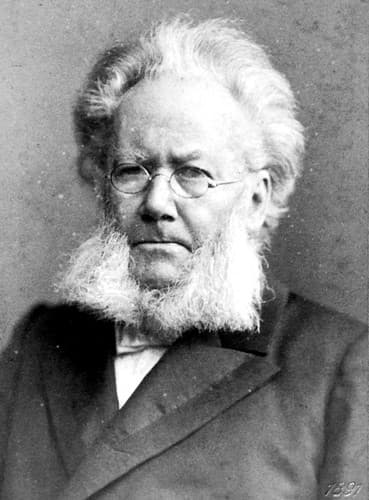
Henrik Johan Ibsen was a Norwegian playwright and theatre director. As one of the founders of modernism in theatre, Ibsen is often referred to as "the father of realism" and one of the most influential playwrights of his time. His major works include Brand, Peer Gynt, An Enemy of the People, Emperor and Galilean, A Doll's House, Hedda Gabler, Ghosts, The Wild Duck, When We Dead Awaken, Rosmersholm, and The Master Builder. Ibsen is the most frequently performed dramatist in the world after Shakespeare, and A Doll's House was the world's most performed play in 2006.
Similar books
- Hedda Gabler
Henrik Ibsen
3.8 (30k) average on GoodreadsFictionExplores complex, trapped characters and societal expectations with psychological depth.
- Death of a Salesman
Arthur Miller
3.5 (186k) average on GoodreadsFictionFocuses on a fallen patriarch's delusions, family dysfunction, and the crushing weight of unfulfilled ambition.
- A Doll's House
Henrik Ibsen
3.7 (106k) average on GoodreadsFictionWhile both plays feature individuals trapped by societal expectations and past decisions, 'A Doll's House' offers a more explicit and revolutionary call for individual freedom and self-discovery through Nora's defiant exit. 'Borkman' is more a tragic post-mortem on the consequences of sacrificing personal happiness for power, with no clear path to liberation for its central figure. Nora's departure implies a future, however uncertain, whereas Borkman's end is final and fatalistic.
- Nineteen Eighty-Four
George Orwell
4.2 (5.5M) average on GoodreadsFictionWinston Smith dreams of truth and rebellion in a world where Big Brother watches all, but he confronts the terrifying power of a regime that controls not just actions, but thoughts.
- The Frozen River
Ariel Lawhon
4.4 (600k) average on GoodreadsFictionIn 1789 Maine, a heroic midwife's diary helps her expose a murder and get justice in a town that wants to silence her.
- A Man Called Ove
Fredrik Backman
4.4 (569k) average on GoodreadsFictionA stubborn widower, who lives by strict rules, finds his quiet world changed by a lively new family next door, making him face his past and find happiness in human connection.






Enjoyed the summary?
A summary gives you the shape of the book. The book itself has the detail, the examples and the voice.
Find John Gabriel Borkman on AmazonAs an Amazon Associate, BookBrief earns from qualifying purchases. How we're funded