
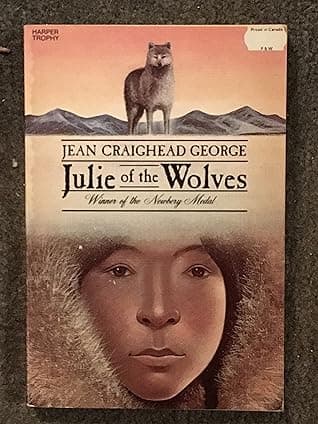
Synopsis
Covers the whole plot, including the ending.
- Difficulty
- Easy
- Pacing
- Moderate
- Mood
- Atmospheric, Reflective, Educational, Hopeful
- Read it if
- You enjoy survival stories, nature writing, and coming-of-age tales set in unique environments.
- Skip it if
- You prefer fast-paced action or are sensitive to animal death in fiction.
Julie of the Wolves Plot Summary
Covers the whole plot, including the ending.
Escape to the Tundra
Thirteen-year-old Miyax leaves her arranged marriage to Daniel and the difficult home of her father's friend, Martha, in Barrow, Alaska. She plans to reach San Francisco, California, to live with her pen pal, Amy. She heads into the Alaskan tundra with only a few supplies, including a knife and some dried meat. Having grown up with both traditional Eskimo customs and modern American culture, Miyax feels caught between two worlds. Her journey quickly becomes dangerous as she realizes how vast the wilderness is and how little food there is. She remembers her father, Kapugen, and his lessons about Arctic survival.
Encounter with the Wolf Pack
After days of wandering and near-starvation, Miyax finds a pack of Arctic wolves. Desperate for food, she decides to watch them, hoping to learn their hunting methods and perhaps share their kills. She remembers Kapugen's lessons about respecting animals and communicating with them. She identifies the alpha male, Amaroq, and begins to imitate wolf behaviors, like sitting patiently and making submissive gestures. At first, the wolves ignore her, but her persistence and quiet observation eventually lead to a subtle acknowledgment from Amaroq, giving her hope.
Learning the Ways of the Wolves
Miyax works to understand the wolf pack's social structure and hunting strategies. She observes Amaroq, the lead wolf, and learns how he communicates, hunts, and cares for his family. She also learns about the other wolves: Silver, the beta male; Nails, a young female; and the pups. By mimicking their calls and body language, she slowly gains their acceptance. Amaroq eventually brings her food, a piece of caribou liver, which is a key moment in her relationship with the pack. She begins to do well, learning to hunt lemmings and store food like the wolves.
The Arrival of the Golden Plover
As summer goes on, Miyax fully becomes part of the tundra's rhythms. She feels a strong bond with the wolf pack, especially Amaroq, who she sees as a father figure in the wilderness. She names the pups and watches them play. One day, a golden plover, a bird that migrates south, lands near her. Its presence reminds her of the world beyond the tundra and her original goal of reaching San Francisco. This encounter creates a conflict within her: her wish to stay with the wolves versus her lingering connection to the human world and her pen pal, Amy.
Winter's Approach and the Threat of Hunters
As autumn arrives, the tundra changes, and the caribou herds begin to migrate. Miyax realizes that the wolves' food source will become scarce. She also notices signs of human presence — airplane trails and the sound of distant shots. This fills her with fear, knowing that hunters threaten the wolf pack. She tries to warn the wolves of the danger, but their instincts differ from hers. The conflict between the wild and human worlds grows, forcing Miyax to face the harsh realities of both.
Tragedy Strikes the Pack
Miyax's worst fears come true when she hears gunshots and later finds that Amaroq has been killed by a hunter from an airplane. This loss devastates her, as Amaroq was her protector, teacher, and family in the wilderness. His death shatters her sense of belonging and safety. She sees the pack's grief and confusion, and the young wolves struggle to find leadership. This tragic event changes Miyax, increasing her disappointment with the human world and its destructive effect on nature.
A New Journey and a Growing Conflict
After Amaroq's death, Miyax feels she cannot stay with the fragmented wolf pack. She says a sad farewell to the remaining wolves, especially to her favorite pup, Kapu. Her desire to find Amy and escape the pain of the tundra returns. She begins her journey south, carrying a deep sense of loss but also a new determination. As she travels, she encounters more signs of human civilization, including traplines and abandoned camps, which further show the modern world's growing presence in the wilderness.
Encounter with Tornait
During her southward journey, Miyax finds an injured golden plover, which she names Tornait, meaning 'spirit bird.' She cares for the bird, making a splint for its wing. This act of nurturing gives her purpose and comfort amidst her grief. Tornait becomes a symbol of hope and resilience, reminding her of life's connections and nature's beauty. Her bond with Tornait echoes her earlier connection with the wolves, showing her natural empathy and deep understanding of the natural world.
Discovery of a Human Camp
Miyax eventually finds a trapper's camp. She meets a solitary Eskimo man named Oki, who is friendly but speaks little English. Through broken words and gestures, Miyax learns that Oki knows her father, Kapugen. To her shock, Oki reveals that Kapugen is alive and has adopted a more modern, 'gussak' (white man's) way of life, living in a house in a village and having remarried. This news is a blow to Miyax, challenging her idealized image of her father as a traditional Eskimo hunter.
Reunion with Kapugen
Guided by Oki, Miyax travels to the village where Kapugen lives. The reunion is bittersweet. While she is happy to see him alive, she finds him greatly changed. He is no longer the traditional hunter she remembers, but a man who has adopted modern comforts and values. He wears Western clothes, lives in a house, and seems to have moved away from the deep connection to the land he once taught her. This realization causes Miyax great sadness and confusion, as her image of her father, her symbol of traditional Eskimo life, is broken.
A Choice Between Worlds
Miyax struggles to accept the Kapugen she knew versus the Kapugen she now sees. She realizes that her initial journey to San Francisco was an escape from a difficult present, but her time with the wolves taught her the value of her Eskimo heritage and self-reliance. Now, facing a father who has seemingly abandoned those traditions, she is at a crossroads. She understands that the wild she embraced is quickly disappearing, and the way forward is unclear. She must decide whether to fully embrace the modern world or find a way to honor her heritage within it.
Embracing a New Path
Despite her disappointment, Miyax begins to understand the challenges of survival and adaptation in a changing world. She recognizes that Kapugen, like her, has adapted to survive. She chooses to stay with her father, accepting his new life while holding onto the lessons learned from the wolves and her traditional upbringing. She realizes that true Eskimo values—intelligence, fearlessness, and love—are not tied to a specific place or lifestyle, but are inner qualities. Her journey has changed her from a lost girl into a resilient young woman who can connect two worlds.
Julie of the Wolves Characters
Miyax (Julie Edwards)
Protagonist
A young Eskimo girl torn between traditional and modern worlds.
Miyax, also known as Julie, is a thirteen-year-old Eskimo girl who runs away from an unhappy arranged marriage and seeks refuge in the Alaskan wilderness. She is intelligent, resourceful, and deeply connected to nature, drawing upon her father's teachings for survival. Throughout her journey, she grapples with her identity, torn between her traditional Eskimo heritage and the encroaching modern American culture. She possesses a keen observational sense and a remarkable ability to communicate with animals.
Relationships: Kapugen (Her revered father and mentor in traditional Eskimo ways.); Amaroq (The alpha wolf who becomes her surrogate father and teacher in the wilderness.); Amy (Her pen pal in San Francisco, representing the modern world and her initial escape destination.); Daniel (Her arranged husband, whom she flees.); Martha (Kapugen's friend, with whom Miyax lived in Barrow, finding her overbearing.)
Kapugen
Supporting
Miyax's father, a traditional Eskimo hunter who later adapts to modern life.
Kapugen is Miyax's father, a revered hunter and a master of traditional Eskimo survival skills. He taught Miyax how to hunt, fish, and respect the land and its creatures. For much of the book, he represents the ideal of traditional Eskimo life and Miyax's guiding light in the wilderness. However, Miyax later discovers that he has adapted to the 'gussak' (white man's) way of life, living in a modern village and remarrying, which deeply challenges Miyax's perceptions.
Relationships: Miyax (His daughter, whom he taught survival skills and traditional values.); Martha (His friend, who cares for Miyax in Barrow.)
Amaroq
Supporting
The alpha male of the wolf pack who accepts Miyax and teaches her survival.
Amaroq is the wise and patient alpha male of the wolf pack that Miyax encounters. He is a powerful hunter and a responsible leader, guiding his pack with intelligence and care. He initially observes Miyax with caution but gradually accepts her into the periphery of his pack, eventually providing her with food and allowing her to learn from their ways. He becomes a surrogate father figure to Miyax, teaching her invaluable lessons about hunting, communication, and the intricate balance of nature. His tragic death is a pivotal moment for Miyax.
Relationships: Miyax (Her surrogate father and mentor in the wilderness.); Silver (His beta male and pack member.); Nails (A young female in his pack.); Kapu (One of his pups, with whom Miyax forms a special bond.)
Silver
Supporting
The beta male of Amaroq's wolf pack, often suspicious of Miyax.
Silver is the beta male of Amaroq's wolf pack. He is a strong hunter and loyal to Amaroq, but he is initially more suspicious and wary of Miyax than Amaroq is. He represents the wild's inherent caution towards humans. Over time, as Miyax proves herself harmless and dedicated, Silver's suspicion lessens, though he never fully embraces her as Amaroq does. He plays a crucial role in the pack's dynamics and survival.
Relationships: Miyax (Initially wary of her, later accepts her presence.); Amaroq (Loyal beta male and pack member.)
Kapu
Supporting
One of Amaroq's wolf pups, with whom Miyax forms a special bond.
Kapu is one of Amaroq's pups, named by Miyax. He is a playful and curious young wolf who forms a special connection with Miyax. He is often the first to approach her and engage in playful interactions, symbolizing the innocence and natural curiosity of the wild. Miyax feels a deep affection for Kapu, seeing him as a younger brother. His presence provides her with comfort and a sense of family during her time with the pack.
Relationships: Miyax (Her favorite pup and a source of comfort and affection.); Amaroq (His father.)
Oki
Supporting
An Eskimo trapper who helps Miyax find her father.
Oki is a solitary Eskimo trapper whom Miyax encounters during her journey south. He is a kind and gentle man, despite his quiet demeanor. He helps Miyax by providing her with food and, most importantly, by informing her that her father, Kapugen, is alive and living in a nearby village. Oki represents a bridge between the traditional and modern worlds, living off the land but also engaging with some aspects of modern life. He is instrumental in guiding Miyax to her father.
Relationships: Miyax (A helpful stranger who guides her to her father.); Kapugen (An acquaintance who knows of Kapugen's whereabouts.)
Amy
Mentioned
Miyax's pen pal in San Francisco, representing her initial escape goal.
Amy is Miyax's pen pal from San Francisco, California. She represents the allure of the modern world and Miyax's initial destination when she runs away. Amy symbolizes a different life, one free from the confines of traditional Eskimo expectations and the hardships of the Arctic. Though she never appears in person, her existence serves as a driving force for Miyax's journey and a symbol of the 'gussak' world.
Relationships: Miyax (Her pen pal and initial destination.)
Daniel
Mentioned
Miyax's arranged husband, whose marriage she flees.
Daniel is Miyax's arranged husband, a young man whom she finds distasteful and whose marriage she flees at the beginning of the story. He represents the oppressive aspects of traditional Eskimo society that Miyax rebels against. His character is not deeply developed, serving primarily as the catalyst for Miyax's escape into the wilderness.
Relationships: Miyax (Her arranged husband, whom she avoids.)
Julie of the Wolves Themes
Survival and Adaptation
The novel explores survival, both physical and emotional. Miyax's journey shows human resilience as she adapts to the harsh Alaskan wilderness, learning from the wolves how to hunt, find shelter, and endure extreme conditions. Beyond physical survival, she adapts to the loss of her traditional world and the discovery of her father's changed life. This theme is clear when she mimics wolf behavior for acceptance (plot_summary #3) and when she later accepts Kapugen's modern lifestyle, finding a way to combine her heritage with new realities (plot_summary #12).
“She was an Eskimo, and Eskimos were not afraid of the wilderness. They were part of it.”
The Conflict Between Tradition and Modernity
A main conflict in the story is the clash between traditional Eskimo culture and the growing modern 'gussak' (white man's) ways. Miyax herself embodies this conflict, having lived in both worlds. She first tries to escape traditional expectations (arranged marriage) but finds comfort and identity in the ancient wisdom of the land and animals. The killing of Amaroq by a modern hunter (plot_summary #6) clearly shows modernity's destructive impact on the wild. The biggest challenge comes when Miyax discovers her father, Kapugen, has embraced modern life, forcing her to reconcile her idealized past with a complex present (plot_summary #10 and #11).
“She had to find Kapugen and tell him the wolves were being killed. He would know what to do. He was Eskimo. He would understand.”
Identity and Belonging
Miyax's journey is a search for identity and belonging. Initially, she feels lost, fleeing a home where she feels trapped. In the wilderness, she finds a strong sense of belonging with the wolf pack, becoming 'Julie of the Wolves.' This connection helps her define who she is, drawing on her Eskimo heritage. However, Amaroq's loss and the discovery of her father's changed identity force her to redefine her sense of belonging. She ultimately realizes that her true identity lies not in a place or a specific lifestyle, but in her inner strength and values (plot_summary #11 and #12).
“She was Miyax, daughter of Kapugen, and she was a member of the wolf pack.”
Humanity's Relationship with Nature
The novel explores the delicate relationship between humans and nature. Miyax shows a respectful, interdependent relationship with nature, learning its lessons and living in harmony with it. Her ability to communicate with and be accepted by the wolves highlights a forgotten connection between humans and animals (plot_summary #3). In contrast, the 'gussak' world often represents exploitation and destruction, as seen in Amaroq's killing by airplane hunters (plot_summary #6). The story suggests that a balanced relationship with nature, based on understanding and respect, is important for both human and ecological well-being.
“The wolf, who was to her a symbol of the Eskimo way of life, was being hunted from the sky.”
Plot Devices & Literary Techniques
Foreshadowing
Hints and clues about future events, particularly the changing landscape and threats.
Foreshadowing is used to build suspense and prepare the reader for upcoming challenges. For instance, Miyax's observations of airplane contrails and distant gunshots (plot_summary #5) subtly warn of the dangers posed by human hunters, culminating in Amaroq's death. The golden plover's migratory flight south (plot_summary #4) serves as an early hint of Miyax's eventual return to the human world, even as she feels integrated with the wolves. These subtle cues create a sense of impending change and unavoidable conflict.
Symbolism
Objects and characters representing deeper meanings and themes.
Symbolism is central to the novel. The wolves, especially Amaroq, symbolize the purity, wisdom, and resilience of traditional Eskimo life and the natural world. Amaroq's death (plot_summary #6) symbolizes the tragic impact of modern civilization on indigenous cultures and nature. The golden plover (Tornait) symbolizes hope, migration, and the interconnectedness of life, guiding Miyax during her solitary journey (plot_summary #8). Miyax's knife, inherited from her father, symbolizes her Eskimo heritage and her capacity for survival and self-reliance.
Flashbacks/Memory
Miyax's recollections of her father's teachings and past experiences.
The narrative frequently employs flashbacks or Miyax's internal memories of her father, Kapugen. These recollections are not just sentimental; they are crucial survival tools. Miyax draws on Kapugen's specific lessons about animal behavior, hunting, and respecting the land to navigate the wilderness (plot_summary #1 and #3). These memories serve as her internal guide, connecting her to her heritage and providing the knowledge she needs to survive, effectively making Kapugen a guiding presence even in his absence.
Personification
Attributing human qualities to animals and nature.
Personification is used extensively to deepen Miyax's connection to the natural world, particularly the wolves. She interprets their expressions, calls, and actions with human-like understanding, attributing feelings like patience, wisdom, and even grief to them. For example, she sees Amaroq as a 'gentle father' and observes the wolves' 'sadness' after his death. This device allows the reader to empathize with the animals and understand the profound bond Miyax forms with them, blurring the lines between human and animal consciousness.
Julie of the Wolves Quotes
“Miyax, the name you have chosen, is a good one. It means the little one of the wolf, and you have made yourself one of them.”
“The wind was a whetted knife, and Miyax was a naked girl.”
“Wolves are brothers. They are to be respected, not feared.”
“She was an Eskimo, a true child of the wilderness, and the wilderness was her home.”
“To be a good hunter, you must think like the animal.”
“The wolves were her family, her teachers, her companions.”
“She had to learn to live with the land, not against it.”
“Man is like the walrus, clumsy and slow, but he has a mind that can make him fly.”
“The sun was her clock, the wind her calendar, the stars her map.”
“When you are lost, you are not really lost until you lose sight of yourself.”
“She was Miyax of the wolves, and she was home.”
“The old ways are not gone. They are just forgotten.”
“To survive, one must be strong, silent, and swift.”
“The world of the white man was not her world, not anymore.”
“There are no trails in the tundra, but the animals always know where they are going.”
Quiz
10 questions on the plot and the characters. Each answer comes with a short explanation.
Question 1
What is Miyax's English name, which she uses when writing to her pen pal?
- Amy
- Julie
- Sarah
- Elizabeth
Show answer
B. Julie Miyax's pen pal calls her Julie, which becomes her chosen English name when she runs away.
Question 2
What is the primary reason Miyax runs away from home?
- To find her long-lost father
- To escape an intolerable home situation, including a forced marriage
- To explore the Alaskan wilderness
- To join a different Eskimo village
Show answer
B. To escape an intolerable home situation, including a forced marriage Miyax runs away to escape her arranged marriage to Daniel, which she finds intolerable, and to find her pen pal in San Francisco.
Question 3
Which animal pack does Miyax eventually come to live with and learn from?
- A pack of caribou
- A family of polar bears
- A pack of Arctic wolves
- A group of arctic foxes
Show answer
C. A pack of Arctic wolves Miyax is accepted by and learns to communicate with a pack of Arctic wolves, who become her surrogate family.
Question 4
What skill, taught to her by her father Kapugen, is crucial for Miyax's survival in the wilderness?
- Building elaborate snow shelters
- Setting complex animal traps
- Reading animal behavior and understanding the natural world
- Navigating by the stars alone
Show answer
C. Reading animal behavior and understanding the natural world Kapugen taught Miyax to observe and understand animals, particularly wolves, which directly aids her in communicating with and learning from the pack.
Question 5
What is the name of the lead wolf in the pack that Miyax befriends?
- Amaroq
- Jello
- Kapu
- Tornait
Show answer
A. Amaroq Amaroq is the wise and respected alpha male of the wolf pack who accepts Miyax and teaches her many things.
Question 6
What critical item does Miyax initially lack that makes her journey even more perilous?
- A warm fur coat
- A hunting rifle
- Food and a compass
- A sled and dog team
Show answer
C. Food and a compass The book explicitly states that Miyax is lost in the Alaskan wilderness 'without food, without even a compass,' highlighting her initial unpreparedness.
Question 7
What significant change in the wolves' behavior towards Miyax signals their full acceptance of her?
- They allow her to hunt alongside them with a weapon.
- They bring her food and allow her to share in their kills.
- They let her sleep inside their den with the pups.
- They teach her their unique howling patterns.
Show answer
B. They bring her food and allow her to share in their kills. The wolves' act of sharing food, particularly when Amaroq regurgitates food for her, is a profound sign of her acceptance into the pack.
Question 8
What is the ultimate theme Miyax learns about the 'traditional riches of Eskimo life' by the end of her journey?
- Accumulation of wealth and possessions.
- The importance of technology and modern advancements.
- Intelligence, fearlessness, and love for nature and community.
- Strict adherence to ancient rituals and superstitions.
Show answer
C. Intelligence, fearlessness, and love for nature and community. The book explicitly states that Miyax 'is forced to rethink her past, and to define for herself the traditional riches of Eskimo life: intelligence, fearlessness, and love.'
Question 9
What tragic event involving Amaroq forces Miyax to question her perception of humans and the modern world?
- Amaroq is attacked by another wolf pack.
- Amaroq is killed by a hunter from a passing airplane.
- Amaroq succumbs to old age and illness.
- Amaroq abandons the pack, leaving Miyax alone.
Show answer
B. Amaroq is killed by a hunter from a passing airplane. Amaroq's death at the hands of a human hunter in an airplane is a pivotal moment that shatters Miyax's idealized view of her wilderness life and highlights the conflict between nature and human encroachment.
Question 10
Upon finally reaching a human settlement, what does Miyax discover about her father, Kapugen?
- He has moved to San Francisco and is waiting for her.
- He has become a successful hunter and trapper, living a traditional Eskimo life.
- He has adopted a more modern lifestyle, working for a white man and living in a house.
- He has passed away years ago, unknown to her.
Show answer
C. He has adopted a more modern lifestyle, working for a white man and living in a house. Miyax finds her father, Kapugen, but he has significantly changed, having adapted to a more modern way of life, working for a gussak (white man) and living in a settlement, which initially disappoints her.
Julie of the Wolves FAQ
What is the central conflict Miyax faces at the beginning of the story that leads her to run away?
Miyax is deeply unhappy with her arranged marriage to Daniel, a mentally challenged boy, and the increasingly Westernized and restrictive life in Mekoryuk. She feels disconnected from her Gussak stepmother, Martha, and longs for the freedom and traditional Eskimo ways she experienced with her father, Kapugen.
How does Miyax initially establish communication and trust with the wolf pack?
Miyax meticulously observes the wolves' behavior, particularly their communication through barks, growls, and body language. She mimics their gestures, such as lowering her head in submission to Kapu, the pack leader, and eventually earns their acceptance by demonstrating non-threatening behavior and sharing food.
Who is Amaroq and what role does he play in Miyax's survival and emotional development?
Amaroq is the alpha male of the wolf pack, a wise and experienced leader. He becomes Miyax's surrogate father figure, teaching her how to hunt, understand the land, and live in harmony with nature, profoundly shaping her understanding of survival and community.
What significant event causes Miyax to ultimately decide to leave the wolf pack and continue her journey?
Miyax witnesses the tragic death of Amaroq, who is shot by a Gussak hunter from a plane. This event shatters her sense of security and loyalty to the pack, making her realize the dangers posed by humans and solidifying her decision to seek out her father.
Where is Miyax trying to go when she runs away, and why does this destination appeal to her?
Miyax is trying to reach San Francisco, California, to meet her pen pal, Amy, who calls her Julie. This destination represents a complete escape from her current life, offering the promise of a modern, Americanized existence and a different identity.
What is the significance of the silver earrings Miyax wears throughout her journey?
The silver earrings are a gift from her father, Kapugen, and serve as a tangible link to him and her traditional Eskimo heritage. They symbolize her identity and connection to her past, even as she struggles to define her future.
How does Miyax's understanding of her father, Kapugen, evolve as she learns more about his life?
Miyax initially idealizes Kapugen as a pure Eskimo hunter, but later learns he has adopted Gussak ways, becoming a successful hunter with a modern rifle and even marrying a Gussak woman. This revelation challenges her romanticized view and forces her to reconcile his dual identity.
What is the implied significance of the 'golden plover' that Miyax often observes?
The golden plover symbolizes migration and the cyclical nature of life and seasons. Its journeys mirror Miyax's own journey of survival and self-discovery, and its return signifies hope and the promise of renewal.
Beyond physical survival, what psychological needs does the wolf pack fulfill for Miyax?
The wolf pack provides Miyax with a profound sense of belonging, family, and unconditional acceptance, which she lacked in her human community. It nurtures her emotional well-being and helps her overcome feelings of loneliness and despair.
How does Miyax's experience with the wolves help her process the trauma of her past and her father's absence?
Living with the wolves allows Miyax to reconnect with the natural world and the traditional values her father taught her. Their disciplined yet loving social structure provides a stable environment for her to heal and integrate her past experiences, reinforcing her resilience.
In what ways does Miyax's internal conflict between her Eskimo identity and her desire for a modern 'Julie' identity manifest?
Miyax constantly grapples with the lure of Western conveniences and the perceived freedom of San Francisco versus the deep-seated respect for nature and communal values of her Eskimo heritage. She often questions which path truly defines her and where she belongs.
How does the author use Miyax's observations of animal behavior to reflect on human nature and societal structures?
Through Miyax's keen observations of the wolf pack's hierarchy, communication, and cooperation, the author draws parallels to human societal needs for leadership, community, and mutual respect, often contrasting the 'natural' order with the destructive tendencies of Gussak society.
Is Kapugen's choice to adopt Gussak ways a betrayal of his Eskimo heritage, or a pragmatic adaptation for survival?
This is debatable. Some interpret it as a necessary adaptation for survival in a changing world, allowing him to thrive. Others might see it as a compromise of traditional values, highlighting the difficulty of maintaining cultural identity in the face of modernization.
What is the ultimate message about the balance between nature and civilization that the book conveys through Miyax's journey?
The book suggests that true fulfillment and survival lie in understanding and respecting the natural world, rather than conquering it. It critiques the destructive aspects of unchecked civilization while acknowledging the complexities of cultural change and adaptation.
How does the ending, with Miyax finding her father but seeing his changed lifestyle, contribute to the book's themes?
The ending reinforces the theme of cultural transition and the difficulty of returning to an idealized past. Miyax realizes that both she and her father have changed, suggesting that true belonging involves forging a new path that integrates old and new identities, rather than simply reverting.
What specific skills and knowledge, learned from her father, prove most crucial for Miyax's survival in the wilderness?
Miyax's father taught her crucial survival skills such as how to build a snow house (igloo), identify edible plants, hunt small game, and, most importantly, how to observe and understand animal behavior, particularly the wolves.
How does Miyax's relationship with Daniel, her arranged husband, influence her decision to leave her village?
Miyax finds Daniel's mental slowness and her expected role as his wife intolerable. This arranged marriage, combined with the general discomfort of her stepmother's home, is a primary catalyst for her desperate flight from Mekoryuk.
About the author
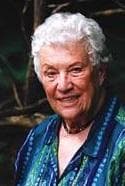
Jean Craighead George was an American author known for her works of children's fiction, particularly those that explore themes of nature and wildlife. Among her notable books are "Julie of the Wolves," which tells the story of a young girl surviving in the Alaskan wilderness, and "Tree Castle Island," which follows the adventures of children in a forest setting.
Similar books
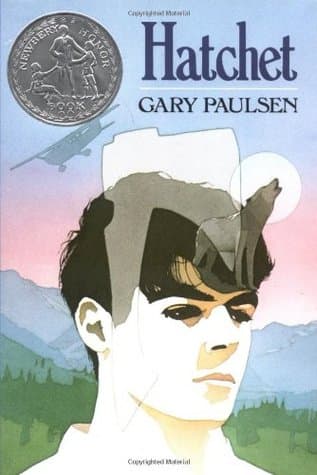
- Hatchet
Gary Paulsen
3.7 (309k) average on GoodreadsChildren'sA classic survival story of a boy lost in the wilderness, relying on his wits and nature.
- Island of the Blue Dolphins
Scott O'Dell
3.8 (292k) average on GoodreadsChildren'sFocuses on a young girl's survival alone on an island and her relationship with animals.
- Harry Potter and the Sorcerer's Stone
J.K. Rowling
4.5 (7M) average on GoodreadsFantasyRescued from a miserable life under the stairs, an orphaned boy discovers he's a wizard destined for a magical school, where he uncovers a dangerous secret tied to the dark wizard who murdered his parents.
- The Hobbit, or There and Back Again
J.R.R. Tolkien
4.3 (2.9M) average on GoodreadsFantasyA comfort-loving hobbit named Bilbo Baggins is whisked away by a mischievous wizard and a band of dwarves on an unexpected journey to reclaim stolen treasure from a fearsome dragon, discovering courage and a magical ring along the way.
- Harry Potter and the Goblet of Fire
J.K. Rowling
4.6 (2.6M) average on GoodreadsFantasyA bewildered Harry Potter, underage and thrust into a deadly Triwizard Tournament, must brave dragons, mermaids, and a resurgent dark magic to survive a year that will forever alter the wizarding world.
- Harry Potter and the Order of the Phoenix
J.K. Rowling
4.5 (2.5M) average on GoodreadsFantasyIn a year of oppressive secrets and the threat of Voldemort, Harry Potter and Dumbledore's Army secretly train for war, shown through Jim Kay and Neil Packer's dark illustrations.





Enjoyed the summary?
A summary gives you the shape of the book. The book itself has the detail, the examples and the voice.
Find Julie of the Wolves on AmazonAs an Amazon Associate, BookBrief earns from qualifying purchases. How we're funded