
Synopsis
Covers the whole plot, including the ending.
- Difficulty
- Medium
- Pacing
- Moderate
- Mood
- Gritty, Bleak, Cynical, Observational, Unflinching
- Read it if
- You are interested in a raw, unflinching, first-person account of drug addiction in the mid-20th century, exploring the psychological and social aspects of the junkie lifestyle.
- Skip it if
- You prefer traditional plot structures, find graphic descriptions of drug use and addiction disturbing, or are sensitive to morally ambiguous characters and settings.
Junky Plot Summary
Covers the whole plot, including the ending.
Early Days of Addiction in New York
The novel introduces William Lee, who is already deep into heroin addiction. He describes his daily routine of getting drugs in New York City, especially the Lower East Side, and the constant effort to maintain his habit. Lee details injecting, the immediate rush, and the quick need for more. He interacts with other addicts, pushers, and shady characters, navigating a hidden world driven by the next fix. His early experiences show his detached observation of his own decline and the poor lives around him. This sets the bleak tone of his existence. He works odd jobs, often as a hotel porter, to pay for his addiction, always looking for new connections and avoiding police.
Encounters with Law Enforcement and the Legal System
Lee's addiction often leads to trouble with the law. He tells of several arrests for possession and vagrancy. He describes the process of being booked, held in jail, and appearing in court. He talks about the casual harshness of some police officers and the uncaring bureaucracy of the legal system. These experiences are not shown as chances for reform. They are temporary problems that stop his drug use. Lee learns to deal with the system, often pleading guilty to smaller charges or pretending to cooperate to get lighter sentences or avoid worse outcomes. His experiences show a deep distrust of authority and a practical acceptance of his criminal status.
Relationships and the Junkie Subculture
Lee forms different relationships, mostly brief or for business, within the junkie subculture. He has a significant relationship with Vicki, another addict. They share a difficult and codependent life. Their interactions are often fueled by drugs, marked by arguments, and a mutual understanding of their shared situation. He also deals with other junkies like Herman, a small-time dealer, and Mary, another user. These relationships often involve distrust, manipulation, and the constant threat of betrayal. However, they also give a fragile sense of community and shared experience in an otherwise lonely world. Lee observes the different types of addicts and how they survive.
Attempts at Detox and Rehabilitation
Lee tries to detox periodically, in jail, at home, or by himself. He describes the pain of withdrawal—the sweats, cramps, nausea, and intense cravings. These attempts rarely last long. The drug's pull is always too strong. He thinks about how useless these efforts are, knowing that his environment and psychological dependence make lasting sobriety almost impossible. These episodes show addiction's cyclical nature and how hard it is to escape it, even when he wants to. He notes the physical and mental decay that comes with long-term use and withdrawal.
Escalation and Dealing
As his addiction gets worse and its cost rises, Lee moves from just using to actively dealing. He starts selling small amounts of heroin and other drugs to support his own habit. He learns the details of the black market. This involves connecting with bigger suppliers, managing risks, and balancing profit and personal use. His dealing further puts him into the criminal underworld. It exposes him to more dangerous people and situations. He says his actions are necessary for survival, blurring the lines between user and supplier.
Moving to New Orleans and the South
Lee moves south, eventually settling in New Orleans, seeking a change from the New York drug scene. However, he quickly finds that the drug problem is just as widespread, though with different local details. He continues his addiction, getting drugs and interacting with local junkies and pushers. The new setting does little to change his situation. The same struggles with withdrawal, the law, and the constant search for a fix continue. He observes the unique traits of the Southern drug culture, including different drugs and distribution methods. But he ultimately finds himself in a familiar cycle.
Experimentation with Other Drugs and Sex
Beyond heroin, Lee tries many other drugs, including morphine, cocaine, marijuana, and various sedatives. He often combines them to get different effects or manage withdrawal symptoms. He describes each substance's distinct effects and his changing preferences. The story also touches on Lee's sexuality, detailing his experiences with both men and women in the drug subculture. These encounters are often for business, driven by mutual need, or happen in drug-induced states. He approaches these experiences with the same detached, observational quality as his drug use, seeing them as further explorations of human experience.
The Allure of the Junkie Lifestyle
Lee reflects on the appeal of the junkie lifestyle. Despite the dirt, danger, and degradation, he describes a certain 'coolness' or mystery with it. It gives a sense of belonging to an exclusive, forbidden group. He details the rituals, language, and shared understanding that connect addicts, creating a strange sense of community. This attraction is not just about the drug itself. It is also about the identity it gives and the escape it offers from conventional society. He notes how addiction simplifies life, reducing all desires to the single, overwhelming need for a fix. This focus can become a strange kind of freedom.
The Pursuit of 'Ultimate Kicks' and the End of the Line
As his addiction progresses, Lee's search for drugs becomes more desperate. It is less about pleasure and more about preventing withdrawal. He seeks an 'ultimate kick' or a different kind of experience. He tells of increasingly risky efforts to get drugs. This includes traveling to Mexico for more potent or unusual substances, or to escape US law. This travel shows a deeper psychological journey into his addiction. The lines between survival, pleasure, and self-destruction become blurred. The story suggests a growing feeling of being at the end of the line, with fewer choices and a deepening despair beneath his detached exterior.
A Glimmer of Hope and the Journey's Continuation
Towards the end of the story, Lee, while still addicted, starts to think about a different future. This might involve a more serious attempt at sobriety or a complete break from his current life. He considers going to Mexico, not just for drugs, but possibly for a more permanent escape or a chance to rethink things. The ending is not about definite recovery. It is a continuation of his journey, leaving the reader with the idea that his struggles are ongoing. It suggests he knows his situation and has a new desire for change, even if the way forward is unclear and hard.
Principal Figures
William Lee
Protagonist
A detached, observant heroin addict navigating the underworld of post-war America
William Lee is the first-person narrator and protagonist, a thinly veiled autobiographical representation of William S. Burroughs himself. He is a heroin addict who maintains a surprisingly detached and analytical perspective on his own degradation and the squalor of the junkie world. Lee is driven by the insatiable need for his next fix, which dictates his actions, relationships, and movements. He is cynical, pragmatic, and possesses a dark wit, often observing the absurdities and hypocrisies of both the straight and the drug-addled societies. His intellectual curiosity, even amidst his addiction, leads him to experiment with various substances and to analyze the psychology of addiction.
Relationships: Vicki (codependent, volatile romantic and drug-sharing relationship); Herman (fellow junkie and small-time dealer); Mary (fellow junkie, often a source of drugs or company)
Vicki
Supporting
Lee's on-again, off-again junkie girlfriend
Vicki is William Lee's primary romantic interest and a fellow heroin addict. Their relationship is characterized by intense codependency, shared drug use, and frequent arguments fueled by their addictions. Vicki is often portrayed as more emotionally volatile and desperate than Lee, reflecting the harsher realities faced by women in the drug underworld. She represents the destructive nature of addiction on personal relationships, as their bond is primarily centered around the procurement and consumption of drugs. Despite the chaos, there is a deep, if twisted, understanding between them due to their shared experience.
Relationships: William Lee (codependent, volatile romantic and drug-sharing relationship)
Herman
Supporting
A small-time drug dealer and acquaintance of Lee
Herman is a recurring character in Lee's New York drug circuit, a small-time dealer and fellow junkie. He is one of the many unsavory but necessary contacts Lee makes to maintain his habit. Herman embodies the desperate, often unreliable nature of individuals in the drug trade, driven by his own addiction. His interactions with Lee are typically transactional, highlighting the lack of genuine friendship in this world, where everyone is primarily concerned with their next score. Herman's presence helps to illustrate the intricate network of suppliers and users that Lee navigates daily.
Relationships: William Lee (drug-related acquaintance and occasional supplier)
Mary
Supporting
Another junkie in Lee's social circle
Mary is another female junkie whom Lee encounters frequently. She is less defined than Vicki but serves to illustrate the broader community of addicts Lee interacts with. Mary often represents the more vulnerable or pathetic aspects of addiction, sometimes seeking help or companionship from Lee. Her character contributes to the tapestry of the junkie underworld, showing the various individuals caught in its grip. Her presence reinforces the idea that addiction is a widespread problem affecting a diverse group of people, all united by their dependence on drugs.
Relationships: William Lee (acquaintance and fellow drug user)
The Police/Narco Agents
Antagonist
The ever-present threat of law enforcement to the junkie lifestyle
While not a single character, 'The Police' represent the collective antagonistic force of law enforcement in the novel. They are the constant threat that looms over Lee and his fellow junkies, embodying the external pressure and danger of their lifestyle. Lee describes them as often brutal, indifferent, and fundamentally misunderstanding of addiction. Their role is to disrupt, arrest, and incarcerate, forcing Lee to constantly be on guard and to develop strategies for evasion. They symbolize the societal condemnation of drug use and the futility of trying to suppress it through punitive measures.
Relationships: William Lee (adversarial, cat-and-mouse dynamic of pursuit and evasion)
The Junkie Subculture
Supporting
The collective community of addicts, dealers, and hangers-on
Like 'The Police,' this is not a single character but a pervasive force and environment. The junkie subculture is a vibrant, albeit grim, world that Lee inhabits. It's a network of shared rituals, codes, language, and mutual dependence among addicts, pushers, and various criminal elements. This subculture provides a perverse sense of belonging and identity for Lee, even as it traps him. It dictates his daily routine, his interactions, and his worldview. It is both a source of comfort and constant danger, a world where trust is rare and betrayal is common, yet it is the only world Lee truly knows.
Relationships: William Lee (immersive, defining environment and social network)
Bill Gaines
Mentioned
A fellow addict Lee encounters
Bill Gaines is one of the many minor characters Lee meets in the drug scene. He is presented as another example of a junkie, often in a state of desperation or withdrawal. His interactions with Lee are brief, serving to populate the landscape of addiction and illustrate the various types of individuals caught in its grip. Gaines contributes to the overall atmosphere of degradation and shared struggle that defines the novel's setting. He is a fleeting presence, one among many faces in the shadowy world Lee inhabits.
Relationships: William Lee (brief acquaintance in the drug world)
The Landlady
Mentioned
A minor figure representing the 'straight' world's indifference
The landlady is a minor character who occasionally appears in Lee's narrative, often when he is trying to maintain a semblance of normalcy or avoid suspicion. She represents the oblivious or indifferent 'straight' world that exists parallel to the junkie underworld. Her interactions with Lee are superficial, highlighting the gap between his hidden life and the mundane concerns of everyday society. She is a reminder of the need for discretion and the constant threat of exposure that addicts face, even in their own homes.
Relationships: William Lee (landlord-tenant relationship, marked by suspicion and evasion)
Themes & Insights
Addiction and Dependence
The main theme of 'Junky' is how drug addiction takes over everything. Burroughs details the physical and psychological parts of dependence, withdrawal, and the constant search for the next fix. The book shows how addiction takes away people's control. It makes their lives about one thing. It shows how the drug controls daily routines, relationships, and moral choices. It turns the addict into a 'junky' whose identity is defined by their habit. Lee's detached narration shows heroin's hidden power. It becomes not just a substance but a way of life, a 'job' from which there is no escape.
“A junky is a man who uses junk. But who is a junky? A junky is a man who knows junk.”
Alienation and Otherness
The novel shows a deep feeling of being alone, both from regular society and within the junkie community. William Lee, even though he is with other addicts, keeps a detached, almost scientific view of his own life and those around him. Junkies are shown as 'outsiders.' They live outside normal morality and law, creating their own rules and realities. This isolation brings both suffering and a strange kind of freedom. It lets Lee observe the world without being fully part of it. The constant fear of the law makes them even more isolated, confirming their status as outcasts.
“The junky is a special animal, a separate species. He is a creature of the night, existing outside the laws of man and God.”
The Criminal Underworld and Society's Margins
Burroughs clearly shows the hidden criminal world that supports drug addiction. This theme explores the illegal networks of pushers, users, and various low-level criminals who live on society's edges. The book details the constant game with law enforcement, the dangers of betrayal, and the harsh realities of survival in a world where trust is rare. It criticizes the societal structures that create and keep this underworld. It suggests that punishment only pushes the problem further into the shadows. This creates a subculture that is both dangerous and strangely self-sufficient. This world has its own rules, different from the 'straight' world.
“The junky's world is a vast network of connections, a secret society, with its own rules, its own language, its own currency.”
Identity and Self-Destruction
'Junky' explores how addiction shapes and changes identity. For William Lee, his identity is tied to being a 'junky.' He watches his own self-destruction with a cool, intellectual curiosity. It is almost as if he is a scientist studying his own decline. The constant search for drugs overshadows all other parts of his personality and goals. While there are times he thinks about wanting to be clean, the story mostly focuses on accepting and even embracing this drug-defined identity. It shows addiction's strong psychological hold, which makes self-destruction a chosen path rather than an accident.
“I was a junky. I had gone to the end of the line. I was a junky and I was trying to kick.”
Critique of Authority and Social Control
The novel questions the effectiveness and morality of law enforcement and the legal system's approach to drug addiction. Burroughs shows the police as often brutal and ineffective. Their methods do little to stop addiction but much to dehumanize addicts and keep a criminal underworld going. The legal system is shown as a bureaucratic maze. It offers little real help. Instead, it cycles people through jails and courts. This theme shows a deep distrust of authority. It argues that society's current response to drug use is flawed. It often makes the problem worse instead of solving it.
“The law is for the rich and the straight; the junky is always outside the law.”
Plot Devices & Literary Techniques
First-Person Detached Narration
Lee's objective, clinical voice despite his subjective experience
William Lee narrates his experiences in a remarkably detached, almost journalistic style, even when describing his own suffering and degradation. This device creates a sense of objective observation, allowing Burroughs to present the raw realities of addiction without overt moralizing or sentimentality. It also highlights Lee's intellectual and analytical nature, even as his life spirals into chaos, making him a unique and compelling guide through the underworld. This detachment can be seen as a coping mechanism, but also as a fundamental aspect of Burroughs' authorial voice, which often seeks to dissect rather than simply experience.
Slice-of-Life/Episodic Structure
A series of vignettes rather than a linear plot
The novel is structured as a series of loosely connected vignettes and anecdotes rather than a traditional linear plot with a clear climax and resolution. This episodic approach mirrors the cyclical and repetitive nature of addiction, where days blur into a constant search for drugs, interrupted by arrests or brief detox attempts. It emphasizes the mundane, repetitive reality of a junkie's life, devoid of grand narratives, and allows Burroughs to explore various facets of the drug subculture without being constrained by a conventional story arc, reflecting the non-linear experience of time under the influence.
Authentic Slang and Jargon
Use of specific language of the drug subculture
Burroughs employs the authentic slang and jargon of the 1940s and 50s drug subculture ('junk,' 'fix,' 'score,' 'kick,' 'mainline,' etc.). This device immerses the reader directly into the world of the junkie, lending credibility and realism to the narrative. It also highlights the insularity of the drug community, which has its own language and codes, further emphasizing its 'otherness' from mainstream society. The precise use of this vocabulary is not merely decorative but functions to define the characters and their reality, making the experience visceral and immediate for the reader.
Autobiographical Fiction
A thinly veiled account of Burroughs' own experiences
While presented as fiction, 'Junky' is a thinly veiled autobiographical account of William S. Burroughs' early years as a heroin addict. The protagonist, William Lee, is a clear stand-in for the author. This device lends a powerful sense of authenticity and authority to the narrative, as the details and insights come from direct, lived experience. It allows Burroughs to explore the psychological and sociological aspects of addiction with an unparalleled degree of realism and personal understanding, blurring the lines between author, narrator, and subject, making the text feel like a confession or a field report.
Junky Quotes
“A mugger and a junkie are the same thing, the only difference is the junkie makes a choice.”
“Junk is not a kick. It is a way of life.”
“The best way to escape from a problem is to solve it.”
“You can't sell junk if you're not on junk. It's a closed circuit.”
“My first experience with junk was in New York, and it was a revelation.”
“I was looking for some kind of absolute experience, and I found it in junk.”
“The junk sickness is the only sickness you can't cure with money.”
“Marijuana is a rather harmless drug, but it leads to other things.”
“The mark of a true junky is that he never gives up.”
“I never had any illusions about junk. I knew what it was.”
“The junky is a free man, in a way, because he has nothing to lose.”
“Every junky is a dealer, and every dealer is a junky.”
“The world is a vast conspiracy to make you feel bad.”
“To be a junky is to be a doctor, a nurse, a chemist, and a pharmacist, all rolled into one.”
Quiz
10 questions on the plot and the characters. Each answer comes with a short explanation.
Question 1
What is Bill Lee's primary motivation for moving from New York to New Orleans at the beginning of the novel?
- To escape a drug bust in New York.
- To find a new, cheaper source of drugs.
- To pursue a legitimate business opportunity.
- To avoid a difficult personal relationship.
Show answer
B. To find a new, cheaper source of drugs. Bill Lee moves to New Orleans primarily to locate a more accessible and affordable supply of drugs, as the scene in New York was becoming too difficult and expensive for his habit.
Question 2
Which drug is Bill Lee most consistently addicted to throughout the narrative?
- Marijuana
- Cocaine
- Heroin
- Benzedrine
Show answer
C. Heroin Heroin is the central and most pervasive drug addiction that defines Bill Lee's life and experiences throughout 'Junky,' though he experiments with others.
Question 3
What is the typical method Bill Lee uses to obtain money for his drug habit?
- Working a regular job in various cities.
- Selling drugs to other users.
- Petty theft, hustling, and relying on friends.
- Receiving an allowance from his family.
Show answer
C. Petty theft, hustling, and relying on friends. Bill Lee engages in various illicit activities, including petty theft (like shoplifting), hustling, and borrowing from acquaintances, to finance his drug addiction, rather than holding down a steady job or dealing large quantities of drugs.
Question 4
Which city is NOT a primary setting for Bill Lee's drug-seeking adventures in 'Junky'?
- New York City
- New Orleans
- Mexico City
- St. Louis
Show answer
C. Mexico City While Burroughs himself spent time in Mexico City, 'Junky' primarily focuses on Bill Lee's experiences in New York City, New Orleans, and St. Louis as he navigates the drug underworld.
Question 5
What is the significance of the character 'Kiki' in Bill Lee's life?
- Kiki is a loyal, non-addicted friend who tries to help Bill get clean.
- Kiki is a fellow junkie and small-time dealer who often provides Bill with drugs or connections.
- Kiki is a detective constantly pursuing Bill for drug offenses.
- Kiki is Bill's estranged brother who reappears unexpectedly.
Show answer
B. Kiki is a fellow junkie and small-time dealer who often provides Bill with drugs or connections. Kiki is a recurring figure in Bill Lee's drug-addled world, serving as a fellow user and a source of drugs or information about where to find them, embodying the transient, often unreliable nature of junkie relationships.
Question 6
How does Bill Lee typically view the police and the legal system?
- As a necessary evil that maintains order.
- As an oppressive force to be evaded and distrusted.
- As a potential source of help for getting clean.
- With indifference, rarely encountering them.
Show answer
B. As an oppressive force to be evaded and distrusted. Bill Lee's narrative consistently portrays the police and legal system as an adversarial, often corrupt, and always threatening force that he must constantly evade to continue his drug use and maintain his freedom.
Question 7
What is the primary thematic difference between 'Junky' and Burroughs' later, more experimental works like 'Naked Lunch'?
- 'Junky' is much more focused on political commentary.
- 'Junky' employs a more linear narrative and realistic style, while 'Naked Lunch' is highly fragmented and hallucinatory.
- 'Junky' explores themes of space travel, which are absent in 'Naked Lunch'.
- 'Junky' features a wider range of international settings than 'Naked Lunch'.
Show answer
B. 'Junky' employs a more linear narrative and realistic style, while 'Naked Lunch' is highly fragmented and hallucinatory. 'Junky' is notable for its relatively straightforward, autobiographical narrative style, detailing the factual experience of drug addiction. In contrast, 'Naked Lunch' is highly experimental, non-linear, and filled with surreal, hallucinatory imagery.
Question 8
Which of the following best describes Bill Lee's attitude towards getting 'clean' from drugs?
- He desperately wants to quit and actively seeks treatment.
- He views periods of withdrawal as an inevitable, unpleasant part of his lifestyle, often followed by relapse.
- He believes addiction is a moral failing and feels deep guilt.
- He denies his addiction entirely and sees no need to quit.
Show answer
B. He views periods of withdrawal as an inevitable, unpleasant part of his lifestyle, often followed by relapse. Bill Lee often goes through periods of withdrawal, sometimes forced, sometimes attempted, but these are usually depicted as temporary respites from his habit rather than definitive attempts to get clean. He accepts relapse as part of the junkie cycle.
Question 9
What role does Dr. Benway play in 'Junky'?
- He is a compassionate doctor who successfully helps Bill Lee overcome his addiction.
- He is a fictionalized, grotesque doctor figure representing the medical establishment's often ineffective and cruel approaches to addiction.
- He is a rival drug dealer who competes with Bill Lee.
- He is a parole officer who monitors Bill Lee's activities.
Show answer
B. He is a fictionalized, grotesque doctor figure representing the medical establishment's often ineffective and cruel approaches to addiction. Dr. Benway, a recurring character in Burroughs' work, appears in 'Junky' as a disturbing, often incompetent, and sadistic doctor who performs questionable treatments, symbolizing the author's critique of the medical and societal responses to drug addiction.
Question 10
The final section of 'Junky' describes Bill Lee's journey to a specific location with a new goal. Where does he go, and what is he seeking?
- He goes to Tangier to open a legitimate business.
- He travels to South America in search of a mythical drug called Yage.
- He returns to New York to face his past and get clean.
- He moves to a secluded farm to live a drug-free life.
Show answer
B. He travels to South America in search of a mythical drug called Yage. The book concludes with Bill Lee venturing to South America, specifically in search of Yage (ayahuasca), a hallucinogenic vine, signaling a shift in his quest from mere drug acquisition to a pursuit of altered states of consciousness, a theme Burroughs would further explore.
Junky FAQ
What is Junky about?
Junky is a semi-autobiographical novel detailing the life of Bill Lee, a heroin addict in 1940s New York City. The narrative follows his relentless pursuit of drugs, his interactions with other users, dealers, and the law, and his attempts to kick the habit, often through various bizarre and ineffective methods.
Why should I read Junky?
You should read Junky for its raw, unflinching, and unsentimental portrayal of drug addiction and the subculture surrounding it. It offers a stark, first-person perspective on the daily struggles, paranoia, and fleeting moments of euphoria experienced by an addict, providing a valuable historical document of a specific time and place.
What is the background/setting of Junky?
The book is primarily set in the gritty underworld of New York City during the late 1940s and early 1950s, with Bill Lee moving through various apartments, drug dens, and seedy streets. Later sections also touch upon his travels to New Orleans and Mexico City, always in search of drugs or a place to escape legal repercussions.
What are the most memorable quotes?
Memorable quotes include "A junky is a man who takes junk," encapsulating the stark reality of addiction, and observations like "Junk is not a kick. It is a way of life," highlighting the pervasive nature of his habit. Burroughs's prose is often characterized by its directness and lack of embellishment.
What writing style does the author use?
William S. Burroughs employs a direct, journalistic, and detached writing style in Junky. The prose is sparse and unsentimental, often recounting events with a clinical precision that belies the chaotic subject matter. This objective tone contrasts sharply with the intensely personal experiences being described.
What minor details add significant meaning?
The meticulous descriptions of drug preparation and injection rituals, though seemingly mundane, underscore the obsessive nature of addiction and the ritualistic comfort it provides. Also, the casual references to various obscure drugs and their effects highlight the protagonist's deep immersion in the drug world's intricate knowledge base.
What are some subtle foreshadowing moments?
Bill Lee's repeated failures to stay clean, despite his intentions, subtly foreshadow the cyclical and often inescapable nature of addiction that he will continue to battle throughout the narrative. His encounters with addicts who are far gone also serve as a grim preview of potential future states for him.
What unexpected character connections exist?
While not 'unexpected' in a dramatic sense, Bill Lee's connections often reveal the tight-knit yet transient nature of the drug subculture, where dealers like Roy and fellow addicts like Herman are both collaborators and potential betrayers. These relationships are forged out of necessity and shared experience, rather than genuine affection.
What are unspoken character motivations?
Beyond the explicit desire for drugs, Bill Lee's unspoken motivations often seem to include a desire for control over his own body and mind, even if that control is achieved through chemical means. There's also a subtle undercurrent of a search for identity or meaning within the chaos of his chosen lifestyle.
What psychological complexities do characters exhibit?
Bill Lee exhibits a complex mix of self-awareness and self-delusion. He can analyze his addiction with a detached, almost scientific curiosity, yet he repeatedly falls back into the same patterns. The paranoia and distrust among the drug-using community also highlight the psychological toll of their lifestyle.
What are the major emotional turning points?
Emotional turning points are less about grand epiphanies and more about the recurring cycles of hope and despair. For instance, each time Bill Lee attempts to detox, there's a brief surge of optimism, quickly followed by the crushing weight of withdrawal and the inevitable relapse, marking a repeated emotional trough.
How do relationship dynamics evolve?
Relationship dynamics in Junky are largely transactional and dictated by the availability of drugs. Friendships and partnerships, like those with Herman or Roy, are primarily based on mutual need and shared addiction, evolving only as circumstances change their access to substances or their legal standing.
Which parts remain ambiguous or open-ended?
The ultimate outcome of Bill Lee's struggle with addiction remains ambiguous. While he attempts various cures and moves to different locations, the narrative suggests a continuous, cyclical battle rather than a definitive resolution. The full extent of his self-awareness versus his compulsion is also left open for interpretation.
What are controversial scenes or decisions?
The entire premise of Junky, openly depicting drug use and the lives of addicts without moralizing, was controversial upon its initial publication. Specific scenes detailing the casual violence and desperation, such as thefts or the exploitation within the drug underworld, could be considered controversial for their stark realism.
Junky ending explained: how it ends & what it means
Junky ends with Bill Lee contemplating a trip to Mexico, seeking to escape his current situation and potentially find new drugs or a different environment to manage his addiction. It doesn't offer a clean resolution or a definitive cure. Instead, the ending signifies the ongoing, open-ended nature of addiction, suggesting that the struggle continues beyond the pages of the book, mirroring real-life cycles.
About the author
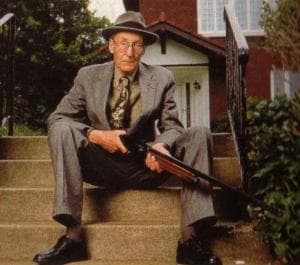
William Seward Burroughs II was an American writer and visual artist, widely considered a primary figure of the Beat Generation and a major postmodern author who influenced popular culture and literature. Burroughs wrote eighteen novels and novellas, six collections of short stories and four collections of essays, and five books have been published of his interviews and correspondences; he was initially briefly known by the pen name William Lee. He also collaborated on projects and recordings with numerous performers and musicians, made many appearances in films, and created and exhibited thousands of visual artworks, including his celebrated "Shotgun Art".
Similar books
- Go Ask Alice
Anonymous
3.7 (293k) average on GoodreadsReferenceA diary-style narrative offering a first-person perspective on drug addiction and its consequences.
- The Man With the Golden Arm
Nelson Algren
3.9 (3k) average on GoodreadsLiterary FictionThe Man with the Golden Arm (1949) also explores drug addiction but frames it within a more conventional narrative of social decay and personal tragedy, often eliciting reader sympathy through its protagonist's struggles. Junky, by contrast, maintains a detached, objective stance, avoiding sentimentalization and presenting addiction as a lifestyle rather than solely a tragedy.
- On The Road
Jack Kerouac
3.6 (349k) average on GoodreadsLifestyleOn the Road (1957), while sharing some counter-cultural themes and a focus on marginalized experiences, romanticizes movement, freedom, and the open road. Junky is rooted in the more static, ritualistic, and often bleak reality of drug acquisition and use, offering a starker, less romanticized view of a specific underground subculture.
- Nineteen Eighty-Four
George Orwell
4.2 (5.5M) average on GoodreadsFictionWinston Smith dreams of truth and rebellion in a world where Big Brother watches all, but he confronts the terrifying power of a regime that controls not just actions, but thoughts.
- The Frozen River
Ariel Lawhon
4.4 (600k) average on GoodreadsFictionIn 1789 Maine, a heroic midwife's diary helps her expose a murder and get justice in a town that wants to silence her.
- A Man Called Ove
Fredrik Backman
4.4 (569k) average on GoodreadsFictionA stubborn widower, who lives by strict rules, finds his quiet world changed by a lively new family next door, making him face his past and find happiness in human connection.





Enjoyed the summary?
A summary gives you the shape of the book. The book itself has the detail, the examples and the voice.
Find Junky on AmazonAs an Amazon Associate, BookBrief earns from qualifying purchases. How we're funded